


I have been trying out abstract paintings that use three canvases at once.
It is interesting to see how simple geometric shapes can link together across the panels.
I started with basic lines and blocks in my own work and noticed they created a sense of movement when placed side by side.
These ideas grew from that kind of experimenting.
I put together some examples that might be useful if you want to try something similar.
Continuous Wavy Lines Across Three Panels
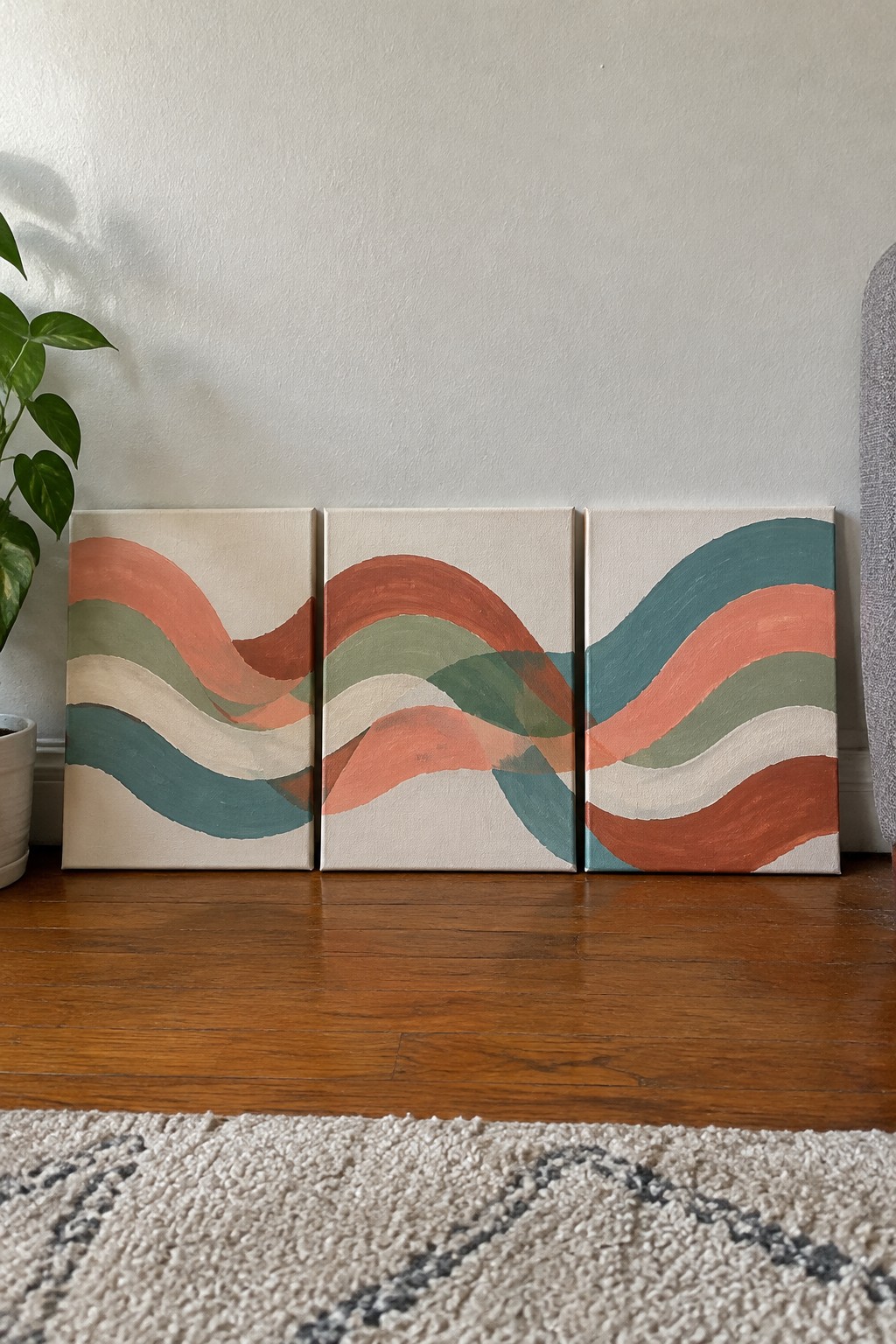
A three-panel abstract built around overlapping horizontal waves creates a single flowing design when the curves carry across the seams without interruption. The idea works by stacking bands in coral, teal, sage, and off-white so each color layer shifts slightly in height and thickness. Loose brushwork and soft edges keep the focus on movement rather than precise shapes, making it a straightforward decorative option for modern walls.
What makes this idea useful is the way the continuous lines automatically connect the separate canvases into one composition. You can swap the coral and teal for any two colors that already exist in a room or stretch the waves taller to fit a bigger space. For practice, the wide strokes let you work on smooth curves without worrying about fine detail. The same layout also adapts easily if you want to add a fourth panel or simplify it to just two colors.
Continuous Arcs Split Across Three Panels
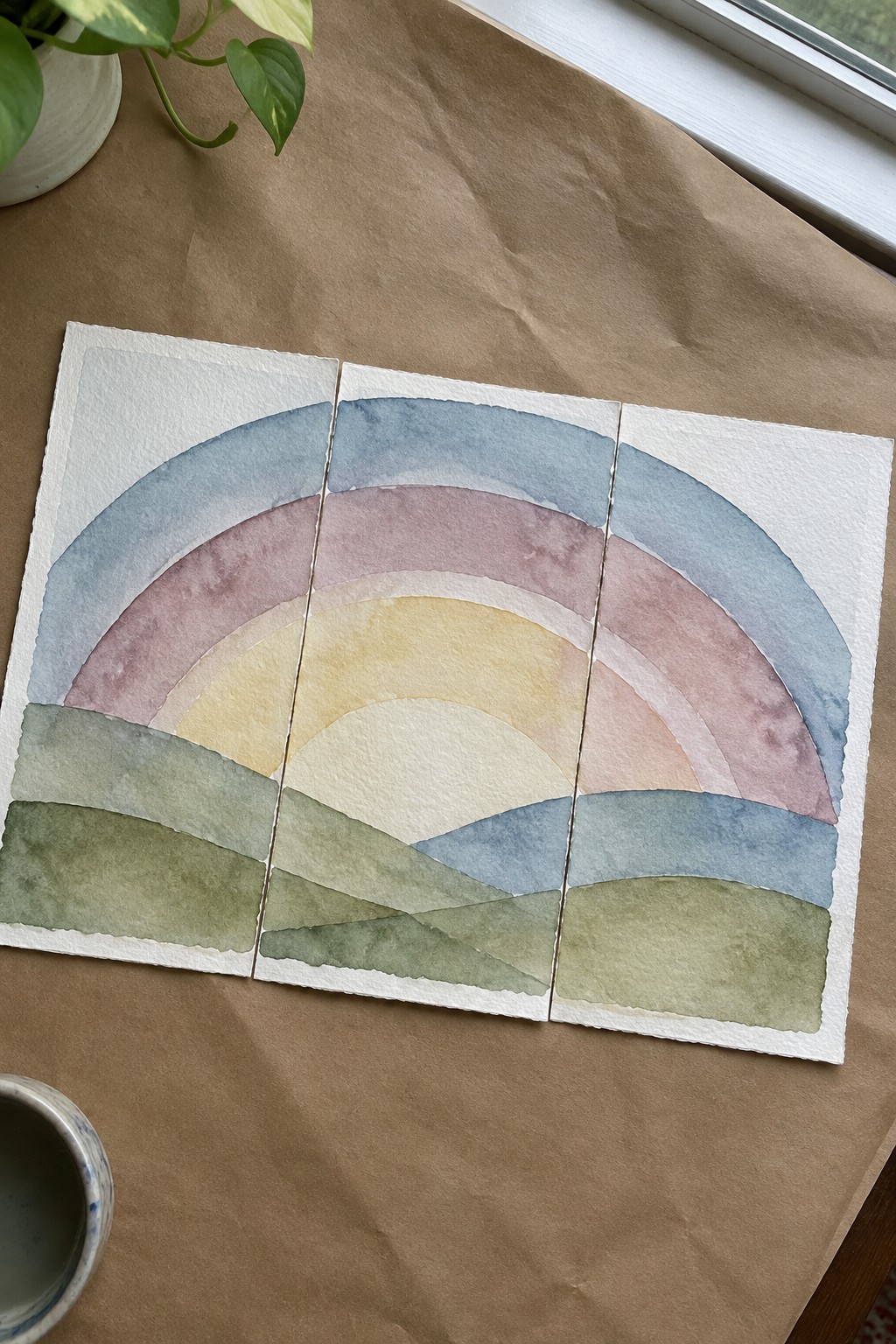
This painting idea uses a triptych format to carry a single set of overlapping curved bands and rolling lower layers from one canvas to the next. The upper arcs move through soft blue, pink, and yellow tones while the bottom section builds with overlapping green shapes that stay aligned at the seams. The approach works because the geometric curves stay simple enough to repeat while the color shifts and slight overlaps keep the whole piece feeling connected rather than three separate paintings.
What makes this idea useful is how the matching edges force you to plan the layout across all three canvases from the start. You can easily change the color order or swap the green tones for a different palette without redrawing the curves. For wall art the triptych layout adds visual weight that a single canvas often lacks. The same structure also works well as practice for blending washes or testing how far you can push soft edges before they lose definition.
Continuous Geometric Forms Across Three Panels
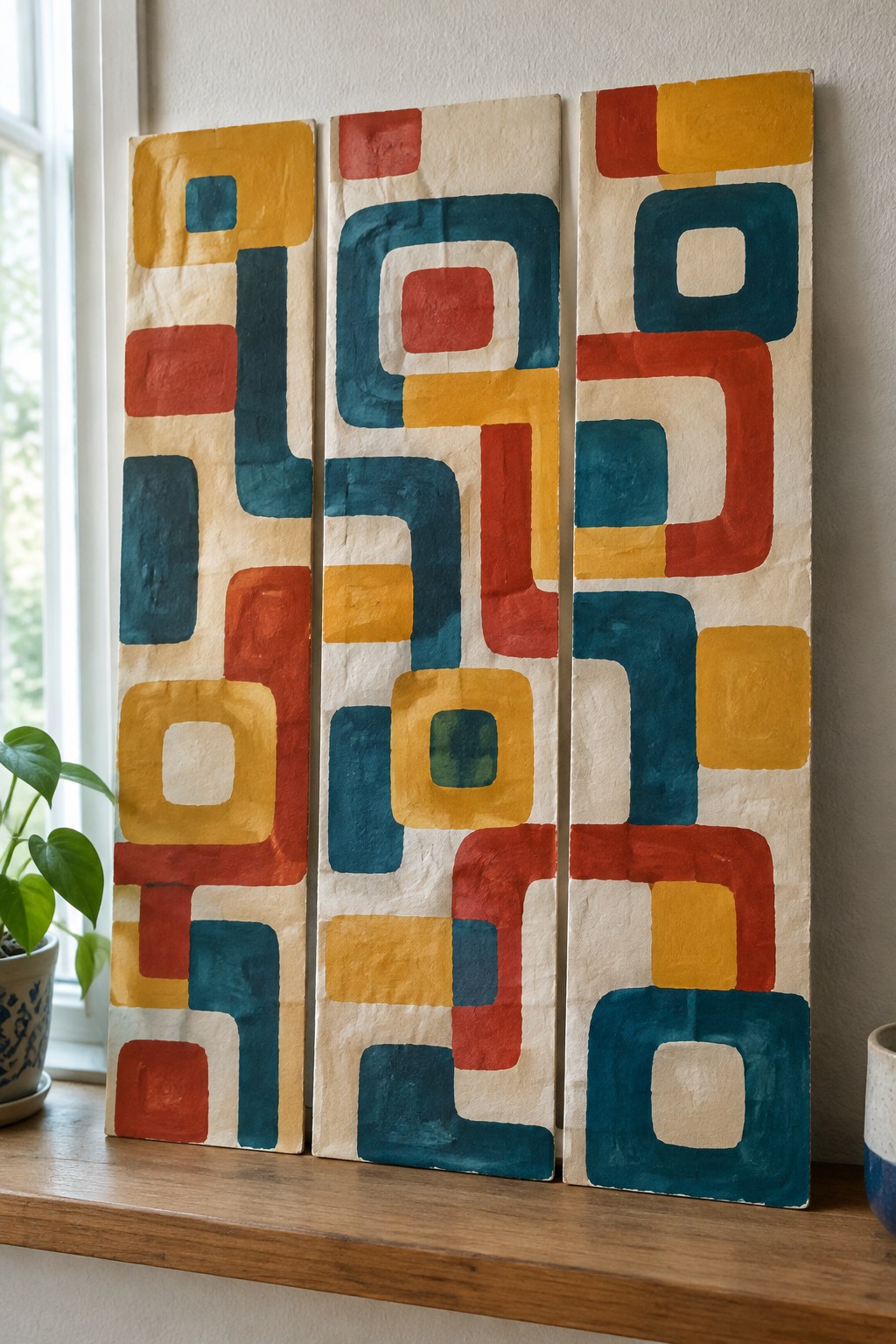
This painting idea uses three vertical canvases to display bold geometric shapes that link visually from one panel to the next. The design relies on rectangles and squares in yellow, red, and teal arranged over a light background so the eye travels across the full width of the set. It belongs to the category of decorative abstract art where the triptych format turns separate pieces into one unified composition.
What makes this idea useful is the way the connected shapes guide the layout without needing complex details. The color choices stay simple enough to swap out for whatever matches your space while keeping the same structure. You could scale it down to smaller canvases for a quicker version or repeat just one section as a single-panel study. For wall art this format stands out on Pinterest because the vertical panels fill height without taking up much width.
Continuous Diagonal Stripes Across Three Panels
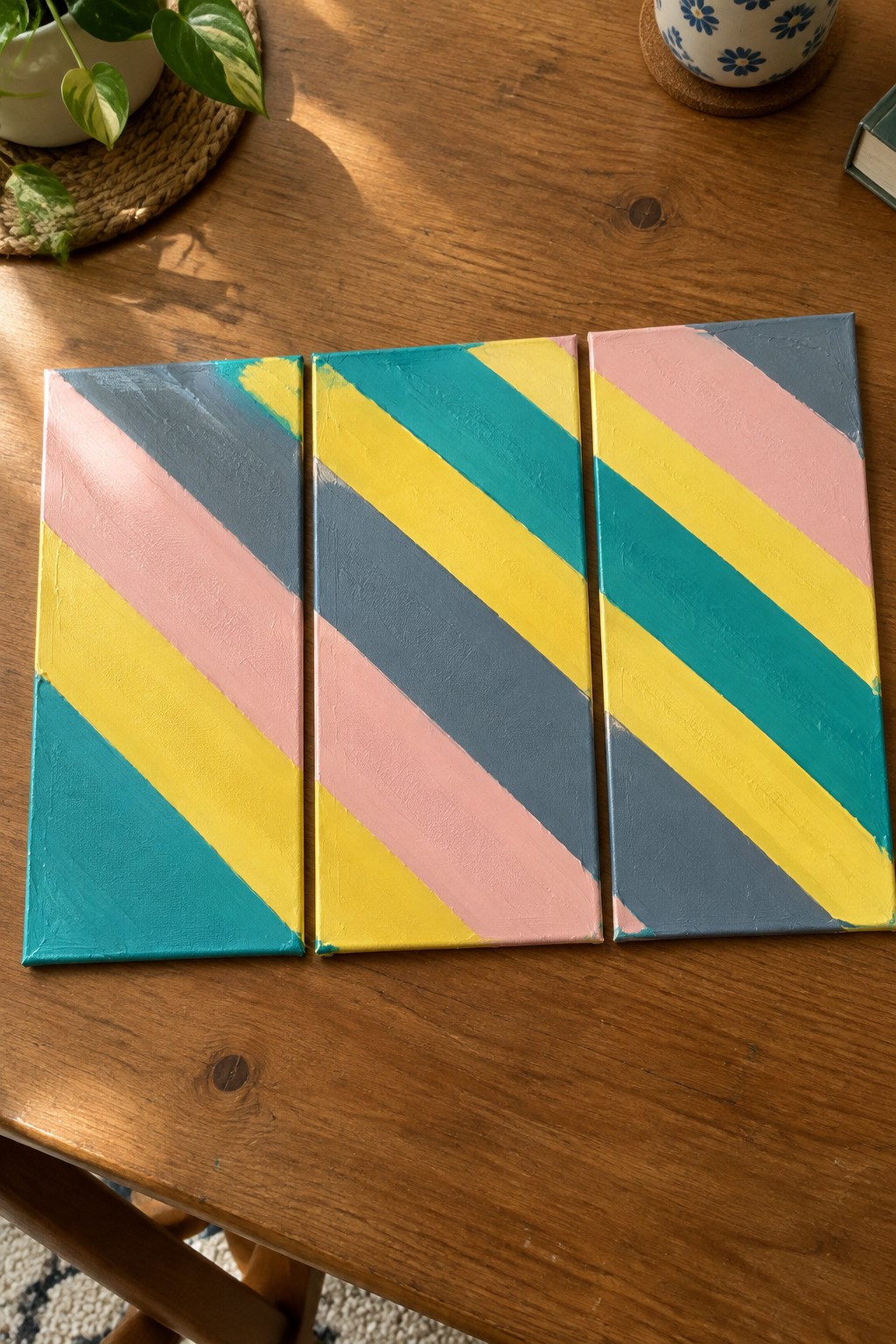
This painting idea splits one set of wide diagonal bands across three separate canvases so the stripes line up and continue from one panel to the next. The color sequence moves through teal, yellow, pink, and gray-blue, with each stripe staying thick and straight for a clean geometric effect. The layout works because the repeating direction and limited palette keep the whole piece unified even though it is physically broken into three parts.
What makes this idea useful is that you only need to plan the stripe angles once and then repeat them on the remaining canvases. The same pattern can be scaled down to two panels or expanded if you want a longer wall piece, and the colors are easy to swap for whatever already exists in the room. For practice, this kind of subject helps you focus on consistent brush direction and edge control without adding extra details.
Linked Circles Across Three Canvases
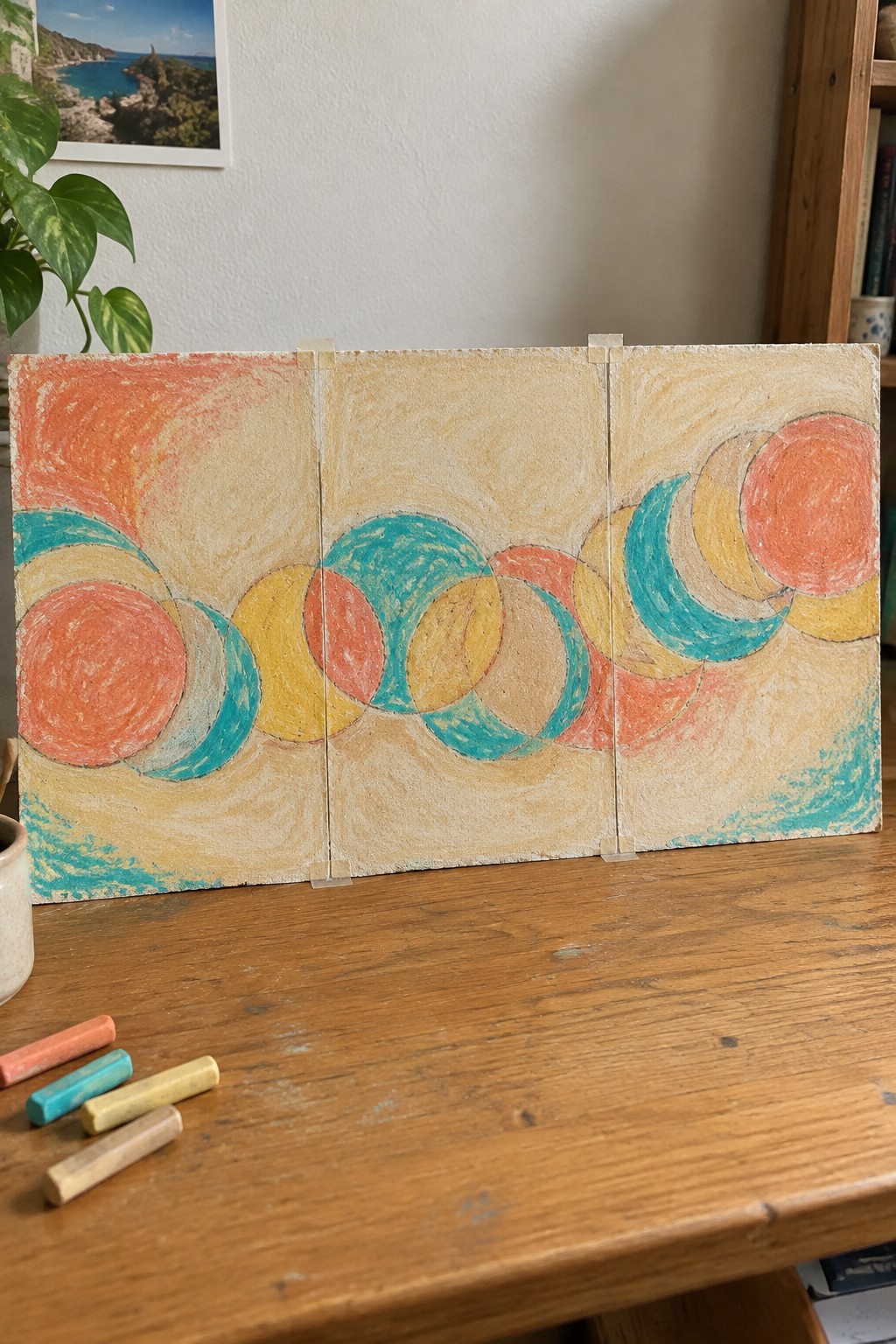
This idea centers on a row of overlapping circles that stretch continuously from one canvas to the next, creating a single flowing composition instead of three separate pieces. The circles shift in size and color as they move across the panels, with some fully visible and others partially hidden to keep the eye moving. A warm neutral background keeps the focus on the shapes while the coral, teal, and yellow tones create contrast without needing precise edges.
The repeating circle pattern makes the layout easy to plan and paint, since each canvas can be worked on individually before the pieces are hung together. You can change the color order, adjust how much the circles overlap, or swap in different hues to match a room. For wall art, this approach stands out on Pinterest because the split-canvas format adds interest while the simple shapes stay approachable for practice or quick projects.
Continuous Arched Bands Across Three Canvases
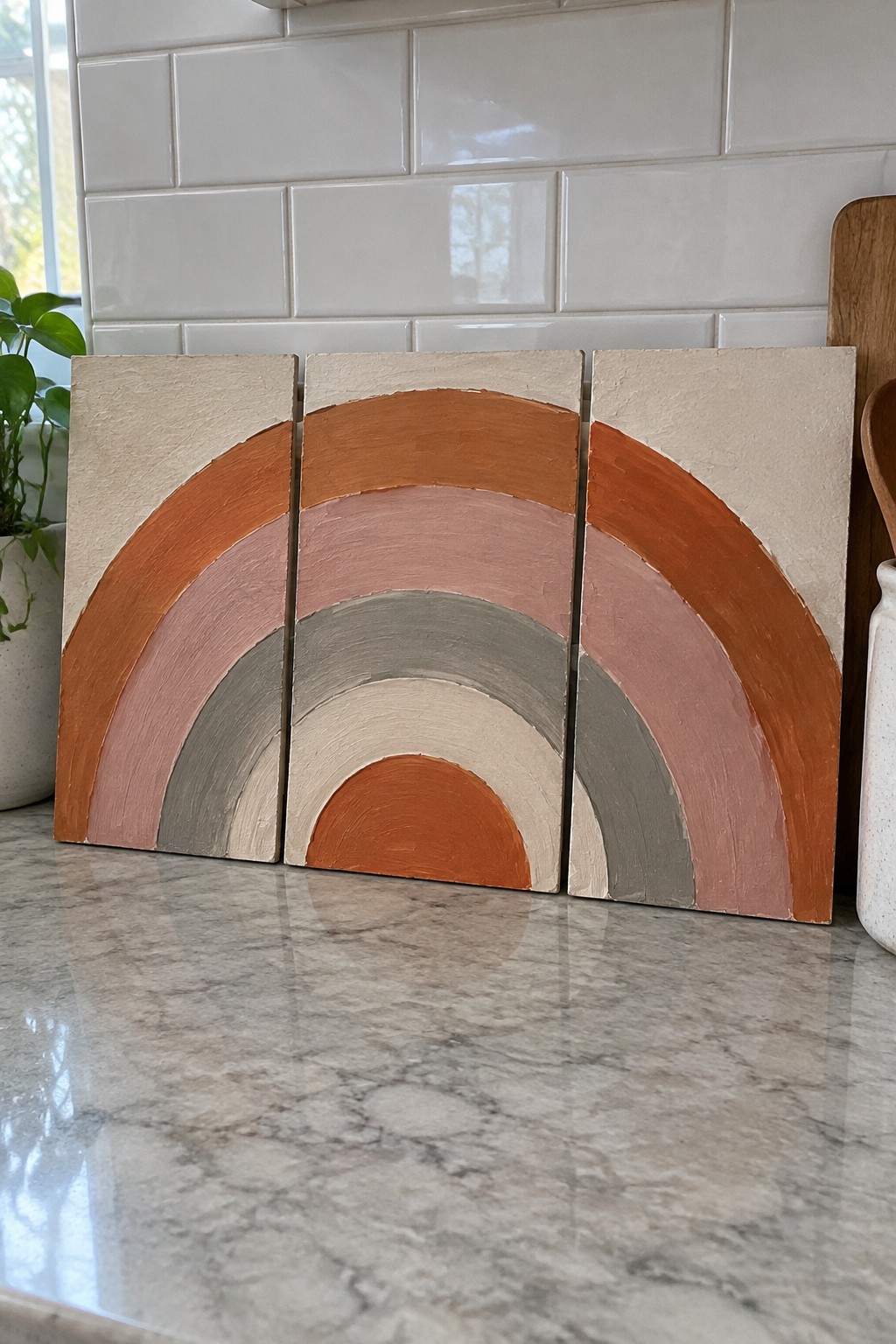
A three-panel painting idea works well when the main subject is a single set of stacked arcs that run across all the canvases as one unbroken shape. The design uses wide curved stripes in a muted sequence of terracotta, rose, sage gray, and cream so the eye follows the bands from left to right without stopping at the panel edges. This keeps the composition simple while the split layout gives the finished piece more presence on a wall than a single canvas would.
The composition does a lot of the work here because the repeating arcs create movement across the breaks between panels. You can change the color order or swap in any palette that matches a room without redrawing the curves. For wall art this format stands out on Pinterest because the triptych layout looks intentional yet the shapes stay easy to mask or paint freehand on each panel. The same idea scales down to smaller boards or stretches to larger ones if you want a bigger statement piece.
Continuous Staircase Across Three Canvases
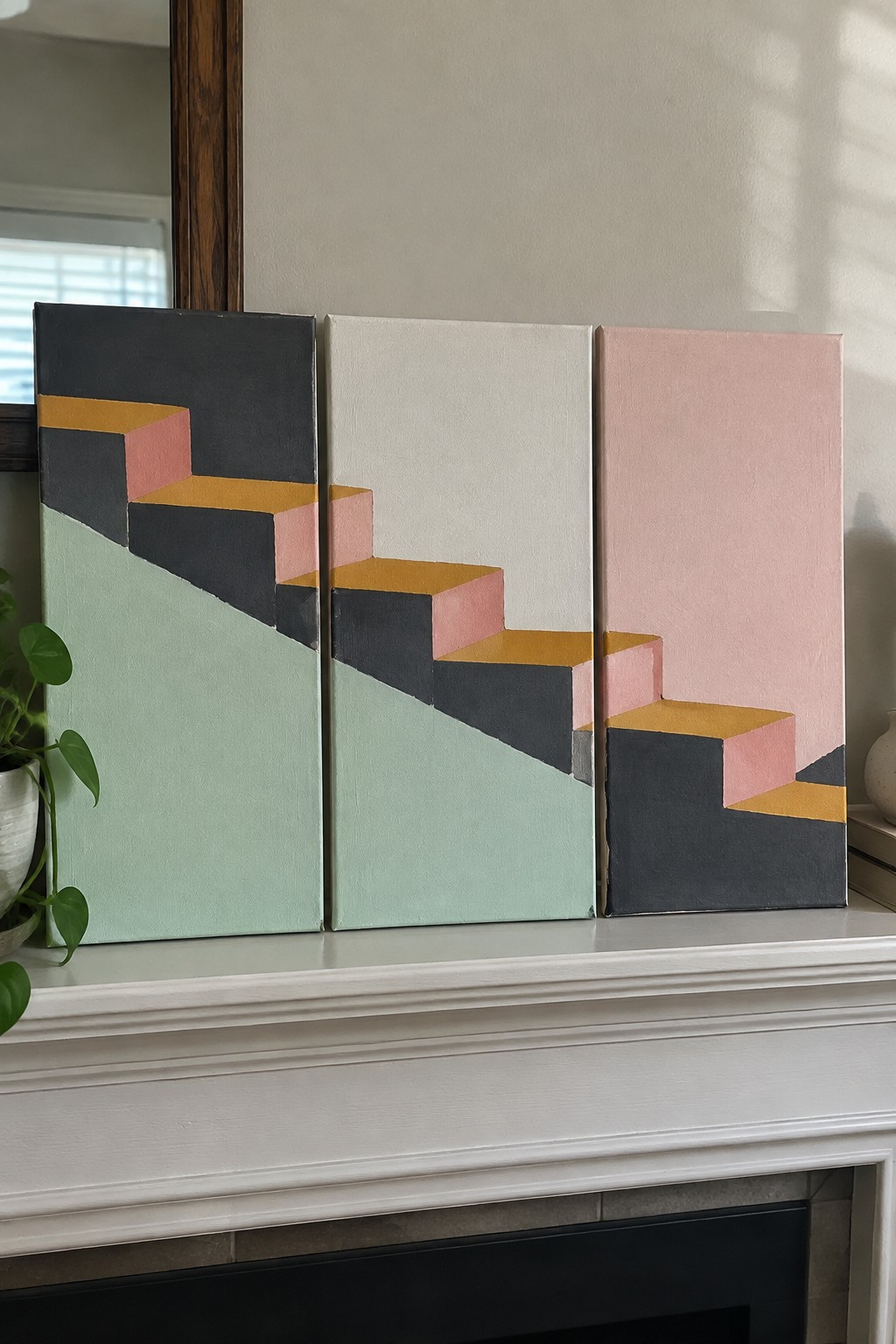
This painting idea splits one staircase into three connected panels so the steps appear to climb continuously from left to right. Each panel uses the same blocky step shapes but sits against a different background color, which keeps the eye moving while the overlapping edges tie the pieces together. The limited palette of black, pink, mustard, and soft green makes the geometric forms stand out without extra detail.
The composition does a lot of the work here by letting the repeating steps create movement across the full width of the display. You could swap the background colors to fit any room or simplify the steps further if you want a quicker version. For wall art, this kind of triptych works well because the split format adds interest without requiring advanced painting skills.
Linked Geometric Forms Across Three Panels
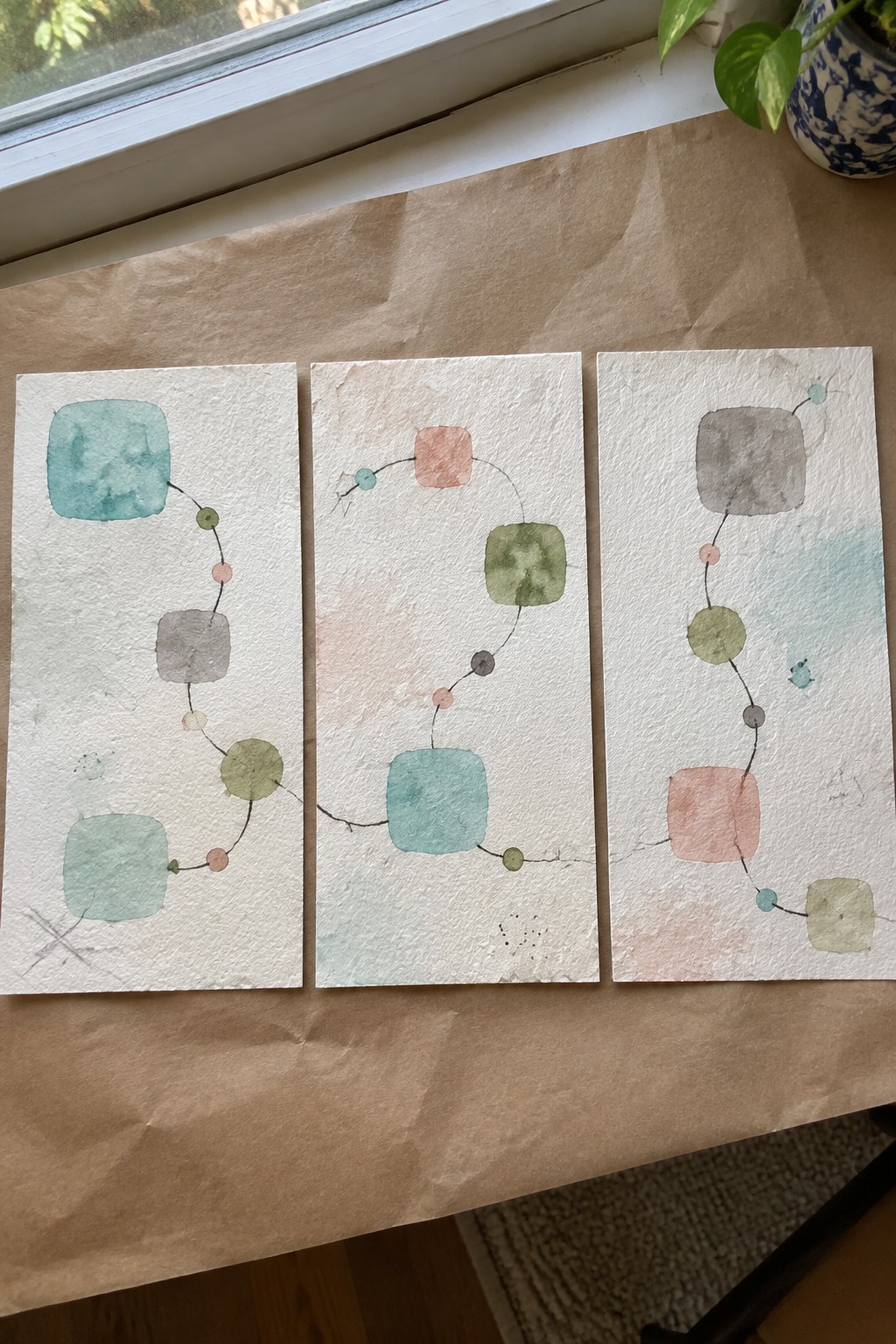
A three-panel abstract idea connects simple geometric shapes like rounded squares and circles using thin lines that run vertically down each canvas. The shapes appear in a soft palette of teal, coral, green, and gray with light watercolor-style washes that let the paper texture show through. Placing the panels side by side creates a loose overall flow while each canvas stays self-contained.
The three-panel format makes this easy to adapt for different wall spaces since you can adjust the gaps between canvases or even hang them separately. Basic shapes and a limited color set keep the project approachable for practice or quick weekend painting. You could swap in your own colors to match existing decor or repeat the same chain pattern on larger or smaller panels for a custom look.
Connected Loops Across Three Canvases
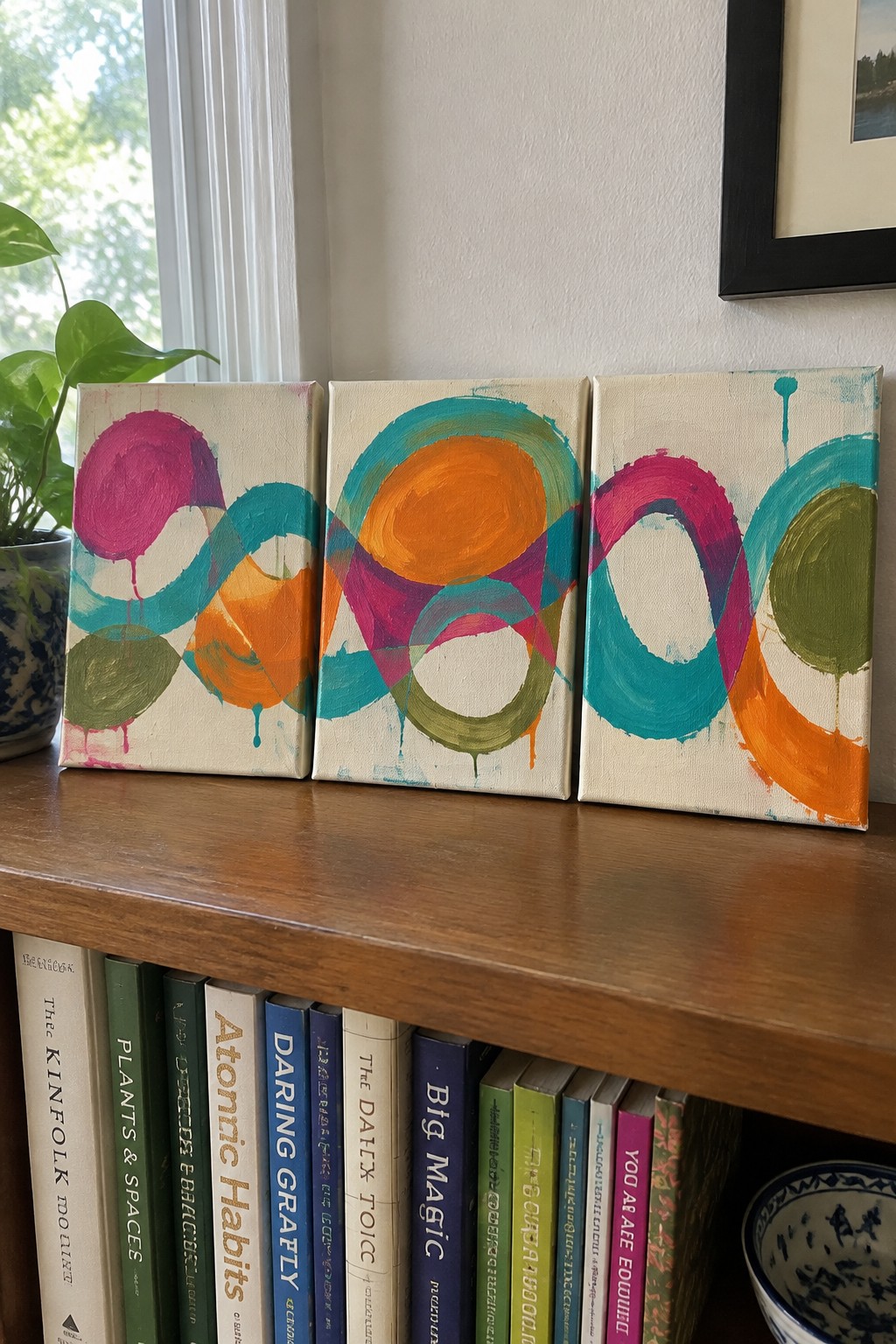
This painting idea splits one flowing abstract design across three separate canvases using overlapping loops and circles that continue from one panel to the next. The curves layer in teal, magenta, orange, and green with visible brushstrokes and a few paint drips that keep the surface active. The cream background lets the shapes stand out while the repeating forms create movement without needing extra detail.
The composition does a lot of the work here since the curves already connect across the panels, making it simple to resize or shift colors to match a room. You can drop one panel or stretch the design wider if needed, and the limited palette keeps mixing straightforward. This kind of layout works especially well for wall pieces because the eye follows the motion across the full width.
Three Matching Floral Canvases with Geometric Petal Shapes
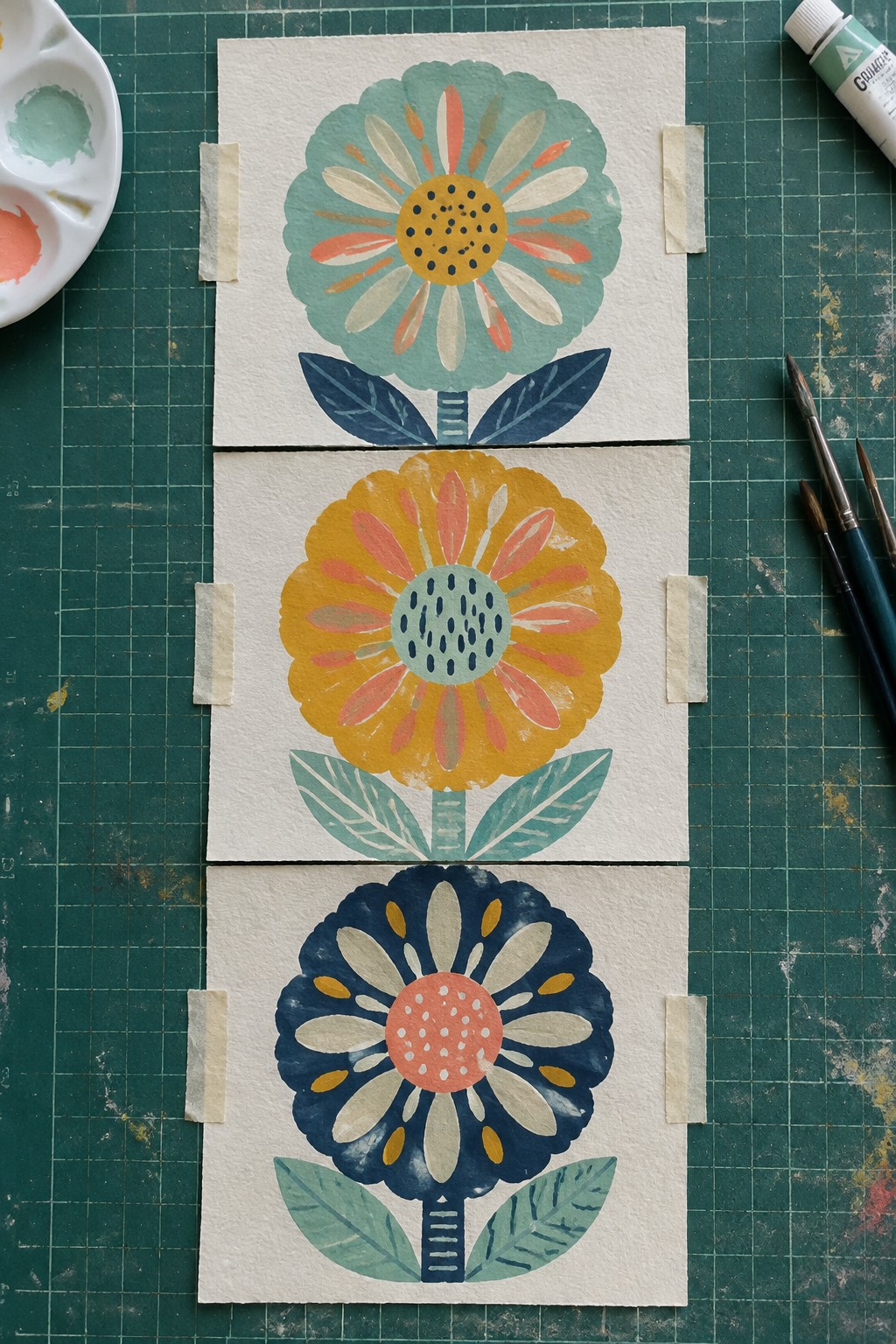
This idea uses the same centered flower layout across three separate canvases, with each one built from bold scalloped petals, a dotted circular center, and simple leaves framing the base. The consistent structure lets the color changes carry the variation while keeping the overall series unified. It works as decorative floral art that leans on clean shapes rather than fine detail.
What makes this idea useful is how the repeated layout turns color swaps into the main creative step. You could paint the same flower structure in any palette that fits your space, or adjust the petal count and center pattern without changing the overall balance. For wall pieces, the vertical arrangement of three panels gives a clean stacked look that fills height without needing a large single canvas.
Abstract Network Lines Across a Triptych
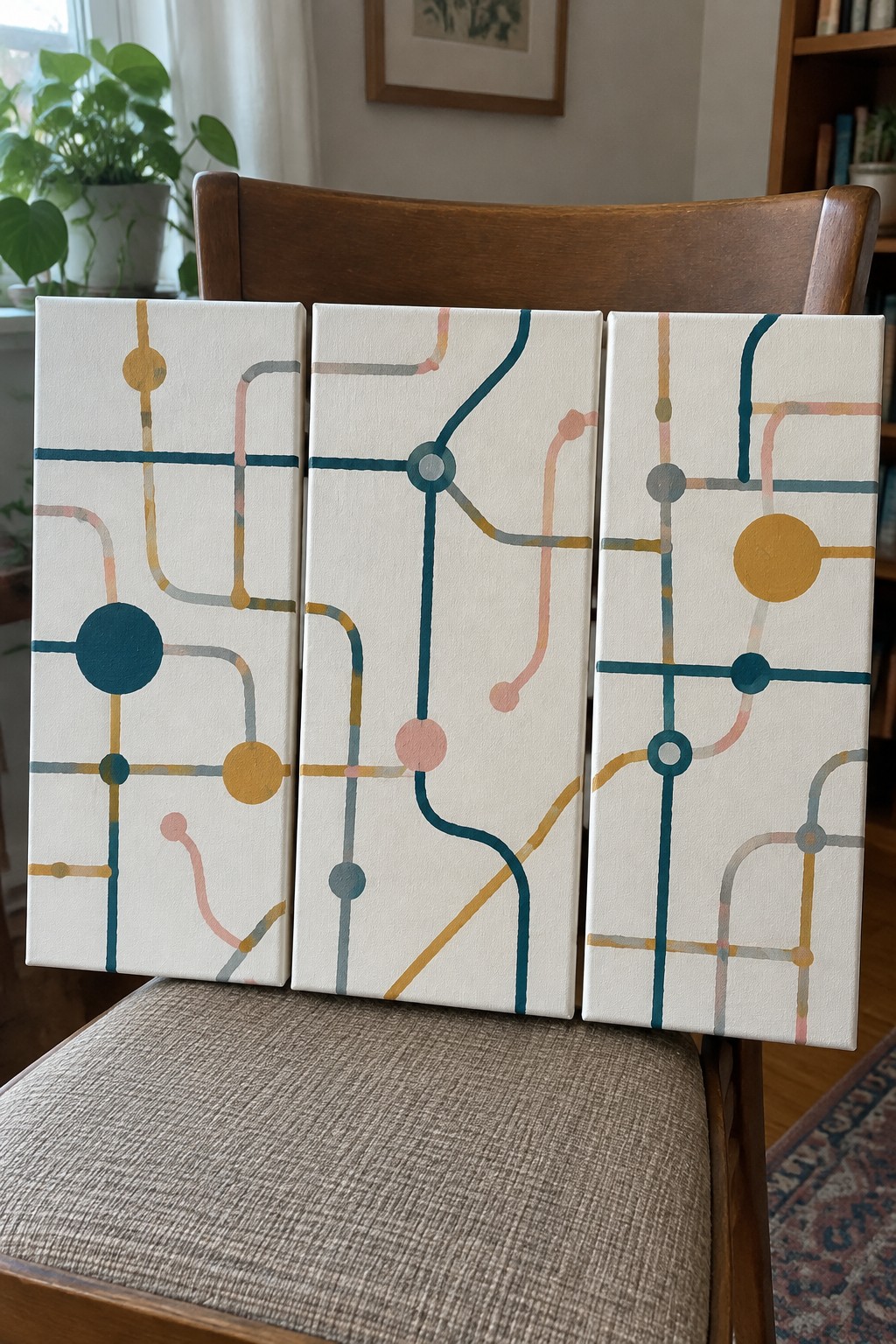
This painting idea centers on an abstract network of lines and circles that continue across three separate canvases to form one connected composition. Horizontal and vertical lines in teal, mustard, pink, and gray link circles of varying sizes, creating a balanced layout that feels like a simplified map or diagram. The approach works as decorative abstract art because the repeating geometric elements stay consistent while the split panels add structure without extra detail.
What makes this idea useful is how the three-panel format handles visual weight on its own, so you do not need complex shading or backgrounds. The color palette is easy to swap for different rooms, and the line work can be simplified further or extended onto additional canvases if you want a wider piece. For wall art, this kind of design stands out on Pinterest because the modular setup photographs cleanly and adapts quickly to different sizes.
Lunar Phases Split Across Three Panels
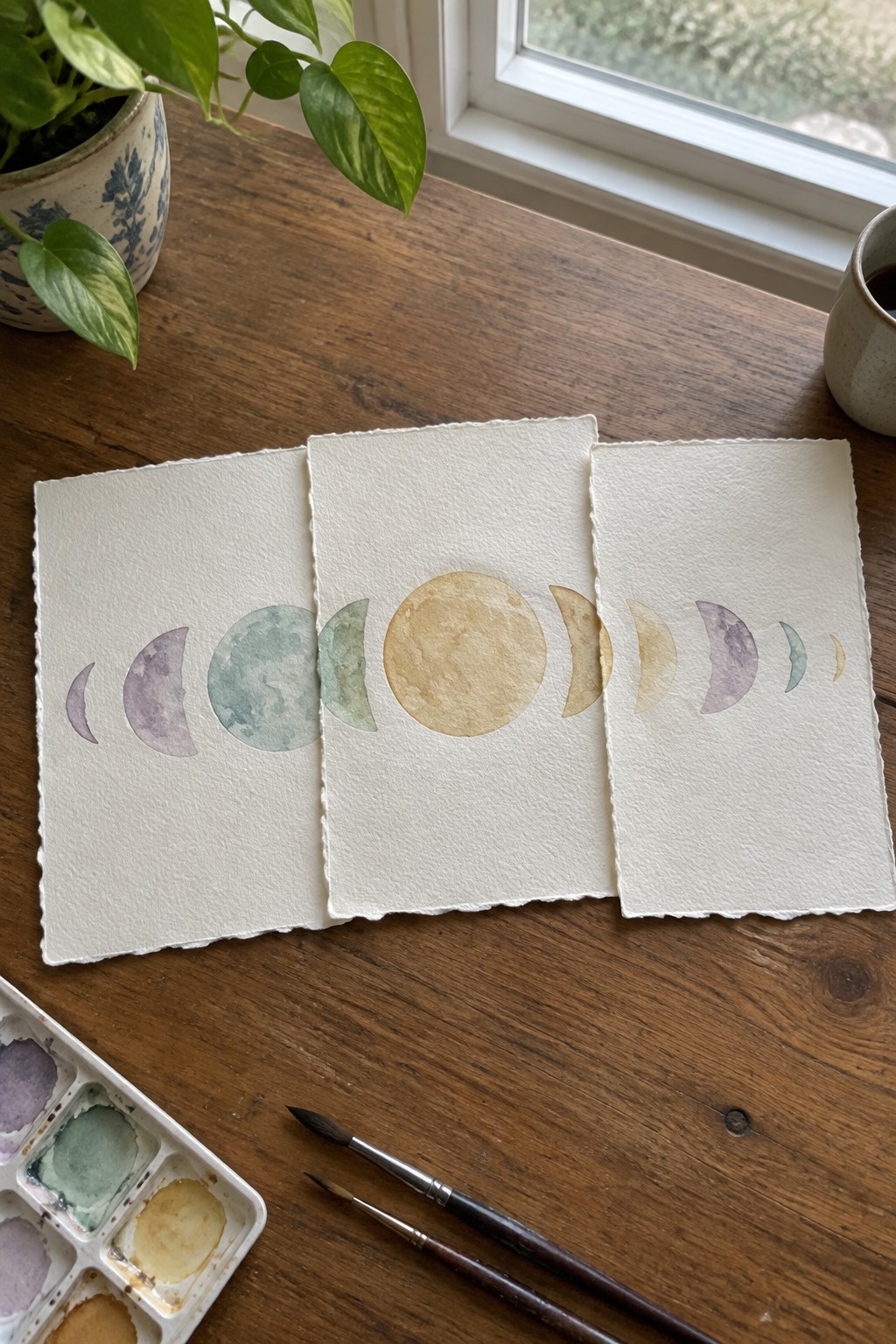
Painting the full lunar cycle as one continuous sequence divided across three separate canvases gives the geometric shapes room to breathe while still reading as a single progression. Each panel carries a portion of the cycle, with the central canvas holding the full circle that anchors the whole arrangement. The soft watercolor blends and slight overlaps between neighboring phases create smooth visual movement from left to right without any hard breaks.
What makes this idea useful is how the repeated circular forms stay balanced even when the work is broken into three pieces, so the eye follows the cycle naturally. You can easily change the palette to cooler tones or limit the number of phases if the full sequence feels busy. For wall art, the horizontal layout sits comfortably above furniture, and the same split-panel approach works just as well with other simple repeating shapes like sunrises or abstract orbits.
Abstract Triptych with Rounded Geometric Blocks
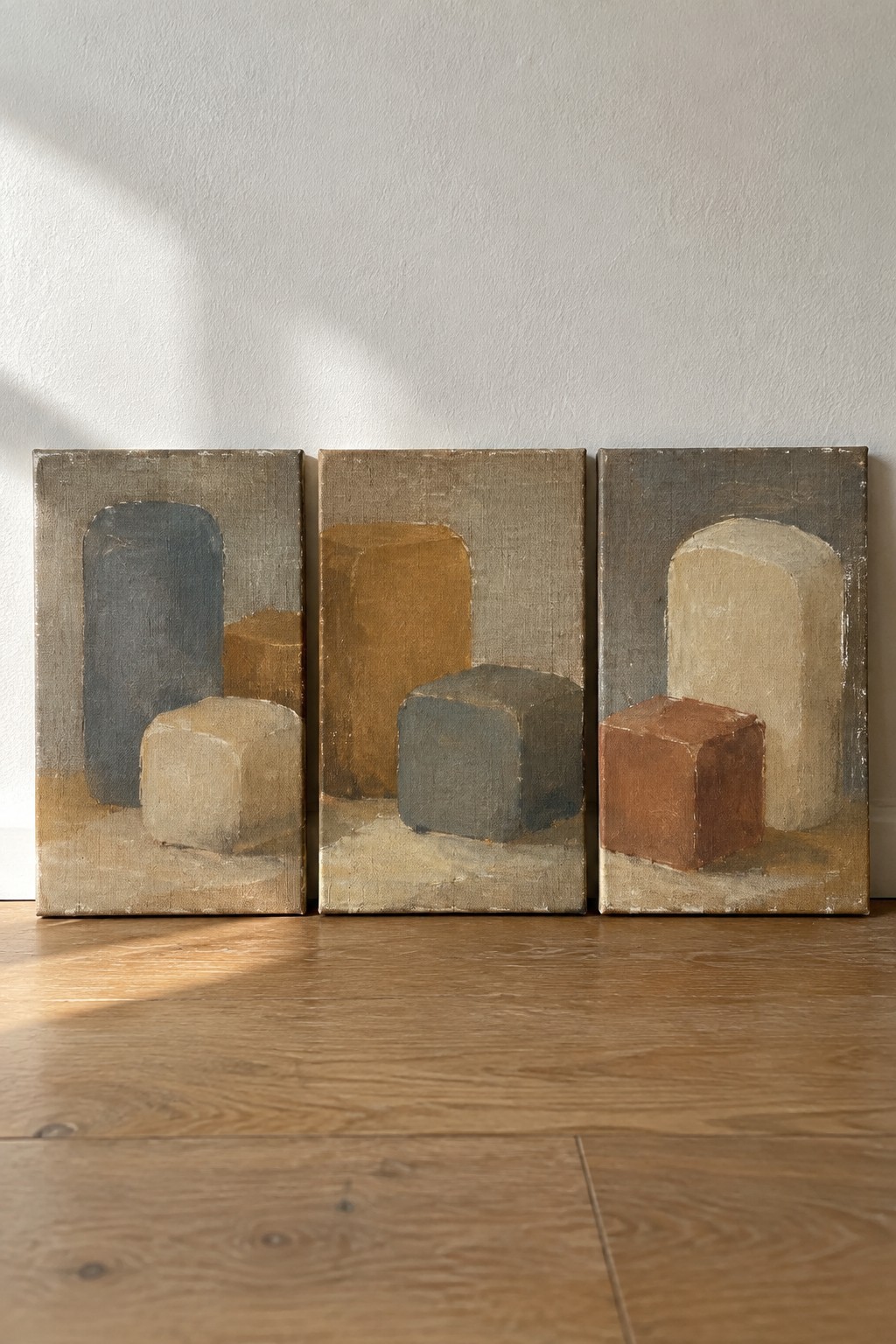
This painting idea uses three separate canvases to explore a simple arrangement of rounded rectangular and cubic forms in a shared neutral palette. Each panel places a taller vertical shape beside one or two smaller blocks at the base, creating visual rhythm through repetition rather than complexity. The muted mix of blue-gray, warm brown, beige, and soft gray keeps the focus on shape and placement, which suits a minimalist abstract style.
What makes this idea useful is the built-in continuity across multiple panels, so you only need to vary the colors or slight positioning to make the set feel connected. The limited shapes and earthy tones are easy to adapt for different room palettes or to scale down for smaller studies. For wall decor, a triptych like this works well because the consistent layout reads as intentional and balanced without demanding intricate brushwork.
Nested Squares Across Three Colored Panels
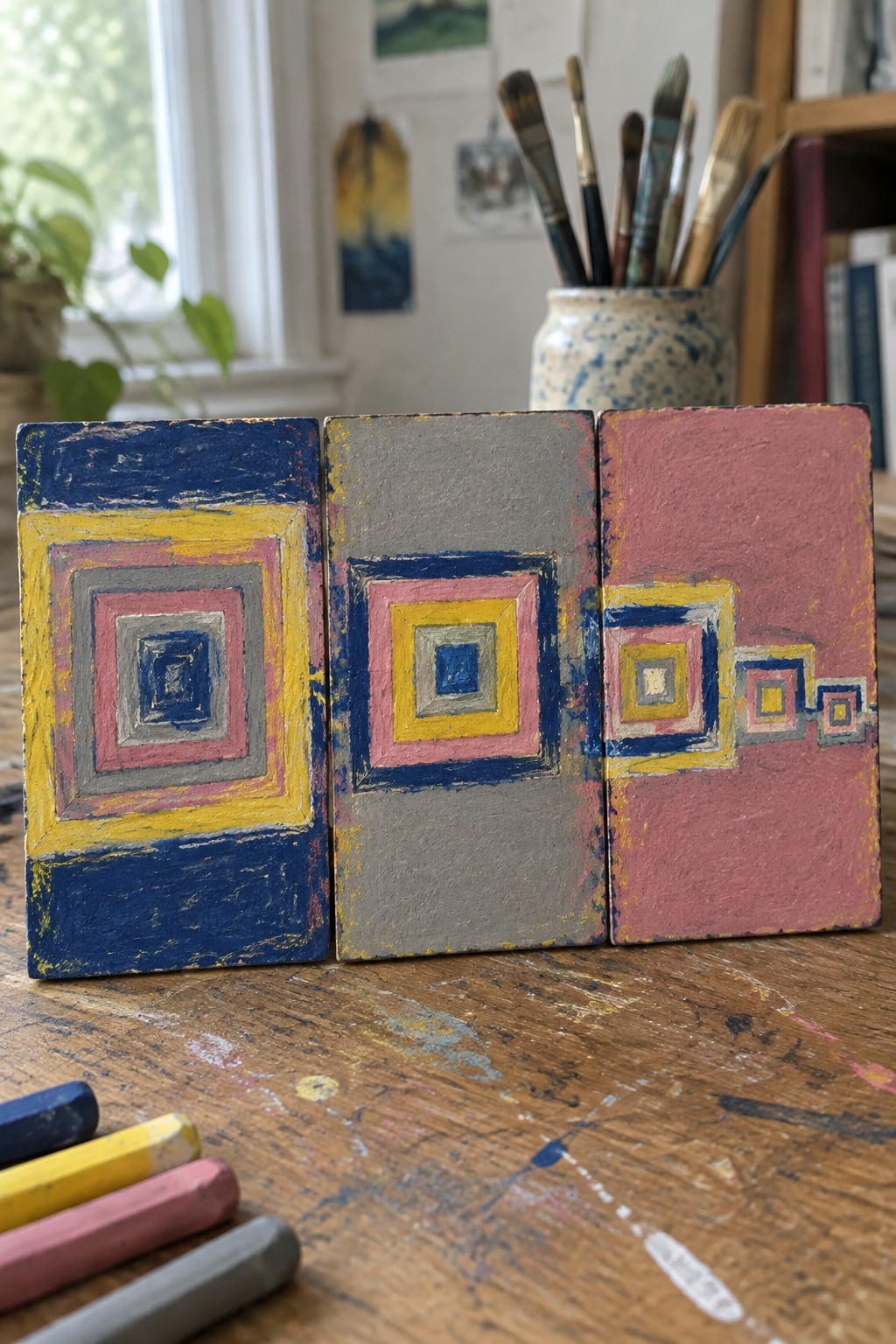
This painting idea uses three canvases to show a sequence of nested squares that shift in size and placement while staying aligned across the panels. Each canvas has its own background color with layers of squares painted inward in contrasting hues, creating a simple but connected geometric pattern from left to right. The right panel breaks the pattern slightly by staggering smaller squares, which adds variety without losing the overall structure.
What makes this idea useful is how the basic square shapes keep the focus on color choices and spacing rather than complex drawing. You can swap the background colors or change how far the inner squares shrink to fit different wall sizes or room palettes. For practice, this kind of subject works well because the panels can be painted one at a time and still look finished together. The staggered layout on the final canvas also gives you an easy way to experiment with asymmetry if you want to personalize it.
Continuous Spiral Geometric Triptych
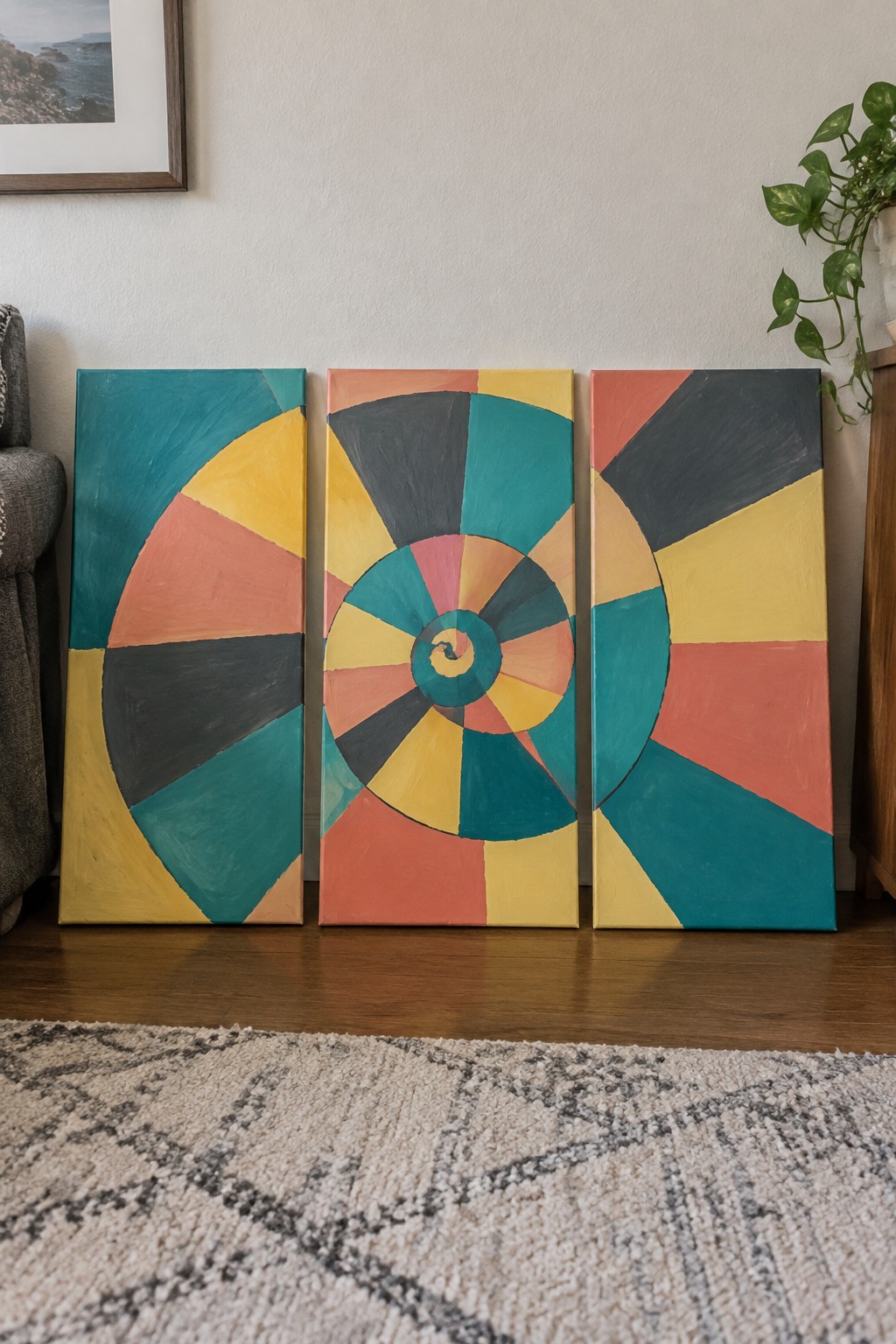
A three-canvas abstract idea splits one large radial spiral across separate panels so the design reads as a single flowing form when hung together. Each canvas carries wedge-shaped color blocks in teal, yellow, coral, and dark gray that radiate from a small central spiral on the middle panel. The segmented layout keeps the eye moving across the full width while still letting each piece hold its own if displayed alone.
The composition does a lot of the work here because the repeating wedges create instant structure and the spiral gives a clear center without extra detail. You can change the color order or reduce the number of wedges to simplify the painting or match a room’s palette. For wall art this scale works especially well since the triptych format fills space without requiring one oversized canvas. The same idea adapts easily to two panels or four by shifting where the spiral starts and stops.
Pastel Geometric Triptych with Continuous Lines and Shapes
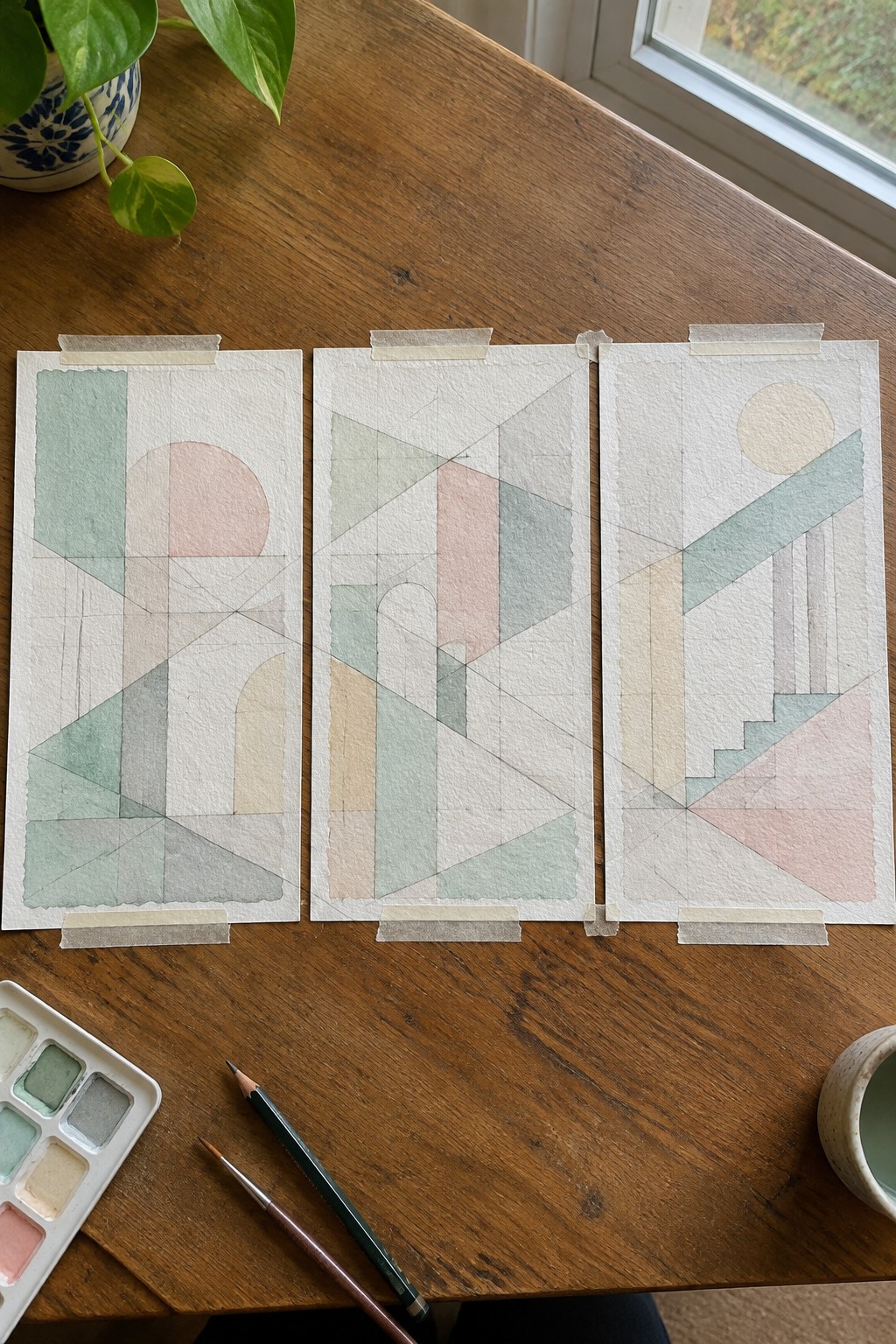
This painting idea uses three vertical panels to show connected abstract forms built from overlapping triangles, arcs, circles, and straight lines. Soft blocks of muted green, pink, beige, and gray fill the spaces between the lines, creating a loose architectural feel without depicting any specific building. The design splits across the three canvases so shapes and lines appear to continue from one panel into the next.
The composition does a lot of the work here because the repeated shapes keep the eye moving across the full width. You can adapt the idea by changing the color palette to match a room or by using only two panels if three feels like too much. For wall art this stands out because the connected layout gives the set more presence than three unrelated abstracts. The simple shapes also make it easy to sketch the main structure first and fill in color afterward.
Earth Tone Semicircle Panels With Vertical Stripes
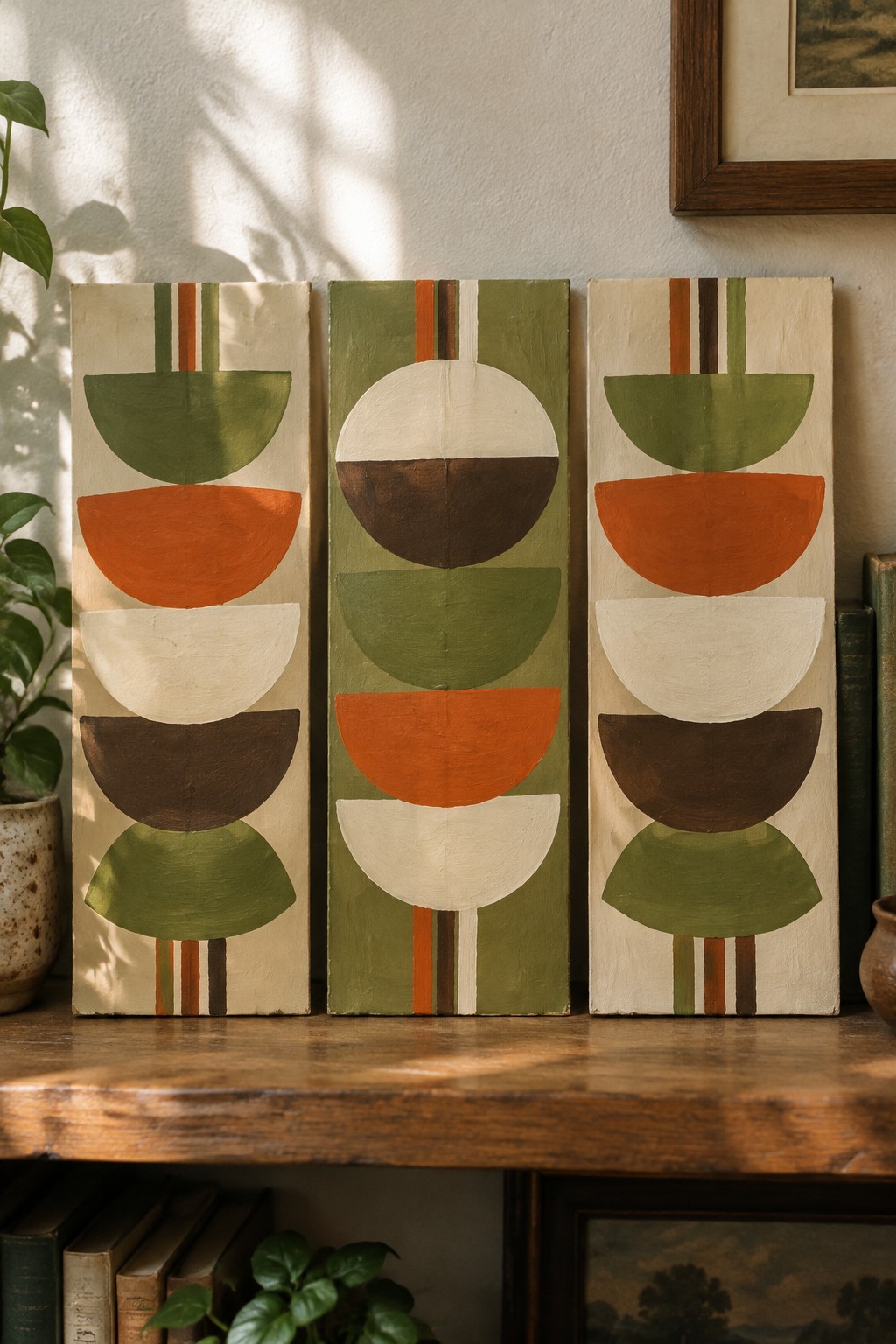
This painting idea centers on three vertical canvases that repeat a stacked semicircle motif in a coordinated earth palette of olive green, rust orange, warm brown, and cream. Thin vertical stripes in matching hues run through each panel to create visual continuity across the set. The approach works as decorative abstract art because the repeated curved forms and limited color range produce a balanced, rhythmic composition without needing intricate detail.
What makes this idea useful is the way the three-panel layout lets you adjust spacing on the wall to fit different spaces. The shapes stay simple enough to paint with basic brushes and tape for the stripes, so the focus stays on color placement rather than fine control. You could easily swap in your own palette to match existing decor or stretch the same layout across two or four canvases if you want a wider arrangement. For Pinterest saves, the clean geometric style photographs well and translates directly into a finished wall piece.
Flowing Ribbon Shapes Across Three Panels
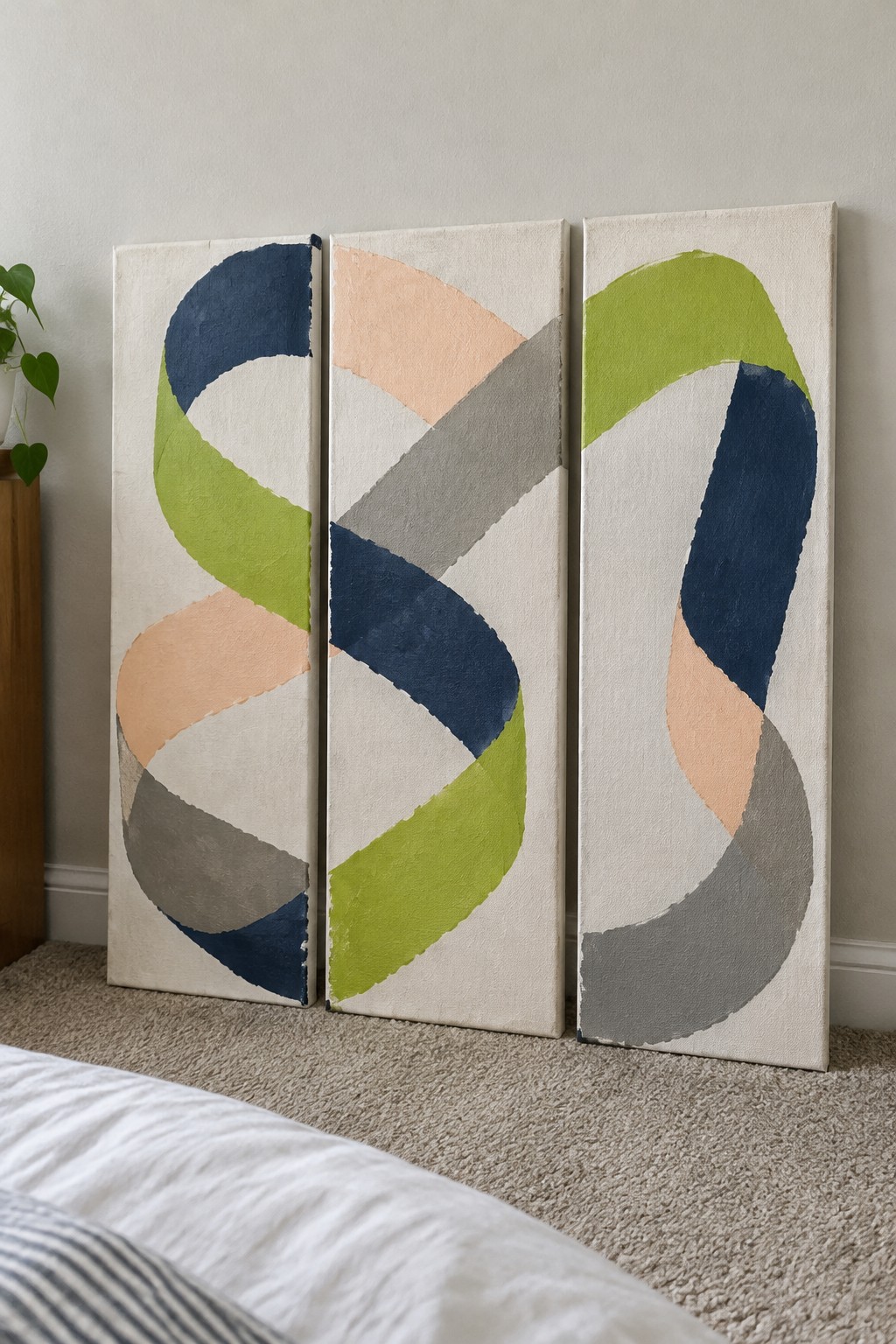
A triptych of vertical canvases works well for a single abstract idea built from wide curving bands that twist and overlap. The composition uses repeated rounded forms in navy, lime green, peach, and gray that continue from one panel into the next to create a connected flow. The off-white background keeps the focus on the simple color blocks and their smooth transitions.
What makes this idea useful is how the split-canvas format lets the same curve pattern feel larger and more dynamic without extra detail. You can easily shift the color sequence or swap in other muted tones to suit different rooms. The flat shapes and soft edges also make it straightforward to adapt to two panels or a single wide canvas if you want a smaller version. For practice, the design rewards clean overlaps more than perfect precision, so it stays approachable while still looking finished on the wall.
Three-Panel Star Triptych with Repeating Diamond Fill
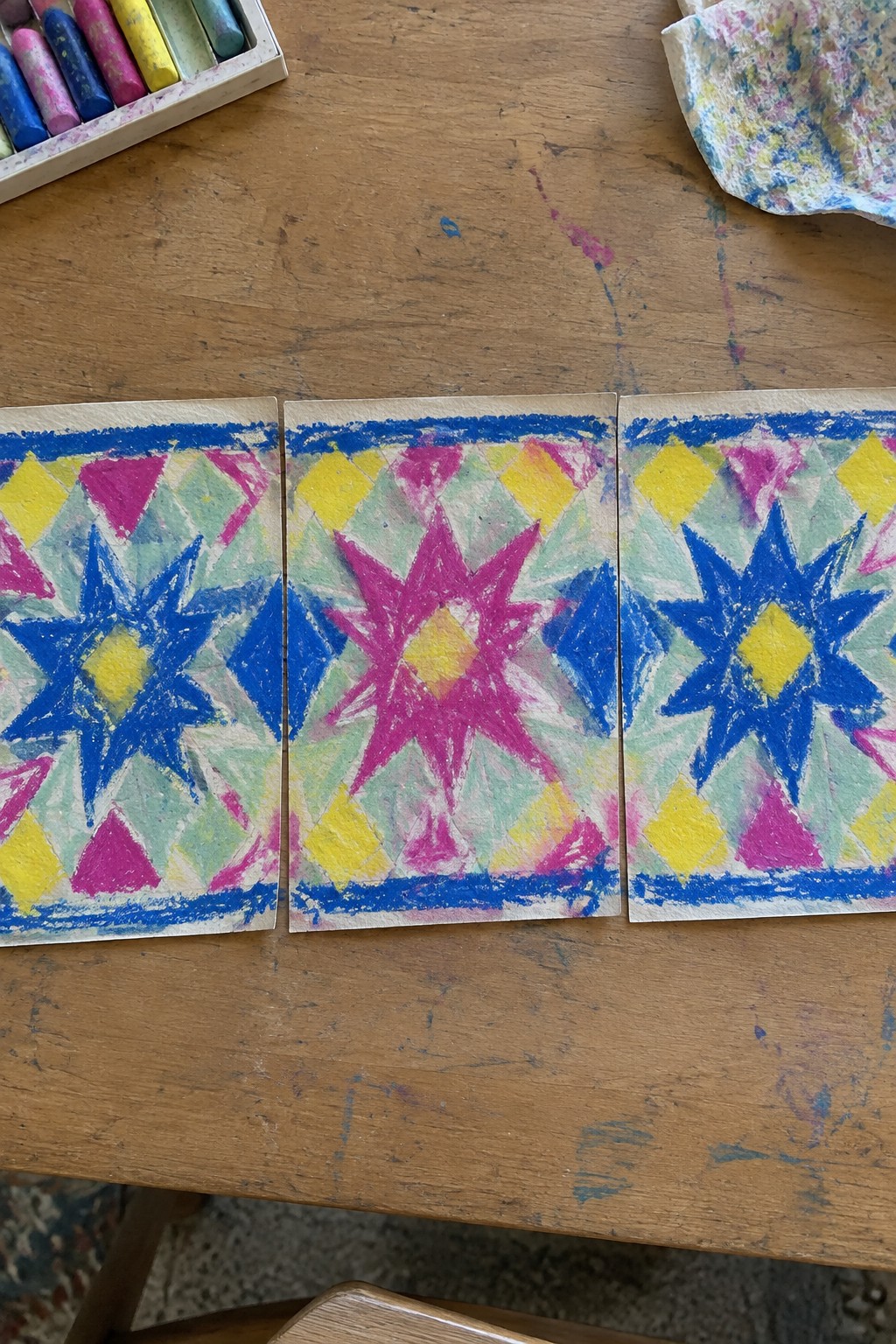
A strong option here is a triptych where each panel holds a large multi-pointed star centered on a background of small interlocking diamonds and triangles. A solid blue border runs across the top and bottom of all three pieces to tie them together visually. The bright color repeats in yellow centers, blue and pink points, and mixed pastel fills create a consistent rhythm that reads as one continuous design when the panels hang side by side.
What makes this idea useful is how the repeating diamond grid does most of the layout work once the first panel is done. You can swap the central star for other bold shapes or shift the palette without losing the overall structure. For wall pieces the high contrast and clear borders help the set stand out even in smaller sizes. The same grid and border approach also works if you want to test different color combinations across the three canvases before committing to a final version.
Frequently Asked Questions
1. What materials and tools work best for starting a three-canvas abstract painting with continuous geometric forms? Use three identical canvases in a size that fits your space, such as 16 by 20 inches each. Gather acrylic paints in your chosen palette, brushes of varying sizes, a ruler for straight lines, a pencil for light sketching, and painter’s tape to mask edges. Begin by priming all canvases with gesso for even coverage, then sketch the same starting geometric shape on each panel in alignment so lines flow when the canvases sit side by side.
2. How can I make sure geometric forms connect smoothly from one canvas to the next? Place the three canvases together on a flat surface before painting and mark reference points where shapes will cross the edges. Paint the first canvas fully, then extend key lines and shapes slightly onto the adjacent canvas edges using the same measurements. Work on all panels at once for each layer of color or form to keep proportions consistent and avoid gaps when the pieces hang together.
3. Which color strategies help emphasize the continuous effect in these paintings? Choose a limited palette of four to six colors that transition gradually across the panels, such as moving from cool blues on the left to warm oranges on the right. Apply base colors first, then layer geometric shapes with overlapping hues at the seams to create visual bridges. Test small color swatches on paper taped together in the same layout to confirm the flow looks balanced before committing to the final canvases.
4. What are effective ways to hang three-canvas pieces so the geometric forms appear unbroken? Measure the total width of the three canvases with small gaps of one to two inches between them for breathing room. Use a level and matching hooks or a French cleat system to align the tops precisely. Hang them at eye level and step back to check that lines and shapes meet visually across the spaces, adjusting as needed before securing the final positions.
5. How can beginners adapt these ideas if they lack experience with precise geometric shapes? Start with simpler forms like overlapping circles or basic triangles instead of complex polygons. Practice drawing the continuous pattern on graph paper first to refine proportions. Work in thin layers of paint so mistakes can be corrected easily, and consider using stencils for clean edges. Focus on one idea from the list at a time and allow each layer to dry fully before adding the next to build confidence gradually.
