

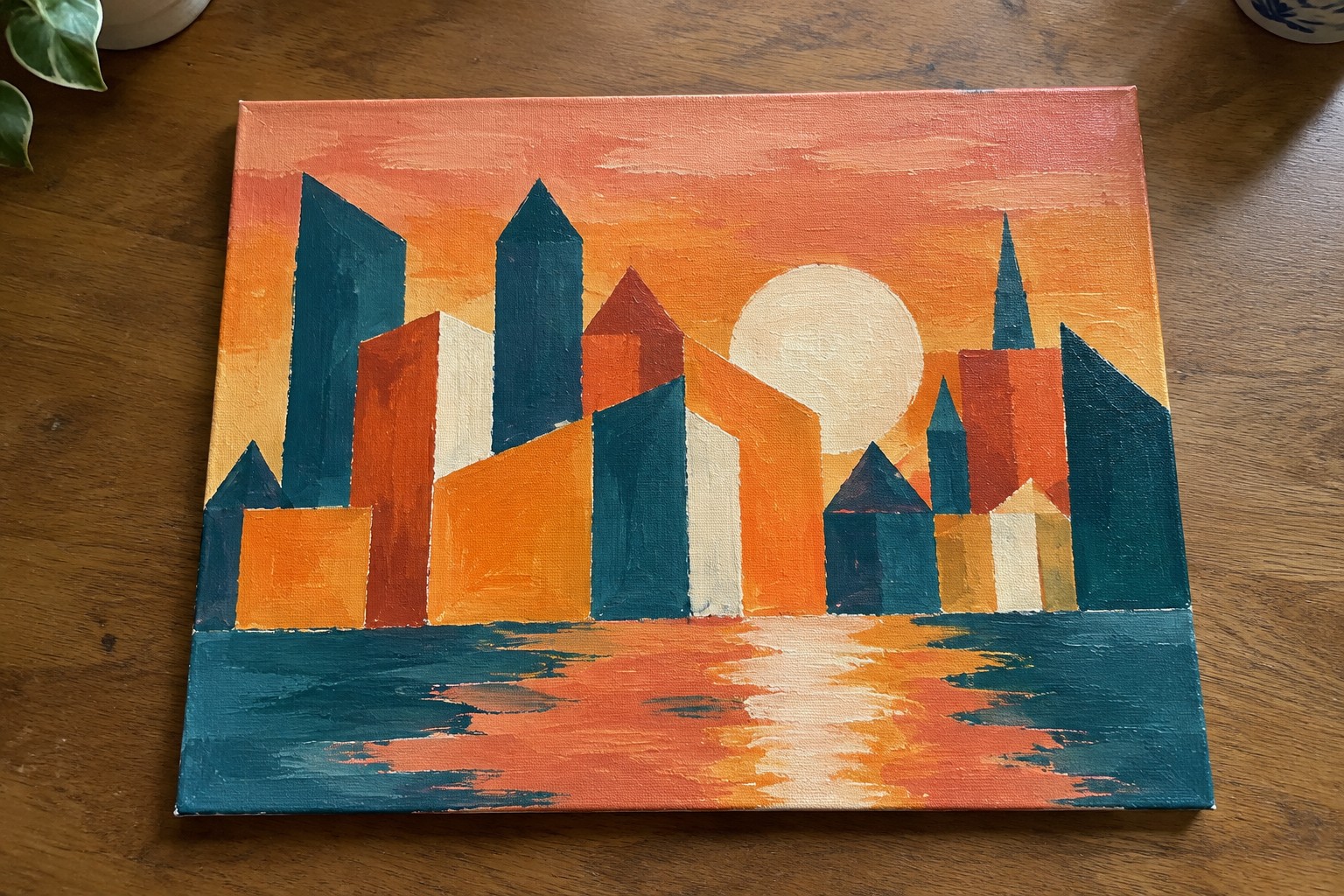
I like to paint cityscapes but I often simplify them with angular shapes instead of trying to copy real buildings exactly.
This approach lets me focus on the overall feel rather than precise lines.
Over time I have collected a few ideas that work well for this style.
They involve different ways to arrange blocks and triangles to suggest windows and rooftops.
Some of my favorites use limited colors so the shapes stand out more.
Angular Sunset Cityscape with Reflection
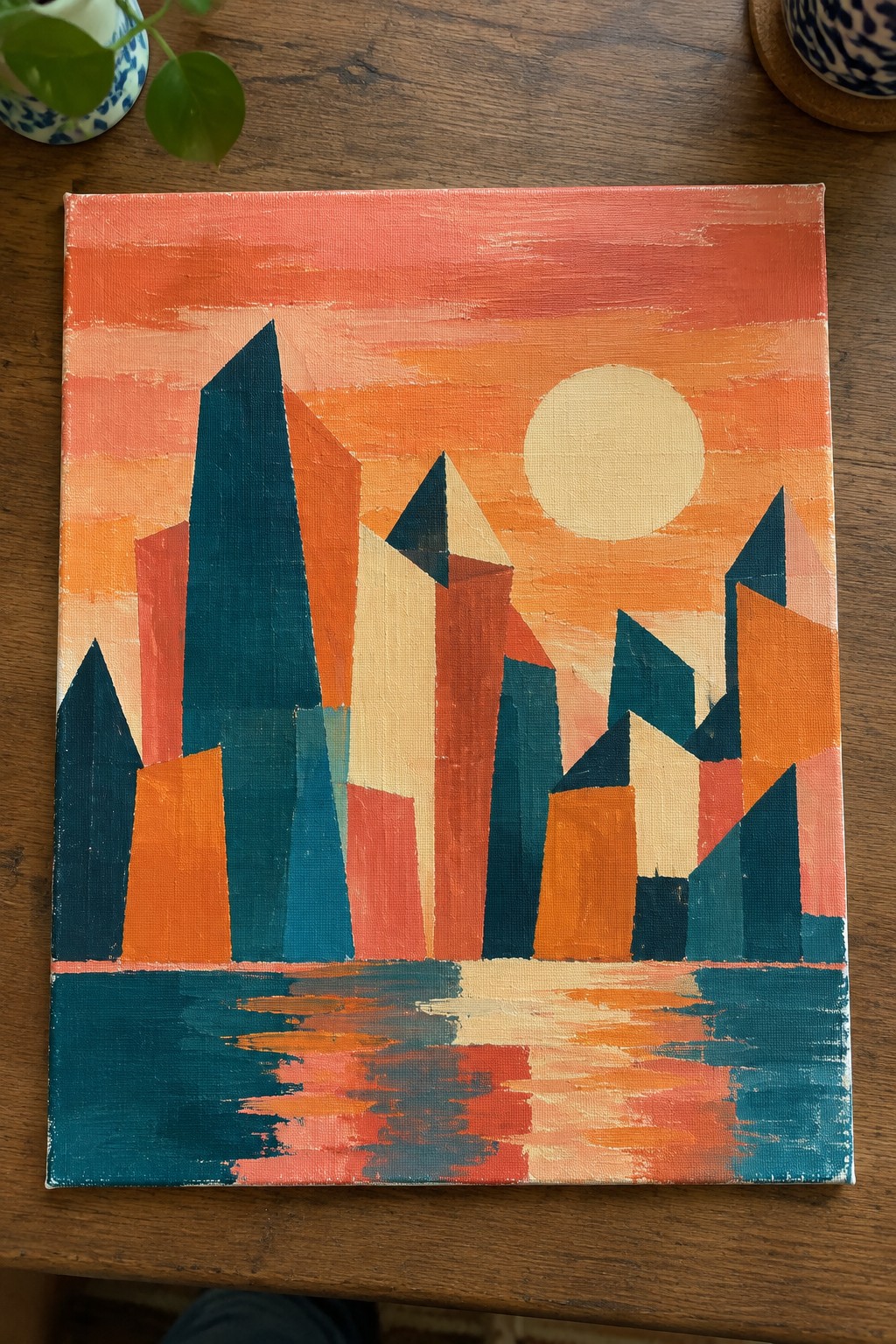
This painting idea builds an abstract cityscape from large angular shapes that suggest buildings without showing windows or details. A warm gradient sky holds a simple pale circle for the sun while a horizontal band of water at the bottom mirrors the same colors and forms. The limited palette of teal, orange, coral, and cream plus the flat color blocks make the composition read clearly even from a distance.
The composition does a lot of the work here by using the water reflection to double the visual interest without extra painting. A painting like this works especially well for wall art because the bold shapes and sunset tones stand out on a canvas of almost any size. You could easily adapt it by shifting the colors to cooler tones or stretching the buildings taller for a narrower canvas. For practice, the flat shapes help you focus on color mixing and clean edges rather than fine detail.
Angular Buildings Doubled by Water Reflections

This painting idea uses a row of sharp, angular building shapes to form a city skyline that gains extra impact from its mirrored reflection below. The soft, blended color washes in cool blues and muted purples let the strong geometric forms stand out while the warm sky band adds subtle contrast. It works as an abstract cityscape because the focus stays on simplified shapes and symmetry rather than realistic detail or texture.
The composition does a lot of the work here by placing the horizon line right through the middle so the reflection feels like a natural extension of the buildings. You can adapt the idea by changing the building angles, swapping the sky colors, or cropping tighter around just a few towers. For practice or wall pieces, this kind of subject is easy to scale up or down and still read clearly even with loose brushwork.
Stacked Angular Blocks in Bright Color Layers

Angular building shapes stacked in uneven layers form a compact abstract cityscape using flat blocks of teal, yellow, magenta, and cream. Overlapping edges and scattered dots for windows create visual interest without needing perspective or fine lines. A simple yellow sun and textured ground strip anchor the composition while keeping attention on the buildings.
The composition does a lot of the work here because the irregular stacking lets you rearrange heights and colors freely. You can scale the idea down for a small canvas or expand it across a larger one by adding more layers. This works especially well for practice pieces or quick decor since the shapes stay bold even with basic brushwork, and the limited background keeps the focus tight.
Angular Buildings Reflected Under a Night Sky
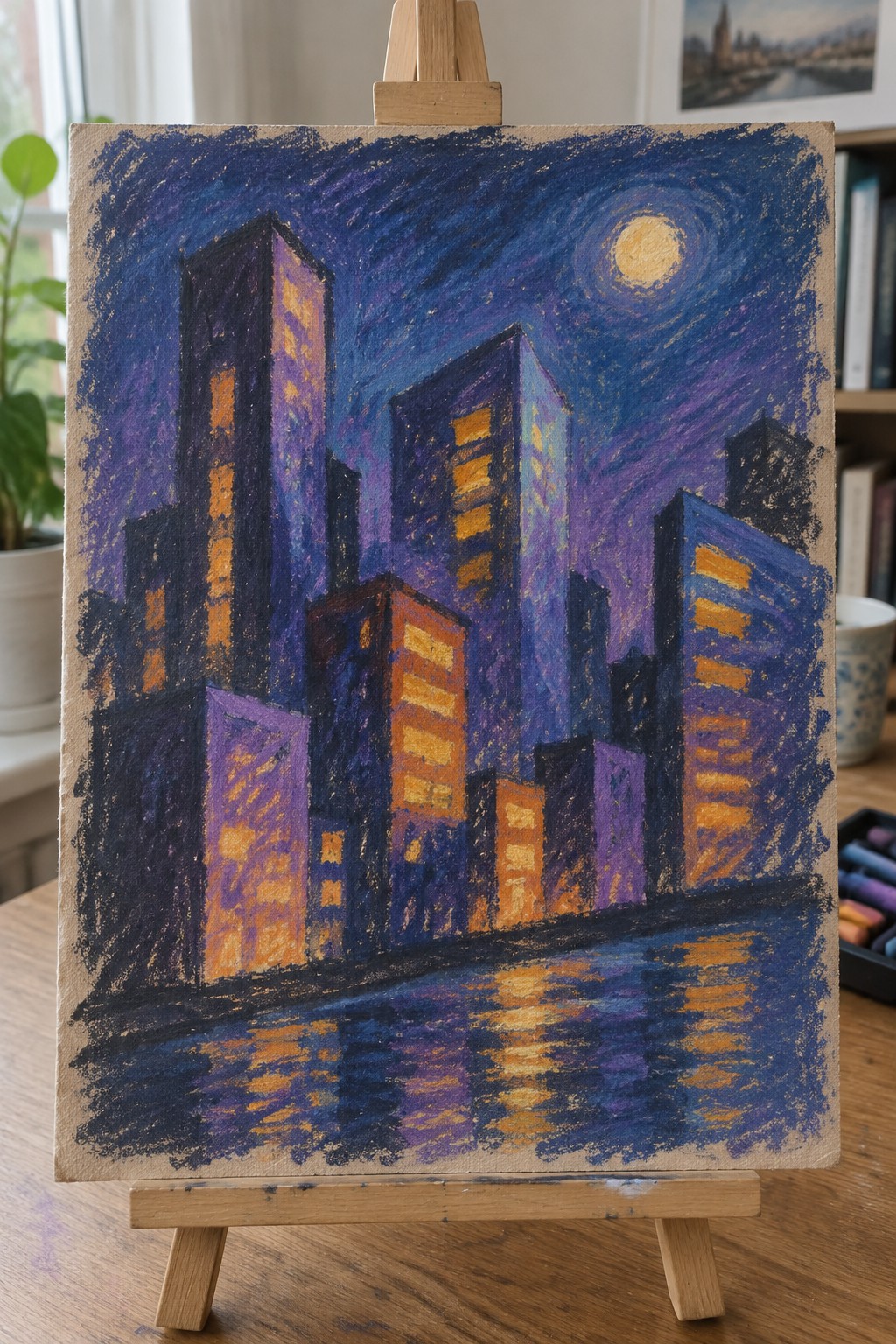
This idea centers on stacking sharp, vertical building shapes against a dark sky to form an abstract cityscape. The glowing rectangular windows create points of contrast against the deep blue and purple tones, while the horizontal water reflection at the bottom balances the tall forms and adds symmetry. The approach fits the abstract cityscape category, where simplified shapes and limited color contrast do most of the visual work.
What makes this idea useful is how the strong verticals and reflections handle the composition without needing fine details. You can easily change the building heights or window placements to fit different canvas sizes, and the cool background with warm light spots adapts well to other color schemes. For practice or wall pieces, the limited palette keeps the focus on shape and balance, so the same layout works whether you keep it loose or add more buildings.
Angular Houses in Bold Color Blocks with a Winding Path
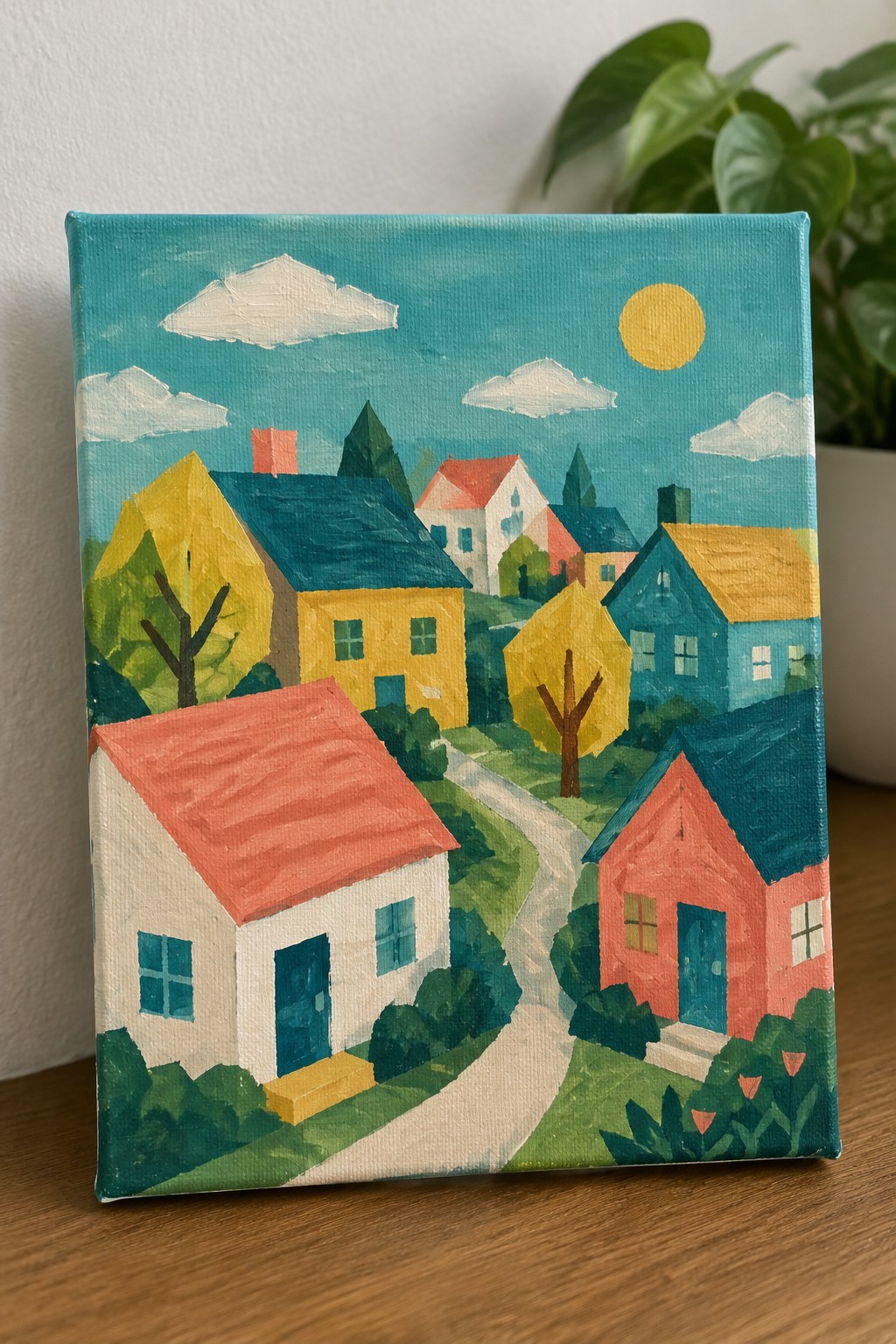
This painting idea builds a village scene from flat geometric shapes, using sharp roof angles and solid wall blocks to form the houses. The layout layers buildings at staggered heights along a curving path, which creates depth through overlapping rather than traditional perspective. A limited palette of bright roof colors against a teal sky keeps the angular forms dominant and easy to read.
What makes this idea useful is how the blocky shapes let you finish a full scene quickly without needing fine detail. The color blocks can be swapped or reduced to fit smaller canvases for practice or gifts, and the path element helps tie scattered shapes into one clear composition. For wall art, tightening the cluster of houses makes the same idea feel more compact while keeping the strong graphic look.
Pointed Angular Spires Over Reflective Water

An abstract cityscape idea built around repeated tall triangular shapes creates a skyline with strong vertical rhythm. The buildings use narrow pointed forms in muted greens, pinks, and grays, while soft background washes suggest sky and the lower half mirrors the entire arrangement in still water. This approach relies on simple angular geometry and symmetry to hold the composition together without needing intricate architectural details.
The repeated sharp forms make the layout straightforward to sketch and scale up or down. You can vary the height and spacing of the spires or swap the palette to earth tones or cooler blues while keeping the same reflection structure. For practice this works well because the water line gives an automatic second area to paint, and the limited color range keeps the focus on shape and balance rather than blending skill.
Hillside Cluster of Angular Buildings with Patterned Facades

This painting idea centers on building an abstract cityscape from stacked angular shapes that form a dense village without relying on realistic perspective. Flat color blocks in ochre, teal, rust, and cream create the buildings while simple repeating motifs like flowers and leaves add surface interest across the walls and border. The composition works because the overlapping shapes and horizontal base layer give structure while the decorative patterns keep the eye moving across the piece.
What makes this idea useful is how the angular forms let you construct a full scene with just a few overlapping rectangles and triangles. The limited palette and motif repeats make it straightforward to adjust the scale or swap colors to fit different rooms. For wall art this approach stands out on Pinterest because the graphic shapes and decorative details create impact even at smaller sizes. You could simplify the patterns further or extend the cluster taller or wider depending on your canvas.
Angular City Skyline Over Layered Geometric Planes

An abstract cityscape idea built around tall, sharp-edged buildings set against a warm gradient sky that shifts from peach to soft blue. The buildings stay simple in form with flat color blocks and minimal detail, while the foreground uses repeating angular shapes that overlap to suggest rooftops or hills. This approach fits the angular cityscape category because it relies on strong geometric contrast and a limited palette to create depth without needing precise perspective.
The composition does a lot of the work here by letting the vertical buildings play against the diagonal planes below. You could adapt it by changing the sky to cooler tones for a night version or stretching the canvas wider for a longer skyline. For practice, this kind of subject works well because the shapes stay forgiving and the limited color range keeps decisions simple. It would also translate cleanly to a small study or a series where you vary the angle density in each piece.
Angular Townscape with Stacked Towers and Rooftops

This painting idea uses simplified geometric shapes to turn a cluster of buildings and church towers into an abstract cityscape. The composition relies on overlapping angular forms, flat color blocks, and varying heights to create depth and lead the eye upward. It works as a clear example of how cityscapes can be built from basic shapes rather than detailed realism.
The composition does a lot of the work here by letting the tallest towers act as natural focal points while the lower roofs fill in the rest. You can adapt this easily by shifting the palette to cooler grays or warmer ochres, or by stretching the shapes taller for a different proportion. For practice, this kind of subject helps you focus on structure and balance without getting lost in small details. It would translate well to a medium-size canvas for wall art.
Angular Buildings Reflected on a Wet Street

This painting idea uses sharp geometric cuts and overlapping vertical shapes to suggest a row of tall buildings without drawing every detail. The angular forms create a fragmented skyline that still reads as urban, while the lower half relies on soft vertical drips and reflections to balance the hard edges above. Cool blue and teal washes keep the focus on shape and light rather than realistic rendering.
The composition does a lot of the work here by letting the reflections carry the sense of depth and atmosphere. This approach works especially well for practice because the angular shapes can be simplified or made more complex depending on your comfort with edges and layering. The limited palette also makes it easy to adapt for different times of day or to test how color temperature changes the mood. For wall art, the strong vertical format and graphic quality help it stand out in a modern setting.
Angular Buildings Framing a Night Market Street
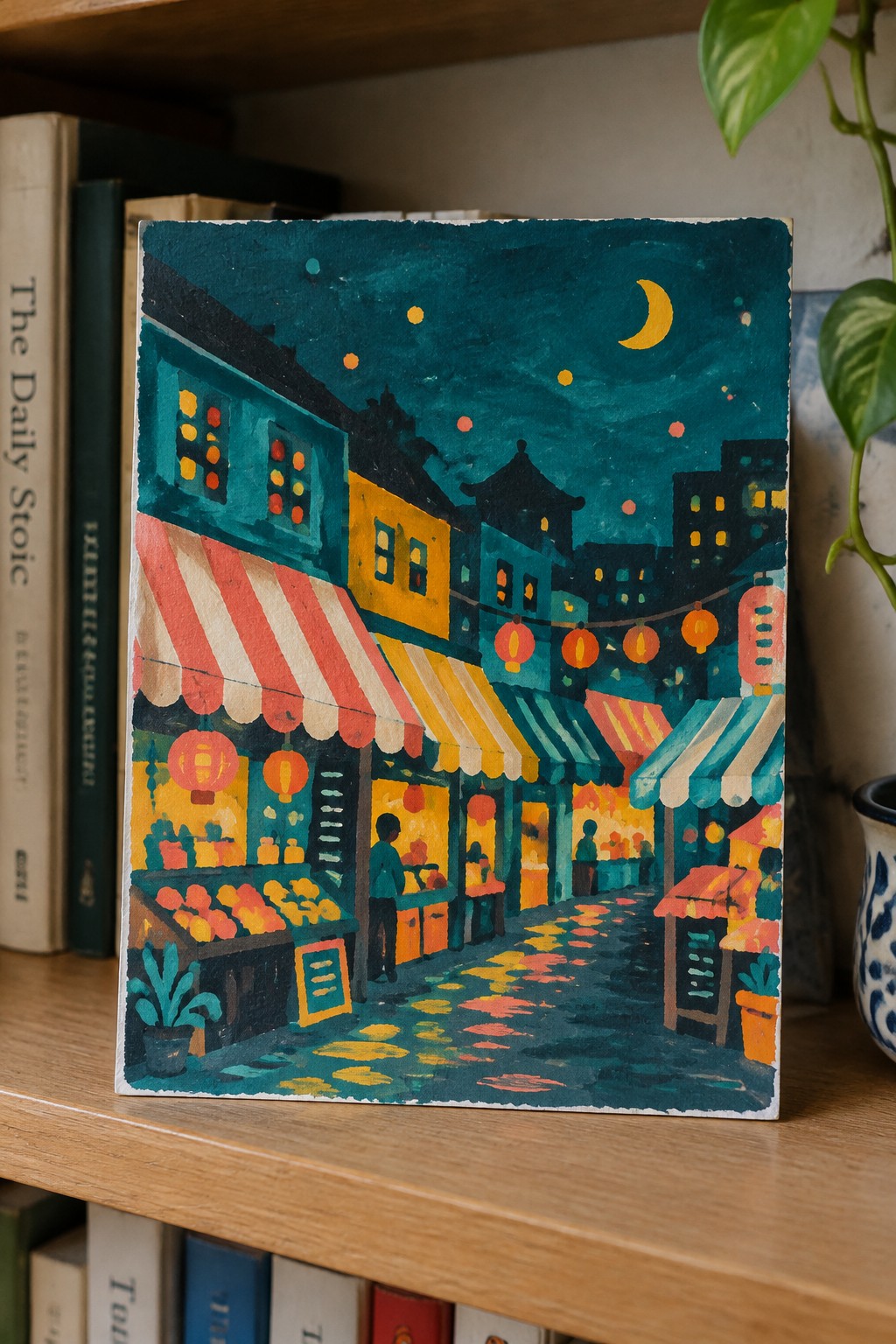
Build a cityscape around sharp roof angles and stacked rectangular forms to create depth in a compact night market scene. Strong color blocks for the striped awnings and glowing lanterns stand out against a dark teal sky while the wet pavement reflections repeat the same shapes below. This approach keeps the focus on simplified geometry rather than fine architectural detail.
The composition does a lot of the work here because the converging lines of the street and awnings naturally lead the eye without extra effort. You can scale it down for a sketchbook study by using fewer stalls or swap the warm lantern colors for cooler tones if you want a winter version. For wall art this idea works especially well because the high-contrast lights and reflections read clearly even when the piece is viewed from across a room.
Angular Waterfront Buildings with Sharp Roof Angles and Reflections

This painting idea uses a cluster of angular building shapes along a harbor edge to create a strong cityscape composition. The pointed roofs, steeple, and vertical forms stand out against the fluid water and sky, with reflections repeating the geometry in broken patterns. Bold color blocks in deep blues, warm oranges, and yellows keep the focus on the angular forms rather than small details.
What makes this idea useful is how the sharp building angles do most of the compositional work, making the scene easy to construct even with loose brushwork. You could simplify the water into fewer color bands or shift the sky to cooler tones while keeping the same angular layout. For practice pieces or wall art, this type of subject stands out because the clear shapes remain readable even when the color palette changes.
Angular Black and White Cityscape with Reflection
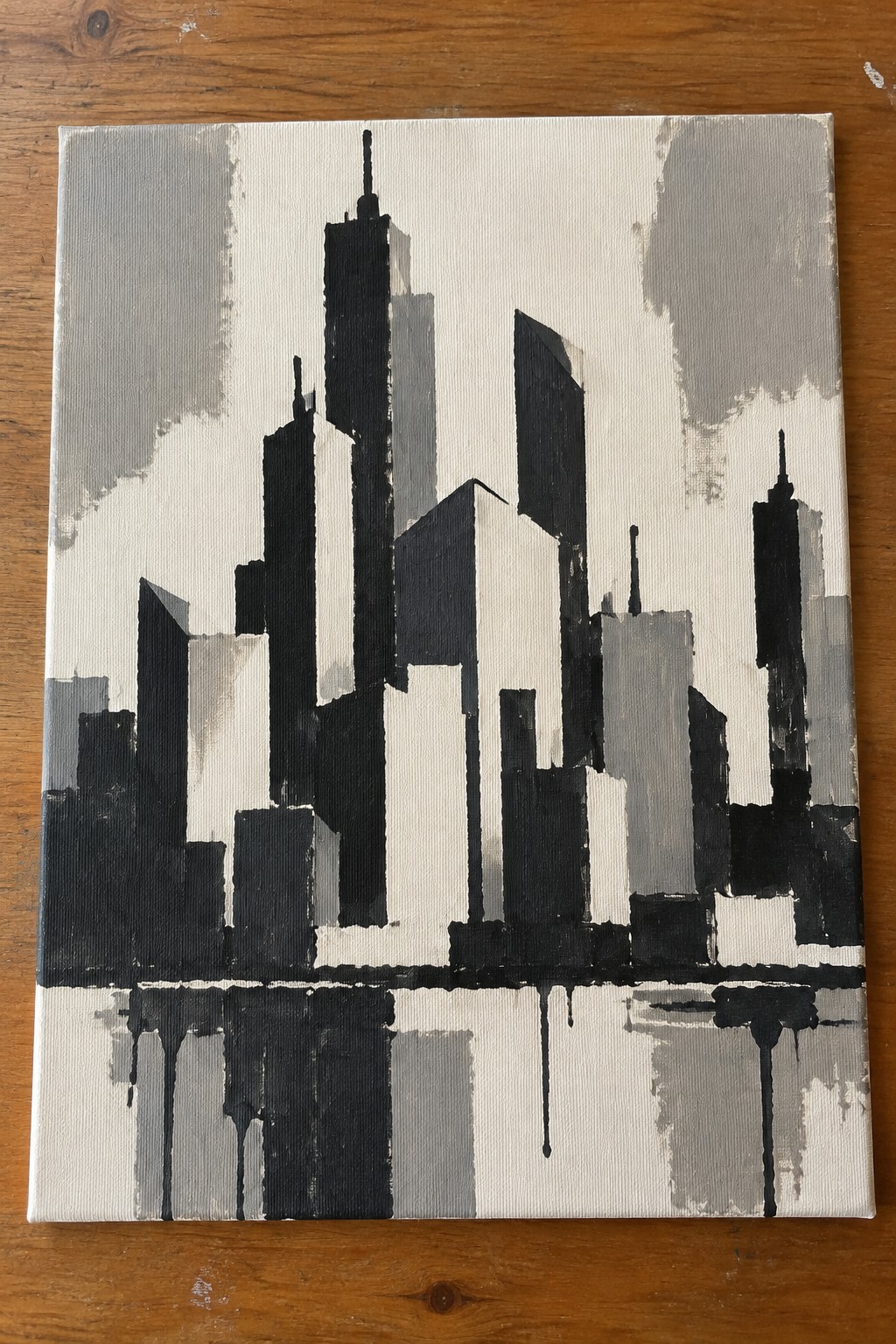
This painting idea uses tall, angular building shapes stacked in a tight skyline to create a strong vertical rhythm. The limited black, white, and gray palette keeps the focus on the sharp edges and overlapping forms, while the horizontal reflection line at the bottom adds balance and suggests a waterfront setting. The style fits squarely into abstract cityscape painting, where the emphasis stays on geometric shapes rather than realistic detail.
The composition does a lot of the work here because the strong contrast and clean reflection line make the whole piece feel finished even with minimal elements. You can adapt it easily by changing the building heights, adding a few thin spires, or shifting the gray tones warmer or cooler depending on the mood you want. For practice, this kind of subject works well because the simple shapes let you focus on brush control and value placement without needing many colors. It would also translate nicely to a larger canvas or a smaller study for modern wall decor.
Layered Angular Rooftops in a High View Cityscape

This idea centers on stacking slanted roof planes and chimney shapes to create depth in a city view without needing fine architectural details. The composition uses overlapping angular forms that recede toward a central dome, with color shifts from warm foreground pinks to cooler background tones keeping the eye moving across the scene. It fits the category of cityscape painting that relies on geometric building shapes rather than realistic rendering.
What makes this idea useful is how the repeated roof angles do most of the work in suggesting a dense urban setting. You can easily adapt the palette to match buildings in your own area or reduce the number of layers for a quicker study. For practice, this kind of elevated viewpoint works well because the strong shapes stay readable even if your edges stay loose.
Angular Buildings with Rooftop Gardens

Create an abstract cityscape by lining up tall rectangular buildings of different widths and heights, then filling them with flat blocks of coral, mustard, sage, and cream. Keep the windows small and scattered so they read as texture rather than detail, and top several roofs with quick clusters of green to suggest rooftop gardens. A pale sky with one simple sun and a few soft clouds holds the whole scene together without competing with the buildings.
What makes this idea useful is how the flat shapes remove any need for accurate perspective, letting you concentrate on color balance and spacing instead. You can stretch or shorten the buildings to fit a horizontal or vertical canvas, or swap in two or three new colors if the original palette does not match your room. For practice, this kind of subject works well because the main forms are quick to block in, yet the rooftop plants and varied heights give you room to experiment without overcomplicating the piece.
Layered Angular Buildings in Warm and Cool Blocks

This painting idea builds a cityscape entirely from overlapping angular shapes that stack upward without traditional perspective lines. Flat areas of teal, ochre, rust, and off-white create the buildings, while red roof planes add repeated horizontal accents that tie the layers together. The approach works as abstract landscape painting because the color blocks and sharp edges handle both structure and depth.
What makes this idea useful is how the limited color palette keeps the layers readable even when shapes get simplified. You can shrink the stack for a smaller canvas or stretch it wider by repeating the same angle patterns in new color combinations. The contrast between the warm roofs and cool building faces makes the idea easy to adapt for different wall colors or to turn into a quick practice exercise with fewer buildings.
Overhead Clusters of Angular Rooftops
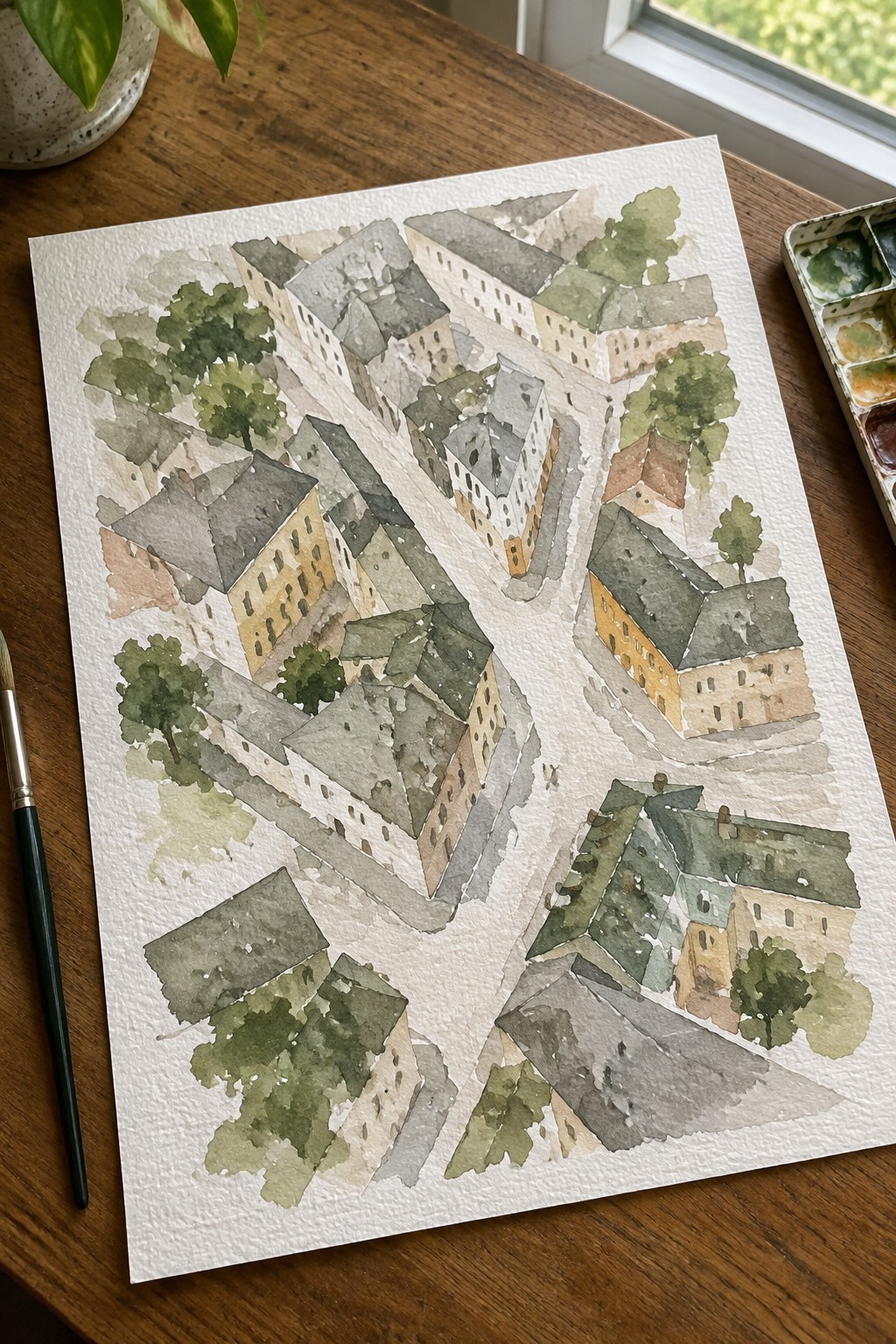
An overhead view of buildings turns rooftops and streets into a network of angular shapes that form an abstract cityscape. The idea relies on simplified blocks and overlapping edges rather than windows or fine details, with a muted mix of greens, grays, and warm neutrals keeping the focus on pattern. This approach works as an abstract landscape where the layout itself becomes the subject.
The composition does a lot of the work here by letting the streets create natural pathways through the buildings. You can adapt the idea by cropping tighter around one intersection or shifting the palette to cooler tones for a different mood. For practice, this kind of subject helps with planning how shapes overlap before color is added, and the same layout can be reused at a smaller scale for cards or sketchbook pages.
Angular Buildings with Strong Reflections at Night

This painting idea centers on stacking sharp, tilted building forms in saturated pinks, yellows, and blacks against a deep blue sky. A single bright circle in the upper right adds a focal point while the water below mirrors the shapes and colors to double the visual weight. The approach works as an abstract cityscape because the flat color blocks and angled edges keep the composition dynamic without requiring realistic perspective or fine details.
What makes this idea useful is how the limited color set and clear reflection line let you finish a piece quickly while still getting bold impact. You can easily swap the pink and yellow buildings for other high-contrast pairs or stretch the water area lower to fit a taller canvas. For wall art this kind of high-contrast layout stands out on Pinterest because the shapes read clearly even in small thumbnails.
Frequently Asked Questions
What supplies work best for painting abstract cityscapes with angular building shapes?
Acrylic paints on stretched canvas provide good coverage and quick drying times for layering sharp edges. Gather a set of flat and angled brushes in various sizes along with a ruler or straight edge for precise lines. Add palette knives for building thick impasto textures on rooftops and walls. Start with a limited palette of cool grays blues and warm oranges to keep the focus on form rather than color mixing.
How can I make angular shapes feel dynamic rather than static in my cityscape?
Vary the angles and lengths of lines so some lean sharply while others sit at gentler tilts to suggest movement and height. Overlap shapes at different depths with lighter tones in the background to create recession. Introduce slight irregularities in the edges by hand rather than perfect ruler lines to add energy. Experiment with cropping the composition so buildings extend beyond the canvas edges for an immersive urban feel.
Which color approaches help the angular buildings stand out in an abstract way?
Use high contrast between warm and cool tones such as placing deep indigos next to bright yellows on intersecting planes. Apply a monochromatic scheme with one accent color like red on window details to draw the eye. Glaze transparent layers over base shapes to soften some edges while keeping others crisp. Test small color studies first to see how light appears to shift across the angled surfaces.
What techniques prevent the composition from looking too rigid or mechanical?
Break up large angular blocks with smaller intersecting shapes that suggest signage or shadows. Add curved elements like distant hills or rounded streetlights to balance the straight lines. Use dry brush techniques or scumbling to create soft transitions between shapes instead of hard outlines everywhere. Step back often during painting to check that the overall flow guides the viewer through the scene rather than trapping the eye in corners.
How do I adapt these ideas if I am working on a smaller scale or with limited time?
Focus on just three or four key angular buildings instead of a full skyline and use quick thumbnail sketches to plan the layout. Opt for gouache or watercolor on paper for faster drying and easier corrections. Simplify the palette to three colors and work wet into wet for blended edges where needed. Complete one section at a time such as the foreground shapes before adding background details to maintain momentum.
