

I like finding simple ways to make flowers with paint, and stamping petals with a brush is one of my favorites.
The loose shapes leave plenty of room to play with color and make each flower look a little different.
I gathered these abstract flower painting ideas for days when I want a relaxed project with supplies I already have.
I hope one of them gives you an idea to try on your own.
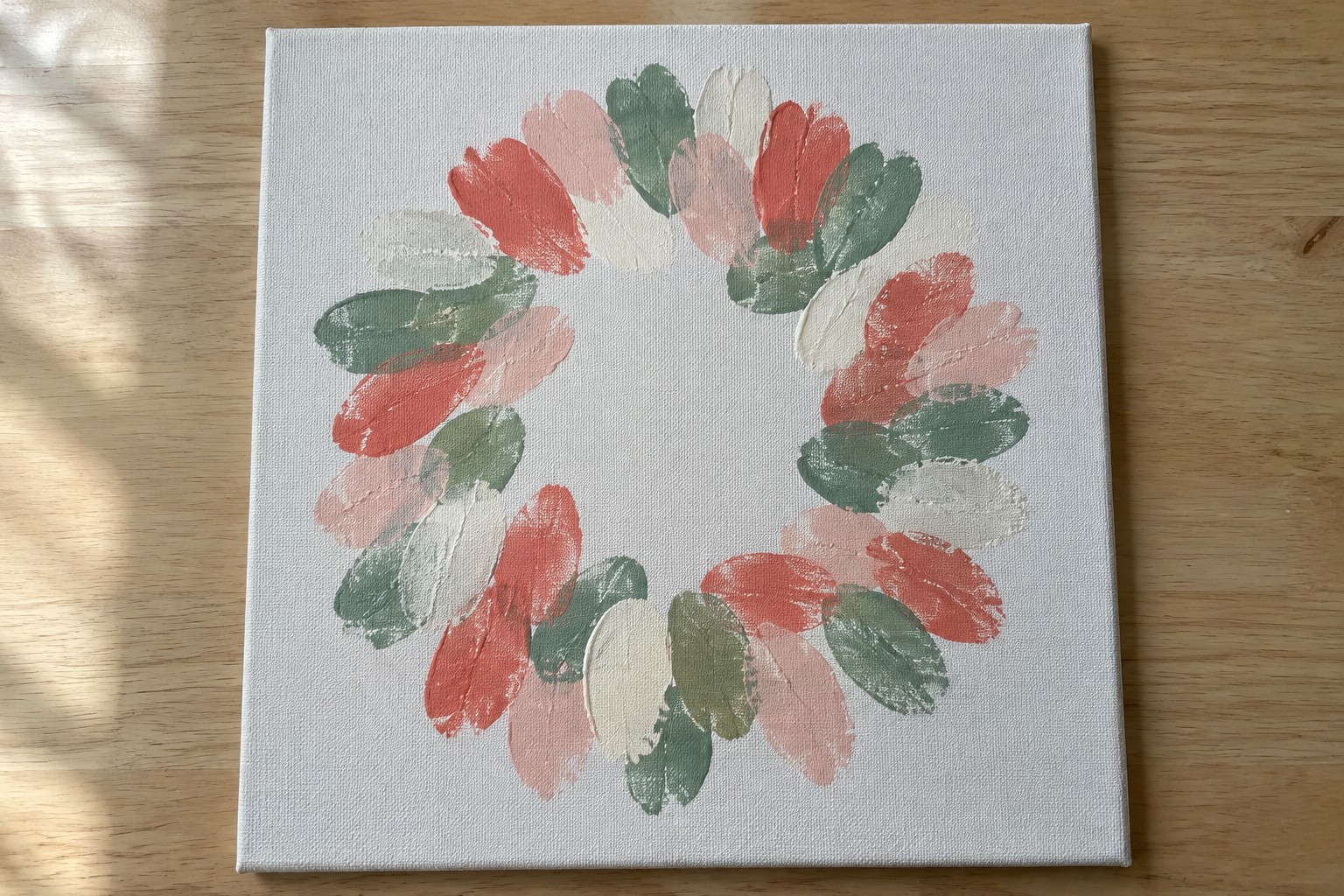
Abstract Flower Wreath with Brush-Stamped Petals

A loose ring of brush-stamped flowers turns simple petal shapes into a decorative abstract floral painting. The coral, dusty pink, cream, and muted green marks overlap around an open center, while the textured background keeps the composition from feeling too precise.
The wreath layout gives you a clear guide for placing petals, but the irregular brush marks leave plenty of room to make each flower your own. Try a smaller palette for a calmer look, or vary the colors and spacing to suit a card, gift, or piece of wall art. The round shape and strong color contrast also make this design easy to recognize in a Pinterest feed.
A Loose Vertical Trail of Stamped Flowers

A vertical floral arrangement built from overlapping, softly stamped petals turns simple flower shapes into decorative abstract art. Dusty pink and plum blooms stand out against muted yellow accents and olive-green leaves, while the open paper background keeps the layered composition from feeling crowded.
The loose spacing makes this idea easy to adapt: arrange the flowers in a tall column for a narrow print, or spread them across a smaller page for a card. A limited palette helps the design stay cohesive, and each bloom can be varied with a different petal shape or center. The textured paper and repeated floral forms also give it a clear, eye-catching silhouette for a Pinterest painting reference.
Three-Row Flower Stamps on a Gray Background

Repeated brush-stamped flowers make a decorative abstract floral painting, with petal shapes arranged in a tidy three-by-three grid. Teal, mustard yellow, pink, and cream flowers stand out against the textured gray background, while varied center colors keep the repeated design from feeling too uniform.
The grid gives you a straightforward layout to follow, and changing the petal colors or flower centers is an easy way to make the design your own. Try fewer, larger flowers for a smaller canvas, or use a different background color to suit a room. The bold color blocks and clear pattern also make this a useful idea to save for a handmade wall-art project.
Stamp a Bold Abstract Flower with Layered Petals

Build an abstract floral painting around a dark, textured center and broad petals that radiate outward in uneven layers. Warm orange, dusty pink, and deep burgundy make the flower stand out against a lightly worked neutral background, while the loose petal shapes keep it decorative rather than realistic.
The radiating layout gives you a clear structure to follow, and the petal colors can be stamped with a brush, then overlapped to add depth. Try a smaller palette or fewer petals for a simpler version, or change the colors to suit a room or handmade gift. Its strong contrast and large flower shape also make it easy to spot in a Pinterest feed.
A Colorful Bouquet of Overlapping Brush-Stamped Flowers

A loose bouquet of abstract flowers makes a lively floral painting, with rounded, brush-stamped petals layered in teal, coral, lime, and cream. The blooms cluster across the upper canvas while overlapping stems narrow toward the bottom, giving the composition a clear bouquet shape without relying on detailed outlines.
The layered petals make this idea useful for trying different brush shapes and seeing how colors interact, while the gathered stems help tie the loose arrangement together. Keep the palette limited for a more coordinated look, or change the flower colors to suit a room or gift; a light, unpainted background also helps the colorful bouquet stand out in a Pinterest pin.
A Scattered Garden of Brush-Stamped Flowers

Arrange large, simple flowers in a loose grid to make a decorative abstract garden. The varied blue, peach, yellow, and sage-green petals keep the repeated flower shapes from feeling rigid, while soft washes and open paper between blooms give the composition room to breathe.
The repeated petal shapes make this idea easy to adapt: vary the flower sizes, switch the palette to match a room, or leave out a few blooms for a more spacious layout. For practice, focus on making each petal with a single brushstroke, then add small marks at the centers; the finished design also suits a vertical wall print or a handmade gift.
A Single Stamped Flower with a Long Green Stem

A loose, five-petal flower makes a simple focal point for this decorative floral painting, with rounded brush-stamped shapes arranged around a small center. Muted blue, rust, cream, and green give the petals variety while keeping the long stem and leaves visually connected.
The open background leaves room to adjust the flower’s size or shift the palette to match a room, and the petal shapes can be made with a few broad brush marks. Try changing the number of petals, adding more leaves, or painting the design on a smaller canvas for an easy gift or a distinct Pinterest-friendly wall-art idea.
Color-Blocked Bands of Brush-Stamped Flowers

Rows of loosely stamped flowers turn this abstract floral painting into a decorative pattern, with green, coral, yellow, and cream arranged in alternating horizontal bands. The repeated petal shapes create rhythm, while small overlaps and gaps keep the rows from looking too rigid.
The banded layout makes the idea easy to adapt to a canvas of almost any size: vary the number of rows, switch the palette, or leave more background visible between flowers. It’s also useful brush-stamping practice, since you can build each flower from a few petal marks rather than drawing detailed blooms. The strong color stripes and repeating pattern make it a clear, eye-catching format for Pinterest.
Loose Clusters of Purple and Yellow Stamped Flowers

Arrange brush-stamped flowers in loose clusters across the page, leaving plenty of open space between them for a decorative floral composition. Purple and pale yellow petals, varied flower sizes, and muted green leaves keep the repeated shapes from feeling too uniform.
The open layout makes this idea easy to adapt to a card, journal page, or larger piece of wall art. Try a different pair of flower colors, shift the clusters toward the edges, or use fewer blooms for a simpler design; the contrast between grouped flowers and blank space also makes the composition easy to notice in a Pinterest feed.
A Symmetrical Folk-Style Flower with Stamped Petals

A large, centered flower anchors this decorative floral painting, with broad dusty-pink petals arranged around a smaller cream-and-ochre center. Smaller leaf and petal shapes repeat around the canvas, creating a balanced, almost folk-art layout, while visible brush texture and a muted background keep the design from feeling too precise.
The repeated shapes make the composition easy to plan: build the central flower first, then add smaller marks around it to fill the space. Try a tighter palette for a softer look, or swap in brighter colors to make the pattern stand out; the layout can also be simplified to fewer petals for a smaller canvas or a quick brush-stamping practice piece. Its clear, symmetrical design makes it easy to recognize in a Pinterest feed and adapt for decorative wall art.
Brush-Stamped Flowers Growing from a Colorful Vase

A loose bouquet of brush-stamped flowers rises from a vase built from overlapping petal and leaf shapes, making this a decorative floral painting with an abstract touch. Coral, golden yellow, and teal stand out against the textured neutral background, while the clustered vase gives the long stems a clear visual anchor.
The composition is easy to adapt by changing the flower colors, varying the number of blooms, or making the vase wider or narrower. For a simpler version, use a few larger stamps and leave more open space in the vase; the tall arrangement also suits a narrow wall-art print or a handmade card.
Soft Horizontal Bands of Brush-Stamped Flowers

Loose rows of small, brush-stamped blooms create a decorative abstract floral pattern, with a few larger flowers breaking up the repeating layout. The muted coral, teal, and gray palette keeps the layered shapes cohesive while leaving plenty of white space between them.
The repeated rows make this idea easy to adapt to a smaller sheet, a card, or a longer piece of wall art. Keep the palette limited for a coordinated look, or change the colors and spacing to suit your room; varying the size of a few flowers adds interest without changing the basic pattern.
A Bold Radial Flower with Brush-Stamped Petals

A large abstract flower takes shape as broad, rounded petals radiate from a dotted center. Teal, black, orange, and cream create clear contrast, while the rough, textured edges keep the decorative floral composition loose rather than precise.
The radiating layout makes this idea easy to adapt: vary the petal colors, change the number or length of the shapes, or use a smaller canvas for a compact wall piece. Brush-stamping lets each petal stay expressive, and the dotted center gives the design a simple focal point to build around.
A Loose Allover Pattern of Brush-Stamped Flowers

An allover floral painting builds a decorative pattern from scattered, overlapping flowers rather than arranging them into a bouquet or a single focal bloom. Coral and purple blossoms stand out against pale yellow and blue areas, while smaller green shapes fill gaps and keep the composition lively.
The varied flower sizes make this layout easy to adapt to a sheet of paper, a fabric panel, or a small piece of wall art. Start with a few larger blooms, then add smaller stamped petals and loose color patches to balance the spaces; changing the palette or leaving more background visible can give the pattern a different look.
A Loose Bouquet of Colorful Brush-Stamped Flowers

A loose, upright bouquet of large brush-stamped flowers makes a decorative floral painting with an informal, layered composition. Coral, teal, and golden-yellow blooms stand out against muted leaves and pale washes, while varied petal shapes and visible brush texture keep the arrangement from feeling too uniform.
The overlapping stems help tie the bouquet together, so you can change the flower colors or number of blooms without needing a precise layout. Try a smaller cluster for a greeting card, or fill a taller sheet for wall art; keeping the background light lets the stronger colors stay clear and gives the design an appealing, easy-to-spot Pinterest silhouette.
Three Concentric Flowers in Warm, Muted Colors

Three layered, circular flowers make a decorative floral painting built from repeated brush-stamped petals. Their ochre, terracotta, blush, and cream rings create clear contrast, while the uneven petal shapes keep the arrangement from feeling too rigid.
The repeated circles make this idea easy to adapt: vary each flower’s size, switch the color order, or add a few simple olive leaves to connect the blooms. It could work as a small wall piece or a handmade gift, and the bold circular layout gives it a recognizable look for Pinterest.
A Wind-Swept Spray of Small Stamped Flowers

A loose spray of tiny brush-stamped flowers and leafy stems fans upward from one corner, leaving plenty of open paper around it. The mix of soft purple, peach, and muted green shapes gives this decorative floral painting movement without needing a detailed background.
The angled stems create a useful layout for a greeting card or a tall piece of wall art, and the open space makes it easy to add a short message if you like. Keep the flower shapes varied but simple, or personalize the palette and let a few stems reach farther across the page for a more scattered look.
A Stamped Flower Bouquet in a Patterned Vase

Build a decorative floral still life around a dark vase, using brush-stamped petals to form large rust-orange and cream flowers. The broad leaves, dotted accents, and repeated marks on the vase give the loose bouquet a balanced, folk-art look without making every detail precise.
The vase anchors the composition, so the flowers and leaves can be rearranged or simplified while keeping the overall layout easy to read. Try a different pair of flower colors, change the vase pattern, or use a smaller canvas for a gift or a distinctive piece of wall art; the strong shapes and warm colors also make it easy to save and share as painting inspiration.
A Layered Rose of Brush-Stamped Petals

A large abstract rose takes shape through overlapping brush-stamped petals in dusty pink, burgundy, muted red, and cream, with green leaves arranged around the bloom. The layered, irregular marks give the floral composition texture while keeping the flower recognizable against a plain taupe background.
The central bloom makes a strong focal point, and the limited palette is easy to adjust to suit a room or a favorite flower. Try building the rose from broad outer petals toward smaller inner ones, then add leaves to balance the edges. The textured marks and clear central subject also make this a useful floral idea to save for a decorative wall piece.
Two Rows of Colorful Flowers on a Textured Ground

A pair of loose rows gives these brush-stamped flowers the feel of a decorative floral border, with bright yellow, coral, and turquoise petals set among green leaves and small pale blooms. The varied flower sizes and slight overlaps keep the pattern lively while the open background leaves room around the design.
The repeated layout makes this idea easy to adapt to a card, a small canvas, or a longer border by adding or removing flowers. Keep the palette limited for a more coordinated look, or change the petal colors to suit a room or season. The bold colors and clear row arrangement also make the design easy to recognize in a Pinterest feed.
Overlapping Petal Shapes in a Three-Color Abstract

Three large, soft-edged color shapes overlap to create an abstract floral composition, with blue, pink, and green areas meeting at the center. The translucent layers and textured edges give the simple arrangement visual interest without adding stems or detailed flower centers, making it a decorative abstract flower idea.
The three-color layout is easy to adapt by changing the palette, shifting the shapes, or adjusting how much they overlap. For brush-stamping practice, try making each shape with repeated petal-like strokes, then let the layered colors create the central details; the clear, graphic arrangement also makes a distinctive pin or small wall piece.
Oversized Stamped Flowers on a Muted Green Ground

An allover floral composition uses large, loosely stamped petals in teal, ochre, rust, and cream against a textured olive-green background. The flowers overlap and vary in size, while dotted centers add a small repeating detail that ties the abstract decorative painting together.
The loose petal shapes make this idea easy to adapt without making every flower identical. Try a smaller canvas with fewer blooms, or swap in colors that suit your room; the textured ground and scattered flowers also make a bold, distinctive wall-art subject for Pinterest.
Pastel Flowers and Blue Blooms on Textured Paper

A loose floral arrangement pairs large brush-stamped flowers with scattered leaves and smaller blooms in dusty pink, cream, blue, and olive green. The varied flower sizes and open, lightly marked background keep the decorative composition balanced without making it feel like a precise repeating pattern.
The textured ground and simple petal shapes make this a useful idea to adapt for a small wall piece or handmade card. Try limiting the palette to two flower colors, or change the layout by clustering the blooms in one corner and letting stems trail across the page. The contrast between soft colors and rough paper texture also gives this floral art a distinctive look in a Pinterest pin.
A Concentric Floral Medallion in Soft Colors

A ring of brush-stamped petals builds outward from a central flower into a decorative floral medallion. Repeated teardrop shapes, layered in coral, purple, teal, and muted tan, give this abstract design a clear radial structure without needing detailed flower outlines.
The repeated petal shapes make the layout easy to plan: start with the center, then add rings of petals in contrasting colors. You can change the palette, vary the number of rings, or leave more open space around the design to suit a smaller canvas or a particular room. Its bold circular format also makes a distinctive piece of handmade wall art that can stand out in a Pinterest collection.
A Loose Field of Brush-Stamped Flowers

A loose floral garden pairs scattered brush-stamped blooms with slender stems and broad green leaves. Warm pink, coral, ochre, and cream flowers sit at varied heights across the paper, so the informal spacing and layered shapes give the composition the feel of a decorative field rather than a formal bouquet.
The varied flower sizes make this idea easy to adapt: repeat a few petal shapes, change the colors, or leave more open space for a quieter layout. A textured paper background and muted palette suit it for botanical wall art, while a few bolder blooms could help the design stand out in a Pinterest pin.
Frequently Asked Questions
You can start with a few basic supplies: acrylic or washable paint, paper or canvas, a paintbrush, a water cup, and a paper towel. A flat or round brush works well for making petal shapes by pressing its bristles onto the surface. Try heavier paper or canvas if you plan to use lots of paint, and keep a scrap sheet nearby for testing colors and brush marks.
Load the brush with a small amount of paint, then press its bristles gently onto the paper and lift straight up. The shape will vary depending on the brush and how firmly you press. Arrange several marks around a center to suggest petals, or make looser, overlapping impressions for a more abstract effect. Practice first so you can see how much paint and pressure create the look you want.
No. Abstract flower paintings are about experimenting with color, shape, and texture rather than copying a particular flower. You can use unusual colors, uneven petals, bold brush marks, or simple clusters of shapes. A few intentional details, such as a contrasting center or loose stems, can help the painting read as floral without making it realistic.
Vary the pressure, angle, and amount of paint on your brush. Turn the brush slightly between marks, use different brush sizes, and leave some petals imperfect or overlapping. You can also change the color from one petal to the next. These small variations give the flowers a more natural, energetic feel.
Use less paint on the brush, and allow a layer to dry before adding another color on top. Rinse the brush well when switching colors, then blot it so it is damp rather than dripping. If the marks have already blended, let the painting dry and add clearer shapes or small accents afterward. Muddy areas can also become part of the abstract texture, so you do not always need to cover them up.
