


I’ve been drawn to color-field painting lately, especially the way broad shapes can make a simple palette feel full of depth.
For autumn, I like working with earthy browns, muted greens, rust, and ochre.
These paintings are a reminder that I don’t need lots of small details to create an interesting piece.
I’ve gathered 22 ideas here that I’d enjoy trying in my own studio.
Layered Earth-Tone Color Fields
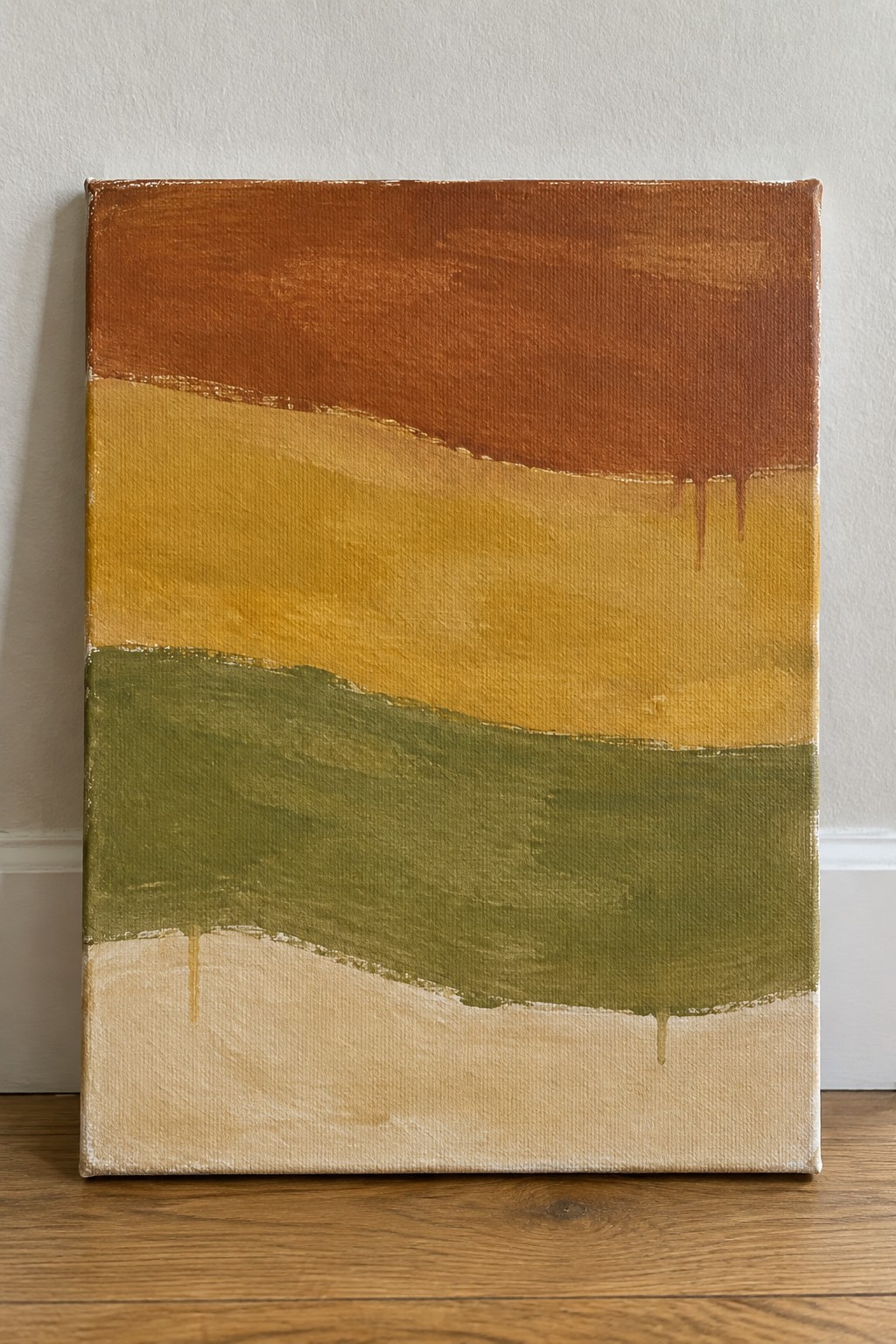
Broad, uneven bands of rust, ochre, olive green, and warm cream make this a contemporary abstract landscape painting idea built around expansive color fields rather than detailed scenery. The softly sloping edges and a few paint drips keep the layered composition from feeling too rigid, while the textured surface adds interest without extra shapes or fine detail.
The composition does much of the work here, so you can adapt it by changing the number of bands, adjusting their curves, or choosing earth tones that suit your space. Keeping the shapes broad makes the idea approachable for a first abstract painting, and the restrained palette helps it read as a coordinated piece of wall art. Its clear horizontal layers and warm seasonal colors also make it easy to save as inspiration for autumn decor.
Overlapping Earth-Tone Color Fields
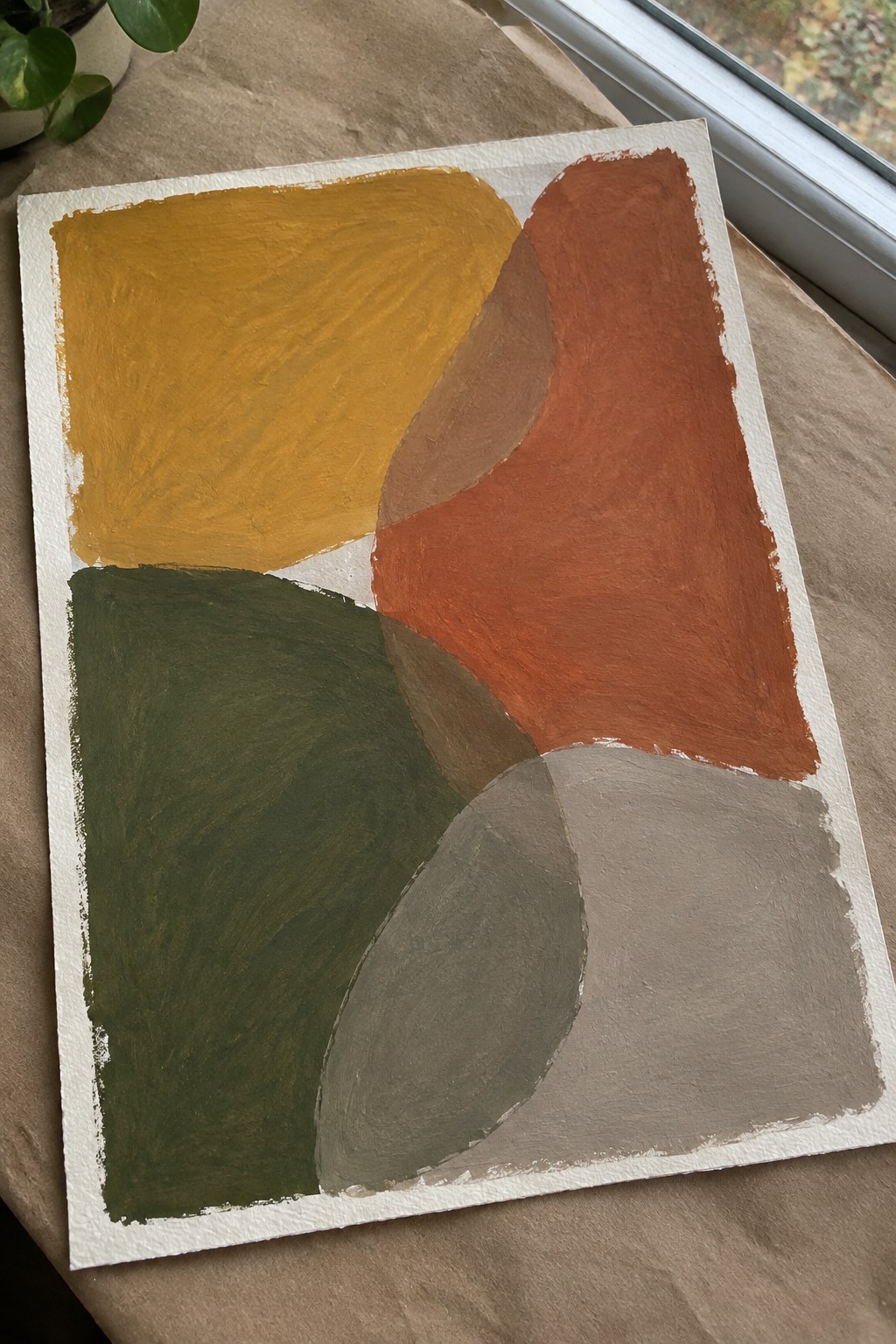
This abstract seasonal painting idea uses large, softly curved color fields in ochre, rust, deep green, and muted gray. The shapes overlap to create smaller areas of blended color, giving the simple layout more depth while keeping the focus on broad forms rather than fine detail.
The composition does much of the work, so you can adapt it by changing the palette, shifting the shapes, or leaving more of the paper visible around the edges. Its loose forms make it approachable for experimenting with color and layering, while the autumn tones and bold layout suit a decorative wall print that could stand out in a Pinterest collection.
Layered Autumn Hills in Expansive Earth Tones

Layered, overlapping hill shapes make a strong subject for an abstract autumn landscape. Broad fields of rust orange, taupe, brown, and muted olive create depth through their uneven edges and soft color blends, while the open paper above keeps the composition from feeling crowded.
The large shapes make this idea easy to adapt to different page sizes or color palettes, and you can simplify it further by using fewer bands and letting their edges stay loose. For a Pinterest-worthy wall piece, keep the forms bold and leave plenty of light space at the top so the warm autumn colors stand out.
Autumn Color Fields in Rust, Plum, and Ochre

Build an abstract autumn painting from a few broad, overlapping blocks of earthy color rather than recognizable fall objects. A deep brown panel, burnt-orange upper section, muted plum shape, and ochre base create an asymmetrical color-field composition, while rough, broken edges keep the large shapes from feeling too rigid.
The simple layout makes this idea easy to adapt to different canvas sizes: keep the main blocks broad, then shift their proportions or swap in colors like clay, olive, or warm gray. For practice, focus on getting the color areas and their boundaries right before adding surface texture; the bold palette and clear geometry also make the finished piece easy to save as inspiration for contemporary seasonal wall art.
Rounded Autumn Color Fields With a Cream Background

Rounded, capsule-like shapes in rust, warm brown, and muted sage make a bold abstract autumn painting, with a narrow cream channel separating the color fields. The loose edges and visible brush texture keep the geometric layout from feeling too rigid, while the mix of large and small shapes gives the composition a clear rhythm.
The simple palette and repeated forms make this idea easy to adapt to a canvas of different sizes: change the number of shapes, adjust their proportions, or swap in other earthy colors. For a more approachable version, sketch a few rounded blocks and leave clean cream space between them; the strong color contrast and graphic layout also make it easy to spot in a Pinterest feed.
A Rust Half-Circle Overlapping an Ochre Crescent

This abstract autumn painting pairs a large rust-colored half-circle with a narrow ochre crescent and a low, sage-green shape. The oversized forms overlap against a textured cream background, making this a color-field idea that uses a restrained earth-tone palette and clear, simple shapes rather than detailed seasonal objects.
The composition is easy to adapt by changing the shapes’ proportions, shifting their placement, or swapping in other autumn colors such as muted plum or brown. Its broad areas of color make it practical for experimenting with shape edges and layering, while the cream border helps the finished piece read clearly as wall art. For a simpler version, use just two overlapping forms and a plain background.
Botanical Forms in Autumn Color Fields

An abstract botanical composition uses a cluster of broad green leaves as its focal point, surrounded by large rust, ochre, cream, and deep brown shapes. The loose edges, visible layering, and generous areas of unpainted paper give this seasonal decorative painting a balance between organic plant forms and bold color-field blocks.
The composition is easy to adapt by changing the leaf arrangement or shifting the warm colors to suit a room or season. Keep the leaves as the central motif and simplify the surrounding shapes into a few large blocks for a more approachable version, or add layered color and texture for a more finished wall piece. The mix of botanical subject matter and strong, thumbnail-friendly shapes also gives it a clear visual hook for Pinterest.
Sweeping Autumn Bands in Ochre, Rust, and Olive

Broad, curved bands turn an autumn palette into a decorative abstract color-field painting. Ochre, rust, olive green, and warm cream overlap in an off-center arrangement, while raised, uneven edges add texture and keep the large shapes from feeling flat.
The sweeping layout makes this idea easy to adapt to different canvas sizes: keep a few wide bands for a cleaner design, or add thinner curved lines for more visible texture. Changing the balance of cream and dark green can help the finished piece suit a room’s palette, and the bold shapes make it easy to spot in a Pinterest grid of seasonal wall art.
Autumn River Landscape in Earth Tones

An autumn river landscape is a strong seasonal painting idea when the scene is organized into broad areas of color rather than fine detail. Rust and ochre trees frame the water, while muted hills and a pale sky create depth; broken, horizontal strokes in the river echo the landscape and keep the composition balanced.
The composition does a lot of the work here, so you can adapt it to a wider or smaller canvas without losing the main idea. Simplify the distant hills and reflection into large color shapes, then add texture selectively to the trees and shoreline; the warm palette and clear landscape format also make it a useful reference for autumn wall art or a seasonal Pinterest board.
Angular Autumn Color Fields in Ochre and Olive

An abstract seasonal painting idea can take shape through broad, angular fields of ochre, olive green, cream, and brown, arranged like sections of a simplified interior or landscape. The large blocks and curved ochre form at the bottom create contrast without relying on fine detail, while the uneven edges and visible texture keep the color-field composition from feeling too rigid.
The composition does a lot of the work here, so you can adapt it by changing the proportions, rounding the corners, or choosing a smaller palette of three or four autumn colors. For practice, paint the large shapes first and use narrow outlines to define where they meet; for wall art, a different arrangement of the same earthy colors can make the idea your own.
Angular Autumn Color Fields in Rust, Ochre, and Olive

A large rust-colored field meets ochre and olive shapes in this abstract autumn painting, with diagonal edges creating a clear, graphic composition. Broad areas of color and visible brush texture make it a color-field idea with more surface variation than a flat geometric design.
The composition does much of the work here, so you can adapt it by changing the angles, proportions, or three earthy colors while keeping the number of shapes small. Leaving some brush marks visible adds texture without requiring fine detail, and the strong contrast between the rust field and the smaller ochre and olive sections helps the design read clearly as wall art.
Stacked Rounded Color Fields in Rust, Ochre, and Sage

Three broad, rounded rectangles overlap in a vertical stack, turning autumn earth tones into a simple abstract color-field painting. The translucent-looking overlap areas and textured brushwork add variation while keeping the composition focused on shape and color rather than detail.
The repeated form makes this idea easy to adapt: change the proportions, spacing, or palette, or try a wider layout with fewer shapes. Its large painted areas offer useful practice with edges, layering, and subtle color shifts, and the clear arrangement makes a strong reference for Pinterest-friendly abstract wall art.
Broad Autumn Color Fields in Brown, Ochre, and Olive

A loose abstract autumn landscape can take shape through three broad horizontal fields: deep brown above, warm ochre through the middle, and muted olive below. The softly blended edges and textured marks keep the simple bands from feeling rigid, while the large areas of color make this a strong fit for contemporary color-field art.
The composition is easy to adapt by changing the proportions of the bands, shifting the palette toward rust or sage, or leaving more of the paper visible around the edges. Because the idea relies on large shapes rather than precise detail, it offers a practical way to explore color mixing and texture, and its bold horizontal layout can read clearly in a Pinterest preview.
Three Stacked Autumn Arches in Rust, Ochre, and Sage

A trio of broad, rounded color fields makes a simple abstract painting idea rooted in autumn’s earth-tone palette. The shapes sit one above another with narrow bands of white paper between them, while mottled washes of rust, ochre, and sage add texture without crowding the composition.
The repeated arches give the layout a clear structure, so you can adapt it by changing the colors, spacing, or size of each shape. For practice, try building the fields from a few large curves, then add uneven patches of color for variation; the restrained palette and vertical arrangement also suit a small print or seasonal wall piece.
Alternating Autumn Color Blocks in Rust and Olive
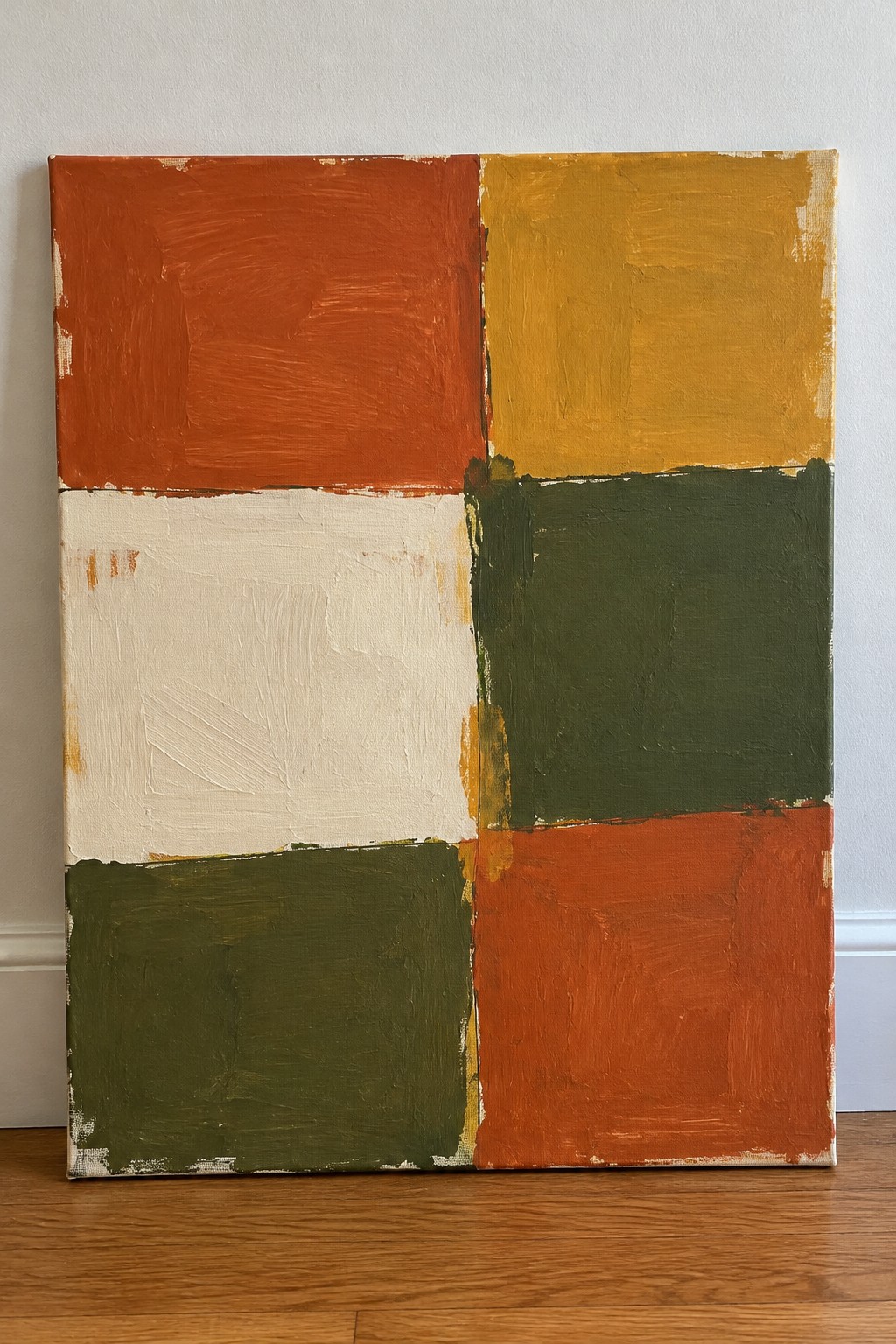
A loose geometric abstract built from six large, alternating color fields turns an autumn palette into a clear, balanced composition. Rust, ochre, olive, and cream meet at uneven edges, while visible brush marks and small areas of color overlap keep the broad shapes from feeling too rigid.
The simple block layout is easy to adapt to different canvas sizes, and the palette can be shifted toward deeper reds or softer greens to suit a room. For practice, focus on filling each section with broad strokes, then leave some irregular edges and texture rather than aiming for perfect lines. Its strong color contrast and graphic arrangement also make it easy to spot among autumn painting ideas on Pinterest.
Curved Autumn Color Fields in Rust, Orange, and Olive

A large rust-brown field anchors this abstract autumn composition, while curved orange and olive shapes meet along its right side. The contrast between the broad background and the narrower overlapping forms gives the color-field painting a clear focal area without relying on small details.
The composition does much of the work, so it can be adapted by changing the curve, proportions, or three-color palette while keeping the same basic layout. For practice, sketch the shapes first and focus on getting the boundaries smooth; for wall art, a larger version would make the earthy colors and sweeping curves easy to notice from across a room.
Broad Autumn Field Bands Beneath a Pale Sky

A simple autumn landscape can take shape through broad horizontal color fields, with ochre and rust bands suggesting harvested land beneath distant hills and a pale, cloud-streaked sky. Loose edges and visible texture keep the stacked shapes from feeling rigid, making this a seasonal landscape idea that relies more on color and composition than fine detail.
The composition does a lot of the work here, so you can adapt it by changing the number of field bands, shifting the horizon, or choosing a warmer or more muted palette. Keep the distant tree line small and the foreground marks loose for a straightforward study, or enlarge the bands into a statement piece that reads clearly as a thumbnail on Pinterest.
Broad Autumn Color Fields in Rust, Cream, and Olive

A simple abstract color-field painting can make autumn tones the main subject, using three broad vertical bands instead of recognizable leaves or landscape details. The uneven edges and visible brush texture keep the rust, muted cream, and olive blocks from feeling too rigid, while the upright layout gives the composition a clear structure.
The large sections are easy to adapt to a canvas of different sizes, and you can shift their widths or swap in nearby earth tones to suit your space. For practice, focus on covering each area with consistent color, then let a few rough edges and layered strokes add texture. This bold, pared-back approach also makes a distinctive Pinterest reference for contemporary seasonal wall art.
An Irregular Rust Shape Framed by Autumn Color Fields

A large, uneven rust-colored shape anchors this abstract autumn painting, with muted cream, gray, ochre, and olive fields layered around it. The contrast between the broad central form and the rough, overlapping edges gives the composition a clear focal point while keeping it loose and painterly.
The composition does not depend on precise drawing, so you can adapt it by changing the central shape or shifting the surrounding color blocks. For a simpler version, use fewer fields and a smaller palette, then build up texture with uneven edges and visible brush marks. Its strong warm-and-muted color contrast also makes it a useful reference for expressive seasonal wall art.
Sweeping Ochre, Brown, and Olive Color Fields

Broad, irregular shapes in ochre, warm brown, and olive make this an abstract autumn color-field painting rather than a literal landscape. The large areas meet in sweeping curves, while narrow strips of exposed paper and faint pencil marks add texture without distracting from the overall layout.
The composition does much of the work, so you can adapt it by changing the proportions or swapping in other autumn shades such as rust, cream, or muted plum. Try sketching a few loose shapes first, then build up the color in broad sections; the simple palette and tall format also make this a practical idea for seasonal wall art. Its bold shapes and earthy colors give it a clear, easy-to-read look that can stand out in a Pinterest collection.
Rounded Autumn Color Fields in Ochre, Rust, and Olive

Abstract autumn wall art can take shape through a few broad, overlapping forms rather than a detailed scene. Rounded fields in ochre, rust, olive, and beige create contrast through their placement and transparent-looking overlaps, while the textured white ground keeps the composition open.
The simple shapes make the layout easy to adapt: shift their size, overlap, or spacing, or swap in a favorite set of autumn earth tones. Keeping the forms broad lets you focus on color and texture instead of fine details, and the clear, graphic arrangement makes this idea easy to save as inspiration for seasonal wall art.
Interlocking Autumn Color Fields in Rust, Ochre, and Olive

Broad, irregular shapes meet and overlap in this abstract autumn painting, creating a landscape-like arrangement without relying on literal scenery. Rust, ochre, olive, and deep brown give the color-field composition a seasonal palette, while the curved edges and visibly textured surfaces keep the large areas from feeling flat.
The composition does much of the work, so you can adapt it by sketching a few large shapes first and adjusting their proportions to fit your canvas. Keep the palette to three or four earth tones for a more restrained look, or add a lighter ground to make the forms stand apart; the bold color blocks also make this an easy-to-recognize idea to save on Pinterest for abstract seasonal wall art.
Frequently Asked Questions
A contemporary color-field autumn painting uses broad areas of color, rather than detailed outlines or realistic brushwork, to suggest the mood and forms of fall. Expansive shapes in colors such as ochre, rust, olive, burnt sienna, and deep brown may evoke changing leaves, fields, or distant hills without depicting them literally. Contemporary examples often pair these earthy tones with unexpected colors, simplified compositions, or visible textures.
Earth tones bring to mind natural materials and seasonal landscapes: rust can suggest fallen leaves, ochre can recall dry grasses, and olive or moss green can hint at the last traces of summer. Their effect depends on how they’re combined. Warm colors feel especially rich beside muted neutrals, while a small area of cool blue or pale lavender can make the warmer shapes appear more vivid.
Start by considering the artwork’s scale, dominant colors, and overall mood. Large shapes can make a bold statement and work well on an open wall, while a quieter composition may suit a bedroom or reading area. Compare the painting’s earth tones with nearby furniture, rugs, and wall colors, but don’t feel you need an exact match. A contrasting accent in the artwork can help it stand out.
Measure the wall and the furniture near it before choosing a piece. A painting above a sofa or console often looks balanced when it is roughly two-thirds the width of the furniture, though that’s a useful guideline rather than a strict rule. Also consider viewing distance: expansive shapes need room to be appreciated, while a textured surface may reward a closer look. When in doubt, use paper cut to the artwork’s dimensions to preview its size on the wall.
Hang the painting where it can be seen comfortably, usually with its center near eye level, and avoid strong direct sunlight that may fade pigments over time. Keep it away from excess moisture, heat sources, and areas where it could be bumped. Care depends on the medium: dust a framed work gently with a soft, dry cloth, and ask the artist or a conservator before cleaning an unframed canvas or touching its painted surface.
