


I have been trying out abstract paintings with just basic shapes lately.
It turns out you do not need fancy techniques to make something that looks modern.
Circles and triangles can come together in interesting ways if you play around with colors and placement.
I put together some ideas that worked well for me when I was starting out.
These might give you a simple way to begin if you want to try it too.
Offset Rectangle Blocks
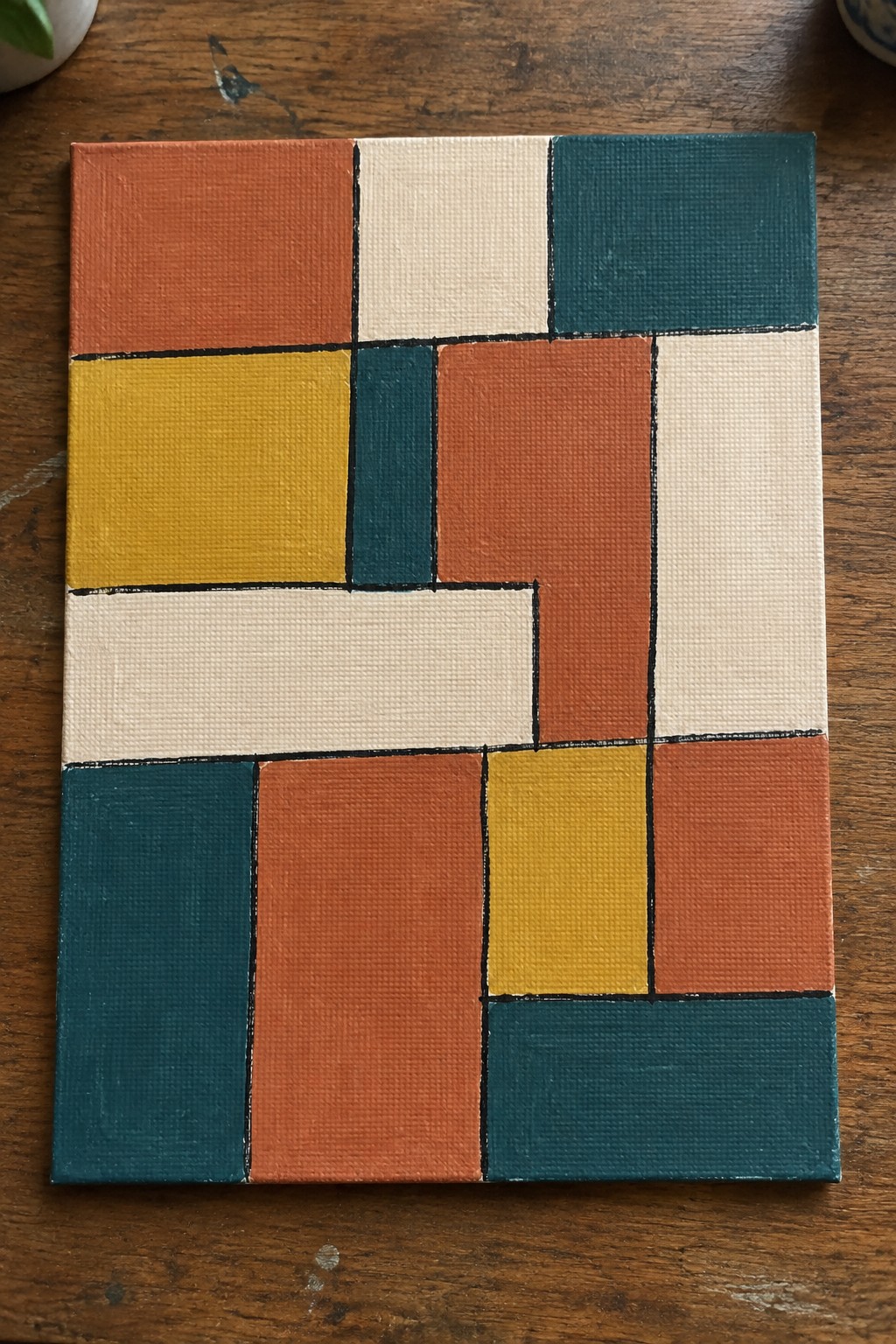
A painting made from rectangles of varying sizes creates a structured abstract design that still feels dynamic. The layout mixes warm terracotta and yellow tones with cool teal and cream neutrals, letting the colors play off each other while the black outlines keep each block distinct. This approach focuses on simple shapes and color placement rather than detail or blending.
What makes this idea useful is how straightforward it is to measure and paint the blocks in any order you prefer. You can shift the size or position of a few rectangles to change the balance completely or swap in different colors to match a room. For practice, this kind of subject lets you work on composition and color contrast without needing advanced techniques.
Layered Watercolor Circles
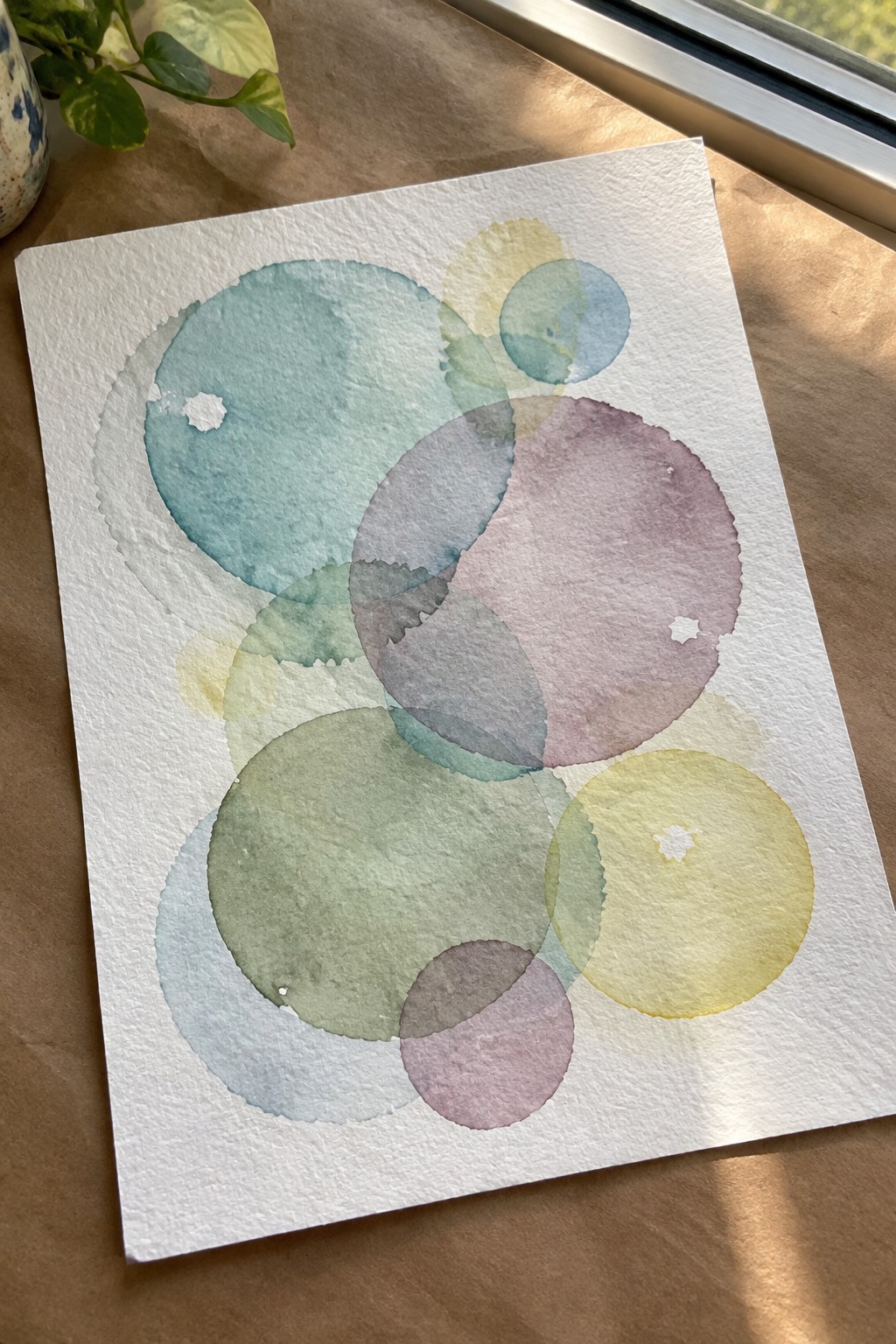
Painting with overlapping translucent circles creates depth through color blending where the shapes intersect. The varying sizes and soft edges keep the focus on the interaction between hues rather than on perfect forms. This abstract idea fits into a modern decorative style that relies on simple shapes and gentle washes.
The composition does a lot of the work here since the overlaps naturally produce new tones and visual interest. You can scale the circles differently or switch to a bolder palette to change the mood. For beginners this works as a low-pressure way to practice watercolor control and layering without drawing anything complex.
Stacked Arch Shapes in Muted Tones
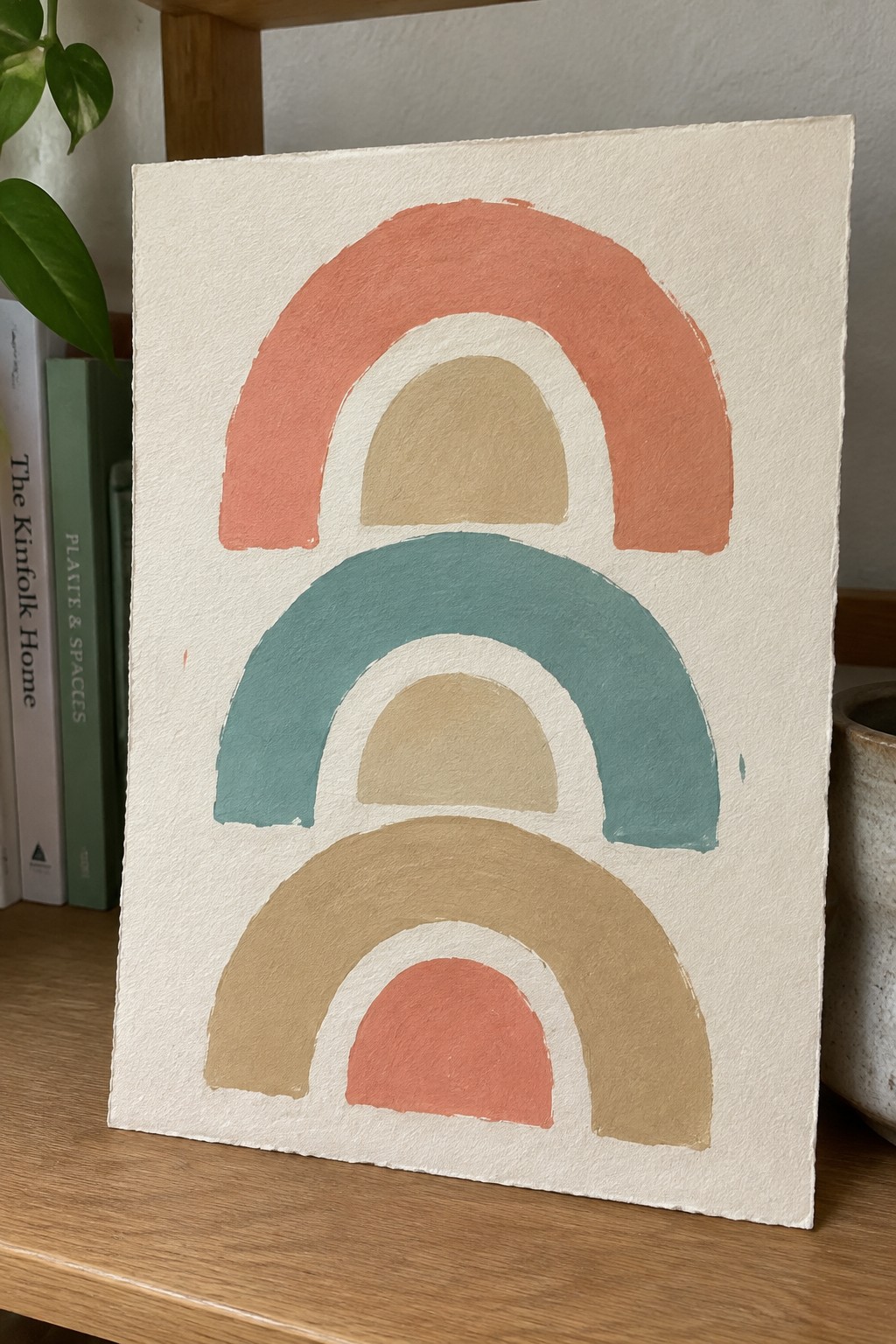
A painting built from three vertically stacked arches uses concentric semi-circles to create a clean repeating pattern. Each arch consists of a wide outer curve and a smaller half-circle inside, with the arches spaced evenly down the canvas. The limited palette of coral, teal, and warm beige against the off-white ground keeps attention on the curved forms and the negative space between them.
The composition does a lot of the work here by repeating one basic shape in different positions and colors. You can swap the three hues for any room palette or adjust the number of arches to match a different canvas size. This idea works especially well for quick practice or small wall pieces because it depends on shape placement rather than fine detail.
Abstract Circles with Linear Accents

This abstract idea builds around large overlapping circles combined with short striped lines and loose scribbles on a neutral ground. The main concept is balancing solid rounded shapes against directional marks in a limited palette of orange, navy blue, yellow, and white. The scattered layout keeps the eye moving across the surface while the repeated colors tie everything together.
The composition does a lot of the work here because the shapes stay simple and the colors repeat in different areas. You could easily scale this down for a smaller canvas or swap in your own favorite colors while keeping the same mix of filled shapes and linear accents. For wall art, something like this works well because the neutral background lets the colors stand out without needing a frame. This would be easy to turn into a series by changing just the color combinations each time.
Loose Organic Shapes in Muted Neutrals

This painting idea uses irregular, stone-like shapes scattered across a light background to create a simple abstract composition. The shapes vary in size and are placed with uneven spacing so the eye moves naturally around the canvas. A limited palette of sage green, soft pink, warm gold, and gray keeps the focus on the forms rather than on color complexity.
The composition does a lot of the work here because the random placement of shapes feels balanced without needing careful measuring. This approach works well for beginners who want to practice brush control and color mixing without drawing a specific subject. You can easily adapt it by swapping in different neutral tones or changing the canvas size for a smaller study or larger wall piece. The same scattered layout also translates quickly to other color schemes if you want to match a room or try a seasonal variation.
Minimalist Sunset Using Horizontal Color Bands
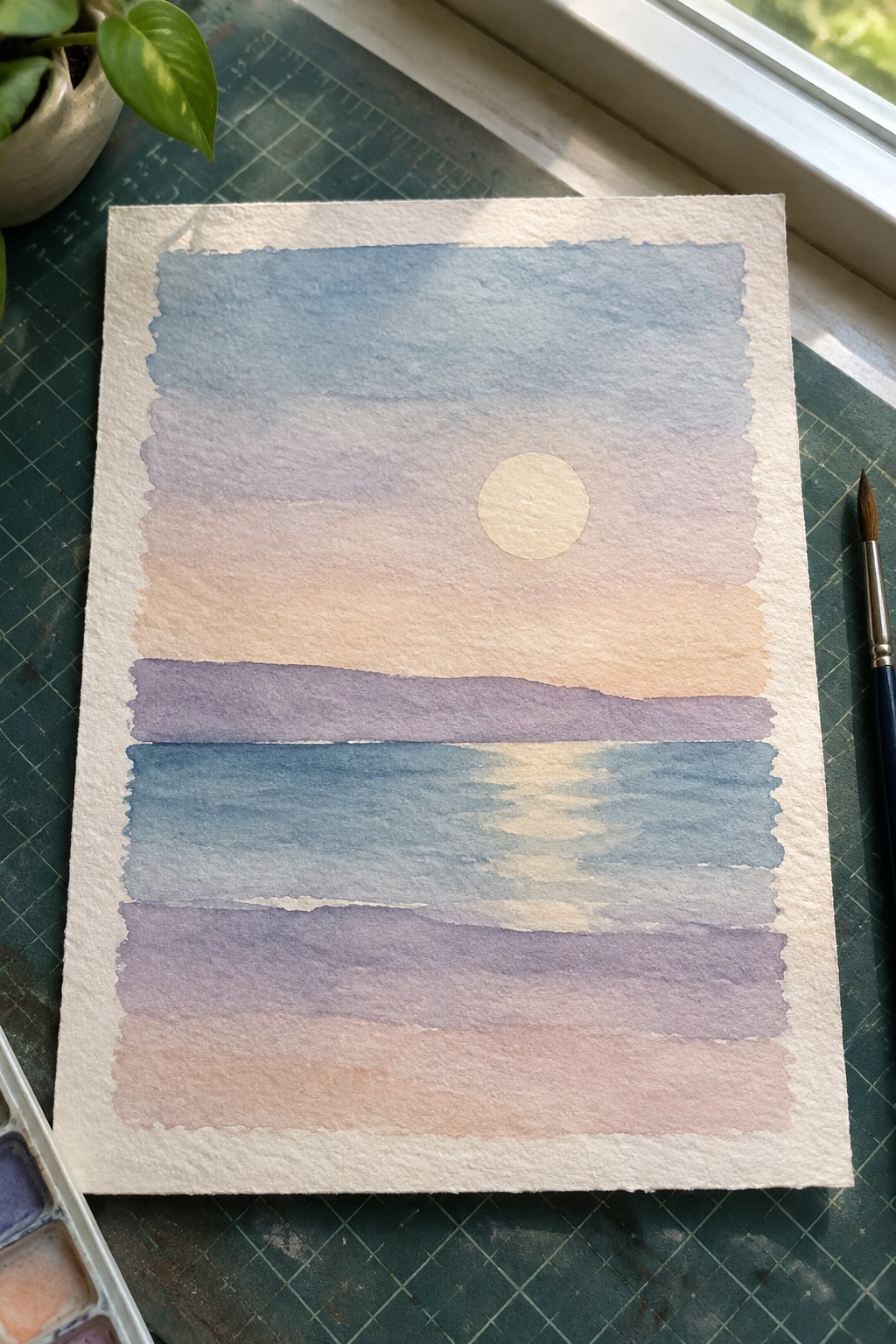
A sunset landscape made from broad horizontal washes gives you sky, water, and horizon in one clean layout. The single pale circle represents the sun while a soft vertical streak below it suggests its reflection on the water. This format works because the stacked bands create depth and separation without any detailed drawing or complex edges.
What makes this idea useful is how quickly you can change the mood by shifting the color order or intensity of the bands. The reflection element adds balance but takes almost no extra time once the main layers are down. You could easily adapt the same structure for a sunrise, swap in cooler tones, or shrink it for a card or small panel.
Stacked Bird Motifs Using Simple Shapes

A stacked bird composition builds a vertical design by layering simplified bird silhouettes on top of each other, with each one carrying its own color and wing pattern. The idea uses a narrow color range of yellow, teal, and red to create contrast while keeping every shape flat and easy to cut or trace. This approach works as decorative animal art because the repeating forms and central alignment hold the whole piece together without extra background elements.
What makes this idea useful is how the vertical stack fills a tall format without requiring complex perspective or shading. The color palette makes this easy to adapt by swapping in different combinations for each bird while keeping the same layout. For practice, this kind of subject helps focus on shape variation and balance rather than fine detail. It would be easy to turn into a series by changing the base motif or adjusting the number of birds.
Geometric Night Mountains with Crescent Moon

A night landscape idea built from overlapping triangular mountain shapes in deep blues, grays, and creams creates a strong sense of depth with very few elements. The crescent moon and its matching reflection below serve as the only warm accents against the cool palette. This approach falls into the abstract landscape category and uses flat color blocks instead of realistic blending or fine details.
What makes this idea useful is how the simple geometric forms stay balanced even when the shapes are painted by hand. You can easily change the moon color or swap the mountain tones for a daytime version. For wall art, something like this works especially well on small wood panels where the texture of the surface adds interest. The limited palette also makes it straightforward to mix the colors from a basic set of paints.
Abstract Circle Pattern with Bright Colors
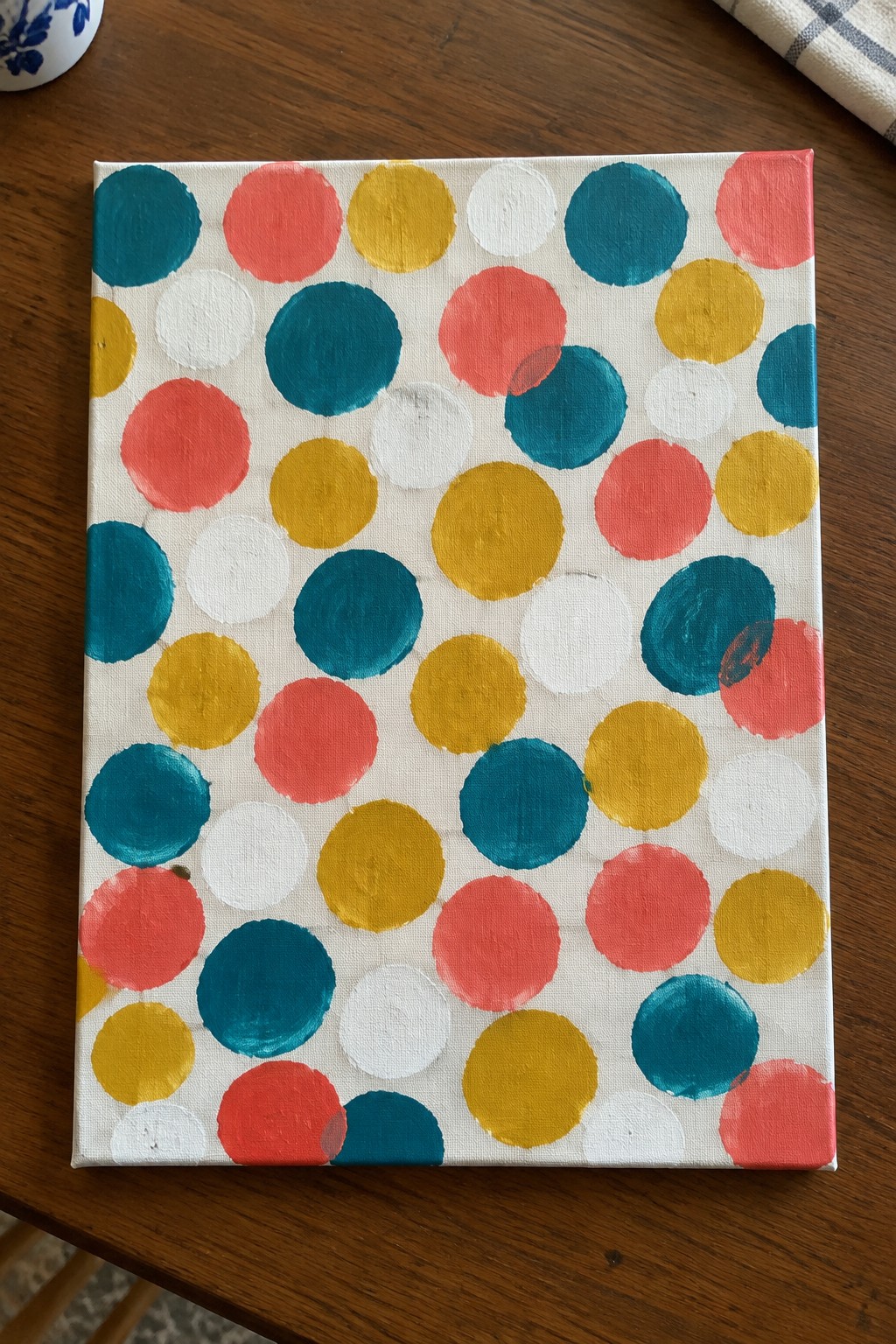
An abstract painting built around circles of different sizes scattered across a plain background creates a lively but balanced design. The idea relies on a small set of colors and simple overlapping shapes instead of detailed subjects or precise layouts. Allowing some circles to sit partially on top of others adds depth while keeping the overall look clean and modern.
What makes this idea useful is how quickly it can be adjusted by changing the number of circles or swapping the color palette to fit a specific room. The scattered placement keeps the eye moving without needing perfect symmetry, so small mistakes in spacing do not stand out. This would be easy to turn into a larger canvas or a matching pair by repeating the same colors with a few circles shifted to new spots.
Layered Arches in Muted Tones
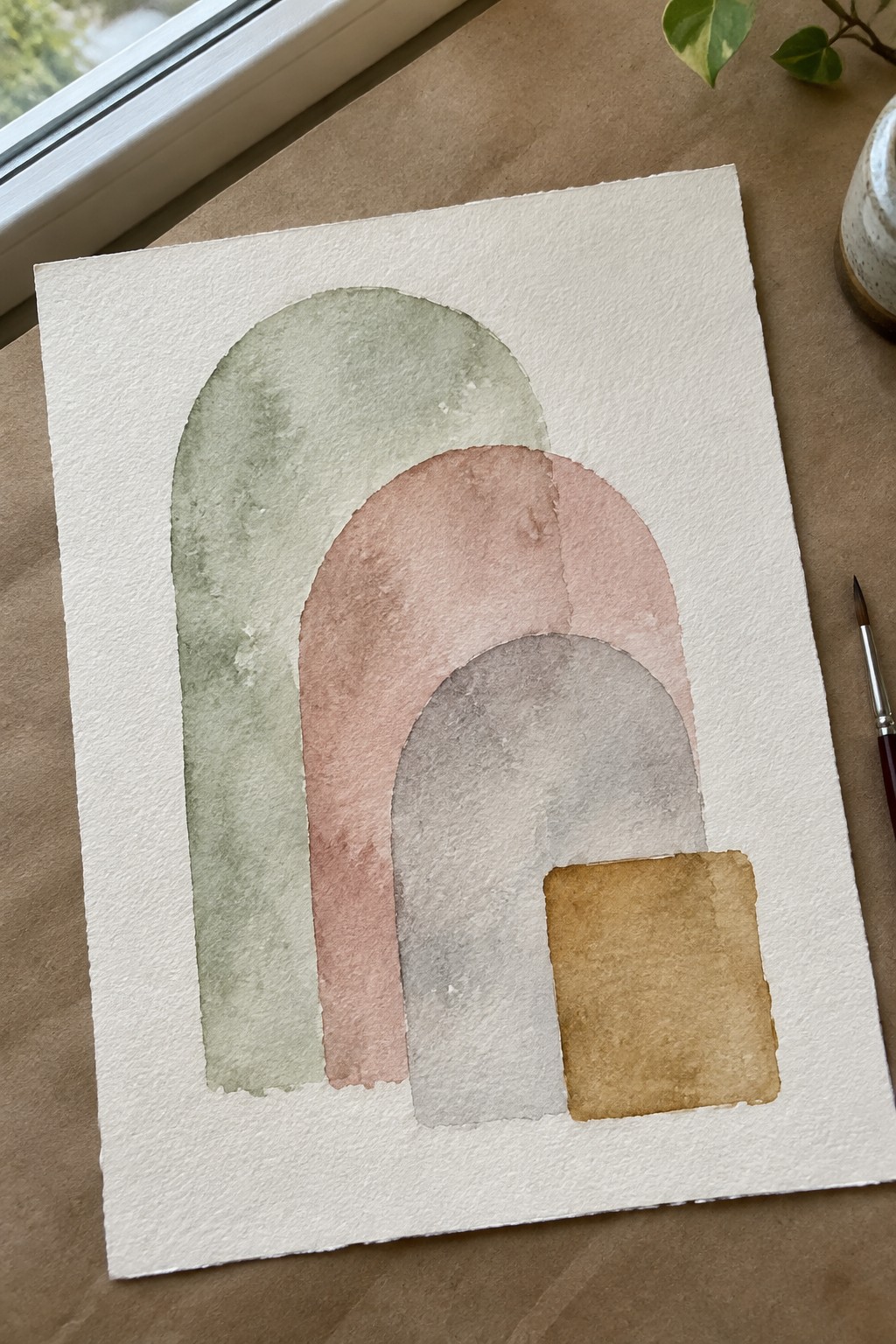
Overlapping arches in a vertical stack create an abstract painting idea built entirely from simple curved shapes. The arches decrease in size from top to bottom while shifting through a muted palette of green, rose, and gray, with a small square added at the base to break the repeating pattern. This approach keeps the focus on color blending and shape placement rather than detailed drawing.
What makes this idea useful is how the limited shapes remove most composition decisions so you can practice even washes and soft edges. The same layout works at different scales or with a completely different color set if you want to match a room or try bolder tones. You could also swap the square for another small shape or texture to change the balance without starting over.
Abstract Oval with Crescent Accents
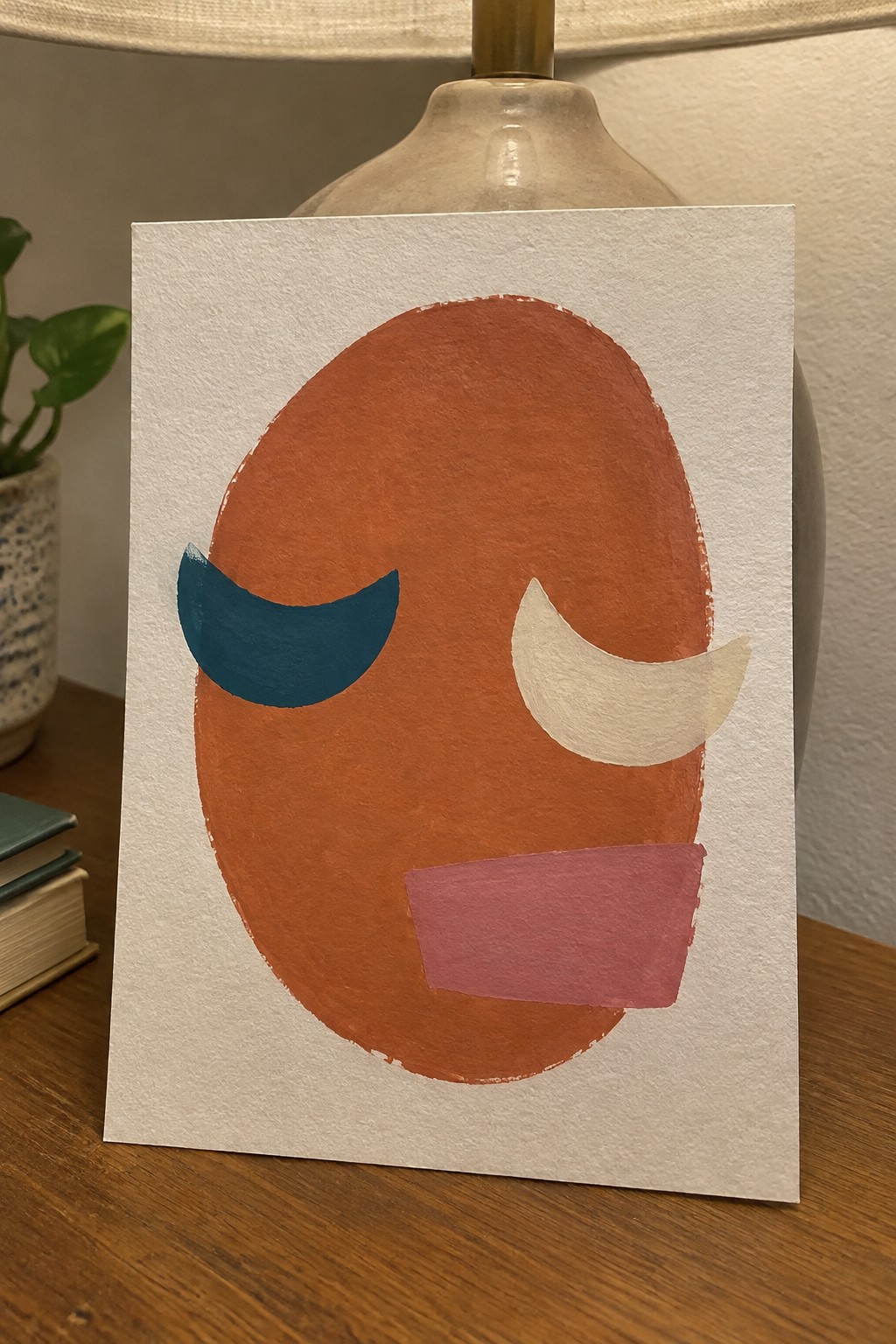
This painting idea uses one large oval as the central form and places a few curved and rectangular shapes inside it to build an abstract composition. The approach keeps the focus on shape placement and color contrast rather than fine details. A limited palette of warm orange with teal, off-white, and pink accents helps the smaller elements stand out against the main shape and the white background.
The composition does a lot of the work here because the oversized oval creates instant structure while the curved pieces suggest just enough movement. You can adapt it by changing the accent colors, flipping the direction of the curves, or scaling the whole thing down for smaller paper or canvas. This kind of idea works well for practice because it requires only basic brush control and gives beginners a clear way to experiment with balance and negative space.
Balanced Oval Stones in Earthy Layers
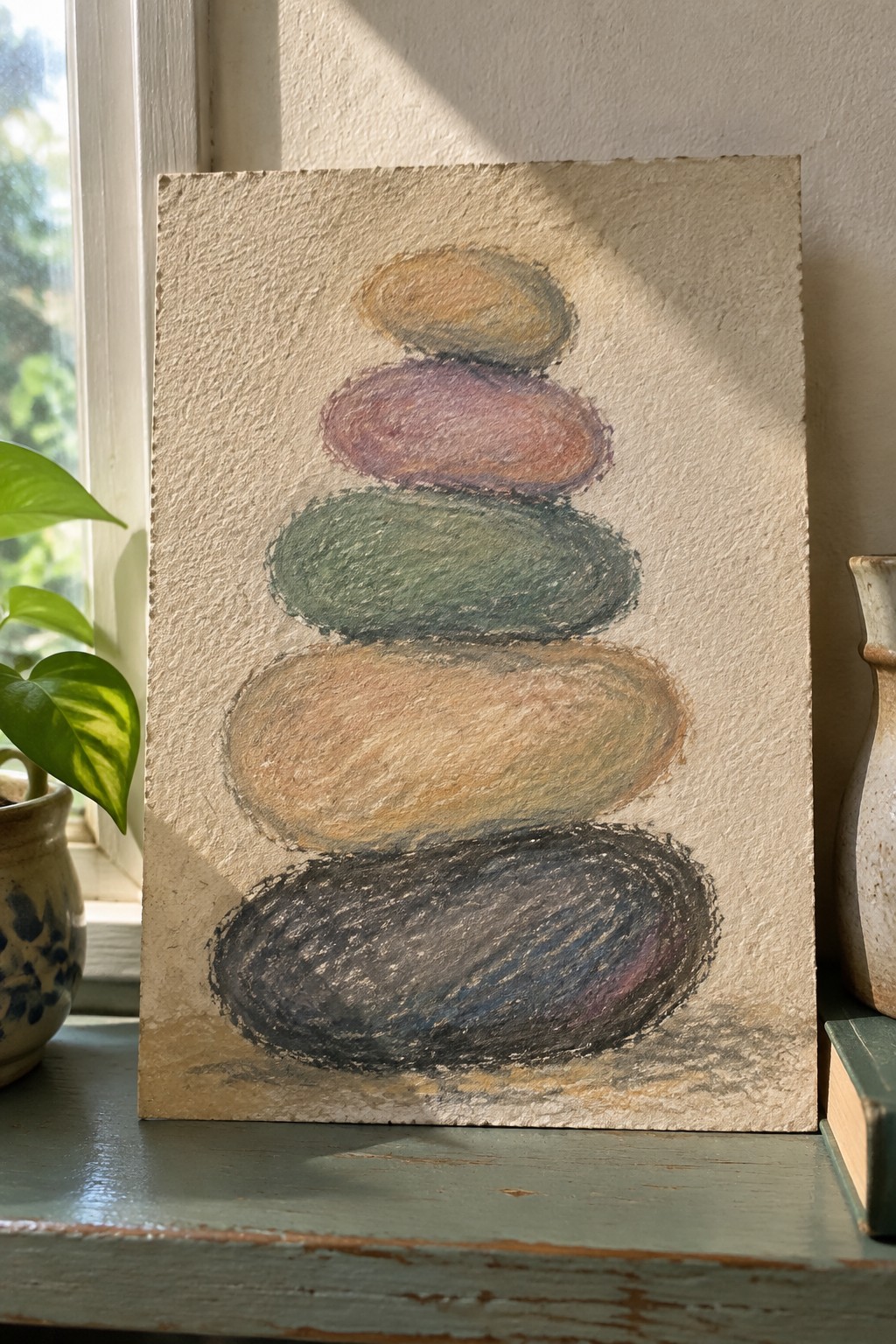
Painting a stack of stones using simple overlapping ovals creates a clean vertical composition that feels both modern and grounded. The idea relies on varying the size and color of each oval while keeping the edges soft so the shapes sit naturally on top of one another. This approach works well as abstract still life because it uses repetition and scale rather than fine detail to hold the viewer’s attention.
The composition does a lot of the work here since the gradual widening toward the bottom gives instant visual stability. You can adapt the idea by changing the color order, using only three stones instead of five, or painting the same stack on a smaller panel for a set of matching pieces. For practice, this kind of subject lets beginners focus on shape placement and color mixing without needing advanced brush control, and the result photographs cleanly for mood boards or Pinterest saves.
Diagonal Color Blocks with a Centered Circle
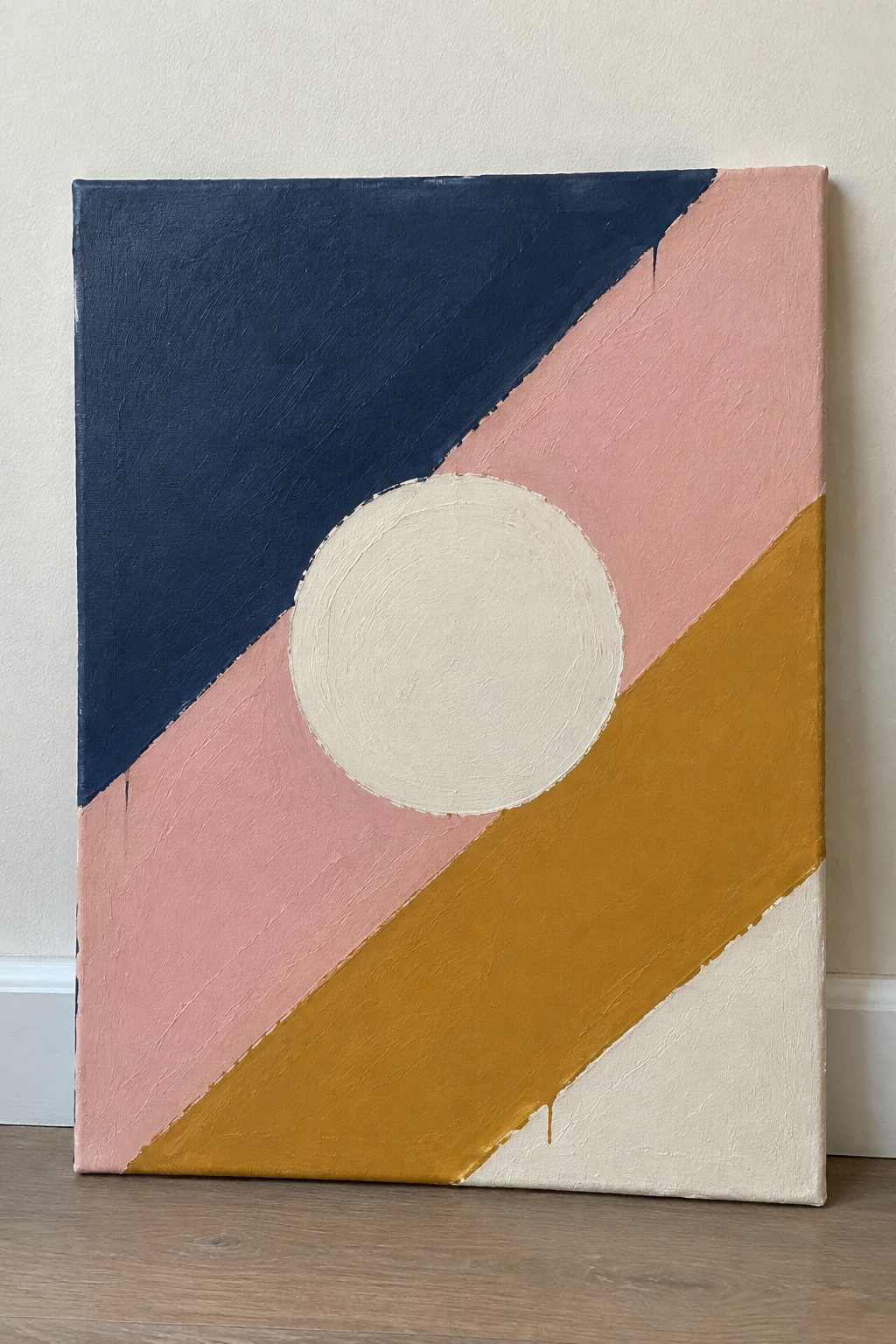
This abstract painting idea builds a strong composition from wide diagonal bands of color that divide the canvas into bold sections. A single circle placed where the bands meet creates a focal point and breaks up the straight lines without adding extra elements. The approach works well as a modern abstract using only simple shapes and flat color areas.
What makes this idea useful is how the diagonal layout guides the eye naturally across the canvas while the circle adds balance. You can easily change the color palette to match different rooms or moods, and adjusting the angle or width of the bands lets you personalize it quickly. The same structure works on smaller canvases for practice or larger ones for wall pieces. This kind of painting idea saves time because the shapes themselves create the interest.
Layered Leaves Along a Single Branch

A painting idea centered on a curving branch with overlapping leaves makes an effective decorative piece for walls or smaller projects. The shapes stay simple and organic, with soft color shifts between greens and yellows creating interest through layering instead of fine detail. This approach fits into the category of abstract botanical or nature-inspired decorative art.
What makes this idea useful is how the loose leaf forms can be scaled up or down without losing impact. The composition relies on negative space and gentle overlaps, so it works on paper, canvas, or even fabric. For practice, this kind of subject lets you focus on color blending and placement before adding more elements.
Horizontal Stripes with Dotted Color Breaks
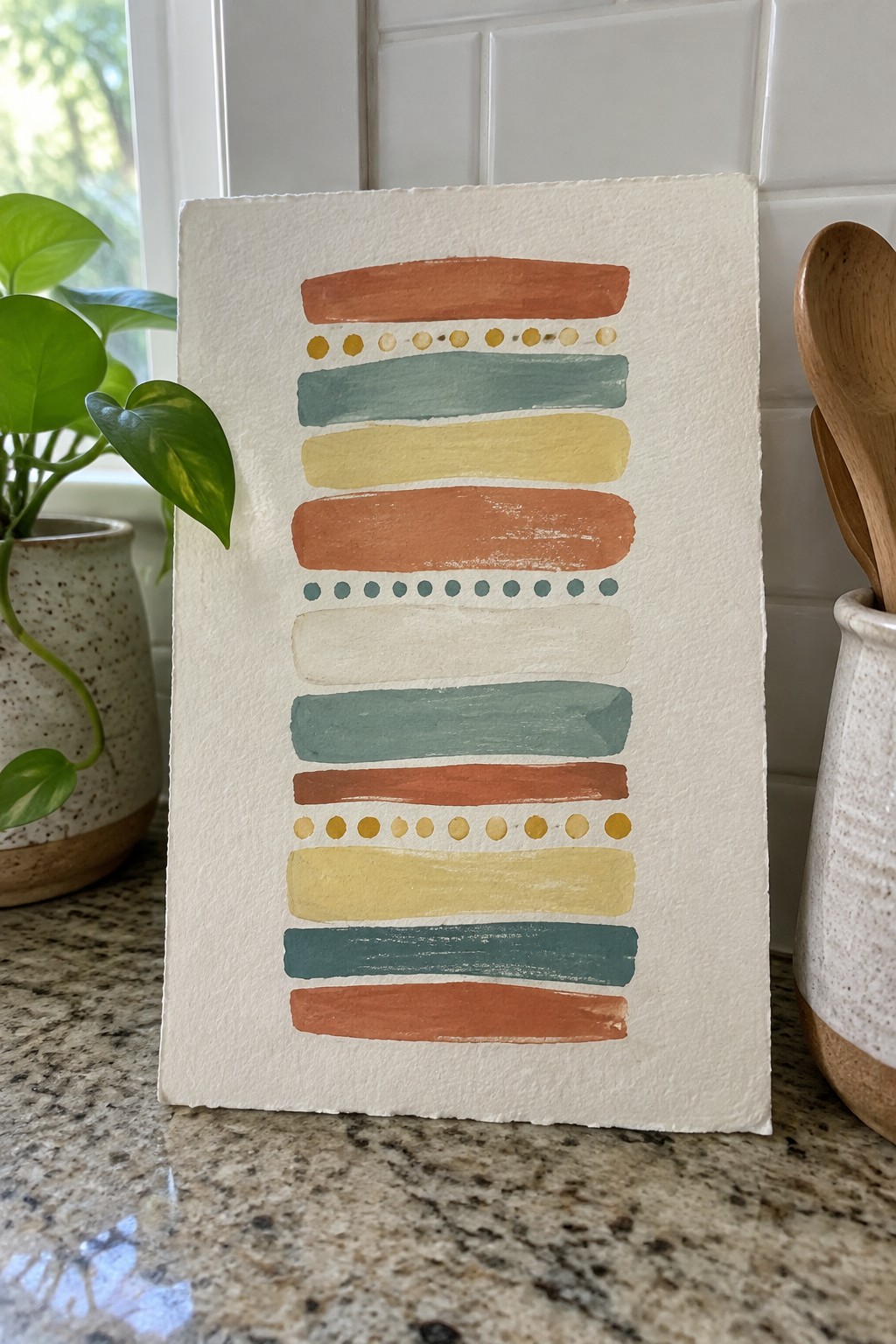
This painting idea builds an abstract design from simple horizontal bands of color that stack across the surface. Solid brushstrokes in terracotta, teal, mustard, and cream sit next to rows of small dots that act as visual dividers between the blocks. The warm and cool tones alternate in a way that keeps the eye moving up and down the page without needing any detailed shapes.
The composition does a lot of the work here because the repeating stripe pattern is easy to measure out and repeat on any size surface. You can swap the color order, adjust the width of the bands, or change the dot colors to fit a different room or season. For practice this works well since it focuses on even brush pressure and spacing rather than drawing anything specific.
Overlapping Rectangles with a Dotted Border

This painting idea centers on building depth through overlapping rectangles and rounded forms in a limited set of bright colors. The shapes sit at different angles and sizes so the overlaps create new color zones without extra brushwork. A ring of small dots around the edge keeps the eye moving inward while holding the whole piece together as one clean unit.
The composition does a lot of the work here because the overlaps already add variation and the border pattern is quick to repeat. You can swap the coral, blue, and green for any three colors that match a room or mood and still keep the same layout. This would be easy to turn into a series by changing only the dot colors or scaling the canvas size up or down.
Overlapping Organic Shapes in Muted Tones
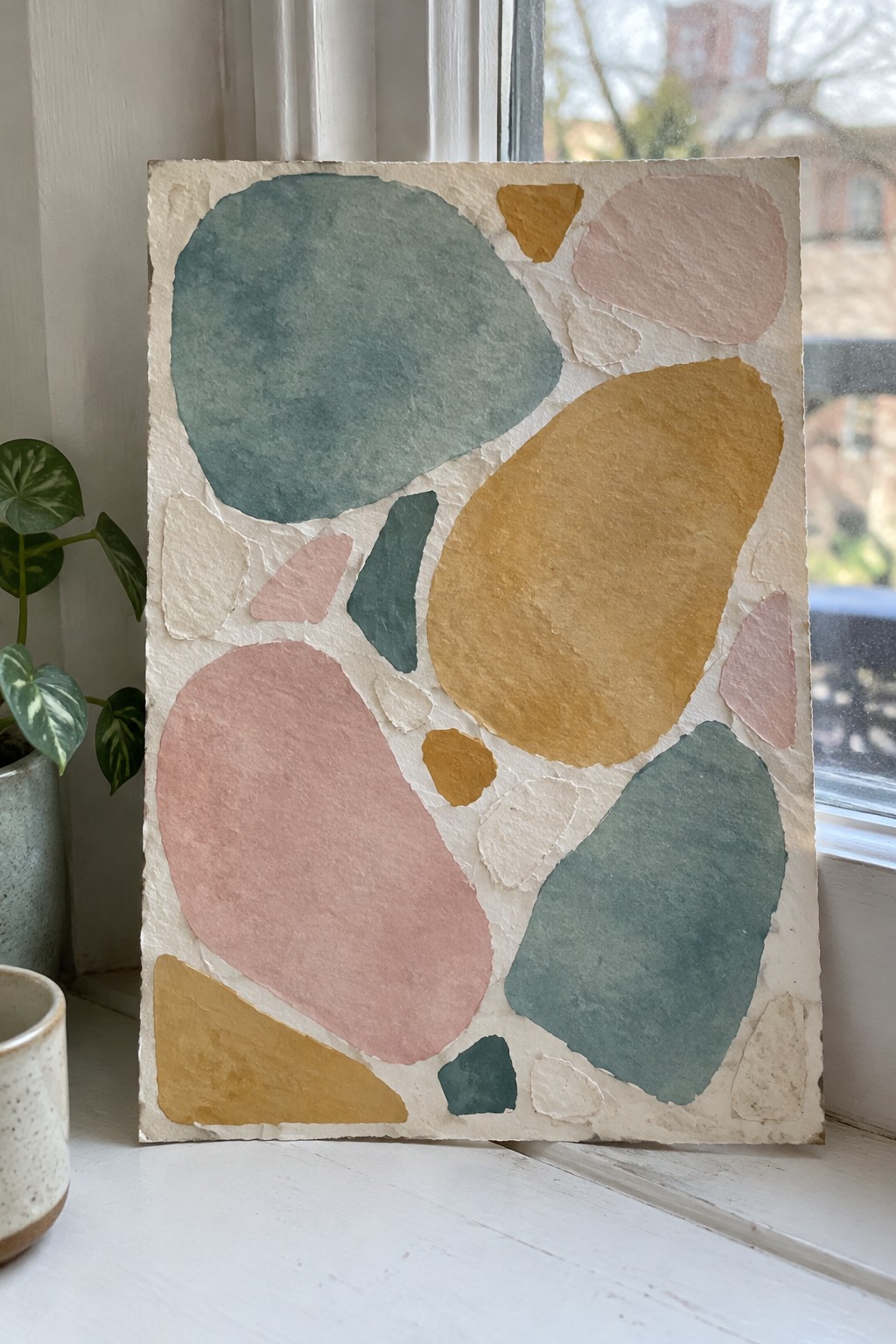
This abstract idea relies on irregular rounded shapes layered over one another in a limited palette of teal, mustard, dusty pink, and cream. The composition stays balanced by mixing a few large forms with smaller accents and letting the textured background remain visible between the shapes. It works as a straightforward decorative abstract that emphasizes placement and color contrast over detail or realism.
What makes this idea useful is how easily the shapes can be painted or cut from paper first to test the layout. The color choices adapt quickly by swapping in any three or four tones that already exist in your space. For wall art the loose arrangement keeps the piece from feeling too rigid while still looking intentional. A painting like this also works well for practice since the focus stays on arranging forms rather than perfect edges or blending.
Frequently Asked Questions
What supplies are essential for starting these abstract painting projects with simple shapes?
Acrylic paints in a few primary colors, a set of brushes in various sizes, canvas or heavy paper, and painter’s tape work well to create clean edges on shapes like circles and triangles. Start with a limited palette to avoid overwhelming choices and focus on overlapping forms for visual interest. Many beginners find that adding a palette knife helps build subtle texture without needing advanced skills.
How do I pick colors that make the simple shapes feel modern and cohesive?
Choose a color scheme with one dominant hue, a couple of neutrals, and an accent for contrast. For example, pair deep blues with soft grays and a touch of warm orange to give depth to basic forms. Test combinations on scrap paper first to see how they interact under different lighting, which helps the overall composition appear intentional rather than random.
What if my attempts at these ideas end up looking too basic or uneven?
Focus on balance by varying the size and placement of shapes across the canvas, such as clustering smaller ones in one area and leaving negative space elsewhere. Practice on smaller surfaces to refine your technique before scaling up, and consider layering thin washes of paint over shapes to soften edges and create a polished, contemporary look.
Can these painting ideas work on surfaces other than traditional canvas?
Yes, wood panels, stretched fabric, or even old furniture pieces provide interesting bases that add character to the simple shapes. Prepare the surface with a primer if needed to ensure paint adheres evenly, and experiment with the same ideas like geometric overlaps to transform everyday objects into modern art pieces.
How should I decide which of the 17 ideas to try first as a complete beginner?
Begin with concepts that use only two or three shapes and minimal colors to build confidence quickly. Review the list and select ones that match available supplies or appeal to your sense of balance, then build from there by combining elements from multiple ideas once you feel comfortable with the basics.
