

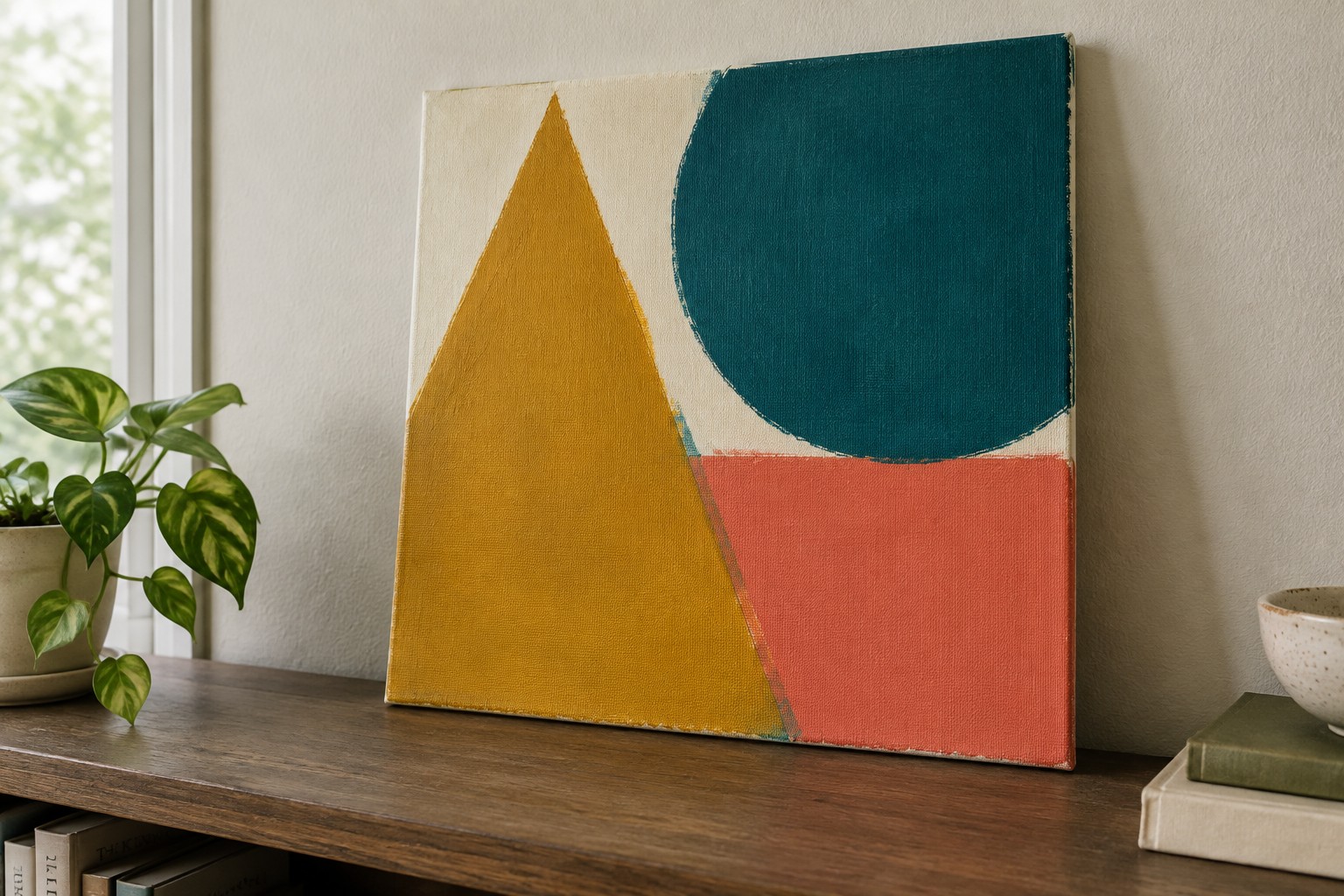
I’ve been looking at abstract paintings that rely on bold geometric shapes for a while now.
They have a straightforward quality that matches how I like to approach my own work.
Some of the combinations of triangles and rectangles stand out more than I expected.
I collected 23 modern examples that seemed worth sharing here.
They might give you a few practical ideas if you paint too.
Overlapping Geometric Blocks in Bold Hues
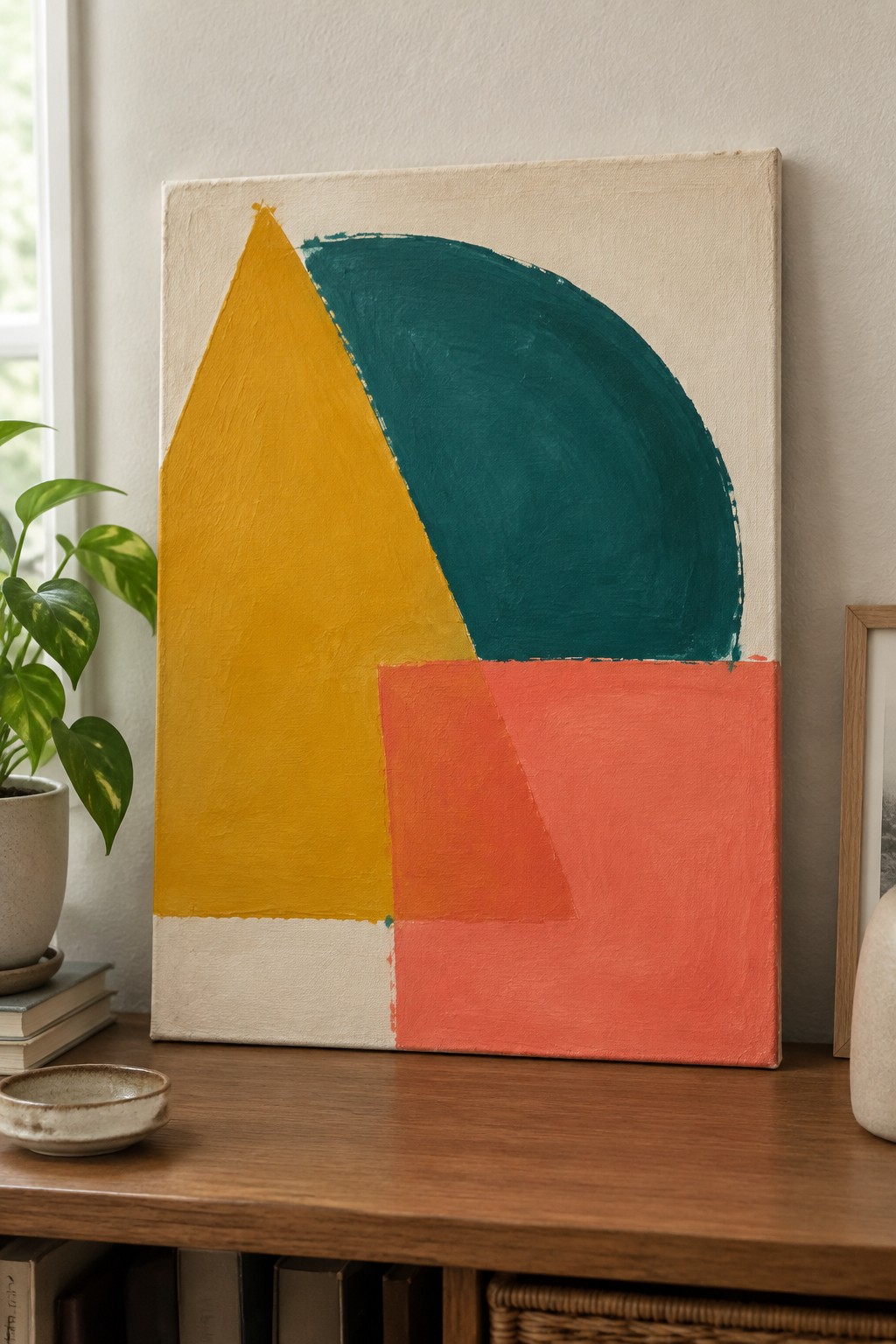
This painting idea centers on building an abstract composition from a few oversized shapes that overlap and intersect. A tall yellow triangle anchors the left side while a broad teal curve cuts across the upper right and coral rectangles fill the lower area, all set against a plain off-white field. The visual strength comes from the high-contrast color choices and the way the shapes meet at crisp edges without needing fine detail or blending.
The composition does a lot of the work here by keeping the layout simple and the shapes large enough to read clearly from across a room. You could easily adapt the same idea by changing the color palette to match a specific space or by adjusting the angle of the triangle and curve to fit a different canvas size. For wall art this works especially well because the bold blocks stay interesting even when viewed quickly, and the neutral background makes it simple to match with existing decor.
Grid-Based Abstract with Circular Accents
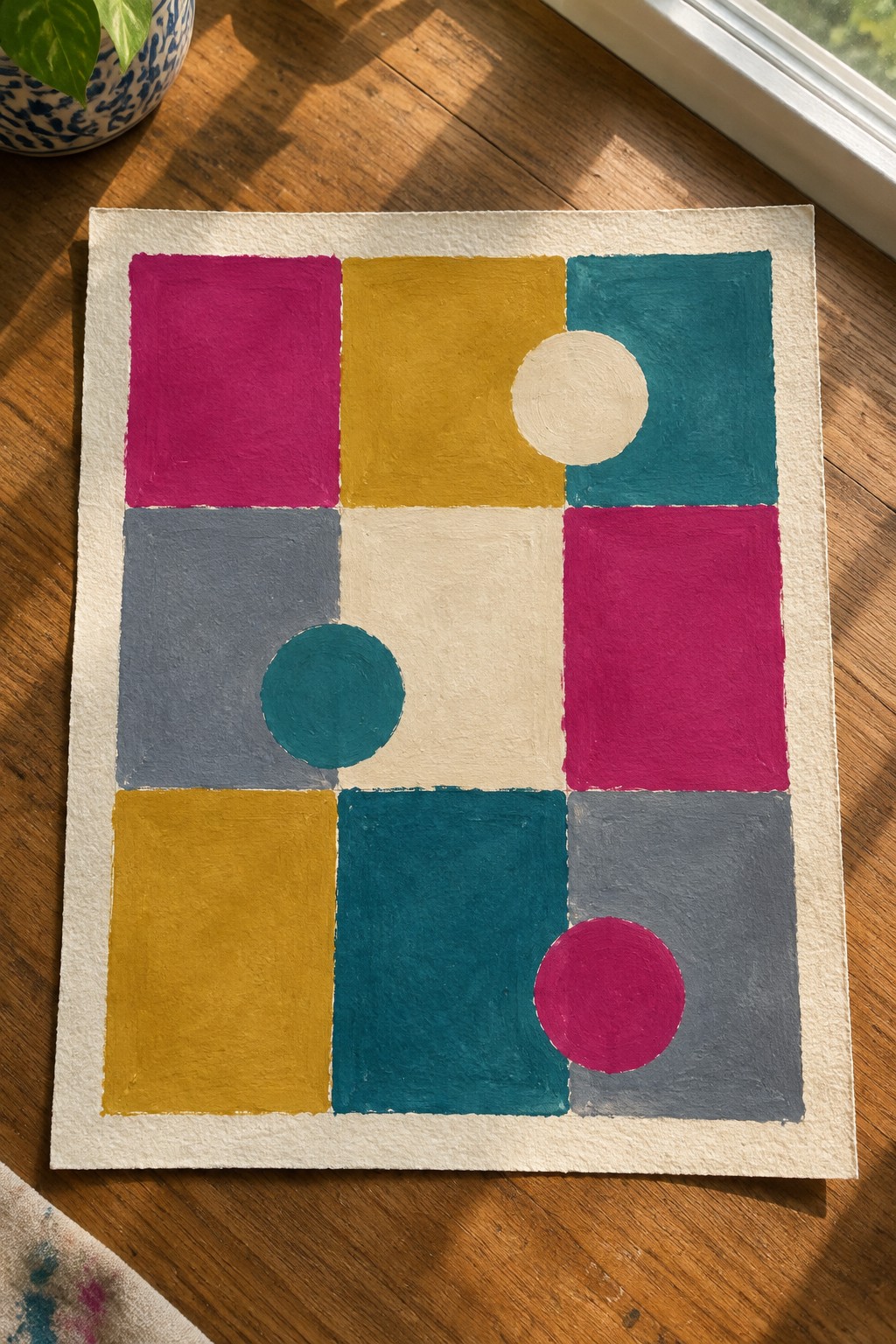
This painting idea uses a straightforward three-by-three grid of solid color blocks as the foundation, then places three circles in contrasting shades to interrupt the pattern. The circles sit at different points in the grid, creating movement while the straight edges keep everything anchored. It belongs to modern geometric abstract work, where the power comes from color choices and simple shape placement instead of any added detail or shading.
The composition does a lot of the work here by letting the grid handle structure so you can focus on picking colors that pop against each other. You could easily adapt the idea by changing the circle sizes, shifting their positions, or swapping in a new set of hues to match a room. For practice, this kind of subject lets you test paint consistency and edges without needing advanced drawing skills. The background keeps the focus on the blocks and circles, so the piece stays clean enough to work as wall art in smaller spaces.
Layered Circles in Muted Geometric Abstract
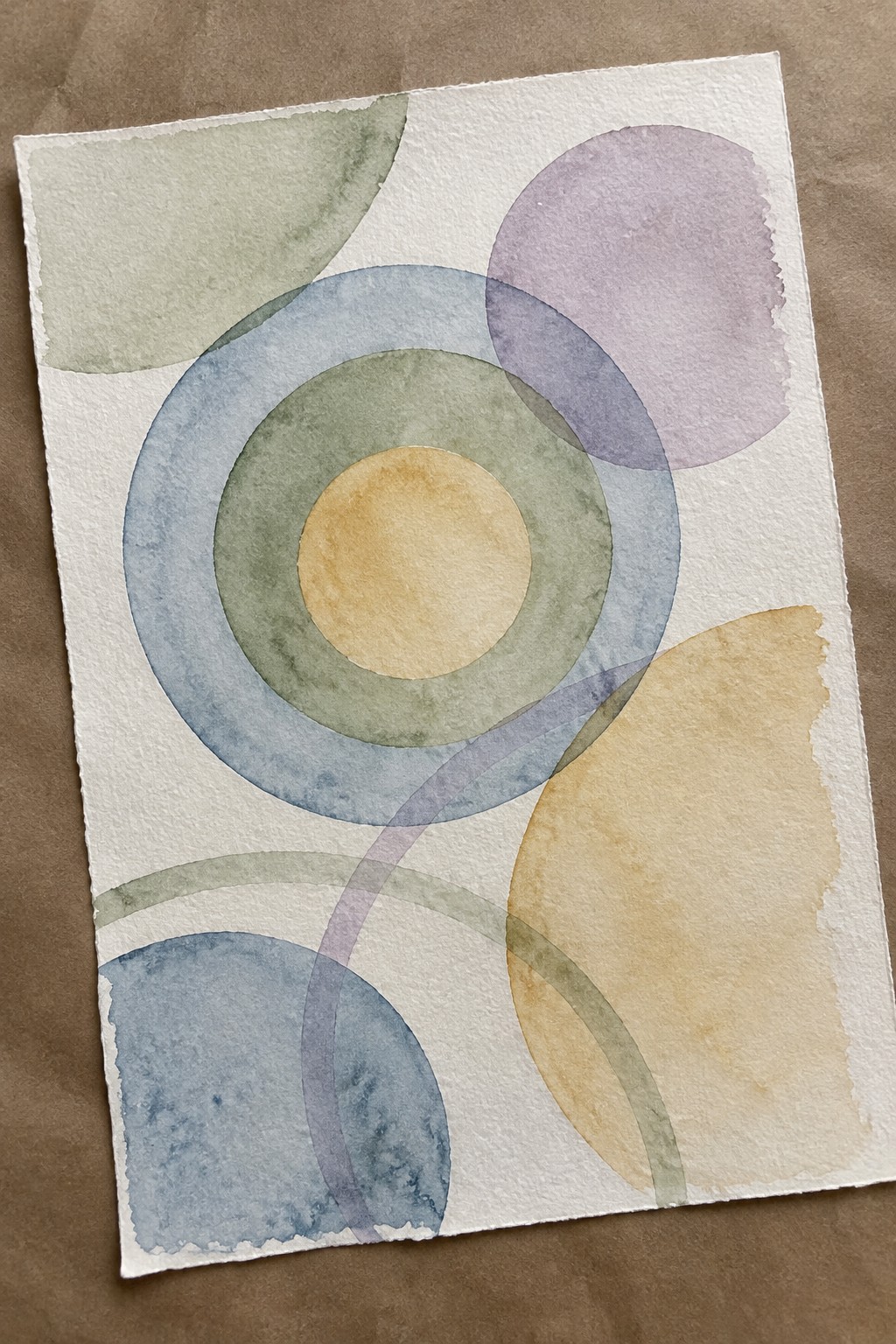
Overlapping circles of different sizes create depth through translucent layers in this abstract geometric idea. The soft edges and limited palette of blue, green, ochre, and lavender keep the composition balanced while the varied overlaps add movement across the space. It works as a modern abstract piece because the shapes stay simple yet interact enough to hold attention without extra detail.
The composition does a lot of the work here since the circles already provide structure and the overlaps handle the interest. You can adapt it easily by changing the color order, using fewer layers for a quicker version, or adjusting the scale to fit a specific frame size. For wall art this layout stays calm enough for most rooms while the asymmetry prevents it from looking too static. The same idea translates well to acrylic or gouache if you want sharper edges instead.
Diagonal Stripes with a Single White Accent Square
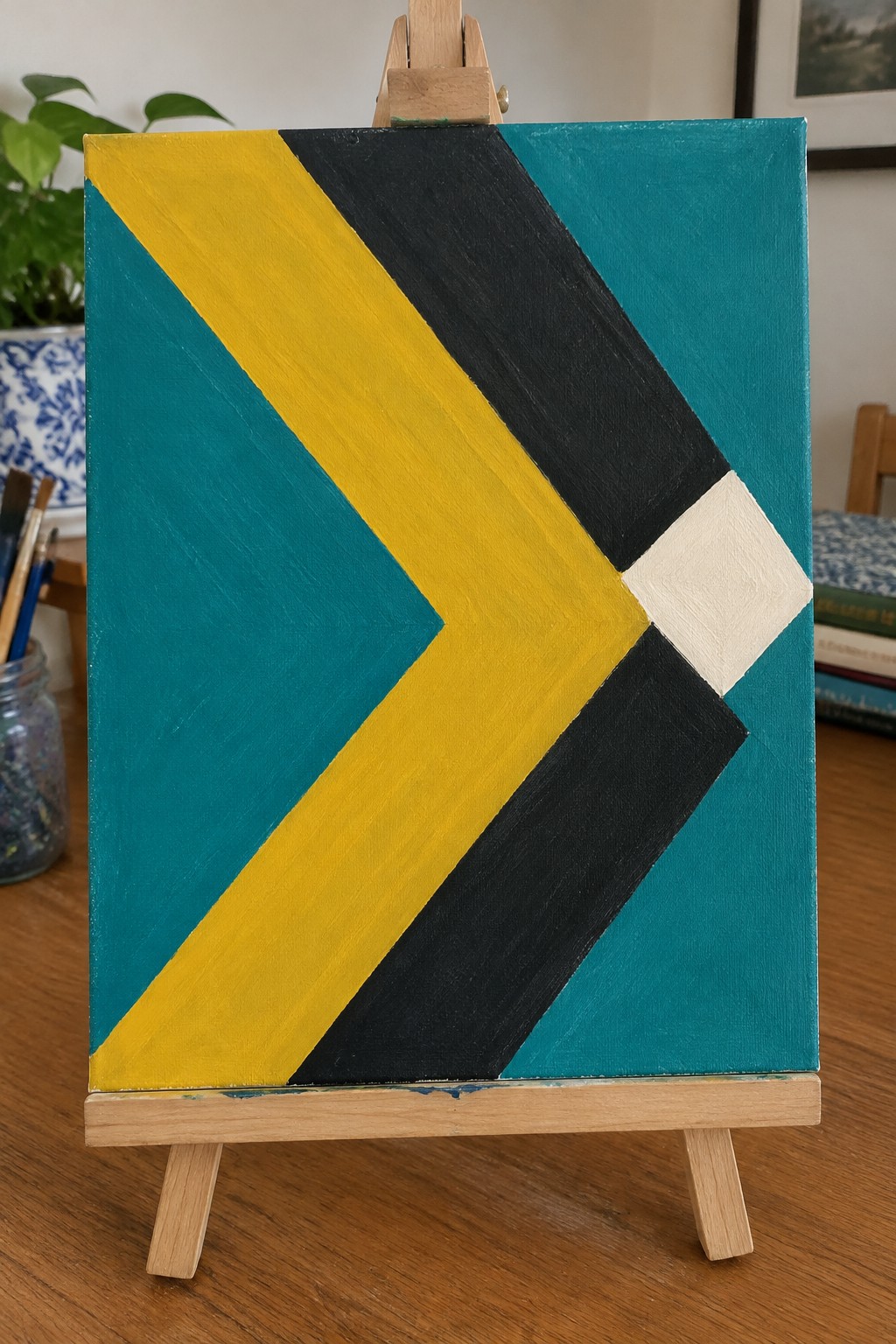
This painting idea uses wide diagonal bands of yellow and black crossing over a solid teal field to form a strong zigzag shape. The composition relies on large flat color areas and sharp angles to create movement across the canvas, with one small white square placed where the bands meet to interrupt the pattern and give the eye a resting point. It belongs to the modern geometric abstract category, where a handful of bold shapes and a restricted palette carry the entire design.
What makes this idea useful is how the straight edges and limited colors reduce the need for precise blending or fine detail. You can change the background hue or shift the angle of the stripes to match different room colors while keeping the same basic layout. For wall art, the high contrast and clean lines make it easy to hang in spaces that already have strong architectural features. The same structure works at different scales, so you could try it first on a small panel before committing to a larger canvas.
Nested Arches in Earthy Geometric Layers
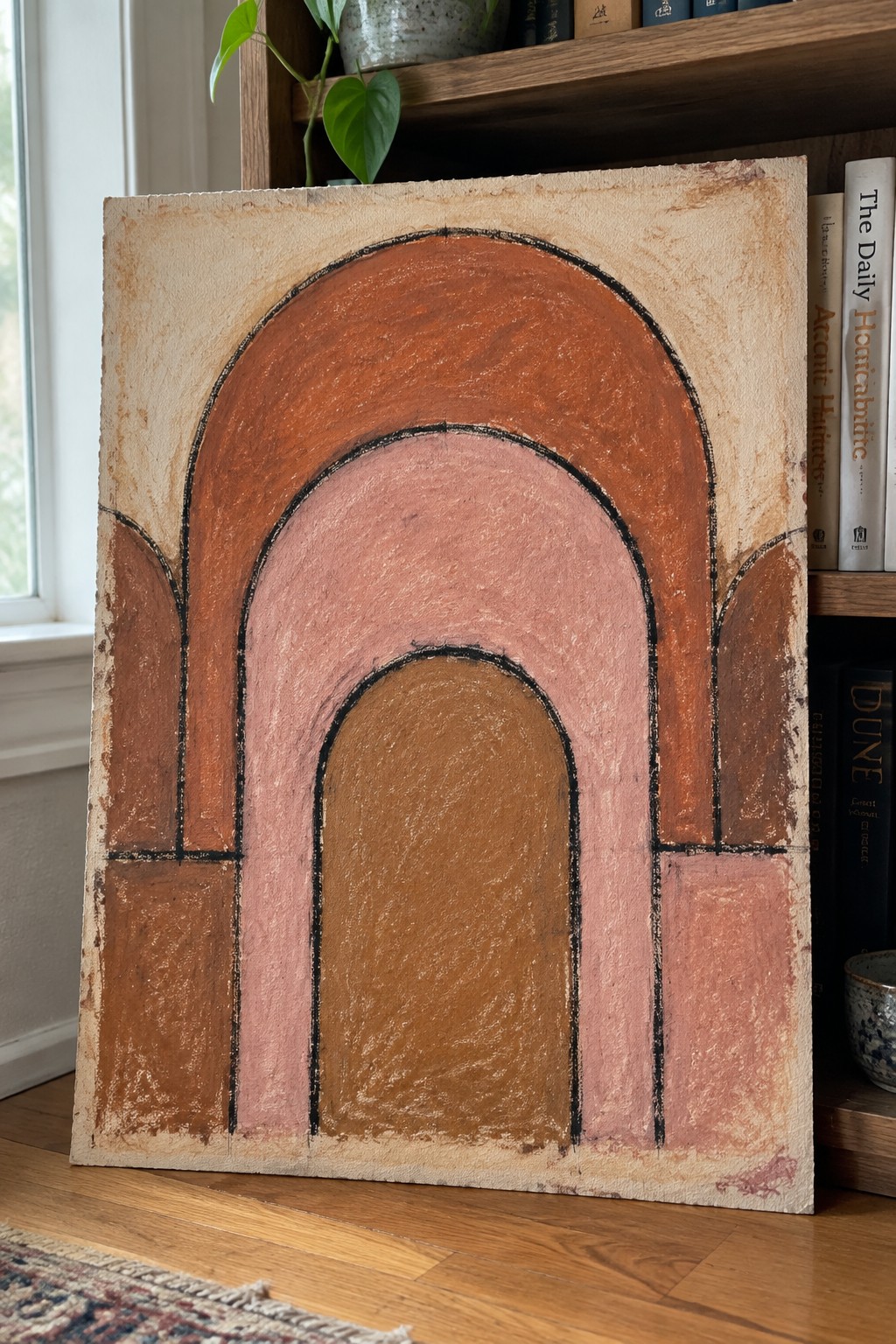
This painting idea uses a series of concentric arches to create depth with only a handful of repeated shapes. The forms sit in a warm palette of terracotta, dusty rose, and brown, separated by bold black lines that keep each layer distinct. The rough texture across the background adds visual weight without competing with the clean geometry.
The composition does a lot of the work here because the arches guide the eye inward on their own. You can scale the idea up for a large wall piece or simplify it by reducing the number of layers and adjusting the color steps to fit your space. This approach stands out on Pinterest because the strong outlines and limited palette read clearly even in a small thumbnail.
Interlocking Triangles and Diamonds in Limited Colors
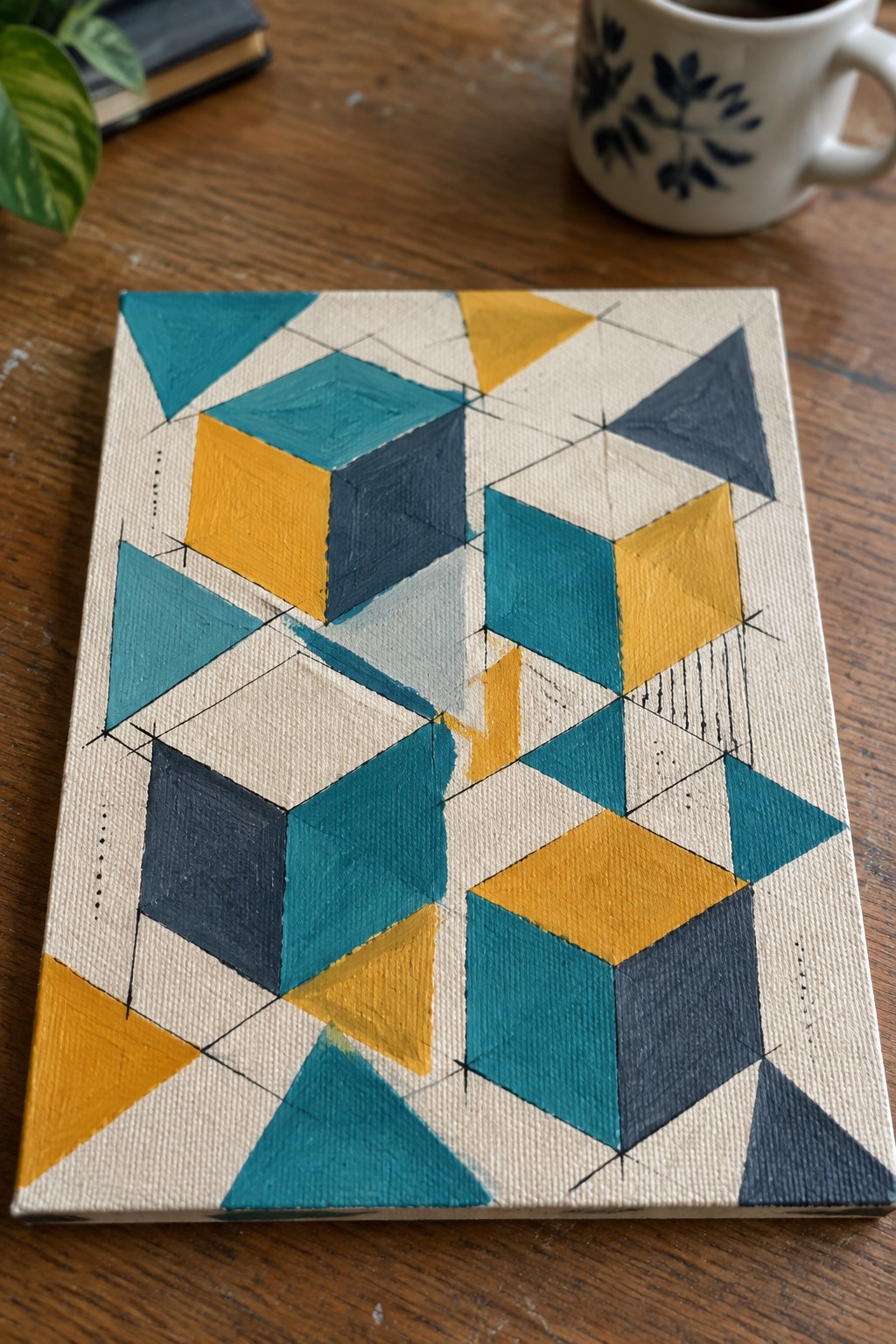
This painting idea uses a grid of overlapping triangles, diamonds, and angular blocks to create a flat yet dynamic abstract pattern. The composition relies on a tight color palette of teal, mustard yellow, and navy against a cream background, with thin black lines and dots providing light structure. The shapes fit together like a loose puzzle, letting the eye move across the canvas without a single focal point.
What makes this idea useful is how the repeating shapes do most of the layout work, so you only need to decide on placement and color rather than invent new forms. The same pattern can be painted larger on a bigger canvas or simplified by dropping some of the smaller details and lines. For practice or quick decor pieces, the limited palette keeps mixing easy while still giving enough contrast to make the blocks stand out.
Asymmetric Balance with a Dominant Red Circle
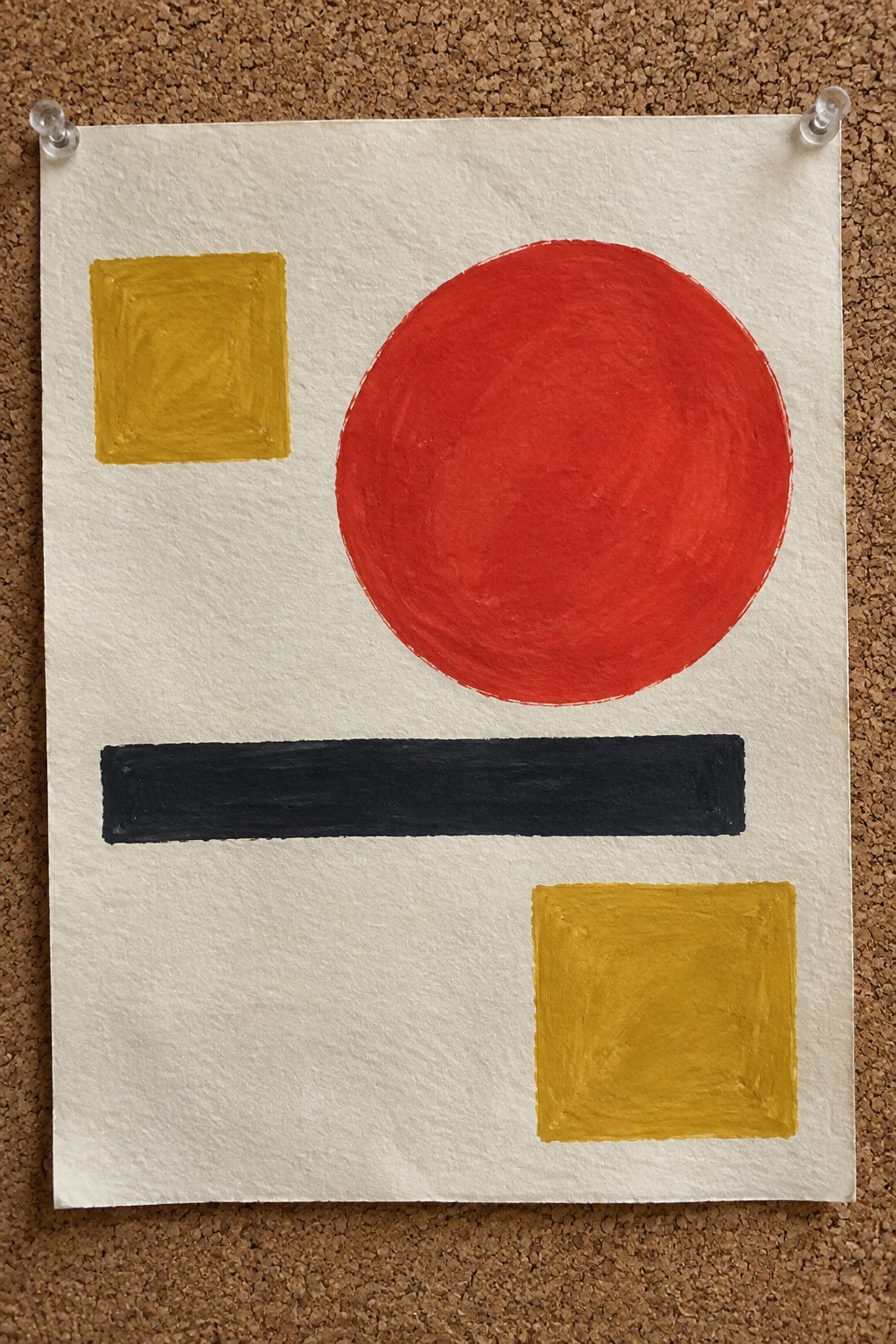
A bold red circle takes center stage in this abstract painting idea, offset by two yellow squares and a thick black horizontal bar that anchors the middle of the composition. The arrangement uses simple geometric shapes and high-contrast colors to create movement across the white space without needing intricate detail. This approach fits squarely into the modern abstract category, where scale and placement do most of the visual work.
What makes this idea useful is how the limited shapes and strong color blocks make it easy to scale up for a statement wall piece. The composition leaves plenty of breathing room, so you can adjust the circle size or shift the squares to fit different canvas proportions. A painting like this works especially well for beginners who want to practice clean edges and color mixing before moving into more complex subjects. The background keeps the focus on the shapes, which also makes the idea simple to personalize with different accent colors.
Geometric Cityscape Built from Bold Rectangles and Triangles
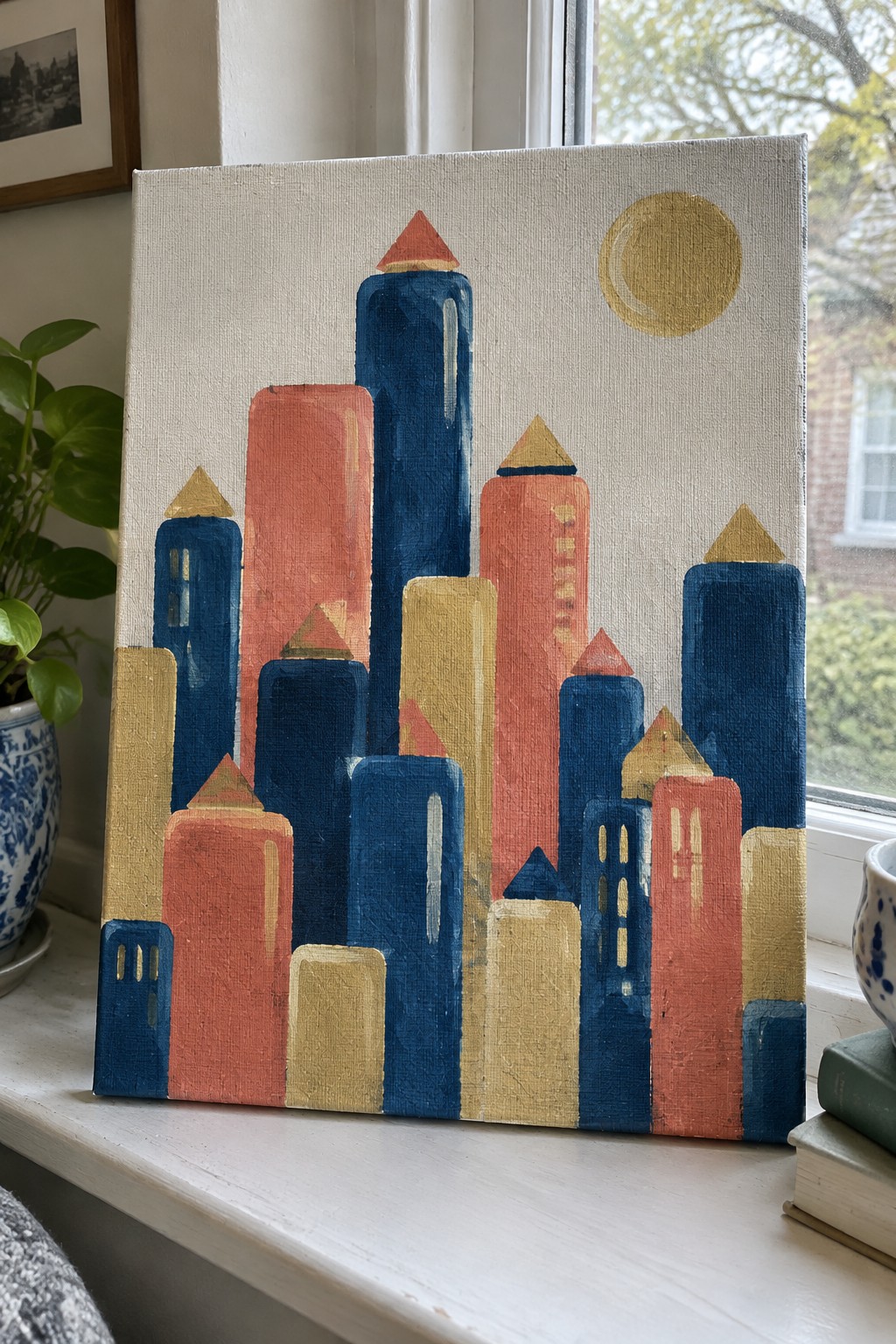
An abstract cityscape idea like this stacks simplified building forms of varying heights and widths to create a skyline without any realistic perspective. The composition gains its strength from the contrast between cool blues and warm oranges, with a few yellow accents and a single sun shape breaking up the upper space. This type of painting sits firmly in the modern abstract category where flat shapes and color placement do the work instead of detail or shading.
What makes this idea useful is how the same basic building blocks can be rearranged or resized to fit different canvas proportions. The limited color palette makes it simple to adapt for a specific room or to match other decor without starting from scratch. For practice, this kind of subject lets you focus on shape balance and edge control rather than complex blending. A version with fewer buildings or a different accent color would still read as the same idea but feel fresh.
Overlapping Leaf Silhouettes in Earthy Tones
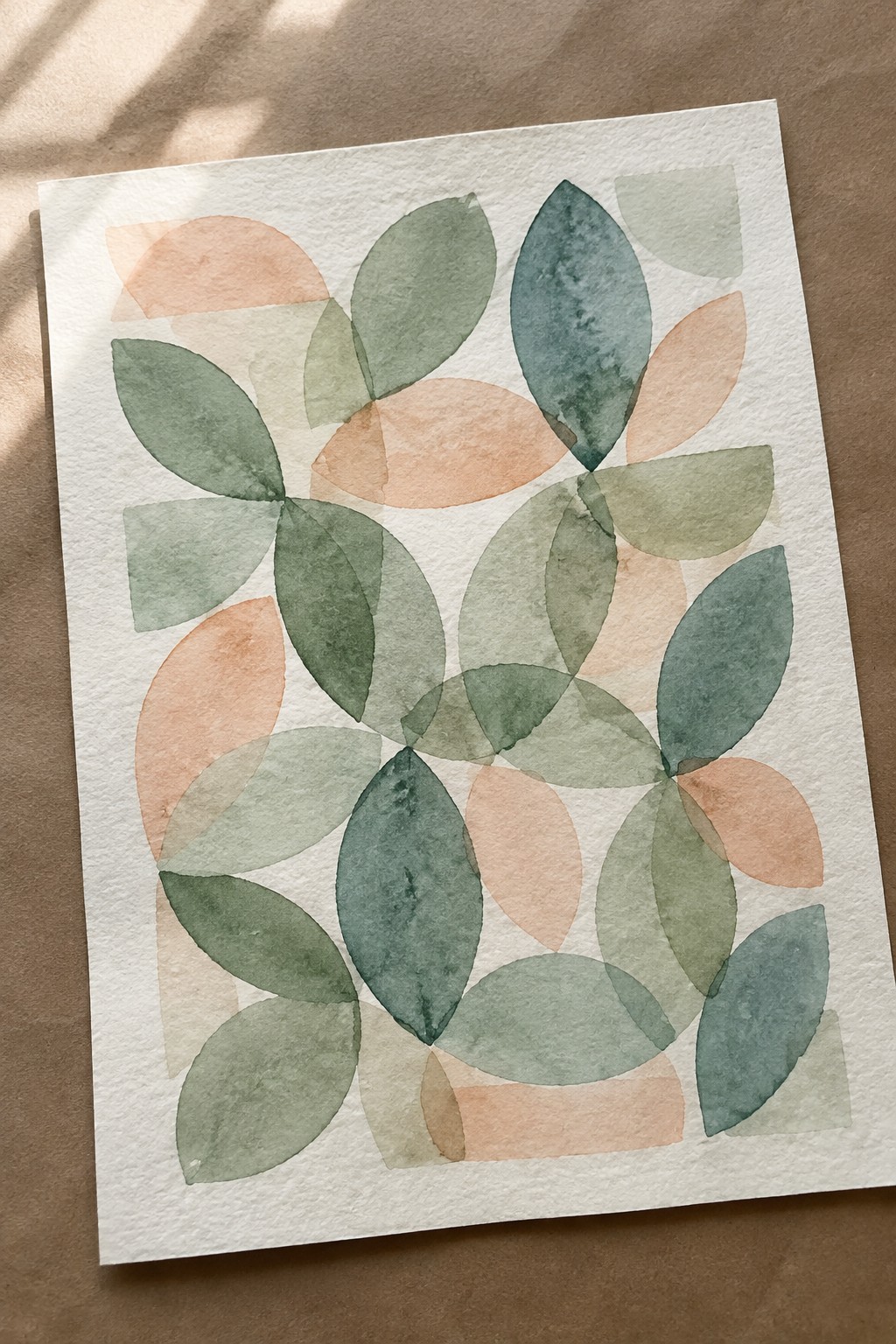
This painting idea uses repeated leaf shapes layered in different sizes and angles to build an abstract pattern. The composition works through overlapping forms that create new shapes where colors meet, using a restrained palette of greens and warm peach tones against white. It belongs to modern abstract decorative art that relies on simple repeated elements rather than realistic detail.
What makes this idea useful is how the overlapping arrangement does most of the visual work, so you only need to plan a few leaf placements to fill the space. The limited color palette makes it easy to adapt by swapping in other muted tones or trying it in a single color with value shifts. For practice, tracing the basic leaf outlines first lets you focus on how the overlaps interact before adding paint. A painting like this works especially well for wall pieces because the bold shapes read clearly from a distance.
Nested Squares in Bold Black White and Blue
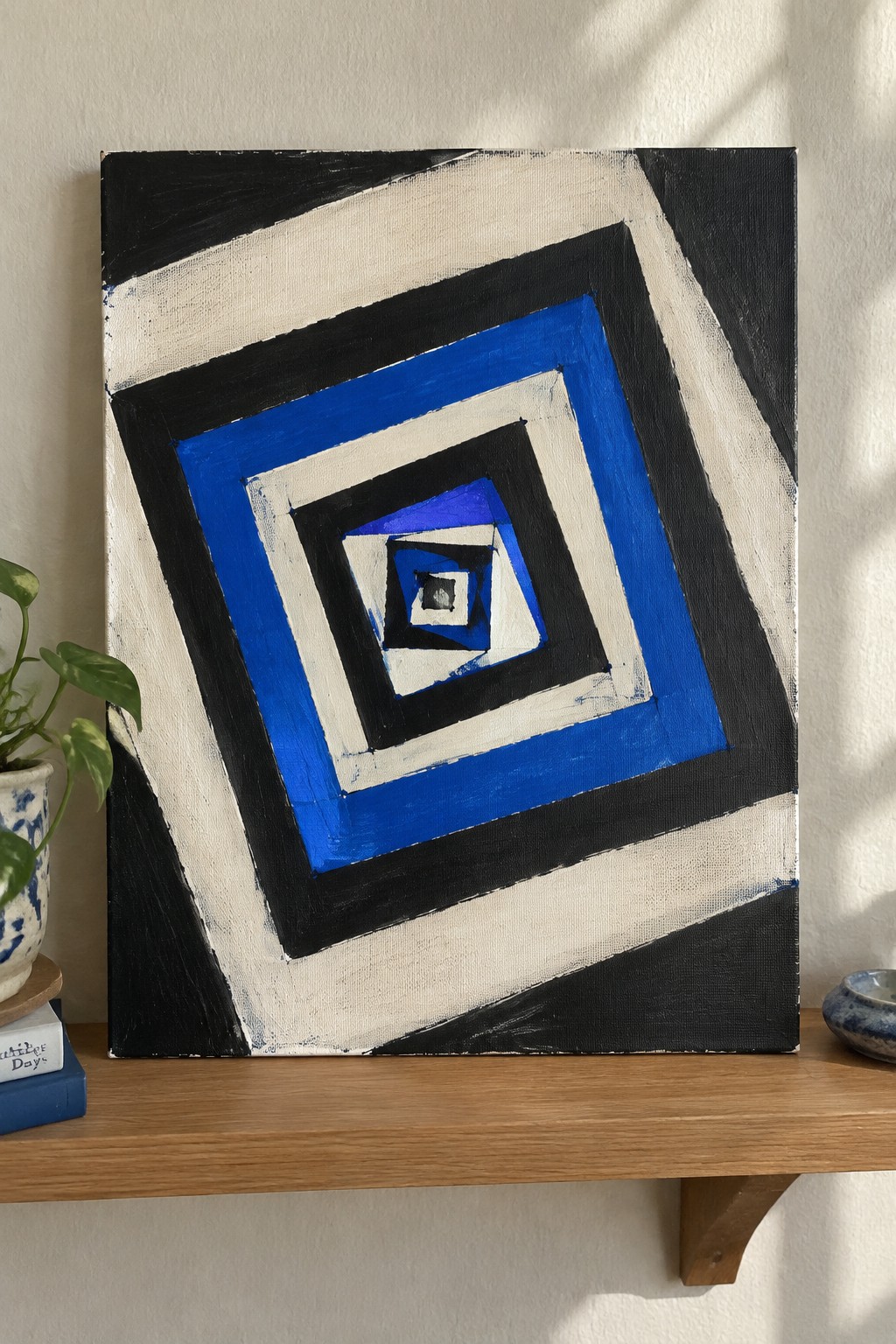
This painting idea uses a series of shrinking squares that sit inside one another to form a strong central focus, with the whole group tilted slightly to add energy. The limited palette of black, white, and vivid blue creates clear separation between each layer while keeping the design simple and graphic. It belongs to the geometric abstract category, where the impact comes from repeating shapes and high-contrast color blocks rather than detail or shading.
What makes this idea useful is how easily the same structure works at different sizes or with swapped colors. You could paint it larger for a statement wall piece or shrink the rings down for a smaller canvas without losing the effect. The clean edges and flat color areas make it a practical choice for beginners who want to practice straight lines and layering, and the bold contrast helps it read well from across a room on Pinterest.
Diagonal Split with Earthy Color Fields
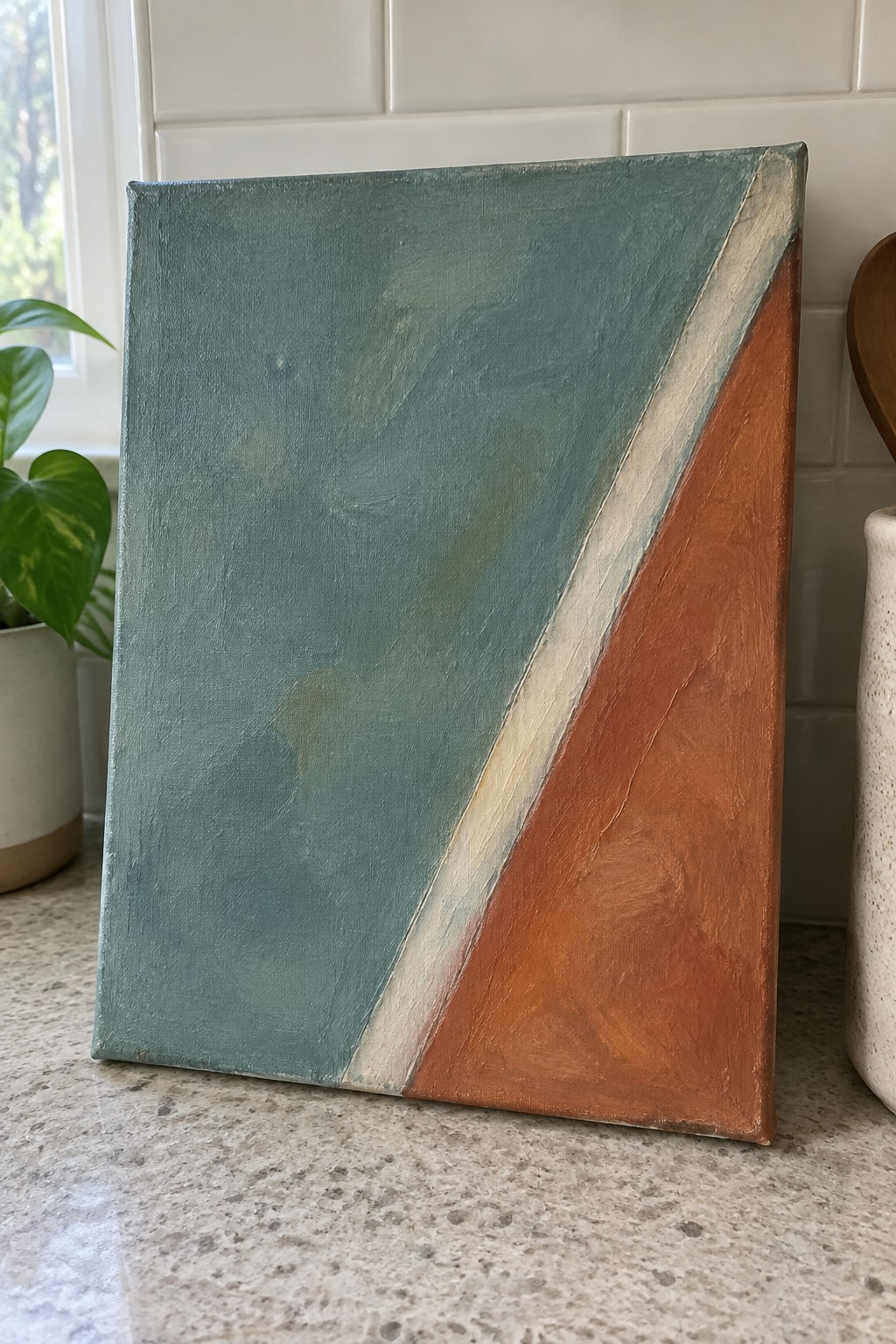
This abstract idea uses a strong diagonal line to divide the canvas into two large color blocks, with a narrow neutral stripe running along the edge for separation. The teal field on one side and the warm rust on the other create contrast through simple shape and color rather than detail or pattern. The composition stays effective because the diagonal adds movement while the limited palette keeps everything balanced and easy to read.
What makes this idea useful is how quickly it can be adapted to different color schemes that match existing decor. You could swap the teal and rust for navy and ochre, or keep the same tones but change the canvas size for a bigger statement piece. The layout works well for practice because it focuses on clean edges and color mixing without requiring any drawing skills. For wall art, the bold diagonal gives a modern geometric feel that stands out even in small spaces.
Scattered Irregular Shapes in Bright Colors
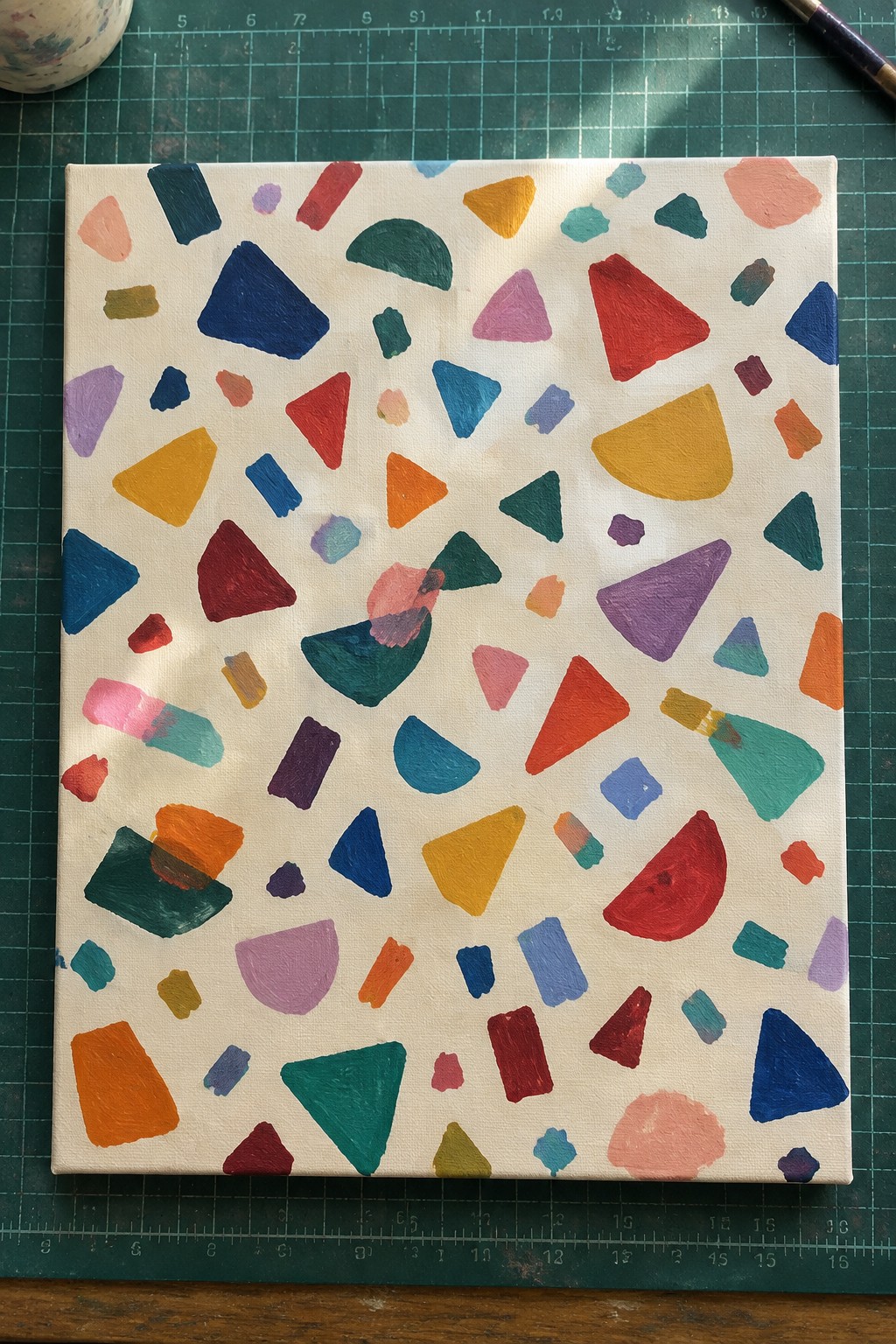
This painting idea uses a loose scatter of irregular geometric shapes across a white background to create a modern abstract look. The shapes range from triangles and semicircles to rounded blobs, all painted in bold, varied colors that include reds, blues, yellows, and greens. The open white space between them keeps the composition from feeling crowded while letting each shape stand out on its own.
What makes this idea useful is how simple it is to adjust the size and number of shapes depending on your canvas. You can repeat a smaller set of colors for a cleaner result or add more variety if you want something busier. For wall art, this approach works especially well because it brings color and movement without needing a clear subject or tight layout.
Vertical Stacked Circles with Contrasting Rings
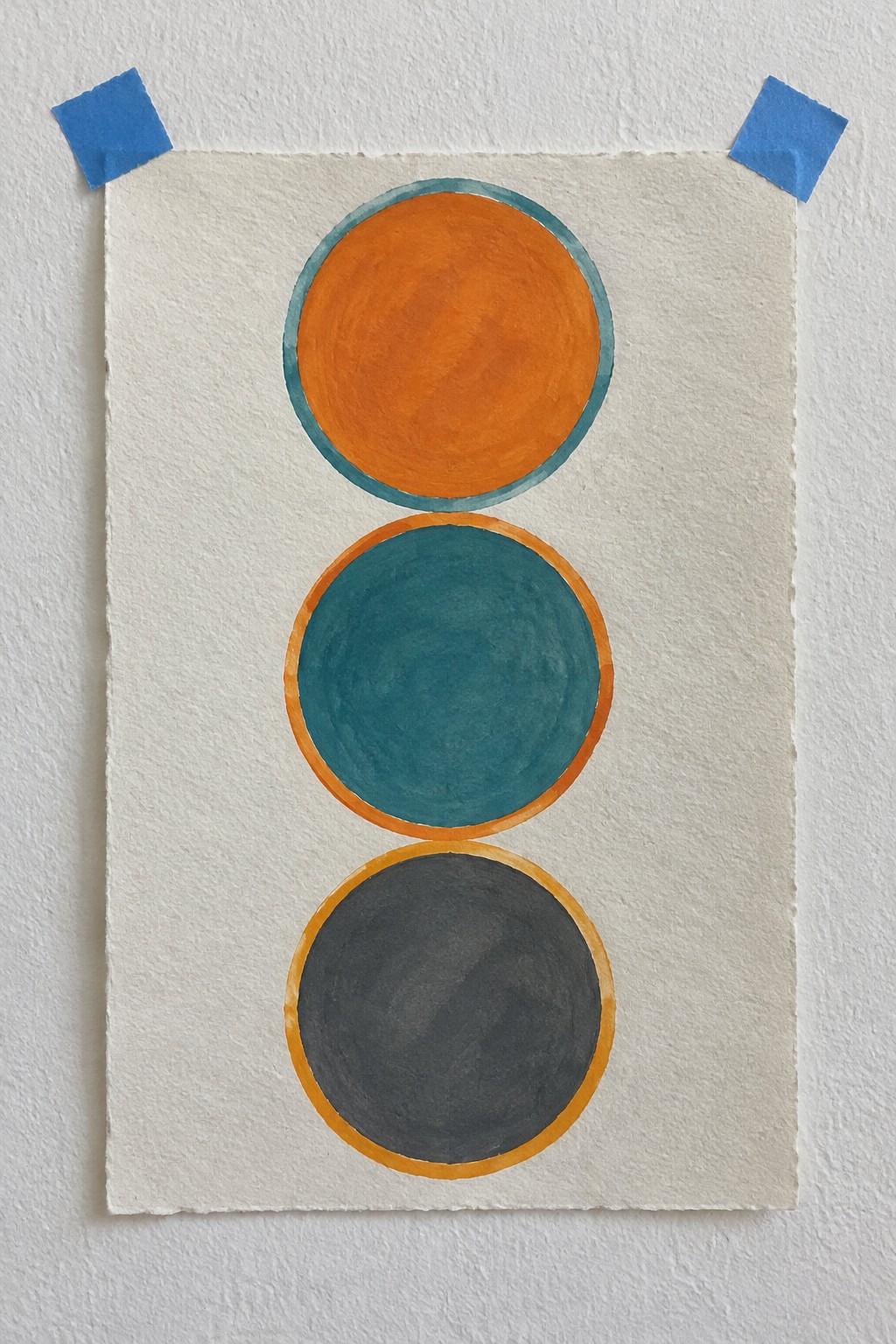
A painting idea built around three large circles aligned vertically works by letting each shape carry a solid fill color paired with a thick ring in a second hue. The top circle uses an orange center with a teal ring, the middle reverses that pairing, and the bottom shifts to a dark gray center with an orange ring. This limited color swap across repeated shapes keeps the composition balanced while the slight overlap between circles adds a subtle sense of layering.
The composition does a lot of the work here because the even spacing and bold borders make the idea readable even at small sizes. You can adapt the same layout by changing the ring colors to match a room palette or stretching the whole arrangement across a taller canvas for a statement piece. For practice, this kind of subject helps you focus on clean edges and consistent brush pressure without needing complex details.
Geometric Abstract Built from Bold Color Blocks
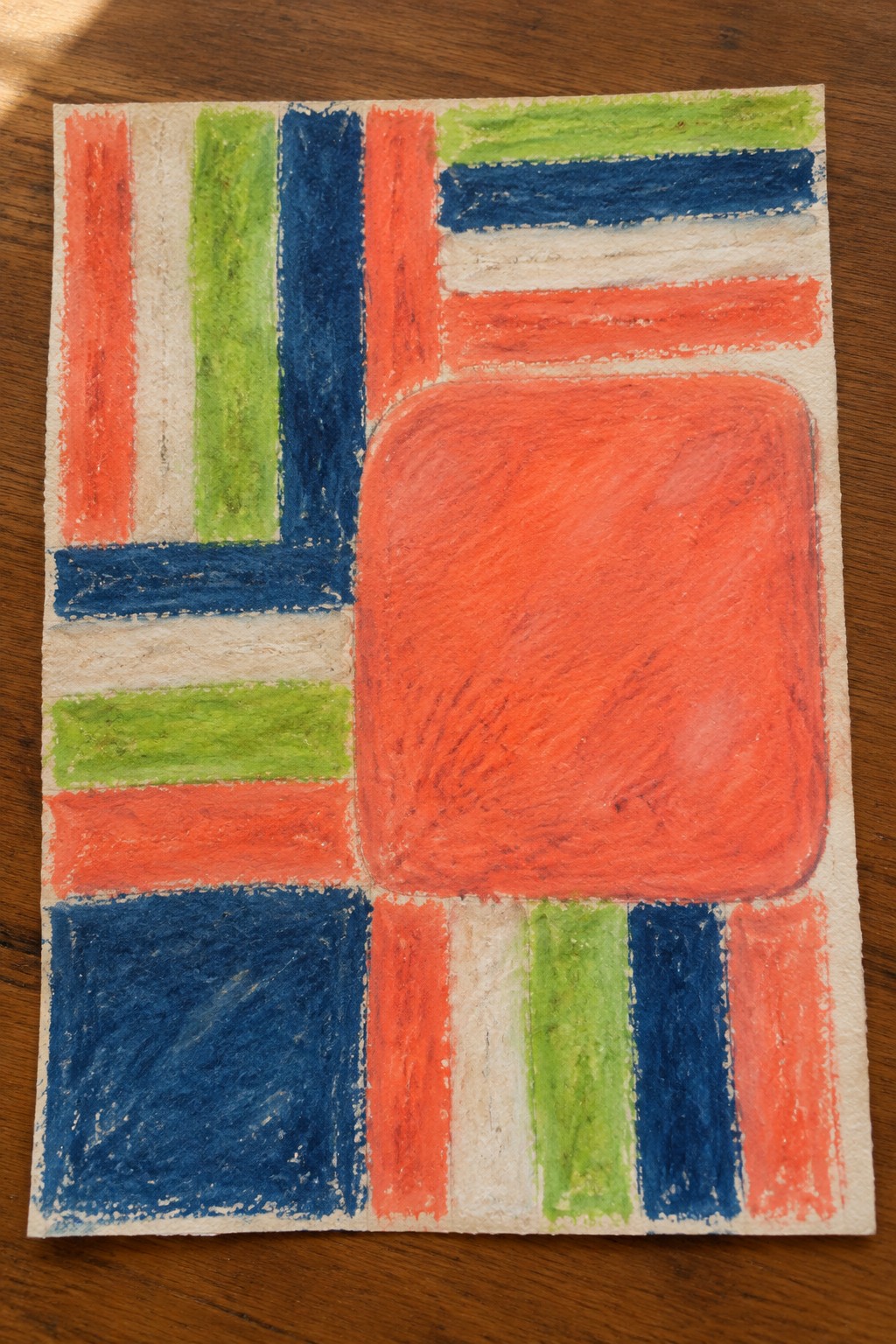
This painting idea explores abstract composition by placing rectangles, vertical strips, and one large rounded form across a loose grid layout. The restricted palette of red-orange, deep blue, lime green, and cream keeps the focus on shape relationships and color contrast rather than detail. The rounded red shape creates a clear focal point that interrupts the straight lines and gives the whole arrangement more movement.
What makes this idea useful is how the large simple shapes let you practice color blocking and balance without needing precise drawing skills. You can adapt it easily by changing the color order, stretching the rounded form into a different size, or adding one extra horizontal band for variety. For wall art this kind of bold abstract works well because it stays readable even when viewed from across a room or in a small online image. The same layout could also serve as a quick color study before you try a larger version with different hues.
Abstract Cityscape Built from Overlapping Color Blocks
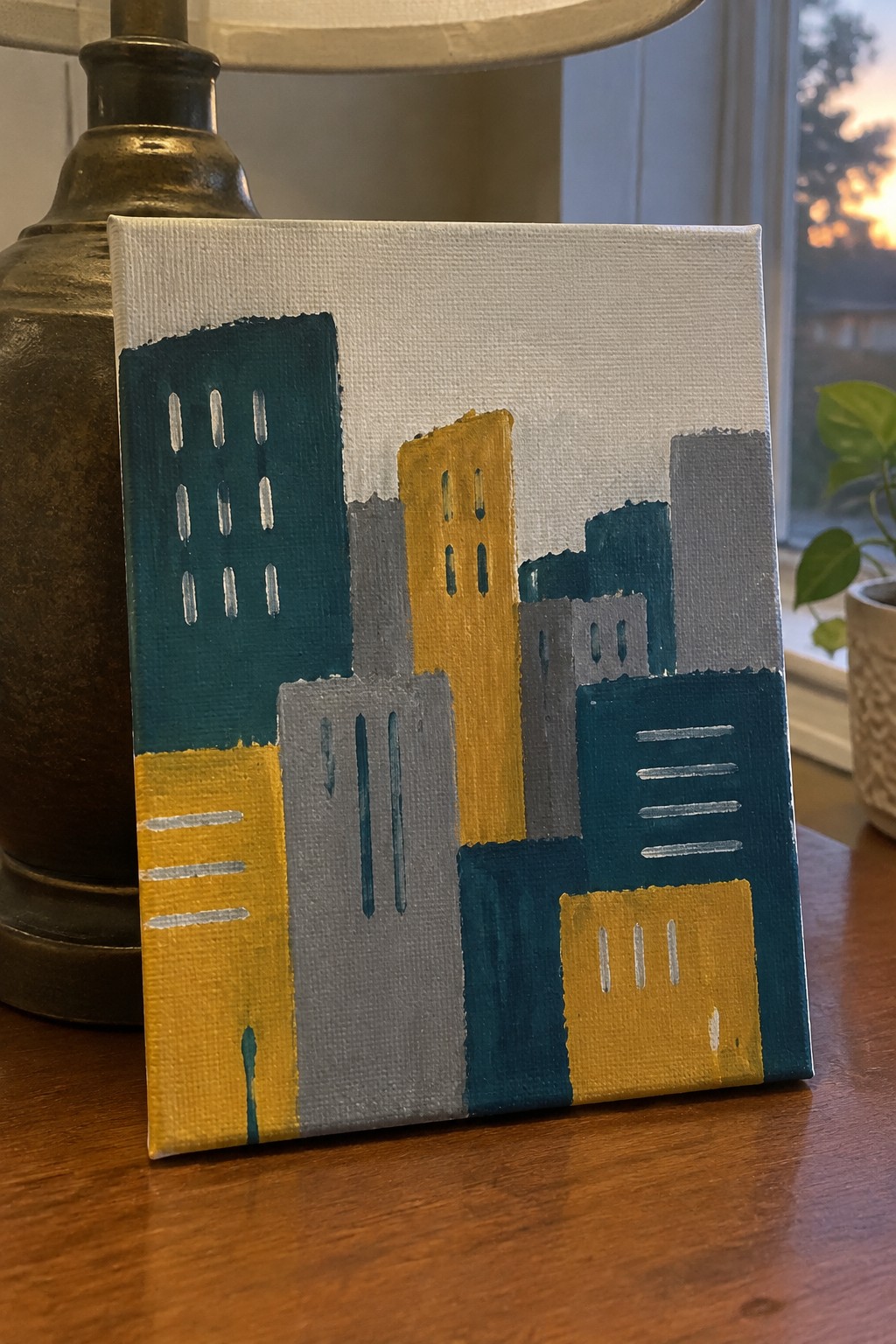
An abstract city skyline painted with bold rectangles offers a simple way to explore modern geometric composition. The idea relies on stacking and overlapping flat shapes in teal, mustard yellow, and gray to suggest buildings without any fine detail. A limited palette and uneven building heights create visual interest while keeping the overall layout easy to follow.
What makes this idea useful is how the same block arrangement can be repeated with new color sets to suit different spaces. The flat shapes and minimal lines make it approachable for trying out color blocking techniques or scaling the canvas size up or down. For wall art, this kind of piece works well in smaller formats where the strong shapes still read clearly from a distance.
Overlapping Triangles for Modern Geometric Abstraction
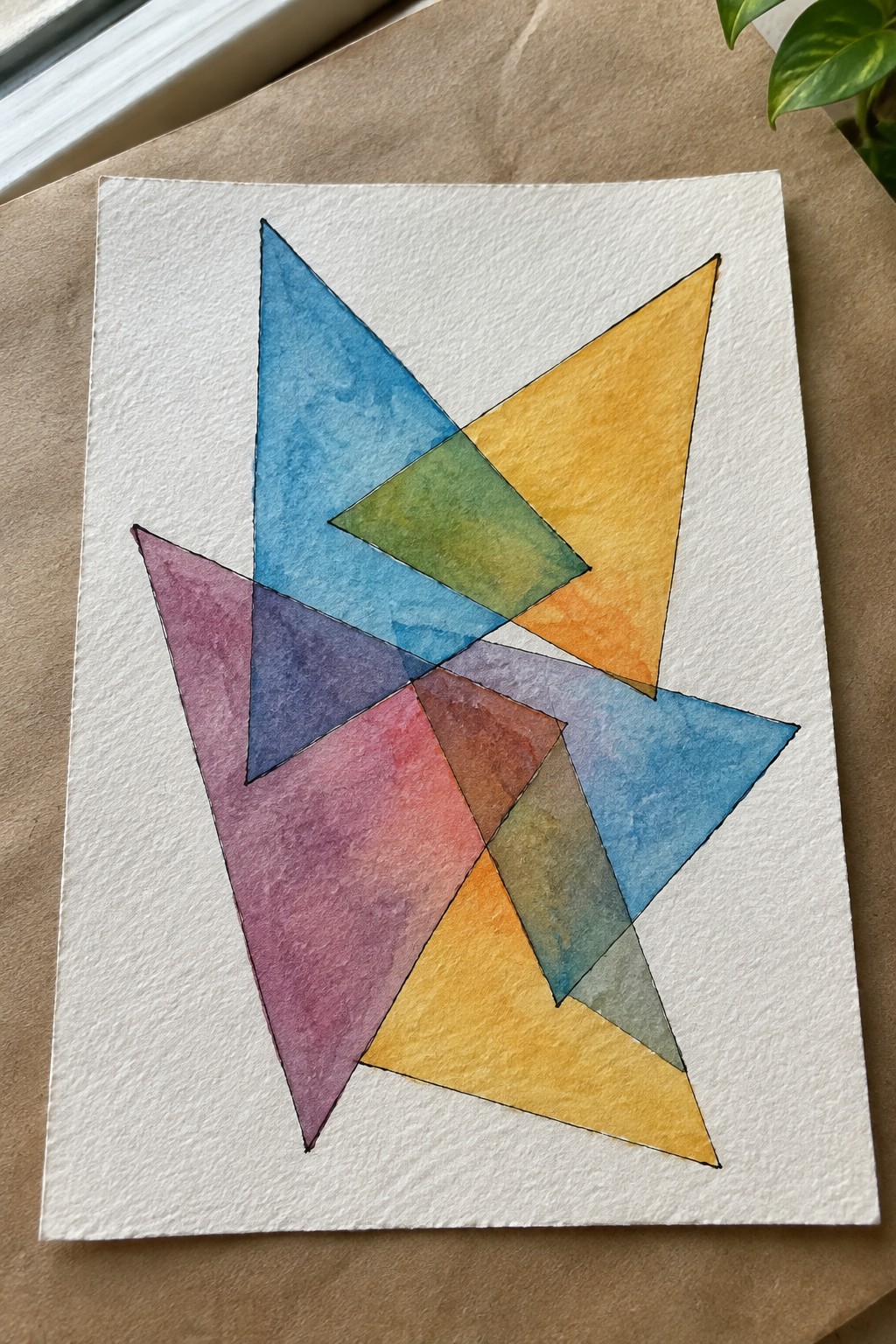
This painting idea uses a cluster of triangles arranged at different angles so they cross and layer over one another to create one larger star-like form. The main appeal comes from letting the shapes do the work while colors shift from warm yellows and oranges into cooler blues and purples, with a few spots where the washes blend at the edges. It belongs in the bold geometric abstract category where flat shapes and color placement matter more than realistic detail.
What makes this idea useful is how the overlapping layout creates interest without needing complex drawing skills. You can change the color scheme to match a room, shrink the whole design for a sketchbook page, or stretch it across a larger canvas for wall art. The simple triangle base also makes it easy to try different paint types or add a second layer of shapes if you want more variation.
Minimalist Black Polygon with Red Circle Accent
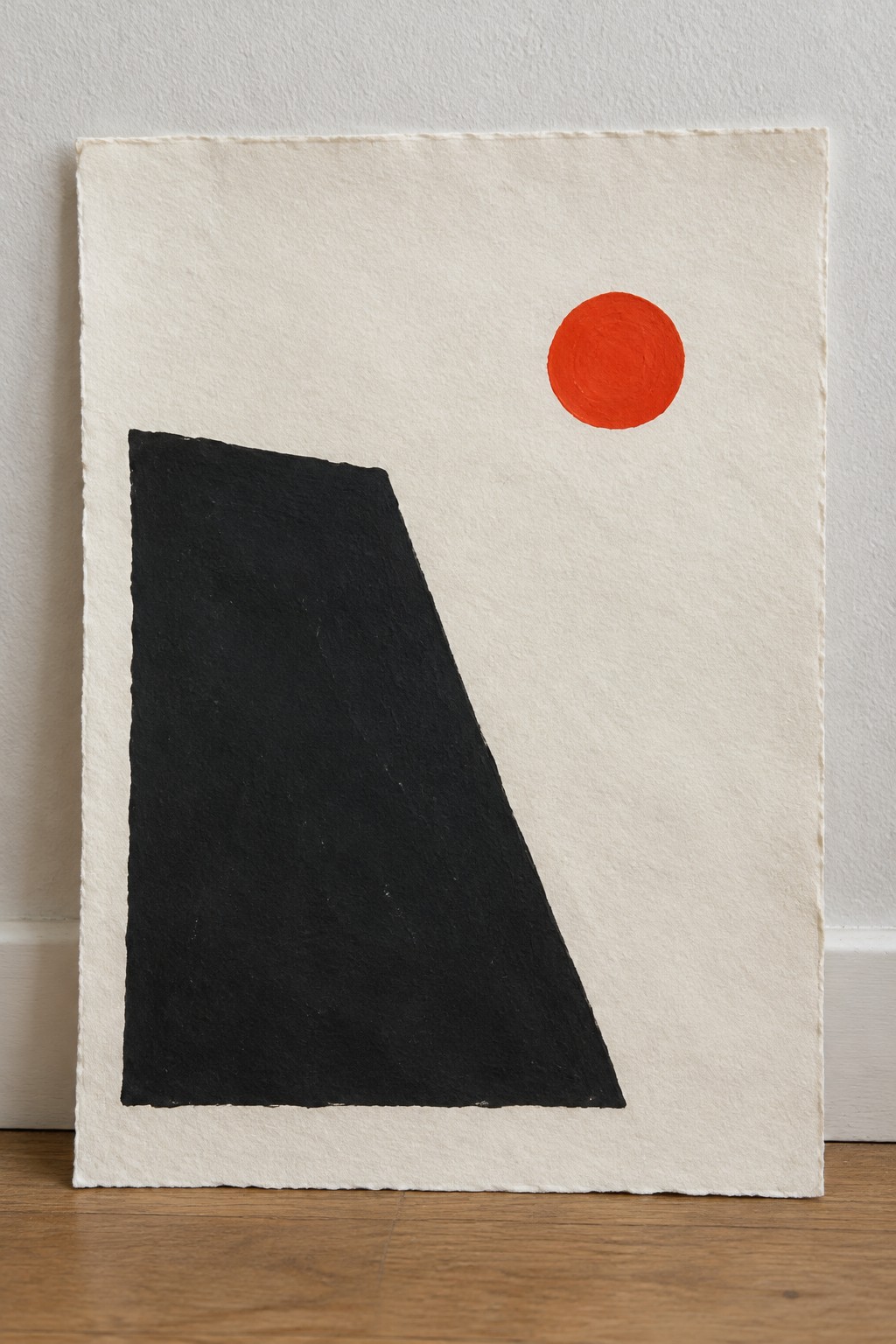
This painting idea centers on a large irregular black geometric shape that dominates the lower left area, balanced by a single small red circle floating in the upper right. The approach uses extreme asymmetry and limited elements to create tension between the heavy dark mass and the bright isolated dot. It belongs to the category of modern abstract art that relies on bold shapes and negative space rather than detail or layering.
What makes this idea useful is how the two simple forms let you test composition quickly on any size surface without extra colors or tools. You can adapt the black shape by making its edges straighter or more jagged, or shift the red circle closer or farther to change the balance. The neutral background keeps the focus tight, so the piece works well as a fast practice exercise or a clean statement for wall art.
Bold Color Blocks with Mixed Straight and Curved Edges
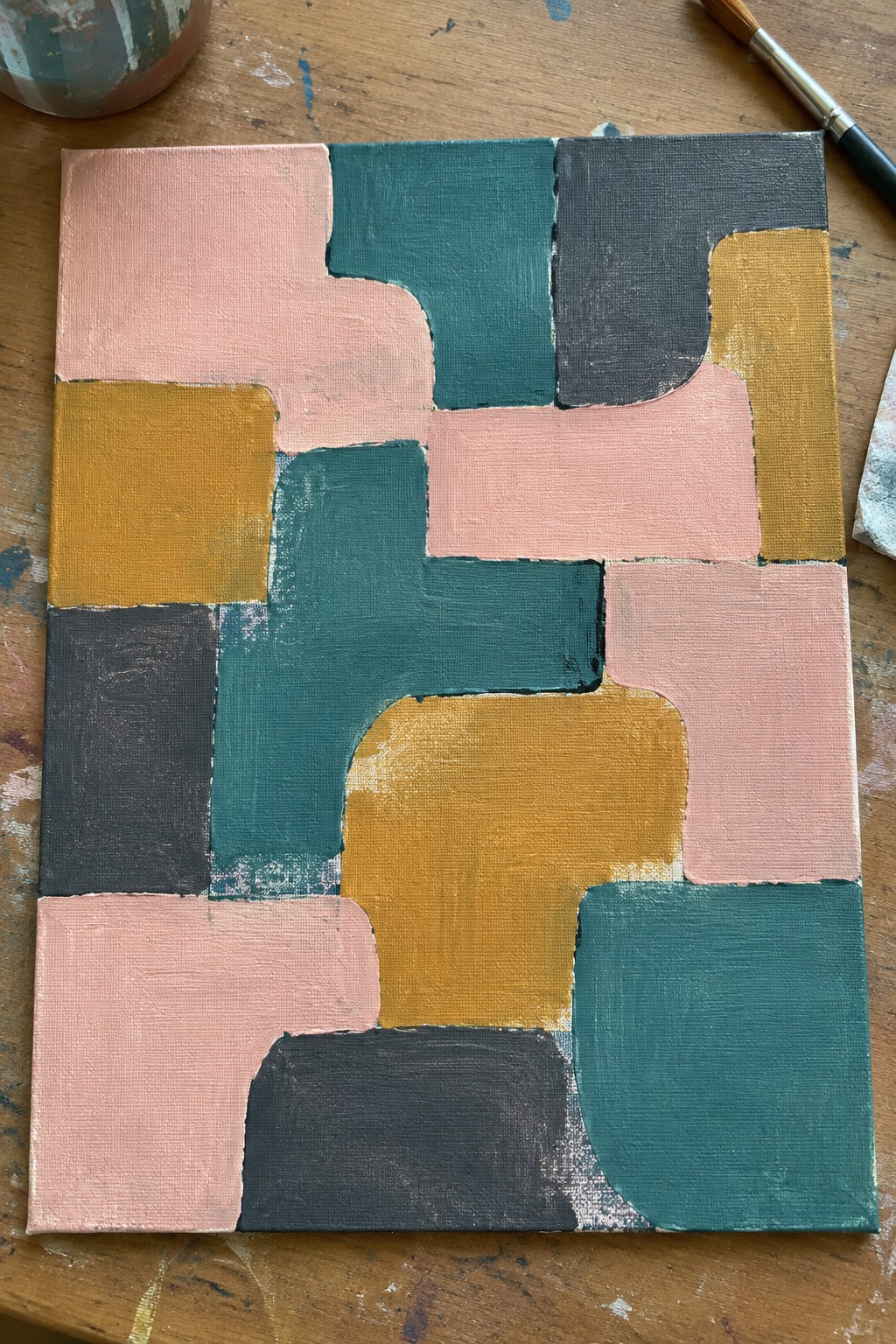
This painting idea focuses on building an abstract design from large interlocking color blocks in a palette of soft pink, teal, mustard yellow, and charcoal gray. The shapes connect and overlap without following a strict grid, using both hard edges and a few rounded forms to hold the composition together. It belongs to the modern abstract category where the main interest comes from color placement and shape balance rather than any recognizable subject.
The composition does a lot of the work here by letting the blocks meet and layer in a loose arrangement. You can adapt it easily by swapping the colors to fit a room or simplifying the layout to fewer blocks on a smaller canvas. For wall art this kind of piece works well because the limited palette stays clean while the mix of angles and curves keeps it from feeling too rigid.
Gradient Arches Built from Stacked Curves
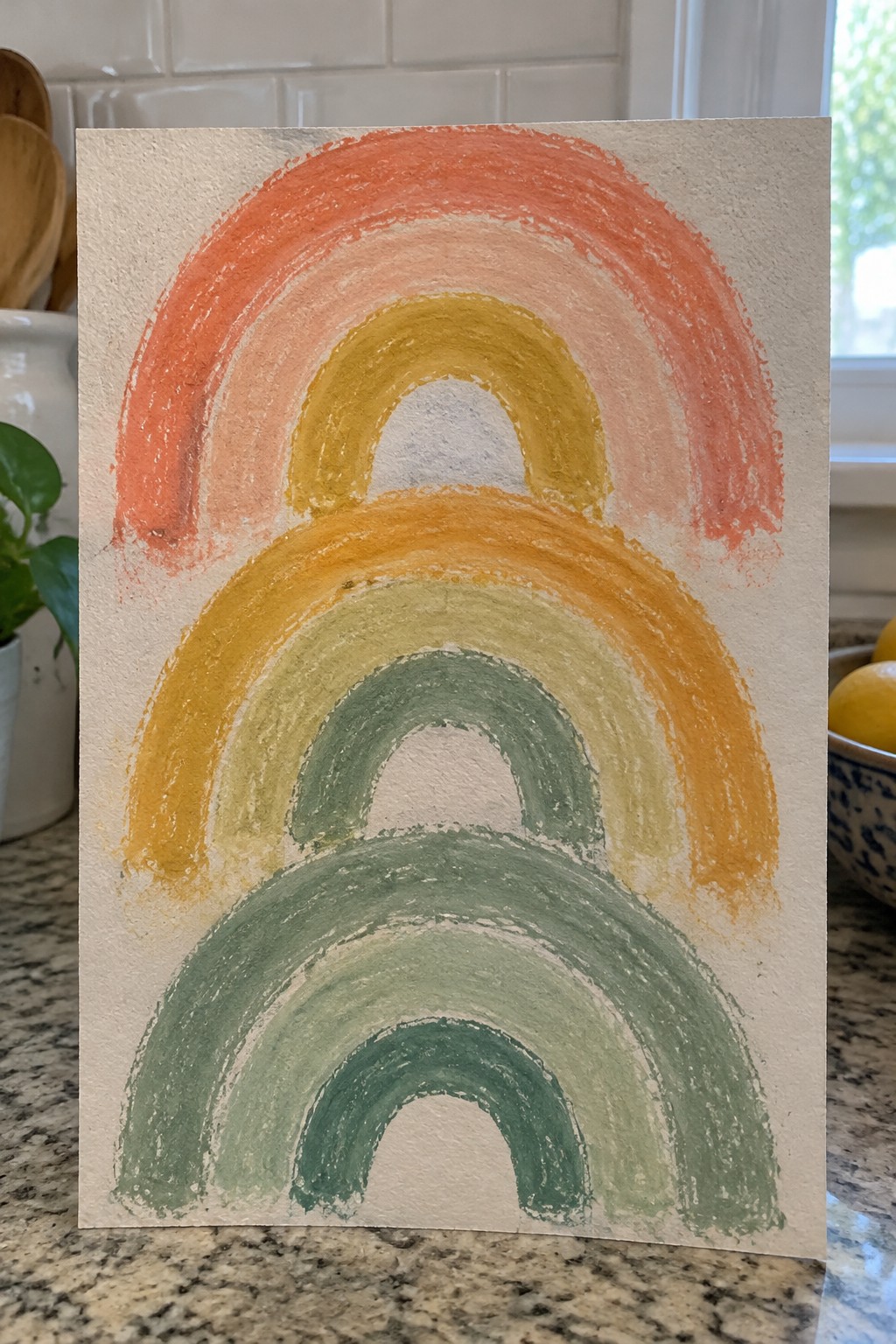
A painting idea built around stacked arches works by repeating the same curved shape in descending sizes and shifting colors to create a rainbow effect without needing a full circle or sky. The main concept relies on bold geometric curves placed in a centered, overlapping sequence that moves from warm reds and oranges at the top through yellows into cooler greens at the bottom. This approach keeps the composition simple while the visible brush texture and slight color blending between layers add interest and depth.
The composition does a lot of the work here because the arches naturally guide the eye downward and the limited color steps make the idea easy to copy or resize. You can adapt it by swapping the palette for different seasons, using fewer or more bands, or changing the background tone to fit a room. For practice or quick wall pieces, the idea stands out on Pinterest because the clean geometric form still feels fresh when the colors stay bold and the edges stay loose.
Radiating Geometric Burst With a Solid Center
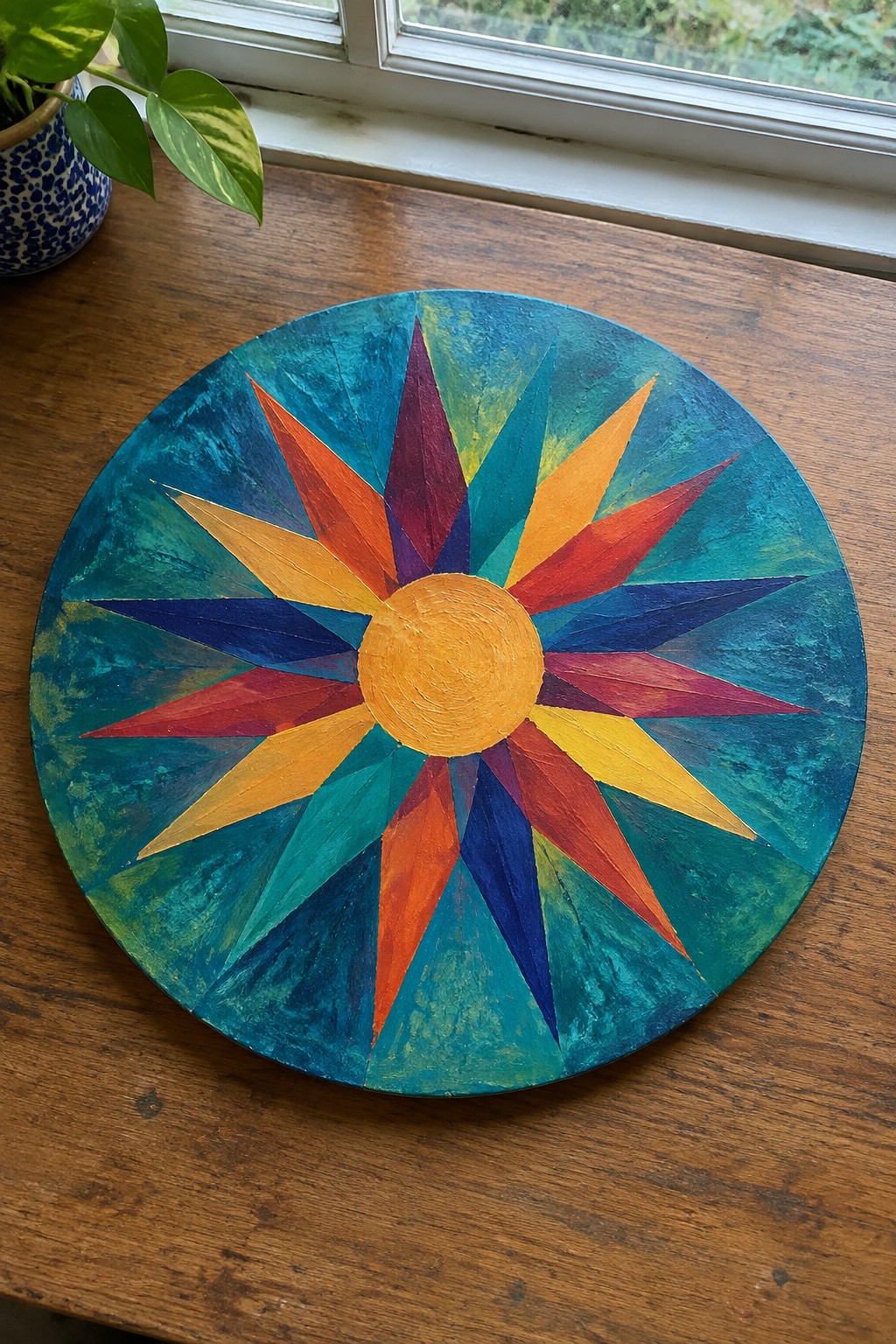
A circular abstract painting built from a central warm circle and sharp triangular rays that extend outward in repeating color groups creates a strong sunburst or star pattern. The design uses contrasting warm oranges, reds, and yellows against cooler blues and teals to keep the rays distinct while the textured background holds everything together. This approach turns a simple radial layout into a complete decorative piece without needing extra elements.
What makes this idea useful is how the fixed center and even spacing do most of the layout work, leaving you free to experiment with color order or ray width. The same structure scales easily to smaller canvases or can be simplified by reducing the number of colors for faster practice sessions. For wall art, the bold circular shape reads clearly from a distance and performs well in modern gallery wall arrangements.
Overlapping Polygons in Coral and Teal
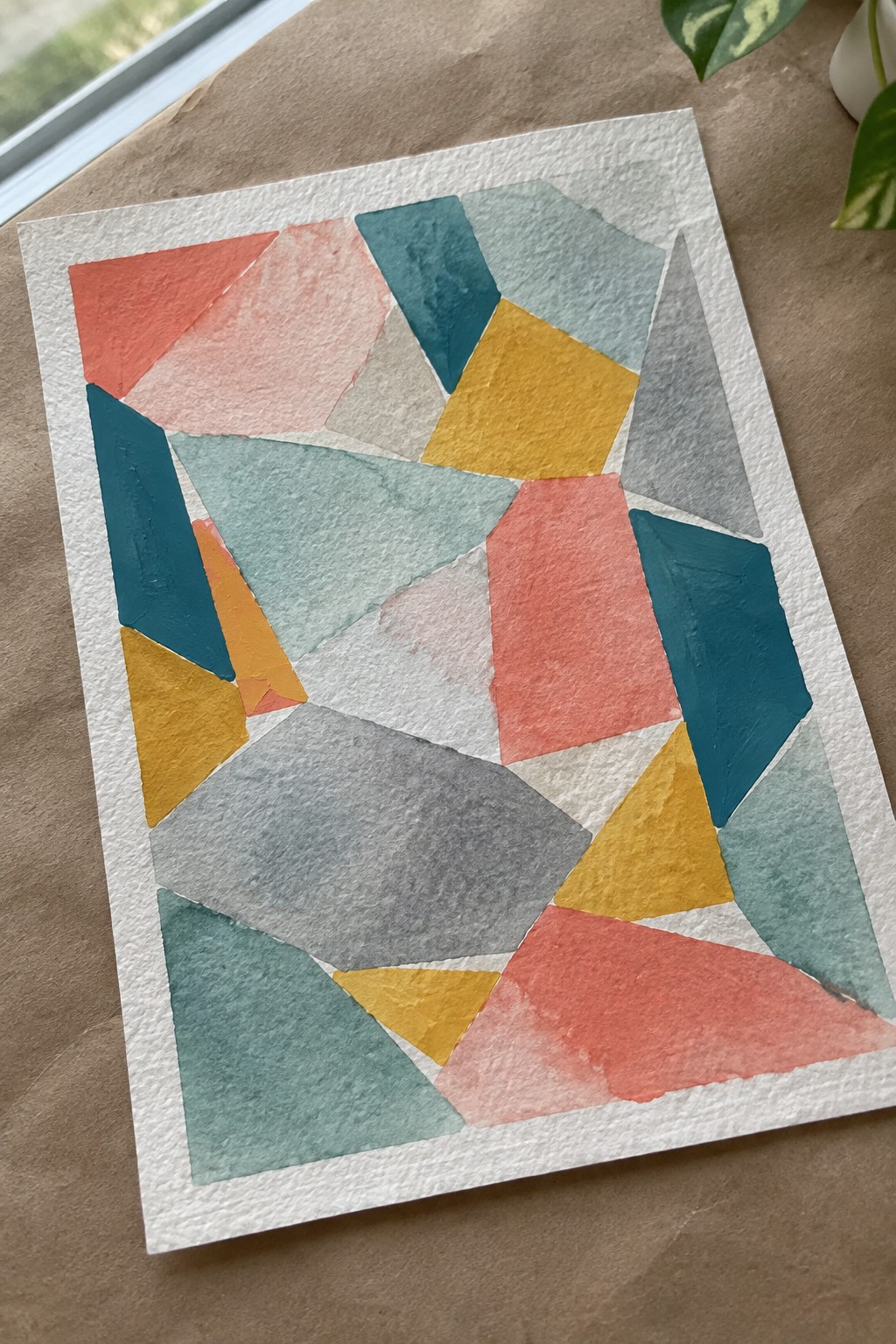
An abstract built from irregular polygons that lock together across the surface. The shapes range from large blocks to small wedges, and the palette shifts between warm coral and pink against cooler teal and gray to create contrast without chaos. This kind of geometric idea stays effective because the flat color areas and hard edges keep the focus on arrangement rather than detail work.
The composition does a lot of the work here by letting bigger neutral shapes anchor the layout while smaller bright pieces add movement. You can adapt it easily by changing the color mix to match a room or swapping in different polygon sizes on a larger canvas. For wall pieces, the clean modern look holds up well even when simplified to fewer colors or painted on stretched paper instead of watercolor board.
Bold Curve Balanced by Three Horizontal Color Blocks
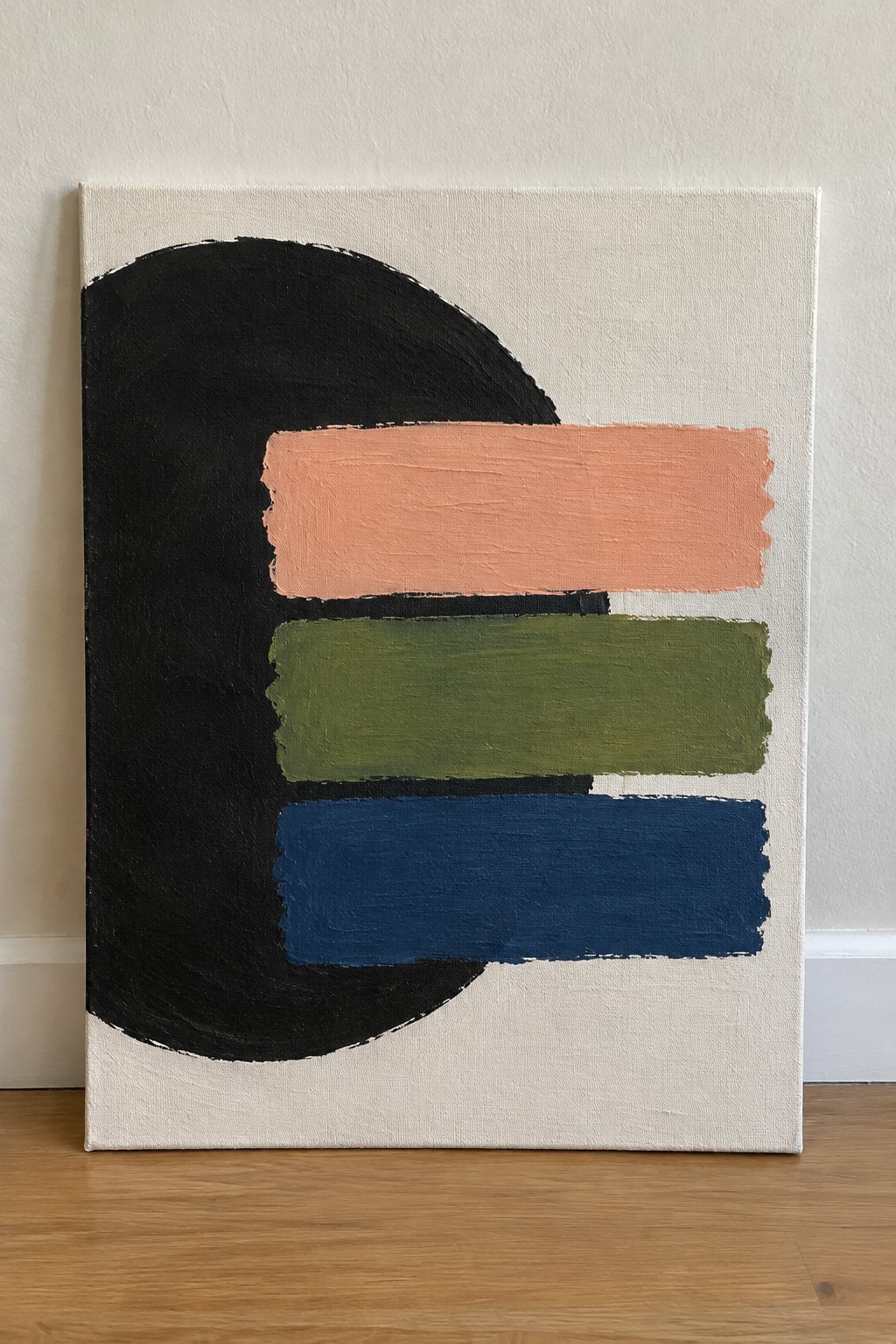
This painting idea uses a large black curved form as the main anchor on one side of the canvas, paired with three stacked horizontal blocks in peach, olive green, and navy blue. The idea works through strong shape contrast and simple overlapping rather than detail or blending. It fits the category of modern geometric abstract art that relies on color placement and negative space.
What makes this idea useful is how the single curved shape carries most of the visual weight, so you only need to decide on three colors and their order. The color palette makes this easy to adapt by swapping in any three tones that match your room or project. For wall art, something like this works especially well because the bold blocks read clearly from a distance. You could simplify it further by using only two blocks or scale the whole thing up on a bigger canvas without adding more elements.
Geometric Florals Made from Layered Shapes
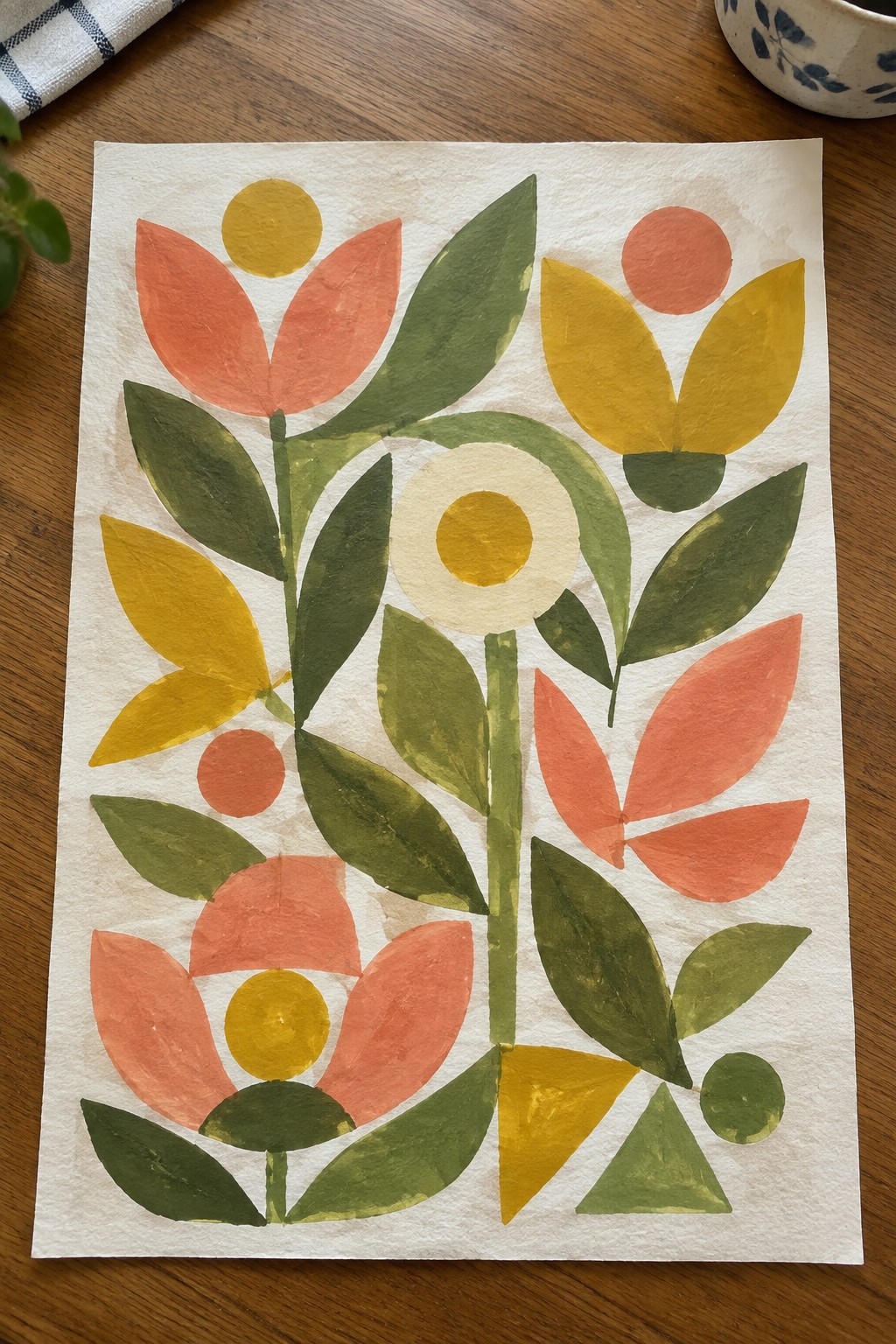
This painting idea builds stylized flowers and leaves entirely from basic geometric forms like circles, ovals, and triangles. The shapes overlap slightly to suggest stems and petals while keeping everything flat and graphic. It sits in the decorative abstract category and relies on a tight palette of coral, yellow, and green to hold the composition together without any realistic detail.
What makes this idea useful is how the simple shapes remove the need for freehand drawing. You can trace or cut templates once and reuse them across multiple pieces. The layout works at different scales, so the same idea fits both small practice sheets and larger wall art. Changing just one color in the palette gives you a fresh version without redesigning the whole thing.
Frequently Asked Questions
What artists are typically featured in collections of modern abstract paintings using bold geometric shapes?
Many such collections highlight contemporary creators like those inspired by Piet Mondrian or Kazimir Malevich, often including emerging talents who blend sharp lines and vibrant colors. Readers can research artist bios through museum sites or art databases to learn about their influences and career highlights for deeper appreciation.
How can someone incorporate these types of paintings into their home or office decor effectively?
Start by selecting pieces that match your space’s color scheme and scale, then position them on neutral walls to let the geometric forms stand out. Pair them with minimalist furniture to avoid visual clutter, and consider lighting that enhances the bold shapes without glare for a balanced, modern look.
Where can buyers find prints or affordable versions of similar geometric abstract artworks?
Online platforms like Society6 or Etsy offer high-quality prints of original designs, while local galleries may sell limited editions. For budget options, check digital downloads from artist websites that allow custom sizing, ensuring you verify copyright details before purchase or reproduction.
What makes bold geometric shapes a key element in modern abstract art interpretations?
These shapes create visual tension and harmony through repetition and contrast, allowing viewers to focus on form and color rather than realistic subjects. They often reflect themes of order amid chaos, helping audiences explore emotions or ideas through structured yet dynamic compositions.
How should one care for and preserve modern abstract paintings with bold geometric elements?
Keep them away from direct sunlight and high humidity to prevent fading or warping of materials like canvas or acrylic. Dust gently with a soft cloth regularly, and consult a professional conservator for any repairs to maintain the integrity of the geometric details over time.
