

I have been trying out drip painting on my own canvases for a while now.
It lets the paint flow and leave trails without much control from me.
I collected some ideas that show different ways to get those abstract effects.
A few use everyday supplies like cups and sticks I keep around.
Others focus on how the surface is moved to guide the paint.
Vertical Color Drip Trails

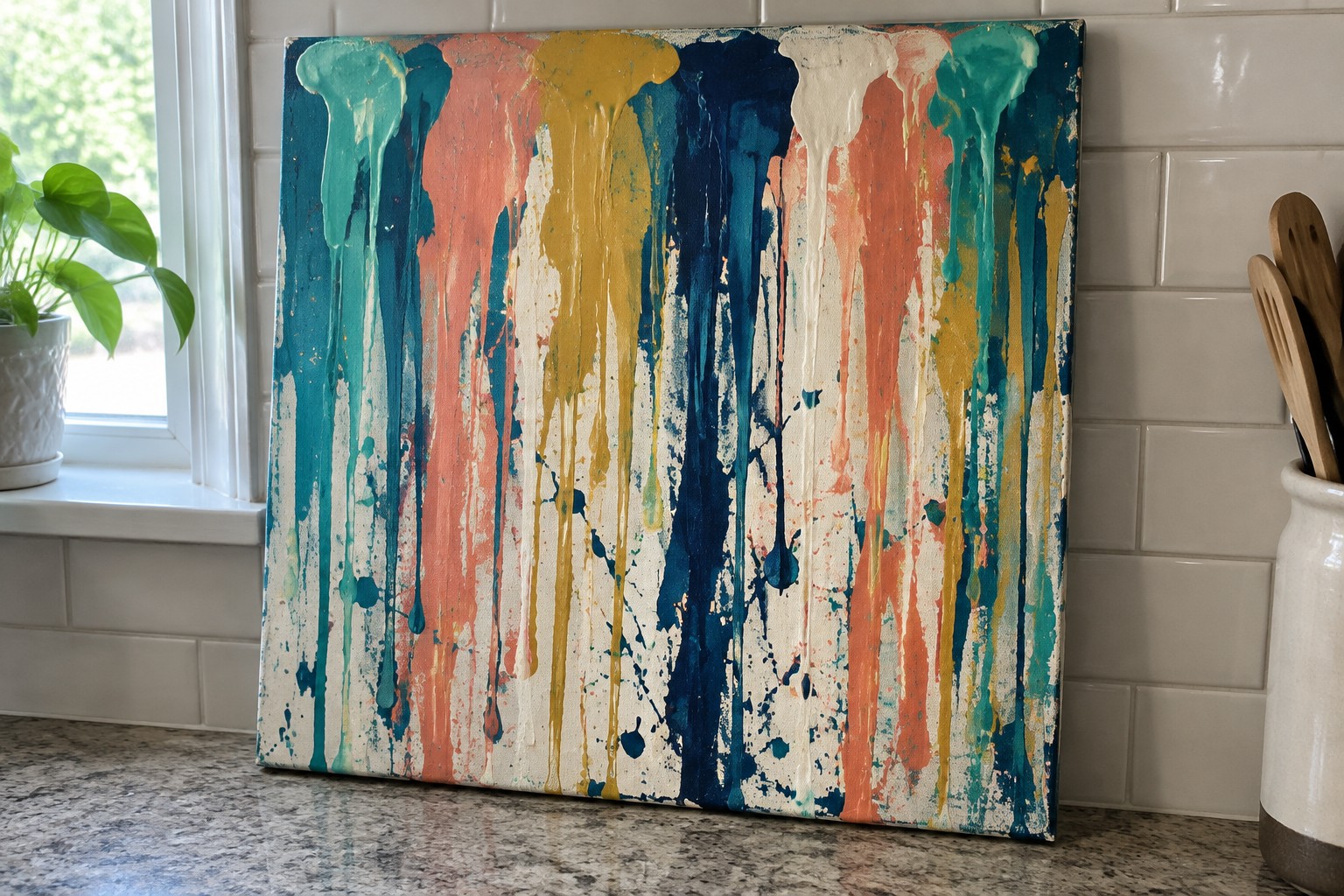
This approach relies on thinned paint poured or dripped from the top edge so it runs downward in long, uneven trails. The mix of teal, orange, yellow, and deep blue creates overlapping lines and scattered splatters that give the piece movement and texture while the white canvas keeps the colors distinct. It belongs to the abstract drip category where the flow of paint determines the final pattern.
The composition does a lot of the work here because the vertical lines automatically fill the space without needing careful planning. You can adapt it by changing the color order, using fewer shades, or trying a taller canvas for more dramatic runs. This style stands out on Pinterest because the bright trails against white read clearly even in small thumbnails, and it works well as a quick practice piece or a bold wall accent.
Vertical Pastel Drips with Soft Burst Accents

Vertical drip trails in a soft pastel palette create an abstract idea built around downward movement and gentle color blending. The trails run in uneven lengths while lighter burst shapes appear along some lines, adding texture without breaking the overall flow. This approach works as a simple decorative abstract that depends on color harmony and gravity rather than detailed planning.
The color palette makes this easy to adapt by swapping in different muted tones to match a room or season. You can simplify the idea by limiting yourself to four colors and letting the drips form naturally on a vertical surface. For wall art, the loose vertical layout fills space without needing a strong focal point, so the same concept scales well from small studies to larger canvases.
Horizontal Bands With Controlled Drips

This approach builds an abstract piece from wide horizontal color blocks stacked top to bottom, with each layer allowed to drip into the one below. The vertical trails break up the straight edges and add movement while the bands themselves stay orderly and balanced. It fits the decorative abstract category and works because the limited number of layers keeps the composition readable even with loose paint application.
What makes this idea useful is how simple it is to swap the color order or change the width of any band without redrawing anything. You can shrink it to a small panel for quick practice or stretch the same layout across a larger canvas for a bigger statement piece. The clean stacking also makes it easy to adapt the palette to match a room or season while keeping the drip technique as the main focus.
Neon Drips Over a Rich Blue Base

This abstract drip painting idea centers on letting bright neon green, hot pink, and thick white paint run across a deep blue canvas to form dynamic trails. The colors overlap in loose layers while the drips vary in thickness and direction, which gives the surface movement without any structured layout. The contrast between the intense background and the lighter running colors keeps the eye moving across the whole piece.
What makes this idea useful is how the drips do most of the work once you tilt the canvas, so you can focus on color choices instead of fine details. You could easily change the background to black or white and swap the accent colors to fit a different room or season. For practice, this works well as a fast session that still produces a bold result worth hanging.
Vertical Drips With Mixed Earth Tones

This painting idea uses vertical drip trails in rust, teal, mustard, and gray to create movement across a light background. The drips vary in length and thickness, with some colors bleeding more than others, which keeps the composition from looking too even or planned. It falls squarely into abstract drip work where gravity does most of the shaping.
What makes this idea useful is how simple the setup is. You can tilt the paper or prop it upright and let the paint run without needing much control over each line. The color mix works because the warm and cool tones balance each other, so swapping in different shades still keeps the same feel. For practice pieces or quick wall art, this format scales easily to larger paper or canvas and still reads well from a distance.
Organic Drips Over Soft Abstract Forms

This painting idea uses overlapping irregular shapes in muted greens, blues, and purples, then lets paint drip downward to create vertical movement across the surface. The approach works by keeping most shapes rounded and semi-transparent so the drips stand out as the main dynamic element. A light background helps the colors stay soft while the drips add structure and direction without needing extra detail.
The composition does a lot of the work here because the shapes already suggest where drips can naturally fall. You could adapt it by changing the palette to brighter tones or using a taller canvas to let drips travel farther. For practice, this kind of subject helps you test how much paint to load before the drips become too heavy. It would work well as a low-pressure way to try fluid techniques while still ending up with something clean enough for wall display.
Muted Pastel Vertical Drips

This abstract idea uses vertical paint trails in soft greens, yellows, purples, and grays that drip downward with uneven lengths and soft edges. The black dots and thin lines scattered through the trails create contrast and keep the eye moving along the flow. The white background stays mostly untouched, which lets the colors stand out without extra elements.
What makes this idea useful is how the vertical layout guides the paint naturally, so you spend less time planning and more time letting the drips form their own shapes. The limited color palette makes it easy to mix a few shades and test different paper weights or sizes without much waste. For practice, you could repeat the same drip pattern on smaller sheets to see how the trails change with more or less water. This kind of piece works well for quick wall art since the format fits narrow spaces and the muted tones blend with most rooms.
Fluid Pour with Interlocking Color Trails

This painting idea relies on a fluid pour technique where multiple colors are layered and tilted so they flow into one another, forming long winding trails and scattered cellular patterns. The combination of deep teal, golden yellow, coral, and cream creates strong visual contrast that keeps the movement active across the whole surface. The composition works because the colors stay distinct yet connected through the natural edges and bubbles that form during the pour.
What makes this idea useful is how the color placement and canvas tilt directly shape the final trails without needing fine brush control. You can adapt it by using a smaller canvas for quicker tests or by shifting the palette toward cooler tones for different seasons. The same approach also works well for wall pieces since the bold color blocks hold attention even from a distance. For practice, focus on varying the paint thickness to see how it changes the size and shape of the cells that appear.
Vertical Color Drip Trio

This abstract painting idea uses three separate vertical color blocks that start thick at the top and taper into single drips at the bottom. The teal, burgundy, and yellow sections sit side by side on a plain background, letting the saturated hues and controlled drip shapes create the main visual interest. The approach fits squarely into decorative abstract art where the focus stays on color placement and simple downward movement rather than detail or blending.
What makes this idea useful is how little setup it needs beyond pouring or brushing three colors and letting gravity do the rest. You can easily change the colors to fit any room or swap the canvas size without altering the basic layout. For wall pieces, the tall narrow shapes work well because they fill vertical space without requiring perfect edges or extra elements. The same format also scales down for quick practice runs or small test canvases when you want to try new paint consistencies.
Abstract Circles with Controlled Drips

This painting idea centers on repeating circular shapes scattered across a light background, where each circle releases downward paint trails of varying lengths. The approach keeps the focus on simple forms and vertical movement rather than complex details, letting the drips create natural texture and rhythm. It fits squarely into abstract decorative art, using a restrained palette of orange, green, yellow, and navy to maintain balance without overwhelming the eye.
The composition does a lot of the work here because the loose placement of circles avoids any need for precise alignment. You can easily adapt it by changing the canvas size, swapping in colors that match your space, or shortening the drips for a cleaner look. For practice, this kind of subject lets you experiment with paint consistency and drip direction without committing to a full scene. It would stand out on Pinterest as a quick modern piece that still feels handmade.
Vertical Blue Drip Trails

This abstract drip painting relies on vertical trails of blue watercolor in shifting shades to create movement across the page. The uneven lengths, varying densities, and soft edges form the main visual interest, letting gravity and water control shape the outcome rather than deliberate brushwork. It belongs to the loose abstract category where color flow and negative space do most of the work.
The composition does a lot of the work here because the drips already vary naturally, so beginners can focus on mixing values and tilting the paper instead of planning exact lines. You could easily adapt the idea by using a single color family, adding a second hue at the bottom, or scaling it down for cards and sketchbook pages. For practice, this kind of subject helps build comfort with wet-on-wet techniques while still producing a finished piece that reads well from a distance on a wall.
Vertical Earth Tone Drips on Black

This abstract drip painting idea centers on letting paint run in vertical trails across a dark ground, using deep purple, olive green, and gold to build contrast and movement. The drips vary in width and length, with some stopping short and others reaching the bottom edge, which creates a natural rhythm without any added shapes or details. The limited palette and strong vertical lines make the paint flow the main focus.
The composition does a lot of the work here because the dark background lets the colors stand out clearly. You can adapt this by changing the drip colors to match a room or trying a taller canvas to exaggerate the trails. For practice, this kind of subject helps you test how paint thickness changes the way lines form and break. A painting like this also works well as simple modern wall art that still feels dynamic.
Horizontal Color Band Drips

This painting idea uses stacked horizontal bands of color where each layer is allowed to drip downward into the band below it. The drips create vertical movement and texture while the bands themselves stay roughly straight across the canvas. It is a straightforward abstract approach that plays with color order and the natural flow of thinned paint.
What makes this idea useful is how simple it is to change the color sequence or number of layers to match any room. You can control the drip length by how much water you add to each color and how long you let each band sit before adding the next. The same layout works at small or large sizes and still reads clearly from a distance. For practice it is helpful because it shows you how paint behaves when it is applied thick versus thin without requiring precise shapes.
Vertical Drip Trails in Earthy Neutrals

This abstract idea centers on letting paint run downward in uneven vertical trails so the colors overlap and blend naturally as they dry. The mix of coral, sage green, black, and warm neutrals creates contrast while the varying drip lengths keep the eye moving across the whole surface. It works as a straightforward abstract drip painting that relies on gravity and loose brushwork rather than precise control.
What makes this idea useful is how forgiving the process is. You can start with any color palette you already have and simply tilt the paper or add more paint at the top to control how far the drips travel. The vertical format translates well to tall canvases or narrow wall spaces, and swapping in brighter or darker colors lets you match different rooms without changing the basic approach. For practice, it is also quick to repeat on smaller sheets to test new color combinations before committing to a larger piece.
Multicolor Vertical Drip Trails

This painting idea uses loose vertical drips in bright pink, yellow, teal, and gray to fill a white surface with irregular trails of varying lengths and thicknesses. The scattered placement and slight overlaps create movement across the page while the plain background keeps the colors prominent. It falls into abstract decorative art, where the appeal comes from the casual arrangement rather than any specific subject.
What makes this idea useful is how little control is actually needed once the paint starts to run. You can adapt it by changing the color mix, narrowing the spacing, or working on a taller canvas to emphasize the downward flow. For practice, this kind of subject helps you get comfortable with fluid consistency and letting gravity do part of the work. It would also translate well to a larger wall piece since the simple vertical lines read clearly from a distance.
Neon Sections with Bold Black Drips

This idea uses vertical black drips to cut across a background divided into bright pink, blue, and yellow sections. The splatters and trails create strong visual movement while the color blocks stop the eye from settling in one spot. It works as a straightforward abstract drip painting that relies on color contrast and gravity to shape the final look.
What makes this idea useful is how the black drips do most of the work in pulling the different colors together. You can swap the neon shades for any palette that matches your space or try the same layout on a smaller canvas to test the pour. The vertical trail pattern stays easy to repeat even if you change the number of colors or the amount of splatter.
Abstract Florals with Vertical Drip Trails

This painting idea centers on tall vertical stems formed by controlled paint drips, topped with loose, rounded flower shapes in coral and lavender. Soft background washes in teal and muted brown create separation between the elements while keeping the focus on the dripping lines and overlapping blooms. It works as an abstract floral approach where the drips themselves define the structure instead of outlines or detailed rendering.
The vertical format leaves plenty of room to stretch or compress the composition depending on your paper size. You can keep the flowers minimal or layer extra drips in the same palette to change the density without starting over. This kind of piece stands out on Pinterest because the color blocks read clearly even in a thumbnail, and the same drip technique translates easily to other color schemes or simpler stem arrangements.
Vertical Earth Tone Drip Stripes

This abstract drip painting idea builds a composition from vertical trails of paint in orange, olive green, deep blue, and warm beige. The drips vary in width and length as they run down the canvas, with some colors layered over others to create subtle overlaps and breaks in the stripes. The vertical layout and limited color range keep the piece balanced while still showing the natural movement of the paint.
The composition does a lot of the work here because the straight vertical format makes it simple to scale up or down depending on your wall space. You can adapt it by changing the color order, using fewer shades, or letting some drips run longer for a different look. This style stands out on Pinterest because the bold stripes read clearly even in a small thumbnail, and the earth tones fit many room styles without needing extra details.
Frequently Asked Questions
What materials are essential for creating abstract drip paintings with dynamic trails?
To get started you will need acrylic paints in various colors, a sturdy canvas or heavy paper, droppers or squeeze bottles for precise application, and a level surface to tilt and guide the paint flow. Add water or a pouring medium to thin the paint for better movement, along with gloves and a drop cloth to protect your workspace. These basics allow you to experiment with the 18 ideas while keeping control over the trails.
How can I control the paint flow to create more dynamic trails?
Start by mixing your paint to a consistency that flows easily but does not run too fast, then apply it in small amounts from different heights and angles. Tilt the canvas gradually or use a hairdryer on low speed to direct the trails without disturbing the overall composition. Practice on scrap paper first to adjust speed and direction, which helps produce the varied patterns seen in dynamic abstract designs.
Are there beginner-friendly ways to try the 18 abstract drip painting ideas?
Yes, focus on simpler ideas first such as basic vertical drips or single-color trails before moving to multi-layered or interactive techniques. Work in small batches on paper to test color combinations and movements, and keep your workspace organized to avoid spills. This step-by-step approach builds confidence while still capturing the energetic feel of the full set of ideas.
What common mistakes should I avoid when making drip paintings with dynamic trails?
Avoid using paint that is too thick, as it will not flow well, or working on an uneven surface that causes uncontrolled pooling. Do not rush the drying process between layers, since wet paint can blend in unwanted ways. Always test your tools and mixtures ahead of time to prevent frustration and ensure the trails remain sharp and intentional.
How should I finish and display completed drip paintings?
Allow the artwork to dry fully for at least 24 hours in a dust-free area, then apply a clear varnish for protection and added depth. Frame it under glass or mount it on a sturdy backing to highlight the trails. Choose a well-lit spot on a neutral wall to emphasize the abstract movement without distractions.
