


I’ve been experimenting with different shades of green in my abstract acrylics over the past few months.
Layering the backgrounds has helped me create more depth without needing a lot of detail on top.
I usually start with a base color and then add thin washes or thicker strokes depending on how the paint behaves that day.
These twenty pieces came out of that process and show a range of results I found interesting to keep going with.
Crescent Shape in Layered Greens
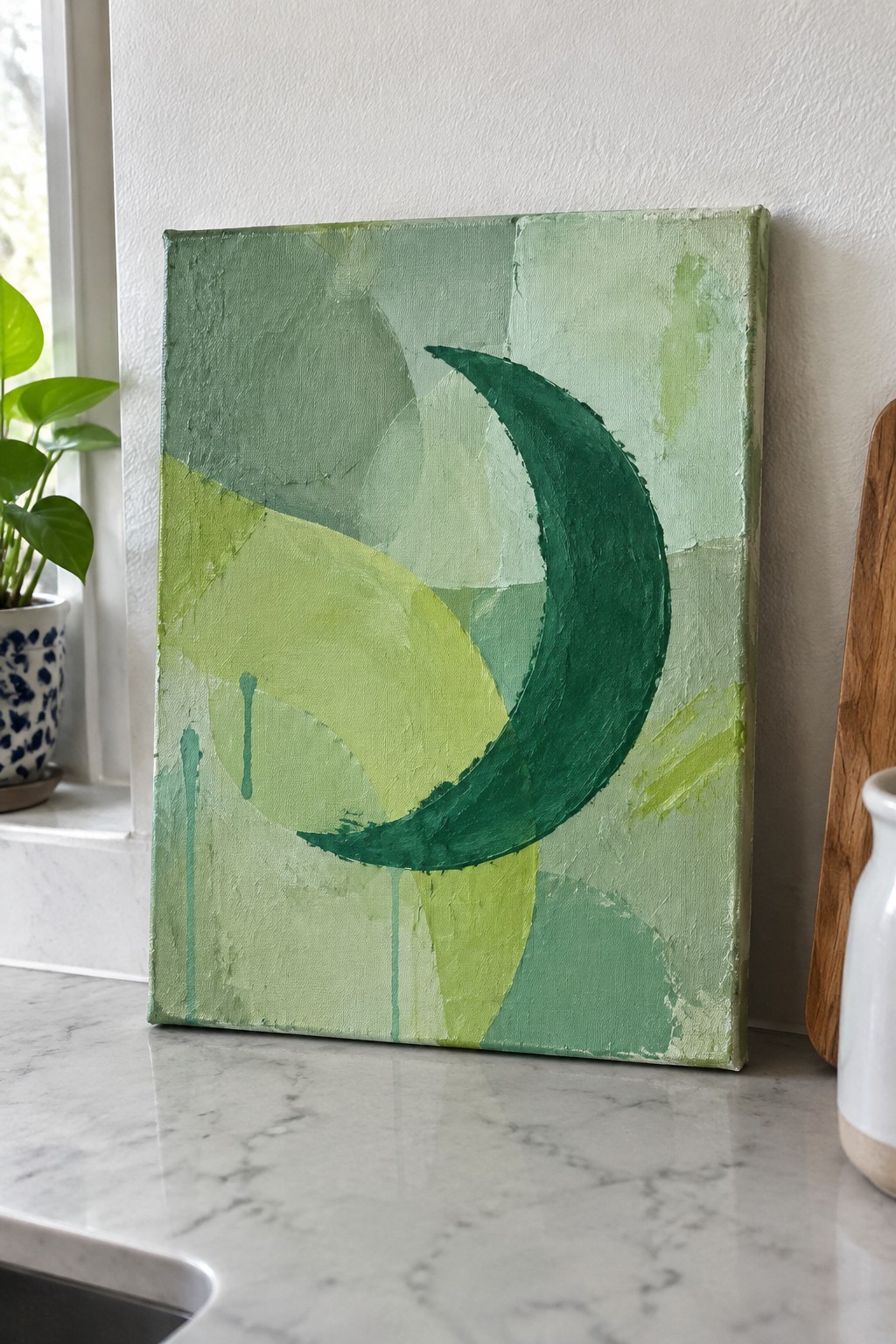
This painting idea centers on a single bold crescent set against a background built from overlapping green washes and soft shapes. The layers create depth through shifts in tone and texture, while the darker crescent stands out as the main form without needing extra detail. The approach fits abstract work where a simple curved element can organize a loose, painterly background into something more structured.
The composition does a lot of the work here by letting the background carry most of the visual interest while the crescent keeps the eye moving. You could swap the greens for cooler tones or repeat the shape in different sizes to make a series. For wall pieces, the layered style holds up well at medium sizes and works as a quick way to practice blending and drips without planning every step.
Layered Green Hills with Horizontal Color Blocks

This painting idea uses stacked horizontal bands of varying green tones to create a simple landscape that reads as distant hills and open fields. The sky sits in a soft yellow-green wash at the top, while each lower band shifts slightly darker or cooler to suggest depth without needing detailed drawing. The foreground adds rougher brush marks and a few lighter strokes to break up the flat planes and keep the eye moving across the surface.
What makes this idea useful is how the clear division into sky, midground, and foreground layers lets you test color mixing and value changes on a small canvas. You can easily swap the yellows for more blue-greens in the distance or keep the foreground darker to make the lighter middle fields stand out. The loose handling also works well for practice pieces or quick studies before trying the same stacked approach on a larger wall piece. For Pinterest, the strong horizontal layout and limited palette make the composition read clearly even as a thumbnail.
Stacked Green Shapes on a Soft Gradient
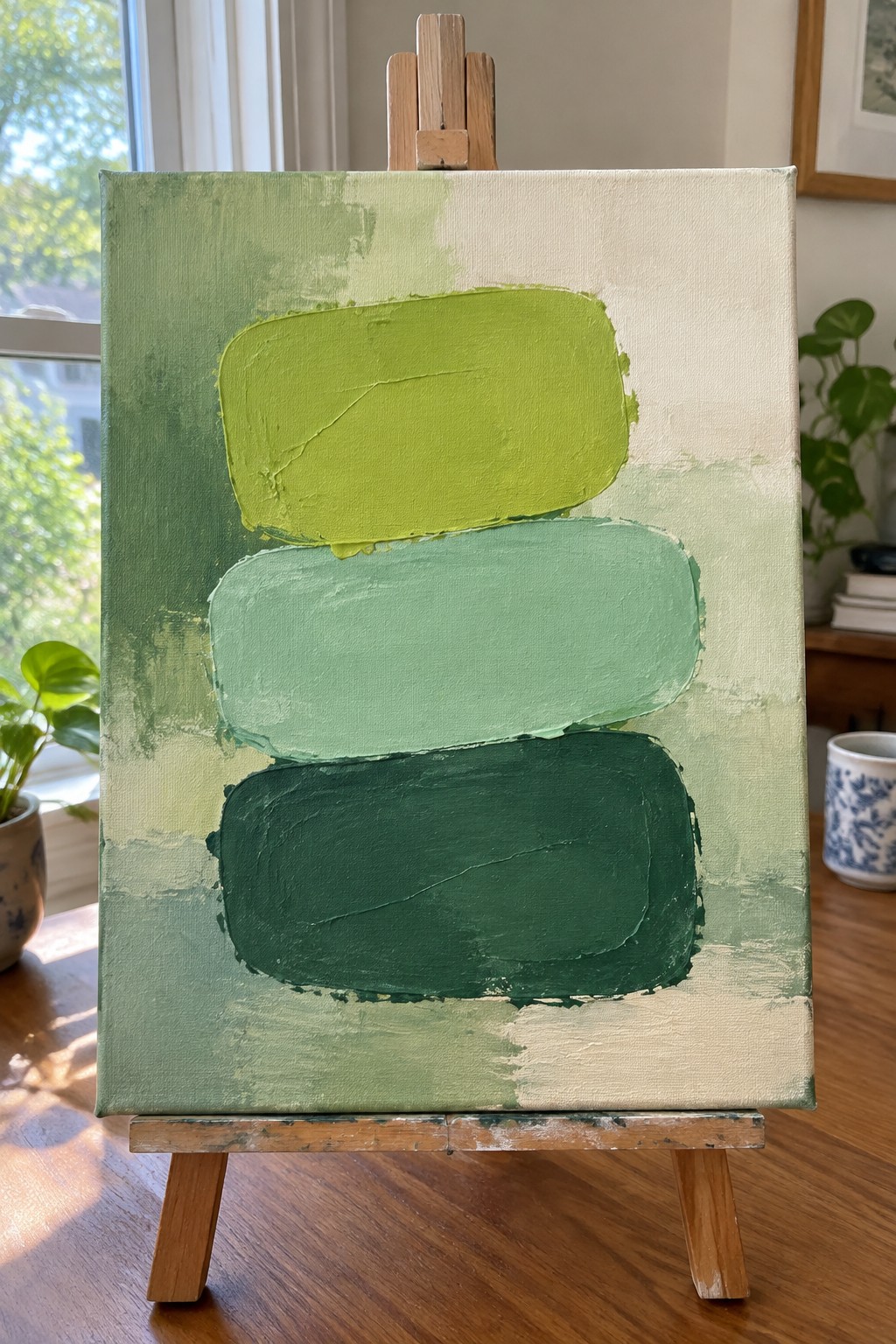
This abstract idea uses three rounded horizontal blocks in different green shades stacked with even spacing to create a simple, balanced composition. The bright lime top layer, cooler middle tone, and darker bottom block sit over a background that blends from green into off-white, letting the shapes stand out through color contrast alone. The rounded edges and slight texture in the paint keep the forms from feeling too rigid while the limited color range holds the whole piece together.
What makes this idea useful is how the stacked layout works at different sizes without needing extra elements. You can swap the greens for any analogous palette or stretch the canvas taller to change the proportions. For practice, start with the background blend first since the shapes are easy to adjust afterward if the spacing feels off. This kind of minimal abstract tends to photograph cleanly for Pinterest since the clear shapes read well even as a thumbnail.
Layered Green Foliage Over Soft Backgrounds

This painting idea builds an abstract botanical scene from overlapping leaf shapes in several green values. The background uses thin washes and vertical brush strokes to create subtle depth, while the darker leaves sit forward with minimal detail. White strokes add light accents without overpowering the overall green harmony.
What makes this idea useful is how the background layers already supply texture and movement, so the leaves only need basic placement and value contrast. You can scale it down to a smaller canvas for practice or expand the leaf count for a larger wall piece. The same approach works with different greens or by swapping in cooler tones if you want a different mood.
Overlapping Circles in Layered Green Tones
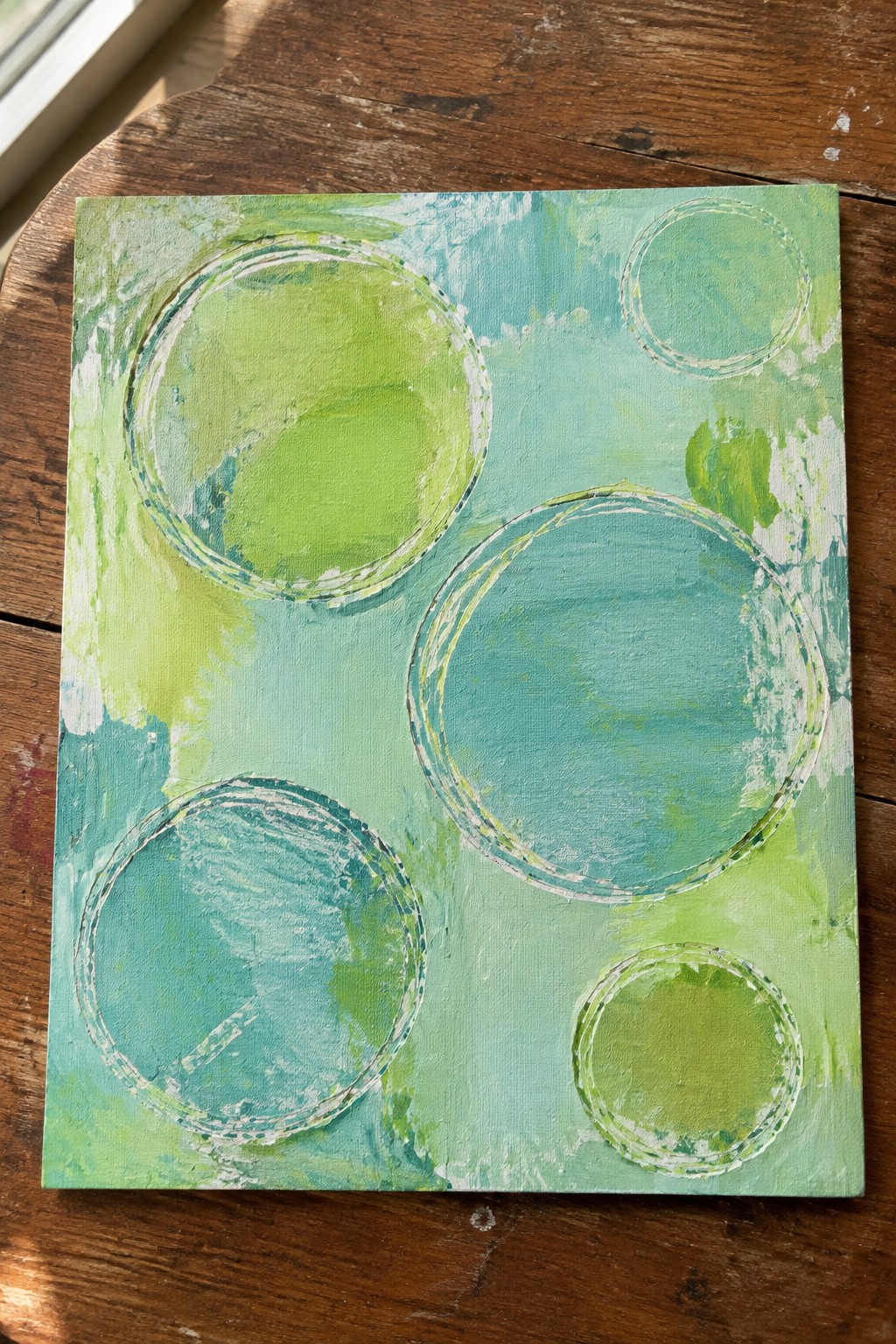
This painting idea uses overlapping circles of different sizes and green shades to create an abstract composition on a textured background. The circles sit at varying levels of transparency, allowing the layered background colors to show through and build depth without extra detail work. The approach fits squarely into abstract decorative art where repeated shapes carry the design.
The composition does a lot of the work here because the circles are spaced to fill the canvas evenly while leaving breathing room around the edges. You could adapt the idea by changing the background splatter colors or adjusting circle sizes to fit a different canvas shape. For practice, this kind of subject works well since the background can be built first with loose brushwork before the circles are added on top. It would stand out on Pinterest as a clean geometric option within green abstract collections.
Grid of Green Rectangles on a Textured Base
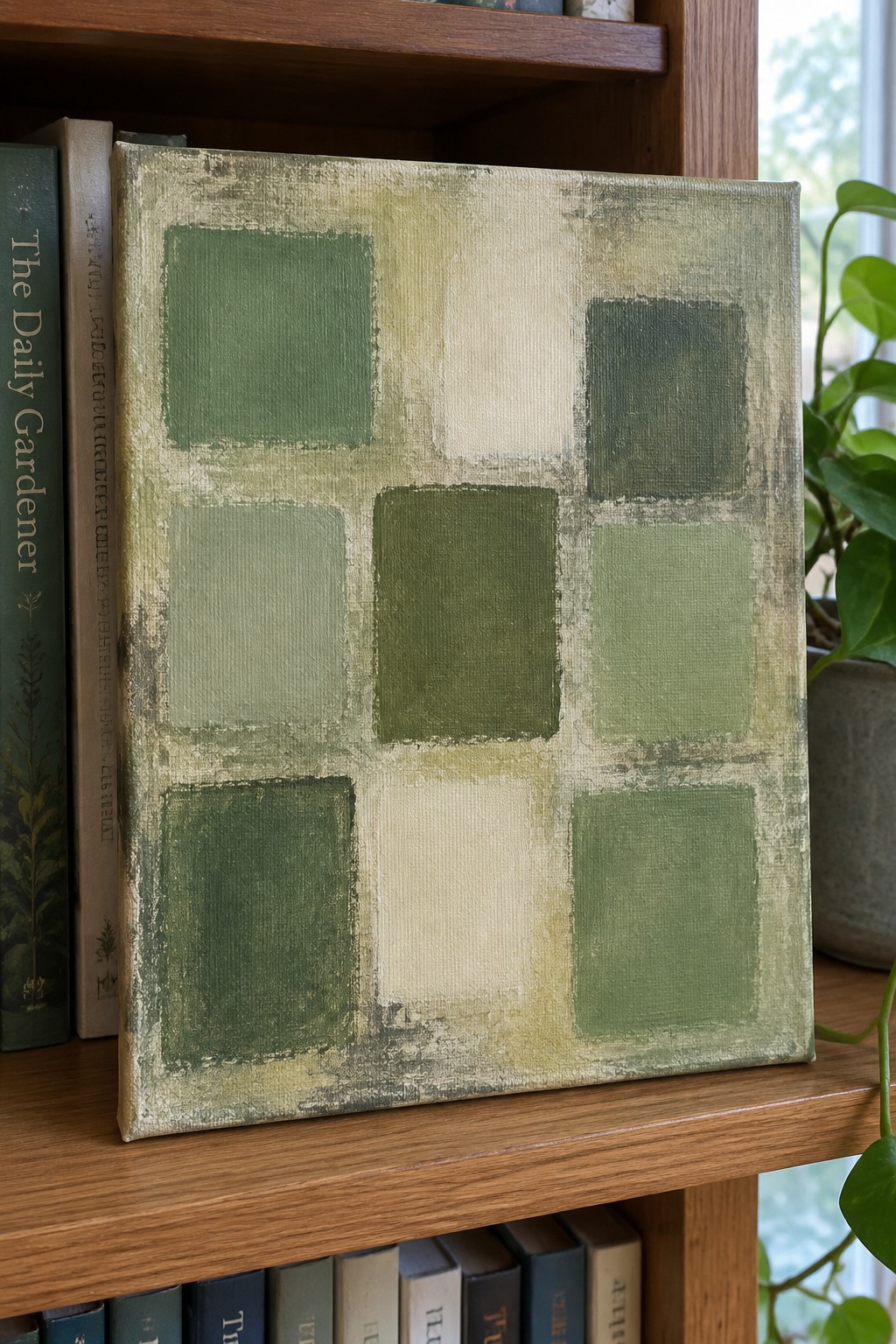
This painting idea uses a loose arrangement of rectangles in different green shades placed across a light, mottled background. The blocks vary in size and tone, which creates movement without needing a strict pattern or precise alignment. The textured background and visible brush marks give the piece a layered look that works well for abstract or decorative categories.
What makes this idea useful is how the uneven spacing and color shifts do most of the visual work. You can adapt it by changing the number of rectangles or swapping the greens for any limited palette while keeping the same background approach. For practice, this kind of subject helps you work on building texture and soft edges before moving to more complex abstracts. It stands out on Pinterest because the simple layout still feels considered rather than random.
Vertical Green Drips Over Layered Washes
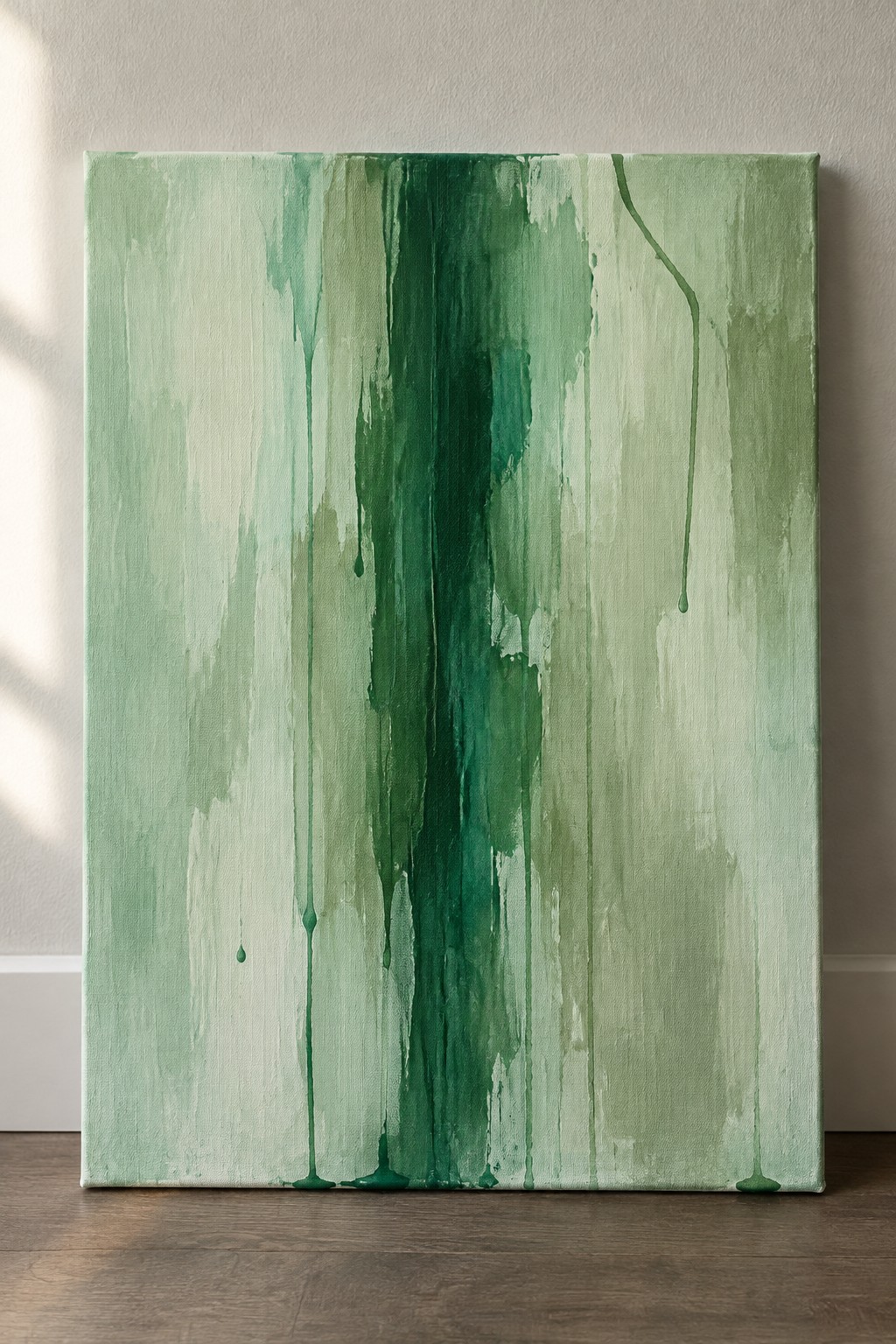
An abstract idea built around soft green washes that shift from pale mint to deeper emerald creates a simple but effective background. Vertical drips then run through the layers to add movement and break up the smooth areas with irregular lines. The contrast between the blended fields and the fluid drips gives the piece its main visual interest while staying easy to paint.
What makes this idea useful is how the drips do most of the work once the base layers are down. You can thin the paint more or less to change how far the lines travel or tilt the canvas to steer them. The same layout works at different sizes and adapts well if you want to swap in another color family or add a second round of drips for extra texture.
Layered Green Seascape with Simple Wave Strokes

A seascape built from stacked bands of green creates depth through color shifts rather than complex detail. The white curved strokes cut across the lower layers to suggest movement on the water while the solid green circle sits high as a clear focal point. This approach fits the landscape category and works because the horizontal bands keep the eye moving across the canvas without needing precise shapes.
What makes this idea useful is how the same layout adapts to different greens or even adds blues in the upper bands for more variety. The sun placement high on the canvas leaves plenty of room to adjust the wave lines or change their thickness depending on the size of the surface. For practice, this kind of subject helps focus on smooth background blending first before adding the white accents last.
Layered Green Organic Shapes for Depth

This painting idea focuses on building an abstract composition from overlapping rounded forms in a range of green tones. The shapes sit at different sizes and opacities so lighter ones appear to sit behind darker ones, creating a simple sense of depth on a pale ground. It belongs to the category of decorative abstract art that relies on color shifts and loose edges rather than any recognizable subject.
What makes this idea useful is how the overlapping layout does most of the visual work without needing perfect edges or complex drawing. You can adapt it easily by changing the green range to blues or earth tones while keeping the same loose shape language. For practice, the forgiving forms let you focus on brush pressure and blending instead of precision. A painting like this also translates well to larger canvases for wall pieces because the soft transitions stay interesting even from across the room.
Concentric Green Rings Over a Layered Background

This painting idea uses a series of concentric circles in different green values to create a strong central focal point on a built-up, textured background. The rings vary in width and saturation, which helps them stand out while the mottled ground keeps the overall surface active. It belongs to the abstract category where simple repeated shapes and color shifts do the main visual work.
The composition does a lot of the work here because the rings create instant structure without needing extra elements. The color palette makes this easy to adapt by swapping in cooler blues or warmer earth tones depending on the room. For practice, this kind of subject lets you focus on brush control and layering without drawing anything complicated. The background keeps the focus on the circles even if your edges stay a bit rough.
Layered Green Background with Diagonal Accent
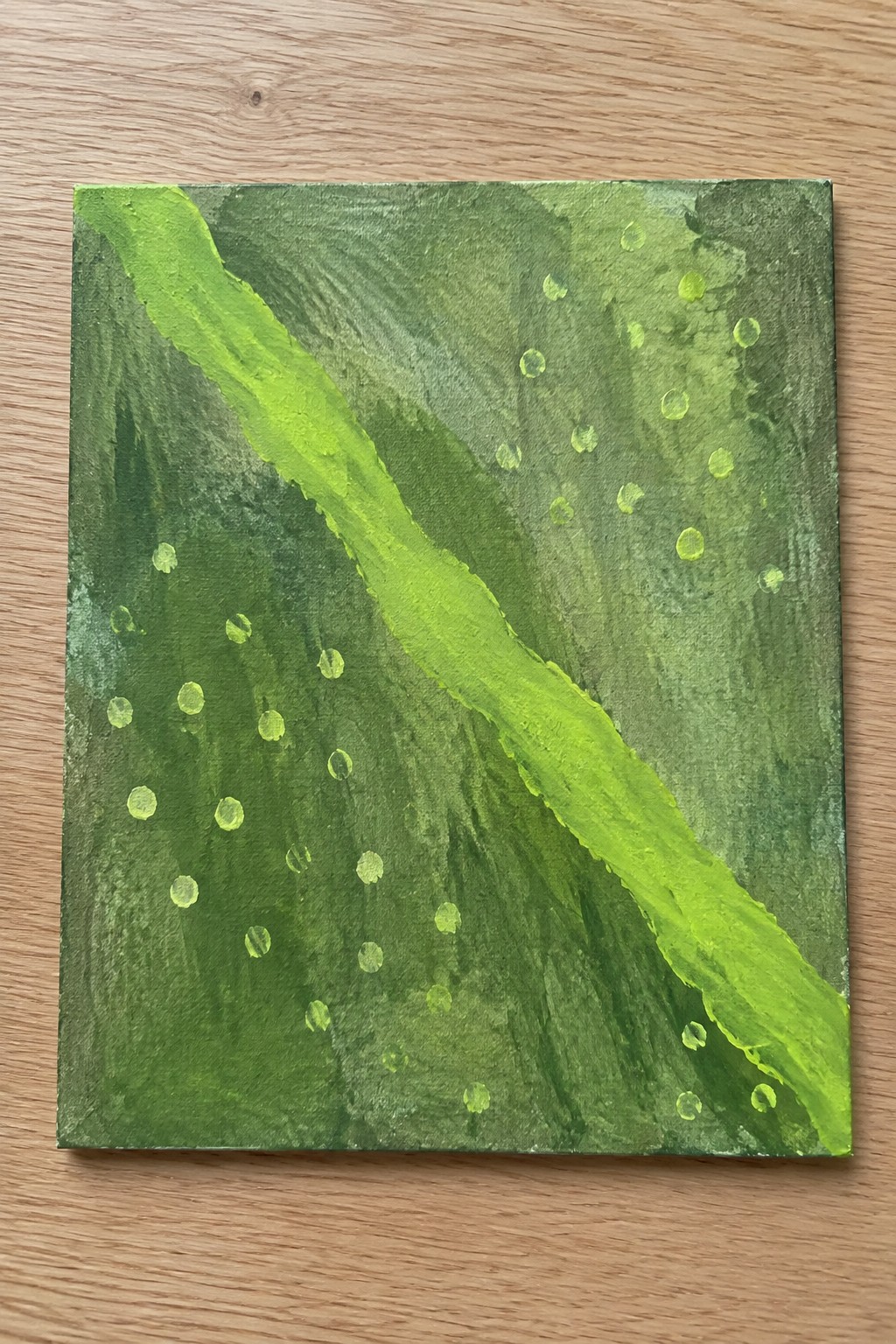
A layered green abstract idea builds depth by applying multiple shades and textures across the canvas before introducing a single bright diagonal stroke. The scattered dots then create a light pattern that balances the strong line without competing for attention. This fits the category of decorative abstract painting where color shifts and simple marks drive the visual interest.
The composition does a lot of the work here because the diagonal automatically creates movement while the dots add just enough variation to hold the eye. You can adapt the same layout by swapping the green tones for cooler or warmer palettes depending on the season or room. For practice this works well as a quick study in layering and texture on a small canvas. It would pin well as a straightforward example of modern abstract wall art that still feels fresh.
Loose Leaf Stems on Layered Green Washes

Botanical leaf stems painted in varying sizes and angles create an organic pattern when placed over a background built from multiple green washes. The overlapping layers of lighter and darker tones give the surface depth without requiring precise blending, while the white dots on the leaves add quick detail that breaks up the solid shapes. This approach fits into decorative botanical painting where the focus stays on natural forms rather than tight realism.
The composition works because the background handles most of the visual interest, leaving the leaves as simple shapes that can be adjusted or reduced without losing the overall effect. A painting like this adapts easily to different canvas sizes or color shifts within the green family, and the same layout can be simplified by using fewer stems for a more open look. For practice pieces or wall art, the single-color palette keeps mixing straightforward while still producing something that reads as fresh and complete.
Layered Green Cityscape with Reflection

A city skyline built from simple rectangular shapes in different green tones gives a clean, modern take on landscape painting. The buildings vary in height and width while staying within one color family, and the horizontal reflection band at the bottom repeats those same shades to create balance. This approach keeps the focus on color layering and shape arrangement rather than fine details.
The limited palette makes it easy to adapt by swapping in blues or earth tones if you want a different mood. You can paint it on a small canvas for quick practice or scale it up for a larger wall piece without changing the basic layout. The loose building shapes also leave room to adjust spacing or add a few more layers if you want to personalize the skyline.
Radiating Floral Center with Loose Green Layers

A central bloom built from short, radiating strokes in white and pale yellow-green sits against a softly blended green background that shifts from light to deeper tones. Scattered dots, small leaf shapes, and thin stems fill the space around the flower without crowding it, keeping the overall feel open and organic. This approach works as an abstract floral idea where the focus stays on the burst of brush marks rather than precise petals or realistic detail.
The composition does a lot of the work here because the strong center automatically draws the eye while the looser marks around it add interest without needing perfect placement. You can easily change the palette to blues or warm earth tones if you want a different mood, and the same layout scales well from small practice canvases to larger wall pieces. For beginners, blocking in the background first then adding the center bloom last keeps the process straightforward and forgiving.
Oval Shape on Layered Green Background

This painting idea uses a simple oval form as the main subject against a background built from multiple green layers that differ in tone and texture. The oval sits slightly off-center and shifts from pale green at the edges to a warmer yellow near the middle, creating contrast with the darker, more varied greens around it. The approach belongs to abstract work that relies on value shifts and background texture rather than detail or recognizable objects.
The composition does a lot of the work here because the oval requires only loose blending once the background is in place. You can adapt the idea by changing how many layers you build in the background or by adjusting the oval size to suit different canvas proportions. For practice, this kind of subject lets you test acrylic layering without needing clean edges or complex drawing, and the limited color range keeps the focus on technique instead of color mixing decisions.
Layered Green Horizon Abstract
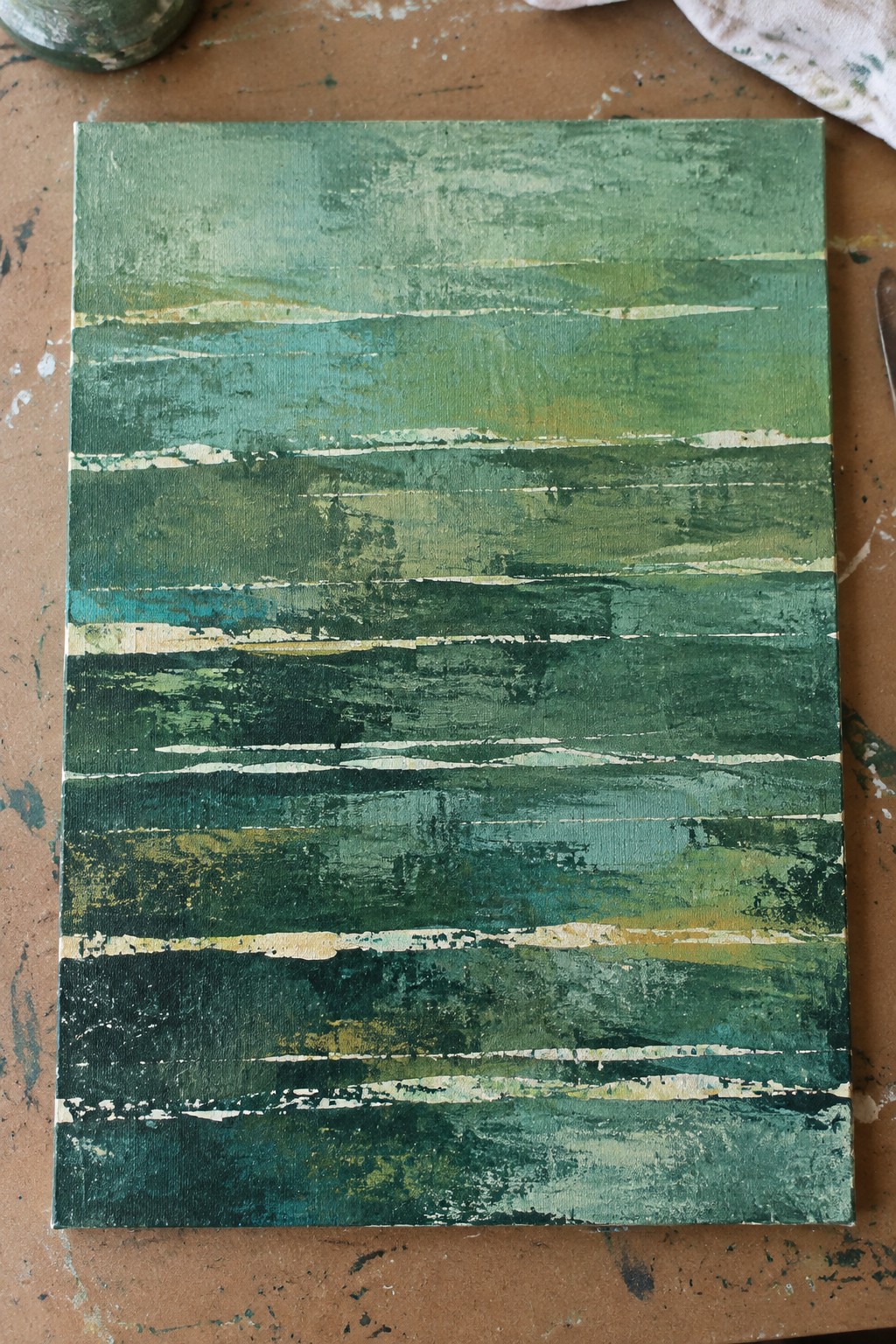
This painting idea uses stacked horizontal bands of green in shifting tones to suggest a landscape or seascape without any defined shapes. The composition relies on varied brush pressure and overlapping layers to create movement and depth across the canvas. It works as a straightforward abstract landscape approach where color changes and texture do most of the visual work.
What makes this idea useful is how simply the layers can be built up or thinned down depending on the size of your canvas. You can start with broad base colors and add narrower stripes or dry-brush texture only in a few areas to keep the piece from feeling repetitive. The color palette makes this easy to adapt for different seasons or room styles by swapping in warmer or cooler greens. For practice, this kind of subject helps you focus on blending and layering without worrying about drawing anything specific.
Layered Green Abstract Fields with Paths

This painting idea builds an abstract landscape from overlapping irregular shapes in a range of greens, creating depth through simple color shifts rather than detailed forms. Light lines run across the surface like paths or boundaries, breaking up the layers and adding structure to the composition. Small scattered marks suggest trees or foliage without adding complexity, keeping the focus on the layered background.
What makes this idea useful is how the loose shapes let you experiment with color mixing on any size canvas. You can swap in different green tones or change the path color to fit a specific space. The same layout works for quick practice sessions or finished wall pieces, and it translates easily to larger formats or different palettes. For Pinterest, this kind of nature-based abstract stands out because it feels fresh without requiring tight detail work.
Layered Green Brushstrokes for Abstract Depth

This abstract idea builds the whole piece from overlapping directional strokes in a range of green shades on a light base. The strokes run at different angles and pressures so the layers create movement and depth without needing any defined subject. Drips in a couple spots break up the heavier marks and keep the surface from looking flat.
What makes this idea useful is that the composition does most of the work once you pick your greens and start laying down broad strokes. You can easily shift the palette toward cooler or warmer tones or change the background color while keeping the same loose structure. For wall art the scale and bold marks hold attention from across the room, and the approach stays simple enough to try on a weekend without needing extra tools or references.
Concentric Circles Over Layered Green Backgrounds
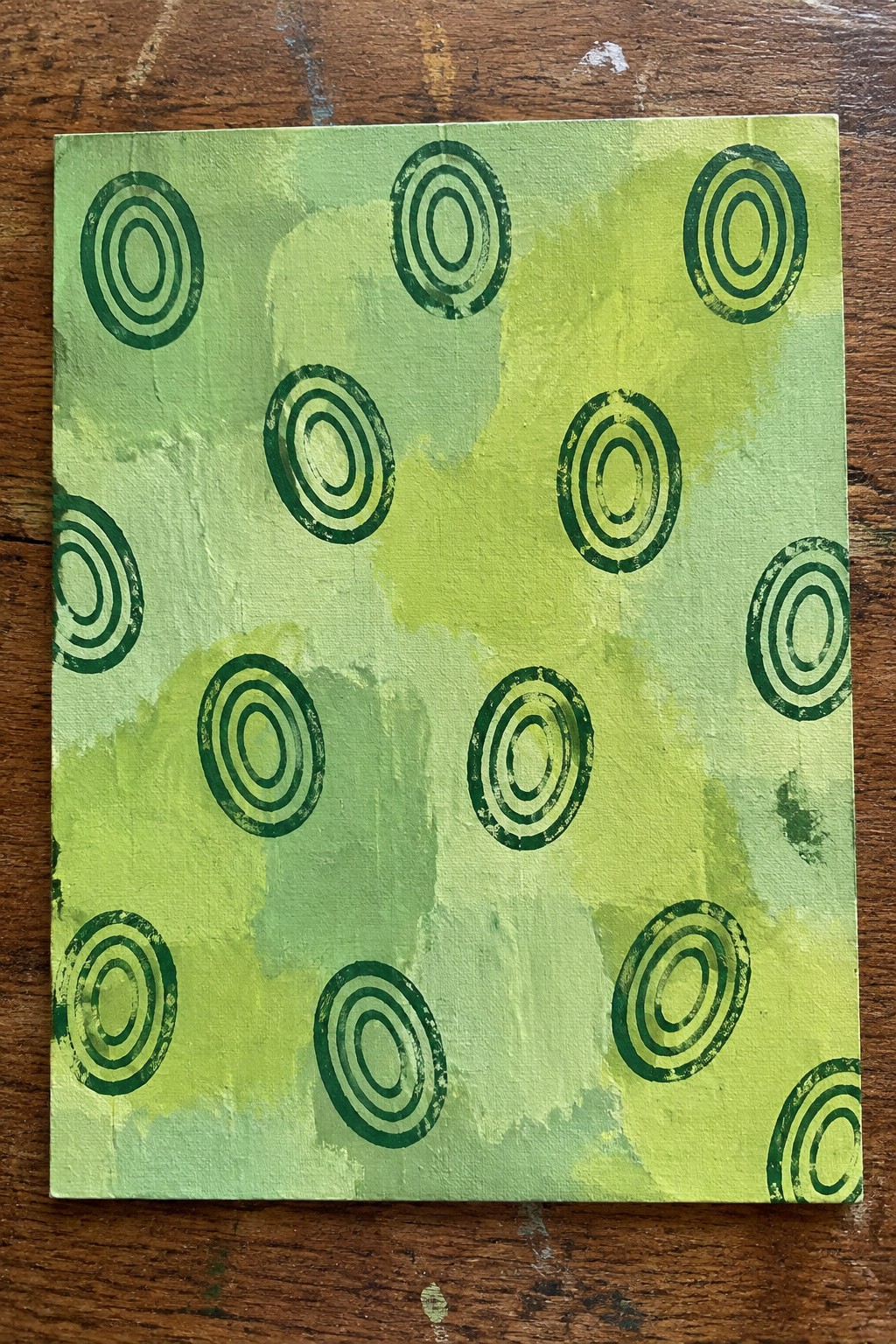
This painting idea centers on scattering groups of concentric circles across a loosely blended green background to create movement and balance. The circles sit at different angles and sizes so the eye moves around the canvas without landing on one spot. Painting the background first with broad, overlapping strokes gives the rings a textured surface that makes them stand out while keeping the whole piece simple and graphic.
The composition does a lot of the work here because the soft background already supplies color interest, so the circles only need clean edges and varied placement. You can easily change the number of rings per circle or shift their positions to suit a taller or wider canvas. For practice or quick decor pieces, this approach adapts well to any shade of green and works on small or large surfaces without needing precise drawing skills.
Layered Greens with Energetic Linear Marks
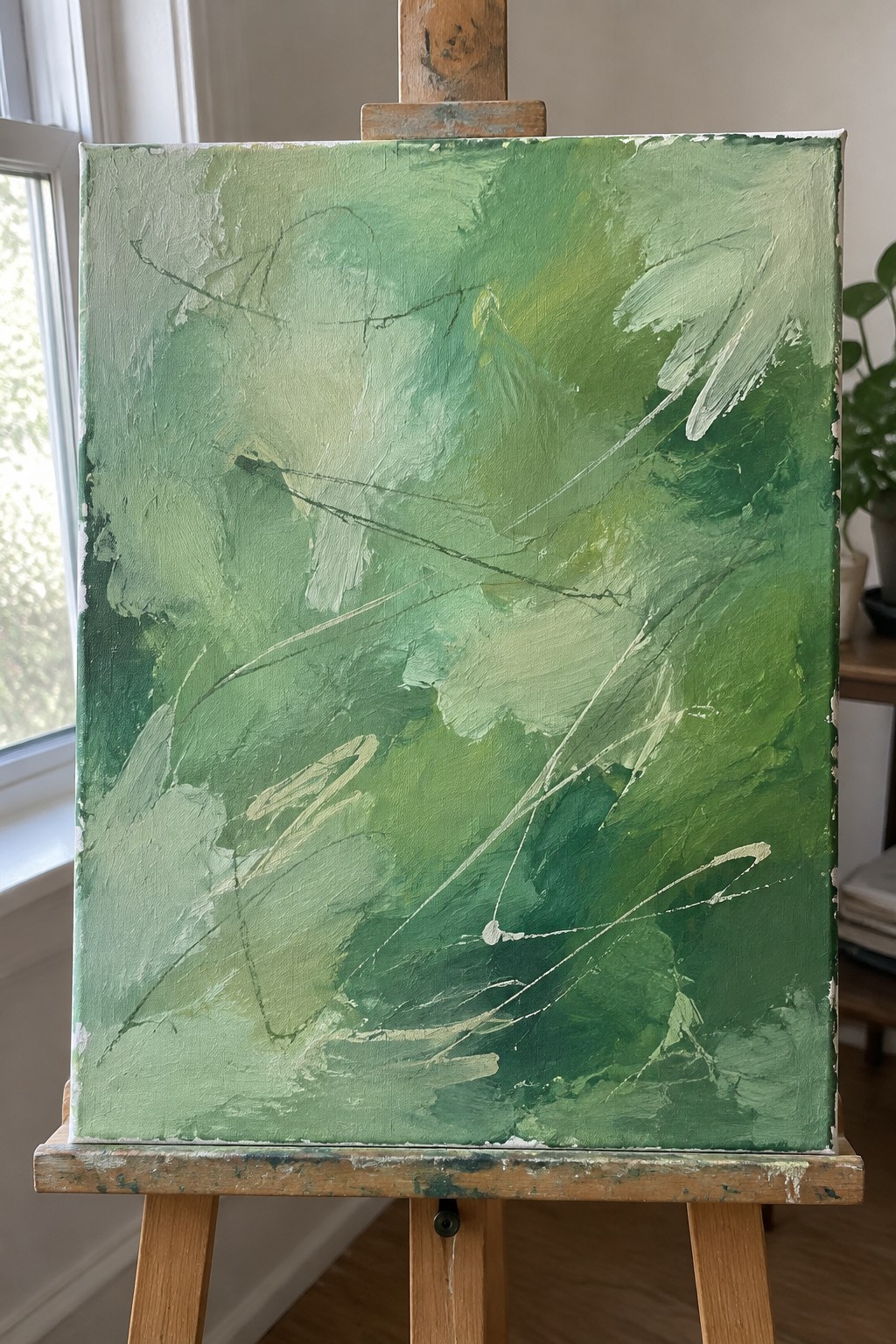
This abstract idea builds a composition entirely through overlapping green tones, starting with soft blended areas and then adding sharper directional strokes on top. The contrast between the muted background layers and the brighter, broken lines creates visual movement without any defined subject. It fits squarely into the category of modern abstract acrylic work that relies on texture and color shifts rather than recognizable forms.
What makes this idea useful is how the loose structure lets you focus on brushwork and layering instead of planning a scene. You can swap in different green mixes or add more white accents to change the mood while keeping the same basic approach. For practice or quick pieces, the format works well because the overlapping marks hide small mistakes and reward bold strokes over careful detail.
Frequently Asked Questions
What supplies are recommended for creating green abstract acrylic paintings with layered backgrounds?
Acrylic paints in various shades of green, along with complementary colors like blues and yellows, form the base. You will also need a sturdy canvas or wood panel, a variety of brushes and palette knives for texture, and acrylic mediums such as gloss varnish or gel to build transparent layers. Start with a gesso primer to prepare the surface and keep a spray bottle of water handy to control paint consistency during application.
How can I build effective layers in acrylic paintings without colors becoming muddy?
Apply thin washes of green first as your foundational background, allowing each layer to dry fully before adding the next. Use glazing techniques with diluted paint to create depth and luminosity. Work from light to dark tones gradually, and incorporate texture by mixing in modeling paste or sand for dimension in select areas. This approach keeps the greens vibrant and distinct across multiple layers.
What makes these green abstract paintings appear fresh and contemporary?
The freshness comes from combining unexpected color pairings, such as vibrant lime greens with muted forest tones, and using irregular shapes or drips to break traditional composition rules. Layered backgrounds add complexity by revealing hints of underlying colors through strategic scraping or wiping. Experimenting with scale and negative space helps the pieces feel modern rather than overly polished.
How long should I wait between layers when working on acrylic paintings with green backgrounds?
Acrylics typically dry to the touch within 15 to 30 minutes depending on thickness and humidity, but allow at least one to two hours between layers for best results. For thicker applications or when adding mediums, wait overnight to prevent lifting or blending of previous colors. Test dryness with a gentle touch on an inconspicuous area before proceeding.
Where can I draw inspiration for my own versions of these layered green abstract works?
Look to nature photography of forests or mossy landscapes for organic shapes and color gradients. Online art communities and museum collections featuring abstract expressionists offer ideas on composition. Keep a sketchbook to note color mixes and layer sequences from reference images, then adapt them using your own intuitive mark making to develop unique pieces.
