

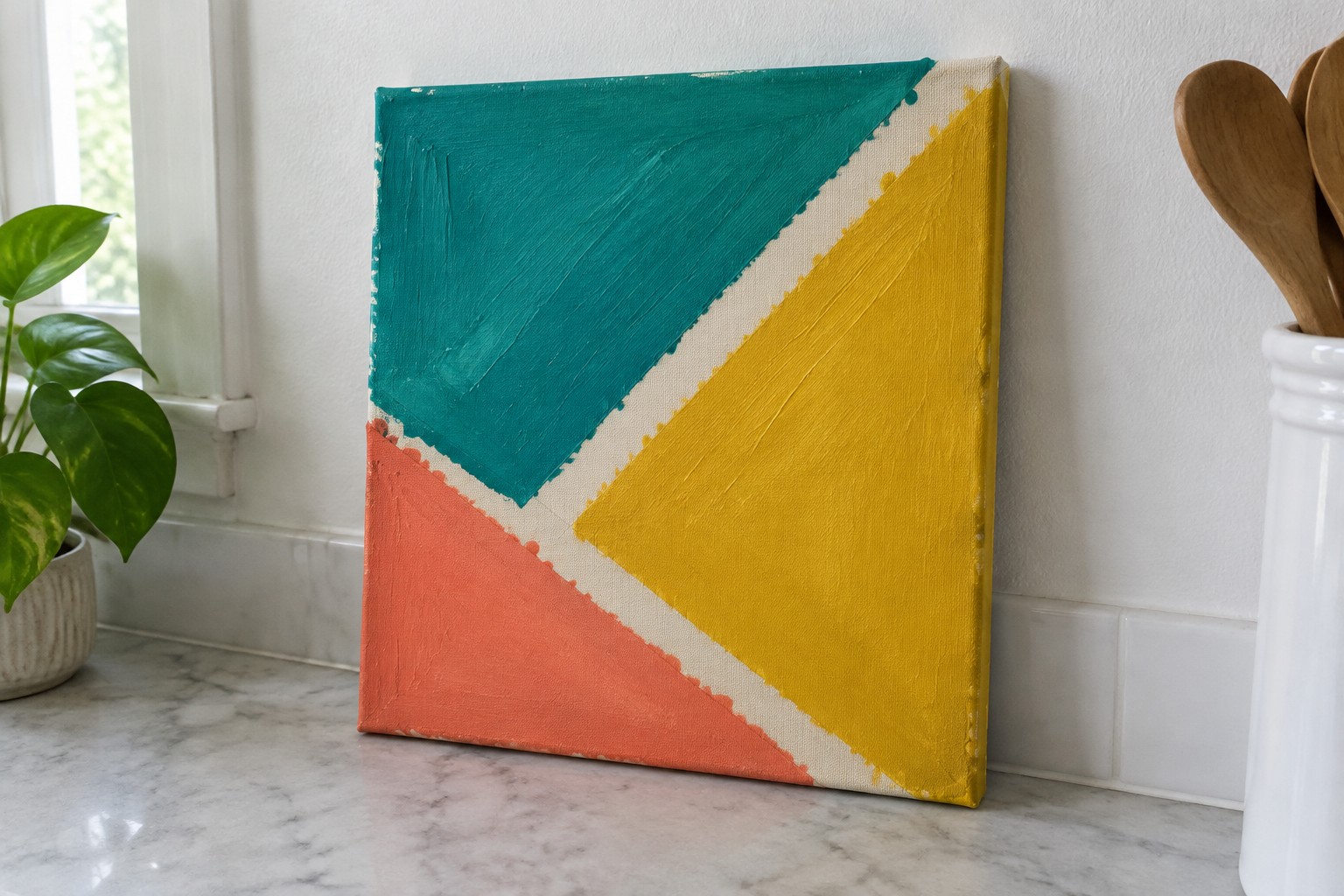
I’ve been trying out geometric abstract paintings on canvas using masking tape for a while now.
It is a straightforward way to get clean lines and shapes without needing much experience.
I usually sketch a simple pattern with the tape first then fill in the sections with paint.
Some of my attempts turn out better than others but they all end up looking decent enough to hang up.
These kinds of projects work well when I want something quick to work on during the weekend.
Bold Diagonal Triangles in Three Colors
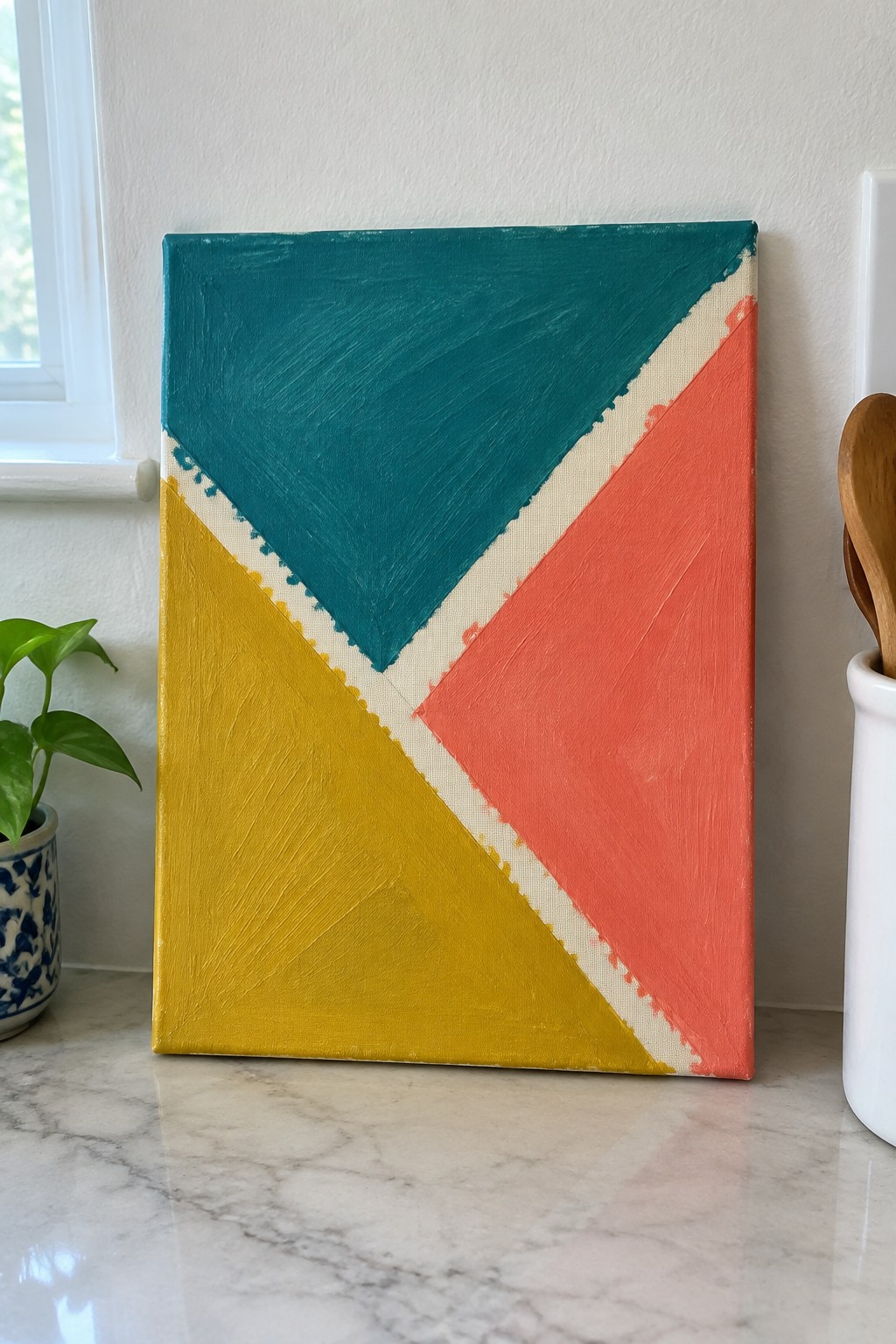
This painting idea uses masking tape to divide the canvas into three large triangular sections with sharp diagonal lines. One triangle gets filled with teal, another with yellow, and the third with coral, leaving the tape edges to create clean white borders between each color. The angled layout and high-contrast color blocks give the piece structure without any extra patterns or details.
What makes this idea useful is how the tape does the precise work of keeping the lines straight so you can focus on even paint coverage. The three-color split is easy to adapt by swapping in different shades or tilting the tape at a new angle for variety. For wall art, this format fills space quickly and stands out on Pinterest because the bold shapes read clearly even in small preview images. You can simplify it further by using just two colors or scale it down to a smaller canvas for practice.
Soft Pastel Rectangle Grid

A grid of rectangles formed with masking tape gets filled with a limited set of muted pastels including sage green, dusty rose, pale gray, and off-white. The layout stays simple, but the color shifts inside each block keep the eye moving across the surface without any single area dominating. This approach fits the decorative abstract category and works because the repeating shapes create structure while the soft palette prevents it from feeling too rigid.
What makes this idea useful is how the tape handles all the hard edges so you only need to focus on color placement. The same grid can be scaled up on a larger canvas or repeated across two smaller ones for a diptych. You can swap in any three or four colors that already exist in your space instead of buying new paint. For practice, this kind of subject lets you test how different values sit next to each other before trying more complex patterns.
Concentric Rectangular Frames with Layered Borders
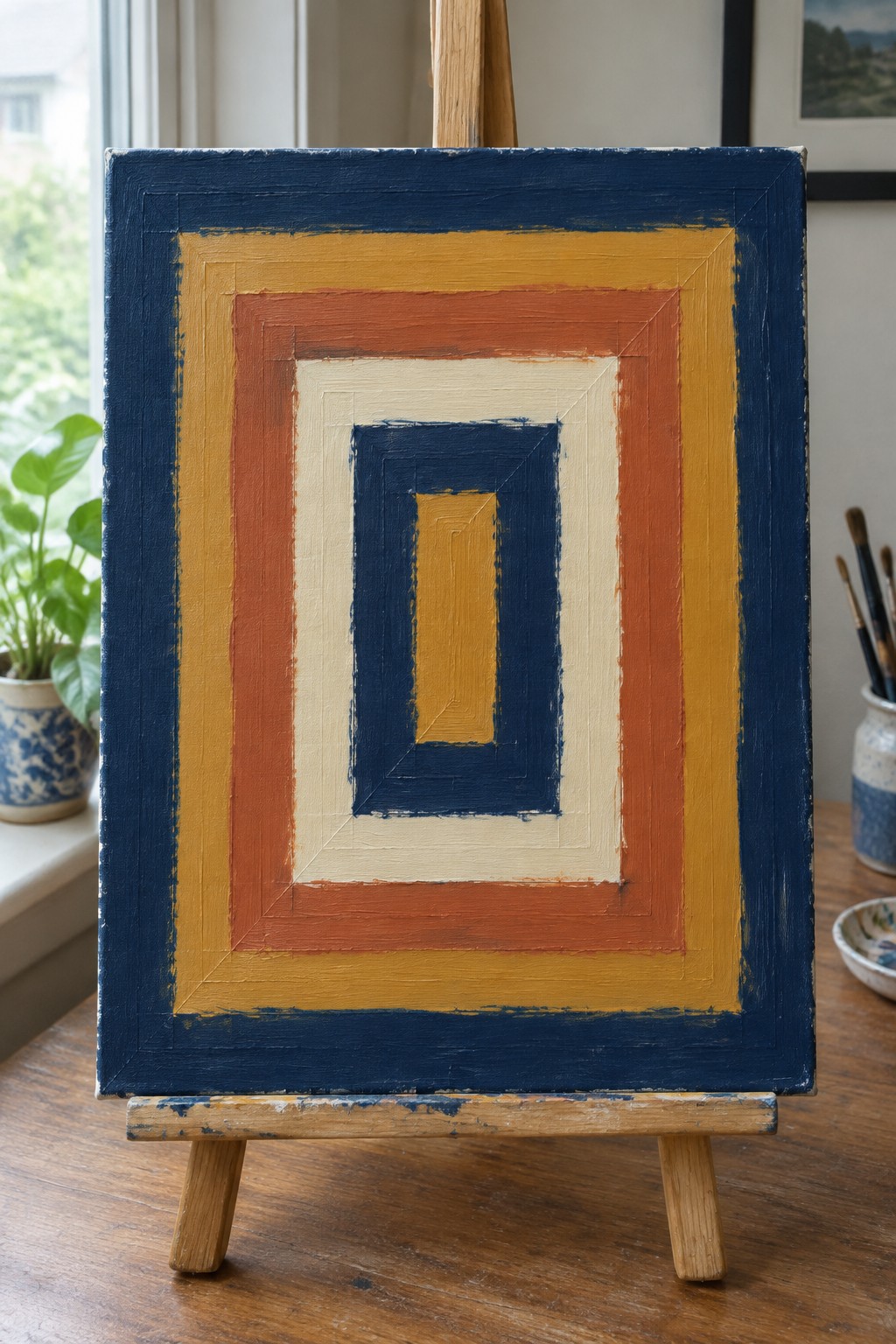
This painting idea centers on building a geometric abstract from a series of nested rectangles that create a stepped frame effect around a small central block. The color sequence moves from a dark outer border through yellow, orange, and cream layers before returning to dark blue and yellow at the core. The straight lines and repeated rectangular shapes keep the focus on the color blocks and the way each layer sits inside the next.
What makes this idea useful is how simply it translates to masking tape steps, with each rectangle taped off in turn for clean edges. You can change the color order, reduce the number of layers, or stretch the proportions to match a taller or wider canvas without losing the structure. For wall art, the bold color blocks hold attention from across a room, and the same layout can be repeated in different palettes for a matching set.
Chevron Bands with Black Outlines
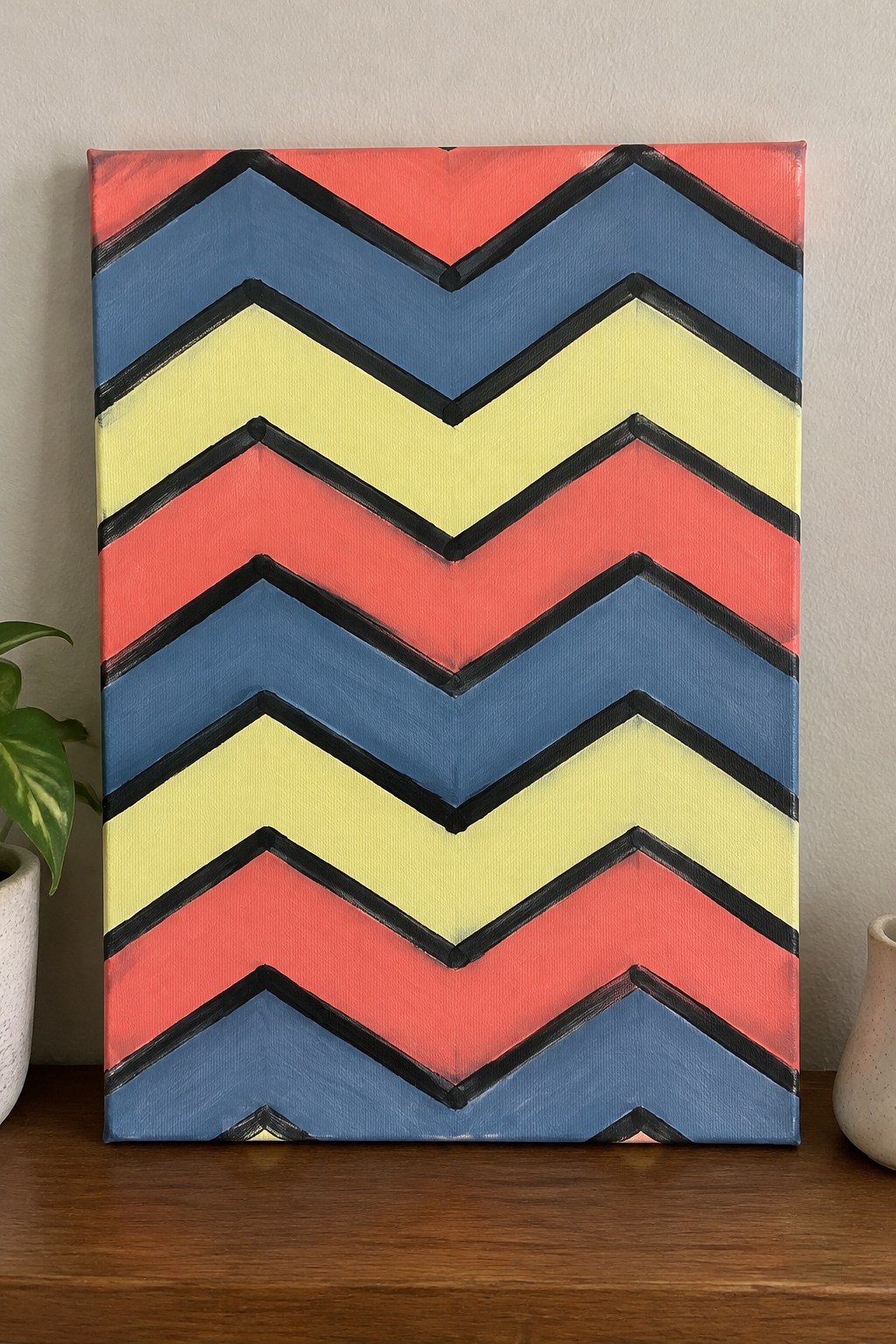
A chevron stripe pattern builds a geometric abstract painting through wide horizontal bands that zigzag across the canvas in coral, blue, and yellow. Each band sits between thick black lines that keep the angles crisp and prevent the colors from blending. The layout repeats the same V shape at regular intervals, which gives the design strong visual rhythm while staying easy to plan with masking tape.
What makes this idea useful is how the black outlines handle the separation work, so you only need to fill solid color blocks between the tape. You can shift the palette to match a room or swap in different widths to fit a taller or wider canvas without changing the core structure. The pattern also reads clearly in small photos, which helps it perform well as a quick project or decor piece.
Staggered Parallelograms in Earthy Neutrals
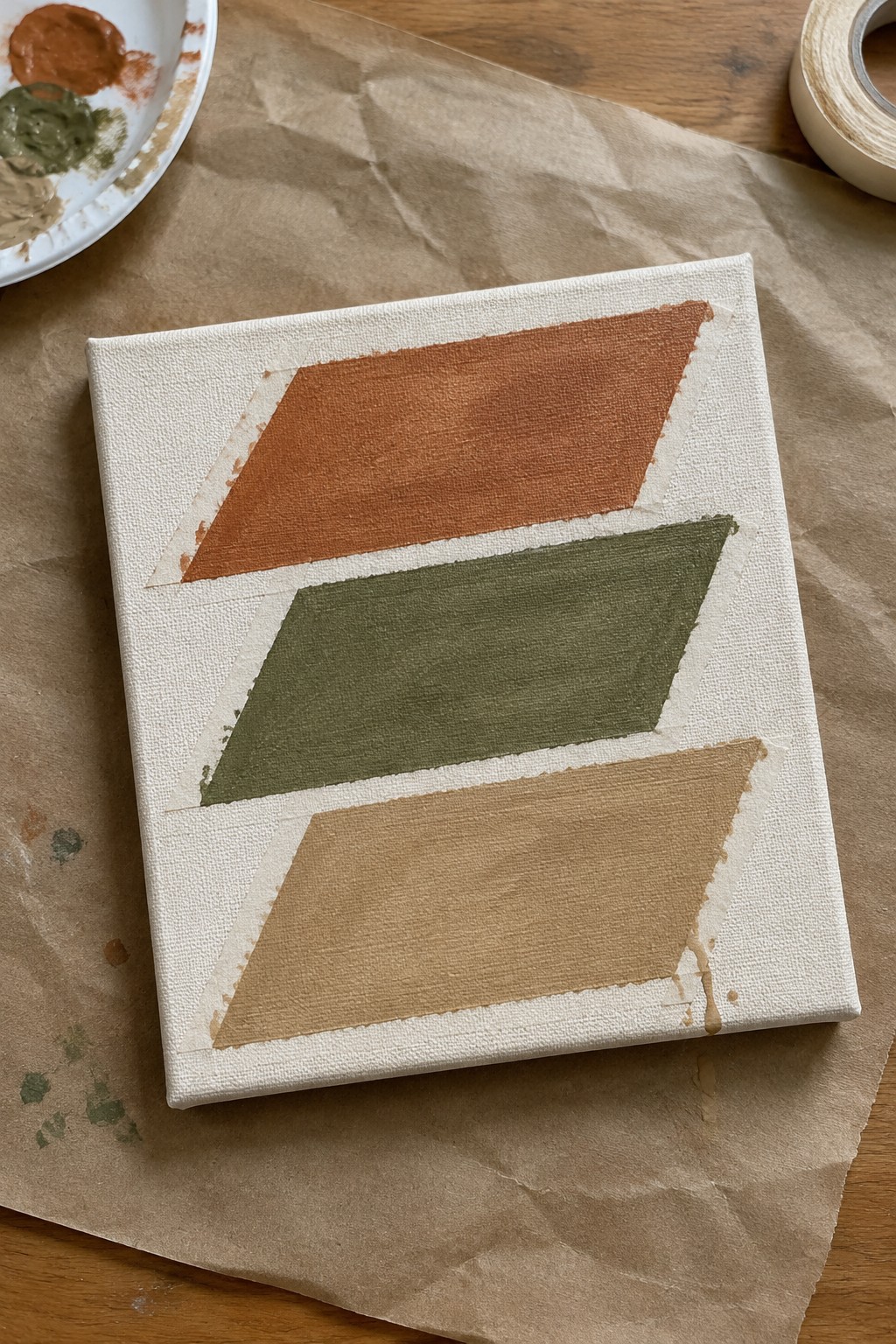
This painting idea uses masking tape to block out three angled parallelograms stacked diagonally across a white canvas. Each shape gets a single flat color from a muted palette of terracotta, olive green, and warm beige, with the tape removed after painting to leave crisp edges. The offset placement creates visual movement without needing extra detail or blending.
What makes this idea useful is how the limited number of shapes keeps the process quick while still looking intentional. The neutral tones work for year-round decor and can be swapped for any three colors that match a room or project. For practice, this format helps you test tape adhesion and paint coverage on a small scale before trying bigger pieces. The same layout can be stretched taller or rotated to fit different canvas sizes.
Bright Polygons Divided by Tape Lines with a Gold Accent
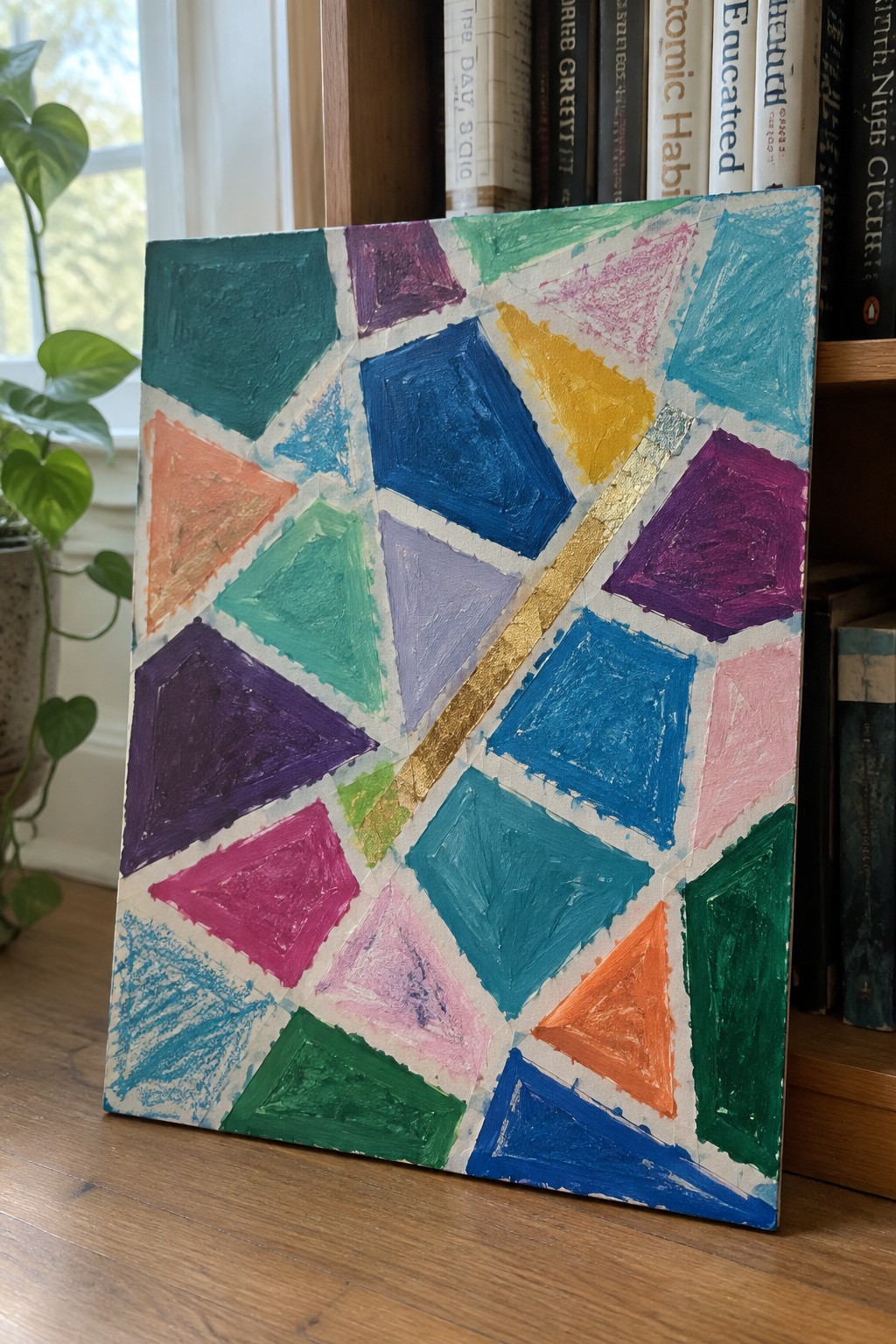
This painting idea uses masking tape to block out irregular triangles and four-sided shapes across the canvas, then fills each section with bold, saturated colors like teal, purple, blue, orange, and pink. The white tape lines stay visible after removal to create crisp separations, while one diagonal gold stripe cuts across the middle to add contrast and movement. The result is a straightforward abstract that relies on shape variety and color placement rather than detailed technique.
What makes this idea useful is how the tape handles the hard edges so you can focus on color choices and simple brushwork. You can easily change the palette to match a room or swap the gold stripe for another color if you want less shine. For practice, this kind of layout works well because the composition stays balanced even if the shapes end up slightly uneven, and it translates directly to different canvas sizes for quick wall pieces.
Horizontal Stripes Broken by Raw Canvas Squares
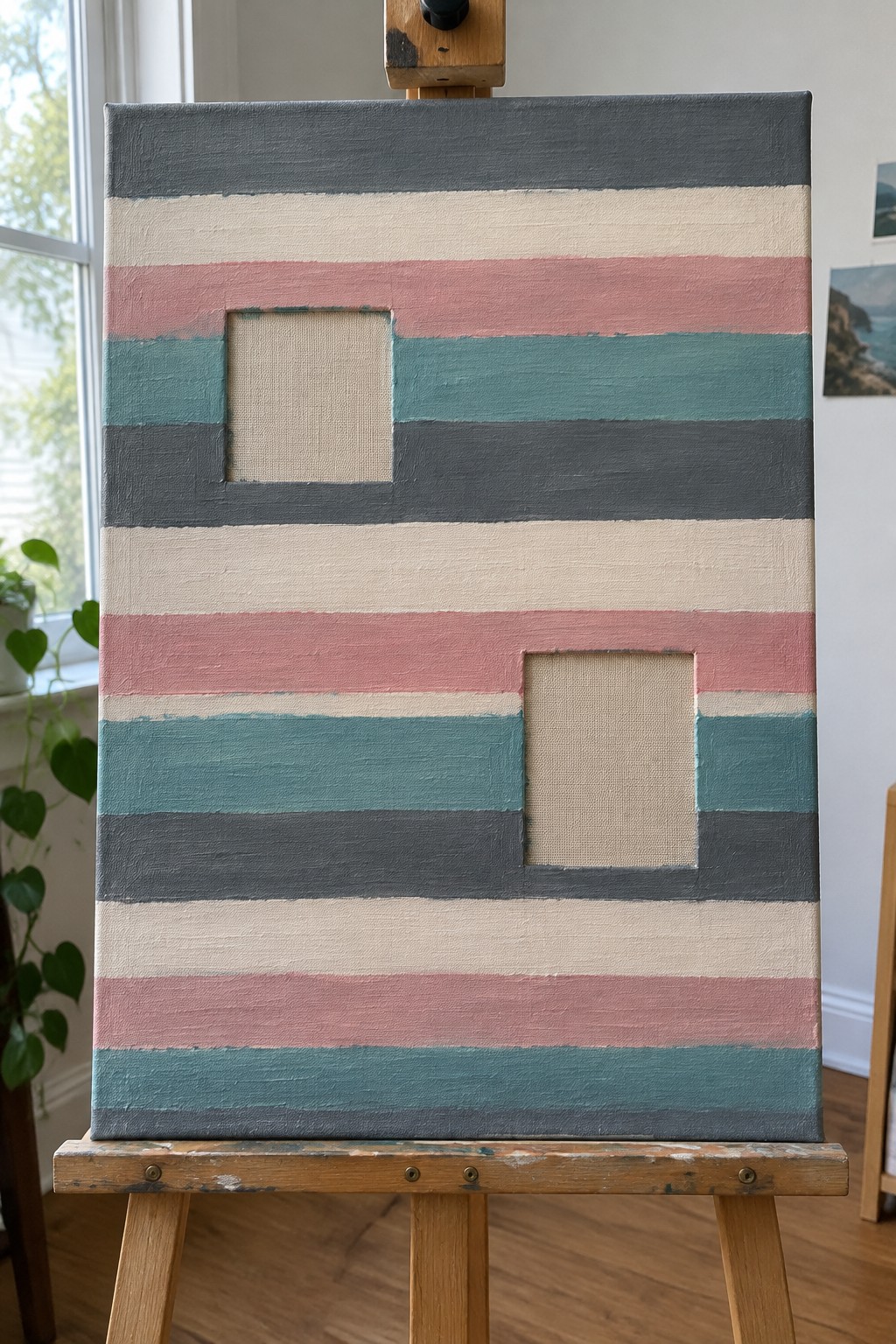
This painting idea centers on a series of horizontal color bands interrupted by two square sections of raw canvas that sit at different heights and break the stripe pattern. The muted palette of gray, pink, teal, and beige keeps the focus on the simple geometry and the contrast between painted stripes and untouched fabric. The composition works because the offset squares add just enough asymmetry to stop the design from feeling static while still staying easy to tape off and paint.
What makes this idea useful is how the raw squares act as built-in negative space that requires no extra detail work. You can shift the square positions, change how many you include, or swap the stripe colors to match a room without altering the core layout. The approach suits quick weekend projects or practice sessions since the masking tape does most of the hard edges. It also translates well to different canvas sizes for wall pieces because the horizontal flow scales cleanly.
Earthy Geometric Rainbow Arcs
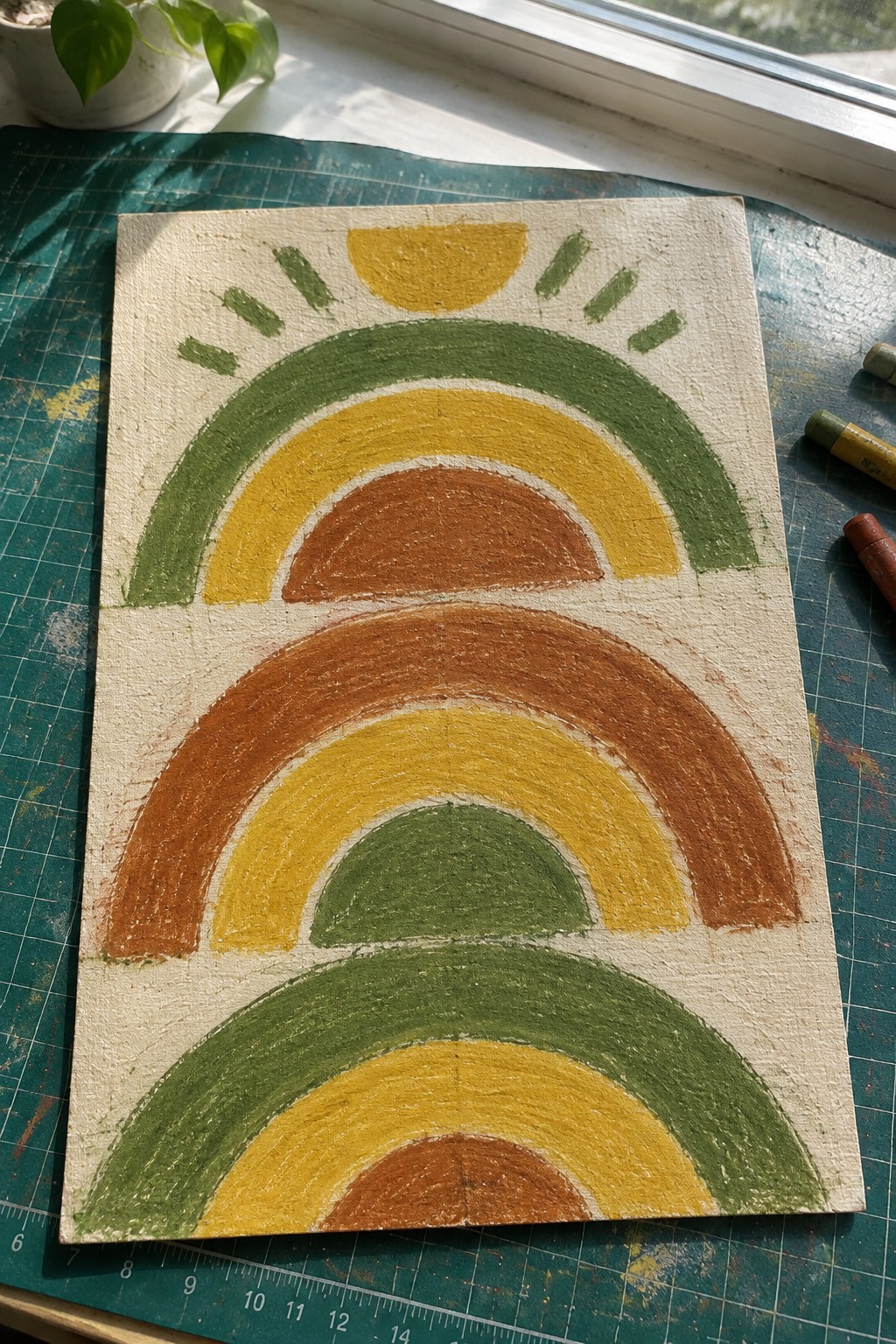
This painting idea centers on a stacked series of concentric arcs that form a rainbow in muted greens, yellows, and browns. The arcs sit on a textured off-white background with a half-circle sun and short rays placed at the top to anchor the design. The limited palette and clear horizontal layering make the shapes easy to read while the visible brush marks add subtle texture without complicating the layout.
What makes this idea useful is how the arc structure works at different widths and heights, so the same layout can fit square or rectangular canvases. The color bands can be swapped for brighter shades or reduced to three layers for a faster version. For wall art, the centered composition sits nicely above a desk or shelf, and the masking tape technique from the article would help keep the edges between arcs clean while still allowing some texture in the paint.
Vertical Blue Stripes With Masking Tape
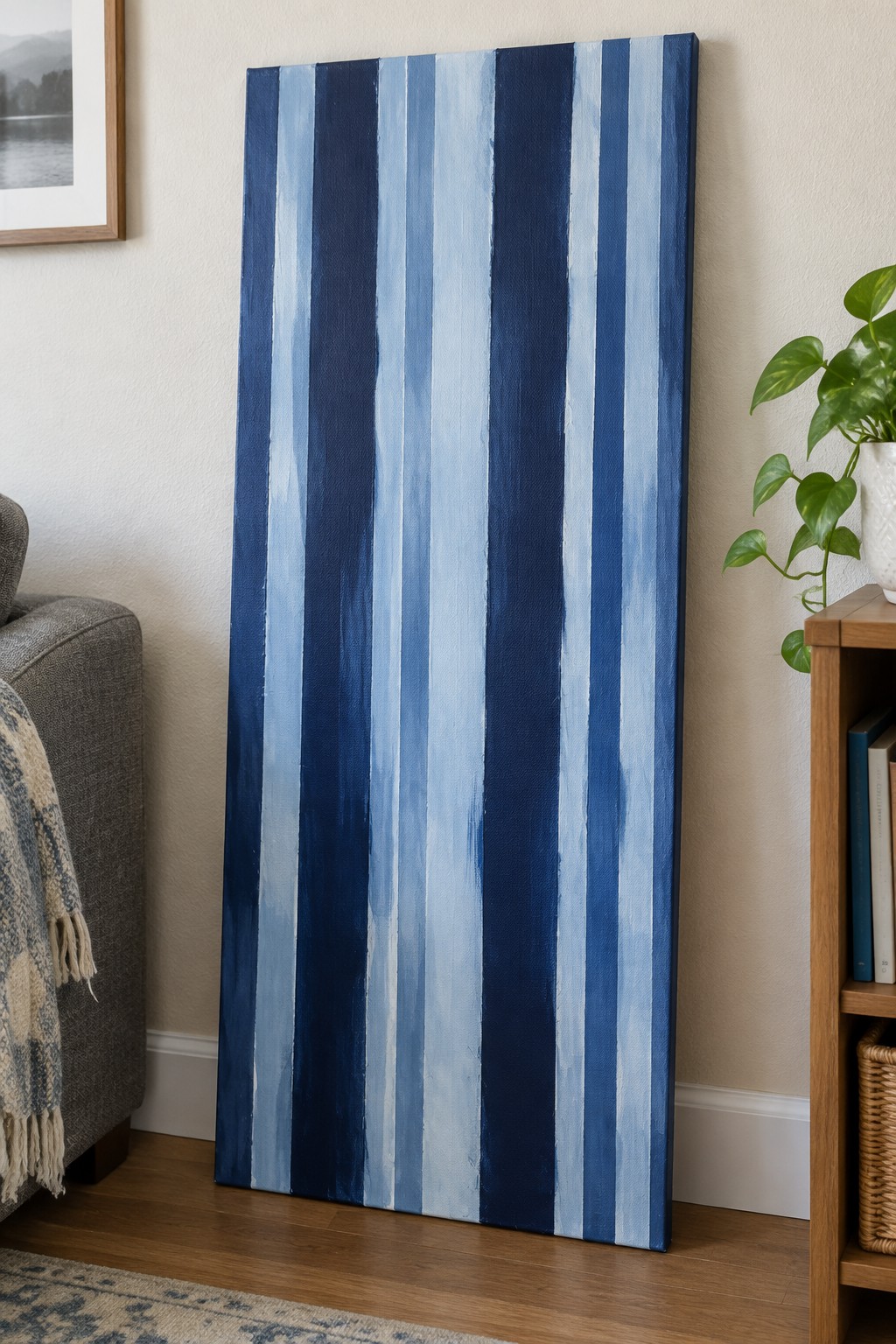
A vertical stripe painting uses masking tape to mark off uneven widths across a tall canvas, then fills each section with a different blue from deep navy to pale wash. The slight variations in stripe width and the soft blending between some colors keep the pattern from feeling too rigid. This fits the geometric abstract category where simple lines and color shifts carry the whole composition.
What makes this idea useful is how the tape does the hard work of keeping edges straight so you can concentrate on mixing shades. You can easily swap the blues for any color family or adjust the stripe widths to fit a different canvas size. The same layout works well as a quick weekend project or as a larger wall piece that stays neutral but still has structure. Scaling the stripes narrower or adding one contrasting color at the edge gives you two quick ways to change the look.
Pastel Square Grid with Masking Tape Lines
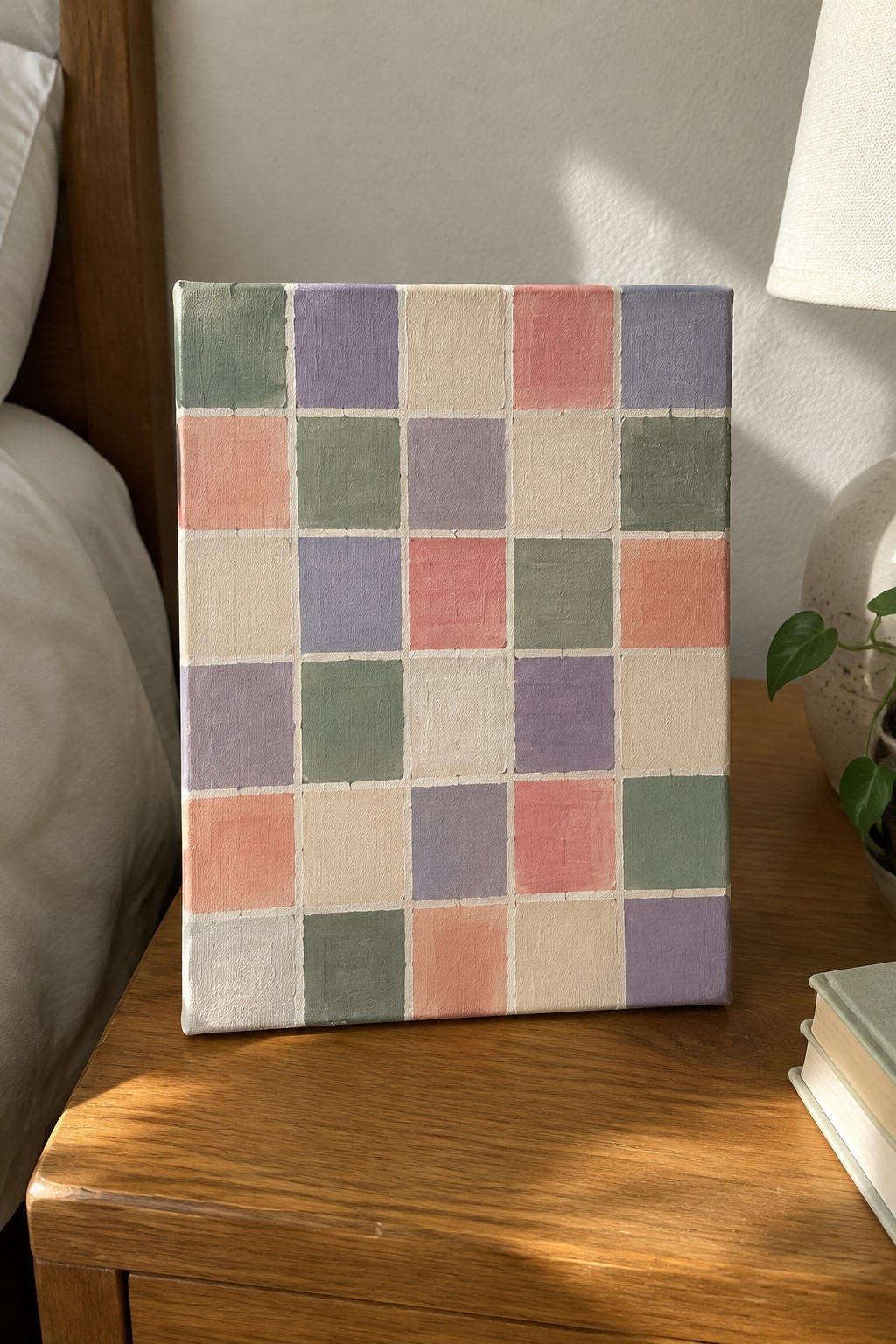
A grid of soft pastel squares makes a straightforward geometric abstract painting that relies on masking tape for sharp divisions. The colors stay in a gentle range of sage, lavender, blush, peach, and cream so nothing competes too hard. The even layout and consistent square size keep the piece balanced without extra planning.
The composition does a lot of the work here because the repeating grid stays simple while the color shifts add just enough variety. You can swap in whatever pastels you have on hand or change the square count to fit a different canvas size. This idea works especially well for quick weekend projects or when you want a calm piece that still reads as modern.
Diagonal Earth Tone Triangles
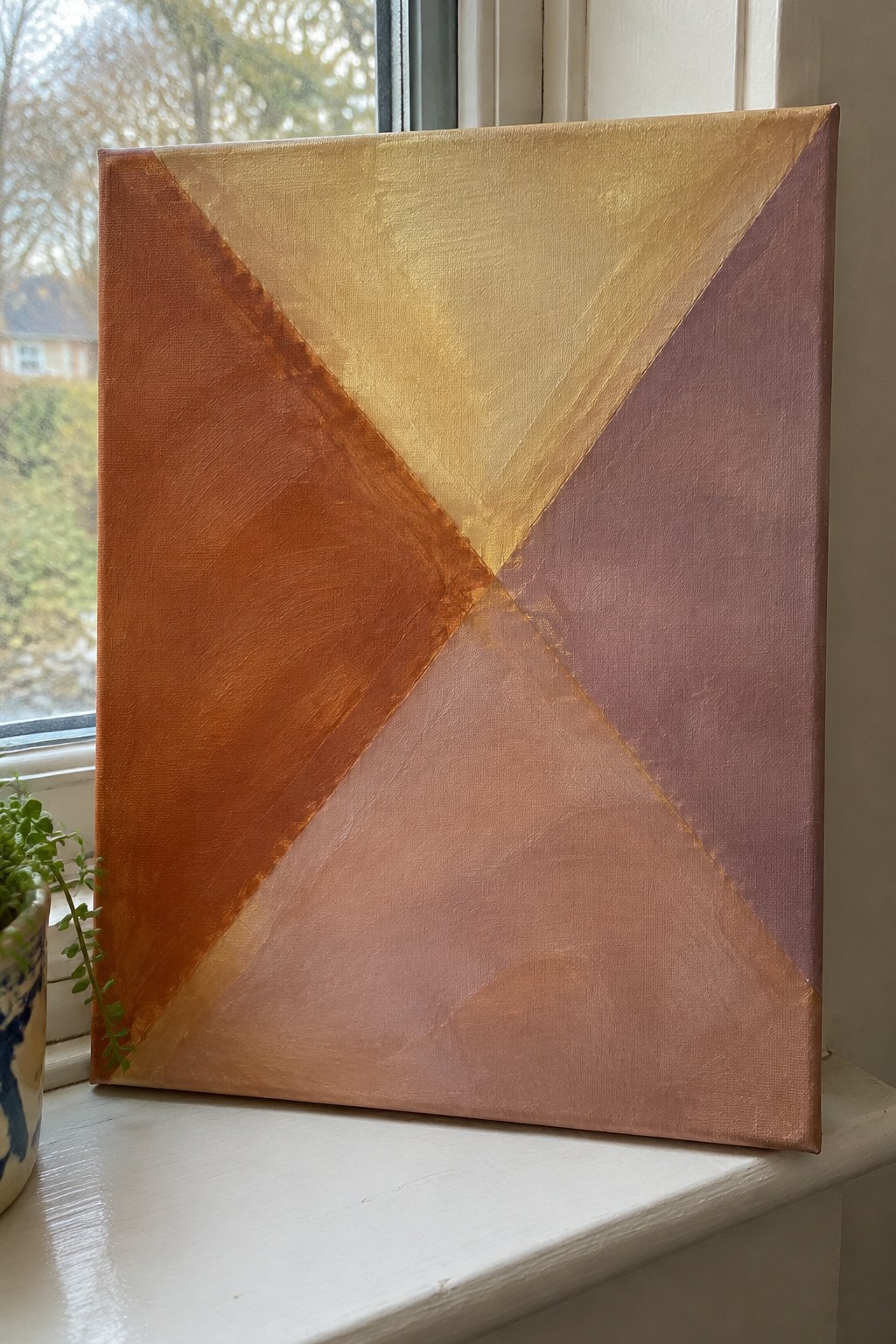
Masking tape creates the clean crossing diagonals that split the canvas into four triangles for this geometric abstract idea. The warm palette of rust orange, gold, terracotta, and muted mauve keeps the sections connected while still letting each color stand out on its own. The central intersection point gives the composition structure without extra layers or details.
What makes this idea useful is how simple the tape layout stays even when the colors change. You can swap in cooler shades or add one brighter accent triangle without redrawing anything. For wall art, something like this works especially well because the bold shapes read clearly from across a room. The same divisions also make a good practice piece when testing new color combinations.
Geometric Rectangle Blocks in Three Bright Colors
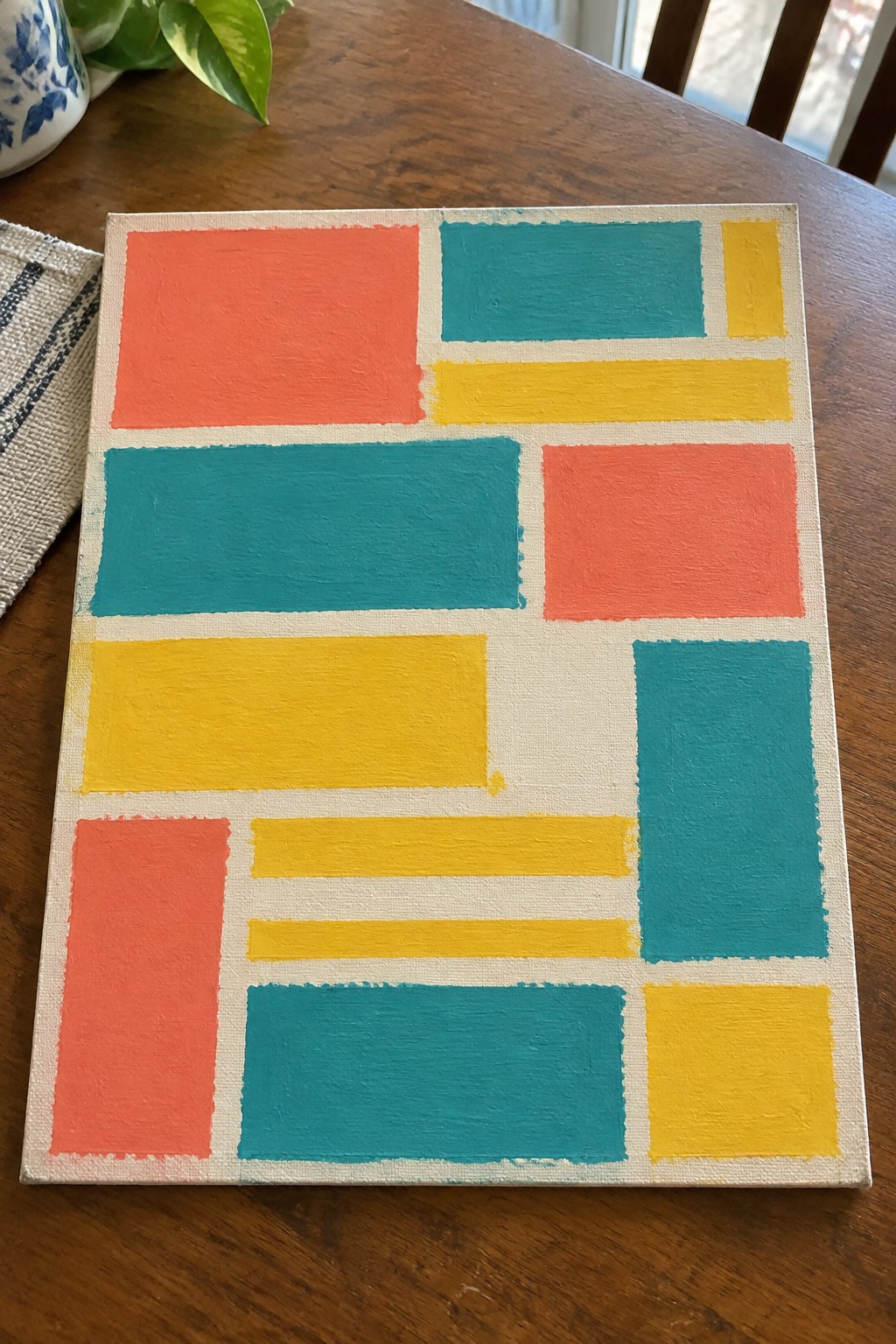
This painting idea uses masking tape to divide a canvas into an irregular grid of rectangles and squares, then fills them with solid blocks of coral, teal, and yellow. The layout works by balancing a few large shapes against smaller accent pieces so the eye moves around the canvas without settling in the center. It belongs to the geometric abstract category where the main appeal comes from color contrast and varied proportions rather than detail or texture.
What makes this idea useful is how the tape method removes the need for steady brushwork on straight edges. You can swap any of the three colors for ones that match your room or shift the size of the largest blocks to change the overall feel. For practice this layout lets you focus on composition choices instead of technique, and the same structure works at different canvas sizes without needing new planning.
Concentric Rings with Varied Radial Segments
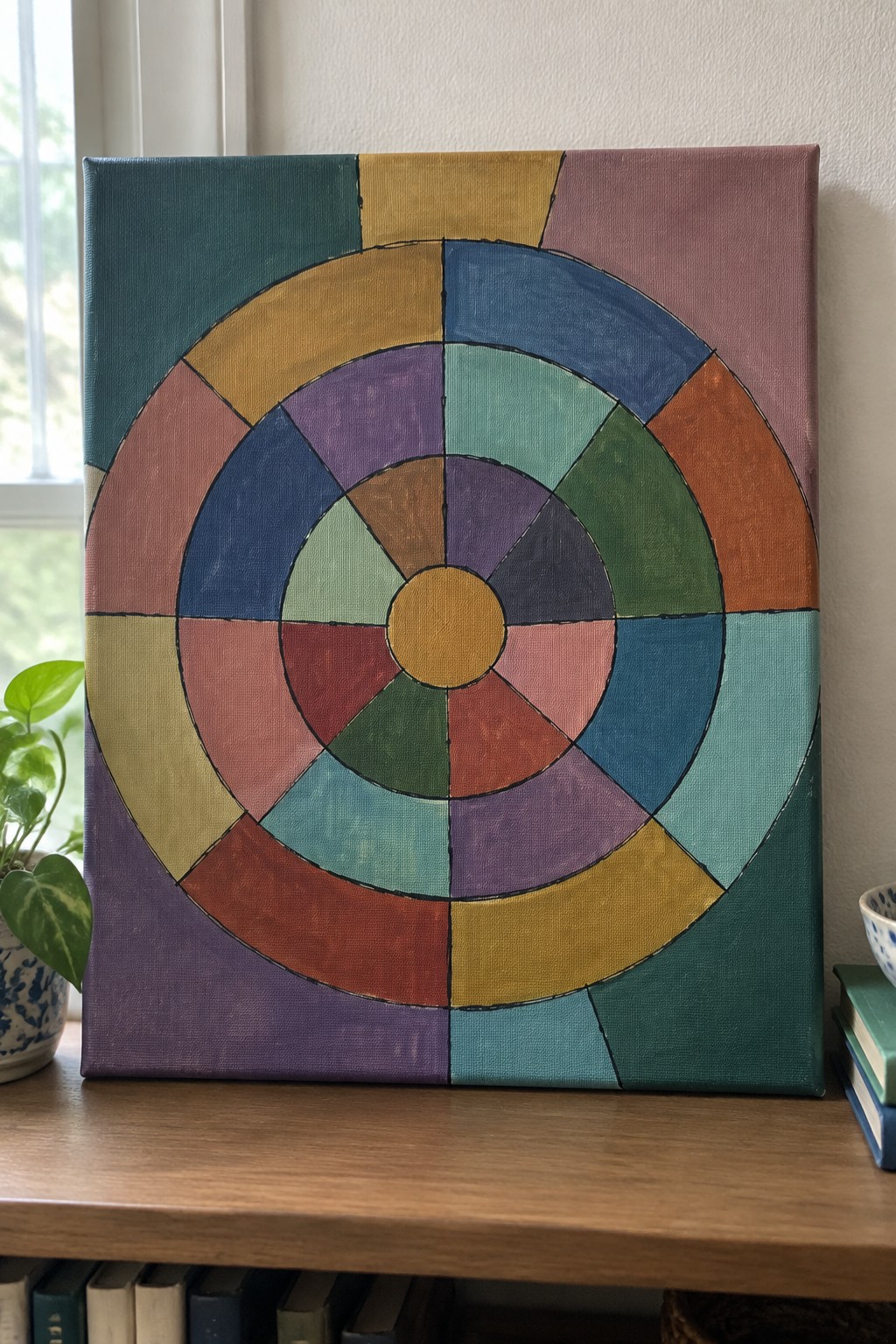
This painting idea centers on building a geometric abstract from concentric circles divided into uneven segments using masking tape for clean edges. The design starts with a solid center circle and expands outward through rings that shift in width and color, creating a balanced but irregular pattern. The muted earth tones and teal accents keep the composition grounded while the tape-defined lines give each section clear separation.
What makes this idea useful is how the tape does most of the structural work, so you can focus on choosing colors rather than freehand control. The layout adapts easily by changing the number of rings, widening some segments, or swapping the palette for brighter or cooler tones depending on your space. For wall art or quick practice pieces, this format stands out on Pinterest because the strong central focus and repeating shapes read clearly even in small thumbnails.
Asymmetrical Rectangle Blocks with Visible Tape Edges
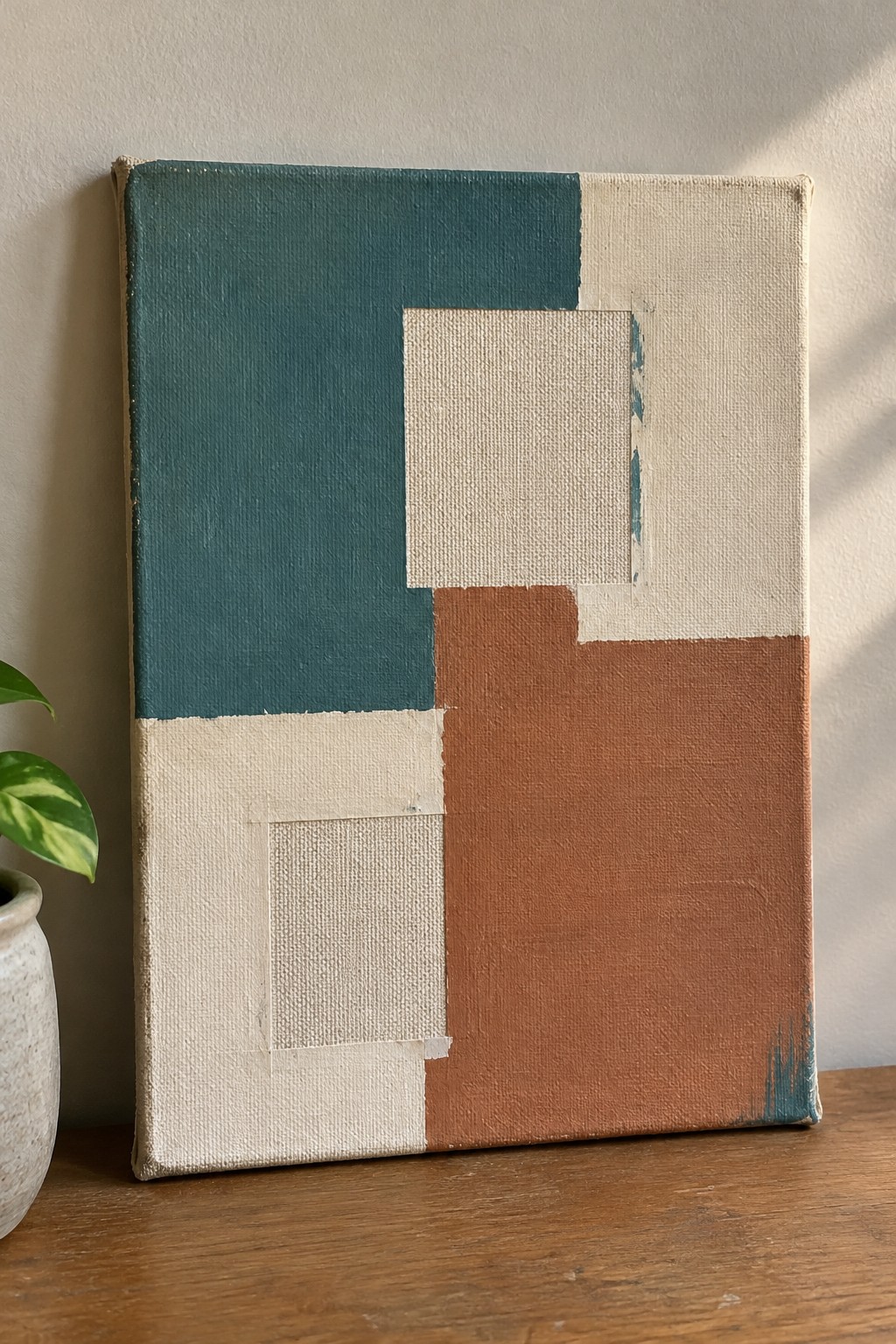
This painting idea centers on building an abstract composition from rectangles of different sizes that sit slightly off-grid. Masking tape creates the clean edges while also leaving a few thin lines exposed on purpose, which adds just enough texture without extra work. The limited palette of teal, cream, and warm brown keeps the focus on how the shapes connect and overlap.
What makes this idea useful is how the same block layout can be stretched taller, made wider, or flipped to suit any canvas size. The three-color setup is easy to change out for whatever tones already work in a room. For practice, the exposed tape marks give a clear way to study how overlaps affect the final look without needing precise planning. A version like this also works well as a quick weekend piece that still reads as intentional wall art.
Stepped Horizontal Stripes in Warm Tones
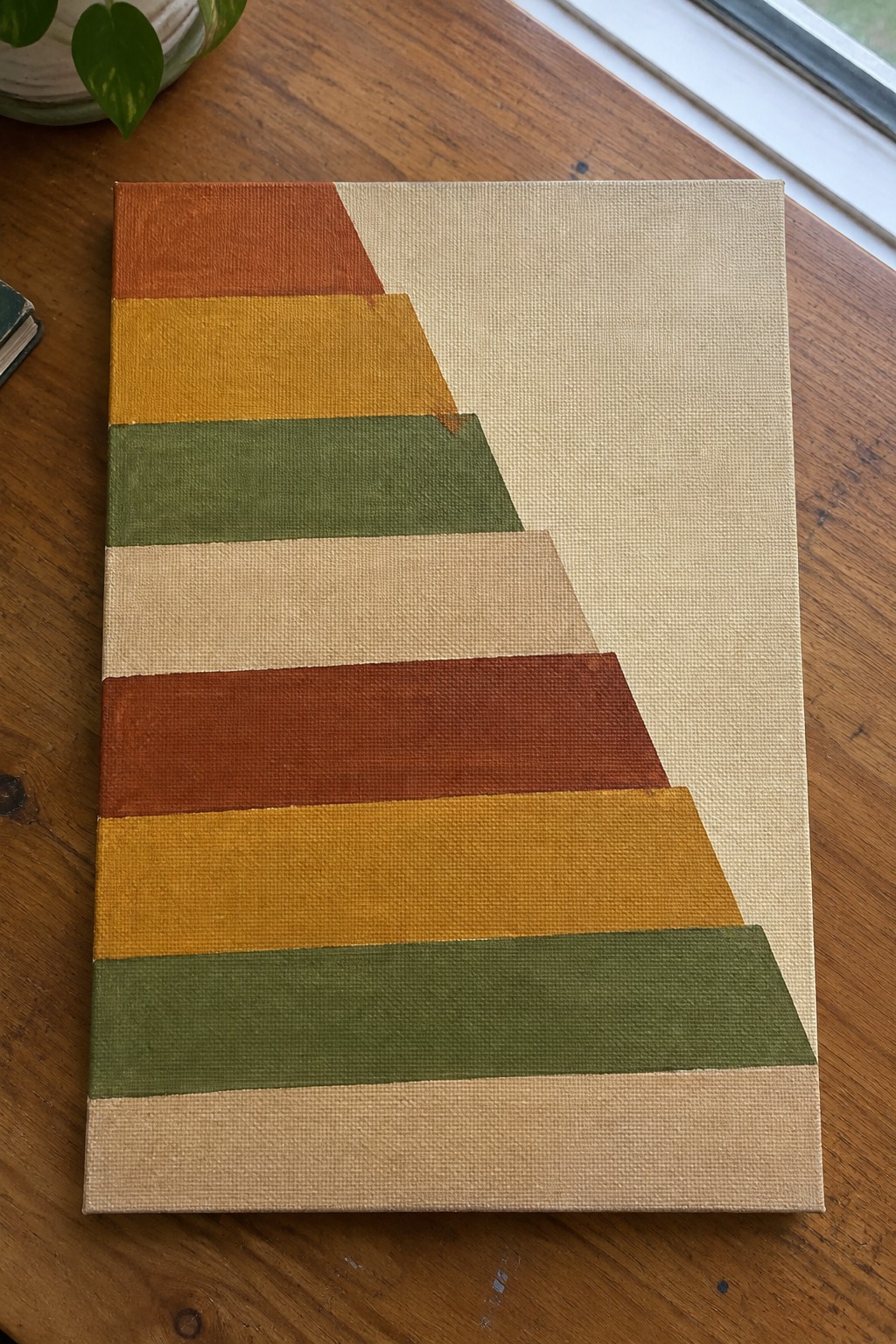
This painting idea stacks horizontal bands of color so each stripe steps down diagonally across the canvas. Masking tape creates the sharp edges between sections, letting the colors sit in clean blocks without any blending. The warm palette of oranges, yellows, greens, and browns gives the steps clear separation while keeping the overall look simple and balanced.
What makes this idea useful is how the tape does most of the precision work, so you can spend time picking colors that match your room. You can change the stripe widths or shift the starting point of the diagonal to fit different canvas sizes. For wall art, something like this works especially well because the repeating pattern stays interesting even from across the room.
Corner Radiating Stripes Abstract
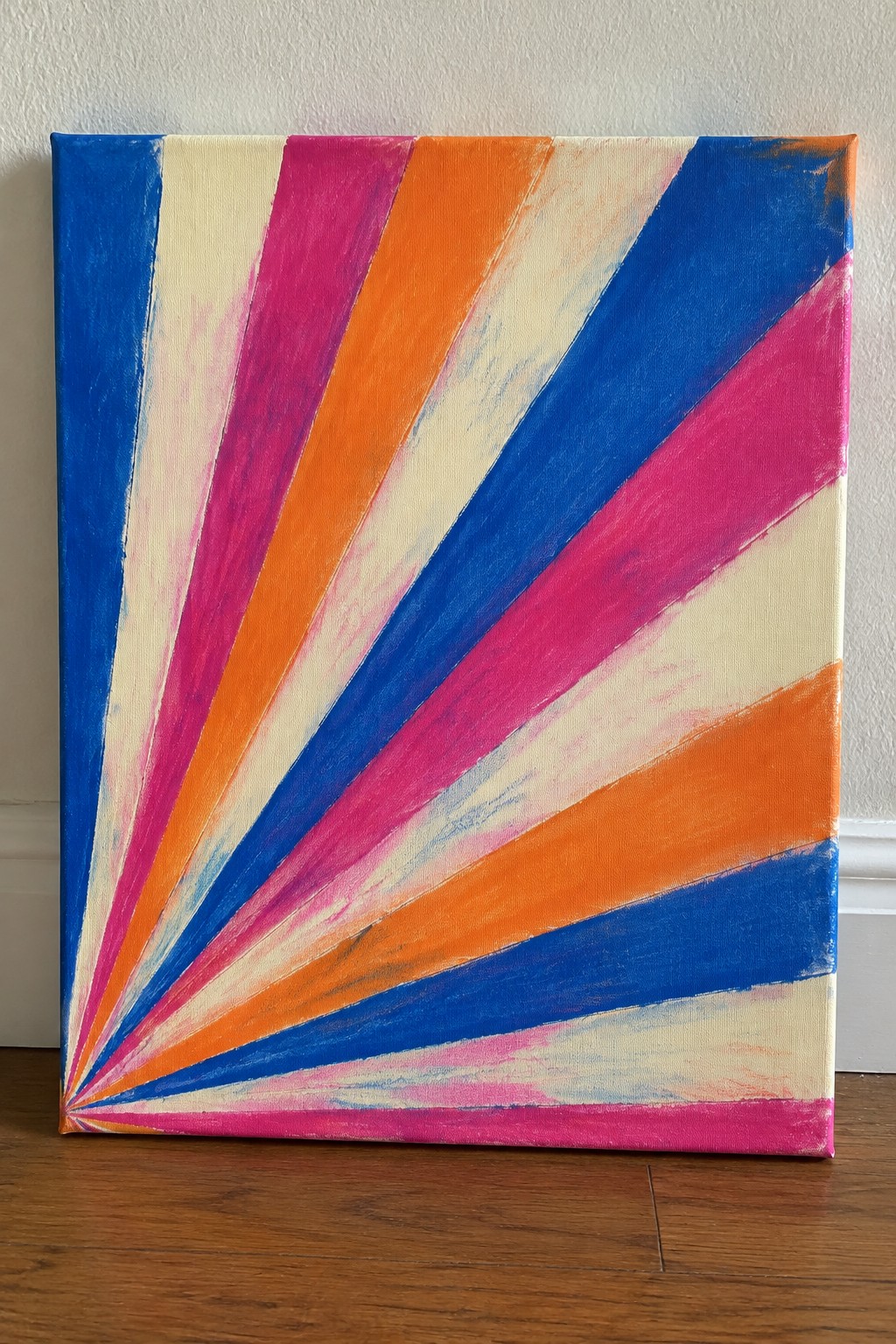
This painting idea uses masking tape to create a series of straight radiating lines that start from one bottom corner and spread across the canvas. The stripes alternate between saturated blue, pink, orange, and cream, which keeps the color blocks distinct and the overall pattern easy to follow. The angled layout creates movement and fills the space without requiring any freehand curves or shading.
What makes this idea useful is how the tape handles all the clean edges, letting you focus on color placement and spacing instead. You can swap the palette for any room or season and still keep the same fan structure. For wall art, the bold stripes hold up well at larger sizes and stay readable from a distance. This would be easy to turn into a set by shifting the starting corner on each canvas.
Overlapping Circles and Rounded Blocks in Muted Neutrals
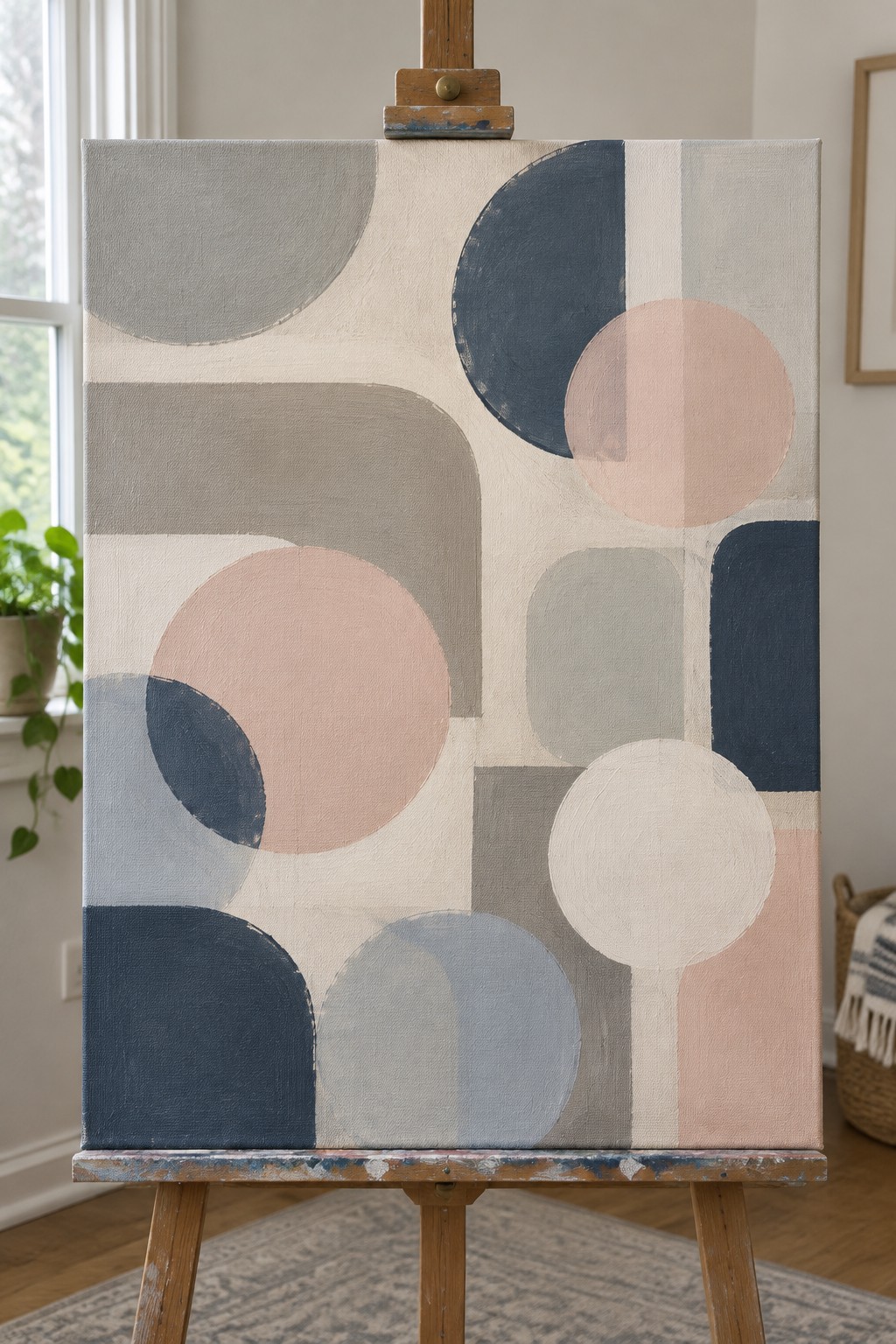
This painting idea centers on arranging circles, half-circles, and rounded rectangular blocks so they overlap and sit side by side across the canvas. The muted palette of navy, dusty pink, warm gray, and soft beige keeps the shapes from competing while the off-white background gives breathing room between forms. Masking tape helps create the clean vertical divisions and crisp edges that make the layout feel organized rather than scattered.
The composition does a lot of the work here because the shapes already balance one another without needing extra detail or shading. You can easily swap the colors for brighter tones or shrink the whole design onto a smaller canvas if you want something quicker. For practice, this kind of subject lets you focus on planning tape placement and color layering before you paint, and the result translates well to wall art or a simple series.
Frequently Asked Questions
What type of paint is best for these masking tape geometric abstract paintings?
Acrylic paint works well because it dries quickly and adheres smoothly to canvas. Start with a base coat on your canvas and let it dry fully before applying tape. Use matte or satin finishes for clean edges and avoid heavy body paints that might seep under the tape.
How do I stop the masking tape from pulling up dried paint during removal?
Press the tape firmly onto the canvas after placing it and paint over the edges lightly to seal them. Remove the tape while the top layer is still slightly tacky rather than fully dry. Pull at a 45 degree angle slowly to keep lines sharp and protect the base coat.
What steps help create crisp straight lines in these designs?
Measure and mark your canvas lightly with a pencil first then align the masking tape along those guides. Burnish each strip with a credit card or similar tool to eliminate air bubbles. Overlap tape ends neatly and trim excess with a craft knife for precise geometric shapes.
How should I select colors for the 17 different abstract patterns?
Begin with a limited palette of three to five complementary hues such as blues and oranges or neutrals with one accent. Test small swatches on scrap canvas to see how they interact under the tape. Vary saturation levels across sections to add depth without overwhelming the simple geometric layout.
What is the best way to finish and protect these completed canvas paintings?
Allow the final paint layer to cure for at least 24 hours then apply a clear acrylic sealer in thin coats. This step guards against dust and fading while preserving the tape created edges. Store finished pieces flat until fully hardened to avoid dents.
