


I often find myself reaching for fewer colors when I paint abstracts these days.
It feels simpler and lets the shapes stand out more without all the extra layers.
These minimalist pieces with restrained palettes are something I keep coming back to in my own work.
I put together some examples here that show how effective that approach can be.
They are all done in acrylics and focus on basic forms and limited tones.
Bold Circle in Muted Earth Tone
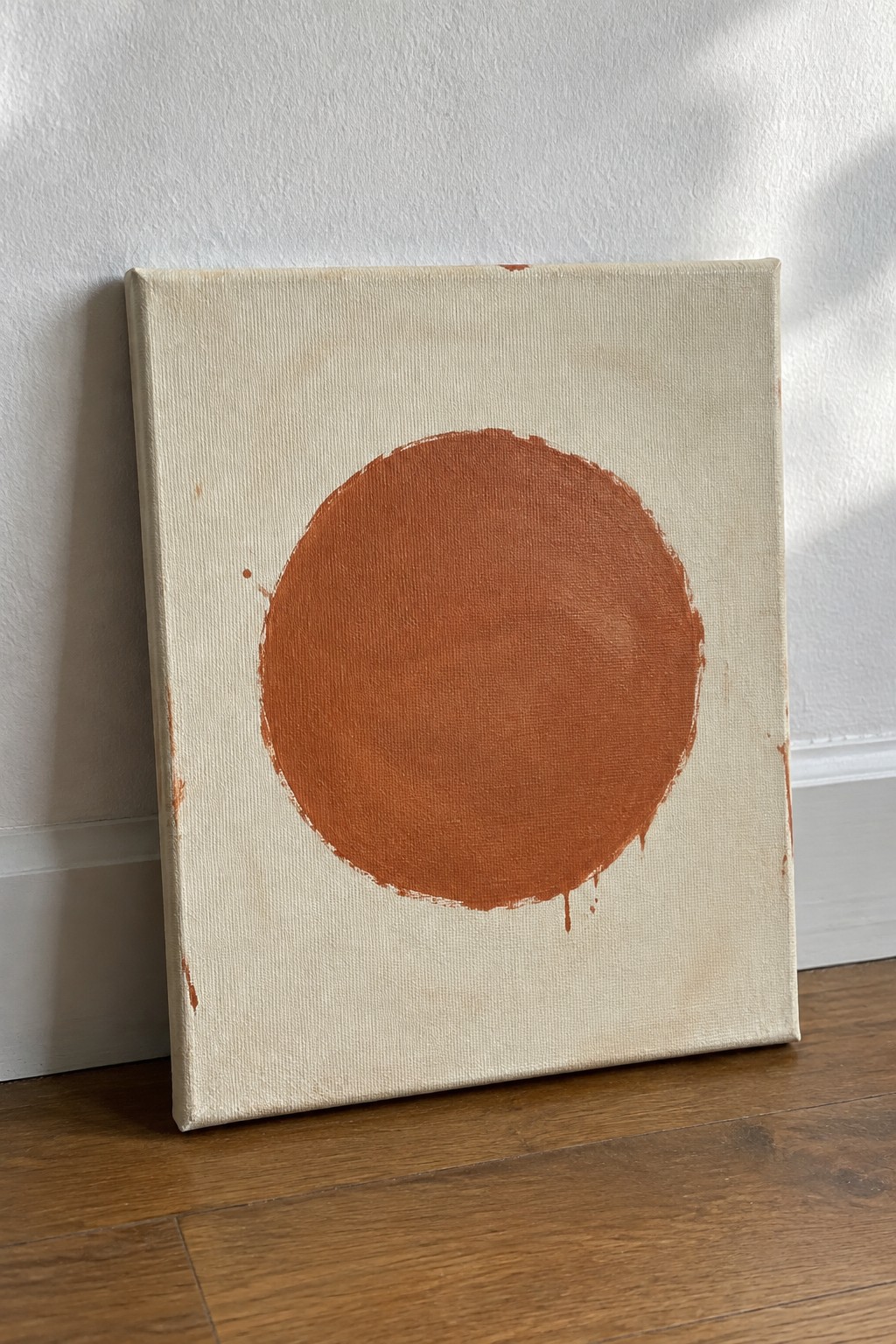
A large centered circle in a warm terracotta shade sits on an off-white ground, with the paint applied in visible strokes that leave slight texture and a few drips along the lower edge. The idea keeps everything to one shape and one color against a plain background, letting the contrast and scale create the impact. This type of abstract painting works through restraint, where the circle fills most of the space but still leaves breathing room at the edges.
The composition does a lot of the work here by using size and placement to hold attention without added details. You can adapt it easily by changing the circle color to another muted tone or shifting the background to match a specific room. For practice, this subject lets you work on even coverage and edge control while keeping the process short. It stands out on Pinterest because the minimal layout reads clearly even in a small thumbnail.
Muted Diagonal Two-Color Split
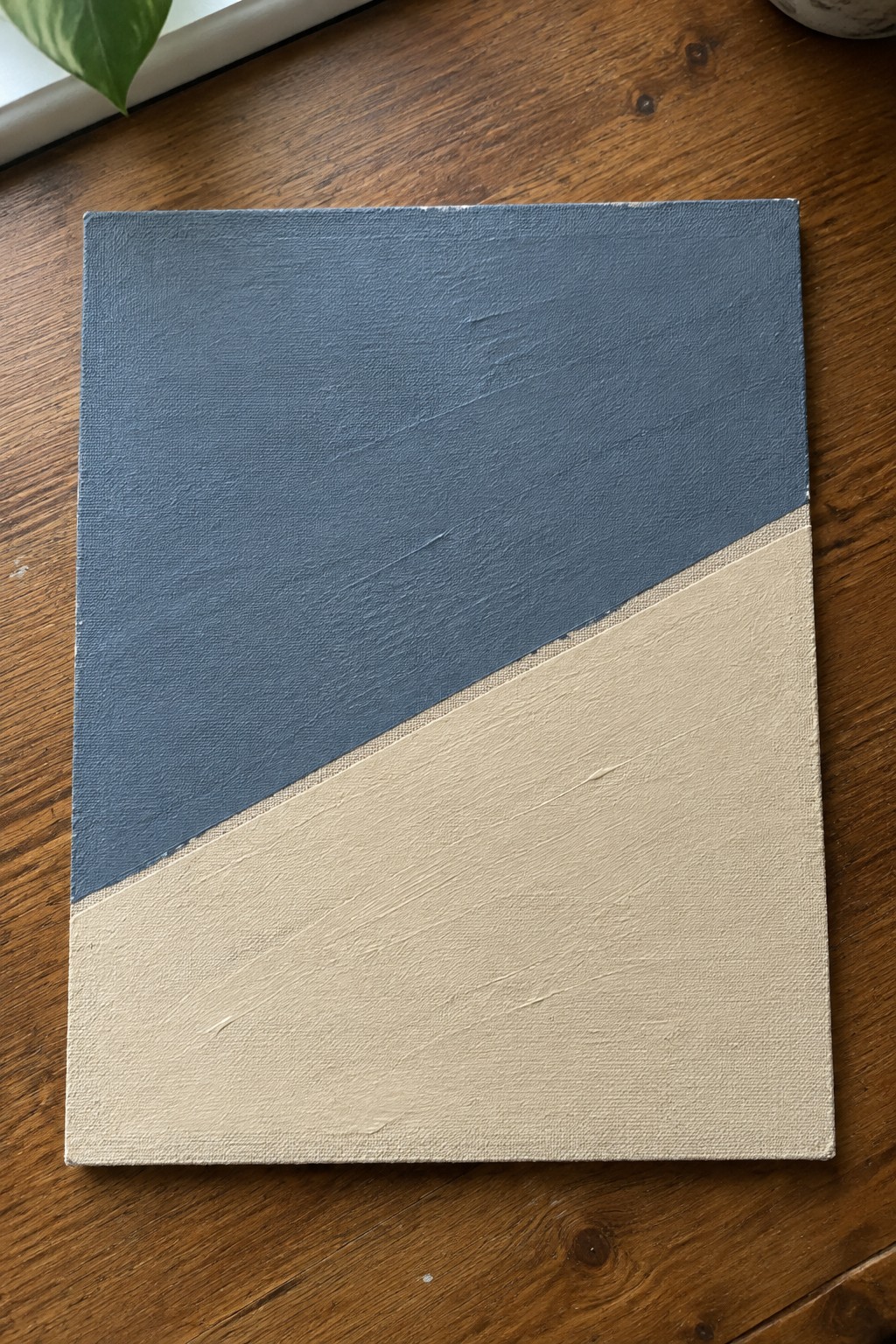
A minimalist abstract idea built around one strong diagonal that divides the canvas into two large color fields. The top section uses a cool blue-gray while the bottom takes a warm beige, letting the angled line create visual movement without any extra shapes or details. This approach works well because the restrained palette and simple geometry keep the focus on the contrast between the two tones.
What makes this idea useful is how quickly it adapts to different canvas sizes or slight changes in angle. You can swap the blue-gray for another muted tone or tilt the line steeper to change the balance. For wall art, the large flat areas make it easy to match existing decor without competing with other pieces. The same layout also works as a fast practice exercise for getting clean edges and even coverage with acrylics.
Horizontal Color Blocks in a Muted Trio
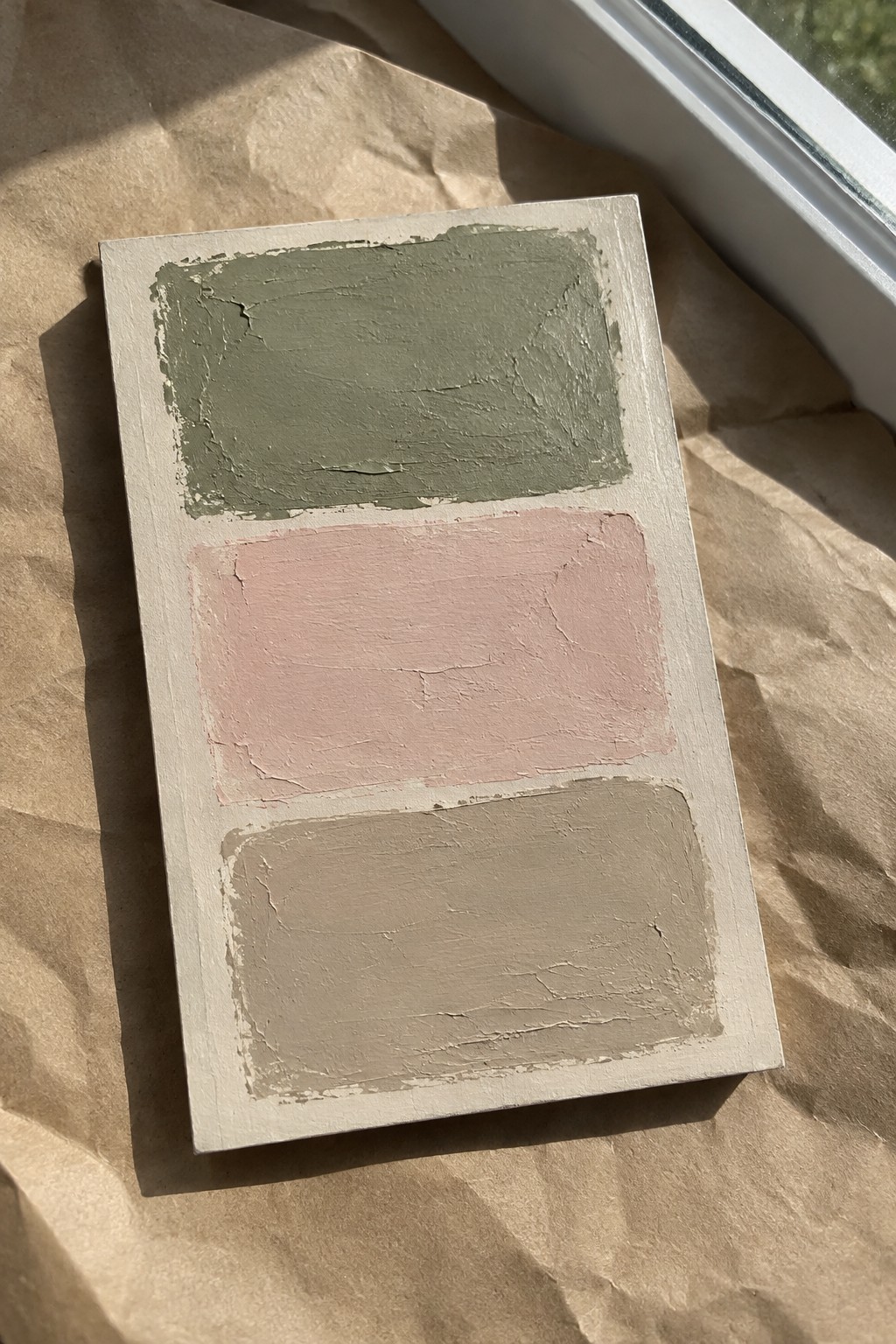
A minimalist abstract built from three stacked horizontal bands works well when the goal is to explore color relationships without added imagery. The top sage green sits above a mid-tone pink and a warm taupe, creating a simple sequence where each band occupies equal space and shares a similar level of matte texture. This layout keeps the focus on how the three hues sit together in a desaturated palette.
What makes this idea useful is how quickly it can be adapted by swapping any of the three colors for ones that match a specific room. The equal-band format removes the need for drawing or complex composition, so the time goes into mixing and applying paint evenly. For practice, this kind of subject helps test how different neutrals interact before committing to a larger canvas. The same structure also scales easily to bigger wood panels or canvas for wall pieces.
Single Bold Stroke on Neutral Ground
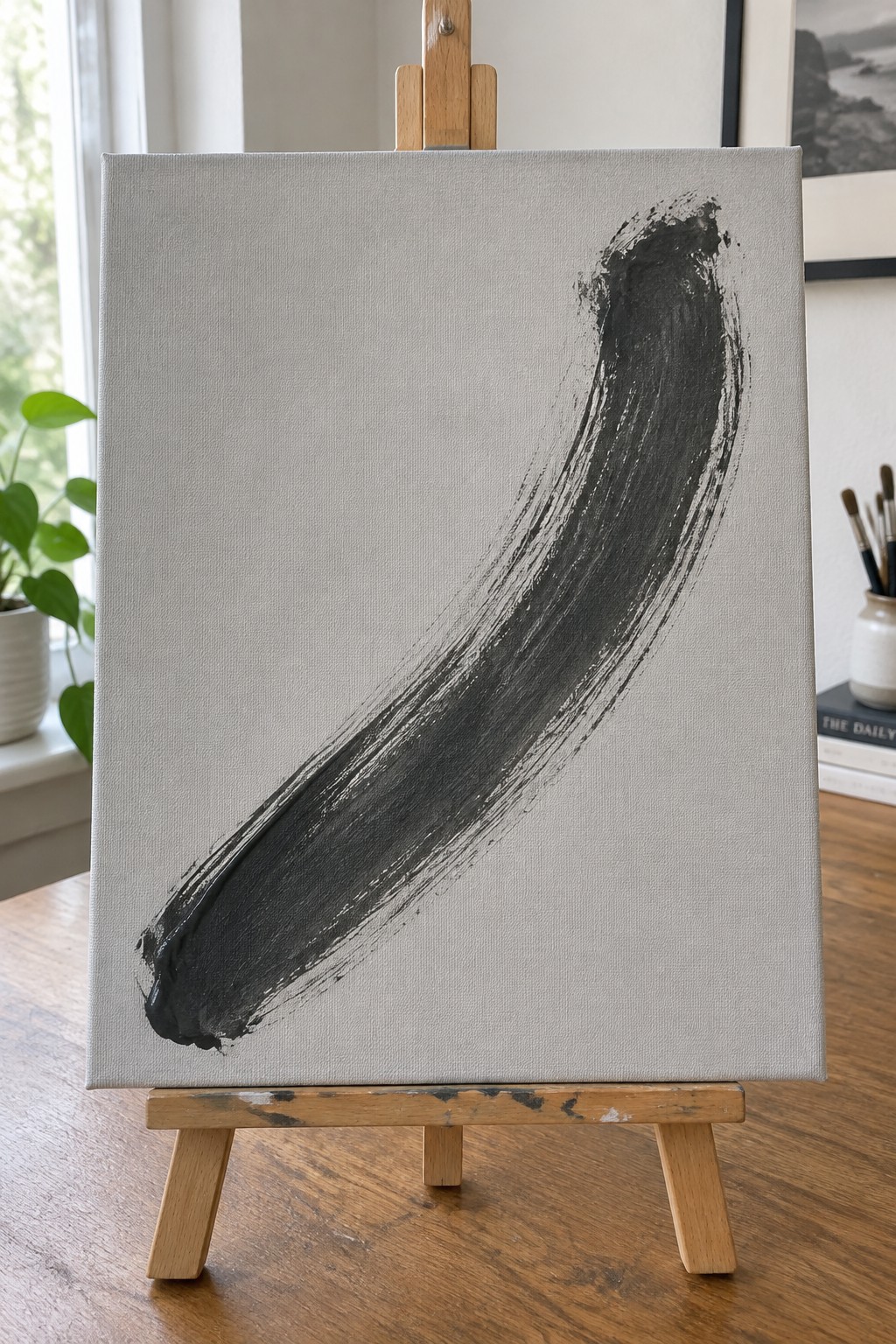
A single sweeping brushstroke in black across a light gray canvas creates the entire composition here. The idea relies on strong contrast, varied pressure, and visible texture from the brush to hold attention without any additional elements or colors. This fits squarely into minimalist abstract painting where one decisive mark carries the visual weight.
What makes this idea useful is how directly it practices brush control and composition at the same time. You can scale it up or down, swap the background tone, or change the stroke direction to match different room sizes or frames. For beginners it serves as solid warm-up work, while still producing a finished piece that reads as intentional rather than simple.
Textured Blue Rectangle Built from Horizontal Strokes
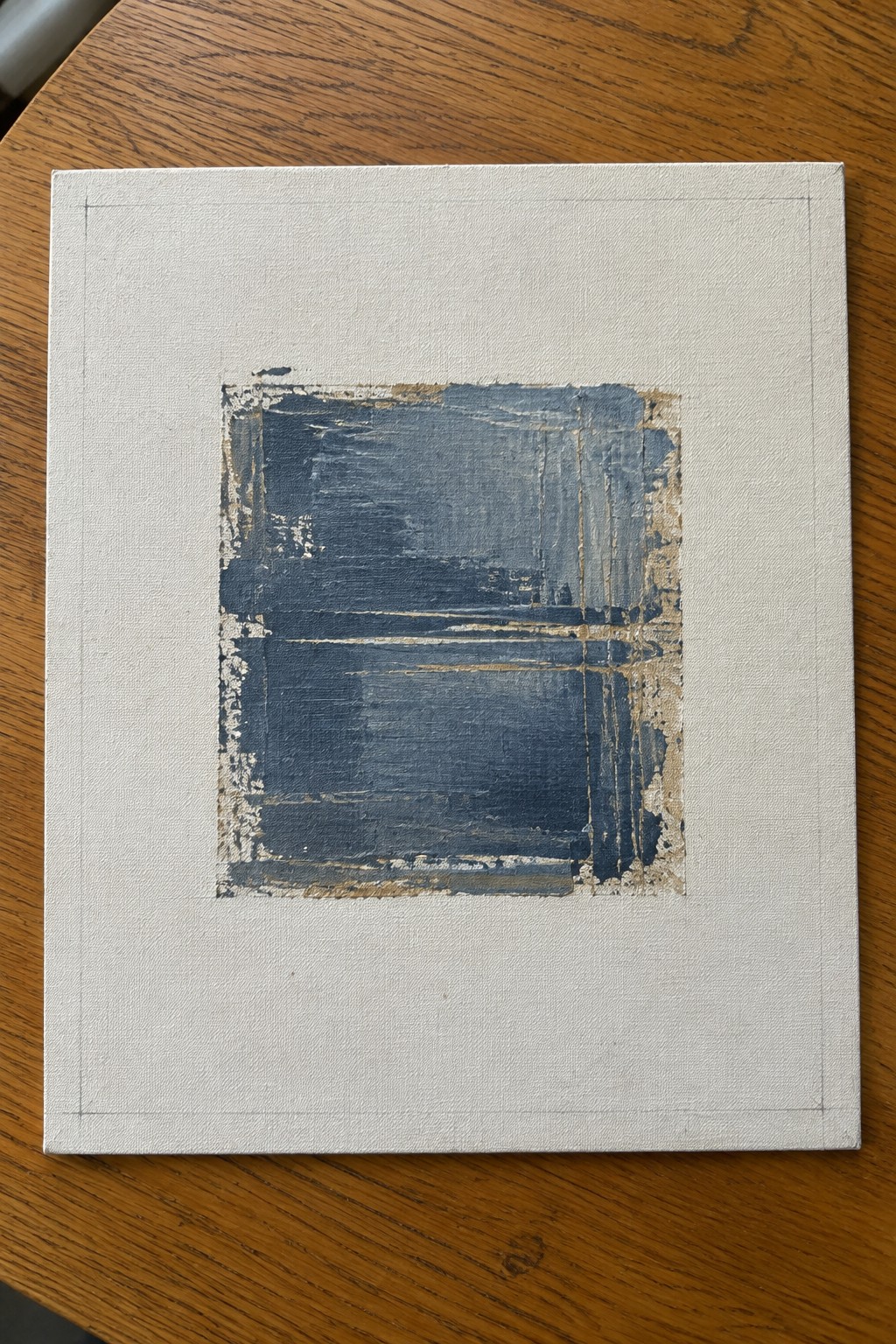
This painting idea focuses on creating a single contained form through layered horizontal brushwork in a tight range of deep blues. The composition works because the strokes vary in thickness and direction while staying inside roughly the same boundaries, which gives the shape weight without needing extra elements or colors. It belongs in the minimalist abstract category where the interest comes from texture and edge quality rather than subject matter.
The composition does a lot of the work here by letting the white canvas act as breathing room around the central shape. You can adapt this by changing the height of the rectangle or testing different pressures with the same brush to alter the texture. For wall art, something like this works especially well in a series of three or four pieces where each one shifts the blue slightly cooler or warmer. The simple structure also makes it straightforward to try on a smaller panel first before committing to a larger canvas.
Vertical Color Bars in a Restrained Neutral Palette
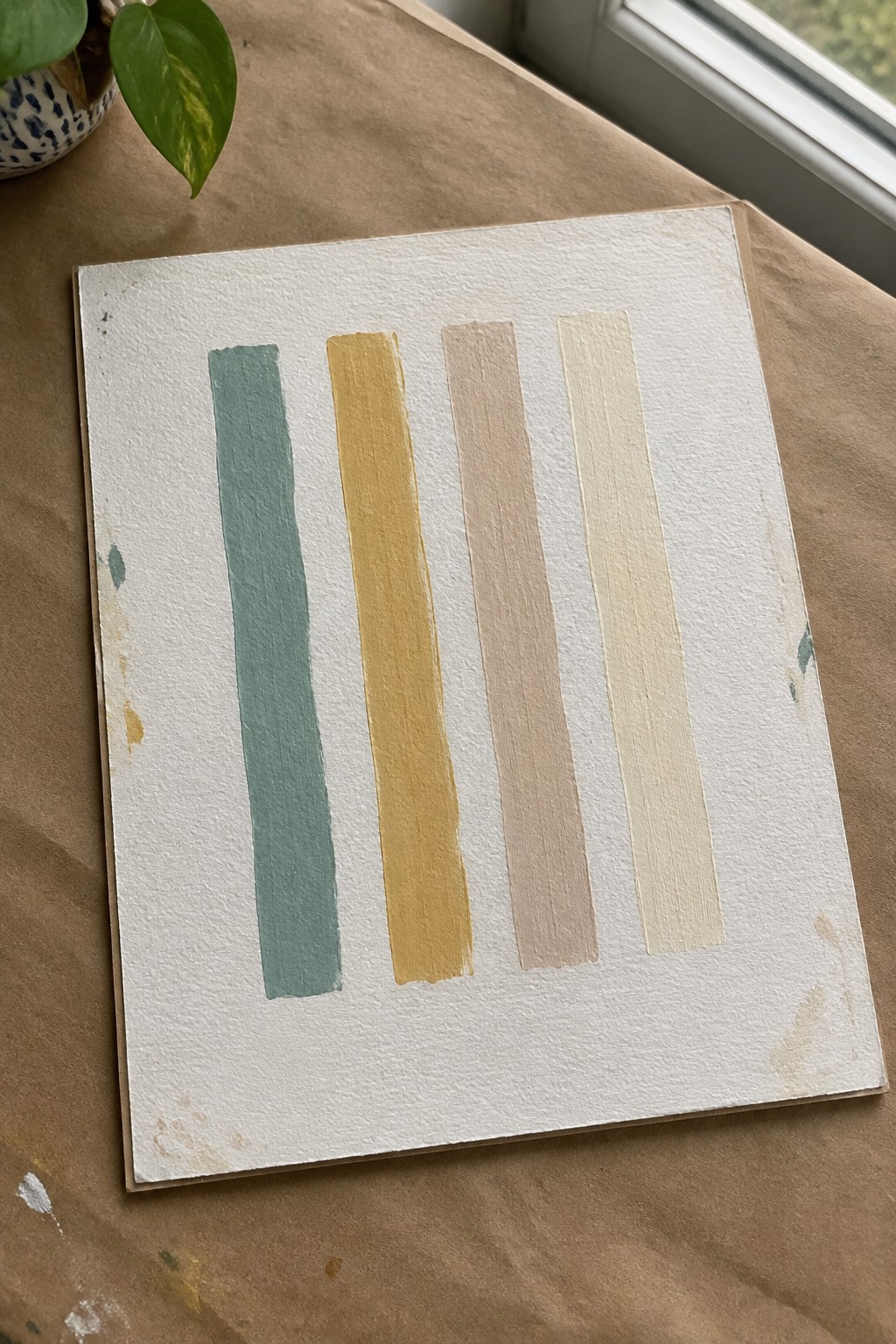
Four side-by-side vertical bars let you focus on color relationships using a tight set of muted tones. The idea works by keeping every bar the same width and spacing them evenly so the colors sit next to each other without distraction. This approach fits the minimalist abstract category and stays effective because the simple rectangles let each hue stand on its own.
What makes this idea useful is how quickly you can swap in new colors or adjust the widths to fit a specific wall or test a palette. The flat, unblended application means it serves as both fast practice and finished decor without needing advanced techniques. For wall art, something like this scales easily to larger sizes or can be repeated as a small series with slight color shifts.
Loose Arc in Muted Rose on Gray
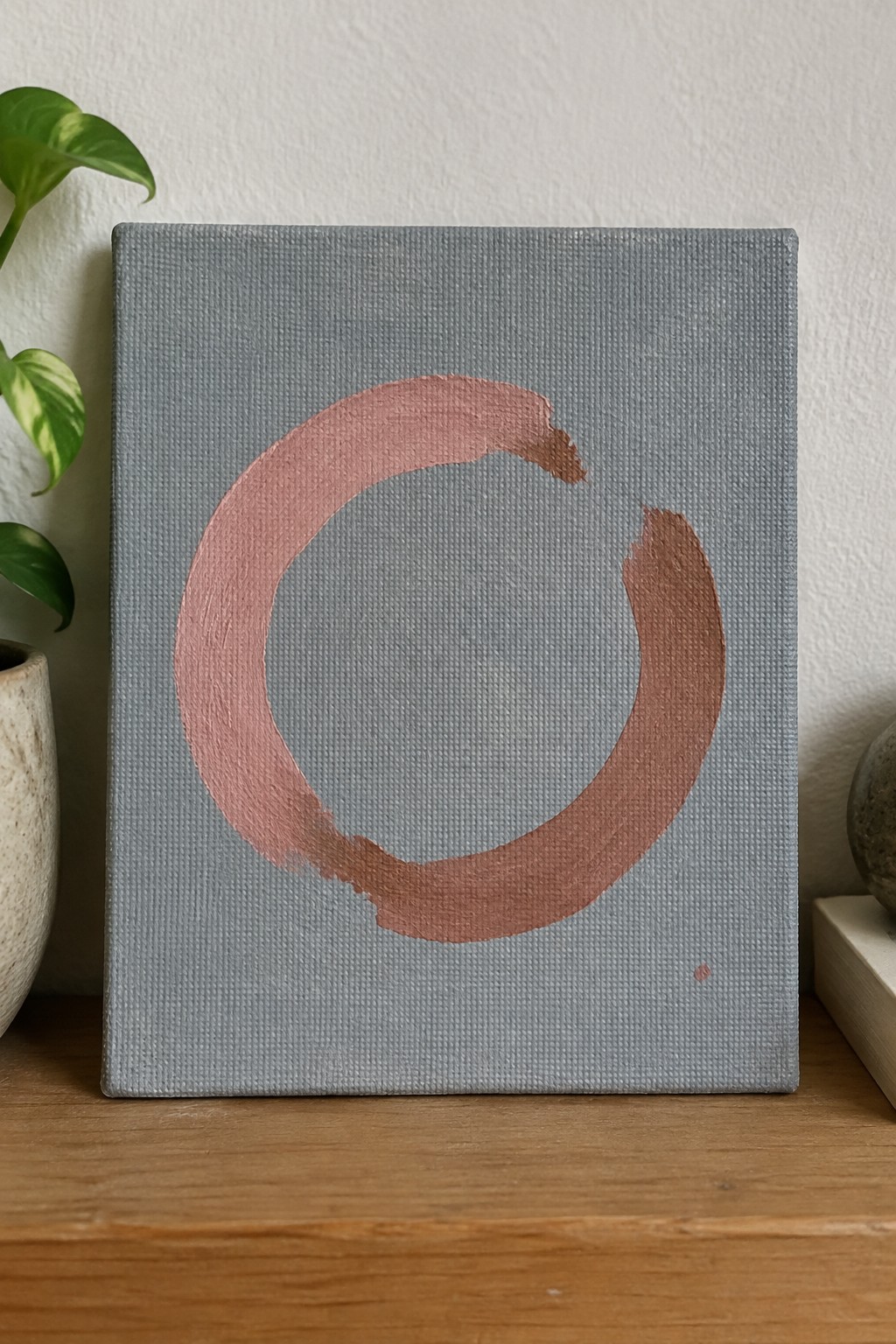
A single broad stroke creates an incomplete circle that leaves most of the canvas open. The idea centers on using one warm neutral against a cool gray ground so the curve stands out without extra elements. Visible brush texture and a small accent dot keep the piece from feeling too rigid while staying firmly abstract.
The composition does a lot of the work here because the empty space balances the weight of the arc. This approach works especially well for quick practice sessions or when you want a larger wall piece without spending hours on detail. You could swap the rose for any other muted tone or stretch the arc into a different curve to make it your own. The restrained palette also makes it easy to match with existing decor.
Textured Blue Blocks on Gold Ground
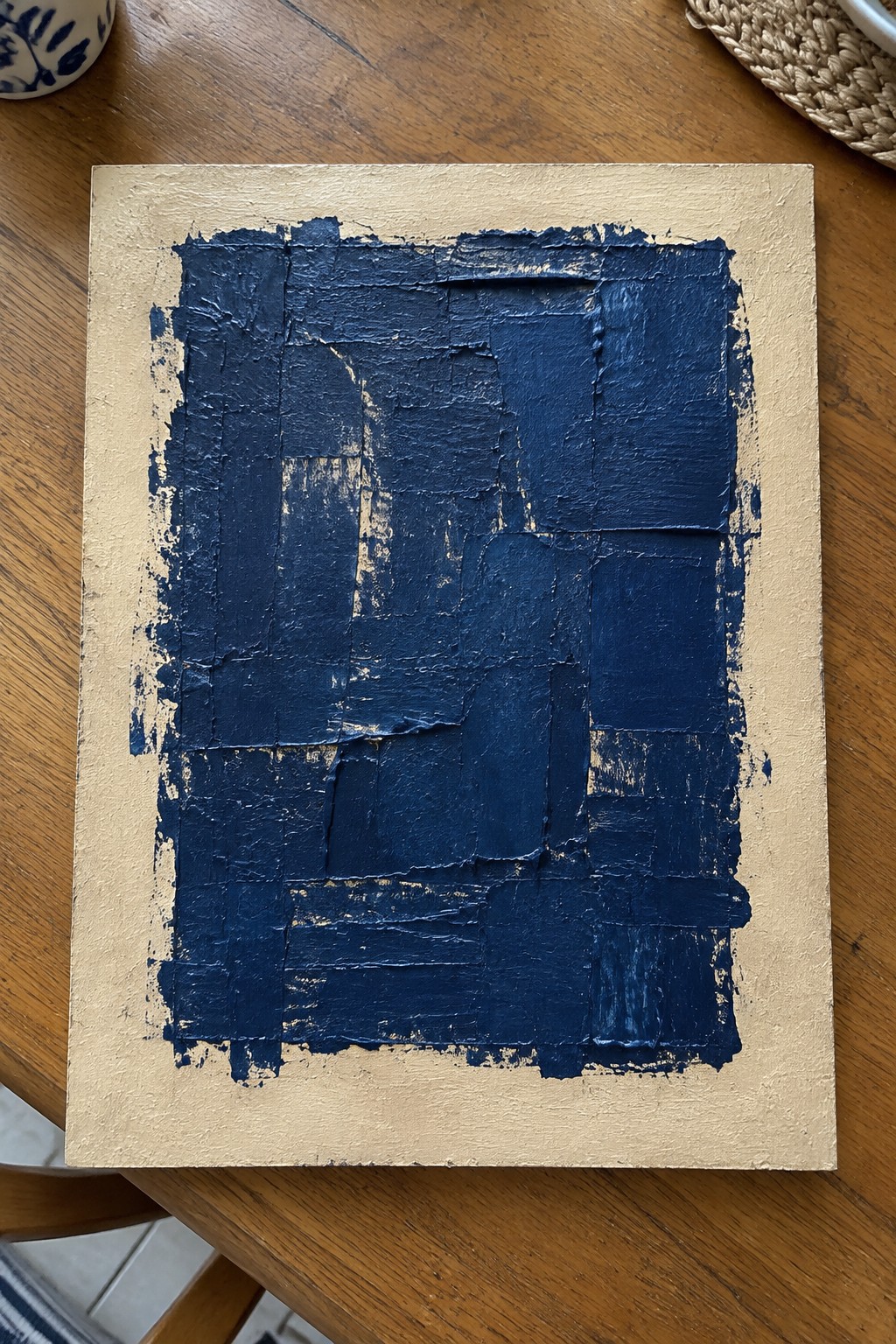
This painting idea builds an abstract composition from irregular rectangular blocks of deep navy blue set against a warm gold background. The thick paint application creates raised texture and visible brushwork that adds depth without extra colors or detail. The uneven edges and scattered gold breaks keep the arrangement dynamic while staying strictly minimalist.
What makes this idea useful is how the two-color contrast does most of the visual work, so you can focus on paint thickness and block placement. You could easily adapt it to a vertical format, swap the gold for a soft beige, or use it as a base for simple color experiments later. The approach suits practice sessions where you want to explore texture on a larger scale without complicated drawing.
Minimalist Horizon With a Small Sun Circle
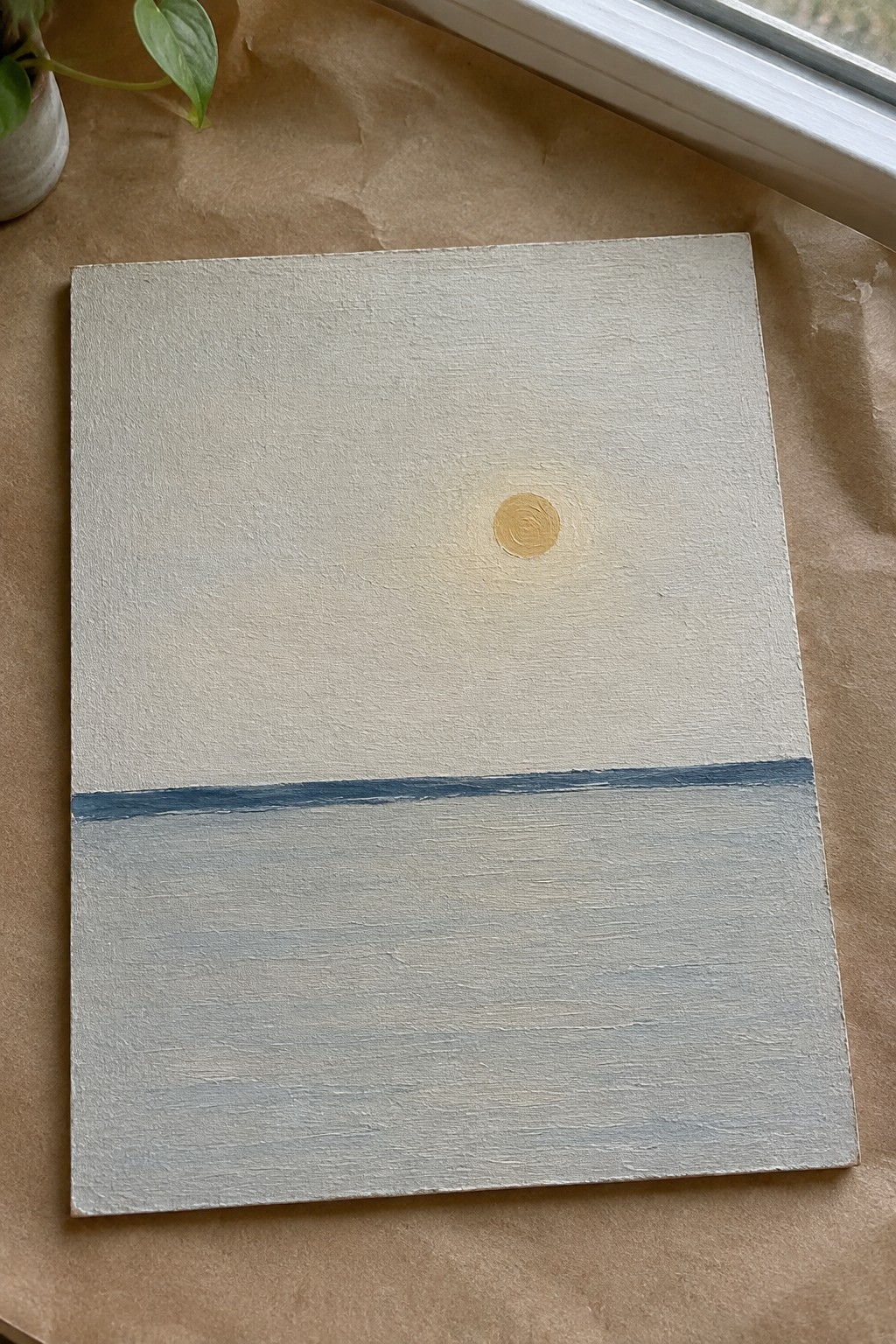
This painting idea reduces a landscape to its simplest parts: a flat horizon line that splits the canvas, a single small circle floating above it, and two large areas of closely related neutrals. The thin blue line and pale gold circle sit against the off-white and gray-blue fields to create a quiet vertical balance without any extra details or layers. It fits the category of restrained abstract landscape, where the effect comes from careful placement and limited color rather than brushwork or texture.
What makes this idea useful is how quickly it can be adjusted by changing the height of the line or shifting the circle slightly left or right. The color palette stays easy to match with house paints or leftover tubes, so the same layout works for quick studies or finished pieces meant for small walls. For practice, this kind of subject helps test how much empty space you can leave before the composition feels unbalanced.
Scattered Dot Abstract on a Neutral Field
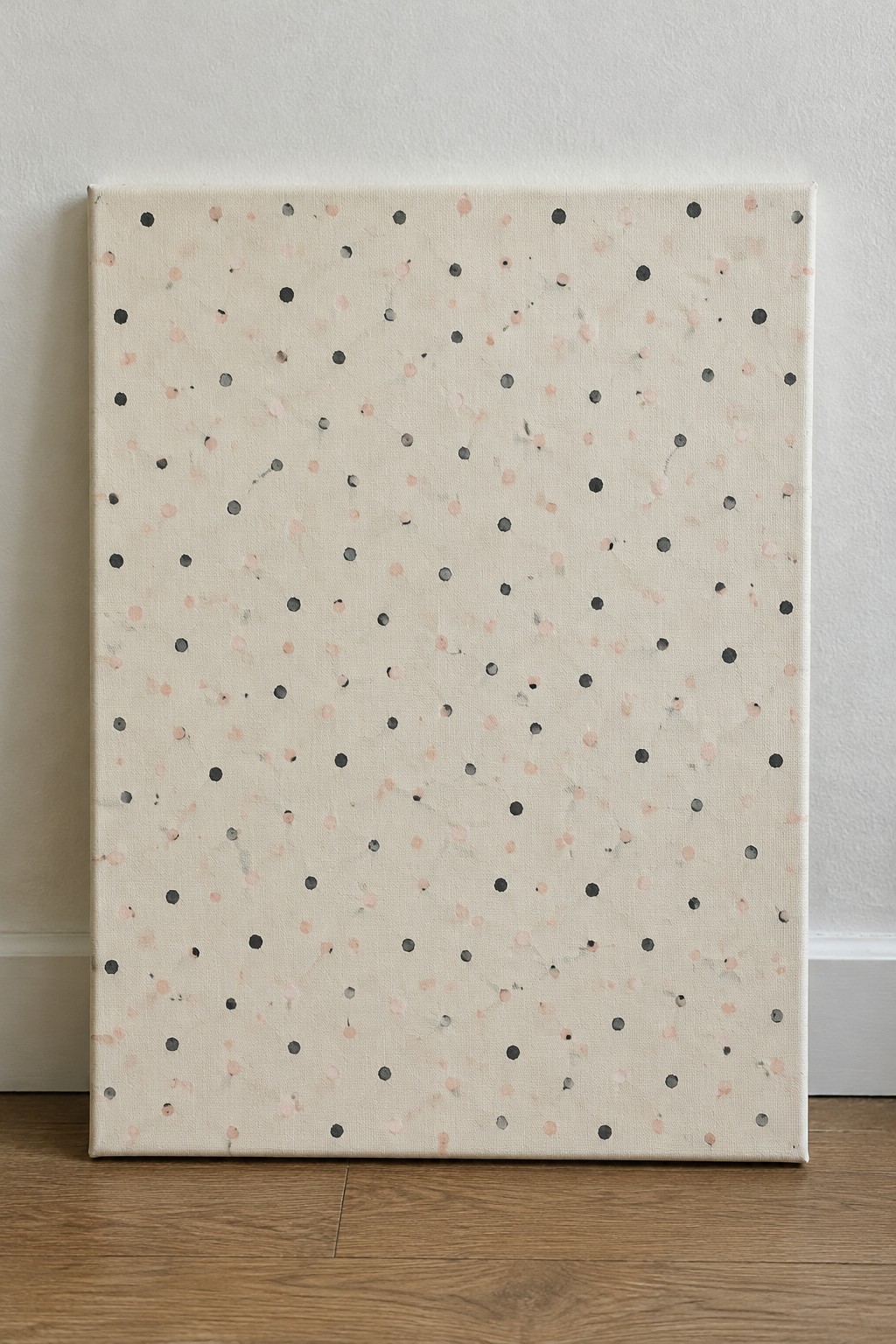
This painting idea uses a simple scatter of dots in black and soft peach across an off-white ground to build an abstract composition. The dots vary slightly in size and are placed with uneven spacing, which creates movement and keeps the eye moving across the surface. It belongs to the category of minimalist abstract decorative art where the focus stays on pattern and negative space rather than on any recognizable subject.
What makes this idea useful is how little planning it actually requires once you pick the colors. The same scattered-dot approach works on smaller panels for quick studies or scaled up for larger wall pieces, and you can easily swap the peach for another muted accent or drop it entirely for a monochrome version. The loose arrangement also means small mistakes in placement disappear into the overall texture, so it serves well as low-pressure practice or a calm background element in a room.
Single Shape Abstracts in Muted Earth Tones
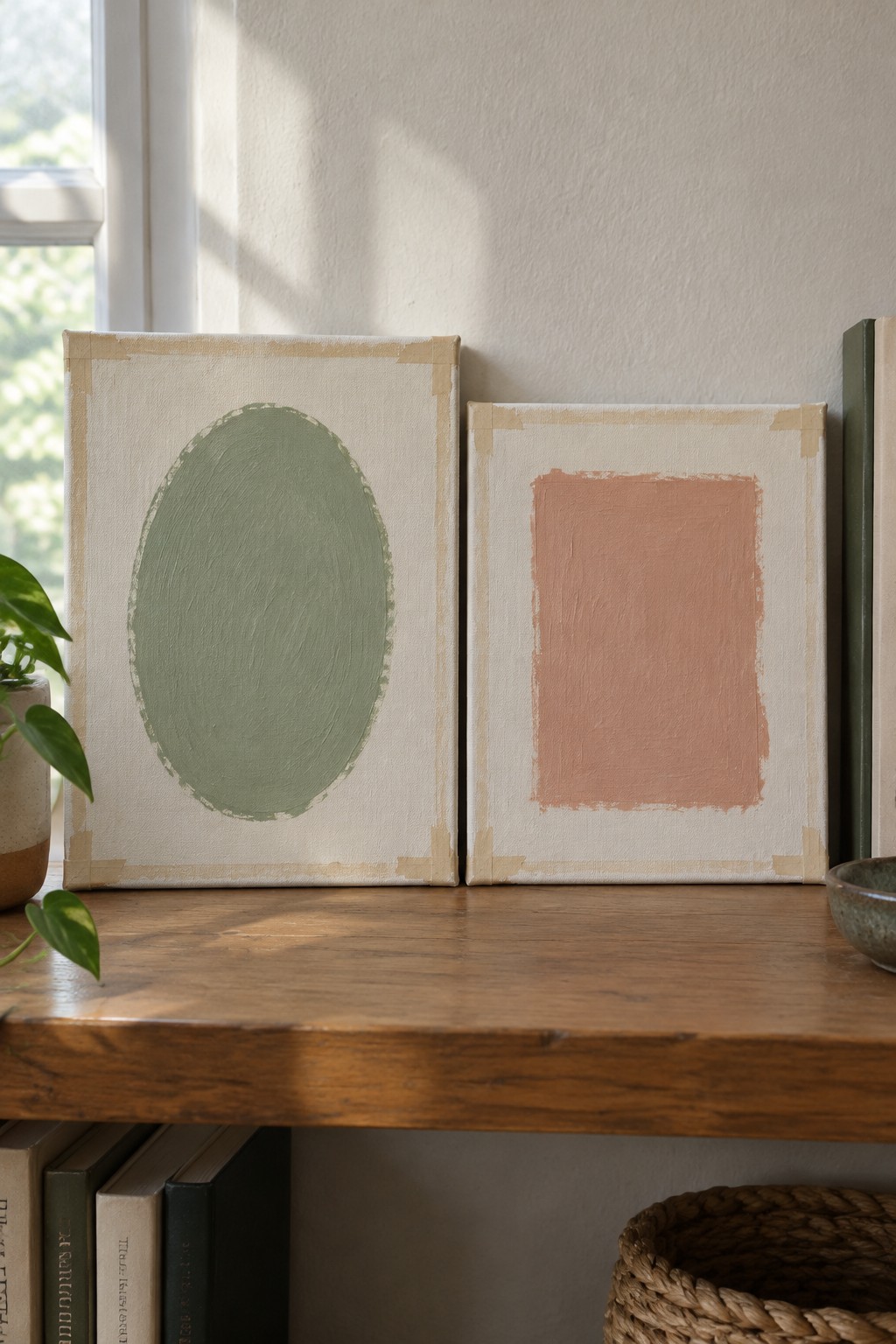
This painting idea uses one large, centered shape on a light neutral ground to keep the focus tight and simple. A soft sage oval fills one canvas while a warm terracotta rectangle sits on the second, both painted with visible brushstrokes that add subtle texture without extra detail. The limited palette and generous negative space let the shapes stand out cleanly against the cream background.
What makes this idea useful is how quickly it can be adapted by changing just the shape or swapping in another muted color from the same range. The composition works especially well for beginners who want to practice brush control and edge work, or for anyone building a small matching set for shelves or walls. You could repeat the format with different simple forms like a circle or square while keeping the same restrained palette to create a cohesive group.
Overlapping Organic Shapes in a Three-Color Palette
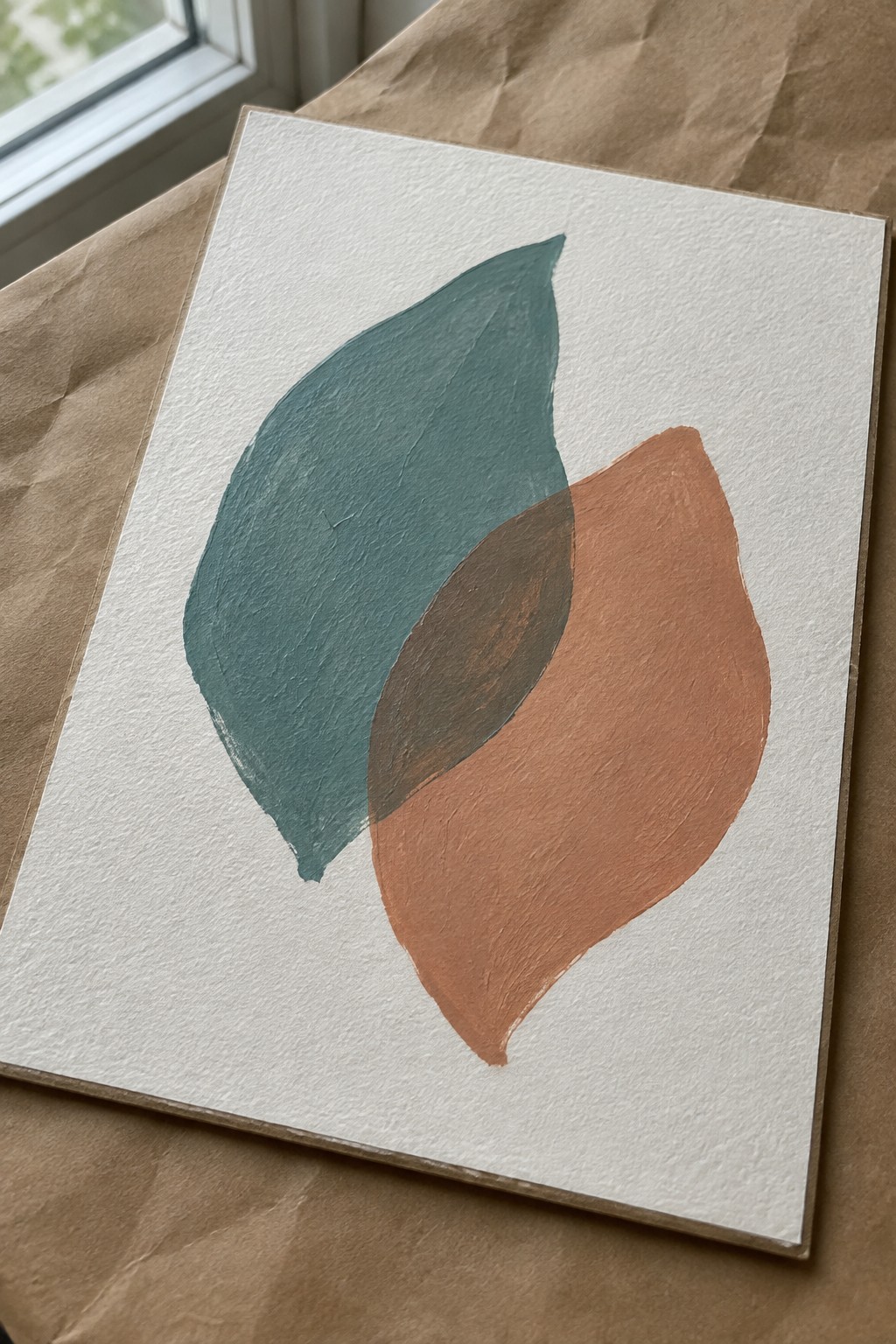
This painting idea uses two simple leaf-like forms that overlap to create a natural focal point through color blending and shape interaction. The left form stays in a cool teal while the right one shifts through warm terracotta into a darker brown where the shapes meet. The approach fits decorative abstract art because the restrained palette and visible brush texture let the composition carry the interest without extra detail.
What makes this idea useful is how the overlapping area automatically adds depth and a third color without mixing paint. The shapes can be stretched taller or rotated slightly to suit vertical or square canvases for different wall spaces. For practice sessions, the limited palette reduces decision fatigue while still teaching control over edges and layering. The clean layout translates well to small studies or larger pieces that photograph clearly for sharing.
Soft Oval Form in Restrained Neutrals
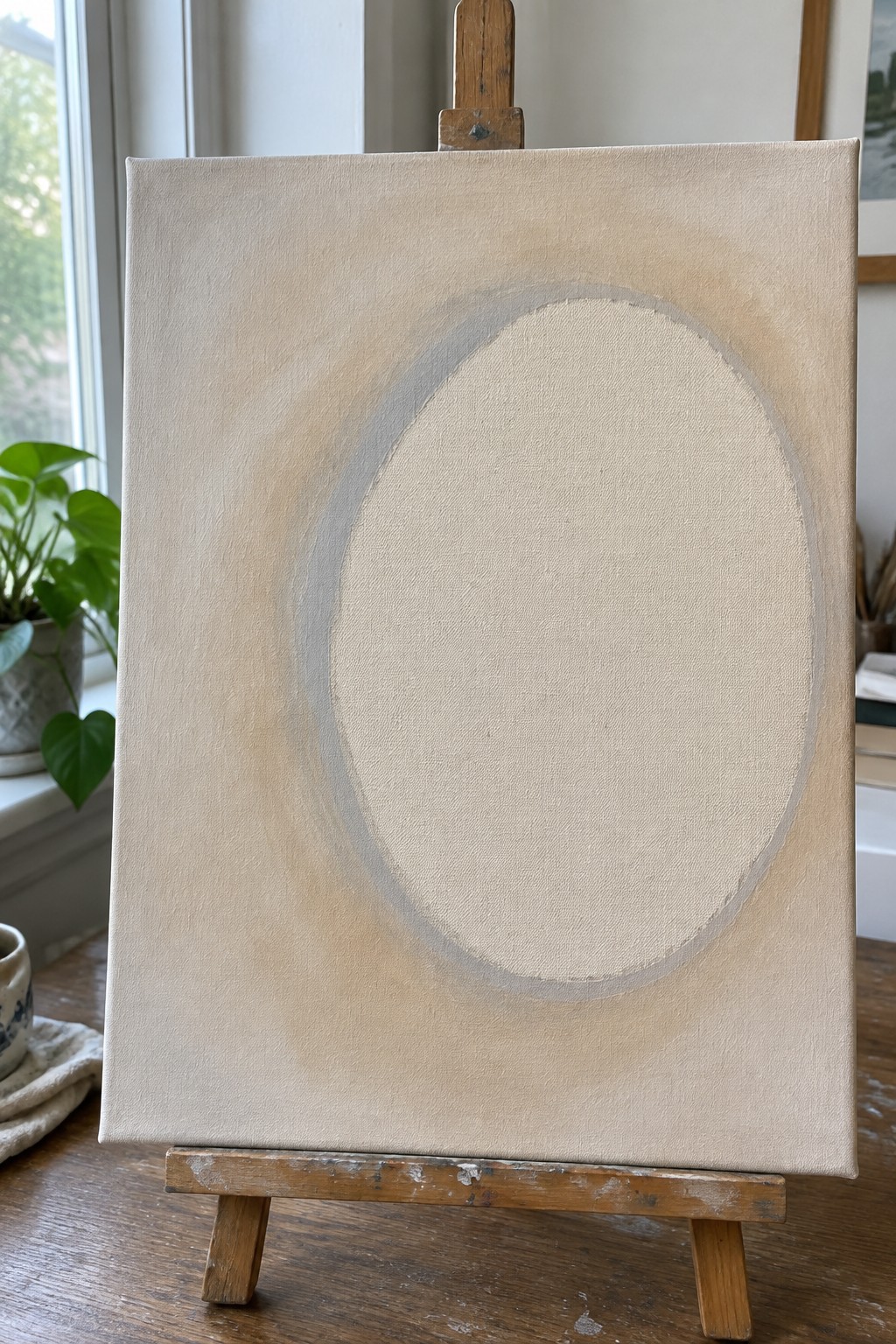
A large central oval with softly blended edges sits against a light neutral ground that shifts gradually toward the corners. The idea keeps the color palette to a few close beige and off-white tones so the shape itself becomes the main interest. This approach works as a minimalist abstract where the composition stays quiet and the focus stays on subtle transitions rather than detail.
The composition does a lot of the work here because the oval fills most of the canvas without needing extra elements. You can scale the oval up or down or swap the beige tones for other close neutrals to fit different rooms. For practice this kind of piece helps with smooth blending and edge control while staying simple enough to finish in one or two sessions.
Single Continuous Stroke Abstract
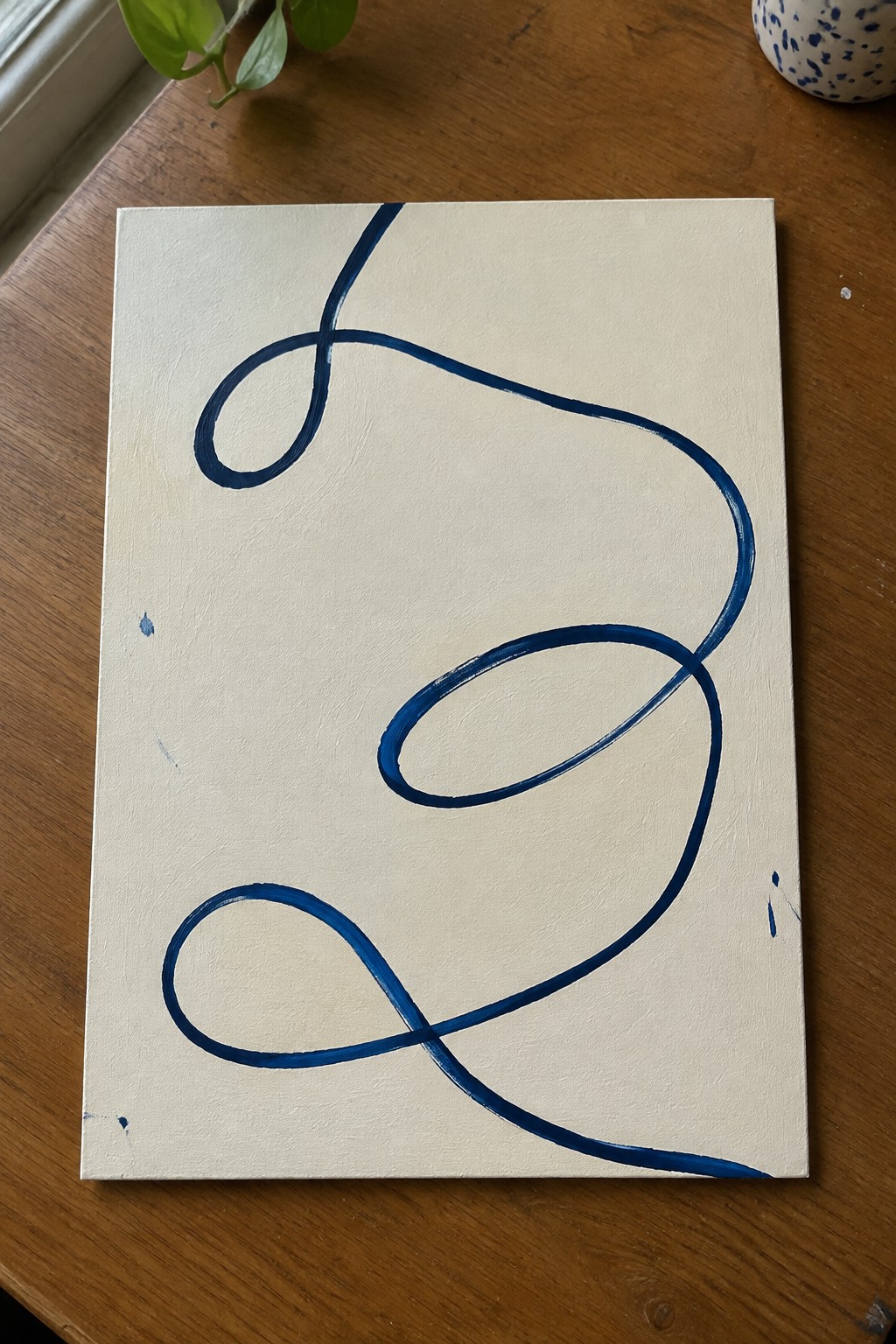
A single unbroken brushstroke forms a series of connected loops and curves across a plain neutral ground. The idea centers on using one continuous line to create movement and balance without relying on multiple colors or added elements. Slight variations in line weight and the way the loops overlap give the composition its visual interest while keeping everything restrained.
What makes this idea useful is how quickly it can be adapted to different canvas sizes or swapped to another single color. The simple layout works well for practice sessions since the focus stays on brush control and flow rather than complex planning. For wall pieces, the clean result stands out in a minimalist setting and can be repeated with minor changes in loop size or direction to create a small series.
Single Red Dot on a Large Gray Field
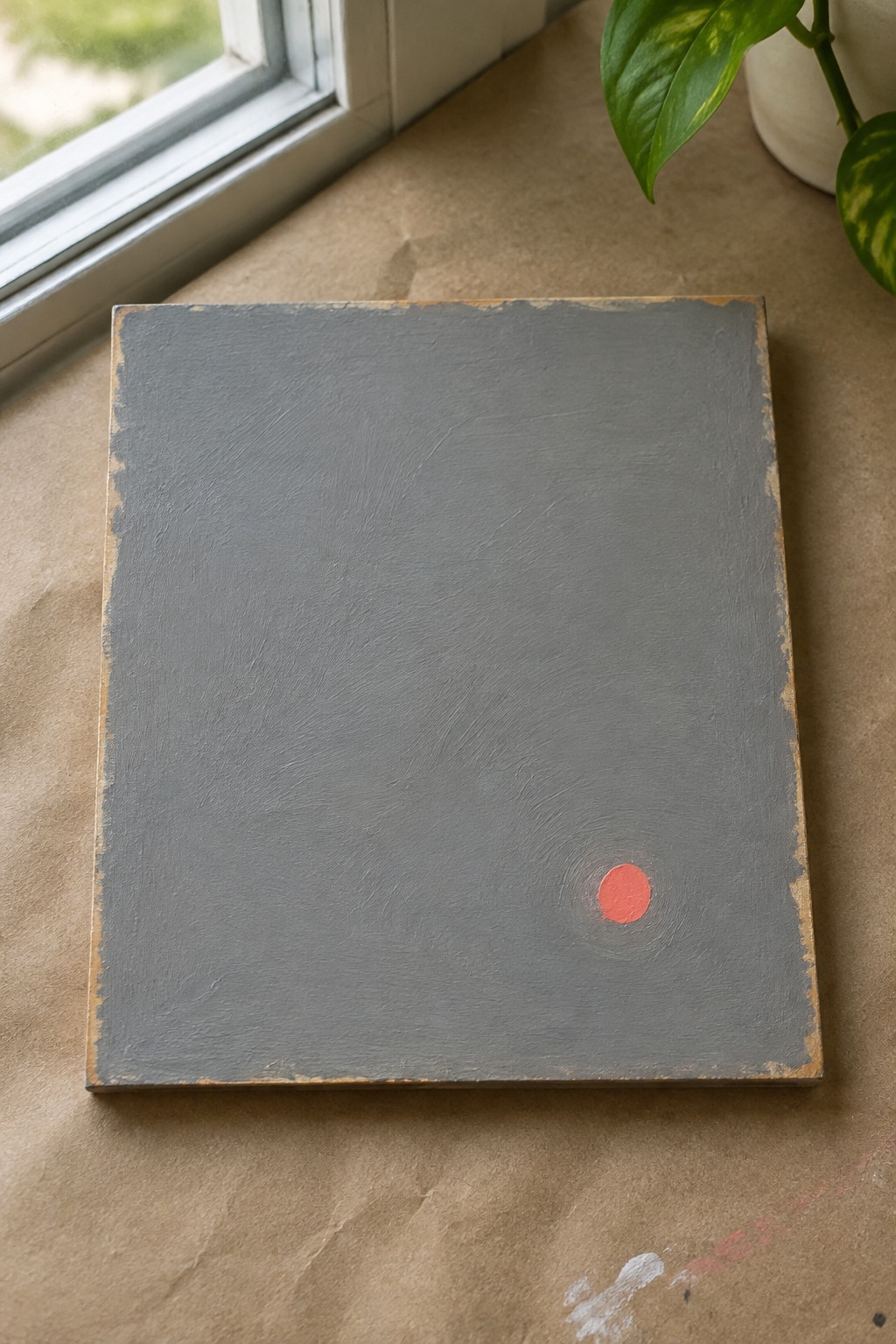
A minimalist abstract idea built around one small circular accent on an otherwise empty gray surface. The composition uses the contrast between the expansive muted background and the single bright mark to hold attention, while the visible brushstrokes add quiet texture across the whole piece. This approach fits the restrained color palette category and keeps the focus on placement and negative space rather than detail.
What makes this idea useful is how easily it can be resized or recolored for different spaces. You could paint the background in any neutral you already have on hand and adjust the dot size or hue to fit a specific wall or mood board. For quick practice sessions it works well because the limited elements let you concentrate on brushwork and balance. The extreme simplicity also helps it stand out in a Pinterest feed full of more complicated designs.
Single Diagonal Stroke in Deep Green
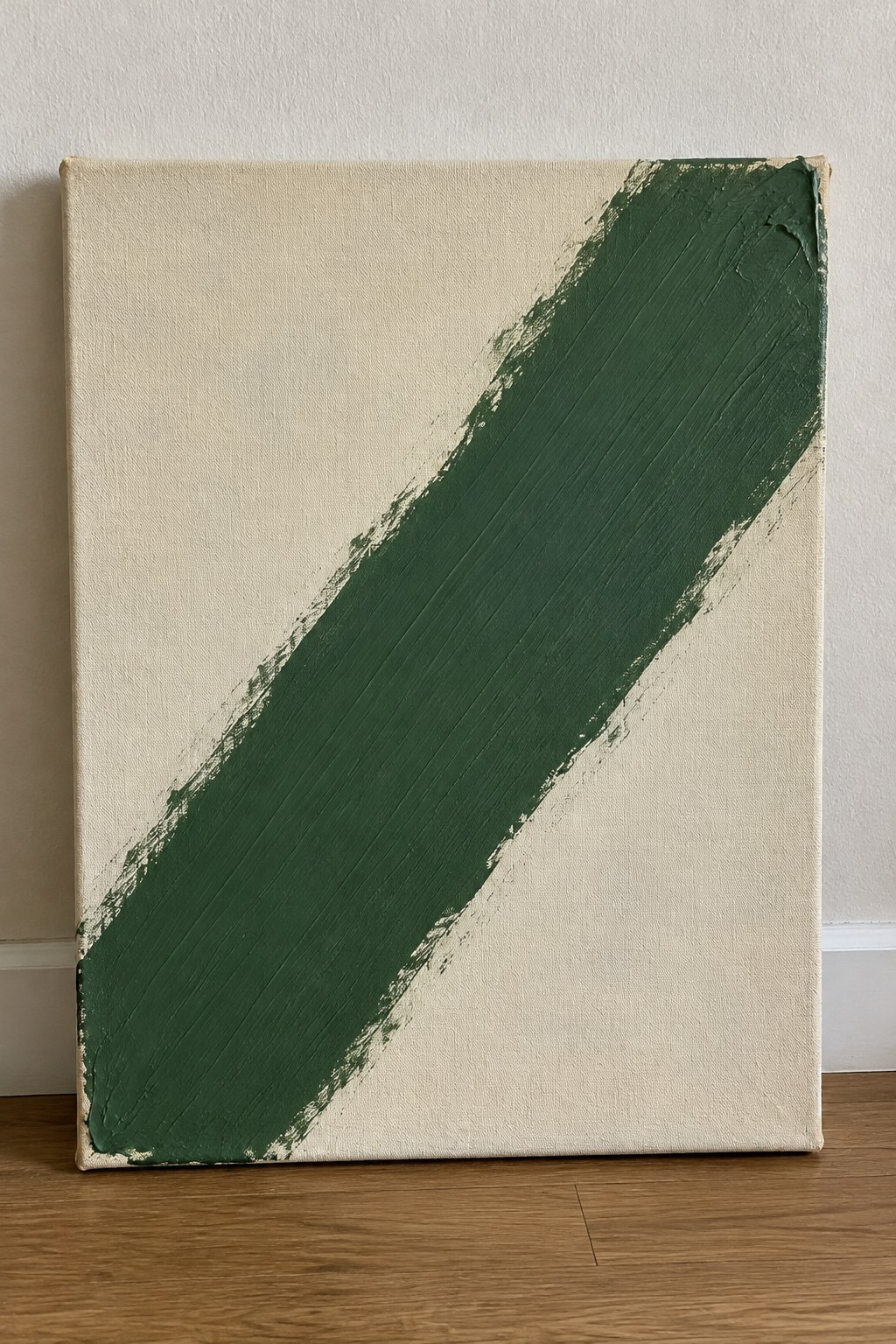
A single wide diagonal band of deep green paint across an off-white canvas creates a strong directional pull without any additional elements. The visible brushstrokes add texture and movement while the surrounding empty space keeps the composition balanced. This approach fits squarely into minimalist abstract work that relies on one strong color against a neutral ground.
What makes this idea useful is how the angle and width of the stroke do most of the visual work. You could try the same layout with a different saturated color or change how much the edges are softened to shift the feel. For wall art, the restrained palette makes it easy to match with existing decor, and the basic structure can be scaled up or down depending on the canvas size.
Grayscale Concentric Rings
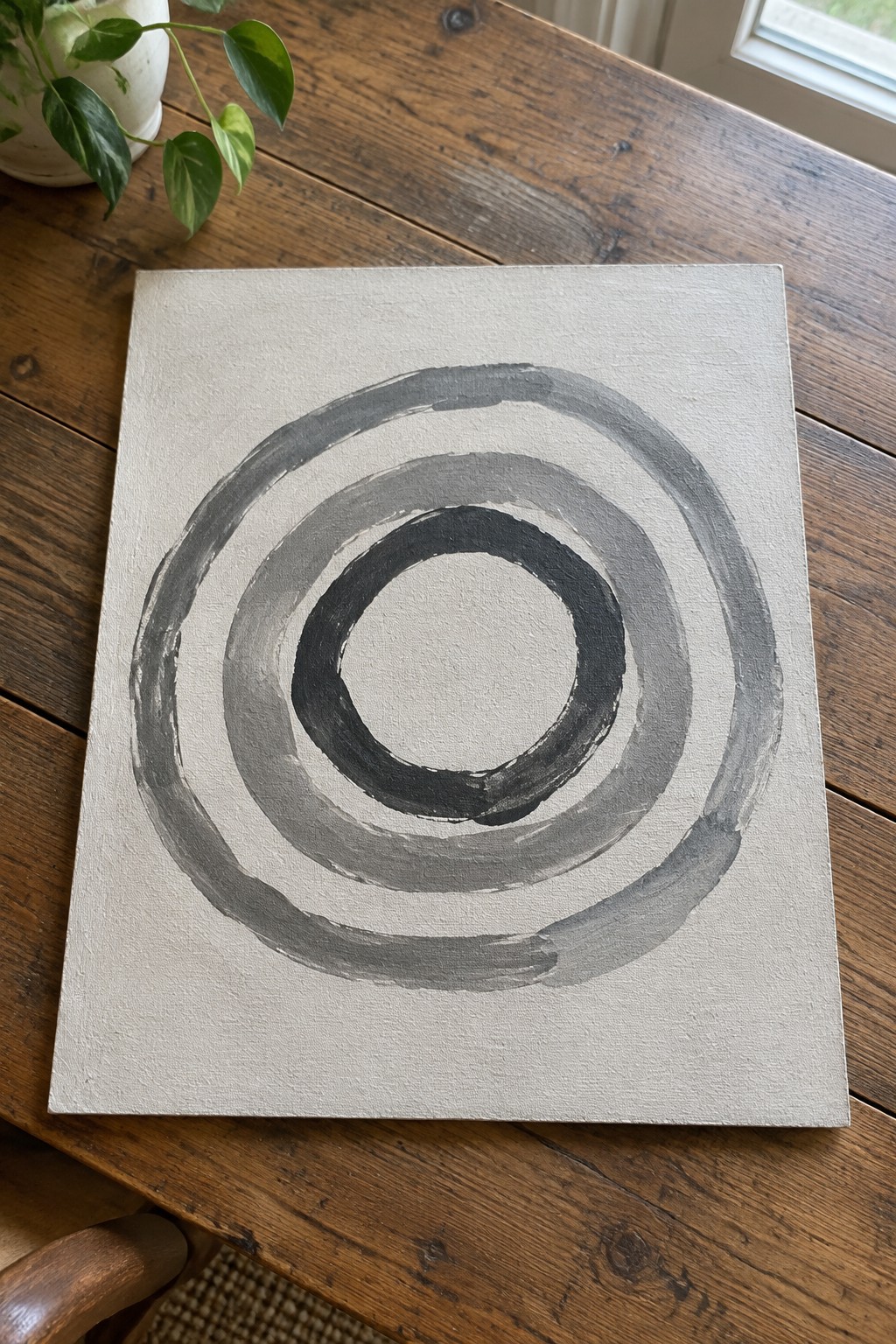
This painting idea uses a series of overlapping circles built from loose brushstrokes in a limited range of grays. The rings vary in width and tone, which creates subtle depth while keeping the overall design simple and centered. The plain background lets the circular forms stand out without any added detail or color.
What makes this idea useful is how quickly it can be adjusted by changing the number of rings or the canvas size. The limited palette makes it a good option for testing brush control or filling a wall space that needs something understated. You could easily swap the grays for another restrained set of tones or shift the placement of the circles slightly to create a different balance.
Stacked Arches in a Muted Neutral Palette
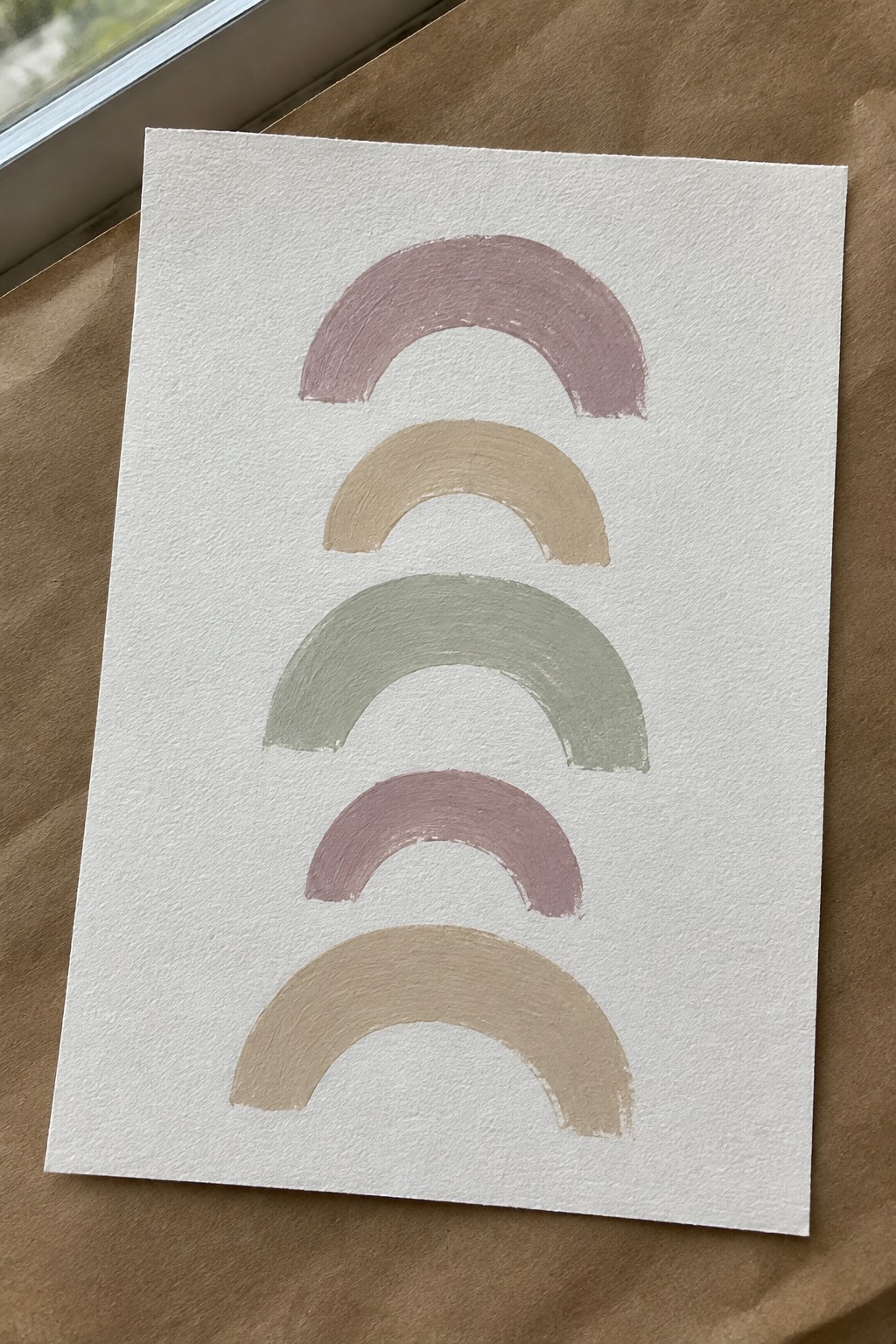
This painting idea centers on repeating a single curved shape in a vertical stack to create an abstract composition. Five arches sit one above the other, each painted in a different soft neutral from the same restrained palette. The slight variation in size and spacing adds quiet rhythm while the visible brush texture keeps the surface lively without added detail.
The composition does a lot of the work here by using repetition and a limited color set. You can swap the tones for other neutrals you already have or change the number of arches to fit a taller or wider canvas. This kind of piece works well for quick practice or small decor because it needs almost no drawing and still reads as intentional once the colors are chosen.
Dominant Dark Field with a Single Accent Block
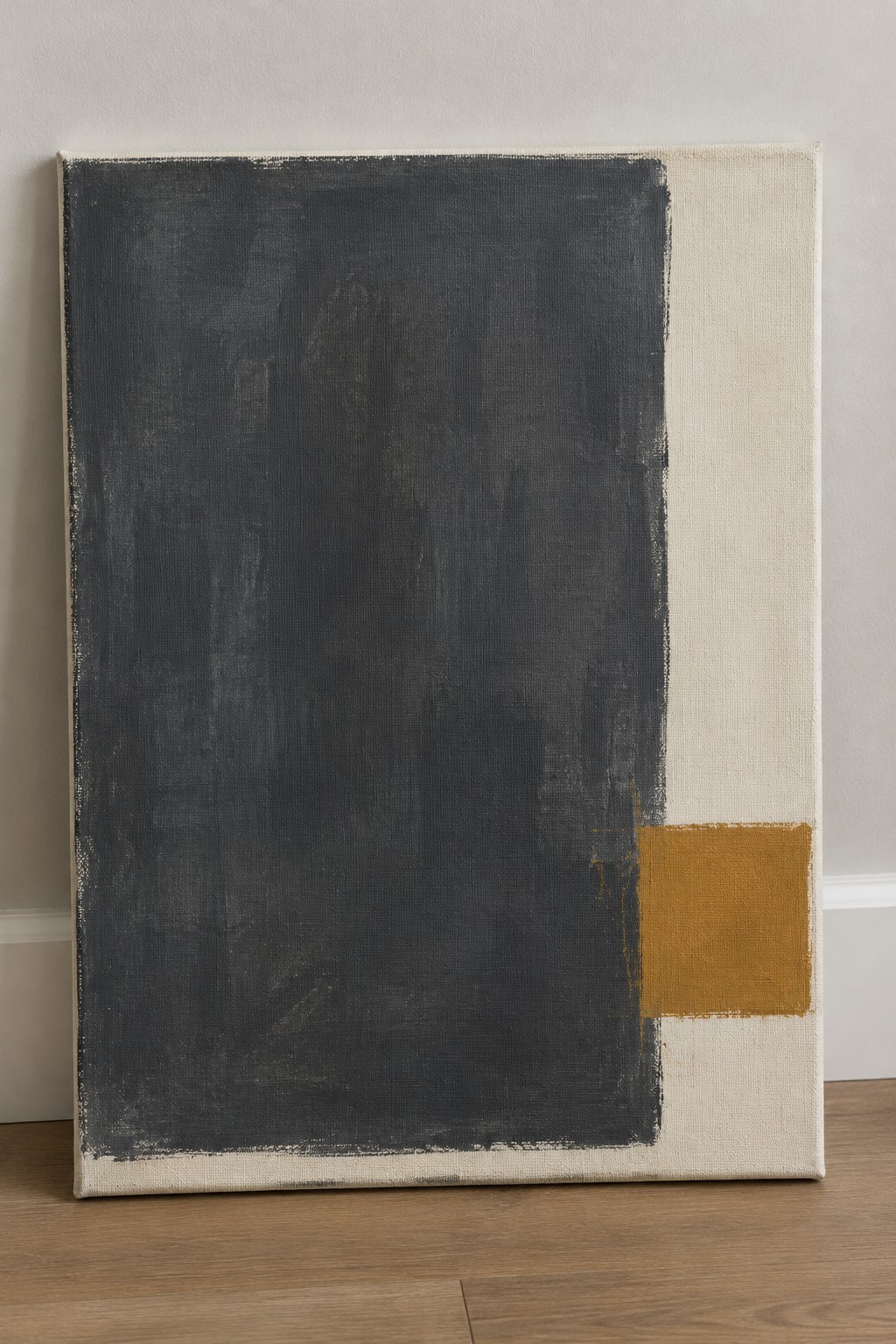
A painting idea centered on a broad, heavily worked dark gray area that fills most of the canvas, broken only by a narrow vertical strip of untouched canvas along the right edge. The single point of contrast comes from a small rectangular block of warm ochre placed low in that light strip, creating balance through placement rather than added detail. This setup works because the limited palette and large unbroken shape let the brush texture and slight edge variation hold attention without any need for extra elements.
What makes this idea useful is how the scale of the dark area does most of the visual work, so you can finish a piece quickly once the main shape is blocked in. The composition adapts easily by adjusting the width of the light strip or swapping the accent color to fit different rooms. For practice or wall pieces, the same idea can be simplified further by using just two colors or scaled up on a bigger canvas while keeping the same proportions.
Frequently Asked Questions
What defines a restrained color palette in minimalist abstract acrylic paintings?
A restrained color palette typically involves selecting just two to four colors that harmonize closely, such as soft neutrals paired with one muted accent. This approach creates calm and focus in the composition. Start by limiting your choices to colors with similar tones and low saturation, then test mixes on a scrap canvas to ensure they blend without clashing. This keeps the artwork simple while allowing subtle variations in value to add depth.
Which acrylic supplies work best for achieving clean minimalist effects?
High-quality acrylic paints with good opacity help maintain sharp edges and even coverage in restrained palettes. Pair them with a few synthetic brushes of varying sizes, a smooth primed canvas or panel, and a palette knife for broad applications. Use matte or satin mediums to reduce sheen if desired, and keep a spray bottle handy for misting to extend working time without adding extra colors or textures.
How can a beginner create their own version of these paintings?
Begin with a small canvas and sketch simple geometric shapes or lines using one dominant color as a base. Apply thin layers of additional restrained hues, allowing each to dry before adding the next to avoid muddiness. Focus on negative space and balance rather than detail, and step back often to evaluate the overall simplicity. Practice on paper first to build confidence in composition without overworking the surface.
Where might someone view or acquire similar minimalist abstract works?
Search online galleries specializing in contemporary abstract art or visit local exhibitions featuring minimalist pieces. Many artists sell directly through their websites or platforms like Etsy, with options for prints or originals. Contact galleries for upcoming shows, or explore museum collections that highlight restrained palettes to gain inspiration and connect with creators.
What advantages come from using a minimalist style with acrylics?
This style encourages quick drying times and easy layering since fewer colors mean less risk of overmixing. It promotes thoughtful decision making during the process, resulting in versatile pieces that suit various interior spaces. The restrained approach also reduces material costs and helps artists develop skills in color harmony and spatial relationships that transfer to other projects.
