


I enjoy trying out abstract paintings with simple shapes and bright colors.
Rainbow geometry has caught my interest lately because it mixes order with lively hues.
I came up with seventeen different ideas that anyone can paint on a canvas.
Some use triangles and lines while others focus on circles in various sizes.
These suggestions come from my own experiments in the studio.
Stacked Rainbow Arcs in Bright Color Bands

This painting idea centers on repeating the same rainbow arc shape three times in a vertical stack with slight offsets. Each arc uses thick stripes of red, orange, yellow, green, blue, and purple applied in visible brushstrokes that create a layered geometric pattern. The plain background keeps the focus on the color bands and the way the arcs overlap to build simple depth.
What makes this idea useful is how the repeated shape removes the need for complex drawing or planning. The composition does a lot of the work here since the arcs already create movement and balance without extra elements. You can easily adapt it by changing the number of layers, adjusting spacing, or swapping in a different background color to match a room. For practice, this kind of subject helps build confidence with color mixing and curved brushwork while still producing a finished piece that reads clearly even in small photos.
Diagonal Rainbow Stripes

This painting idea uses wide diagonal bands of rainbow colors across a rectangular canvas to form a simple geometric abstract. The stripes run from upper left to lower right in the standard rainbow sequence, with red at the top edge and pink at the bottom right corner. The slight drips and visible brush strokes give the flat color fields a bit of texture without adding extra elements.
What makes this idea useful is how little it requires beyond basic color mixing and steady lines. You can change the stripe widths, tilt the angle, or swap the color order to match a room or project. The format works well for quick practice sessions or larger wall pieces because the strong color blocks hold attention even when the brushwork stays loose.
Rainbow Jagged Mosaic

This abstract idea uses irregular polygon shapes arranged across the canvas to create a fragmented pattern that shifts through the full rainbow spectrum. The shapes stay loose and hand-cut in feel rather than precise, which lets the color progression carry the main impact while the white gaps between them keep each section distinct. It falls into the decorative abstract category and works because the gradient moves smoothly even though the individual pieces vary in size and angle.
The composition does a lot of the work here since the eye follows the color flow without needing perfect symmetry or detailed rendering. You can adapt the same layout by narrowing the palette to just three or four colors or by scaling the canvas down for a quicker version. For wall art, something like this holds up well because the pattern stays interesting from across the room without requiring fine detail. The simple shapes also make it straightforward to personalize by changing how jagged or rounded the edges become.
Rainbow Geometry Split Across Three Canvases

A rainbow formed by thick horizontal color bands arcs across three separate canvases so the curves line up into one continuous shape when the panels sit next to each other. The white space below each arc keeps the focus on the clean color sequence and the way the geometry stretches across the group. This approach turns a basic rainbow into an abstract layout that relies on repetition and alignment rather than extra detail or shading.
The composition does a lot of the work here because the split format makes the rainbow feel structured and modern without extra elements. You can change the number of panels or swap canvas sizes to match a specific wall space or shelf. For practice the idea works well since it builds skill with consistent color bands and edge control across multiple pieces while staying simple to adapt.
Concentric Rainbow Squares with Heavy Texture

A series of nested squares in full rainbow order creates a simple but striking geometric abstract. The colors move from warm reds and oranges on the outer rings inward through yellows and greens to cool blues and purples at the center, with each layer built up in thick, raised strokes. This approach keeps the focus on color progression and visible paint texture rather than fine detail or shading.
The composition does a lot of the work here because the square format and repeating shapes make it easy to plan and tape off if needed. You can adapt the idea by changing how many rings you include or swapping in a limited palette while keeping the same layered build-up. For wall art, this kind of piece stands out on Pinterest because the bright spectrum and chunky texture read clearly even in small preview images.
Rainbow Faceted Triangle Abstract

A geometric abstract built from interlocking triangles creates a strong composition when the colors move in a continuous spectrum across the canvas. The triangles vary in size and angle, which adds visual interest while keeping the overall layout balanced. This approach fits squarely in the abstract geometric category and works because the color shifts and sharp edges guide the eye without any single focal point dominating.
What makes this idea useful is how the triangle grid can be scaled up or down depending on your canvas size. You can keep the rainbow progression but simplify the number of shapes if you want a quicker version, or add more overlapping layers for extra texture. For wall pieces, the bold color flow stands out even from a distance, and the same layout adapts easily to different palettes if you want to swap the spectrum for a different mood.
Horizontal Rainbow Chevron Stripes

A canvas covered in repeated horizontal chevron bands uses the full rainbow sequence to form a simple geometric abstract. Each stripe follows the same zigzag direction, with colors stacked in order from red at the top through purple at the bottom. The clean repetition and even spacing keep the composition balanced while the brush texture adds slight variation within each band.
What makes this idea useful is that the repeating shape stays readable at any canvas size, so you can scale it down for smaller practice pieces or stretch it across a larger wall panel. The color order can be shifted or shortened without breaking the pattern, and the flat stripes work for quick weekend projects or group painting sessions. For Pinterest, the bright stacked chevrons catch attention in a feed because they read as both modern and straightforward to copy.
Rainbow Isometric Cube Grid
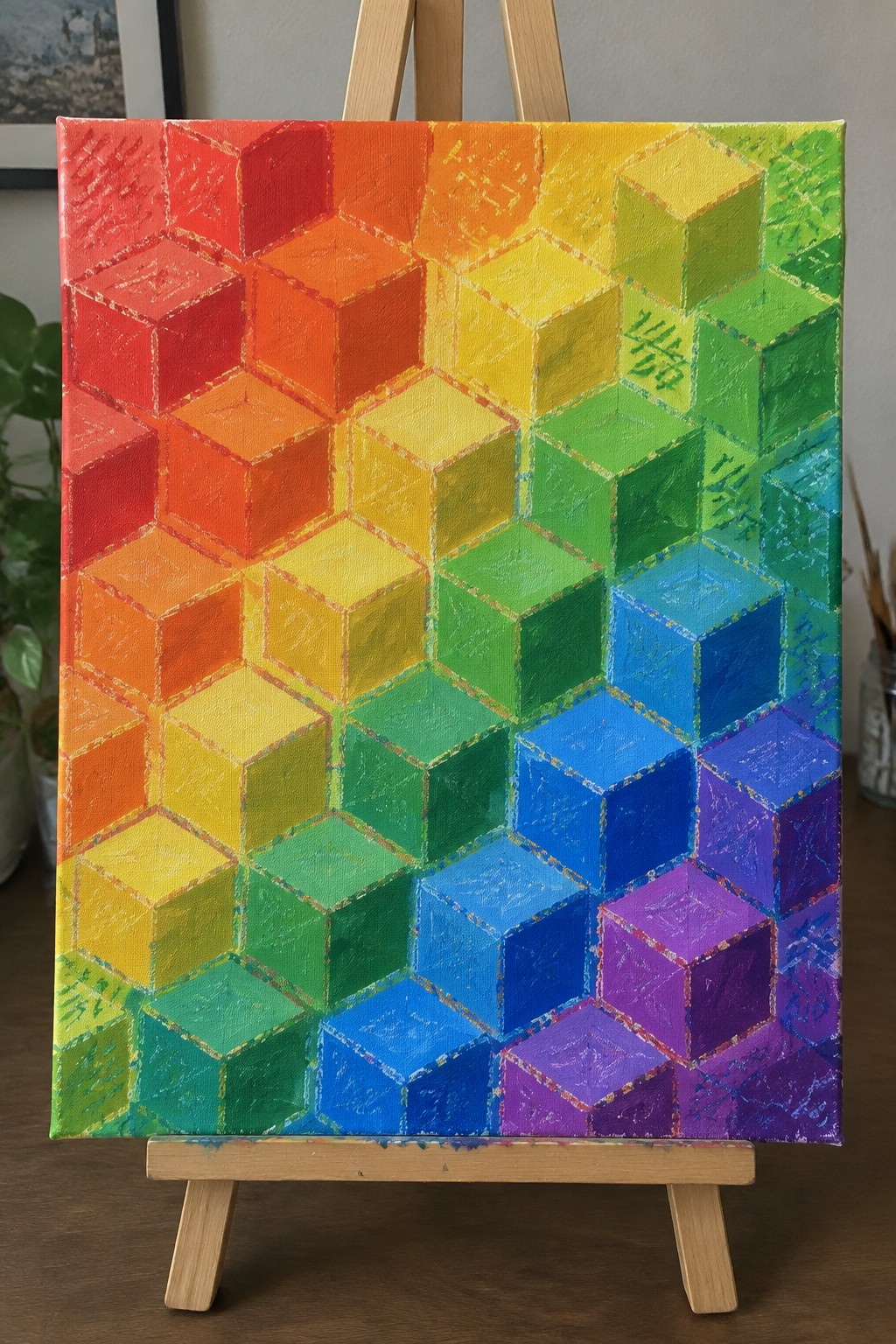
This painting idea uses a repeating grid of isometric cubes to create an abstract geometric pattern that shifts through the full rainbow spectrum. The cubes are arranged so each row transitions smoothly in hue, which gives the composition both structure and movement without needing any focal point. The textured brushwork and slight color blending between shapes add visual interest while keeping the overall look clean and modern.
The composition does a lot of the work here because the consistent cube shape makes it simple to plan and repeat across any canvas size. You can easily adapt the idea by shortening the color range to just warm or cool tones or by changing the grid density for a different effect. This type of piece works especially well for wall art since the bright spectrum and bold geometry stand out even from across a room. For practice, starting with a smaller version lets you test how the colors blend before committing to a larger canvas.
Rainbow Semi-Circle Scales in Repeating Rows

This painting idea centers on rows of overlapping semi-circles arranged in a descending wave pattern, each row filled with a single color from the rainbow spectrum. The arcs create a scalloped effect through simple repetition and color progression, turning basic curved shapes into a structured abstract design. It belongs in the rainbow geometry category where bold color blocks and consistent forms carry the composition without extra detail.
The composition does a lot of the work here because the fixed arc shape removes the need for freehand drawing decisions. You can swap the color sequence or shift the rows tighter or wider to fit different canvas sizes, and the pattern adapts easily to smaller practice pieces or larger wall art. For Pinterest appeal, the bright horizontal bands make the finished piece read clearly even in a thumbnail.
Rainbow Concentric Circles Abstract

This painting idea centers on a simple abstract design made from expanding circles that shift through the full rainbow spectrum. The composition gains strength from the radial layout and steady color progression that draws the eye inward without any added elements. Brush texture keeps the surface lively while the repeating rings maintain a clean geometric feel.
What makes this idea useful is how little drawing skill it actually requires beyond basic circle shapes. The color palette makes this easy to adapt by swapping in a limited set of hues or stretching the rings across a wider canvas. For wall art, something like this fills space effectively with bold color and minimal planning. The same layout can be simplified further by using only three or four colors or by painting the rings larger to finish faster.
Corner Radiating Rainbow Bands

This painting idea uses wide diagonal bands of rainbow colors that all converge at one corner of the canvas, leaving the rest of the surface as a plain neutral background. The composition relies on the angled stripes and the clear color sequence to create movement across the surface without any additional details or layers. It works as a straightforward abstract geometric piece that emphasizes color order and simple linear direction.
What makes this idea useful is how the single corner point does most of the layout work, so you only need to decide the order and width of each band. The color palette is easy to adapt by swapping in different hues or extending the bands into a larger canvas. For practice, this kind of subject helps you focus on clean edges and color mixing while still producing a finished piece that reads clearly from across the room.
Stepped Rainbow Blocks

This painting idea uses a series of horizontal rectangles in rainbow order arranged in a diagonal staircase formation. The blocks start wider at the bottom in red and orange, then step upward and inward through yellow, green, blue, and purple against a plain white field. The flat color areas and visible brush marks keep the focus on the clean geometric progression rather than detail or shading.
What makes this idea useful is how the stepped layout can be stretched or compressed to fit different canvas proportions without losing its impact. The white background does most of the work by letting the color sequence stand out, so you can swap in different hues or shorten the sequence to match your space. For wall art, the simple shape and bright palette make it easy to turn into a quick weekend piece or a template for trying out new color combinations.
Overlapping Rainbow Circles in Geometric Layers
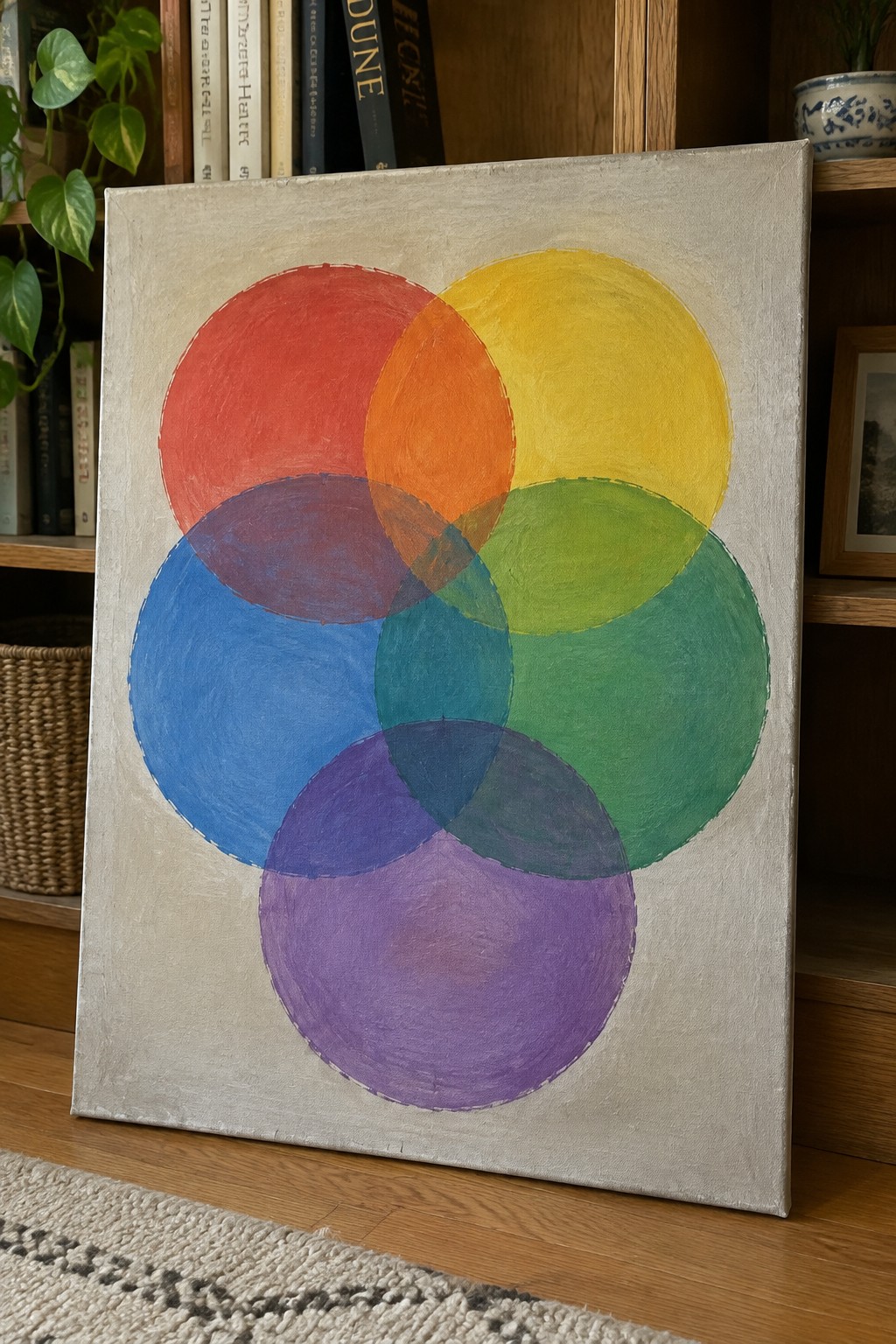
A collection of overlapping circles painted in full rainbow sequence forms a clean geometric abstract that emphasizes color interaction. Each circle sits at a slight angle to the others so the overlaps naturally blend into secondary and tertiary tones without extra mixing on the palette. The idea fits squarely into abstract decorative work because the rounded forms and spectrum order create balance through repetition and transparency rather than intricate detail.
The composition does a lot of the work here by relying on basic circle shapes that can be drawn with a compass or traced from objects around the house. You could adapt the same layout with a limited primary palette for faster practice sessions or enlarge it for a bigger statement piece on a living room wall. For Pinterest saves this kind of painting stands out because the bright color order reads clearly even in small thumbnails. The simple background keeps the focus on the overlaps so the idea translates easily to different canvas sizes or even watercolor paper if you want to test color blending first.
Rainbow Stripes Broken by Angular Cuts
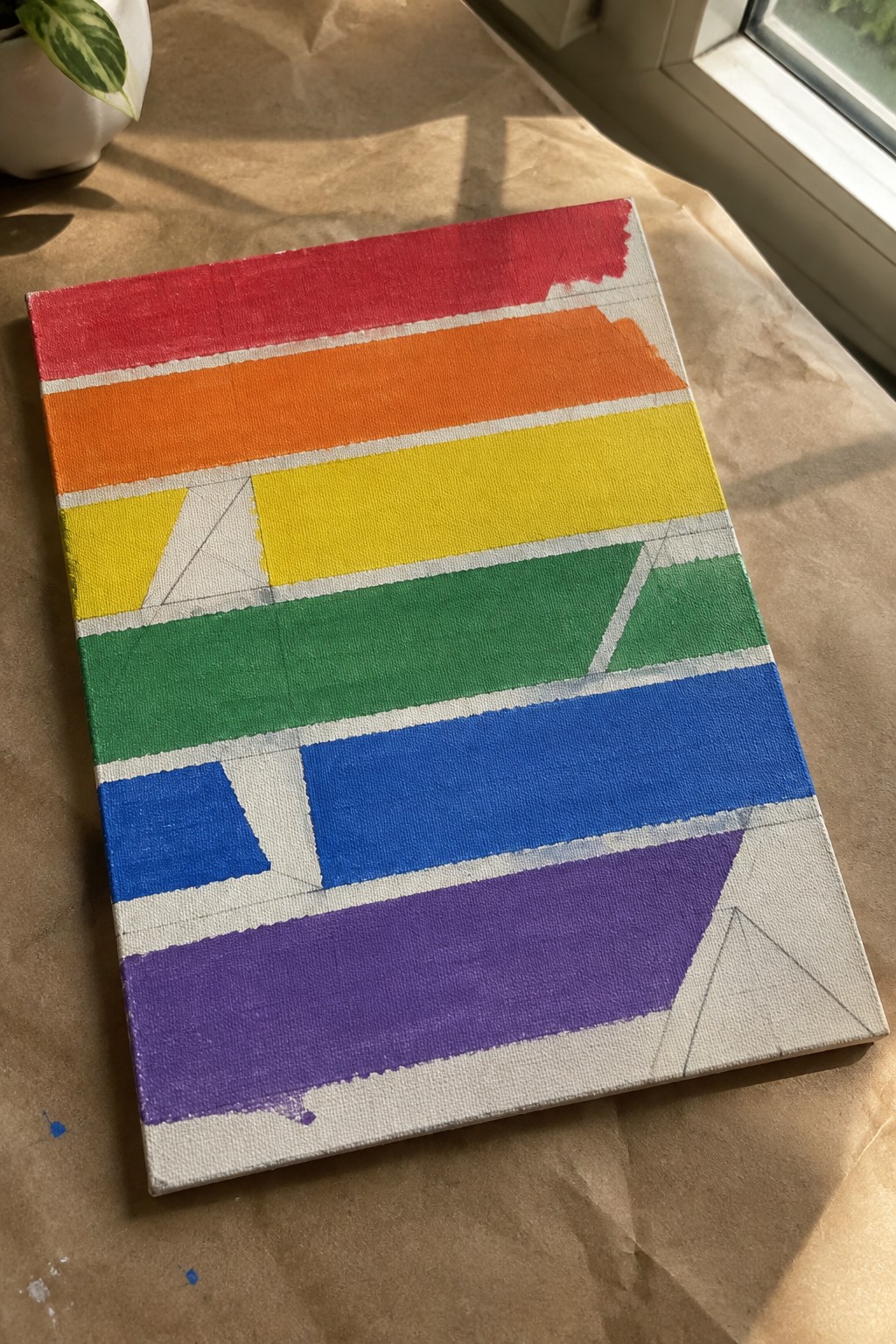
This painting idea uses horizontal rainbow bands in red, orange, yellow, green, blue, and purple as the base structure, then adds white triangular shapes that interrupt the lower stripes. The main concept is a simple color-blocked spectrum paired with sharp geometric breaks to create visual tension without adding extra detail. The composition works because the flat stripes provide order while the angled cuts introduce movement and keep the eye traveling across the canvas.
The composition does a lot of the work here by balancing repetition with sudden breaks. You can adapt the idea easily by changing stripe widths, shifting the triangle placements, or swapping in a different rainbow order to match your space. For practice this works well since it only requires basic color blocking and straight lines. A painting like this stands out on Pinterest when the angles are placed slightly off-center rather than perfectly balanced.
Diagonal Rainbow Impasto Stripes
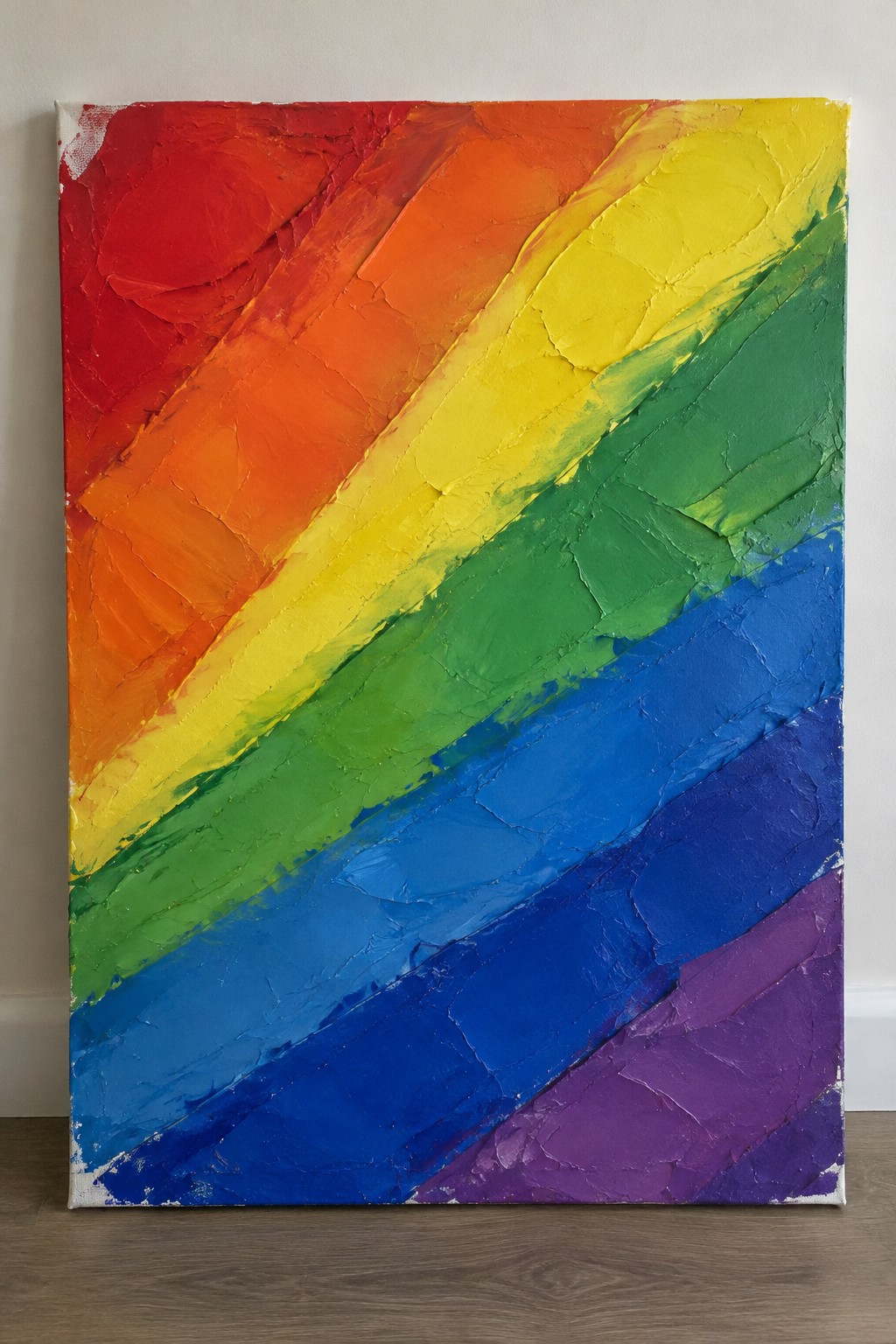
This painting idea uses wide diagonal bands of rainbow colors applied in thick layers to create an abstract piece. The color sequence runs from red through orange, yellow, green, blue, and purple, with each band overlapping slightly at the edges. Heavy brushstrokes and raised paint texture add surface variation that changes slightly depending on the viewing angle.
What makes this idea useful is how little planning it requires beyond choosing the stripe direction and color order. You can adjust the width of each band or tilt the angle to fit different canvas sizes without changing the overall effect. The same approach works for quick practice or finished wall pieces since the texture helps hide uneven edges. For a personalized version, swap the full rainbow for a limited palette that matches a specific room.
Nested Rainbow Rectangles
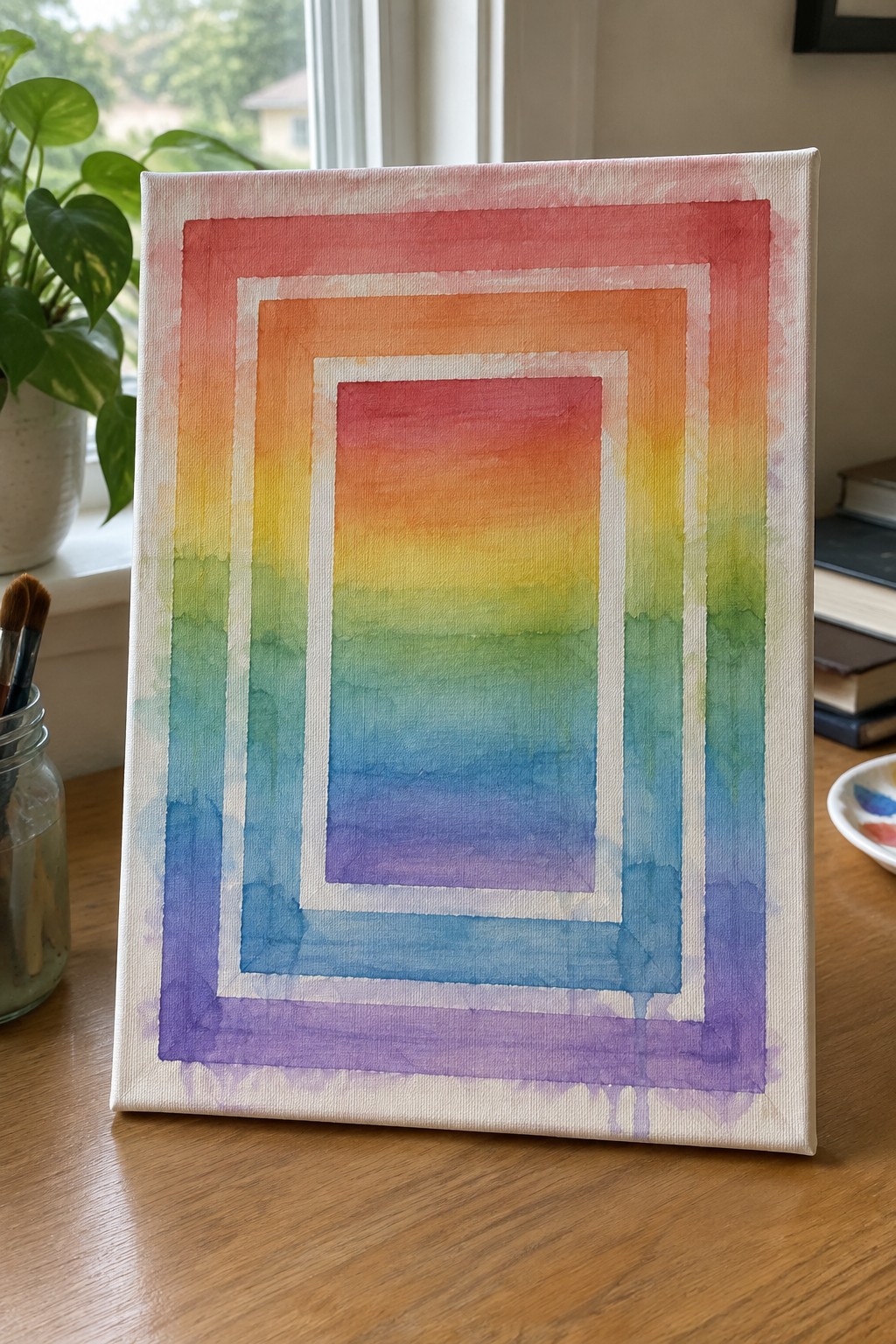
This painting idea uses a series of concentric rectangles to display a full rainbow gradient in clean, stepped bands. Each colored ring sits inside a thin white border, creating clear separation between the red-orange outer layers and the cooler blue-purple center. The approach works as straightforward abstract geometry because the repeating rectangular shapes give the gradient structure and visual order without needing additional details.
What makes this idea useful is how simple it is to scale the number of layers up or down depending on your canvas size. You can swap in different color sequences or keep the same rainbow but change the width of the borders to shift the final look. The layout also translates easily to acrylics if you want sharper edges instead of soft watercolor bleeds. For wall art, the balanced symmetry helps it fit modern spaces without competing with other decor.
Rainbow Mountains Built from Stacked Triangles

This painting idea centers on a set of overlapping triangles arranged in rainbow sequence to form a mountain range. The triangles sit against a flat light blue sky with a single yellow circle and a few simple cloud shapes. The approach works because the repeating triangular forms create a clear sense of layers and depth while keeping every edge straight and easy to mask or paint freehand.
The composition does a lot of the work here because the color order itself guides the eye upward and keeps the scene balanced. You could easily change the rainbow sequence, swap the sky color, or drop the sun and clouds if you want a cleaner version for a different room. For practice or quick decor pieces, this layout scales well to different canvas sizes and leaves room to adjust the number of mountain layers without redrawing the whole idea.
Frequently Asked Questions
What supplies are essential for starting these abstract rainbow geometry paintings on canvas? You will need stretched canvases in various sizes, acrylic paints in a full rainbow spectrum plus white and black for mixing, a set of brushes including fine detail ones and larger flat brushes, a palette for blending, painter’s tape for clean geometric lines, and optional items like a ruler, compass, or stencils to help with precise shapes. Start with a primed canvas and consider adding a varnish at the end to protect the vibrant colors.
How can beginners adapt the more complex rainbow geometry ideas to build confidence? Begin with simpler designs that use basic shapes like triangles or circles rather than intricate overlapping patterns. Practice on smaller canvases first, focus on one rainbow section at a time, and use masking tape to create sharp edges. Many of the 17 ideas can be simplified by reducing the number of geometric elements or using fewer color transitions until you feel comfortable with the full versions.
What techniques help achieve smooth color gradients in the rainbow sections? Apply thin layers of paint and blend them while still wet using a soft brush or sponge for seamless transitions between hues like red to orange to yellow. Work in sections to avoid drying issues, and experiment with glazing techniques by diluting paints slightly with water or medium. This approach keeps the geometry bold while making the rainbows appear luminous and fluid.
How do I ensure the geometric shapes remain balanced and visually appealing across different canvas sizes? Measure and sketch light guidelines with a pencil before painting to maintain proportions, aiming for symmetry or intentional asymmetry based on the specific idea. Scale elements proportionally, such as making larger shapes on bigger canvases to fill space effectively. Test compositions on paper first to adjust spacing and ensure the rainbow colors draw the eye through the design without overcrowding.
What are effective ways to add personal touches or variations to these painting ideas? Incorporate metallic accents or subtle textures with modeling paste in select geometric areas to create depth. Experiment with color order in the rainbows, such as reversing the spectrum or using analogous tones for a softer effect. You can also layer translucent washes over dried sections or combine multiple ideas from the list into one piece for a custom abstract result that reflects your style.
