

I’ve always liked abstract paintings of faces that don’t show everything at once.
The fragmented features make the whole thing feel less like a portrait and more like a puzzle.
In my own work I sometimes leave out parts of the face on purpose just to see how it changes the mood.
These examples use bold shapes and colors to do something similar without trying too hard.
I thought they were worth sharing because they feel honest in a quiet way.
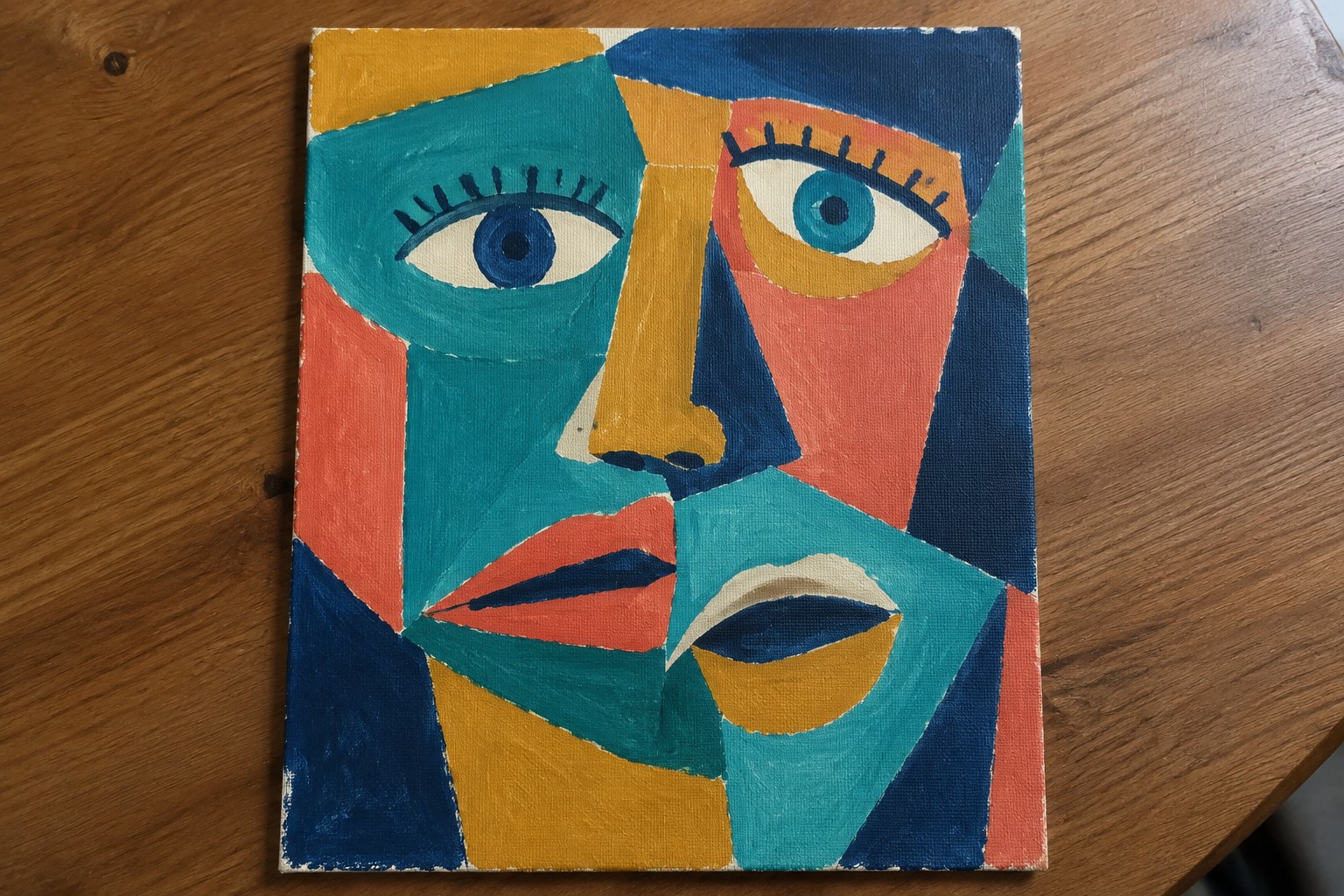
Split-Face Portrait Built from Angular Color Blocks

This painting idea uses flat geometric planes to break a single face into separate colored sections while keeping the eyes, nose, and mouth readable. The sharp angles around the central nose create a natural focal point, and the limited color set of teal, coral, mustard, and navy keeps the whole piece cohesive. It fits squarely in the abstract portrait category where the goal is strong shapes over realistic blending.
What makes this idea useful is how the clear edges between planes let you paint one section at a time without worrying about smooth transitions. You can easily change the color palette to match a room or cut the number of shapes down for a faster version. For practice work, the bold divisions also help you study how value and temperature shifts affect the same facial features.
Fragmented Features Arranged in Bold Color Blocks
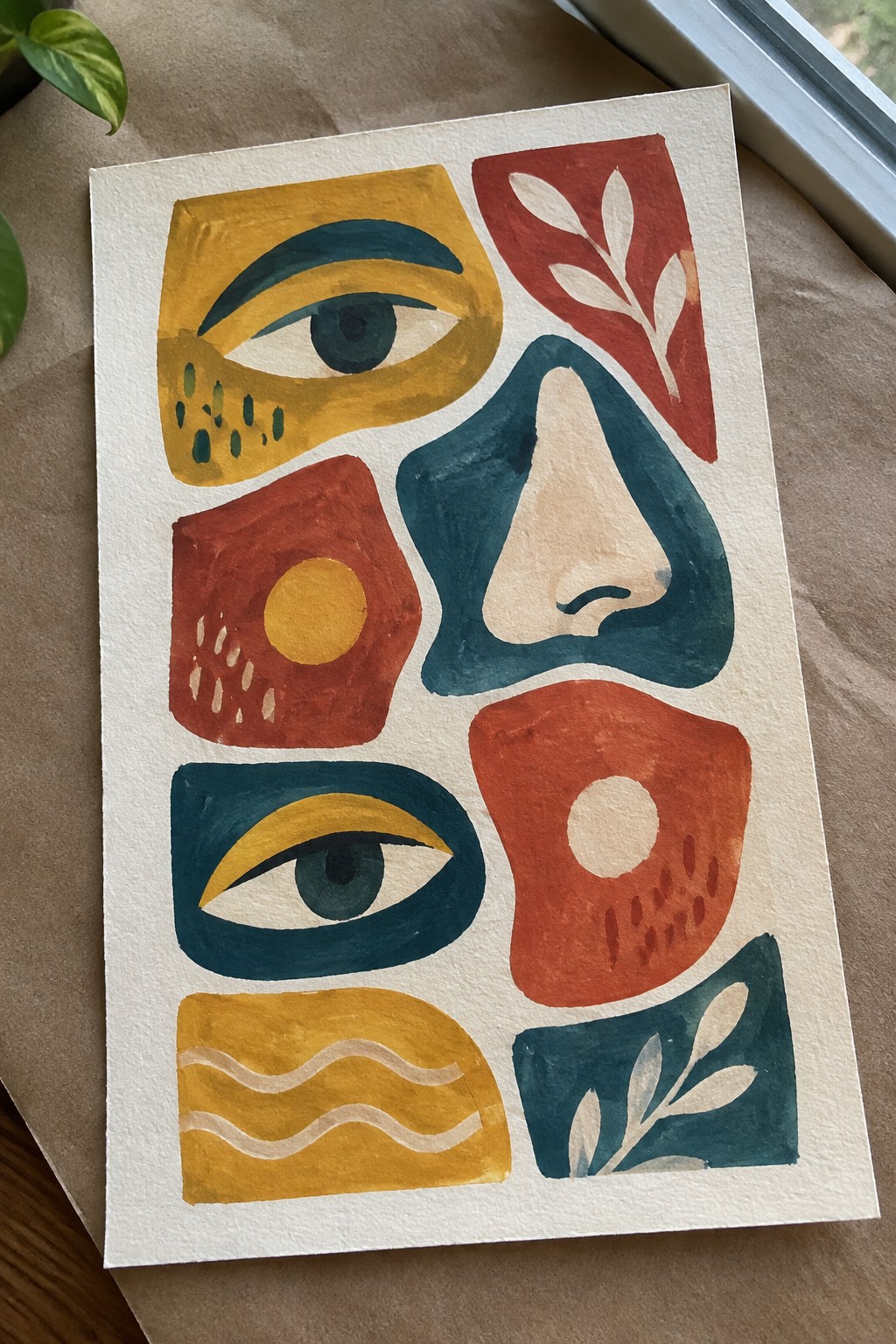
An abstract face idea that breaks the features into separate colored blocks lets you suggest a portrait without connecting everything into one continuous shape. Placing two eyes at different angles, a floating nose form, and patterned shapes around them creates movement through contrast in size and direction. The combination of curved facial pieces with straight-edged blocks and simple leaf motifs keeps the layout balanced while staying graphic.
What makes this idea useful is how the shapes carry the composition, so you can experiment with color placement and texture without worrying about accurate anatomy. The palette of mustard yellow, rust red, and teal works with basic paint sets and could be swapped for any three colors you already have. You could shrink the whole thing into a sketchbook page for quick studies or enlarge the blocks for a bigger wall piece, and the same layout would still read clearly.
Fragmented Face Parts in Loose Arrangement
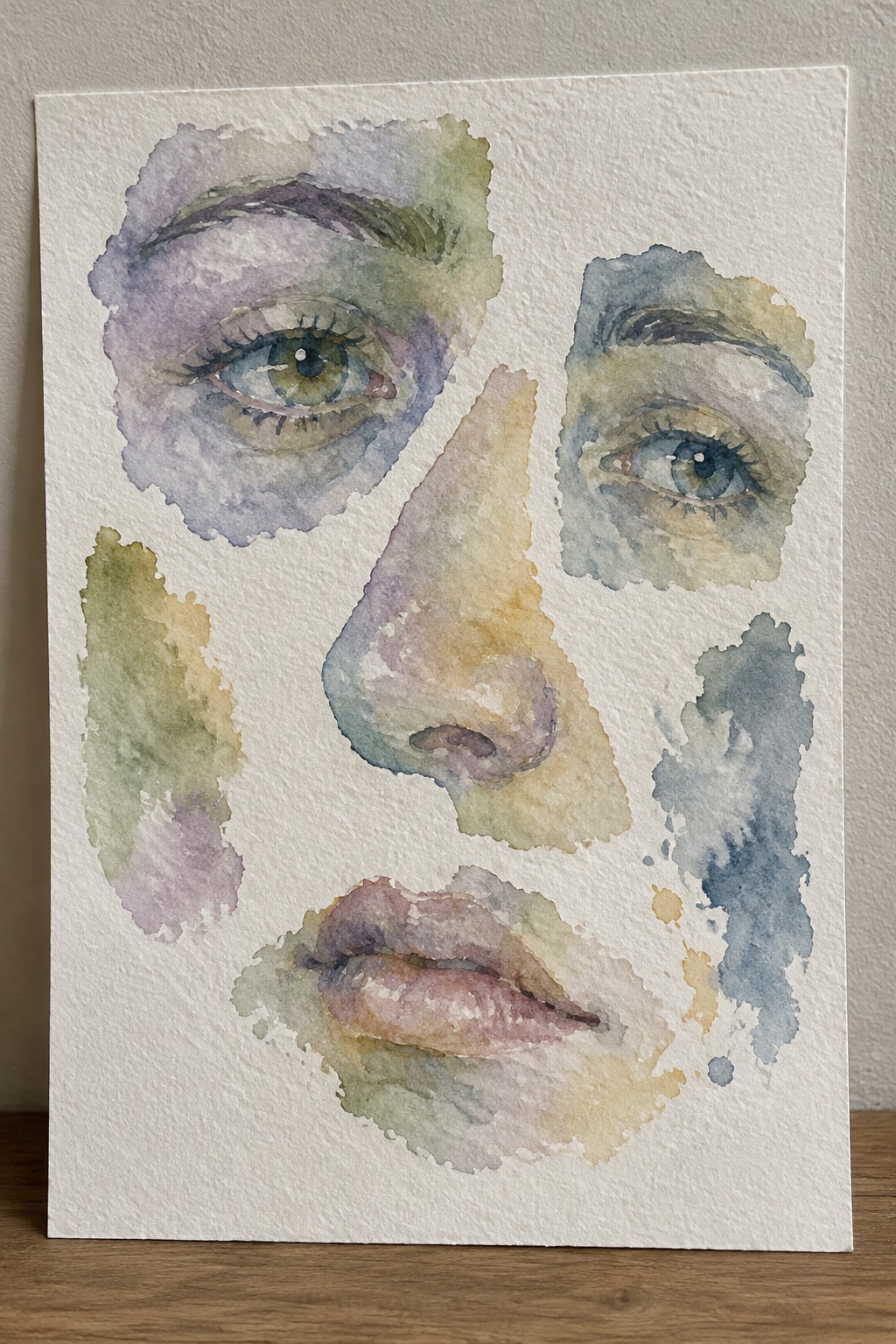
Painting separate facial features as standalone elements creates an abstract portrait without needing a single connected composition. The idea works by letting each piece like an eye or a nose hold its own space on the paper while still suggesting a full face through placement and color overlap. Soft edges and blended washes keep the focus on shape and hue rather than fine detail.
What makes this idea useful is how it turns practice into finished work since you can paint features individually and rearrange them until the layout feels balanced. The scattered placement makes it easy to try different paper sizes or crop the final piece for social media without losing impact. For wall art this approach stands out because the negative space does most of the design work and keeps the piece from feeling crowded.
Fragmented Faces Built from Color Blocks
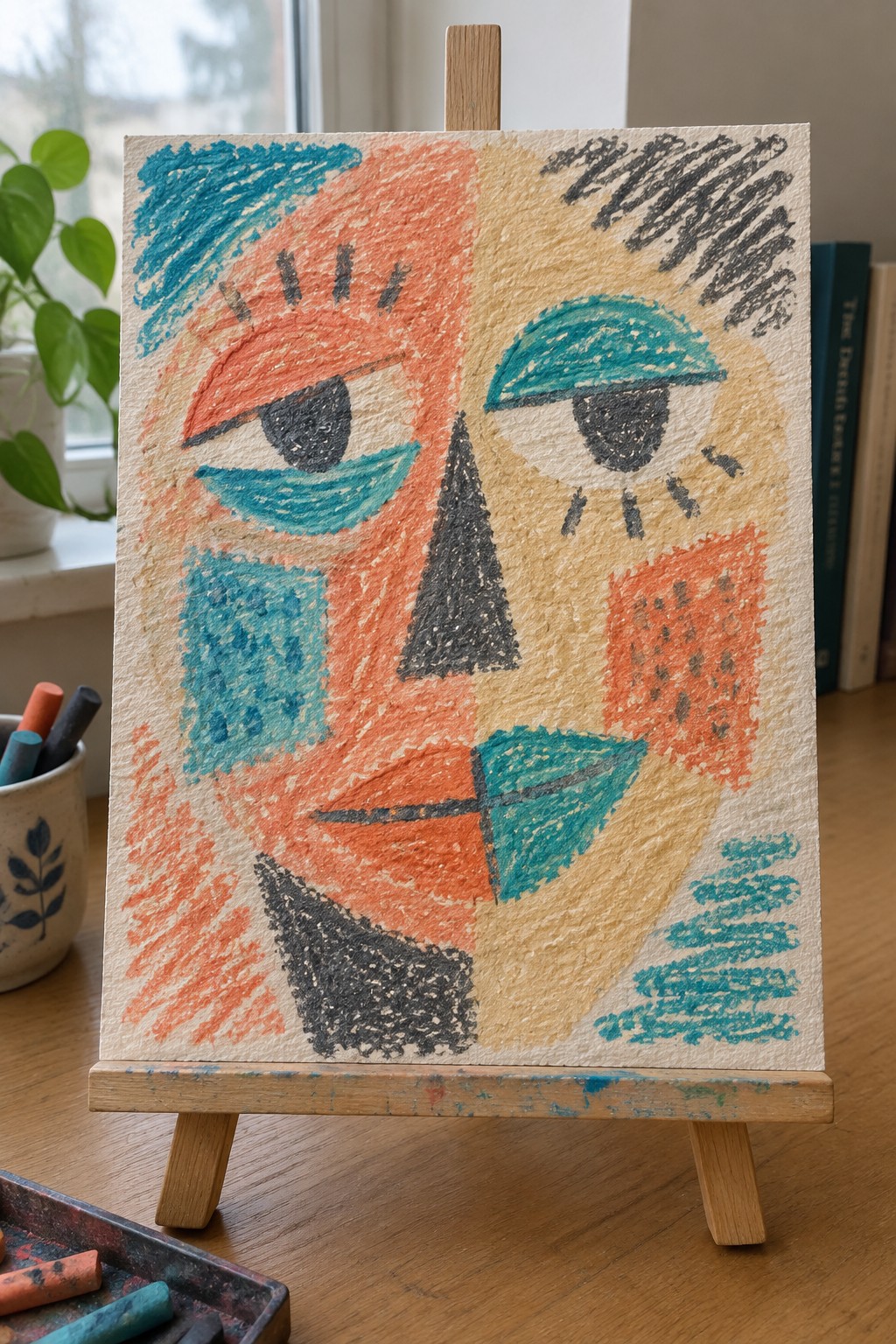
This painting idea uses large flat color areas and simple geometric shapes to break a face into separate pieces rather than drawing it as one connected form. A vertical split down the middle divides the face into two color zones while a black triangle nose and scattered rectangles stand in for other features. The approach works because the bold shapes and limited palette hold the composition together even when the parts do not line up.
The composition does a lot of the work here because the central split and the placed color blocks already give structure without extra detail. You could repeat the same layout on paper or canvas and change the teal and orange to any two strong colors that suit your space. For practice this kind of subject keeps the focus on arranging shapes and choosing colors rather than blending or shading.
Merged Profile and Frontal Views Through Geometric Color Blocks

Abstract face paintings like this one build interest by splitting the subject into flat angular sections that still read as recognizable features. The core idea is to overlap a profile view with a frontal face so the shapes interlock across the middle of the canvas and create a single connected form. A restrained palette of greens, oranges, and deep blues keeps the emphasis on how the planes meet rather than on blending or detail.
The composition does a lot of the work here because the intersecting edges already guide the eye without extra elements. This layout works especially well for practice since you can block in the main shapes first and adjust proportions as you go. The same split-view idea can be adapted by changing the color pairings or scaling it down for smaller canvases while keeping the bold divisions intact. For wall pieces, the graphic structure helps it read clearly even from across a room.
Circular Abstract Face Built from Patterned Blocks
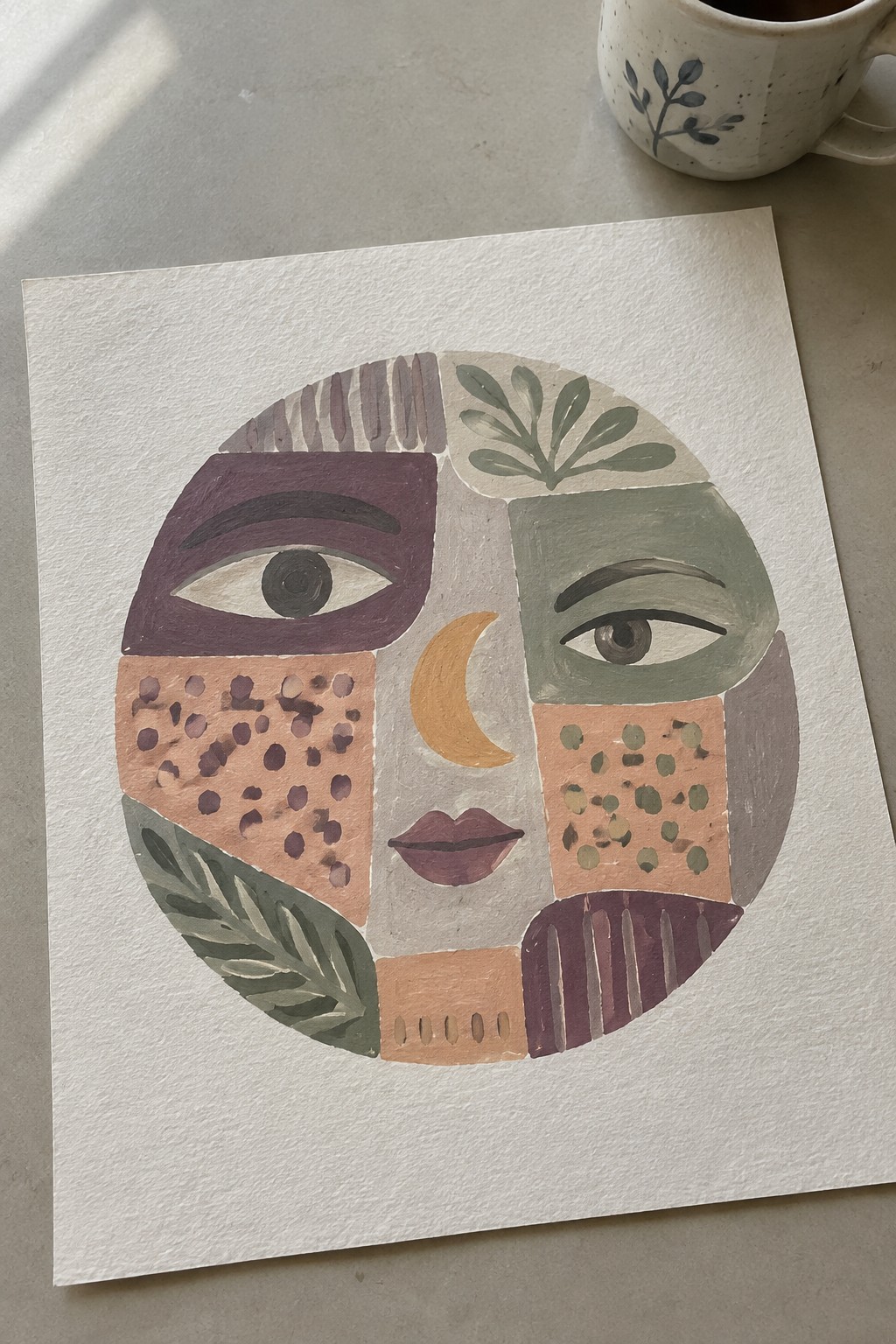
An abstract face idea that divides features into separate geometric sections filled with contrasting patterns like dots, leaves, and stripes creates a balanced but dynamic composition. The muted earth palette of plum, sage, peach, and warm gray lets the textures stand out without competing too much. This kind of painting fits decorative abstract portrait work because the circular crop and repeated motifs hold everything together even when the sections feel mismatched.
What makes this idea useful is how the clear divisions make it simple to try different textures or swap colors without redrawing the whole face. You could shrink the circle for smaller canvases or expand the patterns to fill a larger piece for wall art. The same structure also works well for practice since the focus stays on shape and texture rather than accurate features.
Abstract Portraits Built from Angular Color Fragments
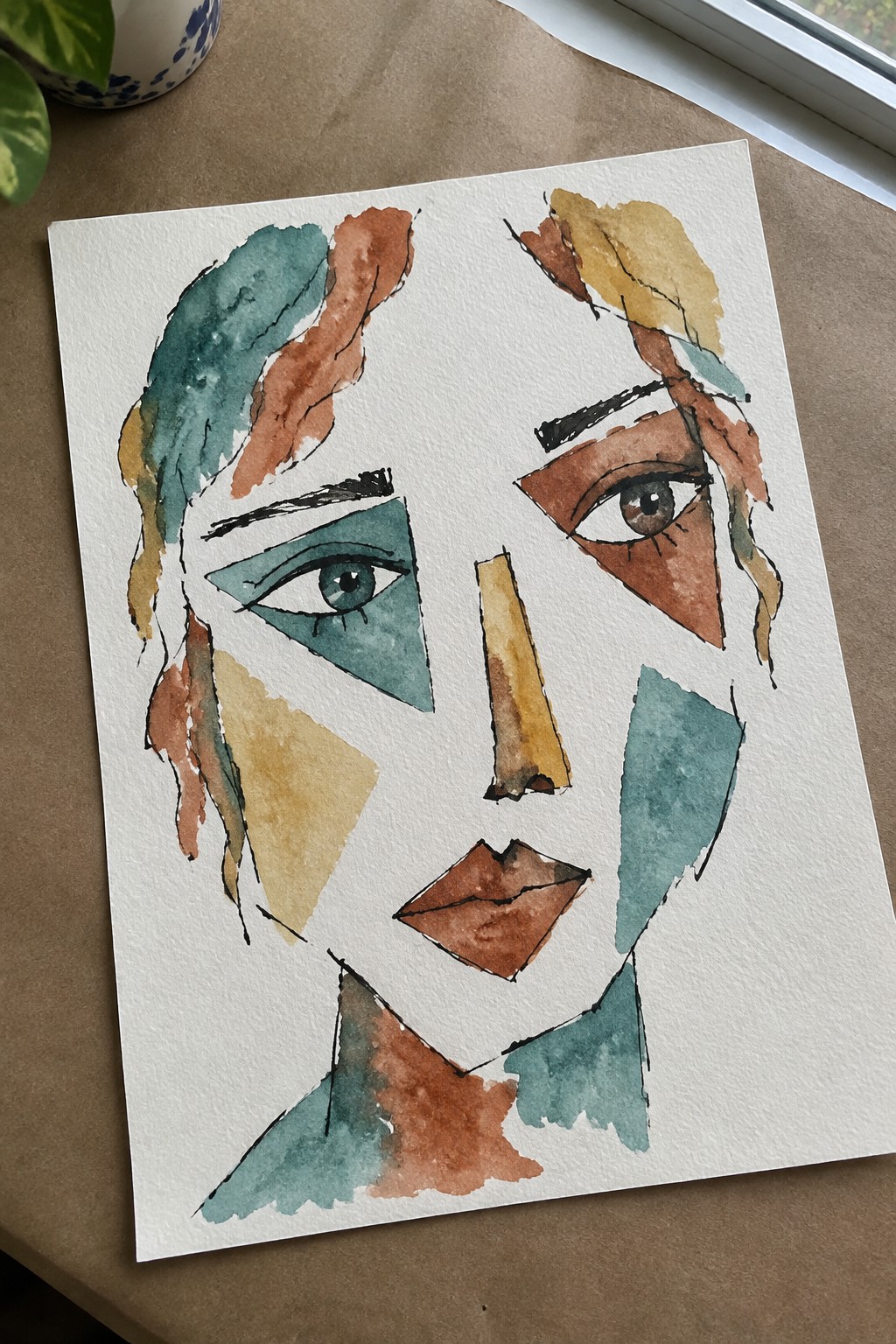
This painting idea centers on breaking a face into sharp geometric sections filled with overlapping watercolor washes in teal, rust, ochre, and brown. The fragments are outlined in black but left open in places so the colors bleed slightly across edges, which keeps the composition from feeling too rigid. The approach works as abstract art because the angled shapes and limited palette still suggest recognizable features like eyes, nose, and mouth without relying on smooth blending or realistic detail.
The composition does a lot of the work here by using negative space and diagonal cuts to hold the face together. You could adapt the same idea with fewer shapes for a quicker version or swap in different earth tones to match a room. For practice, this kind of subject helps you focus on shape and color balance rather than perfect proportions, and the strong lines make it easy to read even as a small piece.
Geometric Blocks to Build a Fragmented Face
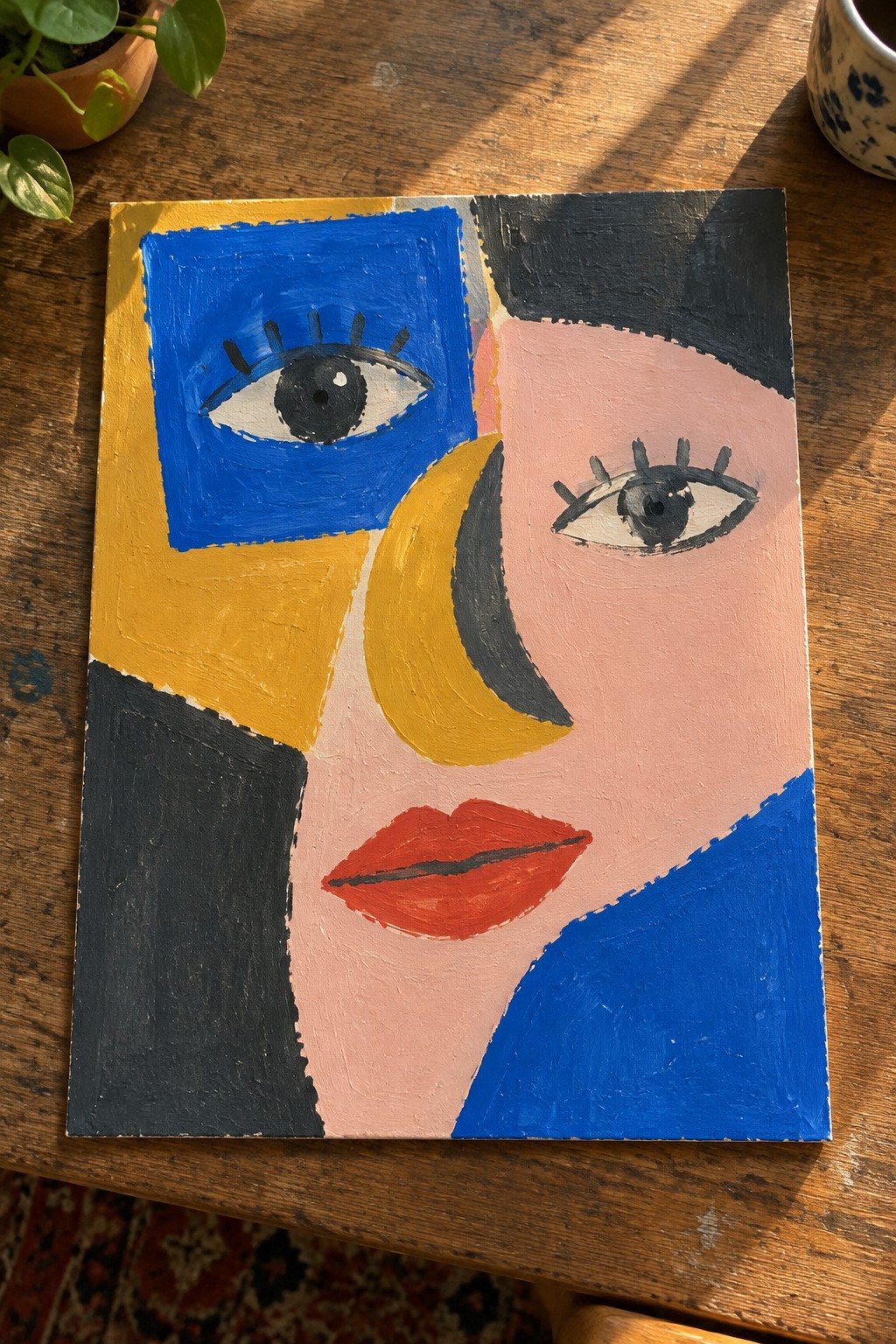
This painting idea breaks a face into separate color zones where each section stands on its own while still forming a clear portrait. Large rectangles and curves in blue, yellow, pink, and black handle the eyes, nose, and mouth without relying on smooth blending or small details. The approach works because the strong edges and flat color areas keep the composition balanced even when the features are split apart.
What makes this idea useful is how the big shapes let you practice color placement and clean edges without getting stuck on proportions. You can swap the blue eye block for another hue or stretch the pink face area to fit a taller canvas while keeping the same layout. For wall pieces, the limited palette and flat blocks make it easy to match with modern rooms, and the same structure can be simplified further by dropping one color or shrinking the size for quick studies.
Abstract Face Built from Overlapping Watercolor Shapes
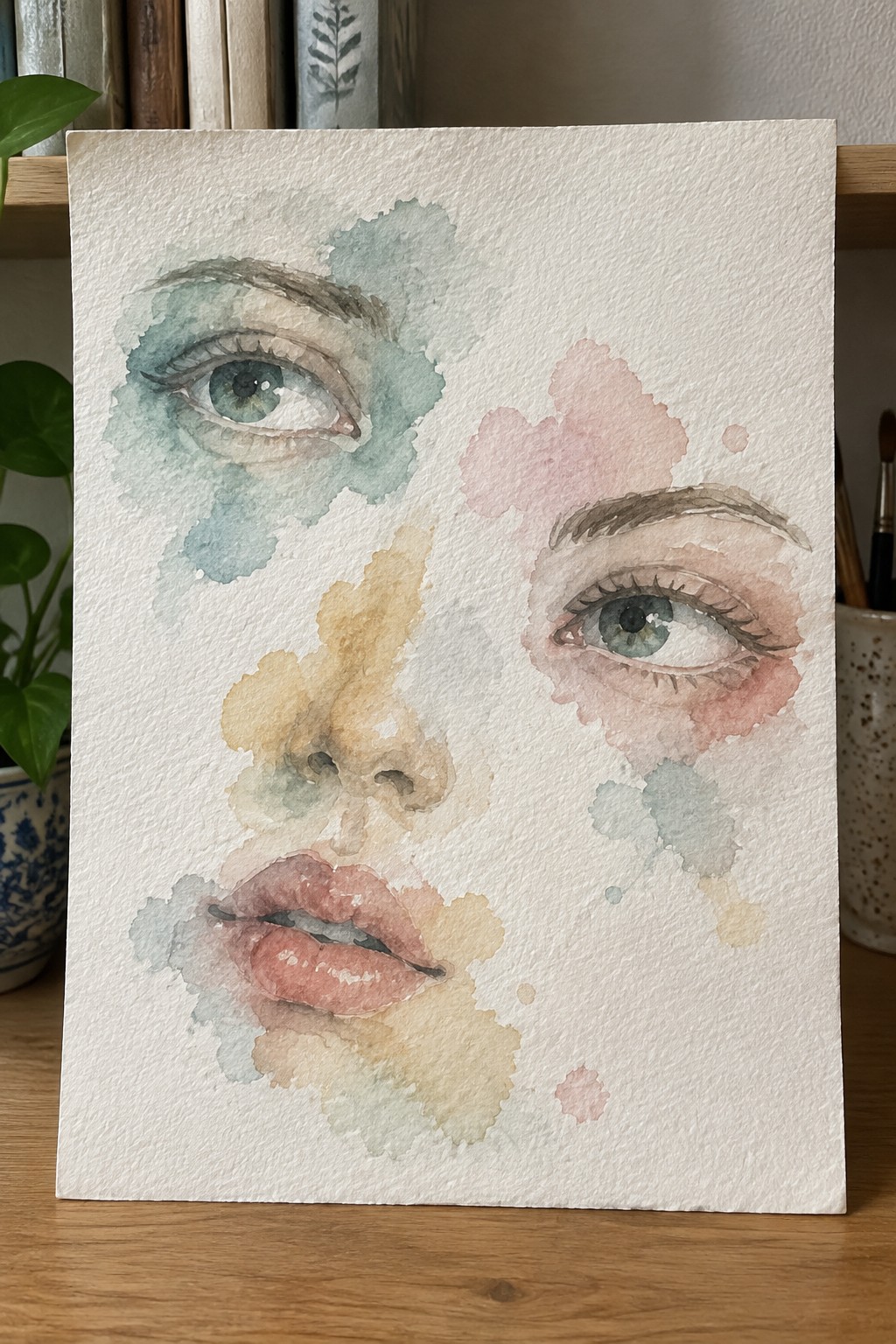
An abstract portrait idea that places realistic eyes and lips inside loose, irregular watercolor washes so the face reads as partially formed rather than fully outlined. The composition works by letting soft-edged color areas in muted greens, pinks, and earth tones carry the structure while the detailed features supply the focal points. This approach sits in the fragmented abstract face category, where selective realism meets open background shapes.
The composition does a lot of the work here by using the color blots to handle edges and negative space, so only a few features need careful rendering. You could adapt the palette to cooler or warmer tones or crop the layout tighter for a smaller canvas. For practice, this kind of subject lets you test watercolor control without requiring a complete face drawing.
Geometric Face Fragmentation in Earthy Color Blocks
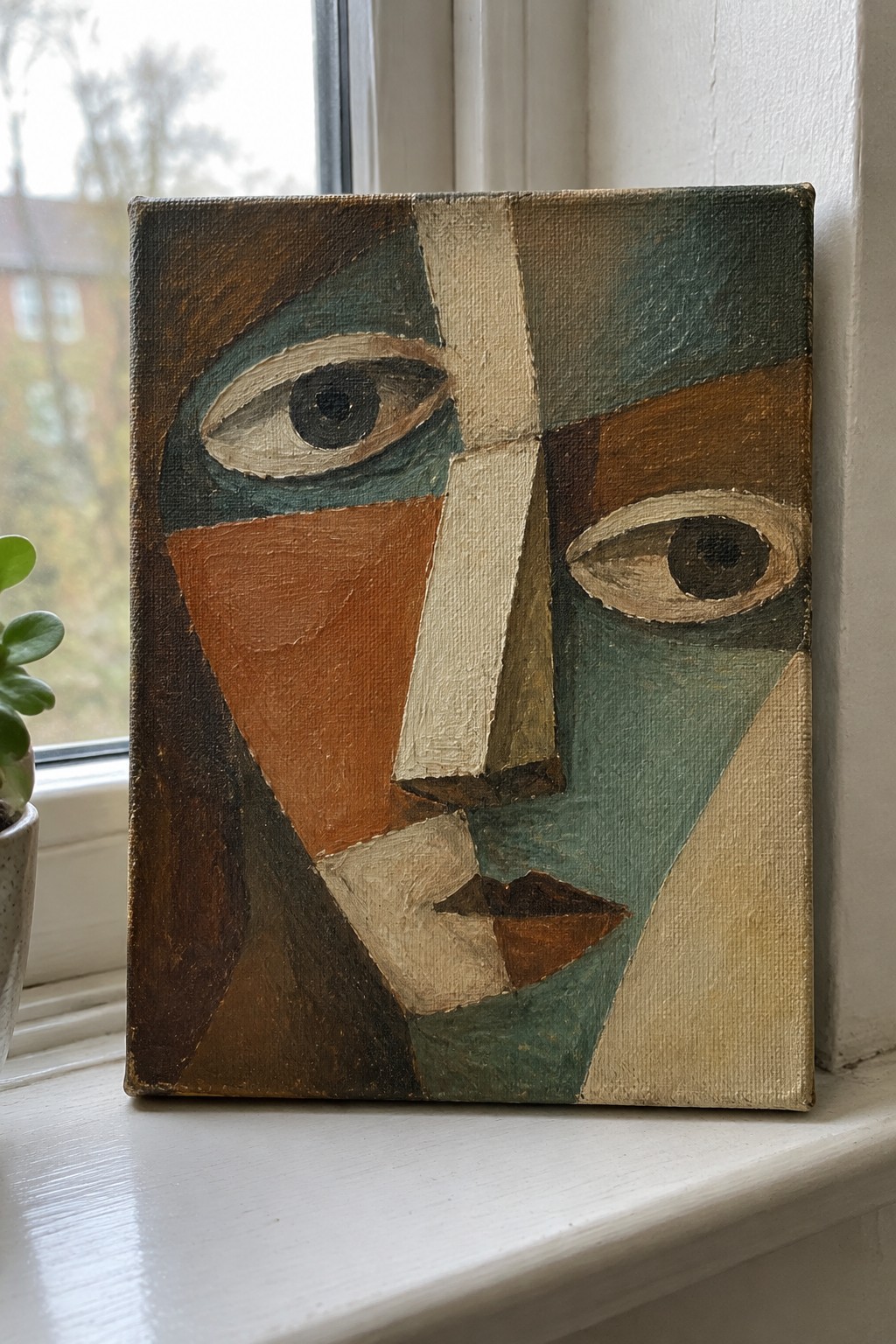
This painting idea uses large angular planes of color to break a face into distinct sections while still keeping the eyes, nose, and mouth readable through placement alone. The approach relies on overlapping shapes in brown, teal, orange, and cream to suggest form without smooth blending or realistic shading. It belongs to abstract portraiture where the structure comes from bold color divisions rather than fine detail.
What makes this idea useful is how the limited number of large shapes keeps the focus on composition instead of tiny brushwork. You could simplify it further by dropping one or two planes or adapt the same layout to a vertical canvas for a different crop. The muted palette also makes it easy to match existing room colors if the goal is wall art rather than just practice.
Split-Face Abstract with Patterned Color Blocks

This painting idea centers on a vertically divided abstract face where each half uses its own color field and repeating motif to create contrast. One side relies on yellow with scattered white dots and teal linear hair, while the other uses coral with teal leaf shapes and a dotted yellow upper section. The approach works because the simplified eyes, nose, and mouth stay centered, letting the bold pattern and color split carry the visual interest without added detail.
The composition does a lot of the work here by balancing symmetry in the facial layout against varied textures on each side. You could adapt it by swapping the leaf and dot patterns for stripes or blocks that fit your own palette, or by shrinking the scale for quick practice pieces. For wall art, something like this stands out in a grid of smaller abstracts because the graphic split reads clearly from a distance. The straightforward face structure also makes it simple to personalize with seasonal colors or different motif repeats.
Bold Abstract Face with Collaged Fragments
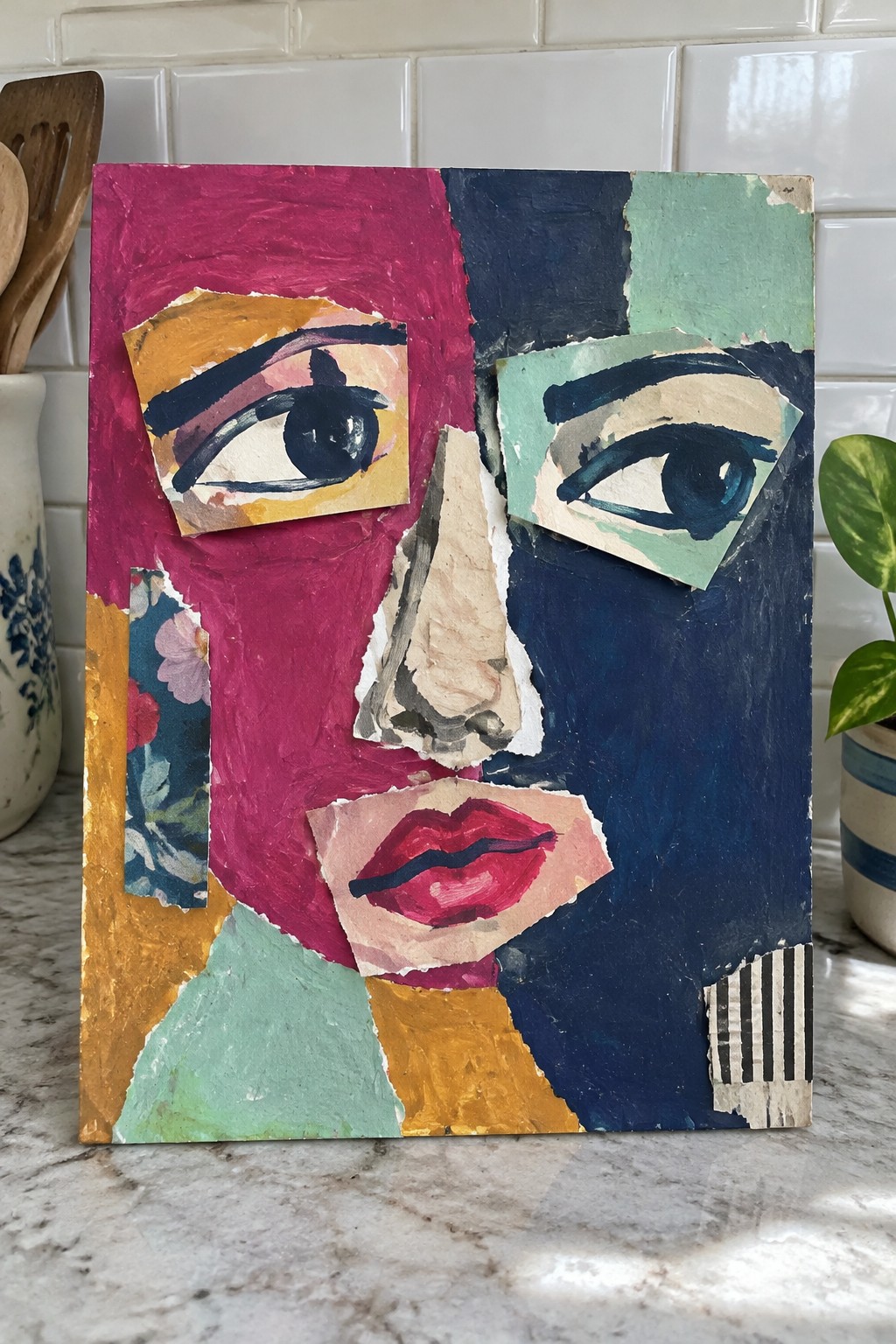
This painting idea centers on an abstract portrait where the face is split into large blocks of bold color and the features are built from separate painted scraps layered on top. The eyes and lips are created on torn pieces that sit at slight angles, while the nose is painted directly in the middle to connect the sections. The approach works because the strong color divisions and raised fragments create contrast without needing precise realism.
What makes this idea useful is that the collage method lets you reuse small painted scraps and experiment with placement until the balance feels right. The divided background keeps the composition structured even if the fragments are rough, and the same layout could be scaled down for a sketchbook page or expanded with different color pairings. For wall art, something like this stands out because the mix of flat color and texture reads clearly from a distance.
Abstract Face Built from Angular Color Fragments
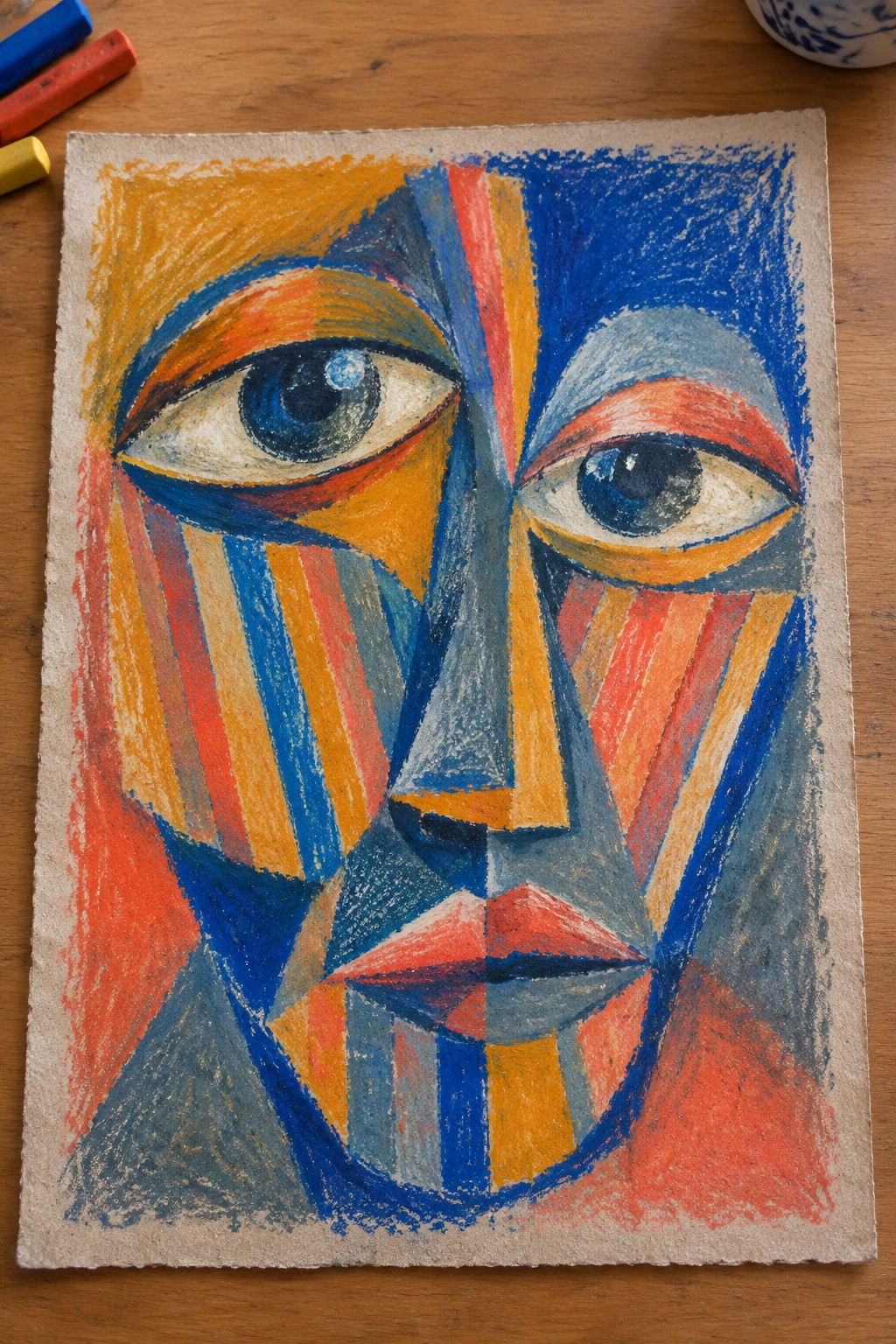
This painting idea centers on breaking a face into sharp geometric sections filled with contrasting blocks of color. The composition relies on strong vertical divisions and repeating stripes to hold the eye across the canvas while still keeping the features readable. It belongs to the bold abstract portrait category where flat planes and saturated hues replace realistic shading or blending.
What makes this idea useful is how the clear edges and limited color zones make it straightforward to plan on paper or canvas. You can easily change the palette to cooler tones or earth colors without losing the impact. The striped sections also give beginners a simple way to practice clean color application while still producing something graphic enough for wall art. For sharing online, the high contrast tends to photograph well and stand out in feeds.
Torn Paper Fragments for an Abstract Face Study
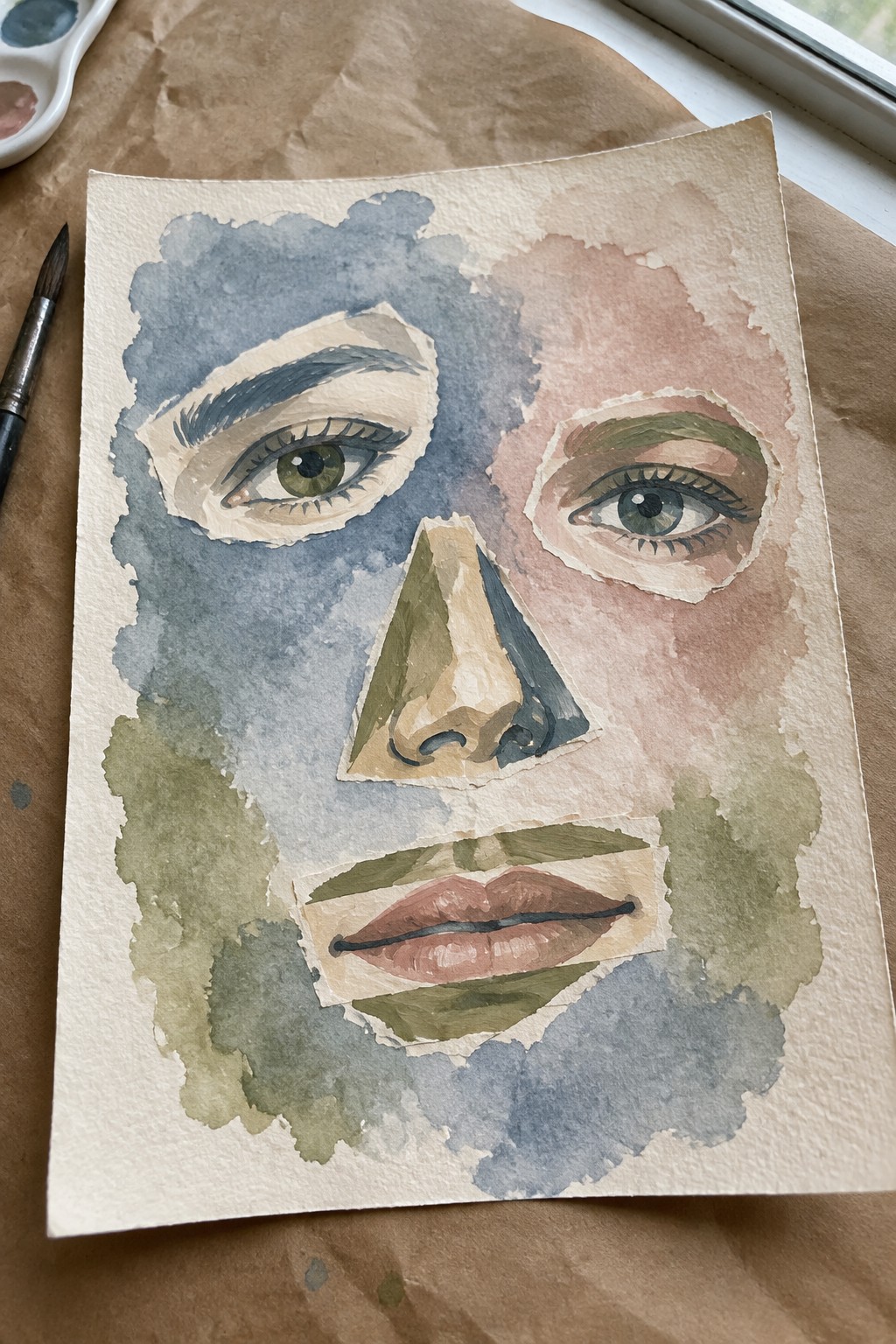
A fragmented face built from separate torn sections lets each feature sit on its own painted piece against loose watercolor washes. The eyes, nose, and mouth are isolated on irregular shapes that overlap muted blue, green, and earth-tone backgrounds, turning a portrait into a graphic arrangement of cut-apart forms. This keeps the focus on shape and placement rather than smooth blending or realistic skin tones.
What makes this idea useful is how the torn edges handle the composition for you, so you can paint and arrange individual features without needing perfect proportions. The limited color palette works well for quick studies or larger pieces, and you can easily swap the wash colors or reduce the number of fragments to match your time or supplies. For wall art, the bold separation of features gives the painting a clean graphic look that photographs well for sharing or printing.
Geometric Face Fragments Across a Three-Panel Composition

This painting idea uses large angular planes to split each face into separate color zones, creating an abstract portrait built from simple shapes rather than smooth blending. The three panels keep the same basic face layout but change the color story each time, which keeps the group unified while showing how different palettes shift the mood. One panel adds a strip of printed paper for texture, showing how a single mixed-media touch can add interest without extra detail.
The composition does a lot of the work here by repeating the same face structure across panels so the focus stays on color choices. You could paint the same idea on three small canvases or one long board and swap palettes to fit a specific space. For practice, the flat shapes make it easy to work on proportion and edge control before adding more complexity. This format stands out on Pinterest because the side-by-side layout reads clearly even as a thumbnail.
Fragmented Faces Built from Loose Color Patches
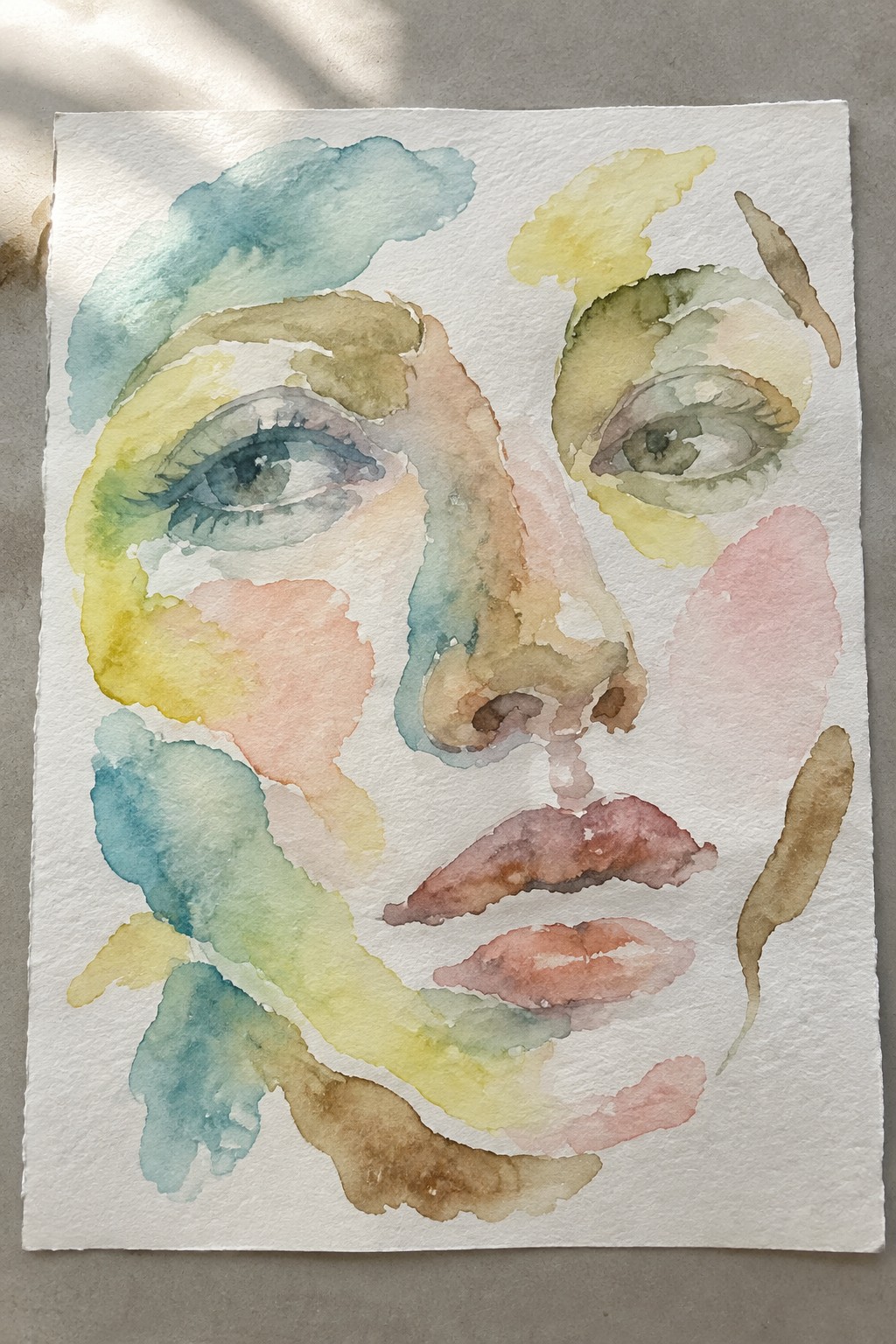
This painting idea uses overlapping washes of blue, yellow, pink, and brown to split a face into separate color zones instead of drawing continuous features. The eyes, nose, and lips sit as independent shapes that only connect through the viewer’s eye, with white paper left between many of the color areas. The scattered layout and soft edges keep the focus on how the colors interact rather than on realistic proportions.
What makes this idea useful is that it removes the pressure to get facial proportions exact. You can start with just four or five colors and move them around until the fragments feel balanced. For practice work the approach works well because mistakes in one section can be covered by adding another wash nearby. The same layout also scales easily for larger canvases if you want something bold for a wall.
Bold Geometric Face Built from Large Color Blocks
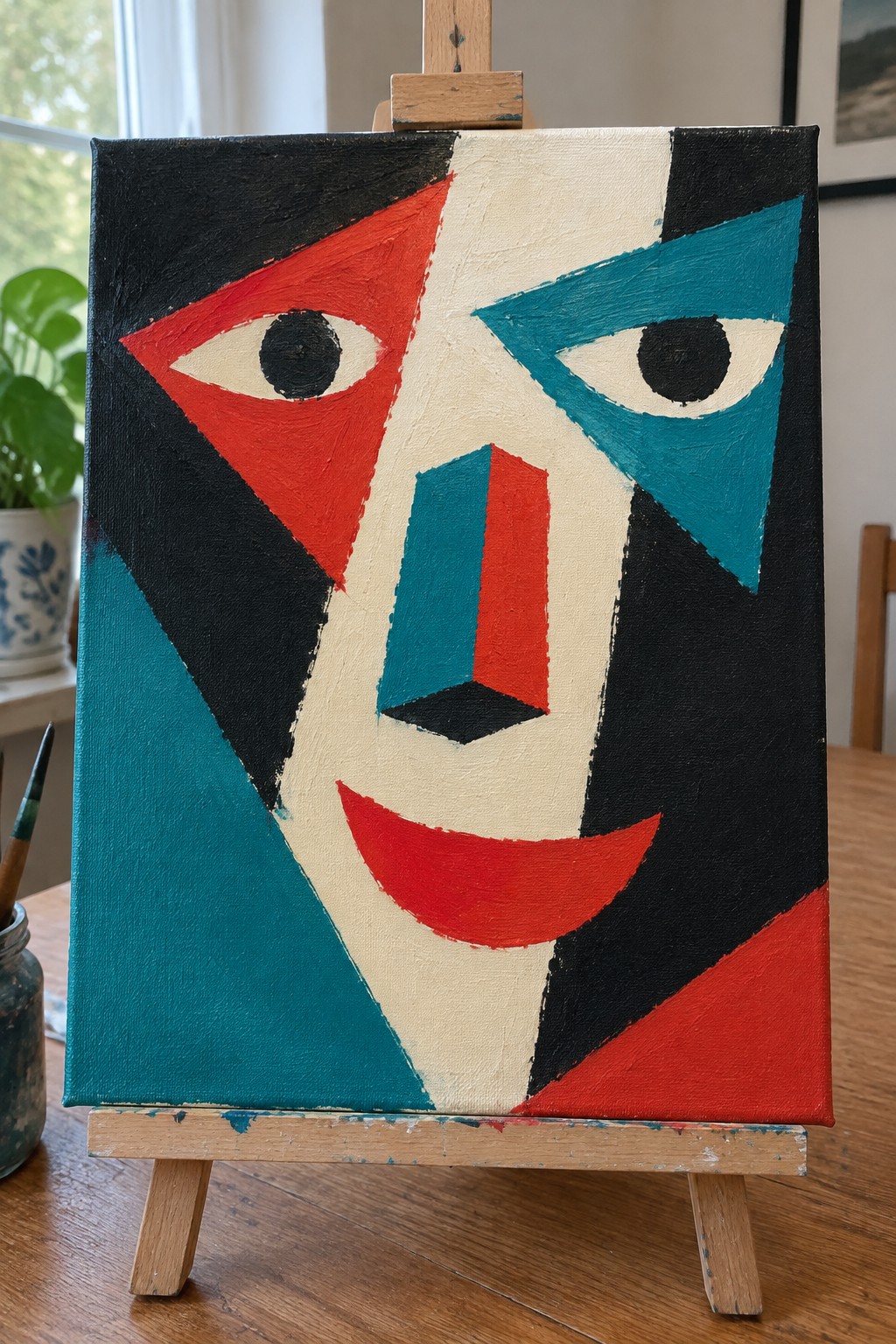
An abstract face idea that breaks the features into sharp triangles and rectangles creates instant impact through strong color separation. The main concept uses bold diagonals to divide the face into distinct zones of black, red, teal, and cream while keeping the eyes and mouth as simple focal points. This style sits squarely in the fragmented abstract portrait category and works because the large shapes and high contrast do most of the visual work.
What makes this idea useful is how the simple block layout lets you experiment with color without worrying about blending or fine details. You can adapt the same diagonal split to different palettes or shrink the triangles for faster practice pieces. For wall art, the graphic quality holds up well at smaller sizes and gives a modern look that stands out on Pinterest boards focused on bold abstract faces.
Abstract Faces Built from Patterned Fragments
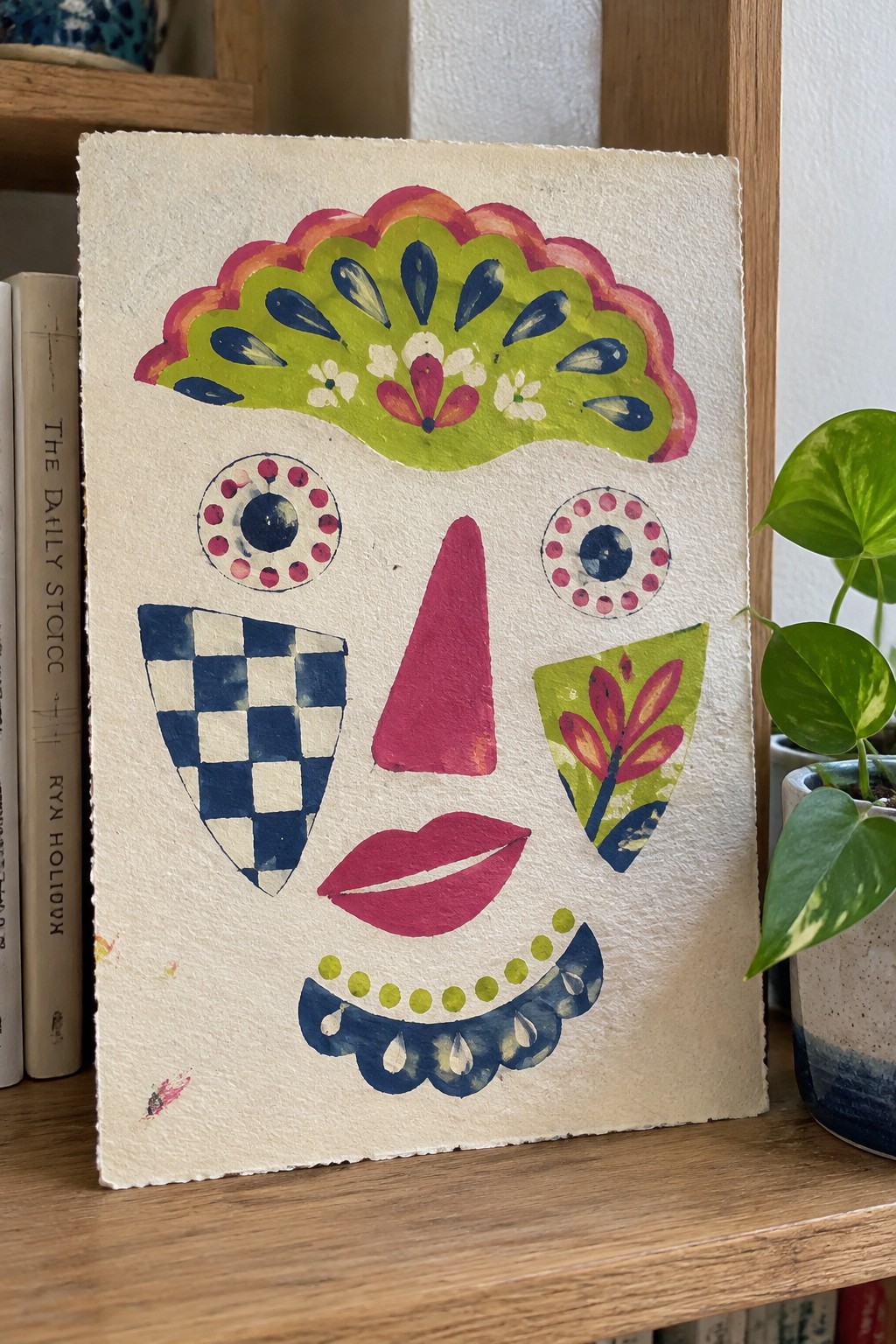
An abstract portrait idea that replaces realistic features with bold mismatched shapes and repeating patterns. The central pink nose and lips stay simple while a checkered blue form sits on one side and a leafy green triangle on the other, topped by a scalloped green element that acts like stylized hair. This approach fits decorative abstract art because the flat shapes and limited color repeats create strong visual balance without needing fine detail or shading.
What makes this idea useful is how the same layout works with almost any pattern you already have in your sketchbook. Swap the checkered shape for stripes or dots and the green triangle for a solid color to quickly change the mood. The composition stays readable even at small sizes, so it translates well to greeting cards or small canvases for gifts. For practice, it gives you a clear structure to follow while still leaving room to test new color combinations.
Fragmented Face with Sharp Geometric Divisions
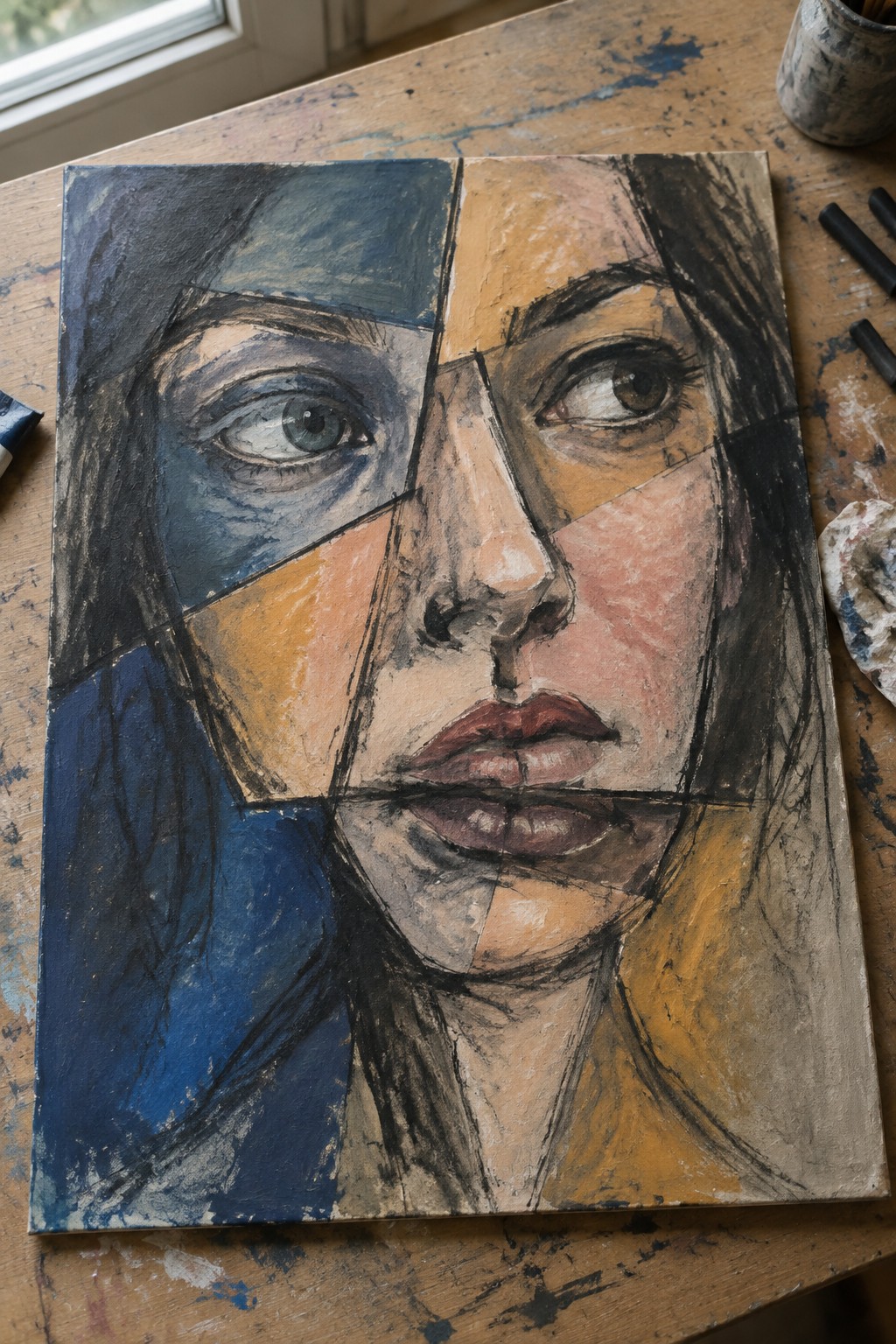
An abstract portrait idea that slices a face into irregular angular sections and fills each one with different color temperatures and values. The composition works because the strong diagonal and horizontal lines cut right through the eyes, nose, and mouth, forcing the viewer to reassemble the features while the color shifts keep each fragment distinct. It sits clearly in the bold abstract face category, where the goal is to keep the portrait recognizable but push it toward graphic, broken-apart design.
What makes this idea useful is that the hard edges and flat color areas remove the pressure to blend skin tones smoothly, so beginners can focus on shape and placement instead. The split between cool and warm sections is easy to adapt by changing the palette or reducing the number of fragments for a simpler study. For wall art, the strong graphic quality holds up well at larger sizes without needing fine detail.
Frequently Asked Questions
What do fragmented features mean in these abstract face paintings? Fragmented features describe how artists divide and rearrange facial elements like eyes, noses, and mouths into disconnected shapes or overlapping planes. This approach creates visual tension and invites viewers to piece together the image themselves, often resulting in a more dynamic and thought-provoking composition than realistic portraits.
How can I select one of these bold paintings to fit my home or office? Start by matching the dominant colors in the artwork to your existing decor for visual harmony. Consider the size relative to your wall space, and think about the emotional tone, since bold abstracts with sharp fragments can energize a room while softer versions promote calm. Many collectors begin with smaller prints to test the impact before investing in originals.
What painting techniques help achieve the bold, fragmented look? Artists frequently rely on mixed media such as acrylics layered with collage elements, strong geometric lines, and contrasting color blocks. They may also use impasto brushwork for texture and deliberately leave edges rough or overlapping to emphasize the broken quality of the features, making the final piece feel both structured and spontaneous.
Why do these paintings often feel more expressive than traditional portraits? The fragmentation allows artists to convey complex emotions or inner states without relying on literal facial expressions. Viewers are drawn into active interpretation, which can create a stronger personal connection and highlight themes like identity, memory, or modern disconnection in ways that smooth, realistic faces rarely achieve.
Where are good places to find similar paintings or prints? Search established online platforms such as Saatchi Art, Artsy, or Etsy for works by emerging abstract artists. Local galleries and university art shows also host exhibitions focused on this style, and many offer affordable limited-edition prints that capture the bold fragmented aesthetic without the cost of an original canvas.
