


I have been looking at different ways to paint couples lately.
Abstract styles with silhouettes that connect appeal to me because they leave room for imagination.
I like how the shapes in these pieces interlock to suggest closeness.
My own attempts at this have been simple but satisfying.
It is interesting to see what others have come up with in this style.
Bold Profile Silhouettes With a Shared Heart Shape
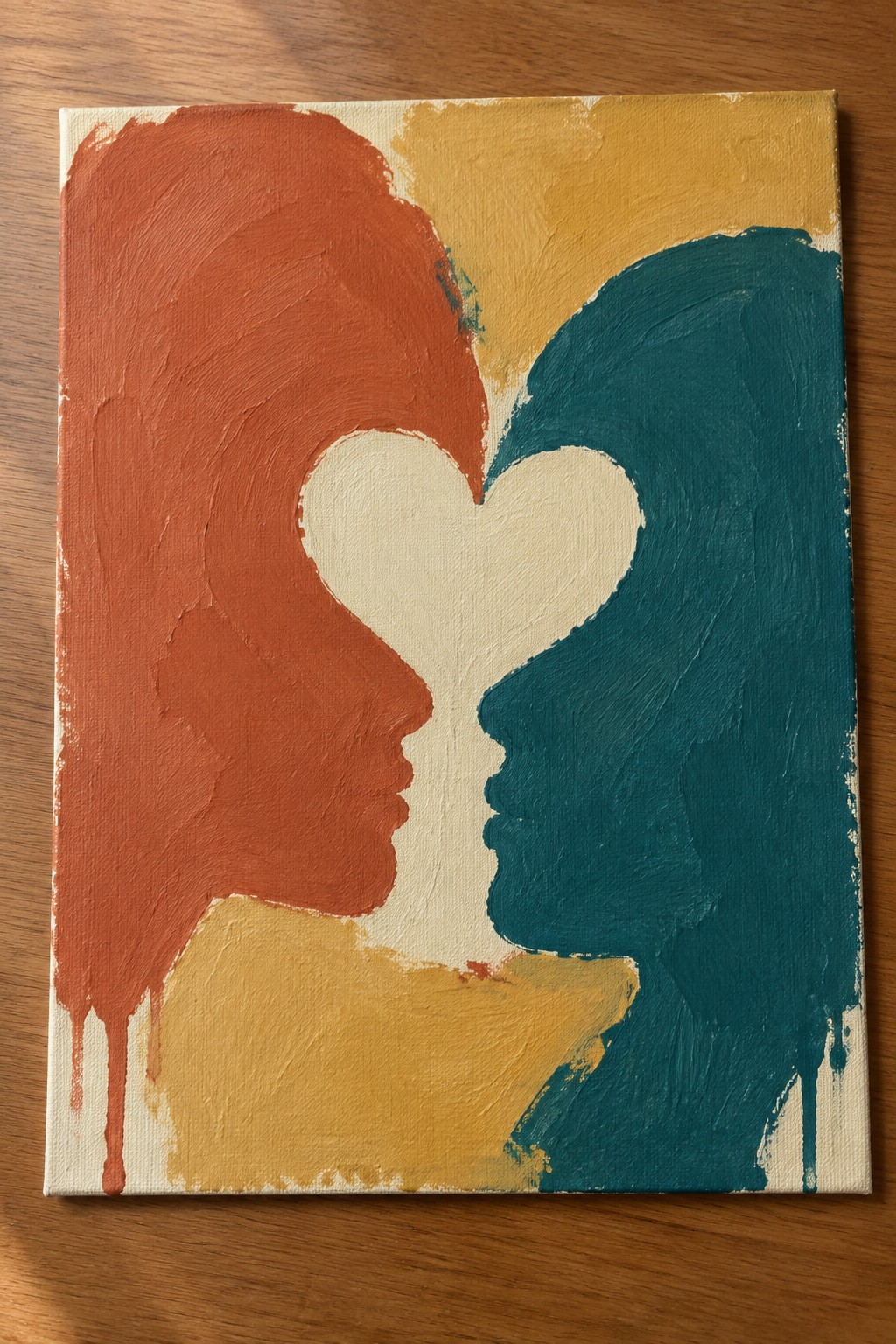
This painting idea uses two large profile silhouettes facing each other so their curves naturally form a heart in the middle. One silhouette is painted in a warm terracotta and the other in deep teal, with mustard yellow filling the remaining space around them. The approach works because the simple shapes and high contrast let the heart read clearly without needing fine details or blending.
What makes this idea useful is how the big blocks of color and limited palette keep the focus on the composition rather than technique. You could swap the terracotta and teal for any two colors that match a space or mood, and the loose drips at the bottom give you room to work quickly without worrying about clean edges. For practice or wall pieces, the graphic style translates well to different sizes and stands out in a grid of other couple paintings.
Overlapping Couple Profiles With Blended Color Layers
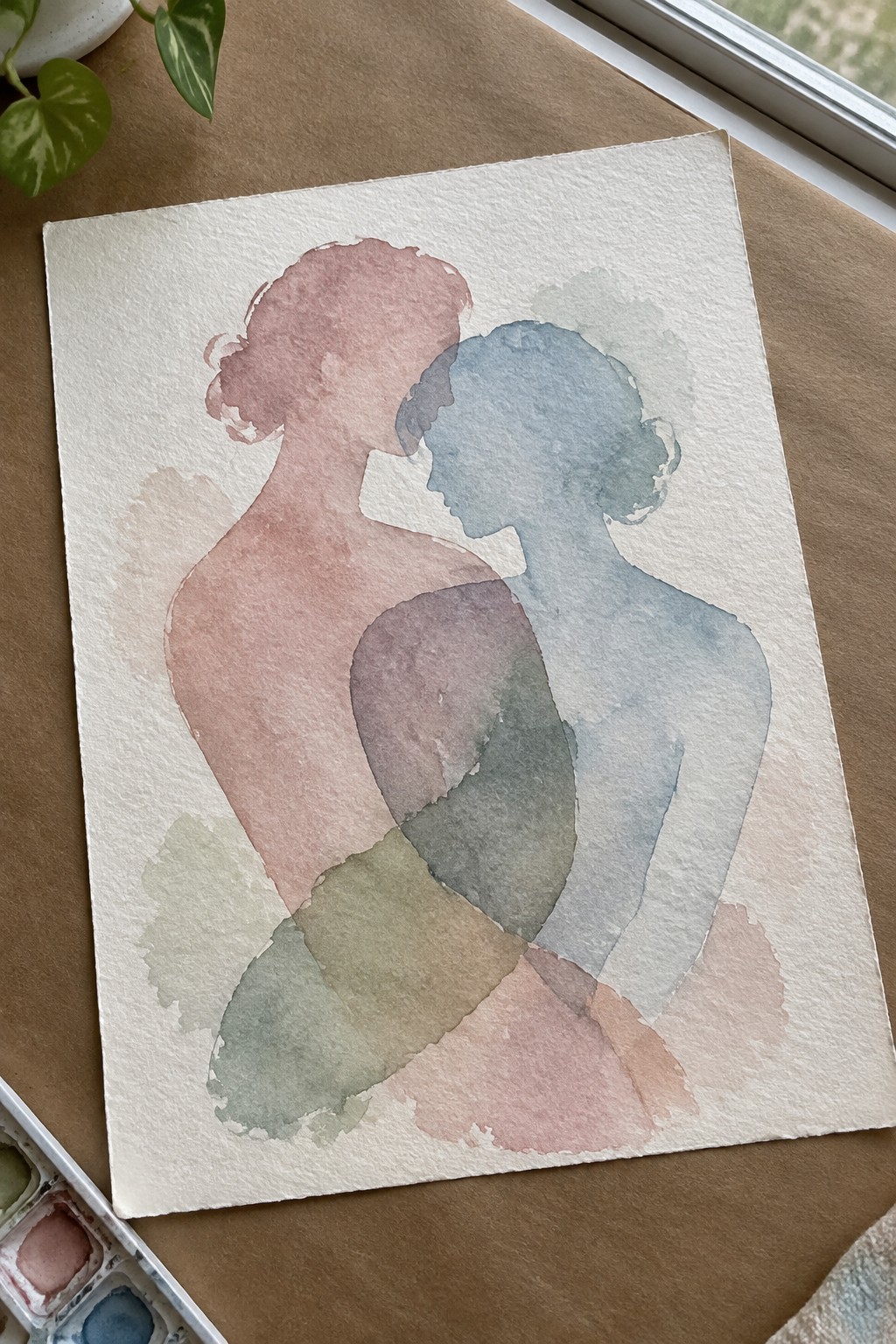
Two facing silhouettes form the core idea here, with one profile in warm tones and the other in cool tones positioned so their shoulders and torsos cross in the middle. The overlap zone mixes the colors into new shades, turning two separate shapes into one connected form without needing facial details or fine lines. This approach belongs to abstract couple art that relies on silhouette placement and transparent layering rather than realistic rendering.
The composition does a lot of the work here since the intersection itself creates the sense of closeness. You can swap the color pairs or change how far the figures lean in to adjust the mood while keeping the same structure. This idea suits quick practice sessions because the outlines stay simple and the focus stays on color mixing instead of drawing accuracy. For wall pieces it stands out on Pinterest feeds when the background stays minimal so the blended center draws the eye first.
Patterned Blocks Forming Interlocked Couple Forms
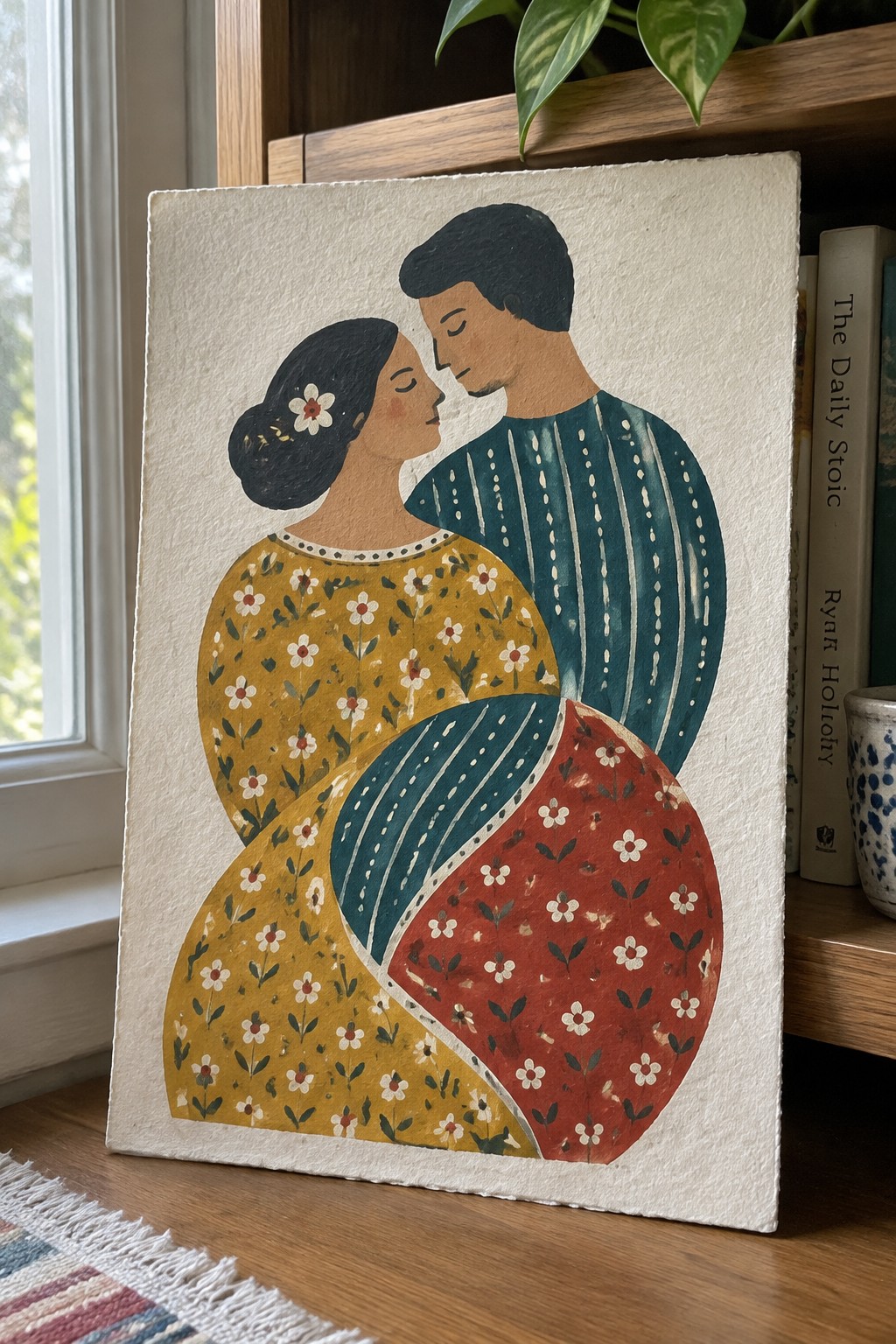
This painting idea uses two side-profile figures whose shapes overlap and merge into one continuous outline. Distinct color sections filled with repeating patterns hold the forms together and create visual unity across the joined areas. The approach belongs to abstract decorative painting where flat shapes and surface patterns carry the composition instead of shading or fine detail.
What makes this idea useful is how the overlapping layout removes the need for precise body proportions. You can change the pattern scale or swap one color block for another to fit different wall colors without redrawing the whole thing. The strong outer silhouette also helps the piece read well at smaller sizes for cards or prints.
Profile Silhouettes Joined by Striped Bands
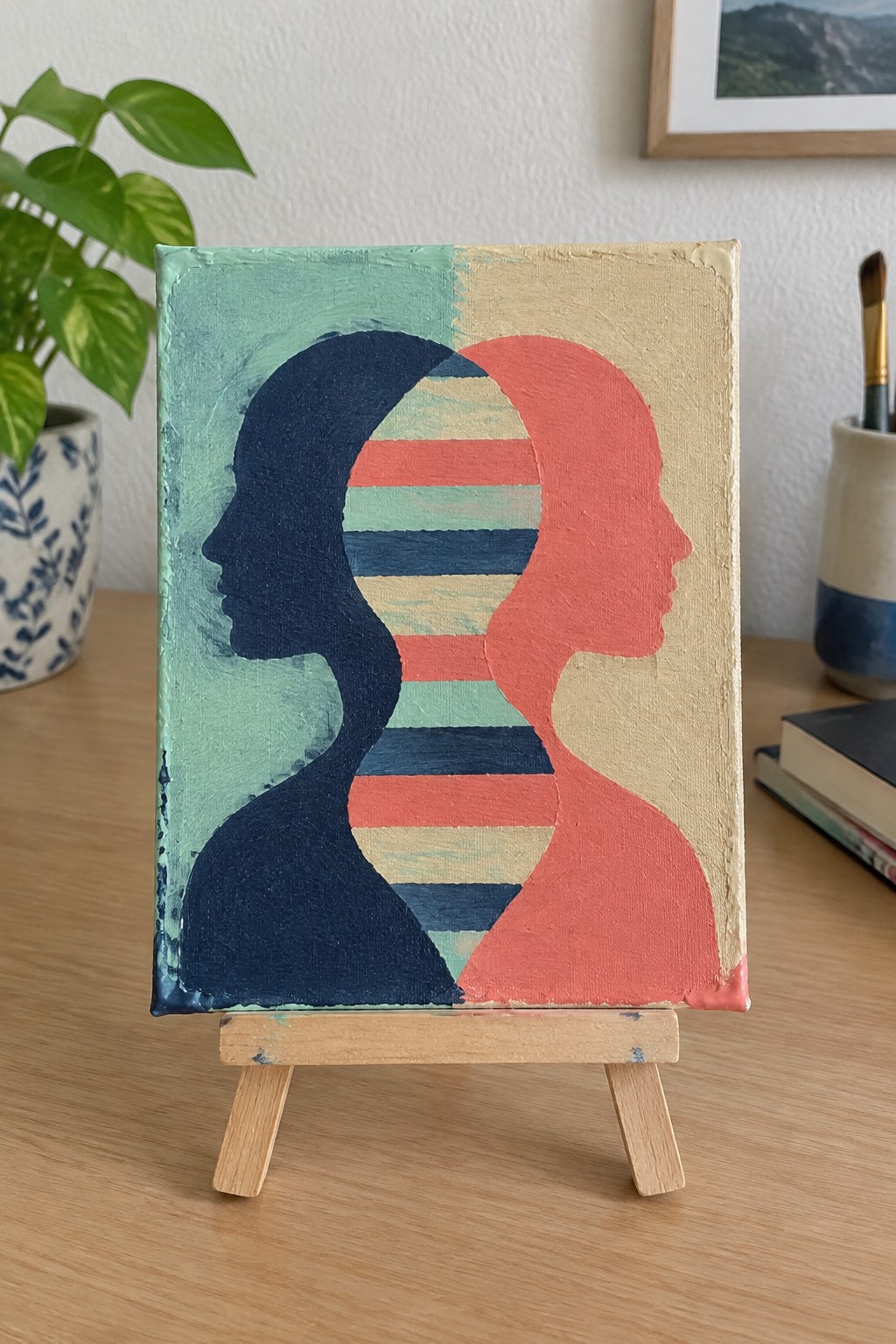
Two profile silhouettes face each other so their shapes overlap in the center, with that shared space filled by alternating horizontal stripes in teal, blue, coral, and beige. The background splits down the middle to match each silhouette side, keeping the left half cool-toned and the right half warm. This setup turns the overlap into the main visual element rather than something to hide.
The composition does a lot of the work here because the stripes automatically create connection without extra detail. You can swap the stripe colors to match any room or season and still keep the same layout. The split background also lets you paint one side at a time, which makes the piece easy to scale up or simplify for smaller canvases. For Pinterest, the clean color blocks and clear overlap read well even as a thumbnail.
Interlocked Abstract Couple in Warm Gradients

An abstract couple painting idea built around two flowing silhouettes that twist and overlap to form a single connected shape. The warm color shifts from red through orange into purple help the forms merge visually while the curved lines guide the eye along the full length of the composition. This approach works as decorative abstract art where the emphasis stays on movement and color blending instead of facial details or clothing.
The composition does a lot of the work here by using bold overlapping shapes that stay readable even at smaller sizes. You can swap the sunset palette for cooler tones or try the same layout on a square canvas to fit different wall spaces. For practice the idea stays approachable because the silhouettes let you focus on smooth color transitions without needing precise anatomy. It would stand out on Pinterest as a clean modern option that still reads clearly as a couple.
Overlapping Profiles in Layered Watercolor Silhouettes
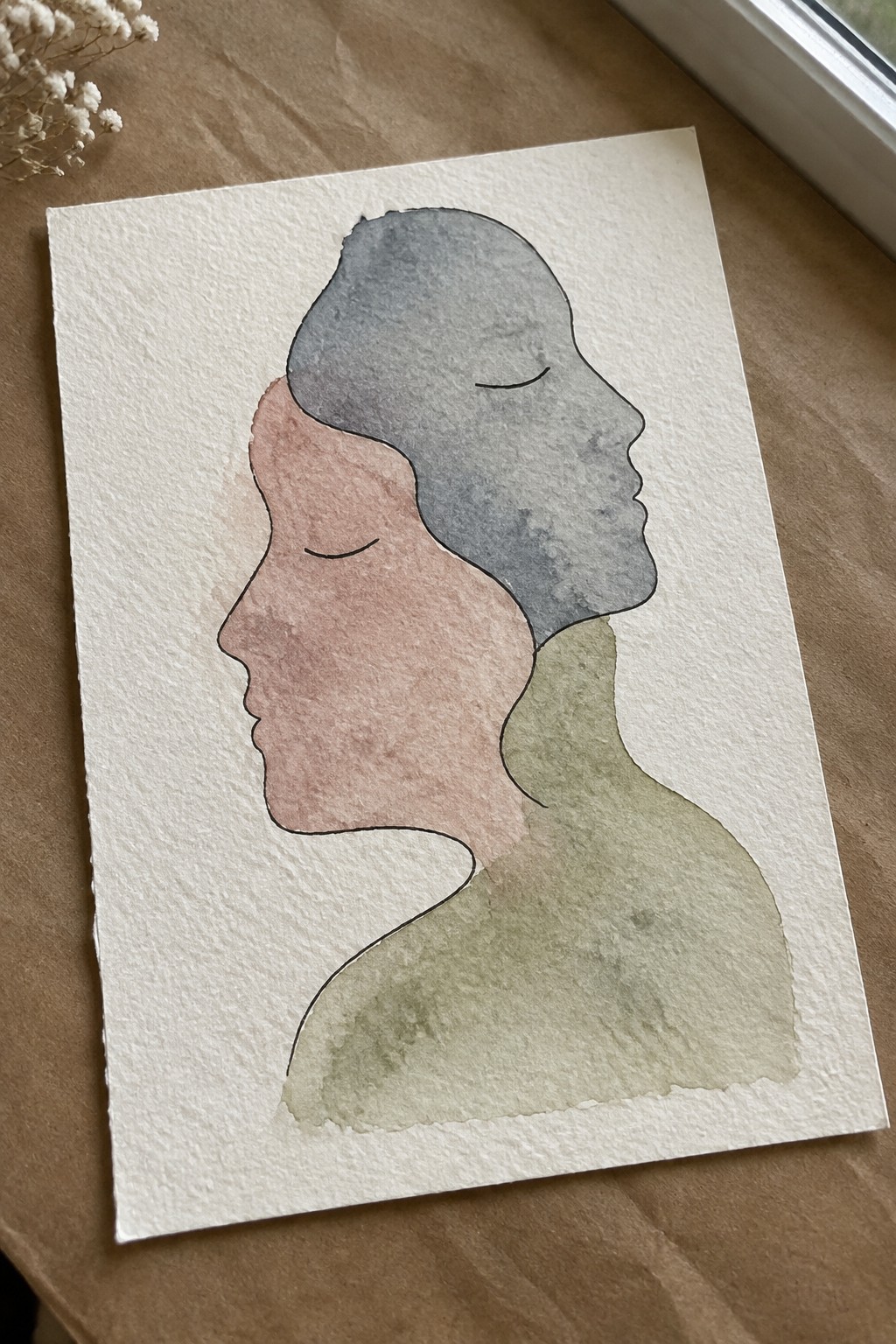
This painting idea centers on two profile silhouettes that interlock at the neck and shoulder to form a single connected shape. The approach uses clean black outlines filled with soft watercolor washes in warm pink, cool gray, and muted green. The composition stays effective because the overlapping placement creates depth and unity while the closed eyes and simple lines keep the focus on form rather than detail.
What makes this idea useful is how the shared lower section lets you practice color blending without needing complex anatomy. You could swap the pink and gray for any two tones that suit your space or shrink the whole thing to fit a small canvas. For wall pieces, the bold outlines help the image read clearly from across a room. The same layout works just as well if you simplify it to one shared color or add a third profile for a different variation.
Overlapping Couple Profiles in Flat Color Blocks

This idea builds a connected composition from two profile silhouettes that overlap at the head and shoulder areas. The design breaks the figures into solid color sections divided by straight lines, with speckled texture added only in select overlap zones. It works as abstract decorative art where the interlocking shapes and limited palette keep the focus on form rather than detail.
The composition does a lot of the work here by letting the silhouettes share edges and create natural balance. You can swap the coral and teal tones for any two-color combo or drop the speckle texture entirely for a faster version. This would be easy to turn into a square canvas piece or a set of smaller studies since the strong outlines stay readable at different sizes.
Night and Day Silhouettes Interlocking Around a Crescent Moon

Two side-view profiles face each other with their forms meeting to shape a white crescent moon in the center. One side uses a deep blue palette dotted with gold stars while the other uses warm rose and peach tones with similar gold accents. The clean negative space between the figures keeps the composition balanced and readable even with the textured brushwork around the edges.
What makes this idea useful is the clear split between cool and warm color zones, which helps the moon stand out without extra detail. You can adapt the layout by changing the gold marks to different small shapes or shifting the color split to suit a specific room palette. For wall pieces, the interlocking silhouette format stays effective at smaller sizes because the main shapes stay bold and simple.
Couple Silhouettes Filled with Flowers
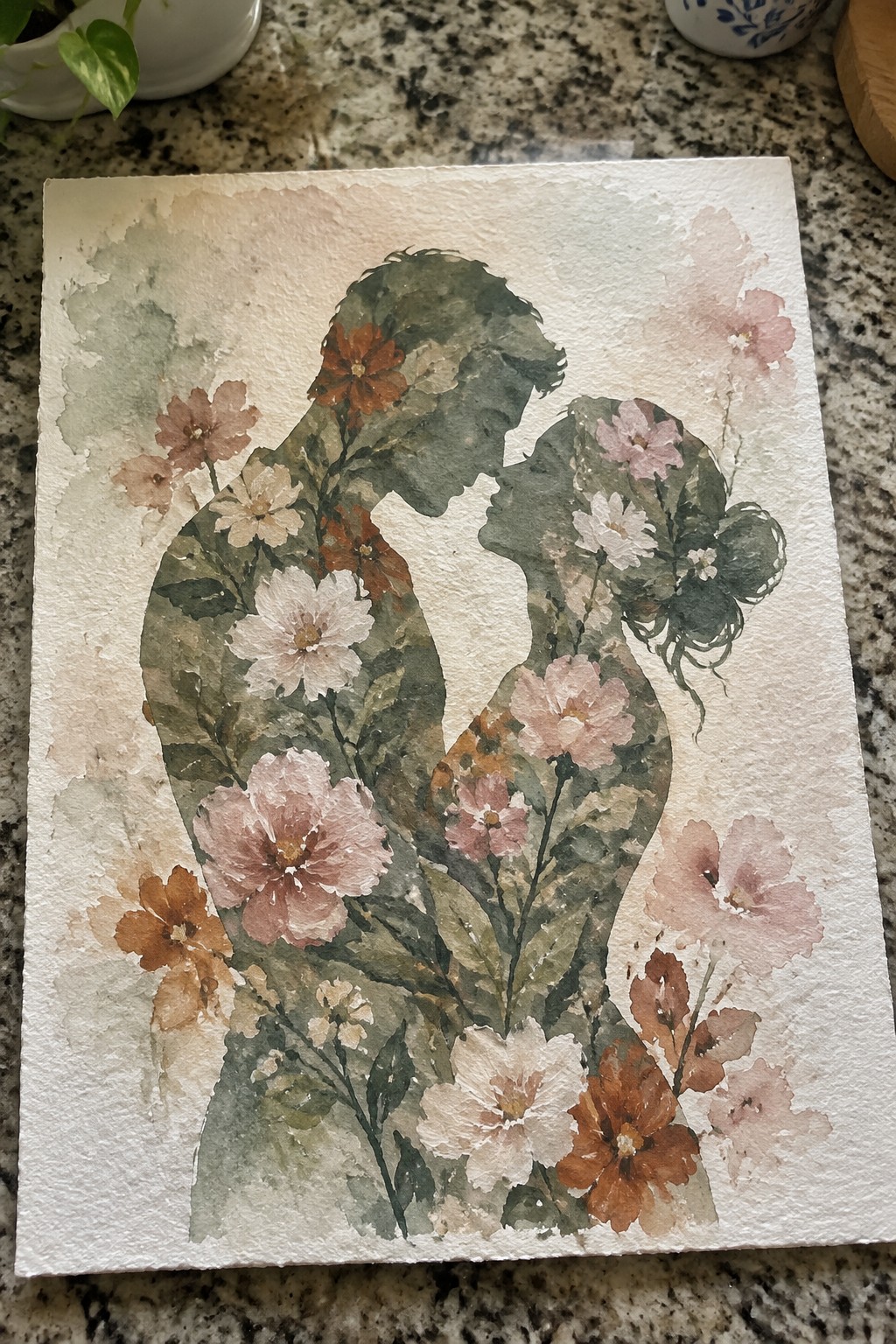
This painting idea places two facing profiles close together so the space between them forms a clear separation while flowers and leaves fill the interior of each shape. The floral elements vary in size and color to create movement inside the outlines without needing extra details outside them. It fits the decorative floral category where botanical subjects carry the main visual weight.
The composition does a lot of the work here by using the negative space between the heads as a built-in focal point. You could swap the flower types for ones that match a wedding palette or simplify the blooms to larger shapes for faster painting. For wall art this approach works because the strong outlines hold up even when the interior colors stay soft.
Interlocked Embrace Using Bold Color Blocks and Thick Texture
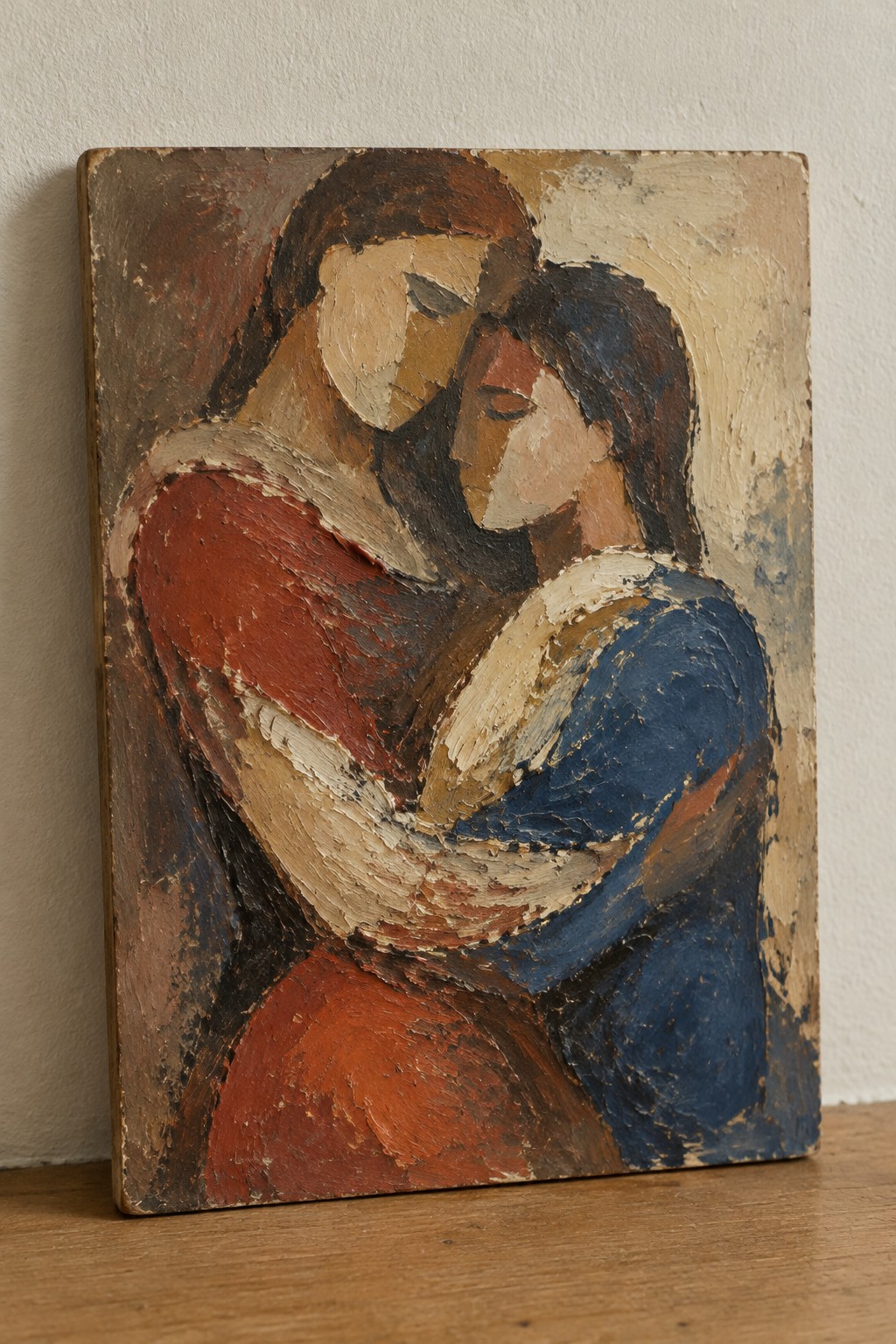
The core idea is an abstract couple painting where two figures merge into one shape through overlapping silhouettes and simplified planes. Red and blue dominate the clothing areas while neutral earth tones define the heads, shoulders, and connecting spaces. Heavy impasto brushwork creates the forms and holds the composition together without relying on outlines or fine detail.
What makes this idea useful is how the tight interlocking layout automatically creates the sense of closeness. The strong color contrast between the two figures makes the subject easy to read even at small sizes, which works well for practice pieces or quick studies. You could adapt the same structure with different color pairs or reduce the texture for a flatter, more graphic version on paper.
Nested Generations in Interlocking Silhouettes
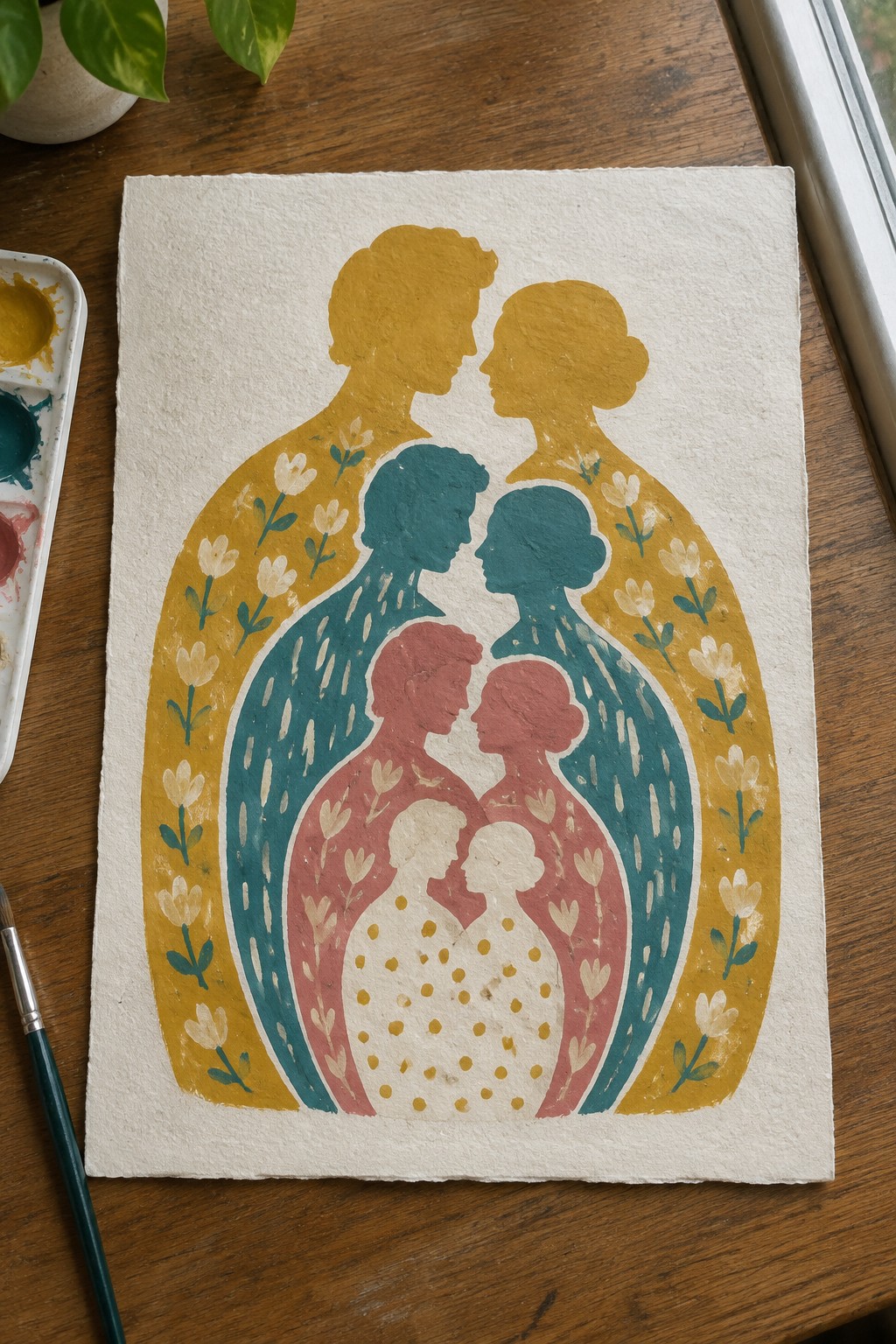
Multiple generations of couples are shown as nested silhouettes that fit inside one another to form one larger outline. Each layer uses a different color block with its own set of floral vines and dots to separate the pairs while keeping the profiles aligned. The approach works because the repeated shapes build depth through simple layering rather than added details or shading.
The composition does a lot of the work here since the nesting structure creates visual interest on its own. You could adapt it by reducing the number of layers for a quicker version or by swapping the colors to match a specific room. This kind of painting idea works especially well for family wall pieces or gifts because the bold outlines stay readable even when printed small.
Dancing Couple Silhouettes Split by Warm and Cool Colors
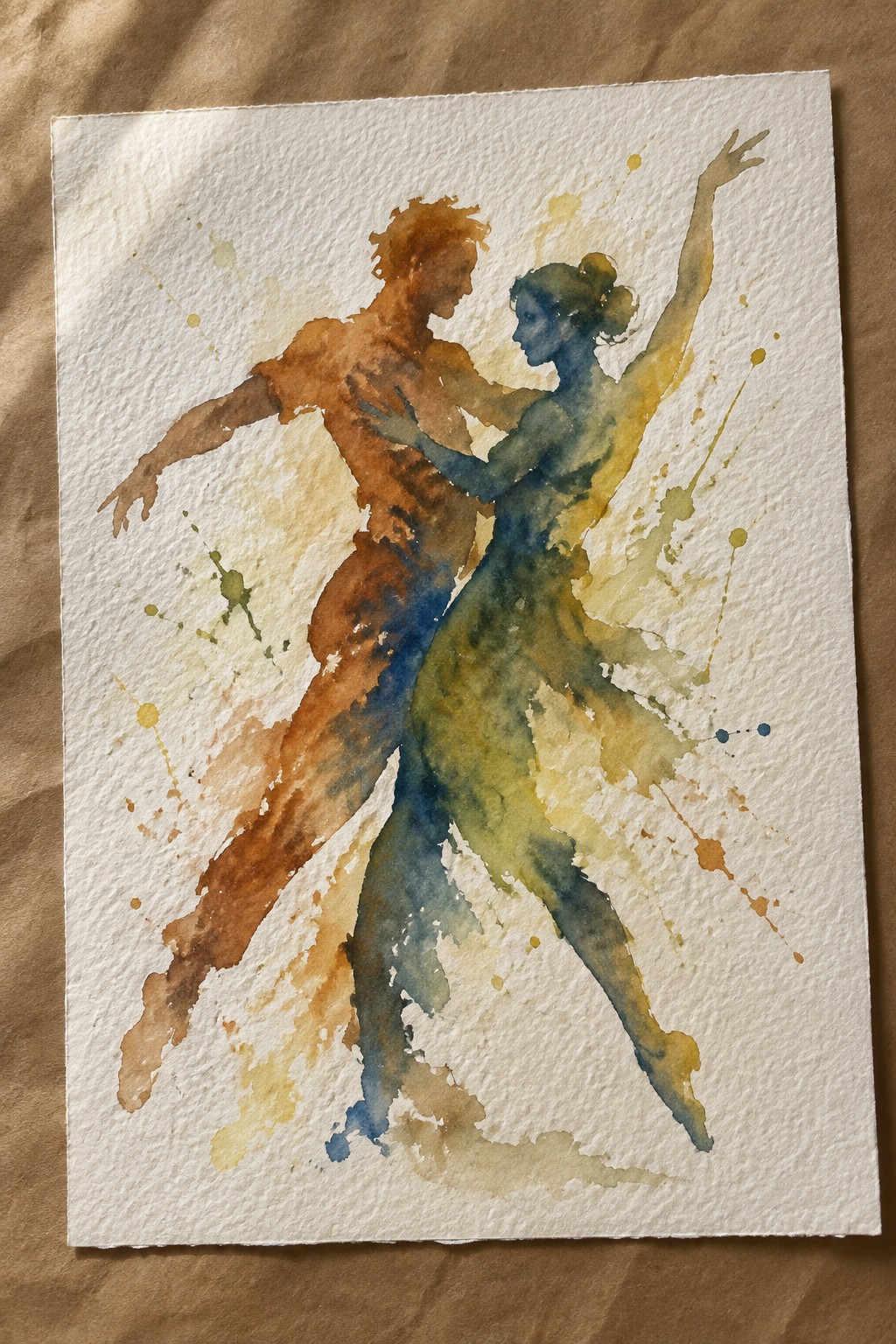
This painting idea centers on two figures locked in a dance pose, with one silhouette painted in warm brown and orange washes and the other in cool blue and green tones so they overlap without losing definition. The loose, fluid shapes and scattered splatters keep the focus on the interlocking forms rather than fine details, letting the contrast between the two color families do the work of separating the bodies. The approach fits abstract figure painting where the subject stays recognizable through pose and color temperature instead of line work.
The composition does a lot of the work here because the strong diagonal lines and overlapping center make the idea readable even if you simplify the edges or reduce the splatter. You can adapt the same split-palette method to other dance poses or crop it tighter for smaller formats like cards or journal pages. For practice, the idea works well because it lets you focus on shape and color mixing without needing to render faces or clothing.
Interlocking Profiles on Split Color Fields

This painting idea uses two opposing profiles that share space through overlapping shapes and negative space rather than traditional outlines. The woman’s bob and the man’s hairstyle create distinct silhouettes that connect visually through the beige area between them, while the background splits into green and orange sections to frame each figure. The lower shapes in terracotta and olive add weight and keep the composition grounded without extra detail.
The composition does a lot of the work here because the strong shapes and limited color palette make it straightforward to sketch and paint. You could easily swap the green and orange for colors that match your room or try the same layout at a smaller scale for a diptych. For practice, this kind of subject works well since the flat areas let you focus on clean edges and simple layering rather than blending or fine details.
Interlocking Silhouettes Built from Bold Color Blocks
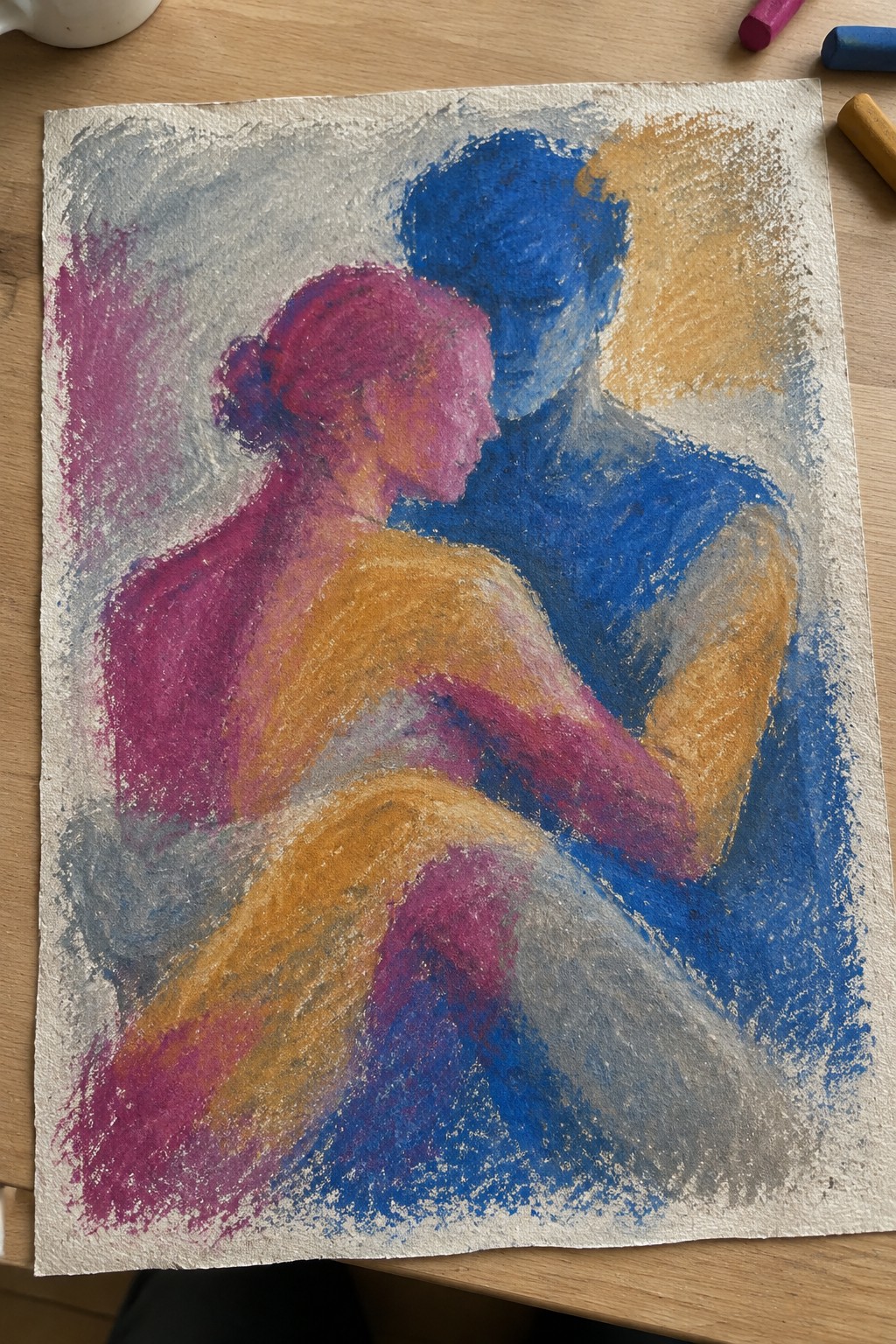
An abstract couple painting can be built around two simplified figures whose shapes overlap so the shared edges become the main point of interest. The idea here is to let one form sit partially inside the other, using a few strong colors that blend where the bodies meet rather than keeping every outline separate. This approach turns the embrace itself into the composition instead of relying on facial details or fine lines.
What makes this idea useful is how the overlapping layout does most of the work, so you only need to decide where the colors will mix and where they stay separate. You can change the blue and magenta to any two hues that contrast well, or crop the same arrangement into a square format for easier framing. For practice, try the same pose on a mid-tone sheet and limit yourself to three colors plus white so the silhouettes stay readable even when the blending gets loose.
Interlocking Profiles Filled with Botanical Motifs
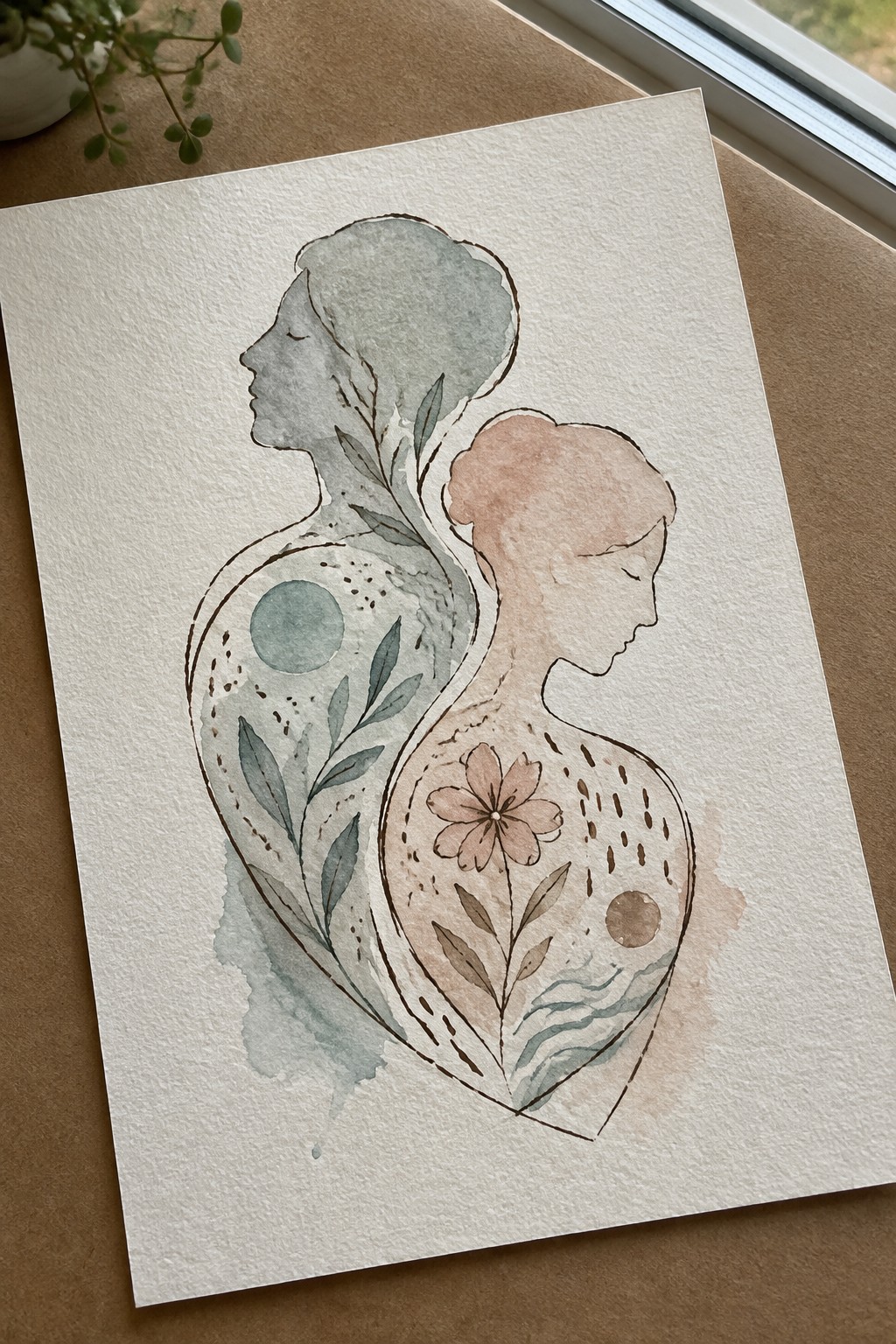
This painting idea centers on two profile silhouettes placed back to back so their outlines merge into one connected shape. One side uses a muted green palette with scattered leaves and a simple circle, while the other uses soft peach tones with a single flower, smaller dots, and a wave pattern inside the form. The approach works because the shared outer contour and limited internal elements create balance without needing complex layering or shading.
The composition does a lot of the work here by letting the joined silhouettes set the structure while the botanical details add variety. You can swap the flower and leaves for other simple motifs or shift the two color palettes to fit different decor styles. This format stays effective at smaller sizes and gives a clear template for trying similar couple silhouettes with your own choice of fill elements.
Interlocking Adult and Child Profiles on a Split Background

The core idea here is a pair of facing silhouettes, one clearly larger than the other, that connect through overlapping shapes and shared negative space. A hard vertical divide runs down the canvas, with solid black on the left side and gold on the right, so the figures read as both separate and joined at once. The limited palette and flat shapes keep the focus on the relationship between the two profiles rather than on detail or shading.
The composition does a lot of the work here because the silhouettes carry the subject without any extra elements. You can swap the gold for copper, teal, or even a deep red depending on the room, and the same layout works at smaller sizes for cards or larger ones for statement pieces. This approach stays approachable for practice since it relies mainly on clean edges and two colors, and the high contrast makes the finished piece stand out in a grid of softer paintings on Pinterest.
Heart Shape Built From Clustered Figures
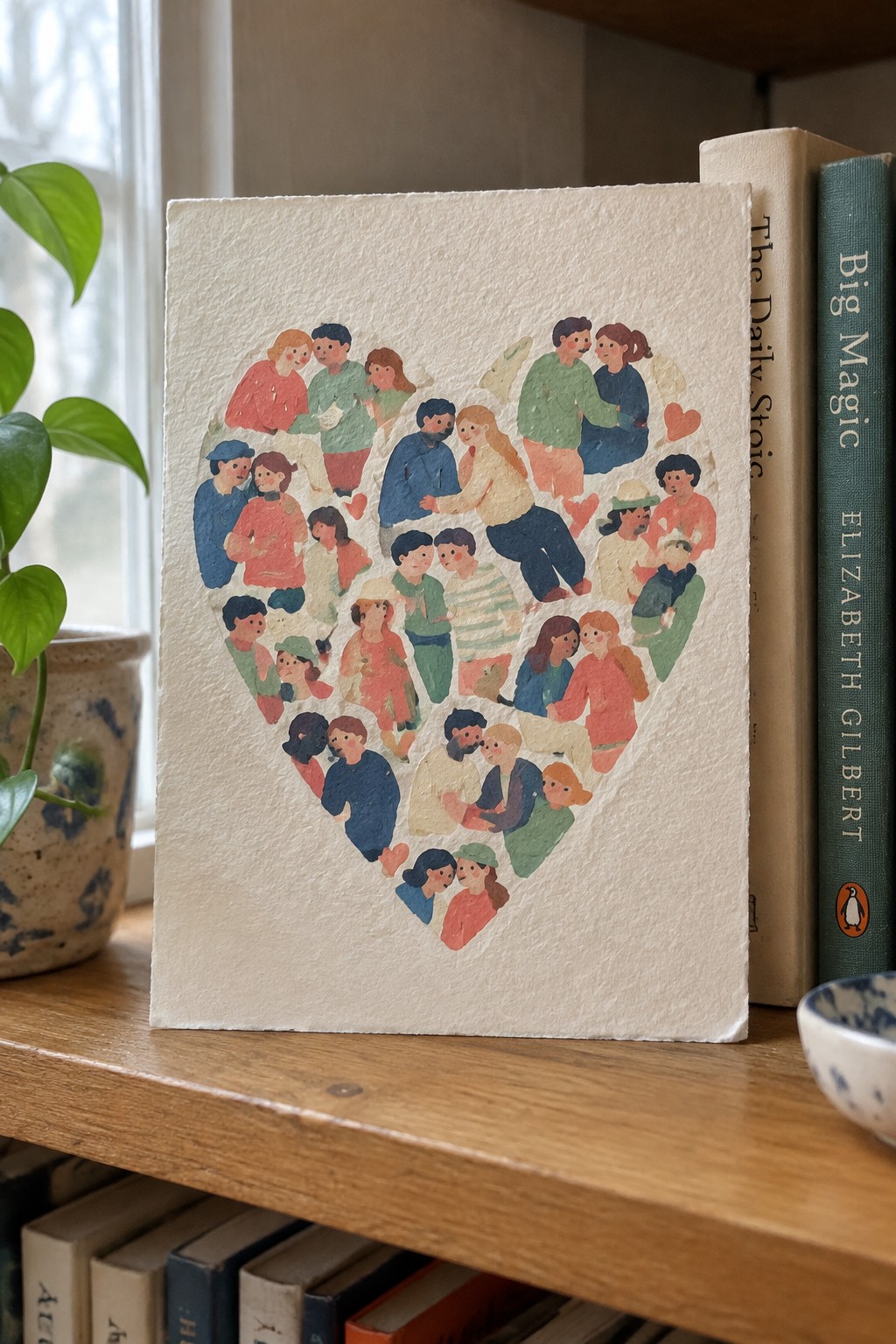
A heart formed by packing dozens of small painted couples into one tight arrangement creates a single clear silhouette through repetition. The idea relies on varied poses and clothing colors to build texture inside the shape instead of relying on a hard outline or background fill. This turns the heart into a busy, readable form that still reads as one unit from a distance.
What makes this idea useful is how the small scale lets you practice figure work without overthinking proportions or faces. You can change the outer shape to a circle or square, swap the color palette to match a room, or reduce the number of figures if the full version feels crowded. For wall art, the packed layout gives the piece presence even on a modest canvas size, and the same concept works as a greeting card or larger canvas by keeping the same tight spacing between figures.
Interlocking Profiles Through Layered Color Blocks
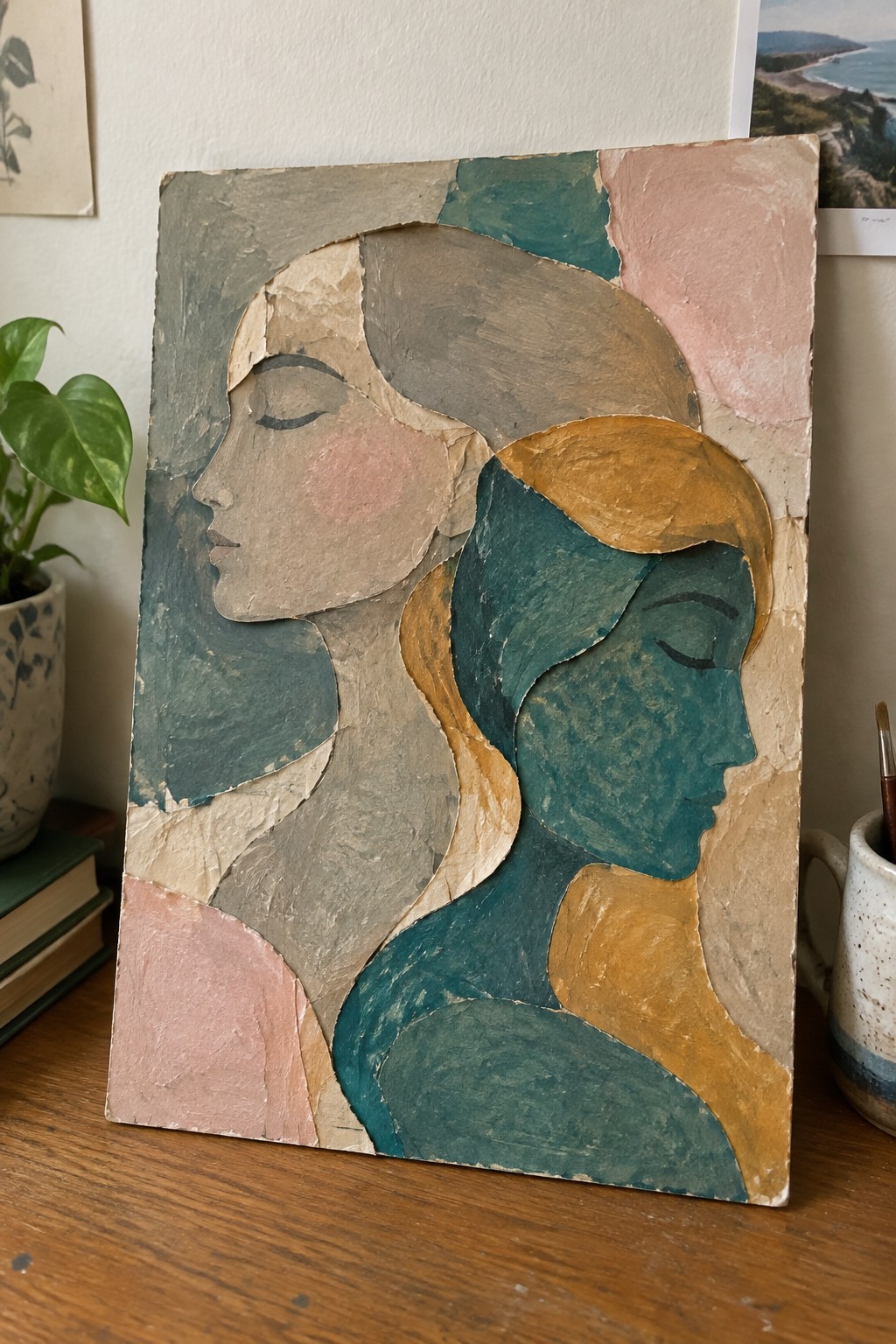
This painting idea centers on two facing profiles that merge through overlapping shapes rather than separate outlines. The concept works as an abstract couple piece because the shared edges and cut-in forms create a single connected shape instead of two distinct figures. A limited palette of teal, beige, pink, and ochre keeps the focus on the silhouette arrangement while the textured layers add depth without extra detail work.
What makes this idea useful is how easily the profiles can be resized or flipped to fit different canvas proportions. The overlapping sections do most of the compositional work, so beginners can focus on shape placement instead of precise drawing. The same approach adapts well to smaller studies or larger wall pieces since the bold blocks of color read clearly from a distance. For practice, trying the same interlocking layout with different color pairings helps test how value contrast affects the final effect.
Frequently Asked Questions
What is the meaning behind the interlocking silhouettes in these abstract couple paintings? Interlocking silhouettes often symbolize deep emotional connections, unity, and the blending of two lives into one. Viewers can interpret them as representations of support during challenges or the harmony found in relationships. To explore this further, consider how the shapes overlap to suggest balance and shared experiences rather than separation.
Which materials work best for creating or reproducing these abstract artworks? Acrylic paints on canvas provide vibrant colors and smooth blending for silhouettes, while mixed media with ink or charcoal adds texture to the interlocking forms. For prints, opt for high-quality archival paper or canvas to maintain detail. Experiment with layering techniques at home using stencils for the silhouettes to achieve a professional look without specialized tools.
How can I select and display one of these paintings to suit my home decor? Choose pieces with color schemes that match your room’s palette, such as soft neutrals for calm spaces or bold hues for energy. Hang them at eye level in living areas or bedrooms to draw attention to the couple theme. Pair with minimal furniture to let the abstract design stand out, and use good lighting to highlight the interlocking elements without glare.
Who are some artists known for this style of abstract couple paintings? Artists like those exploring modern abstract expressionism often focus on silhouettes to convey intimacy, with influences from cubism or minimalism. Search galleries or online platforms for creators specializing in relationship themes. Many offer limited editions, so reviewing their portfolios helps identify consistent styles across multiple works in a collection like this.
What steps should I follow to care for these paintings over time? Keep them away from direct sunlight and humidity to prevent fading or warping, and dust gently with a soft cloth. For originals, consult a professional framer for UV-protective glass. If storing, use acid-free materials and avoid stacking to protect the silhouettes. Regular checks ensure the artwork remains vibrant for years.
