

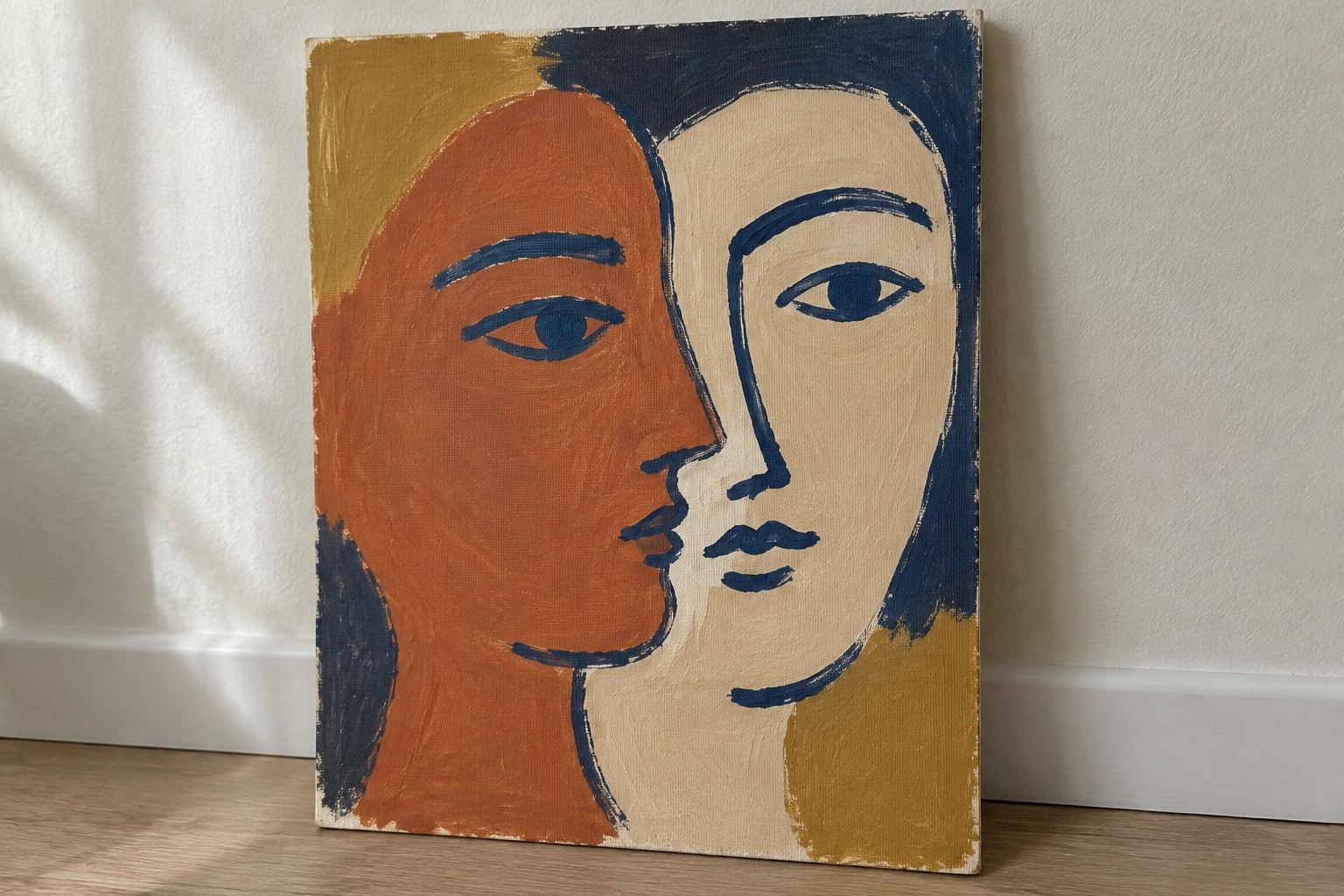
I have always liked the way some artists strip down a face or figure to just a few shapes.
It makes the whole thing feel more open and less about getting every detail right.
Lately I have been looking at different examples of this in abstract portraits.
These kinds of paintings often use blocks of color and simple lines to suggest a person rather than show one exactly.
I put together some of my favorites here to show how that approach can still feel very human.
Two Facing Profiles Divided by Color
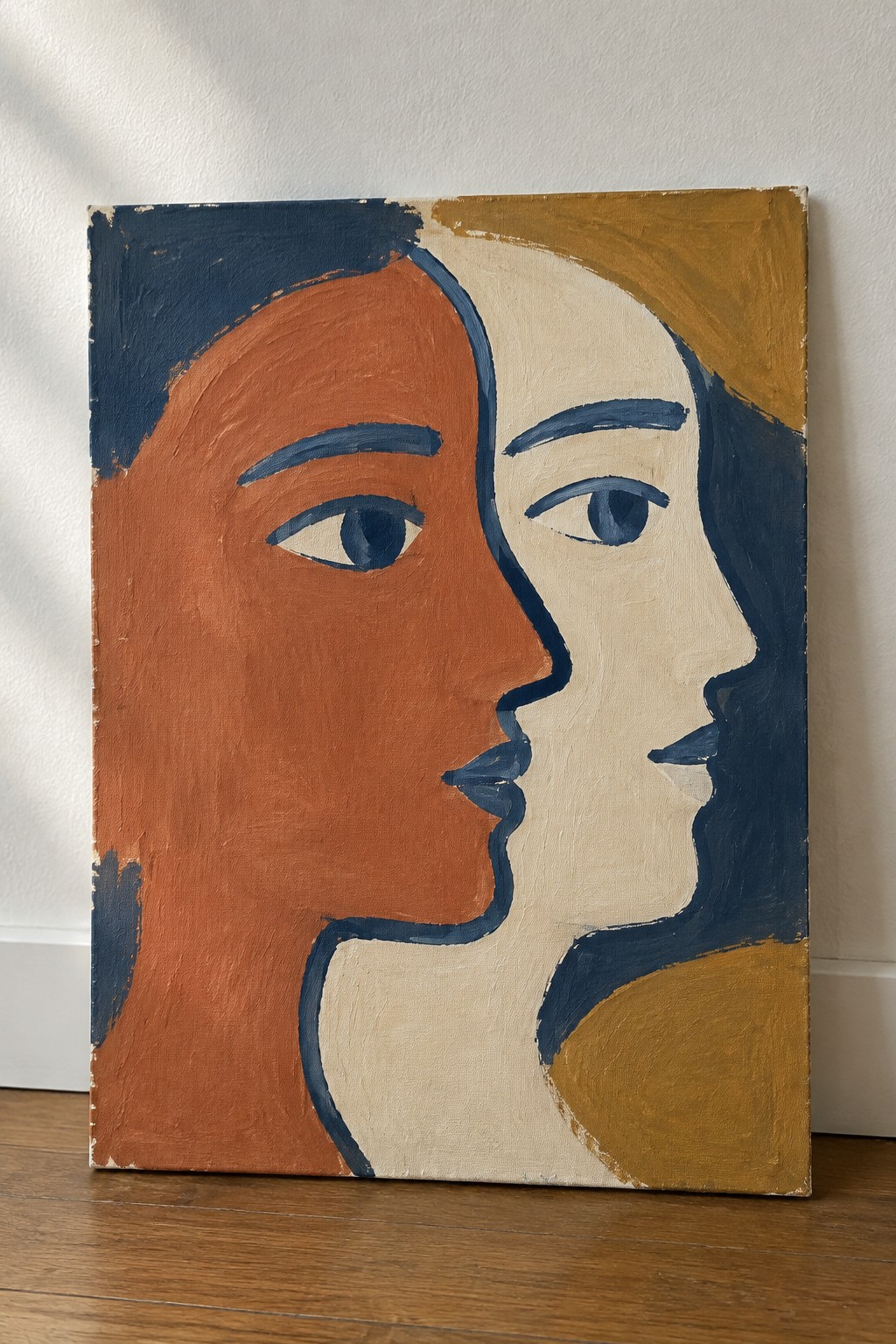
Pairing two simplified profile faces creates a strong focal point through direct opposition and color contrast. The idea centers on using large flat areas of terracotta and cream to define each figure while a single blue line marks the division between them. This approach fits the abstract portrait category because it reduces the human form to essential shapes and lets the meeting point of the two faces carry the composition.
The composition does a lot of the work here by letting the profiles touch and mirror each other without extra detail. You could swap the terracotta and cream for any two colors that suit your space or try the same layout with different skin tones for a more personal version. For practice this subject works well because the big shapes train you to work loosely while the vertical split keeps the layout balanced and easy to follow.
Minimalist Abstract Portrait Built from Soft Color Washes
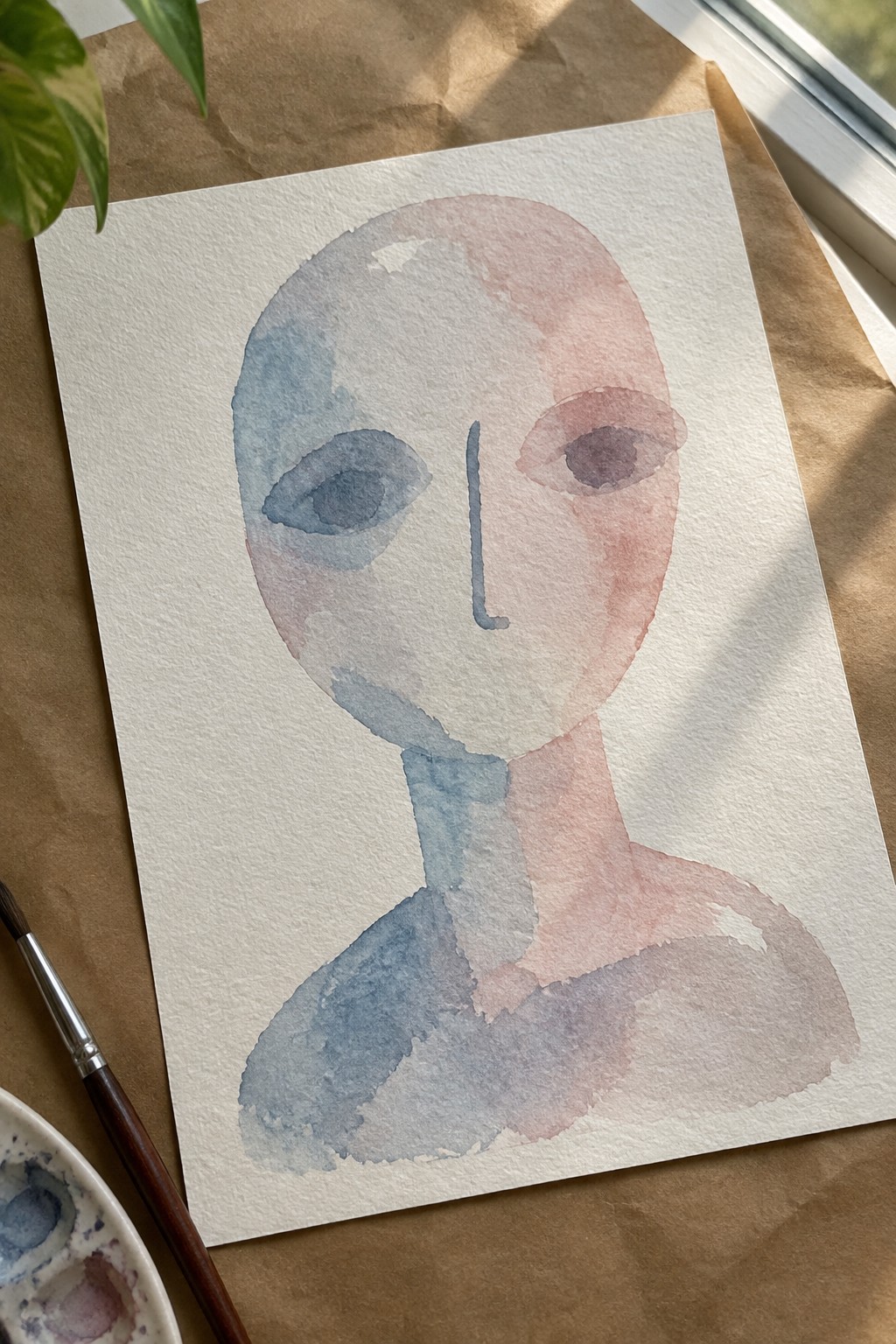
This painting idea uses broad overlapping washes to define a human head and shoulders without relying on fine lines or realistic features. The face emerges from simple blue and pink color fields that meet at the center, with just enough shape to suggest eyes and a nose. It belongs to the abstract portrait category where the goal is to capture presence through reduced forms and blended tones rather than detail.
The composition does a lot of the work here because the soft edges and limited facial marks make the whole thing feel balanced without much effort. This approach is useful for practice because it lets you focus on color mixing and wash control instead of drawing accuracy. You could easily adapt it by switching to different color pairs or stretching the same idea into a series with varied neck and shoulder shapes. For wall pieces, the quiet color palette keeps it versatile enough to fit most rooms.
Bold Shapes and Patterned Accents in an Abstract Portrait
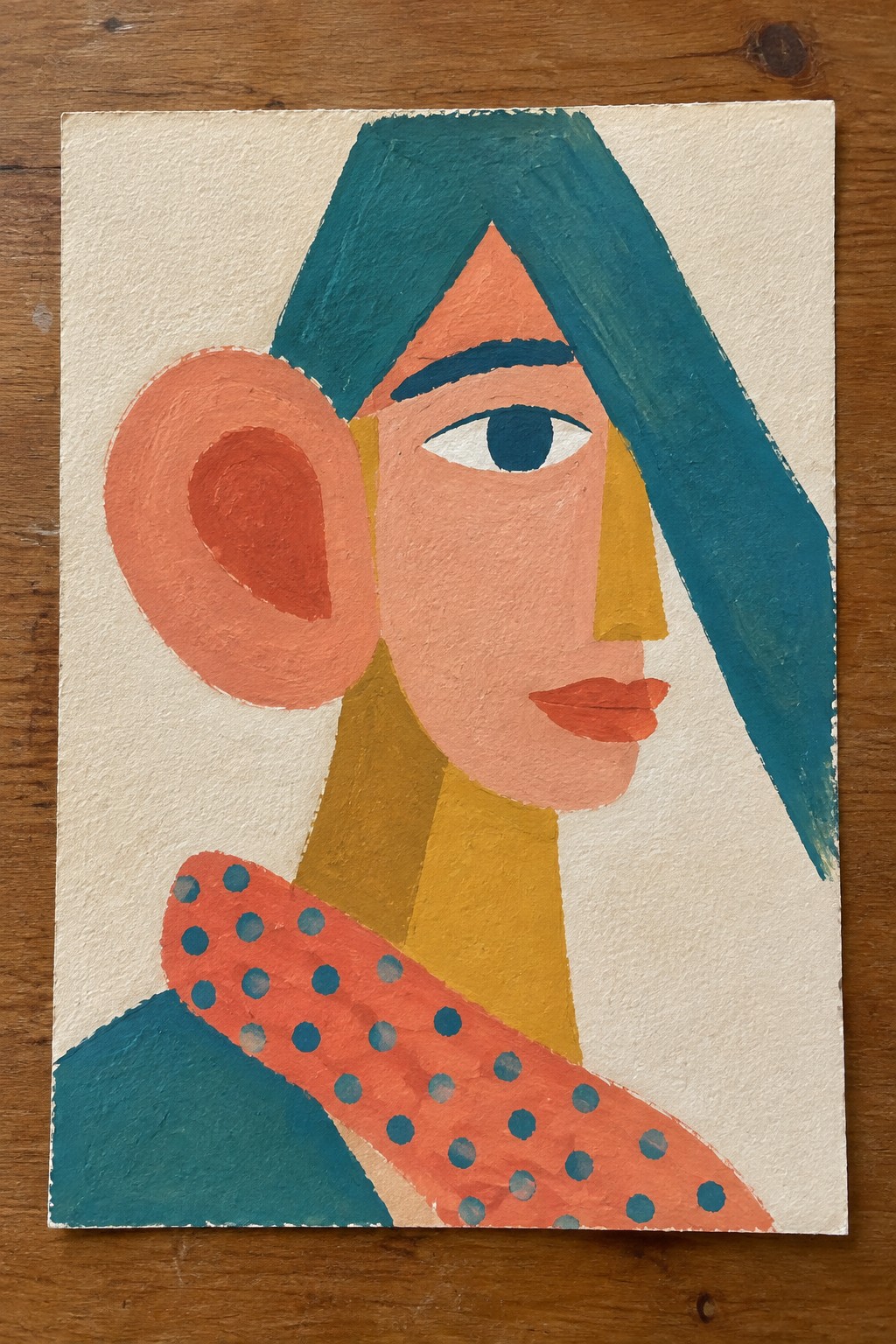
Breaking a face into large flat color areas lets you build a portrait through shape and contrast instead of small details. The teal hair mass, orange face planes, and yellow neck create a strong structure that holds together even with minimal lines. Placing a dotted scarf across the lower section adds movement and keeps the eye traveling through the composition.
What makes this idea useful is how the big shapes remove the pressure of realistic proportions. You can change the color palette completely or swap the scarf pattern without losing the overall effect. For practice, this kind of subject works well when you want to try abstraction while still painting something recognizable. The simple layout also makes it easy to scale up or down for different canvas sizes.
Building Portraits from Overlapping Color Blocks
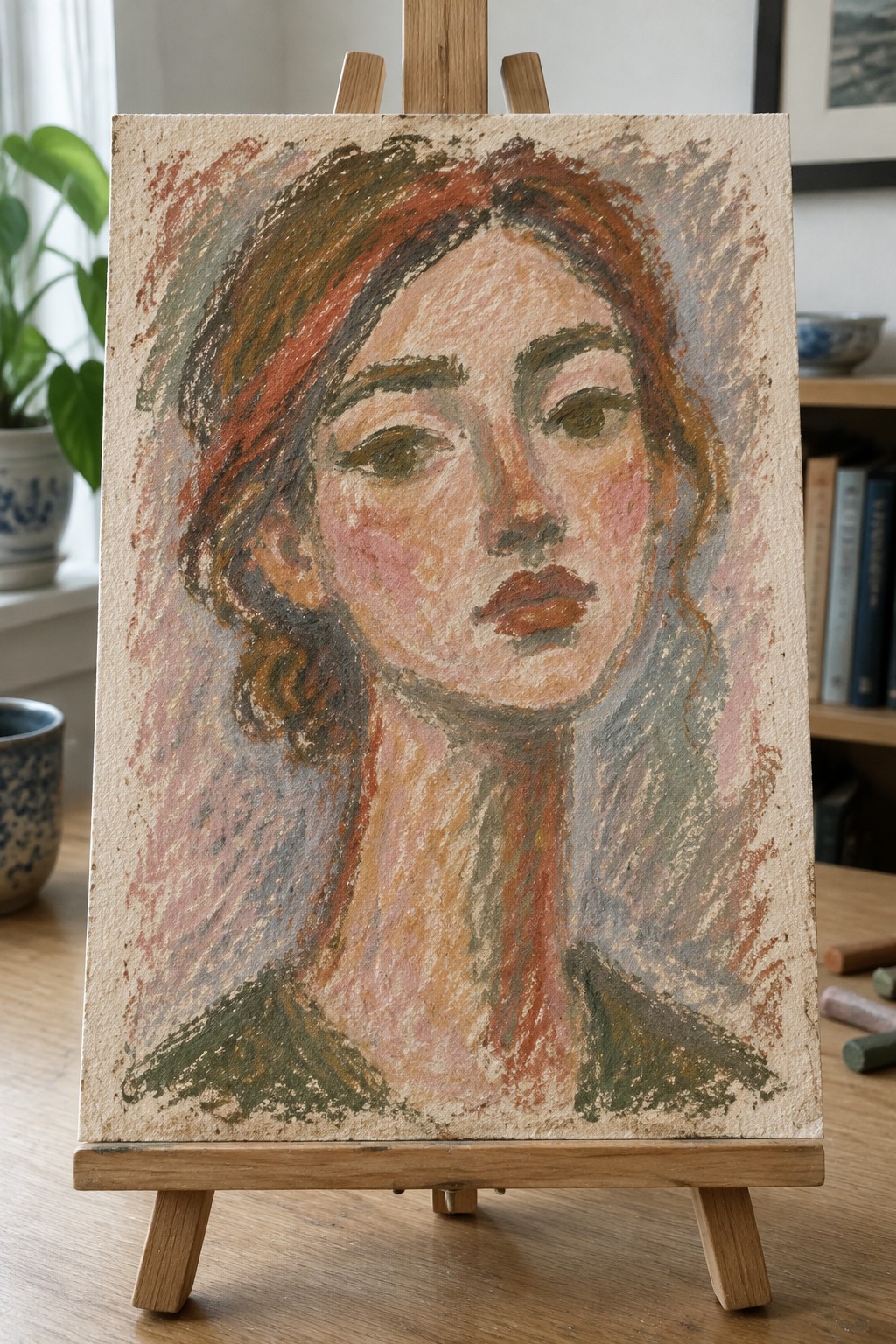
Portraits like this rely on broad, directional strokes that let features form through color overlap instead of clean outlines. The artist blocks in hair and clothing with mixed earth tones while keeping skin areas warmer and more blended, so the face reads clearly even though edges stay loose. This method keeps the whole surface active because every mark remains visible.
What makes this idea useful is how easily you can adjust proportions as you go without starting over. The limited palette of reds, greens, and browns makes color decisions simpler while still giving enough contrast for the features to hold. For practice this approach rewards quick layering over precise drawing, and the same idea scales well to smaller canvases if you want something quick for a wall grouping.
Color Blocking a Face with Simple Planes
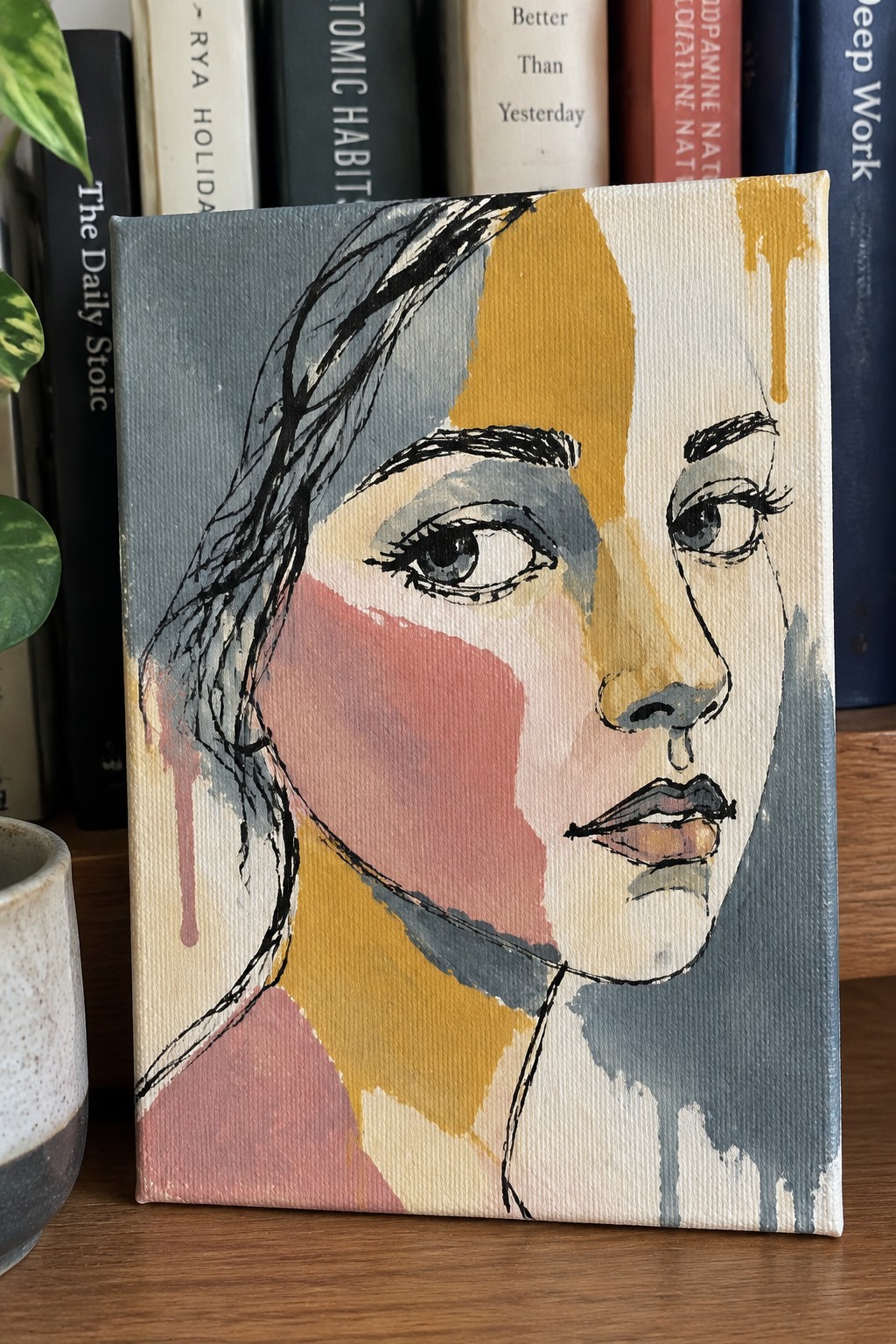
This painting idea centers on breaking a face into large flat color areas instead of blending or shading for realism. The composition uses a few strong blocks of yellow, pink, and muted gray to define the features, with black line work added on top to sharpen the eyes, nose, and mouth. The approach fits squarely into modern abstract portrait work because it keeps the human form recognizable while stripping away most detail.
What makes this idea useful is how the big shapes do most of the work, so you can finish a study quickly without getting stuck on proportions. You can swap the colors for a warmer or cooler palette or shrink the format to practice the same layout on paper first. The loose drips give an easy way to add movement if the flat blocks start to feel too static. For wall pieces this kind of portrait stands out on Pinterest because the high contrast reads clearly even in small thumbnails.
Paired Portraits Built from Flat Color Washes
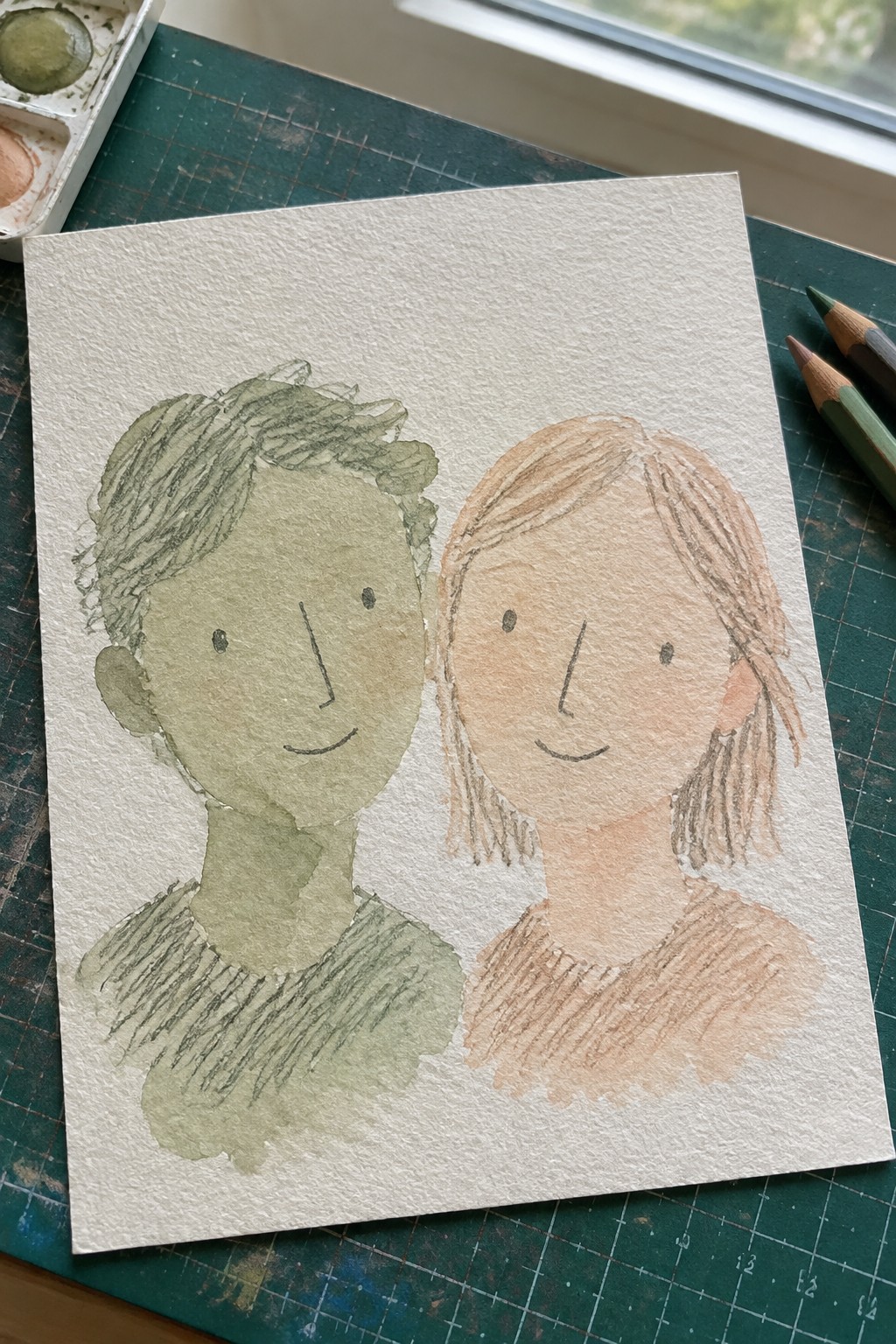
This painting idea centers on two side-by-side figures rendered through broad, single-color washes for the faces and simple directional strokes to suggest hair and clothing. The approach relies on minimal facial details—small dots and short lines—to define expression while letting the color blocks and hatching do most of the visual work. It fits squarely into modern abstract portraiture where the focus stays on shape, placement, and restrained color rather than realistic rendering.
The composition does a lot of the work here because the two heads sit at matching heights with just enough space between them to feel balanced without crowding. You can easily adapt the same layout by changing the two color families to match different skin tones or clothing, or by shrinking the whole thing to fit a smaller paper size for a diptych-style gift. For practice, this kind of subject helps you work on even washes and edge control without needing complex blending or many layers.
Large Color Fields for Simplified Portraits
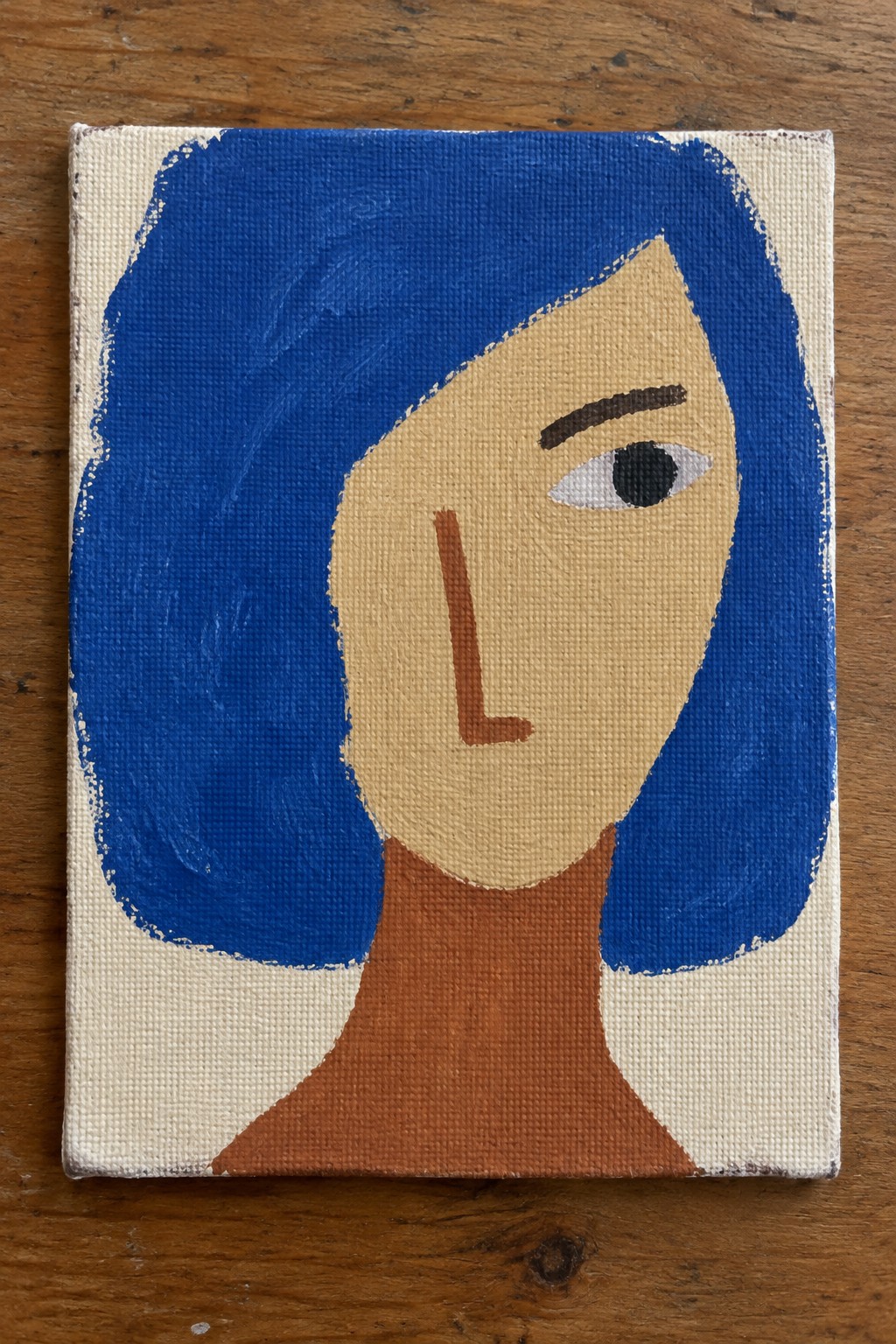
This painting idea reduces a portrait to a few strong shapes and a restricted color set. The head and hair are treated as flat planes that meet at clean edges, with only a narrow brown strip for the neck and a couple of quick marks for the eye and nose. The result is a clear, graphic portrait that relies on shape contrast rather than line work or shading.
The composition does a lot of the work here because the large blue and beige areas already create balance. You can adapt the same idea by changing the hair color or swapping the skin tone while keeping the same minimal features. For practice this works well because it trains you to place shapes first before adding any detail, and the small canvas size makes it quick to test different color combinations.
Crown Portrait with Color Blocked Face
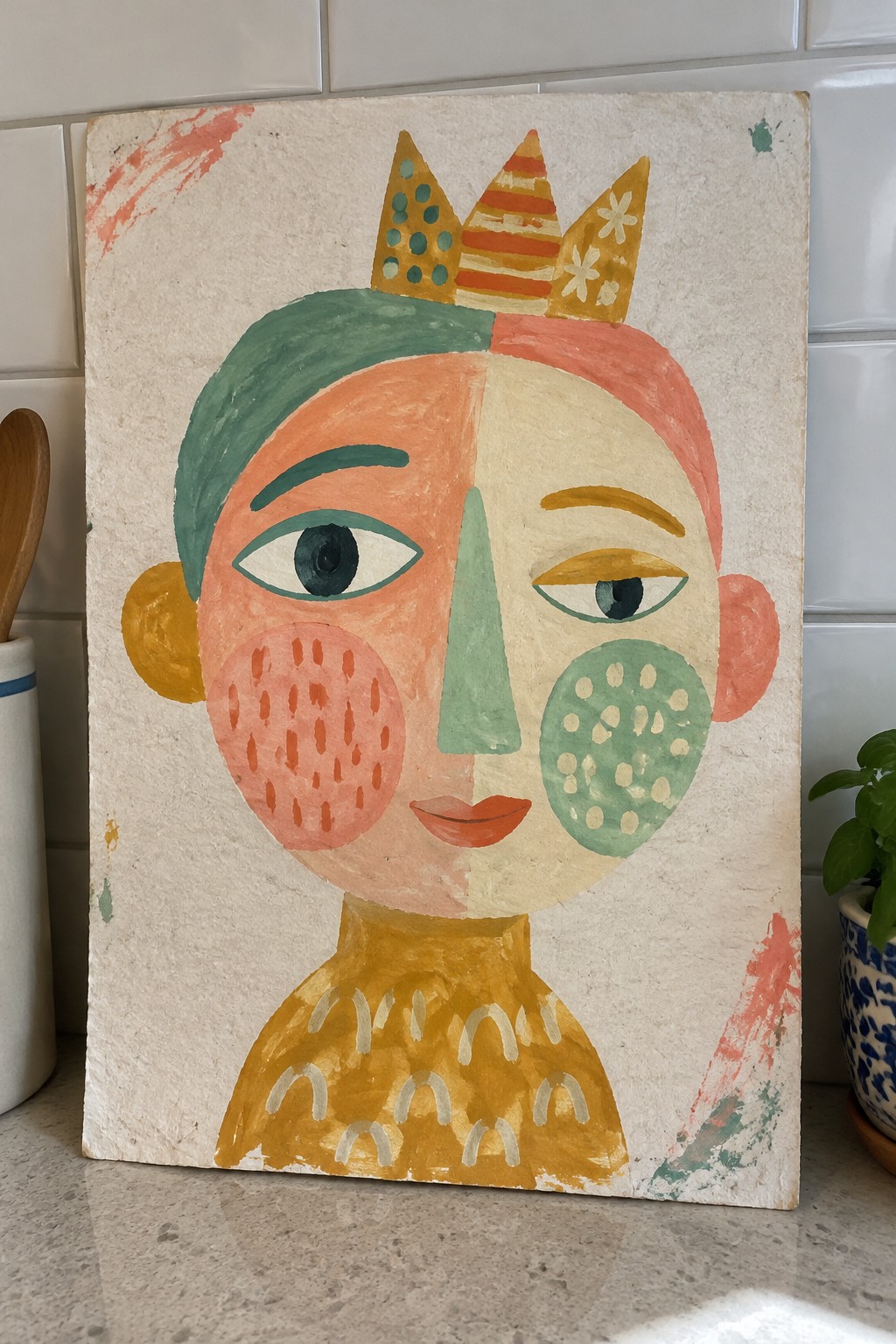
An abstract portrait built around a split-face color block and a patterned crown turns a simple head shape into a strong focal point. The idea relies on dividing the face into flat color sections, adding a three-part crown with simple repeats, and letting the textured background add subtle contrast. This approach fits the modern abstract portrait category where simplified human forms carry the composition through shape and color rather than detail.
What makes this idea useful is how the color split organizes the face so beginners can focus on placement instead of blending. You can change the crown patterns or swap the face colors to fit any room palette while keeping the same layout. For wall art the bold shapes hold up well at medium sizes and the textured paper keeps the look casual. The same structure works if you replace the crown with other headwear or simplify the patterns further for quicker studies.
Abstract Portrait Built from Broad Color Planes
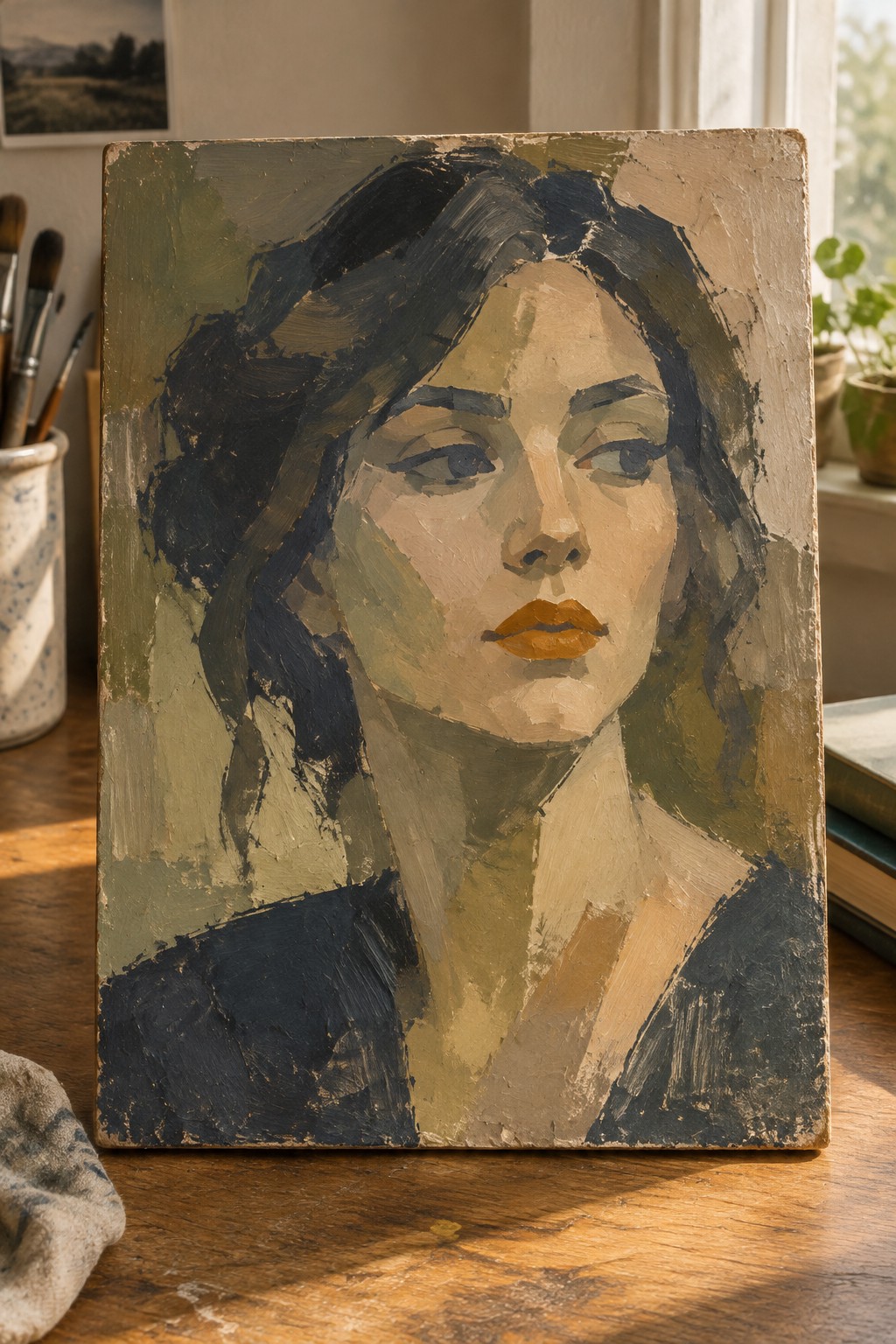
This painting idea centers on a female face reduced to large, directional brushstrokes that define the planes of the forehead, cheeks, and jaw while keeping the features simple. The composition places the head slightly off-center with the gaze turned, letting the single orange mouth stand out against the muted greens, browns, and deep blues of the hair and clothing. It belongs to modern abstract portraiture that uses shape, value, and limited color instead of fine detail or realism.
What makes this idea useful is how the broad strokes and restricted palette remove the pressure to render every feature accurately. You can adapt it easily by swapping the lip color for another strong accent or cropping the canvas tighter around the eyes and mouth for a different mood. For practice or wall pieces, the approach works well because the visible texture and simple shapes make the result look intentional even when the execution stays loose.
Stacked Single-Hue Portrait Studies
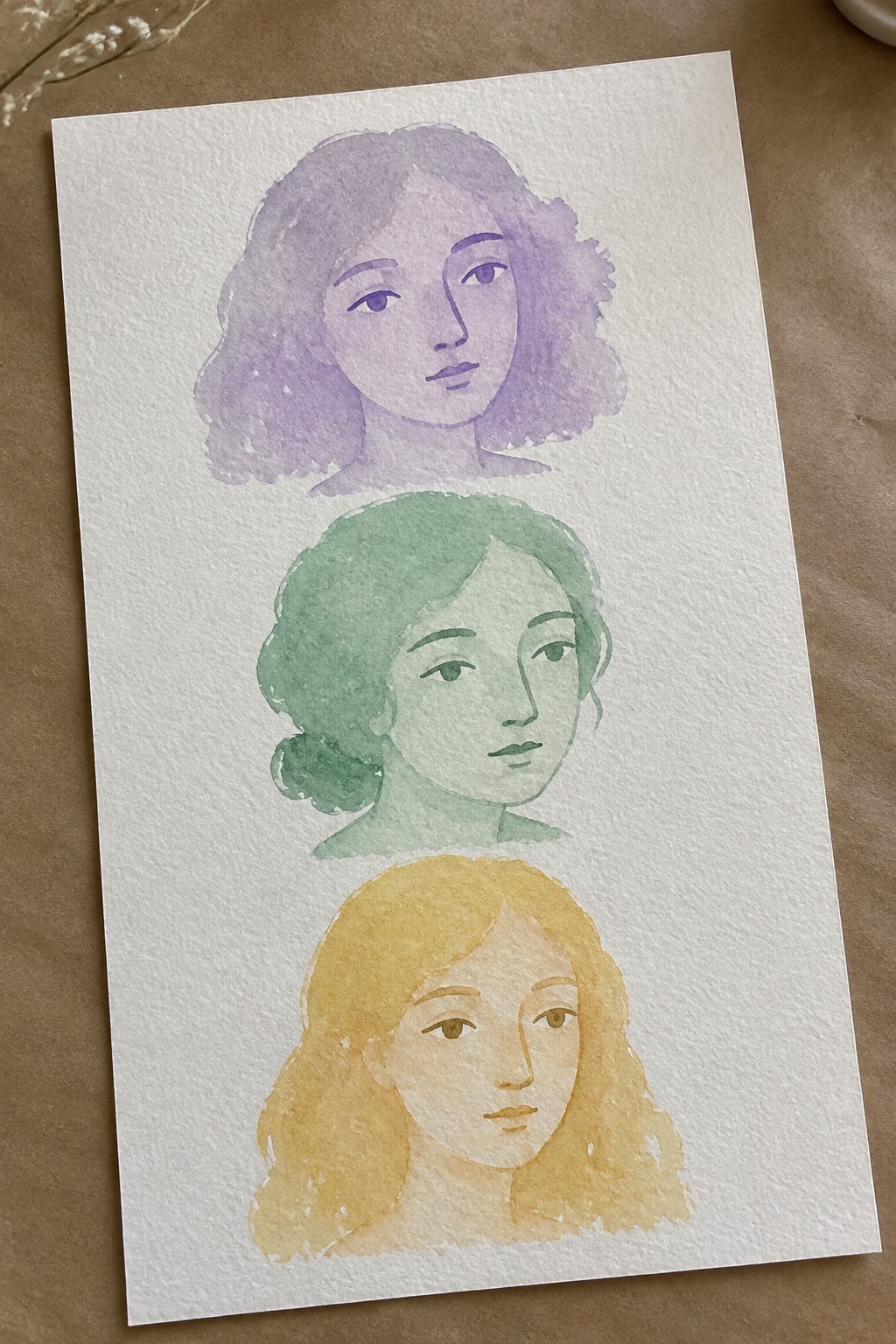
This painting idea uses simplified female faces rendered in loose watercolor washes, with each portrait limited to one color family throughout. The approach relies on soft shapes for hair and minimal facial details to keep the focus on form rather than precision. Stacking three portraits vertically on the same sheet creates a balanced layout that lets the color differences stand out clearly.
The composition does a lot of the work here by isolating each face while keeping the overall arrangement uniform. You could adapt it by changing the colors, varying the number of faces, or shifting to a horizontal row instead. For practice, this kind of subject works well because it removes the need for complex backgrounds or mixed palettes in a single piece. This would be easy to turn into a small series for wall display or repeated as quick studies in a sketchbook.
Abstract Portraits Using Bold Color Blocks
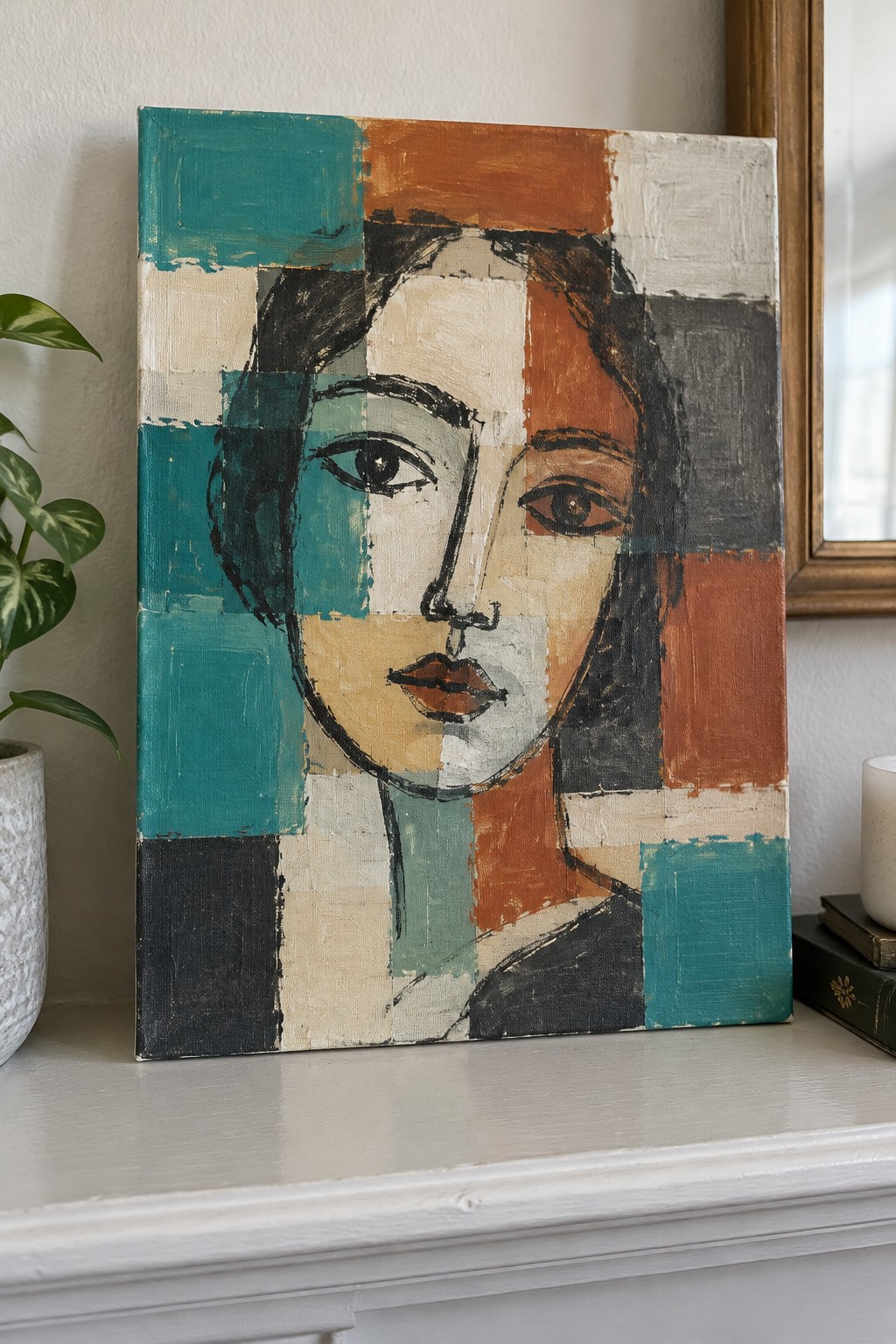
This painting idea centers on breaking a face into large geometric sections of color while using simple black lines to define the features. The approach treats the portrait as a collection of flat shapes rather than realistic shading, letting teal, rust, cream, and black areas build the structure. The composition stays effective because the strong color divisions and minimal outlines keep the face readable even when details are reduced.
What makes this idea useful is how the block method removes the need for blending or precise skin tones. You can lay down a few big color fields first, then add the lines for eyes, nose, and mouth on top. This works especially well for practice because the style forgives uneven edges and still reads clearly from across a room. For wall pieces, the same layout adapts quickly to different color combinations or canvas sizes.
Earthy Abstract Portrait Using Blocked Color Shapes
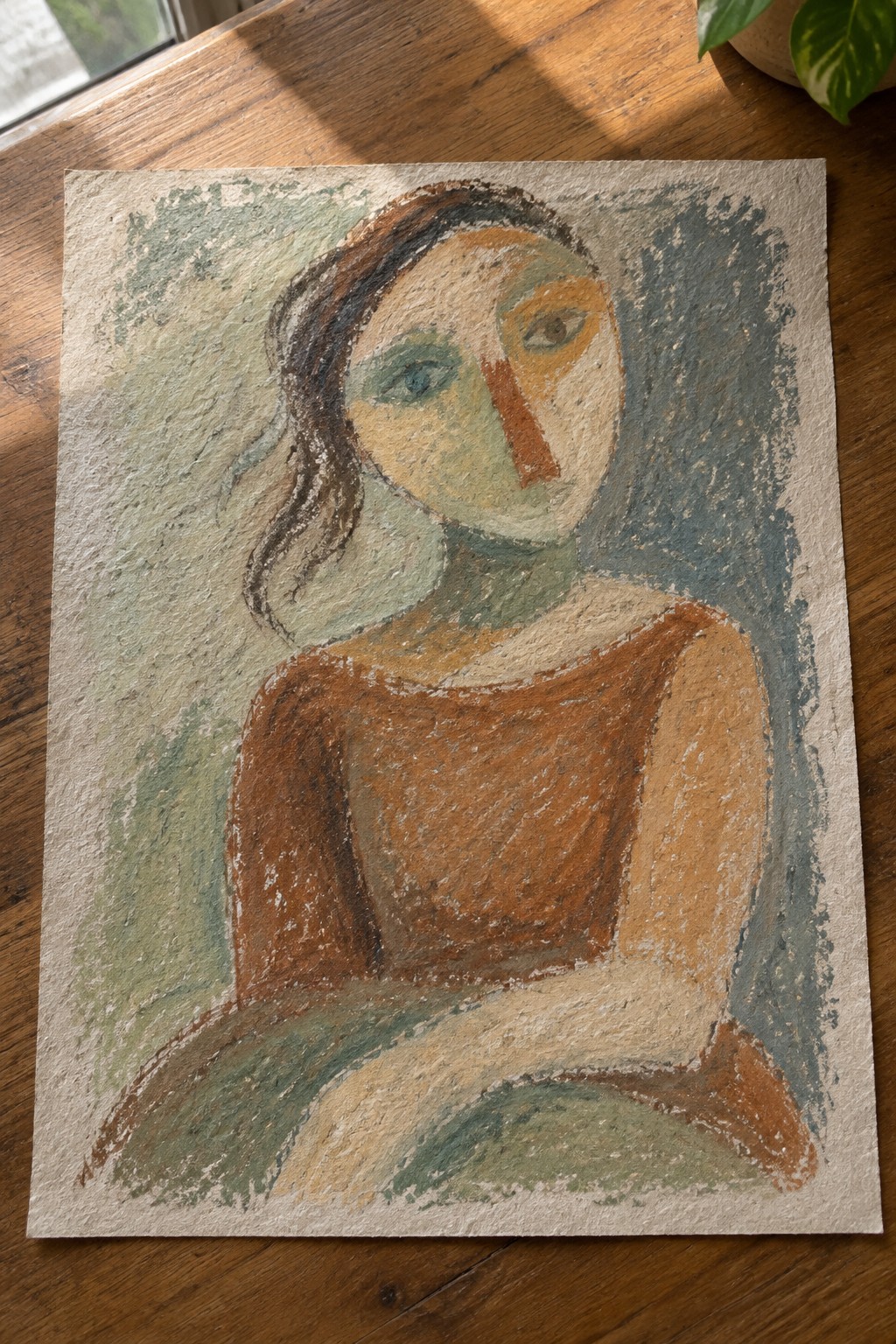
An abstract portrait idea built around simplified human forms works well when the face is broken into overlapping planes of color rather than detailed features. Broad shapes for the head, neck, and shoulders create a strong central mass while the background texture fills negative space without competing. This approach sits comfortably in the modern abstract portrait category because it emphasizes shape relationships and surface variation over realism.
The composition does a lot of the work here by letting the figure sit slightly off-center against a mottled ground. A painting like this works especially well for practice because the reduced detail makes proportions easier to manage. The limited earth-tone palette makes this easy to adapt by swapping in similar muted mixes or trying the same blocked structure on a different scale for wall pieces.
Profile Portrait with Pattern-Blocked Headwrap
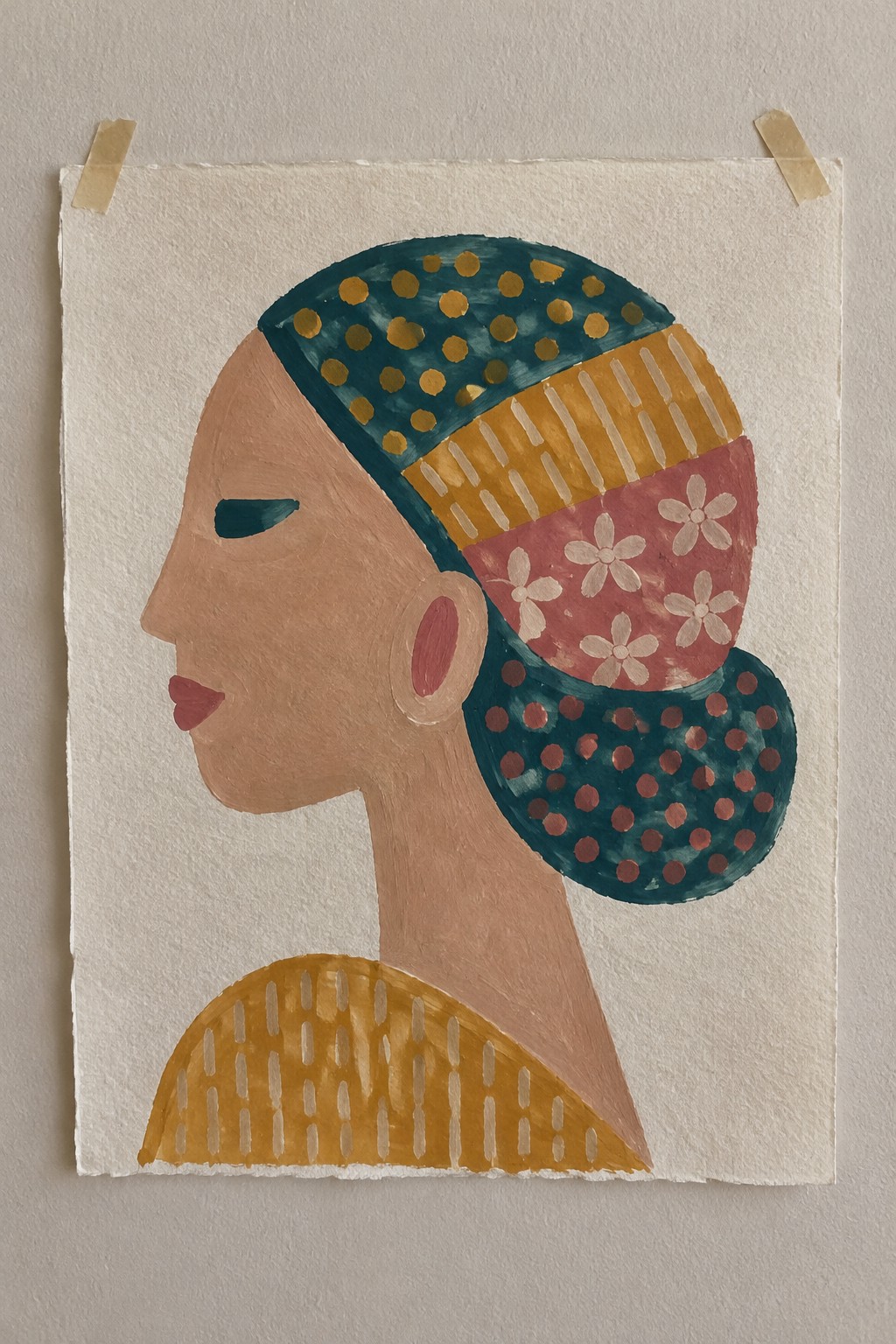
A side-profile portrait idea that keeps the face and neck as simple flat shapes while turning the head covering into the main event through stacked bands of contrasting patterns. The idea works because the patterns shift in type and scale, dots, stripes, and florals, all held together by a tight palette of teal, mustard, and rose. This approach belongs to modern abstract portraiture where simplified human forms let decorative elements do the heavy lifting.
The composition does a lot of the work here by letting the clean silhouette balance out the busy headwrap. You could adapt the same idea by swapping in different pattern styles or adjusting the color blocks to match a specific room or season. For practice, this kind of subject gives you room to play with pattern and color without worrying about realistic features or shading.
Abstract Portrait Built from Loose Color Washes
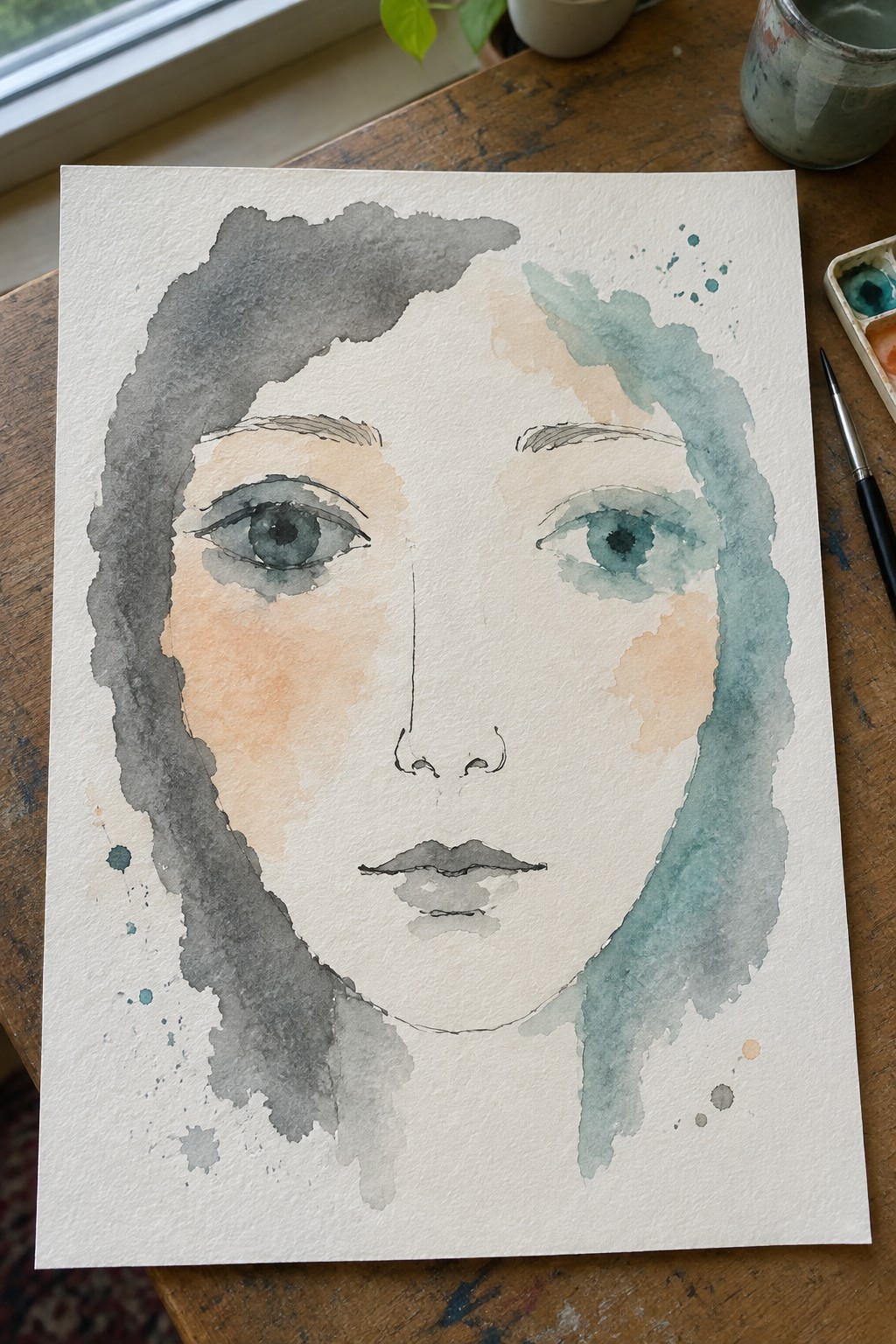
This painting idea uses a close-up face as the subject, built almost entirely from soft, overlapping watercolor washes in gray, teal, and warm peach. Thin ink lines handle only the eyes, brows, nose, and mouth while the rest of the form stays open and fluid. The approach works because the washes create shape and depth without needing tight control or many details, placing it in the modern abstract portrait category.
What makes this idea useful is how few lines are required, so the same layout can be tried with different color mixes or paper sizes without much risk. The open areas around the features make it easy to adapt the palette for a room or to practice wash control on its own. For quick pieces meant for wall display, the loose edges and limited detail keep the focus on color and shape while still reading as a face from across the room.
Paired Abstract Portraits with Flat Color Blocks
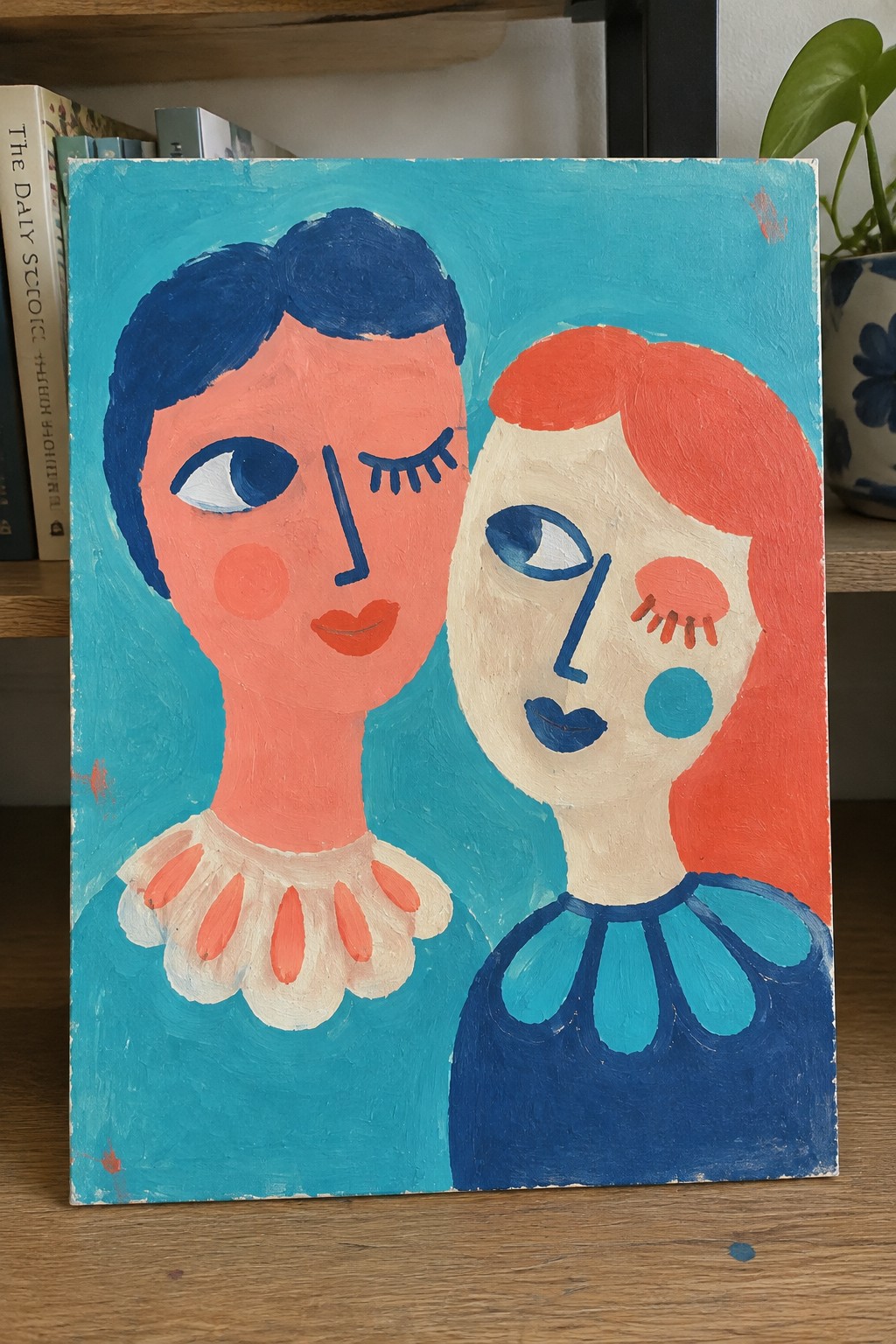
This idea focuses on two simplified faces placed side by side to create a modern portrait using bold, flat shapes. Large areas of color define the hair, skin, and clothing while small details like eyes and collars add just enough character. The solid teal background and contrasting hair tones keep the composition clean and graphic without needing complex layering.
What makes this idea useful is how the close positioning of the two heads handles the balance on its own. You can easily change the hair colors or swap the neckline shapes to match different rooms or personal styles. For practice this works well because the limited details let you focus on color choices and shape placement rather than fine rendering. A painting like this also translates nicely to a series where you vary only the hair or collar elements across multiple canvases.
Fragmented Faces Through Overlapping Color Shapes
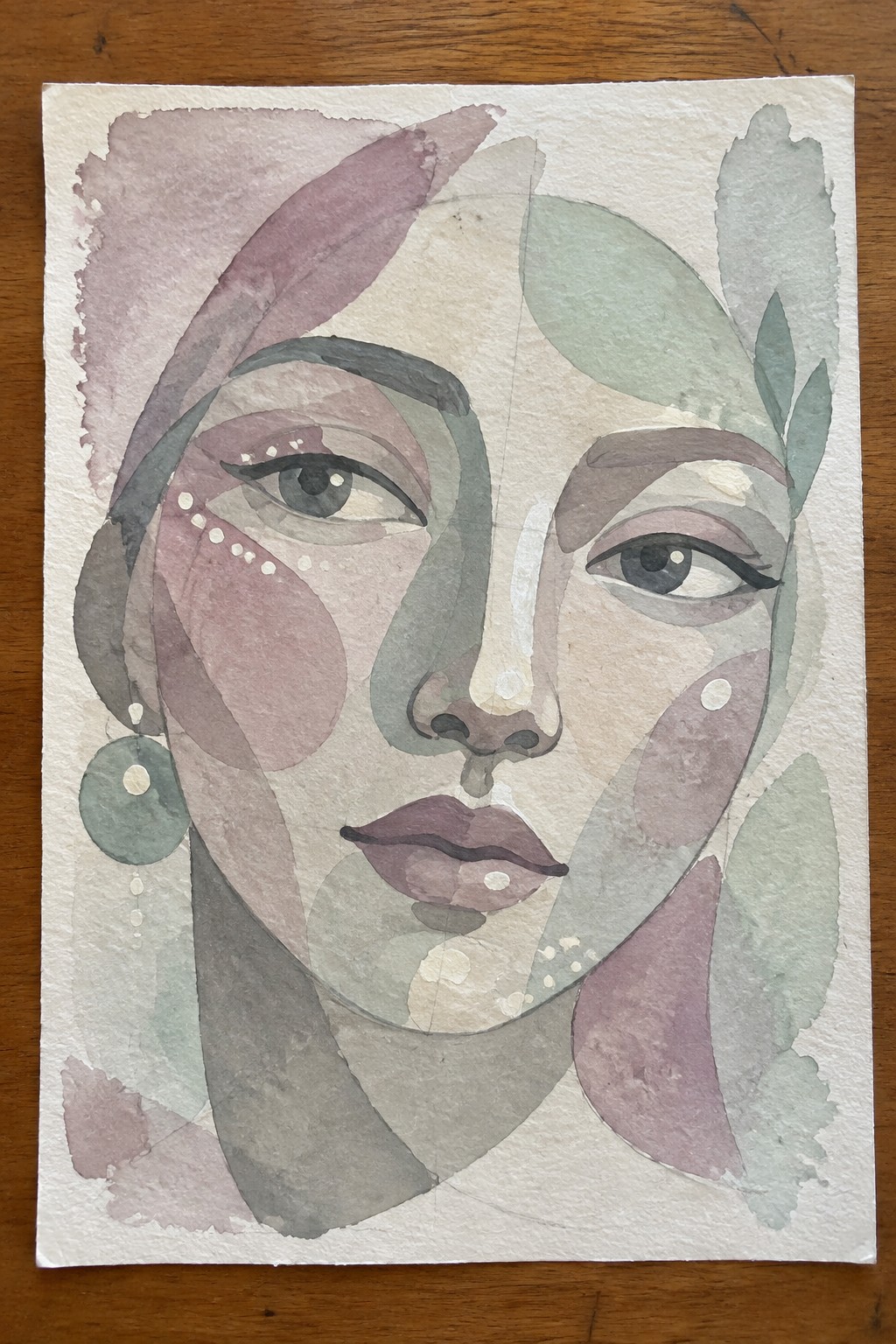
Abstract portraits work well when the face is broken into angular planes that overlap like cut paper. Each section holds a single muted tone so the eye moves across the composition without getting stuck on fine details. The result still reads clearly as a person because the eyes, nose, and mouth stay in their natural positions.
The composition does a lot of the work here since the shapes already create movement and balance. You can swap the dusty rose and sage palette for any two or three colors that sit well together, or enlarge the format for a bigger wall piece. For practice, tracing the main planes first then filling them in keeps the focus on shape rather than shading.
Bold Color Block Profile Portrait
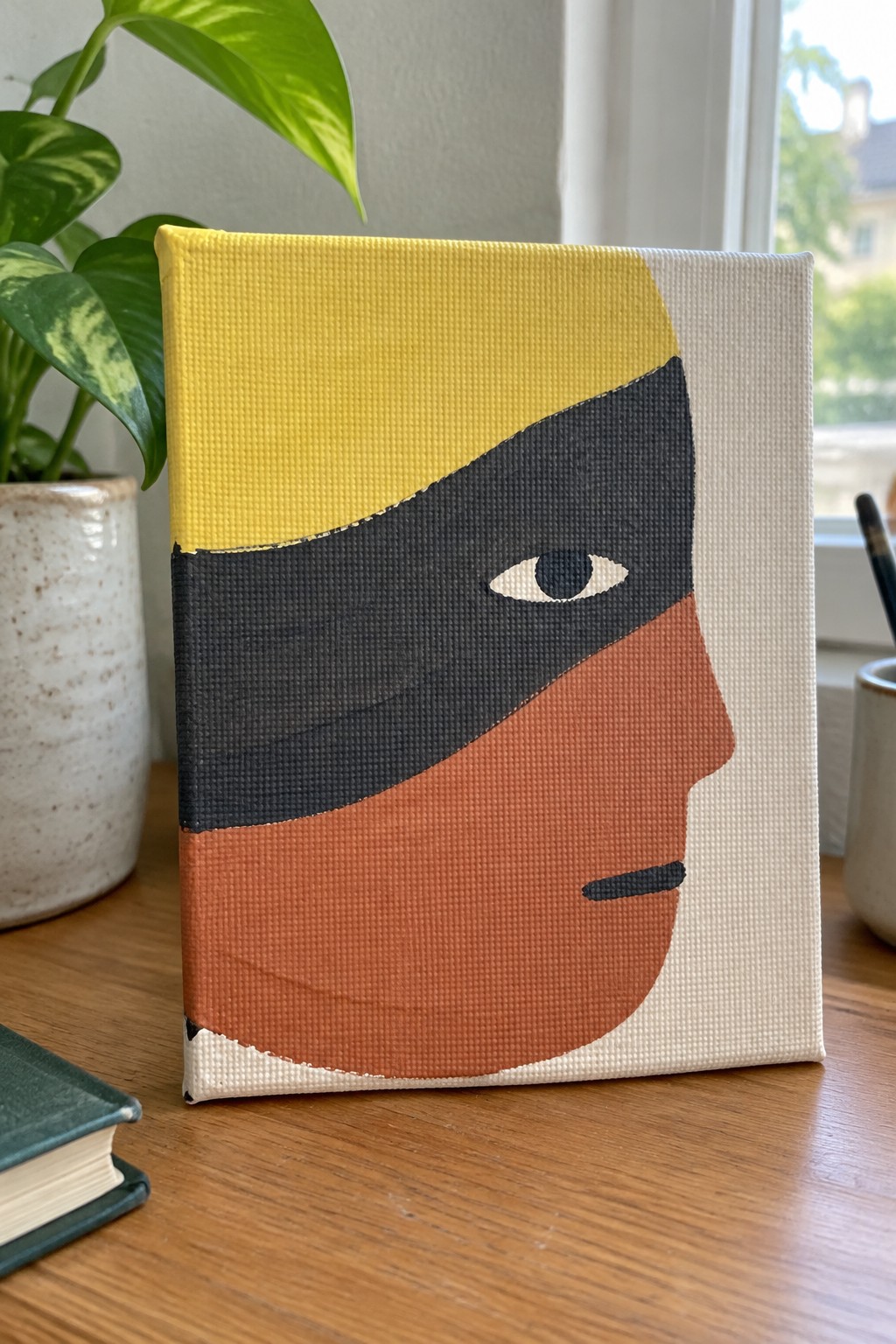
A strong approach to abstract portraiture is to reduce the face to a few large geometric shapes in flat color, letting the edges and negative space define the features rather than fine details. Here the profile is built from a yellow top section, a wide black band across the eye area, and a warm terracotta lower face against an off-white field, with the eye kept as the single focal point. This keeps the composition clean while still clearly reading as a human head in side view.
What makes this idea useful is how the limited shapes and high-contrast palette remove the pressure to blend or add texture, so the painting can be finished in one or two sessions. The split background also gives you an easy way to change the mood by swapping just one or two colors. For practice, this kind of subject works well because you can try different profile angles or color combinations without needing new reference material each time.
Abstract Portrait Built on Broad Planes and Limited Color
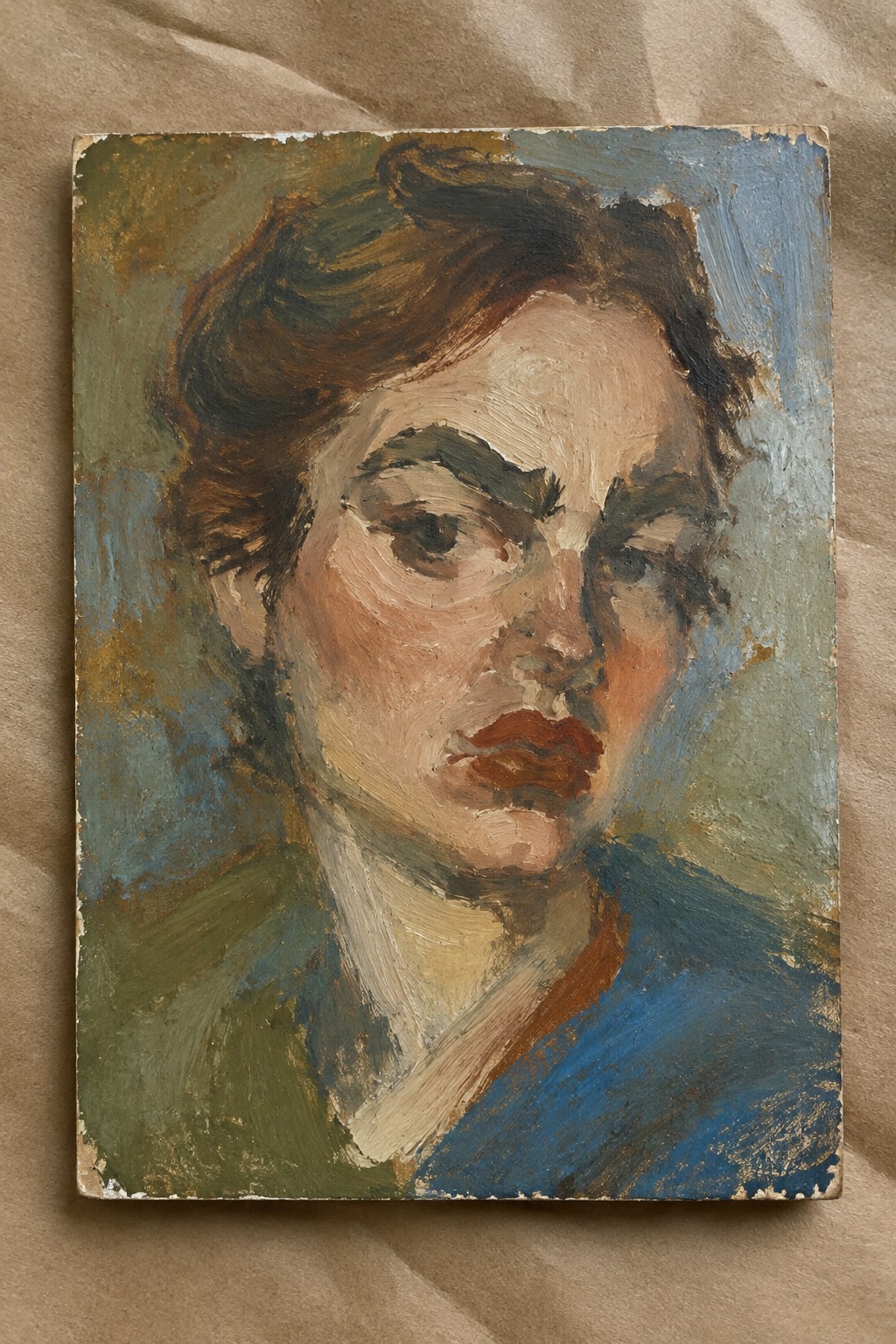
This painting idea centers on simplifying the human face into strong planes of color and visible brushwork rather than fine detail. The composition stays effective by pushing the features forward through contrast while letting the background stay loose and supportive. It belongs to the modern abstract portrait category where recognizable structure meets painterly reduction.
What makes this idea useful is how the limited palette keeps mixing straightforward and the overall piece cohesive. You can easily swap the clothing color or background hue without losing the core approach. The same structure works well for practice because it trains you to block in form first before refining edges. For wall pieces, the strong vertical crop and directional strokes give it presence even at smaller sizes.
Geometric Portraits Built from Flat Shapes
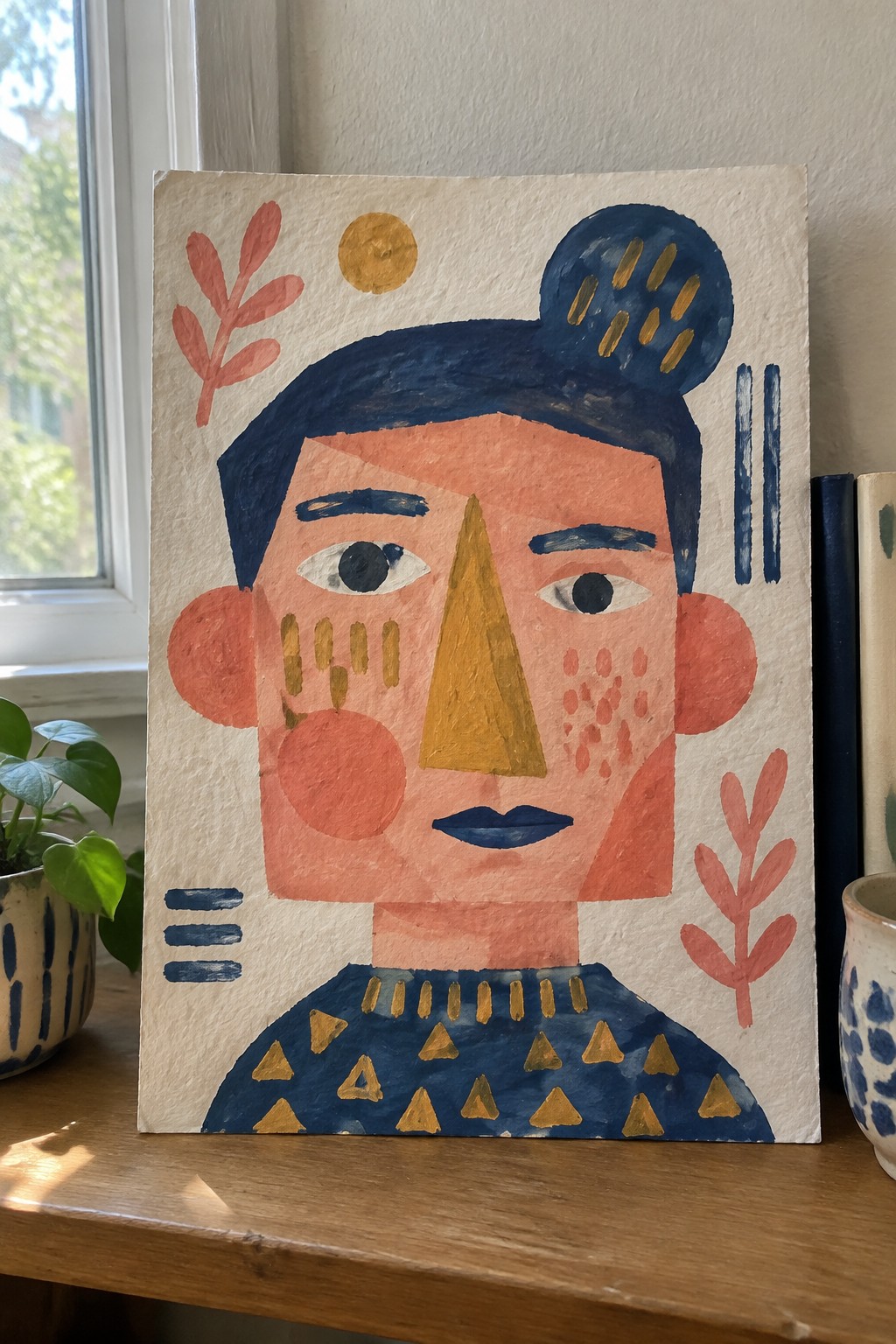
This painting idea centers on reducing a face to a few large geometric forms such as a triangle for the nose and circles for the cheeks, then filling those shapes with flat color. The composition works because the strong blocks of coral and navy create clear contrast while small gold dashes and triangle patterns on the clothing add texture without crowding the space. It belongs to the category of decorative abstract portraiture that prioritizes shape and limited color over realistic rendering.
What makes this idea useful is that the big shapes let you finish the main structure fast before deciding on any pattern details. The same layout can be adapted by changing the hair color or swapping the gold marks for different marks that match your own style. For wall pieces, the bold blocks hold up well from a distance even on smaller canvases.
Minimal Portraits with Floral Crowns
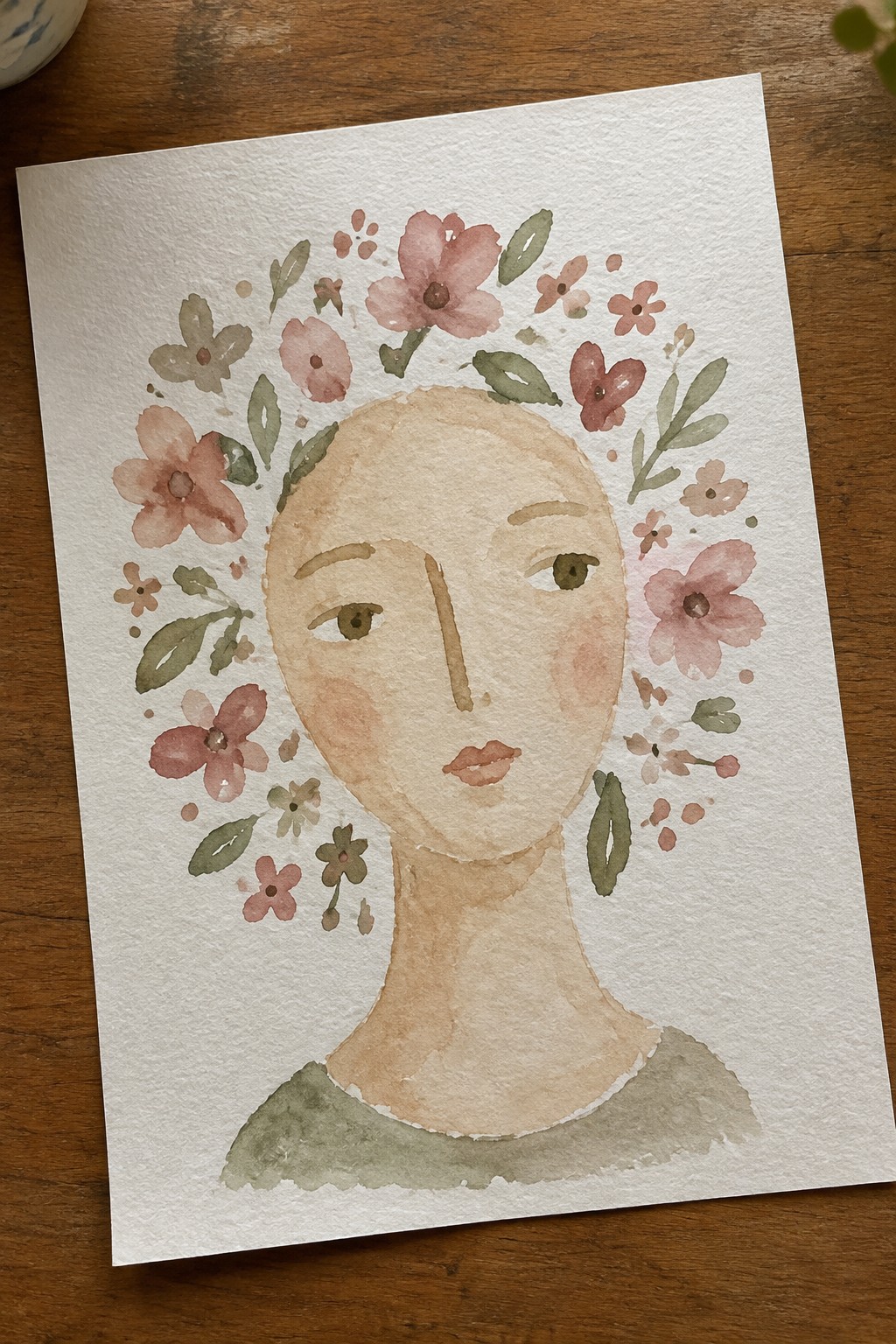
A simple face shape paired with a loose ring of flowers and leaves creates an effective portrait idea that feels balanced without needing much detail. The muted skin tones keep the focus on the pink blooms and green foliage that circle the head, while the scattered placement adds visual interest without crowding the center. This approach fits the floral portrait category and works because the negative space around the neck and shoulders holds the composition steady.
The centered layout makes it straightforward to sketch the face first and then build the wreath outward with whatever flowers you have on hand. You can easily change the bloom colors to suit different seasons or match existing decor, and the same structure scales well for smaller studies or larger wall pieces. What makes this idea useful is how the soft edges and limited palette keep the whole piece approachable even if your flower shapes stay basic.
Profile Portrait with Split Background and Striped Accent
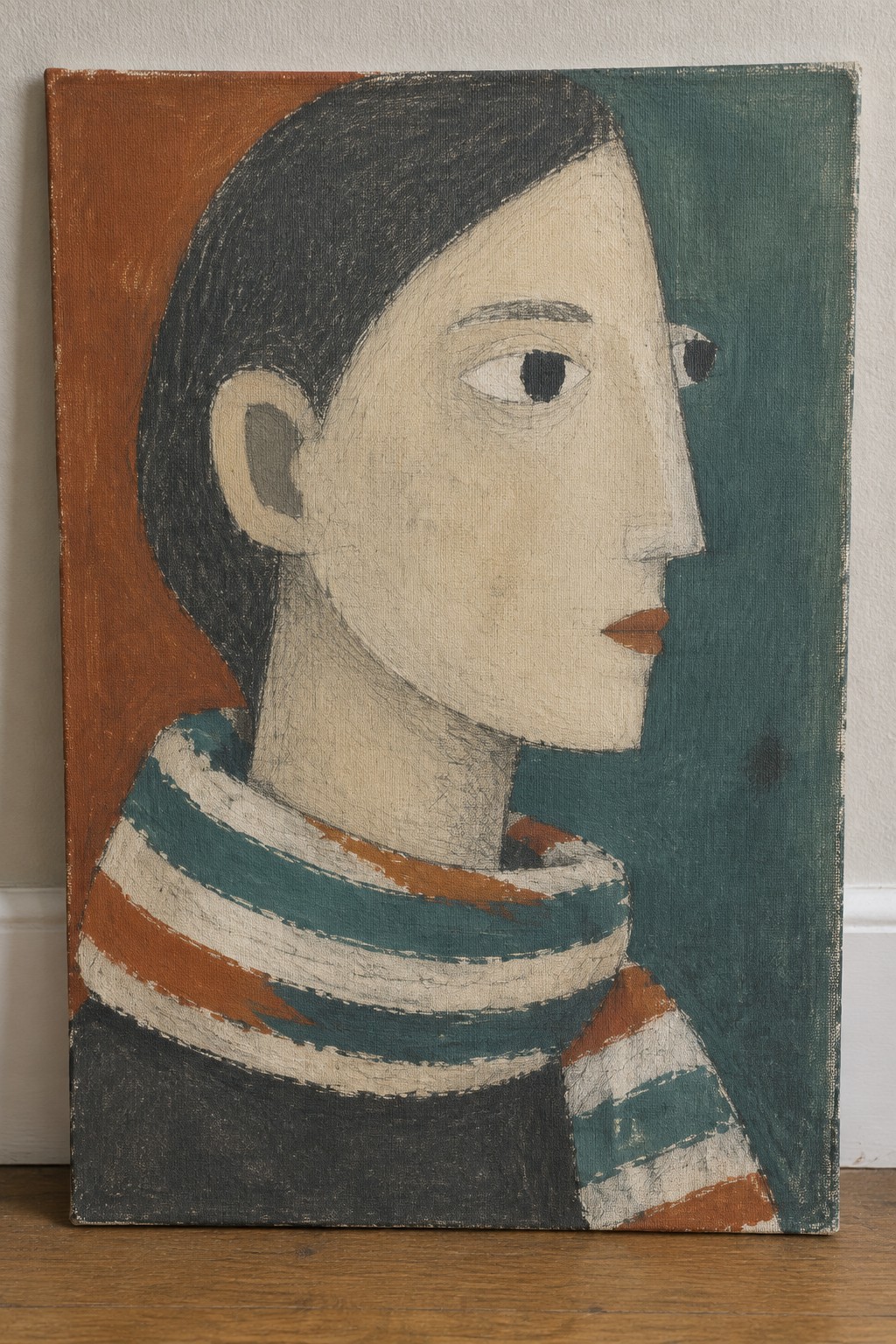
A profile portrait built from simplified shapes works by letting large flat color areas define the face and neck while a striped scarf adds rhythm through repeated lines across the lower section. The split background in two strong colors frames the head and keeps the eye moving between the face and the patterned clothing. This type of abstract portrait relies on reduced detail and clear color boundaries rather than shading or fine features.
What makes this idea useful is how the basic shapes and limited palette let you test color combinations quickly without getting stuck on proportions. The horizontal stripes on the scarf give an easy way to add interest at the bottom, so the same layout works whether you keep the teal and rust tones or swap them for other pairs that fit your space. For practice or wall pieces, the vertical division in the background handles a lot of the composition work, making it simple to adjust scale or try different scarf patterns on future versions.
Frequently Asked Questions
What artists are typically featured in collections of modern abstract portraits with simplified human forms?
Many such collections highlight contemporary creators like those influenced by cubism and minimalism, including figures such as Yayoi Kusama for her dotted figures or modern artists like Jenny Saville who distort forms to explore identity. These works often come from galleries specializing in abstract art, and checking artist websites or platforms like Artsy can provide bios and other pieces by the same creators.
How do simplified human forms change the way viewers connect with the portraits?
Simplified forms strip away realistic details to emphasize emotions, shapes, and concepts, making the art more relatable across cultures. This approach invites personal interpretation rather than focusing on specific likenesses, often leading to deeper reflections on themes like isolation or connection in everyday life.
What techniques help artists achieve simplified human forms in abstract portraits?
Artists commonly use bold lines, flat colors, and geometric reductions to distill figures into essential shapes. Layering acrylics or oils with minimal shading creates a modern feel, and experimenting with negative space allows the background to interact with the subject for added depth without overwhelming details.
Where can someone buy prints or originals from a set of 21 such paintings?
Originals are often available through specialized art galleries or auction sites, while high-quality prints can be found on platforms like Etsy or museum stores. Contacting the featured artists directly via their social media or professional sites ensures authenticity, and checking for limited editions helps secure unique versions at various price points.
How might these abstract portraits fit into home or office decor?
Their clean lines and bold colors complement minimalist or modern interiors by adding visual interest without clutter. Placing them in living rooms or workspaces can spark conversations, and pairing with neutral furniture lets the simplified forms stand out while maintaining a balanced aesthetic.
