

I started playing with circles and lines in my paintings because they are easy shapes to begin with.
They can turn into all kinds of patterns once you move them around on the canvas.
I ended up with 23 ideas that keep things simple and focused on those two elements.
A few came from my own sketches while others grew out of trying different brushes and colors.
You might find one or two that fit what you already like to paint.
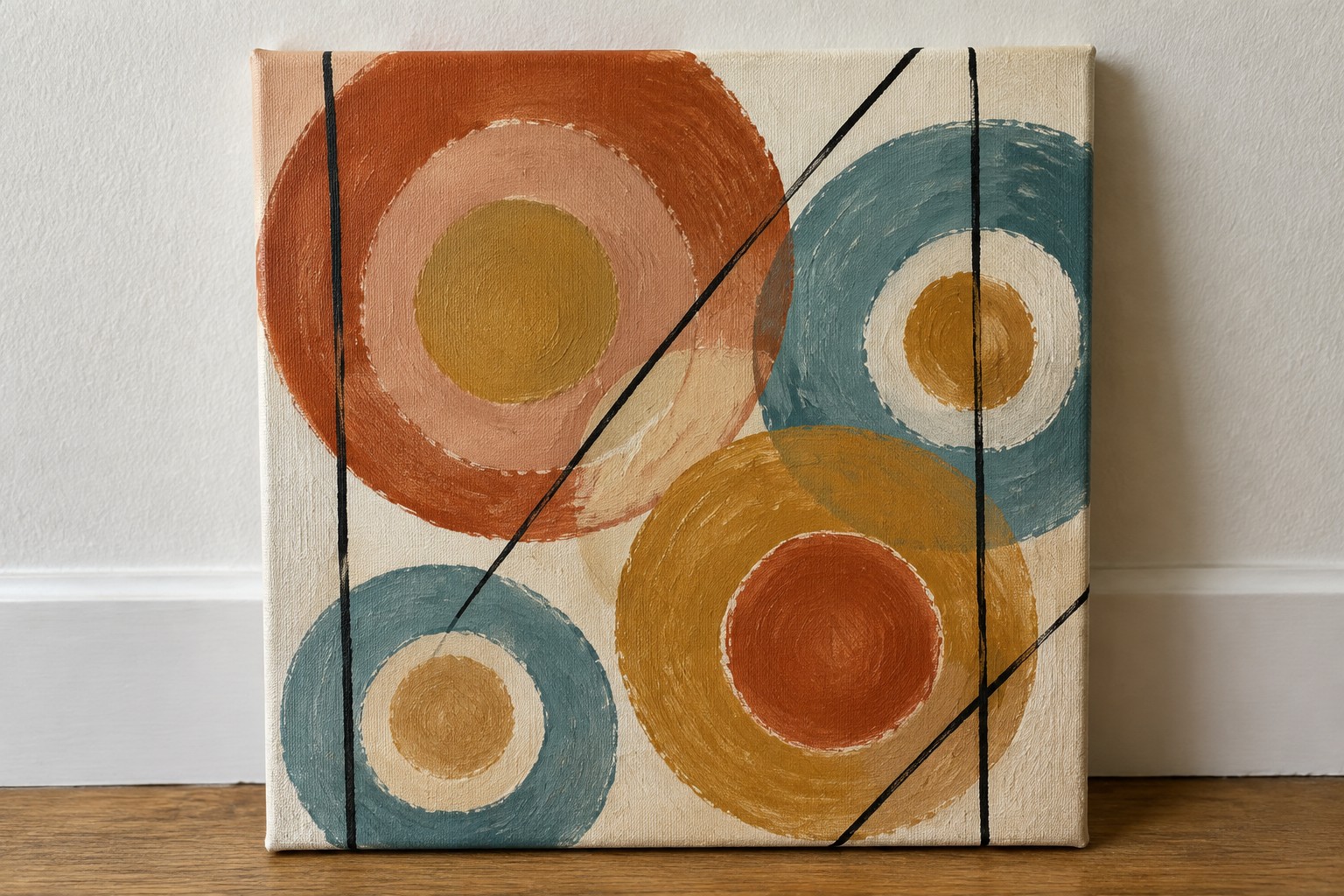
Overlapping Circles with Vertical Line Accents

This geometric abstract idea centers on layering concentric and overlapping circles in a restrained earth-tone palette, using vertical black lines to slice through the composition and create visual breaks. The circles vary in size and color temperature, with warmer oranges and terracotta balanced against cooler teal and mustard, while the off-white background keeps the focus on the shapes themselves. The loose brushwork and slight overlaps give the arrangement depth without requiring precise alignment or complex perspective.
What makes this idea useful is how the vertical lines organize the scattered circles into a more structured layout that still feels relaxed. The color palette works well for quick color swaps, so the same layout can shift from warm autumn tones to cooler coastal shades depending on the room. For wall art, the balanced but asymmetrical placement holds attention without demanding a large canvas, and the idea scales down easily for smaller practice pieces or a set of matching panels.
Pastel Circle Grid in Watercolor

A loose grid layout filled with watercolor circles in soft blues, greens, and lavenders forms a clean abstract pattern. The faint lines provide structure while the varied washes inside each circle create subtle differences in tone and texture. This setup works as decorative abstract art because the repeating round shapes stay balanced without needing perfect alignment.
What makes this idea useful is how simply you can change the grid size or shift the color mix to suit different spaces. Try fewer rows for a quick practice piece or add more circles across a bigger sheet for wall art. The soft palette and basic shapes make it straightforward to adapt with whatever paints you already have on hand.
Three Circles Split by Intersecting Lines

This painting idea centers on three colored circles arranged around a bold vertical line crossed by a thinner horizontal one. The teal circle overlaps the vertical line while the yellow and pink circles sit fully to the left, creating a clear but softened division across the canvas. The limited palette and flat shapes keep the focus on placement and overlap rather than detail or texture.
The composition does a lot of the work here because the lines give instant structure you can adjust by moving the circles or changing which one overlaps. You could swap the yellow for a different accent color or enlarge the pink circle to shift the balance without redrawing the whole layout. For wall art, something like this works especially well in a set of three where each version changes the overlap or line thickness. The simple shapes help this feel more approachable for trying out color combinations quickly.
Stacked Semi-Circles with Horizontal Line Borders

This painting idea centers on a vertical stack of semi-circles in shifting sizes and colors, separated by bands of thin horizontal stripes. The main shapes stay simple and repeated, while the stripes add rhythm and keep the eye moving across the piece. It works as geometric abstract decorative art because the curved forms contrast cleanly with the straight lines and the warm color shifts create visual interest without extra detail.
What makes this idea useful is how straightforward it is to change the number of layers or swap colors to match a room or season. The composition does a lot of the work here by balancing large solid shapes against the finer stripes, so the result holds together even if the edges are not perfect. This would be easy to turn into a bigger canvas version or a quick series by testing different stripe widths or pulling new colors from the same palette.
Sunburst Pattern with Radiating Triangles and Dashed Lines

A central circle anchors this geometric abstract idea, with straight rays of varying lengths shooting outward in a balanced radial layout. The mix of solid color blocks and thin dashed lines adds structure while keeping the overall design simple and graphic. It falls squarely into decorative abstract art that relies on shape repetition and a restrained palette rather than detail or realism.
What makes this idea useful is how the dashed guidelines already built into the design help keep the rays even without extra measuring. The warm orange center paired with teal and ochre rays can be swapped for any color scheme to match a room or season. For wall art, something like this works especially well because the strong center holds attention even at small sizes, and the same layout can be simplified by dropping the dashes or scaled up with thicker strokes for more impact.
Suspended Circle Mobile with Soft Color Balance

This geometric abstract idea uses a series of circles in different sizes connected by thin lines to form a hanging mobile. A curved support line at the top holds the arrangement while smaller circles hang below in staggered positions. The muted palette of dusty pink, sage green, and gray keeps the shapes clean and lets the composition stay balanced without extra detail.
What makes this idea useful is how the repeated circle shapes and simple vertical layout make it easy to recreate on any size paper. You can swap the colors for brighter tones or reduce the number of hanging elements if you want a quicker version. For wall decor, the mobile format gives a light, open feel that works well in small spaces and photographs cleanly for sharing.
Geometric Cityscape Using Repeated Circles and Lines

This painting idea centers on a simplified urban view where rectangles stack and overlap to suggest buildings, while circles repeat as window elements across the facades. The composition uses a central street perspective to guide the eye inward, with the shapes kept flat and graphic rather than shaded. A limited palette of gray, yellow, red, and off-white keeps the focus on the arrangement of forms instead of color mixing.
What makes this idea useful is how the basic shapes handle most of the work, so the painting stays approachable even when adding multiple buildings. The color blocks can be swapped or reduced to two tones if you want a quicker version. For wall art, the vertical lines and repeated circles give it enough structure to read clearly from across a room. This same layout works well as a starting point for larger pieces or smaller studies where you adjust the building heights.
Circle Divided by Horizontal Bands and a Vertical Line

This idea uses a single large circle overlaid with straight horizontal bands and one short vertical line to create a balanced geometric layout. The circle sits across a background split into four sections, which helps the shape stand out without needing extra elements. Earthy browns and ochres paired with teal keep the focus on the clean divisions rather than on color contrast.
What makes this idea useful is how the horizontal lines give you an easy way to break up the circle into different color zones. You can adjust the width or number of bands to change the look quickly, or swap the background split for a single color if you want less complexity. The vertical line adds just enough asymmetry to keep the composition interesting without extra shapes. For practice, this works well because the main forms stay simple while the color blocks give you room to experiment with mixing.
Concentric Circles with Radiating Lines and Corner Florals

A central flower sits inside soft, overlapping watercolor rings that shift from teal to lavender and pale gray. Straight lines cut through the rings from the center outward, giving the loose washes a clear structure. Small flower clusters tucked into the corners keep the design balanced without crowding the main circle.
What makes this idea useful is how the lines do the heavy lifting to hold everything together even if the paint bleeds unevenly. The cool palette adapts easily to whatever colors you already have mixed, and you can drop the corner flowers or change their size depending on the paper you are using. For practice, this works well because the circle shape stays forgiving while the lines give you something simple to measure and repeat.
Stacked Semi-Circles with Connecting Lines

A vertical stack of semi-circles in soft teal, pink, charcoal, and beige creates a balanced tower that feels both structured and light. Thin curved lines link the forms together and end in small dots, adding a sense of movement and connection without crowding the space. The simple radiating marks around the top and bottom circles give the whole arrangement a clean, geometric finish that works as decorative abstract art.
The composition does a lot of the work here because the clear vertical order makes it easy to adjust the height or width for different canvas sizes. You can swap the colors to fit a room or drop some of the connecting lines if you want a faster version. This kind of idea stands out on Pinterest for its simple geometry and works well as a small wall piece or a focused practice exercise.
Circles Joined by Dashed Lines

This painting idea arranges circles of different sizes and colors along a loose diagonal path, with short dashed lines linking them to create a sense of connection and flow. The mix of bright yellow, teal, and peach circles against softer gray and orange ones keeps the layout balanced while the visible texture from the medium adds depth without extra detail. It fits squarely into geometric abstract work where simple repeated shapes and minimal linework do the heavy lifting.
The composition does a lot of the work here by guiding the eye along the dashed paths rather than requiring complex placement. You could swap in a tighter color scheme or reduce the number of circles to make a smaller version for practice or cards. This kind of layout stands out on Pinterest because the lines give it structure that feels intentional even when the shapes stay loose.
Overlapping Circles with a Light Grid Overlay

Build the main idea around several circles of varying sizes that overlap to form new color zones where they meet. Keep the palette to a handful of muted tones like dusty rose, sage, and deep teal against a neutral ground, then add thin straight lines to create a subtle grid that runs across the whole surface. The overlaps add visual weight while the grid gives the composition a quiet sense of order without making it feel rigid.
The composition does a lot of the work here because the grid helps hold the scattered circles together. You can easily swap in different muted colors or adjust how much the circles overlap to change the mood. For practice this subject is approachable since the shapes are basic and the grid can be drawn lightly first. It also scales well for wall pieces or a small series where each version shifts the circle placement slightly.
Concentric Dotted Rings Anchored by a Vertical Line

This geometric abstract idea uses rings of small dots to form expanding circles around a central point. A single dark vertical line cuts through the middle, giving the loose dot pattern a clear structure and balance. The soft color shifts across the rings keep the eye moving outward while the line holds everything together.
What makes this idea useful is how the dot rings can be adjusted in number or spacing to fit different canvas sizes. The color palette works with any similar set of muted tones, so it is easy to recreate without hunting for exact shades. For practice, this kind of subject helps with even spacing and light brush control. This would be easy to turn into wall art by stretching the rings wider or adding a second intersecting line for more complexity.
Circle Divided by Horizontal Color Bands

A geometric abstract idea built around one large circle set against a dark background and crossed by three straight color bands. The bands run horizontally through the middle of the circle, using a warm coral, a neutral tan, and a cool teal to create contrast while keeping the overall layout simple. This approach works because the circle provides a clear focal point and the stripes add structure without needing extra shapes or detail.
The composition does a lot of the work here since the bold circle shape and limited color choices make the design easy to paint and scale. You could adapt it by swapping the band colors to match a room palette or by changing how wide each stripe sits. For wall art this kind of piece stands out on Pinterest because it reads as modern and balanced even when kept small or simplified further.
Concentric Rings with Orbiting Circles

A geometric abstract idea built around a large central circle layered with soft rings in cool blues, greens, and peach, then extended outward with smaller circles connected by straight lines. The composition uses the rings to create depth and movement while the lines tie everything together into a balanced orbital layout. This fits the decorative abstract category and works because the simple shapes and limited color range keep the focus on the overall structure rather than small details.
The composition does a lot of the work here since the rings and lines already suggest motion and connection. You could shrink the outer elements for a tighter piece or swap the palette to earth tones if you want a different mood. For practice, this kind of subject is easy to adapt by changing the number of rings or line angles, and the clean layout makes it a strong choice for a quick wall piece or a series on the same theme.
Face Built from Layered Color Circles

This painting idea uses overlapping circles in bright yellow, cyan, orange, and beige to form the main features of a face. The larger circles act as eyes and cheeks while smaller ones fill out the lower section, and thin black lines define the eyebrows and mouth. The approach keeps everything simple by letting the shapes and color blocks do most of the work instead of adding fine details or shading.
What makes this idea useful is how the circular layout already suggests placement for eyes, cheeks, and a smile, so you only need to decide on the colors and sizes. You can change the palette to match a room or swap the black lines for a different expression without redrawing the whole thing. For practice or quick pieces, the same structure works at smaller sizes and helps build confidence with color layering before trying more complex subjects.
Radiating Stripes from a Central Circle

A radial abstract built around one central circle works well when straight lines fan outward in repeating color bands. This idea uses a tight set of earth tones like rust, teal, mustard, and cream to keep the pattern readable while the lines create movement. The few curved bands placed near the edges add variety without breaking the overall symmetry.
The composition does a lot of the work here because the even spacing of lines makes it simple to lay out on any square canvas. You can swap the color order or change how many stripes you use to fit different sizes or moods. For wall art this style stands out on Pinterest because the strong center point draws attention even in a small thumbnail. Start with the circle and rays, then add the curves only if you want a bit more shape.
Earth Tone Circle Columns with Dashed Accents

This painting idea centers on three vertical columns of stacked circles in a muted palette of dusty pink, olive green, charcoal, and warm beige. The circles connect through short stems while horizontal dashes fill the spaces between columns, creating a steady visual rhythm across the surface. The approach works well as geometric abstract decorative art because the limited color set and repeated shapes keep the focus on pattern and balance rather than detail.
The composition does a lot of the work here since the vertical format translates easily to different canvas heights and widths. You could adapt the same layout with brighter colors for a more graphic result or reduce it to two columns for a narrower piece. For practice or quick wall art, the idea stands out because the structure guides placement without needing precise freehand work, and the neutral tones fit many room styles.
Gradient Sky with Scattered Circles and Stacked Line Layers

This idea uses a soft color wash that shifts from blue to warm yellow to set up a simple sky and horizon. Small circles of different sizes and muted tones sit across the upper area while thin horizontal lines build up the lower section in alternating colors. The mix of loose dots above and straight bands below creates a clean geometric balance that works as a minimal abstract landscape.
The composition does a lot of the work here by keeping the top half open and the bottom half structured. You can change the palette to match sunrise tones or cool night shades without altering the layout, and the same circle-and-line setup scales easily for sketchbook pages or larger panels. For practice, this kind of subject helps you focus on even washes and controlled line work while still producing something that reads clearly in a grid of thumbnails.
Grid of Semicircles in Bold Primary Colors

This painting idea builds an abstract composition from semicircles and circle segments arranged in a loose grid. Straight lines divide the space while dotted accents in matching colors add rhythm without crowding the design. The limited palette of red, blue, and off-white keeps the focus on shape placement and negative space.
What makes this idea useful is the way the grid lines help with proportion and balance before any color goes down. The color palette makes this easy to adapt by swapping in other pairs like teal and ochre or keeping it strictly primary. For wall art, something like this works well at medium sizes where the shapes stay clear but the dotted details still read from a distance. The same layout could be simplified by dropping one or two sections or expanded by adding another row of circles.
Concentric Rings with a Petal Center

A geometric abstract idea that builds outward from a central flower shape using overlapping petal forms, then adds rings and spokes to create clear divisions across the canvas. The design uses repeated circular lines to hold the composition together while the inner petals and outer color blocks add variation without breaking the symmetry. This approach fits the decorative abstract category where simple repeated shapes and a limited palette do most of the work.
What makes this idea useful is how the radial layout guides every placement so you do not have to measure much once the center is set. The color blocks between rings can be swapped for any two or three tones that already exist in a room, and the outer edge can be left rough or trimmed down depending on the canvas size. For practice, painting the central flower first then adding the rings one at a time keeps the steps straightforward and lets you stop at any layer if the scale feels off. This kind of piece stands out on Pinterest because the symmetry reads clearly even in a small thumbnail.
Linked Circles Split Into Wedge Color Blocks
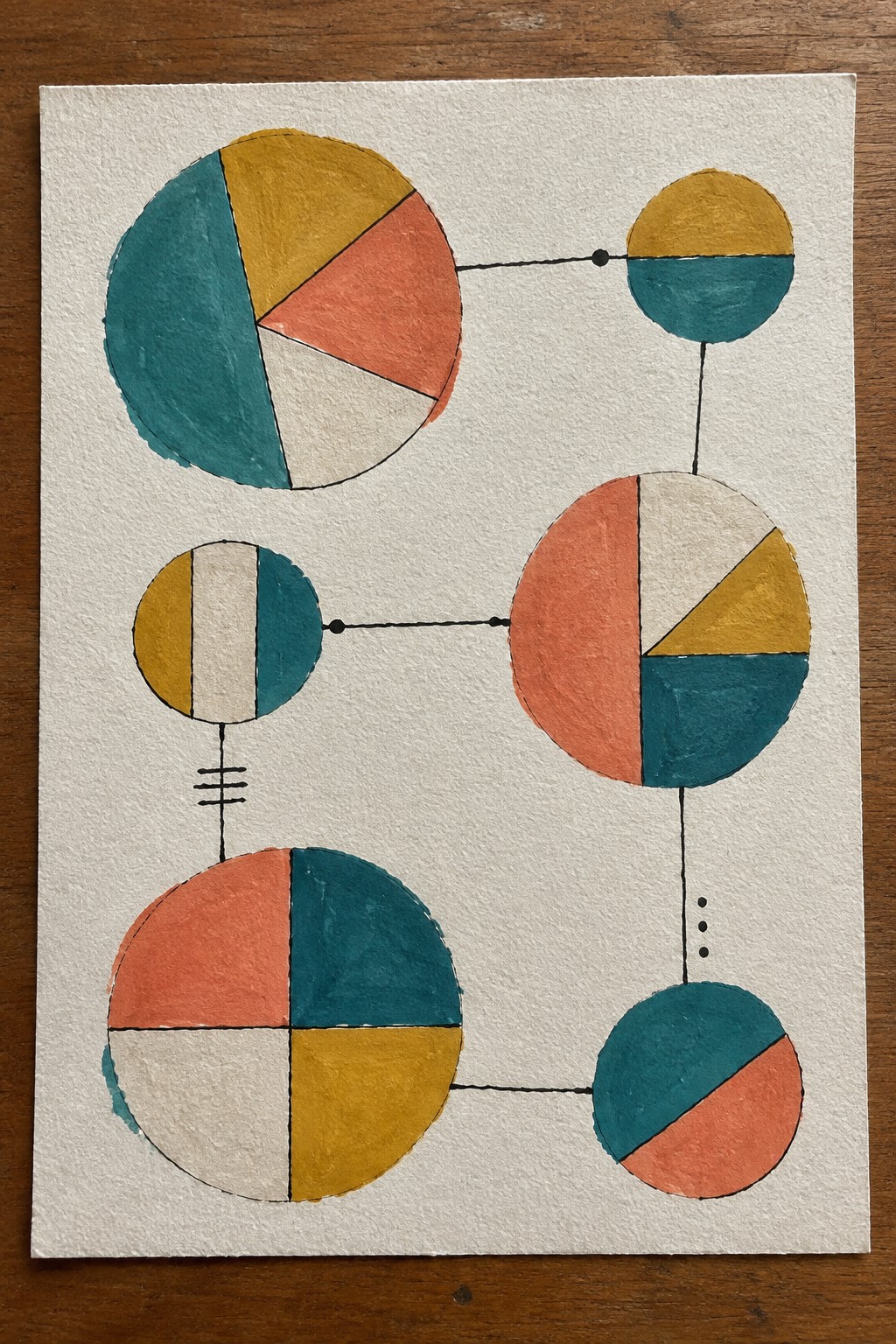
This painting idea builds an abstract composition from circles divided into bold wedges of teal, mustard, coral, and off-white, then connected by thin black lines and dots. The layout places one large circle on the left, a medium one on the right, and smaller circles above and below to create balance through size contrast and spacing. The segmented color blocks inside each circle add visual interest while the simple connecting lines keep the overall structure light and organized.
The composition does a lot of the work here by using the lines to link separate elements without crowding the page. You can adapt it easily by reducing the number of circles for a quicker study or changing the wedge colors to fit a specific palette. This approach works well for practice because it focuses on shape repetition and color placement rather than fine detail, and it translates cleanly to different canvas sizes for wall pieces.
Frequently Asked Questions
1. What supplies work best for creating these geometric abstract paintings with circles and lines? Acrylic paints on stretched canvas provide good coverage and quick drying times that help with layering shapes. Gather a compass for drawing circles a ruler or straight edge for lines and masking tape to keep edges crisp. Begin with a light pencil sketch on the canvas to map out your design before applying paint.
2. How can I make my circles and lines look precise without advanced drawing skills? Practice on paper first by using a compass and ruler to trace shapes until the motions feel natural. On the canvas apply masking tape along line paths and peel it away after painting to reveal clean borders. For circles consider stencils or freehand with a steady hand after marking the center point.
3. Which color schemes enhance the abstract feel of circle and line compositions? Monochromatic palettes with shades of one color create a calm unified look while complementary colors like blue and orange add energy and contrast. Limit your palette to three or four hues to avoid clutter and apply them in blocks to emphasize the geometric forms.
4. What techniques add interest to flat circle and line designs? Layer thin washes of transparent paint over base colors to build subtle depth without losing the geometric structure. Introduce texture by dry brushing edges or using a palette knife for raised line effects. Vary line thickness and circle sizes within one piece to guide the eye through the composition.
5. How do I adapt these ideas to different canvas sizes or personal styles? Scale the number of circles and lines proportionally so larger canvases hold more elements while smaller ones focus on fewer bold shapes. Incorporate personal touches by rotating the arrangement or adding a single unexpected curve that breaks the strict geometry while keeping the overall theme intact.
