

I started making abstract paintings on two canvases because one just didn’t feel like enough space sometimes.
The connected compositions let me carry a shape or color from one side to the other.
It gives the whole thing a bit more flow without being too complicated.
Over time I came up with these seventeen ideas that I keep going back to.
They might give you some inspiration if you’re looking to try something similar.
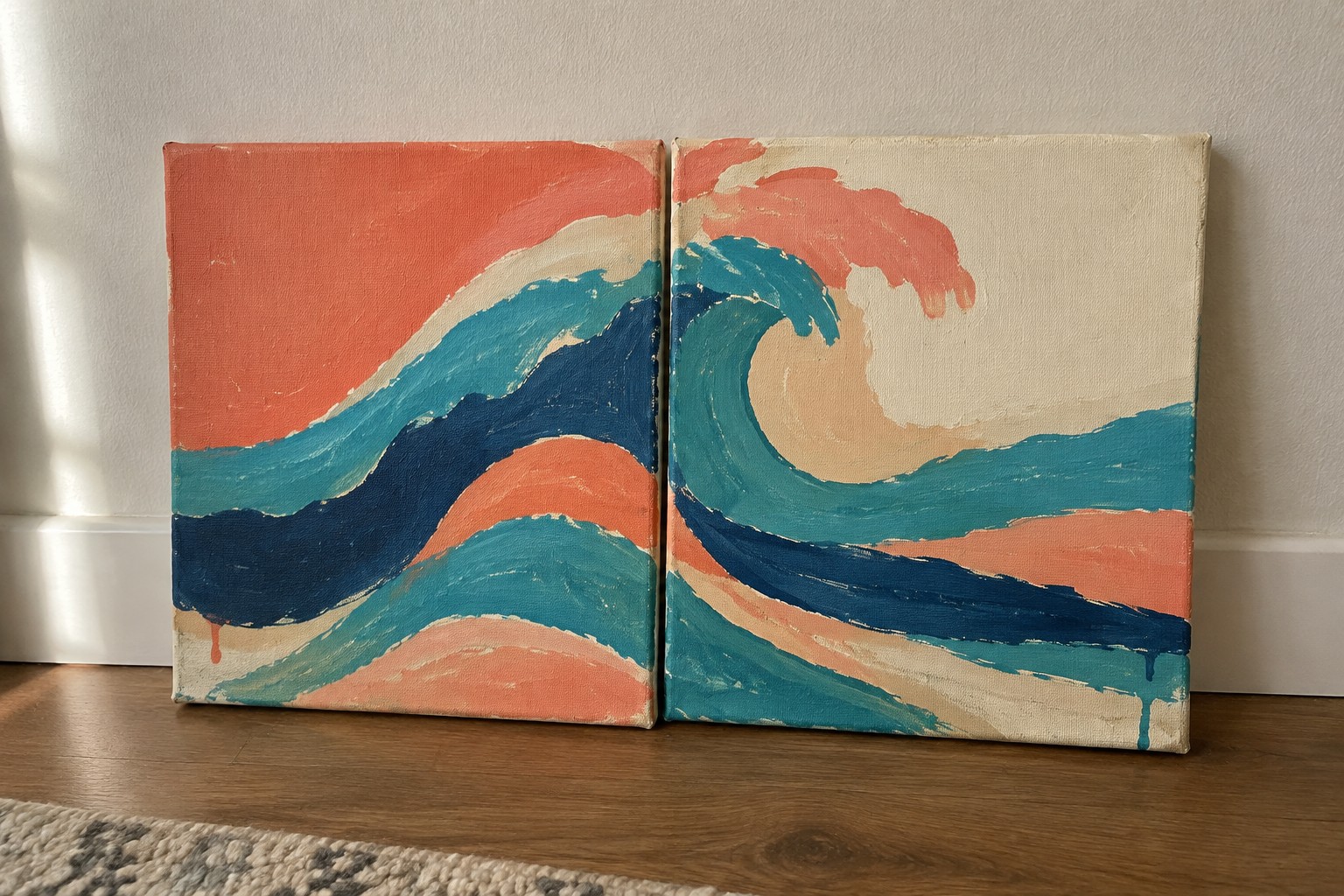
Split Canvas Wave in Coral and Teal

An abstract wave that stretches across two canvases creates one continuous motion when the panels sit side by side. Bold curved strokes in deep blue and teal build the main shape while lighter layers suggest foam and movement against the coral background. The split lets the curve of the wave carry naturally from left to right, which keeps the eye moving across the full width.
What makes this idea useful is that the two-panel layout handles large sweeping shapes without crowding a single surface. The warm and cool color split is simple to swap for other pairs if you want a different mood or to match existing decor. For practice, the loose brushwork and dripping details give room to experiment with texture while the connected layout still holds the piece together.
Two Canvas Misty Mountain Lake Scene

A connected diptych landscape works by splitting one wide view across two canvases so the water and mountain ridges line up naturally from left to right. Soft watercolor washes in muted blues, greens, and lavender create the fog and distance without needing sharp details. The lower foreground trees and bushes on both panels help anchor the eye and tie the two pieces together visually.
What makes this idea useful is that the split format lets you paint each canvas at a manageable size while still getting a big wall impact once they hang side by side. You can easily change the color temperature on the right panel for a warmer sunset or cooler dawn without repainting the whole thing. For practice, the loose wet-on-wet background keeps the focus on shape and value rather than tiny details, and the same layout works fine in acrylic if you want more control over the layers.
Layered Arch Patterns Split Across Two Canvases

This abstract idea uses stacked arch shapes in repeating rows to form a connected pattern that runs across both canvases. The design stays simple by limiting the palette to mustard, rust, teal, and cream while adding small accents like dots and leaf shapes for variety. The arches align vertically so the division between the two panels reads as part of the overall layout rather than a break.
What makes this idea useful is how the repeating shapes remove the need for detailed drawing and let color and spacing carry the composition. You could shift the palette to cooler tones or swap the leaf accents for different motifs to match a space. For wall art, the two-panel format works especially well because the canvases can hang close together and still feel like one piece. The same layout could be simplified further by reducing the number of rows or enlarged by making the arches wider.
Connected Organic Forms Across Two Panels

This two-canvas idea uses overlapping rounded shapes in warm oranges, reds, and browns to create one continuous abstract composition. The forms are arranged so some shapes and color bands cross the center divide, pulling the two vertical panels together visually. Dotted outlines and layered brushwork add subtle separation while keeping the overall flow intact.
The composition does a lot of the work here by letting shapes bridge the gap between canvases, which makes the finished piece feel balanced without needing perfect symmetry. You can adapt it easily by swapping the palette for cooler tones or reducing the number of forms if you want something quicker. For wall art, the vertical format and earthy colors work well in living rooms or entryways where you need height but not heavy detail.
Abstract Planet Split Between Two Canvases

This idea uses two equal canvases to create one large circular form that spans the divide, painted in a bold mix of teal, mustard yellow, white, and metallic gold. Thick, directional brushstrokes give the circle texture and movement while the off-white background keeps the focus tight on the shape itself. The result is a simple abstract composition that reads as a single piece once the canvases sit side by side.
The composition does a lot of the work here by letting the split itself become the concept, so the viewer instantly sees the connection. A painting like this works especially well for wall art because the round shape and limited palette stay balanced even in different room sizes. The color palette makes this easy to adapt by swapping the teal and yellow for any two tones that match existing decor, or by keeping the metallic gold for a little extra shine. For practice, this kind of subject lets you focus on texture and color mixing without needing complex drawing skills.
Connected Floral Paintings Across Two Canvases

A two-panel floral idea works by placing larger blooms on each canvas while letting smaller flowers and stems cross the center divide to tie the pieces together. The soft washes of pink, cream, and green keep the overall look light so the eye moves easily from one panel to the next without a hard break. This layout suits a floral category where the goal is a gentle, repeating pattern rather than a single focal point.
The color palette makes this easy to adapt since the same muted tones can shift to whatever paints you have on hand. For wall art, something like this works especially well in a narrow vertical space because the two panels stack naturally without needing extra framing. You could drop some of the smaller details or enlarge the main flowers if you want to finish the pair faster or match a different room size.
Two-Panel Rooftop Landscape with Connected Shapes

A diptych landscape idea works by splitting one continuous rooftop scene across two vertical canvases. Flat blocks of color and simple building outlines let the eye travel from one panel to the next without any break in the sky or rooflines. The limited palette of soft blues, warm beige, and terracotta keeps the focus on the repeating chimney and roof shapes.
What makes this idea useful is how the split layout gives you flexibility with spacing on the wall. The geometric shapes stay easy to copy or resize, so you can adjust the height of the buildings or swap in different roof colors to match your space. For wall art, something like this fits narrow spots where a single wide canvas would feel too heavy, and the same layout can be simplified further by dropping some chimneys or widening the sky areas.
Connected Wave Patterns Across Two Canvases

This painting idea uses flowing horizontal waves in bright orange, teal, and magenta that stretch across two separate canvases, with scattered circles of varying sizes filling the spaces between the lines. The waves are staggered so the movement continues from one panel into the next, creating a single connected composition rather than two isolated pieces. The loose brushwork and mix of large and small circles keep the focus on color and motion without requiring precise detail.
The composition does a lot of the work here because the repeating wave shapes naturally guide the eye across the divide between panels. You can change the color order or swap in different hues to match a room without redrawing the layout. This format works especially well for wall pieces above a shelf or sofa where two medium canvases feel more balanced than one large one. For a simpler version, reduce the number of circles or use fewer colors while keeping the same wave structure.
Connected Abstract Landscape Across Two Canvases

A two-panel setup works well for abstract landscapes when you want the scene to stretch wider without committing to one large canvas. Horizontal brushstrokes in layers of green, brown, ochre, and gray create rolling fields that continue from the left panel into the right, with the sky area picking up similar movement above. The split lets each side hold its own balance while the overall composition reads as one continuous view.
What makes this idea useful is how the divided format reduces pressure on getting a single perfect surface. You can vary the pressure and direction of strokes on each panel to suggest depth or weather changes without overworking either one. The limited earth palette keeps mixing simple and makes it easy to test different times of day or seasons by shifting one or two colors. For wall display, the pair fits nicely over furniture where a single wide piece might feel too dominant.
Diagonal Stripe Linking Abstract Circles on Two Canvases

This painting idea splits one abstract composition across two canvases by running a thick diagonal stripe from top left to bottom right. Large circles in coral, teal, and black sit on an off-white ground, with the stripe cutting through the space and pulling the separate panels together visually. The limited color palette and clean shapes make the connection between the two sides easy to read at a glance.
What makes this idea useful is how the stripe does the work of unifying two panels without requiring matching imagery on each side. The approach adapts well if you want to change the circle sizes, swap the colors, or add a third panel while keeping the same structure. For wall art, the bold shapes and neutral background give it a clean modern look that fits above a sofa or desk without needing extra framing.
Watercolor Branch Diptych with Soft Neutral Washes

A two-canvas painting of tree branches succeeds when the main limbs and leaf shapes continue across the center divide without a hard break. Loose watercolor washes in muted greens, beige, and soft gray build the foliage through overlapping layers that keep the branches visible as the main structure. This idea sits in the abstract nature category and uses the split format itself to create interest rather than relying on tight detail or strong outlines.
The composition does a lot of the work here because the branches guide the eye across both panels naturally. You can shift the color mix toward cooler tones or warmer earth shades depending on the room, or reduce the number of leaves if you want a simpler version. For wall art, this format stands out on Pinterest because the connected layout feels intentional while staying loose enough for practice pieces or quick weekend projects.
Aligned Concentric Circles Split Across Two Canvases

This painting idea centers on a large circular motif divided between two square canvases, using concentric rings in mustard yellow, olive green, and rust brown. Short radiating dashes and outer curved arcs continue across the seam to create visual flow between the panels. The centered rings and repeating curves keep the composition balanced while the color changes add movement without needing extra detail.
What makes this idea useful is how the split forces careful alignment when hanging, which adds structure to the final display. The repeating shapes and limited palette make it straightforward to adjust colors for different spaces or swap in fewer rings for a faster version. For wall art, the connected layout stands out on Pinterest because it reads as one larger piece rather than two separate paintings.
Split Canvas Botanicals with Flowing Vines

This painting idea places abstract leaf shapes and looping lines across two side-by-side canvases so the design reads as one continuous piece. The same leaf and vine motifs repeat in different sizes and angles, with the curved lines acting as connectors that pull the two panels together visually. A limited palette of terracotta, sage green, and dusty pink keeps the focus on the shapes rather than on color variation.
The composition does a lot of the work here by using the split to create movement without extra detail. You could simplify it by painting only three or four leaf types and letting the connecting curves carry the design across the gap. For wall art, the two-panel format adds interest while the loose brushwork makes it forgiving for practice or quick weekend projects.
Connected Ocean Wave Diptych

A two-canvas seascape splits one continuous ocean view so the waves and shoreline flow across the center divide without a hard break. The water builds through overlapping strokes of blue, teal, and white to show rolling waves, while the sky stays light with soft purple and gray tones. This layout works as a landscape idea that stretches wider than a single panel while keeping the horizon straight and the wave direction consistent.
The composition does a lot of the work here because the wave lines and color shifts already connect the two sides. You can change the palette to deeper blues or add more purple in the sand to match different rooms. For wall pieces above a mantel or sofa, the split format draws attention on Pinterest while staying simple to paint from a reference photo.
Connected Spiral Abstract Diptych

This painting idea splits a single spiral motif across two canvases so the design flows from one panel into the other. The main concept is an abstract composition built from layered circular lines and soft color washes that keep the eye moving across the break. It fits the abstract category and works because the continuous curves and shared color palette make the two pieces read as one unit.
The composition does a lot of the work here since the spiral creates a natural connection that holds the diptych together. You can adapt the color palette easily by swapping the blues and golds for other pairs that match your space. For wall art, this kind of split design stands out on Pinterest because it gives a modern look without requiring complex subjects. You could simplify it by using fewer layers or change the scale by making the canvases larger or smaller.
Two-Panel Connected Flower Painting

A two-canvas floral idea works by letting one large flower span both panels so the composition feels connected rather than separate. Bold petals in bright pink and yellow overlap the center seam while the teal background fills the remaining space, keeping the focus on the flower itself. The loose brushwork and simple color blocks make the shape read clearly from a distance without needing fine detail.
What makes this idea useful is how the split format automatically creates a wider piece that fits above a sofa or console without extra planning. The color choices are easy to change to match different rooms, and the same layout can be simplified by using fewer petal colors or enlarged by adding more panels. For wall art, this approach stands out on Pinterest because the single subject stays strong even when the canvas is broken into two parts.
Two-Panel Sky with Matching Cloud Layers

The idea is to split a single sky scene across two canvases so the clouds and color bands continue from one panel to the next. Soft horizontal cloud shapes in muted blues and warm pinks are painted with light blending so the eye moves across the center divide without a hard break. This approach fits the connected-composition category because the color transitions and cloud placement are planned to read as one wide view once the panels are hung side by side.
The composition does most of the work here because the clouds are staggered so some shapes cross the seam while others sit on either side. You can change the palette to early morning or stormy tones without altering the layout, which makes the idea easy to reuse. For wall pieces, two smaller canvases are simpler to frame and hang than one large sheet, and the same cloud-blocking method can be scaled down for quick practice studies.
Frequently Asked Questions
What are effective ways to ensure the two canvases connect visually in an abstract painting? Focus on repeating key shapes, lines, or color blocks across both surfaces so the eye moves naturally from one to the other. Start by sketching a rough layout on paper that spans both canvases, then paint matching elements like flowing curves or shared color gradients near the inner edges. This creates continuity without forcing identical designs.
How do I choose colors that work well together across two connected canvases? Select a limited palette of three to five hues and use them on both canvases in varying proportions. Place the dominant color on the first canvas and echo smaller amounts of it on the second to pull the pieces together. Test combinations on scrap paper first to confirm they blend smoothly when the canvases sit side by side.
What canvas sizes and orientations work best for these connected abstract ideas? Square or rectangular canvases of equal size pair easily and keep the focus on the composition. Hang them horizontally for a wide landscape feel or vertically for a taller statement. If you prefer variety, try one slightly larger canvas as the focal point and balance it with a smaller one that continues the same visual flow.
How can beginners adapt the 17 ideas without feeling overwhelmed? Pick one simple idea such as mirrored shapes or color bleeding across the divide and practice on small canvases first. Break the process into steps: block in large areas of color on both pieces, add connecting lines next, then refine details last. Keep the first attempt loose so you can adjust the connection as you go.
What are good options for displaying two-canvas abstract paintings at home? Mount them close together with a narrow gap that matches the width of the connecting elements in the painting. Use matching frames or leave them unframed for a modern look. Position the pair at eye level on a large wall so viewers can step back and see how the compositions interact as a single unit.
