

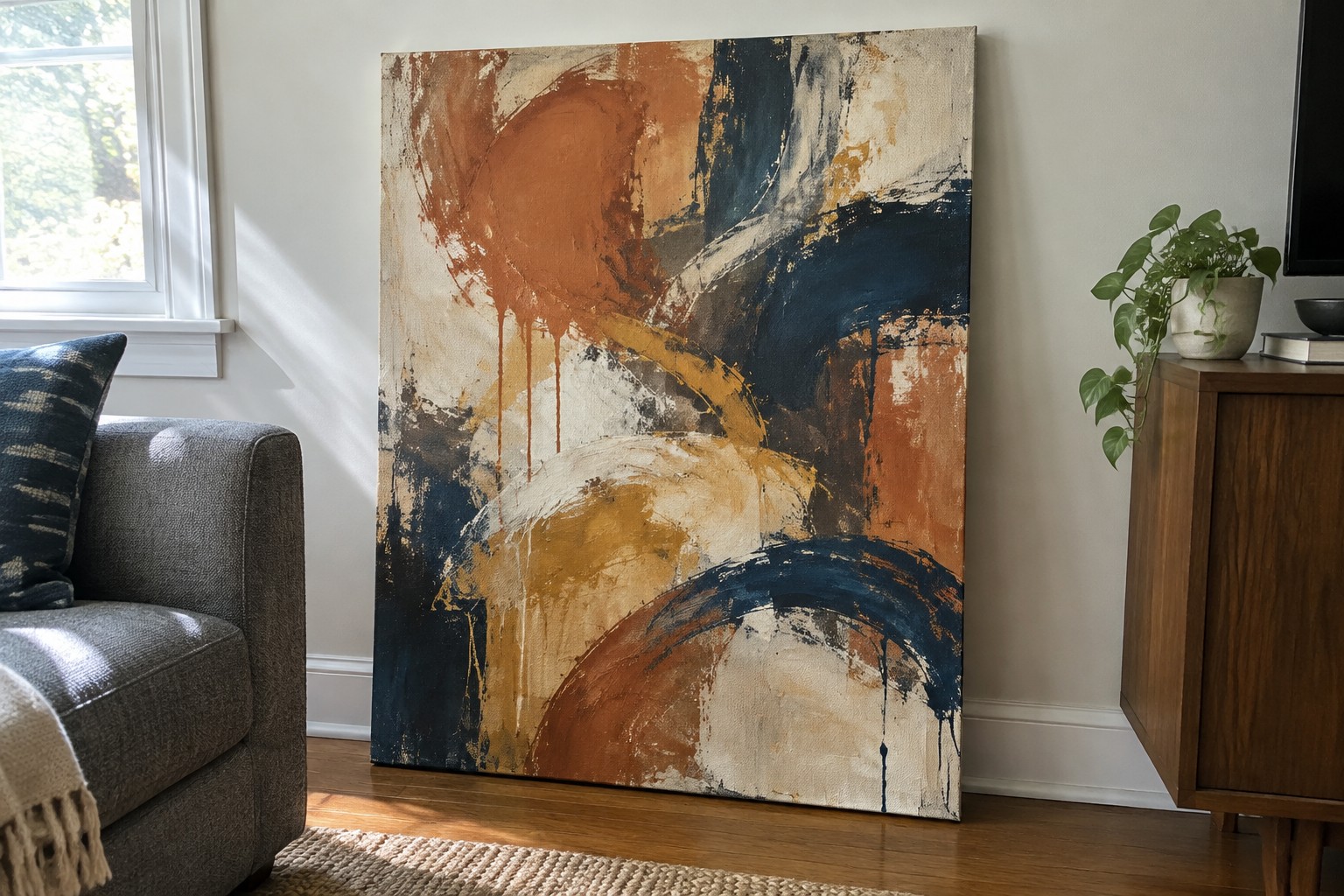
I have always liked working on large canvases because the extra space lets the brushstrokes feel more open and direct.
In my own painting I have found that expressive marks can carry a piece without needing a lot of extra detail.
Here I gathered 18 abstract acrylic works that keep the focus on that kind of brushwork.
They show different ways to build texture and movement across a big surface.
Seeing them together gives a clear view of how simple strokes shape the whole painting.
Expressive Brushwork in Rust, Navy, and Mustard
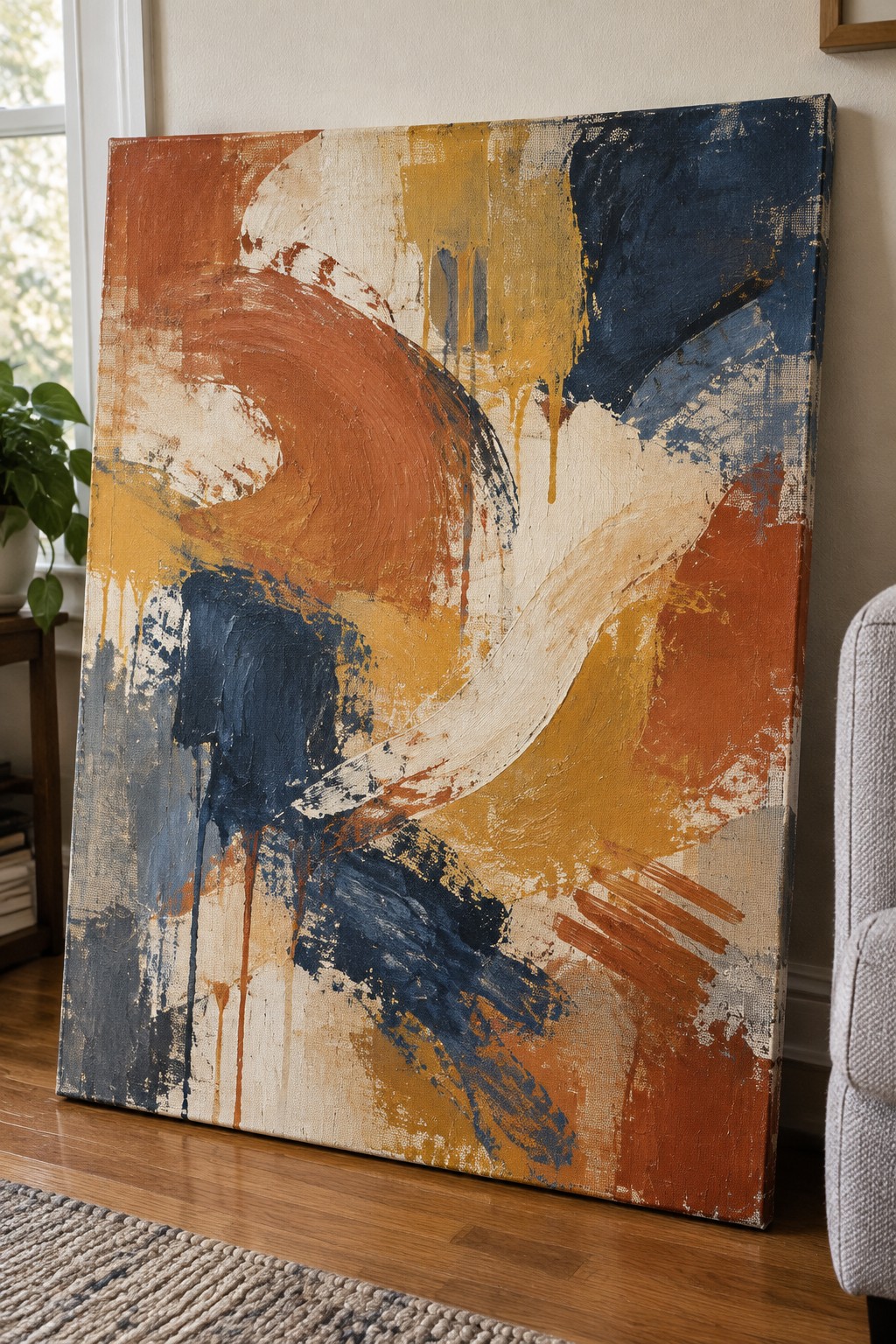
This painting idea centers on building a large abstract piece through wide, overlapping brushstrokes that move in different directions across the canvas. The limited palette of rust orange, deep navy, mustard yellow, and off-white keeps the focus on the mark-making itself rather than color complexity. The composition stays balanced because the strokes vary in size and direction while the drips and layers add texture without overcrowding the surface.
What makes this idea useful is how the big strokes let you fill a large canvas fast while still looking structured. The mix of warm and cool tones gives you a ready-made color scheme that works in many rooms, and you can swap any of the hues to match what you already have. For practice, this approach trains you to control brush pressure and edge quality instead of worrying about perfect shapes. The same layout can be simplified by using fewer colors or made more personal by changing the stroke direction in one section.
Vertical Brushstroke Abstracts in Muted Earth Tones

A large abstract painting built from overlapping vertical brushstrokes creates movement across the canvas without relying on defined shapes. The idea works because the strokes vary in width and pressure, letting colors like deep green, teal, soft pink, and gray blend where they meet while still keeping distinct edges. This approach fits the expressive abstract category and relies on texture and direction rather than detail to hold interest.
What makes this idea useful is how the vertical layout does most of the compositional work for you. The muted palette stays easy to adapt since the colors already sit well together and can be swapped for other earth tones without losing balance. You could try the same concept on a smaller scale by limiting yourself to four colors and letting the brushstrokes overlap less to keep the surface from getting muddy. For wall pieces, the height and texture give it presence even when the room has other patterns or furniture nearby.
Sweeping Blue Gestures Over Layered Neutrals
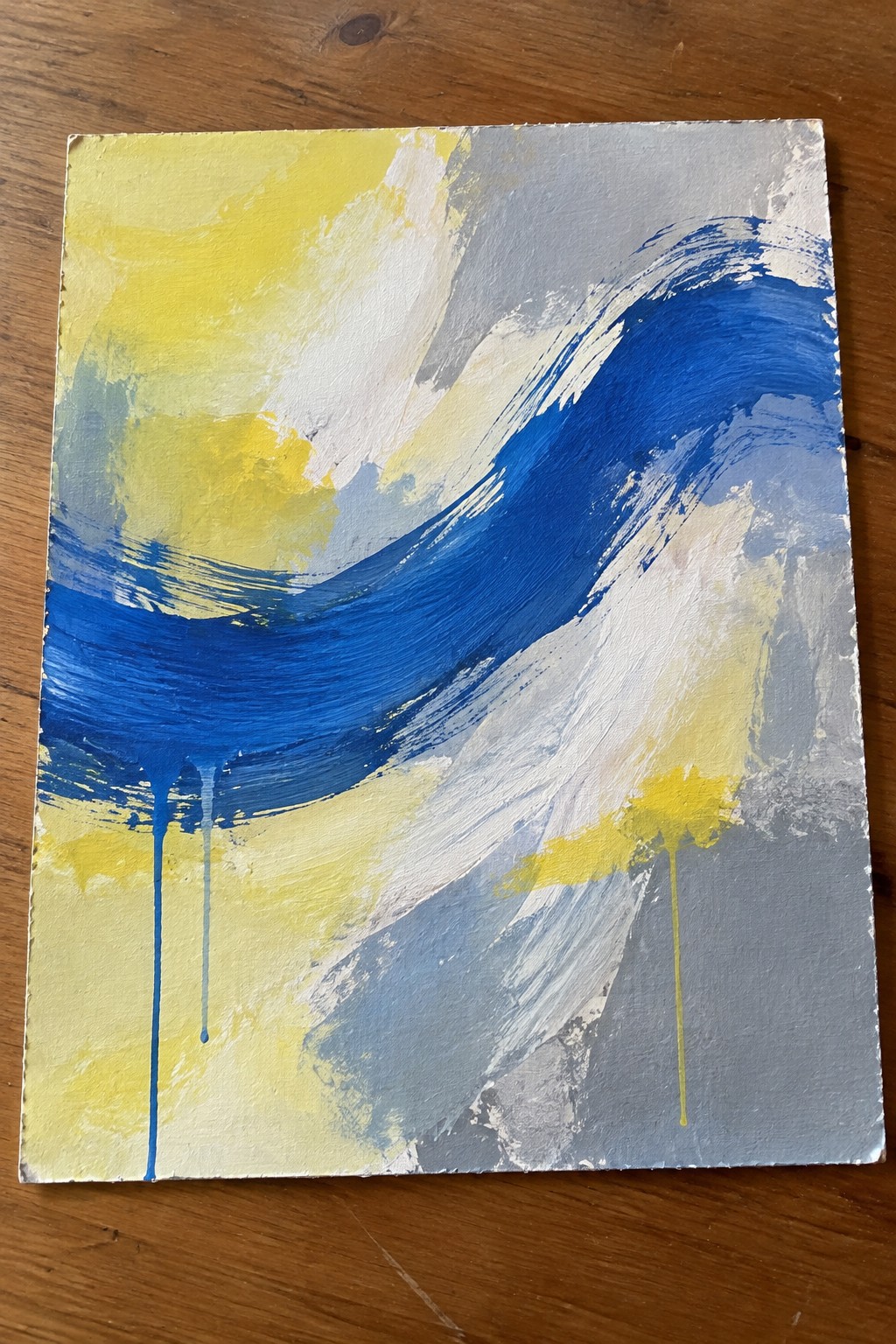
This painting idea uses one large curving brushstroke in strong blue to pull the eye across the canvas while a loose mix of yellow, white, and gray fills the rest of the space. The drips from the blue stroke and a small yellow accent keep the surface active without adding extra shapes or subjects. It fits the category of abstract work built around expressive brushwork on a large scale.
The composition does a lot of the work here since the single bold curve handles movement and focus at once. You could swap the background colors to fit different rooms or try the same stroke in another hue while keeping the background simple. For practice this approach works well on big canvases because the brushwork itself becomes the main event and leaves little room for overthinking details.
Concentric Circles Built with Bold Brushwork
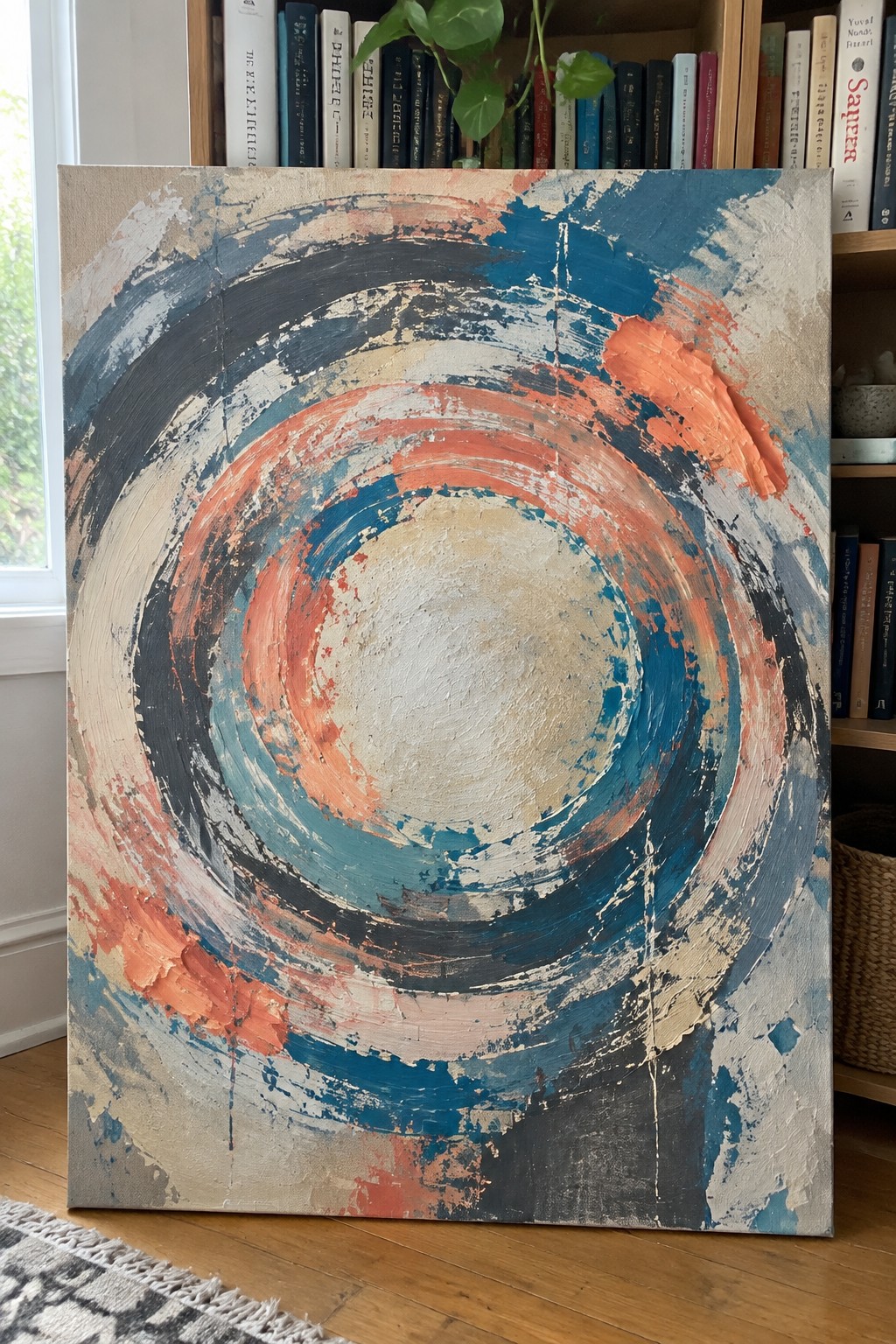
This painting idea centers on creating a large abstract composition from overlapping circular forms that expand outward with visible, directional strokes. The approach uses a limited palette of deep blue, coral, and muted neutrals to let the contrast and texture drive the energy across the surface. It belongs to the expressive abstract category where the painting idea comes from the rhythm of the marks and the way layers build depth without any specific subject matter.
The composition does a lot of the work here by using the natural pull of rings to keep the eye moving across a big canvas. You can adapt the idea by changing the color balance while keeping the same loose, overlapping stroke direction to suit your space. For wall art this scale works well because the brushwork stays bold and the neutral areas prevent it from feeling too busy. This would be easy to turn into a practice piece by blocking in rough circles first then adding layers of thicker paint on top.
Loose Grid Abstract Built from Bold Color Blocks
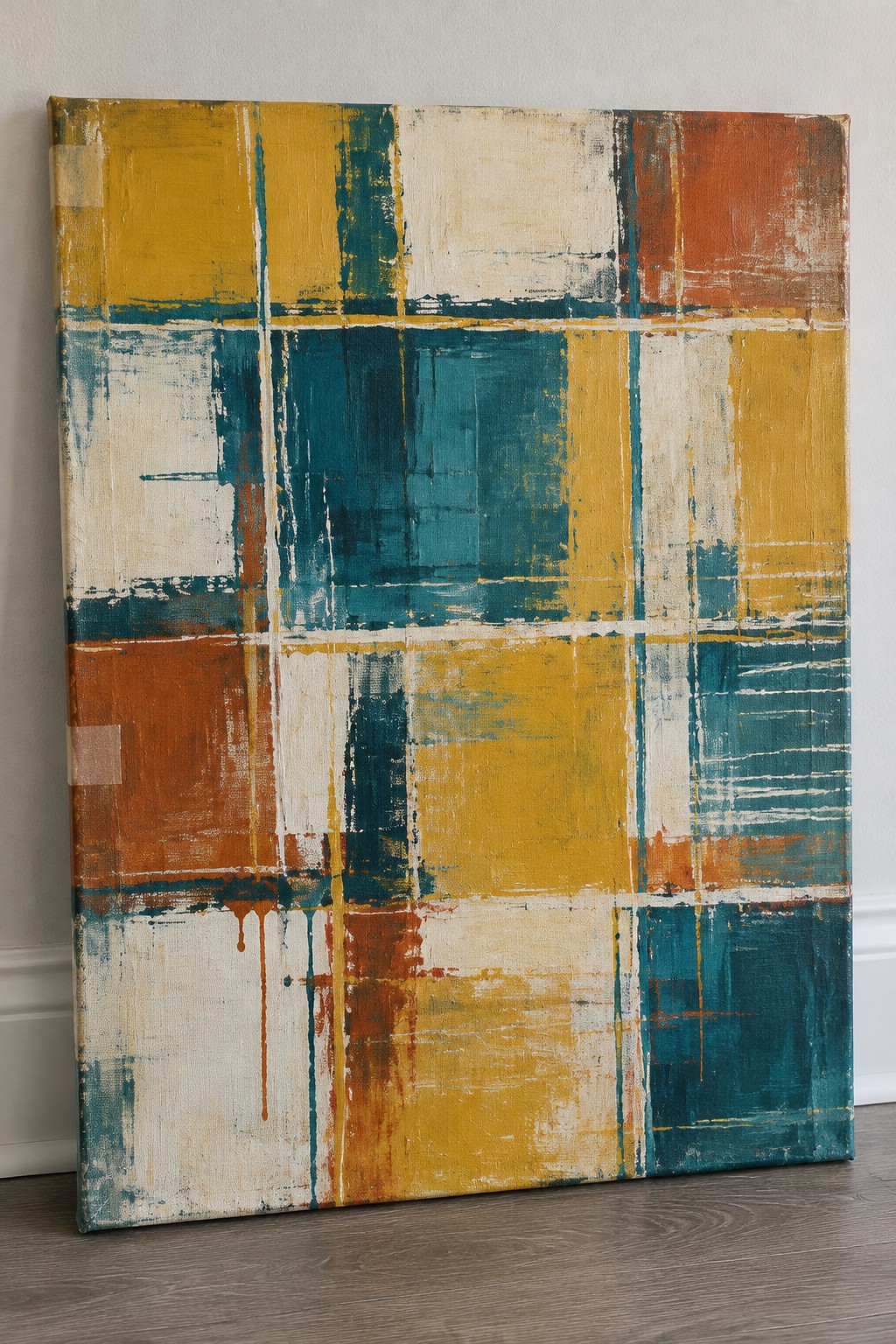
An abstract grid idea like this relies on dividing the canvas into uneven rectangles and filling them with strong color blocks in yellow, teal, orange, and off-white. The composition stays interesting because the brushstrokes run in different directions, some sections get heavier layering, and a few drips break up the straight lines. This approach fits squarely in the expressive abstract category where the focus is on color placement and mark-making rather than any recognizable subject.
The color palette makes this easy to adapt since you can swap in any warm and cool mix that matches your room. A painting like this works especially well for large walls because the simple shapes still read clearly from across the room. You could simplify it by using fewer colors or add more drips and overlaps if you want extra texture. For practice, this kind of subject helps you test how different brush pressures and paint thicknesses affect the final surface.
Abstract Landscapes Using Horizontal Color Bands
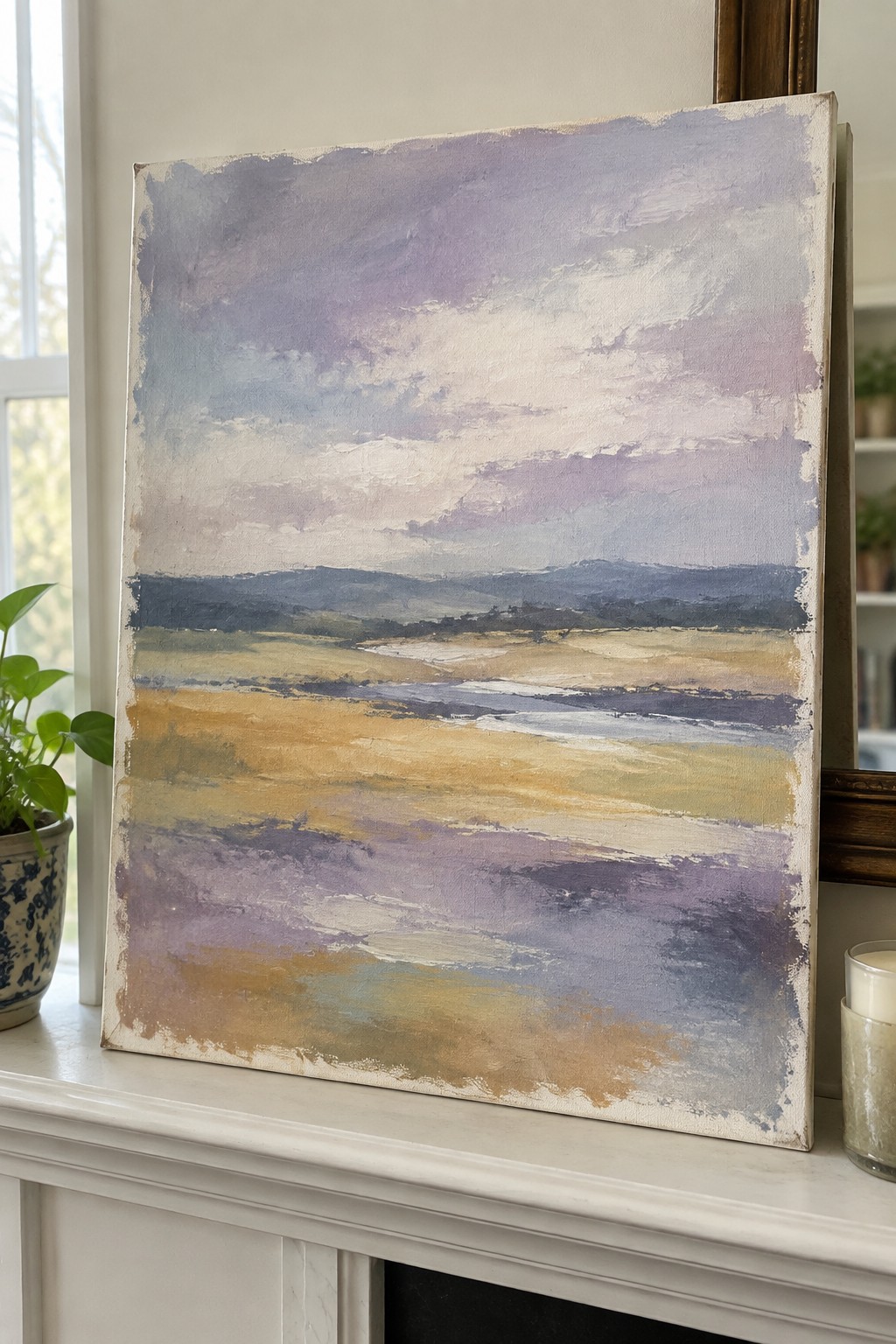
This painting idea uses stacked horizontal bands of color to suggest sky, distant hills, and open fields in a loose abstract landscape. Broad brushstrokes blend muted purples, blues, and warm earth tones to create depth through overlapping layers rather than outlines or details. The composition stays effective because the eye moves naturally across the bands, giving a sense of space without needing realistic perspective.
What makes this idea useful is how the simple horizontal structure lets you focus on color mixing and brush pressure instead of drawing. You can adapt the palette by shifting the top bands cooler for winter or warmer for autumn while keeping the same layout. For wall pieces, the loose style works at larger sizes since it does not rely on small details that might get lost. The same approach scales down easily for practice by limiting yourself to five or six color zones.
Expressive Black Brushwork with Red and Yellow Splatters

This painting idea uses bold, curving black strokes as the main structure, with red and yellow applied through loose splatters and drips that fill the spaces around them. The approach fits abstract art that relies on strong directional movement and a limited color palette to hold the composition together. The black marks create clear paths that keep the scattered color from feeling random.
What makes this idea useful is how the heavy black strokes give beginners something concrete to follow before adding the splatters. You can swap the red and yellow for other colors or reduce the splatter amount to make it calmer for smaller spaces. For practice, the same layout works well on different canvas sizes since the focus stays on brush pressure and direction rather than fine details.
Distressed Vertical Stripes in Muted Neutrals
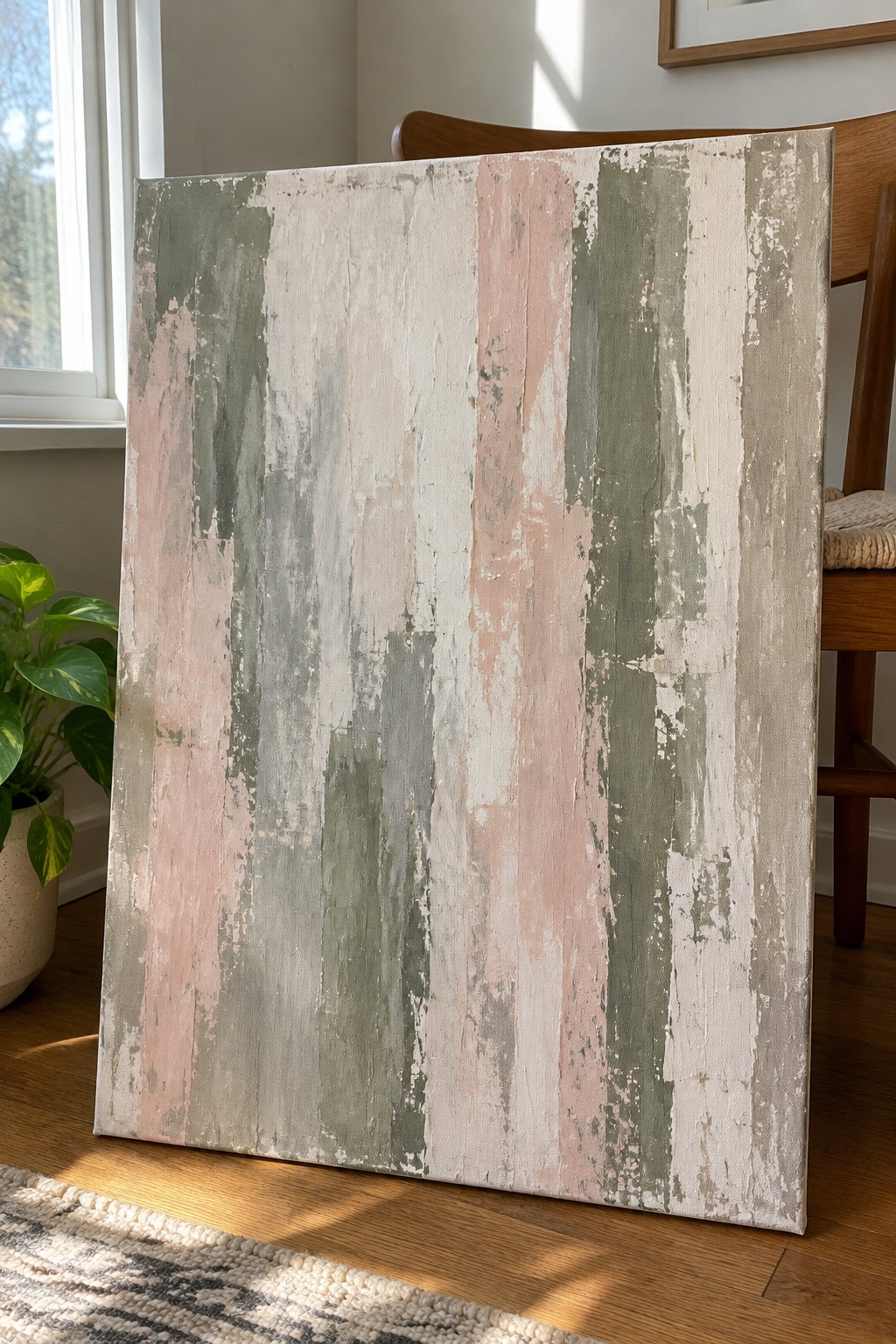
This painting idea uses vertical bands of color in soft pink, sage green, gray, and off-white to create a simple abstract layout. The main effect comes from layering paint and then scraping or rubbing it back to reveal the colors underneath, which gives the surface a worn, textured look. The composition stays balanced because the stripes run the full height of the canvas and the color shifts happen at uneven intervals.
What makes this idea useful is how the vertical format and limited palette keep the work focused on texture rather than drawing skills. You can easily change the colors to match a room or try different neutral combinations without redesigning the layout. For wall art, the large scale and distressed surface make it stand out in photos, and the same approach works on smaller canvases if you want quicker practice pieces.
Sweeping Black Gestures Over Layered Blue Neutrals
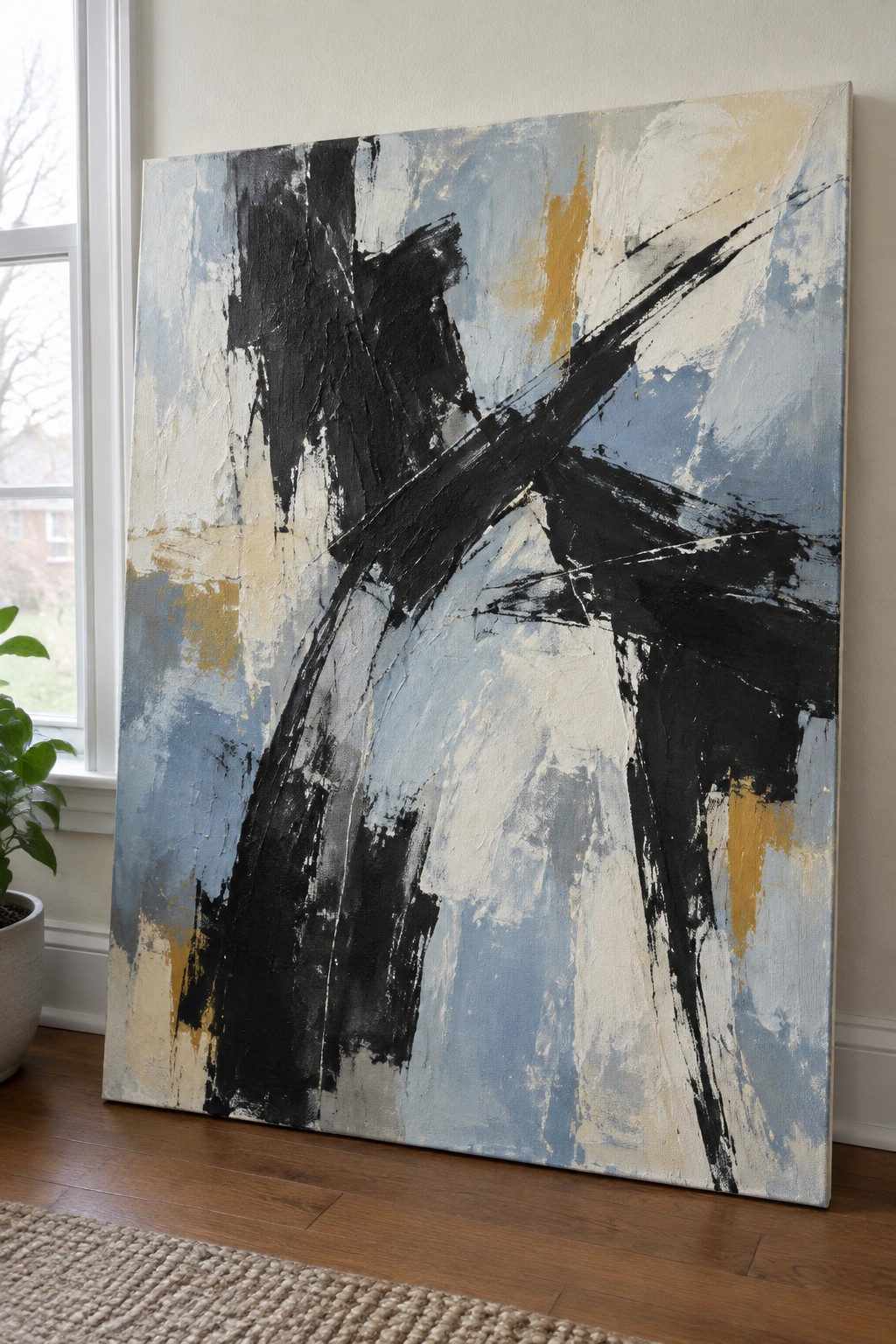
Large abstract paintings like this one center on bold, directional brushstrokes that cut across a soft background of blues, creams, and muted yellows. The heavy black marks create strong diagonal movement while the lighter layers underneath keep the surface from feeling flat. This approach falls squarely into expressive abstract work where the brushwork itself becomes the main subject.
The composition does a lot of the work here because the limited palette lets the black strokes stand out without competing colors. You can scale the same idea down to a medium canvas or swap the cool blues for earth tones if you want a different mood. For wall pieces, the size and contrast make it easy to adapt as a focal point in a living room or office, and the basic structure stays simple enough to try even if you are still building confidence with acrylics.
Bold Curved Strokes Across a Neutral Ground

This painting idea uses large, repeated curved brushstrokes in teal, green, brown, and cream to fill a big canvas with movement. The strokes overlap and vary in size and direction, which keeps the eye traveling across the surface without any single area dominating. It fits the category of expressive abstract work where the brushwork itself is the main subject.
What makes this idea useful is that the stroke shapes are easy to repeat even on a big surface, so you can focus on speed and pressure rather than precision. The neutral background lets you swap in different color families later without repainting the whole thing. For practice, start with three or four colors on a medium canvas, then try the same layout on a larger one if you want something for a wall. The pattern also photographs clearly for sharing, which helps it stand out in a feed.
Vertical Washes with Contrasting Linear Marks
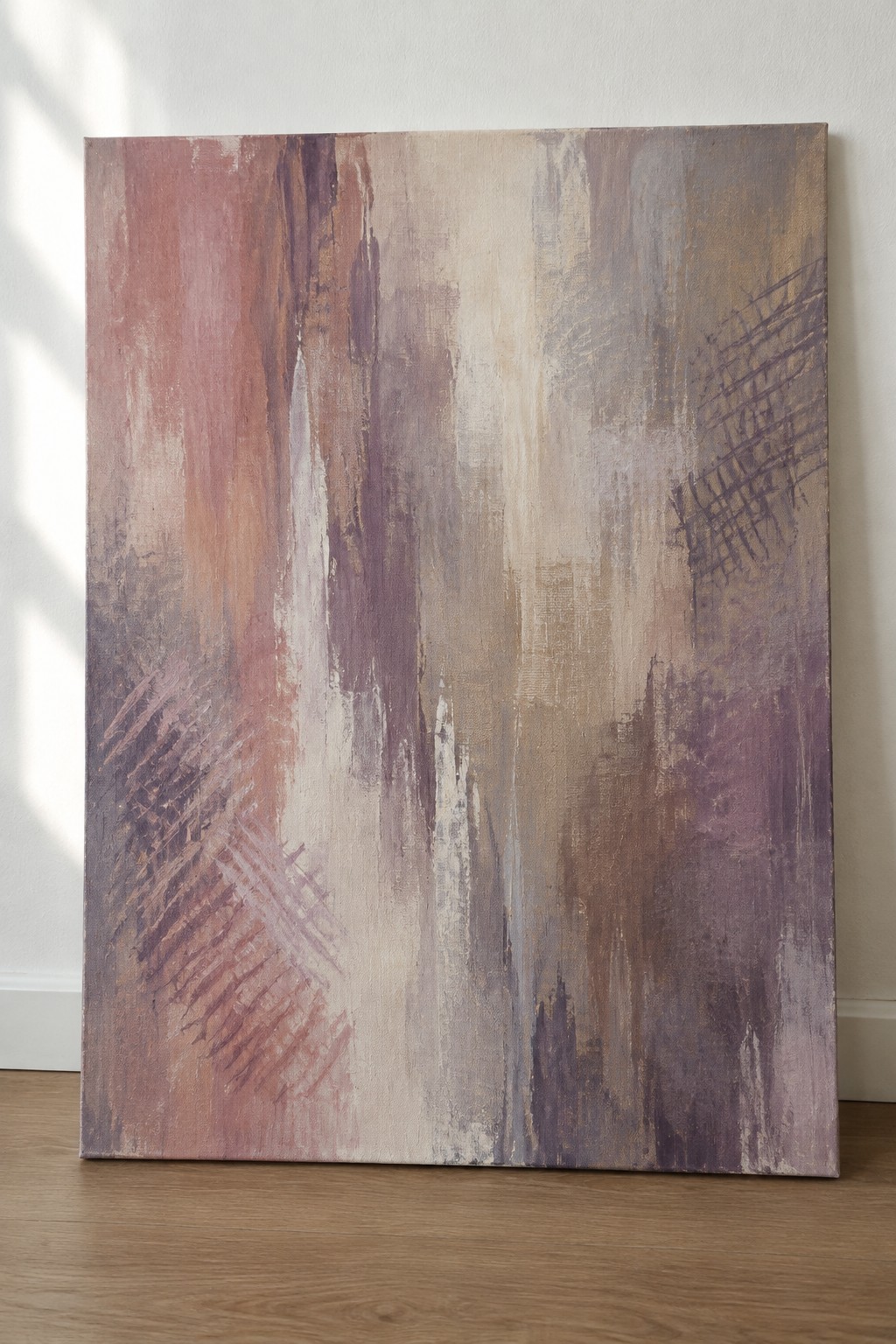
This painting idea focuses on building a large abstract through loose vertical brushwork and color washes that run down the canvas in a muted mix of rose, purple, beige, and brown. The composition gains interest from the contrast between soft blended areas and the sharper grid-like marks added on the sides, which break up the flow without overpowering it. It sits squarely in abstract decorative art, where the goal is texture and vertical movement rather than any recognizable subject.
The composition does a lot of the work here by letting drips and vertical strokes create height and depth on a big canvas. A painting like this works especially well for wall art because the tall format and earthy palette fit easily into many rooms without clashing. You could simplify it by skipping the side marks and focusing only on the washes, or shift the colors toward blues and greens if you want a cooler version for practice or a different space.
Crossing Bold Strokes in Limited Colors

This painting idea uses a few strong diagonal brushstrokes to divide the canvas and create movement. The red stroke cuts across from top left to bottom right while a teal block sits on the opposite side, with black marks anchoring the lower left. The neutral beige ground lets the colors stand out without extra elements competing for attention.
What makes this idea useful is how the simple layout and restricted palette reduce the number of choices you need to make on a large canvas. You can adapt the same structure by changing the angle of the main stroke or swapping in different color pairs that still contrast sharply. For practice, this kind of painting works well because it trains brush control and layering while still producing a finished piece that reads clearly from across the room.
Large Abstract with Overlapping Color Blocks
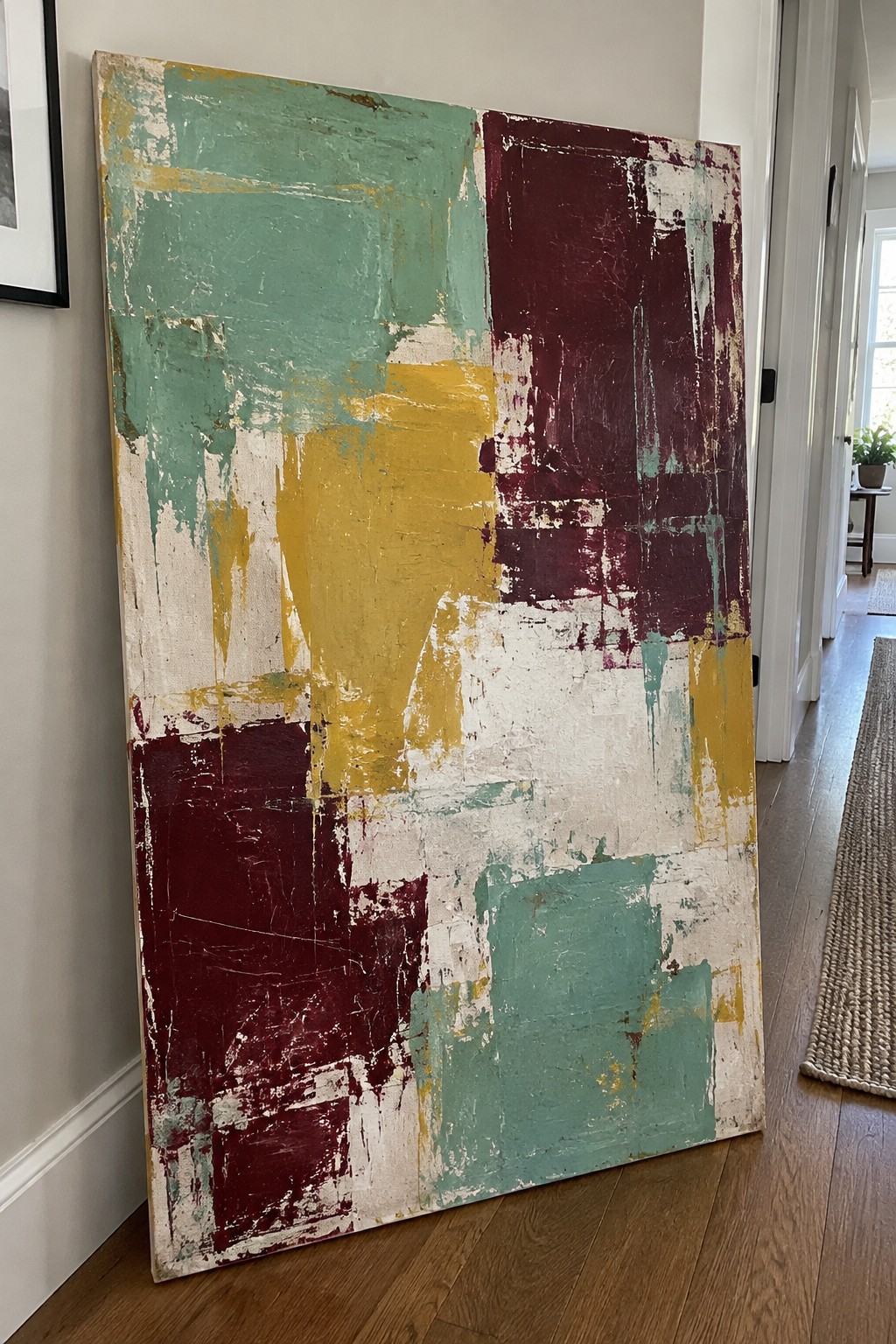
Large abstract paintings built this way focus on big, irregular color areas that overlap and interact rather than any specific subject. The core idea is letting wide brushstrokes and visible texture carry the interest, with a tight palette of teal, mustard yellow, and deep maroon keeping the piece unified. The composition stays balanced because the colors are distributed in uneven blocks that pull the eye across the whole canvas without crowding any single area.
What makes this idea useful is how the straightforward block layout lets you practice bold strokes and layering on a big surface without needing small details. You can easily adapt the same approach with different color combinations or a smaller canvas if you want to test it first. For wall pieces, the scale and raw texture give it more impact than smoother styles, and the limited palette makes it simple to match existing room colors.
Layered Circles with Loose Brushstrokes
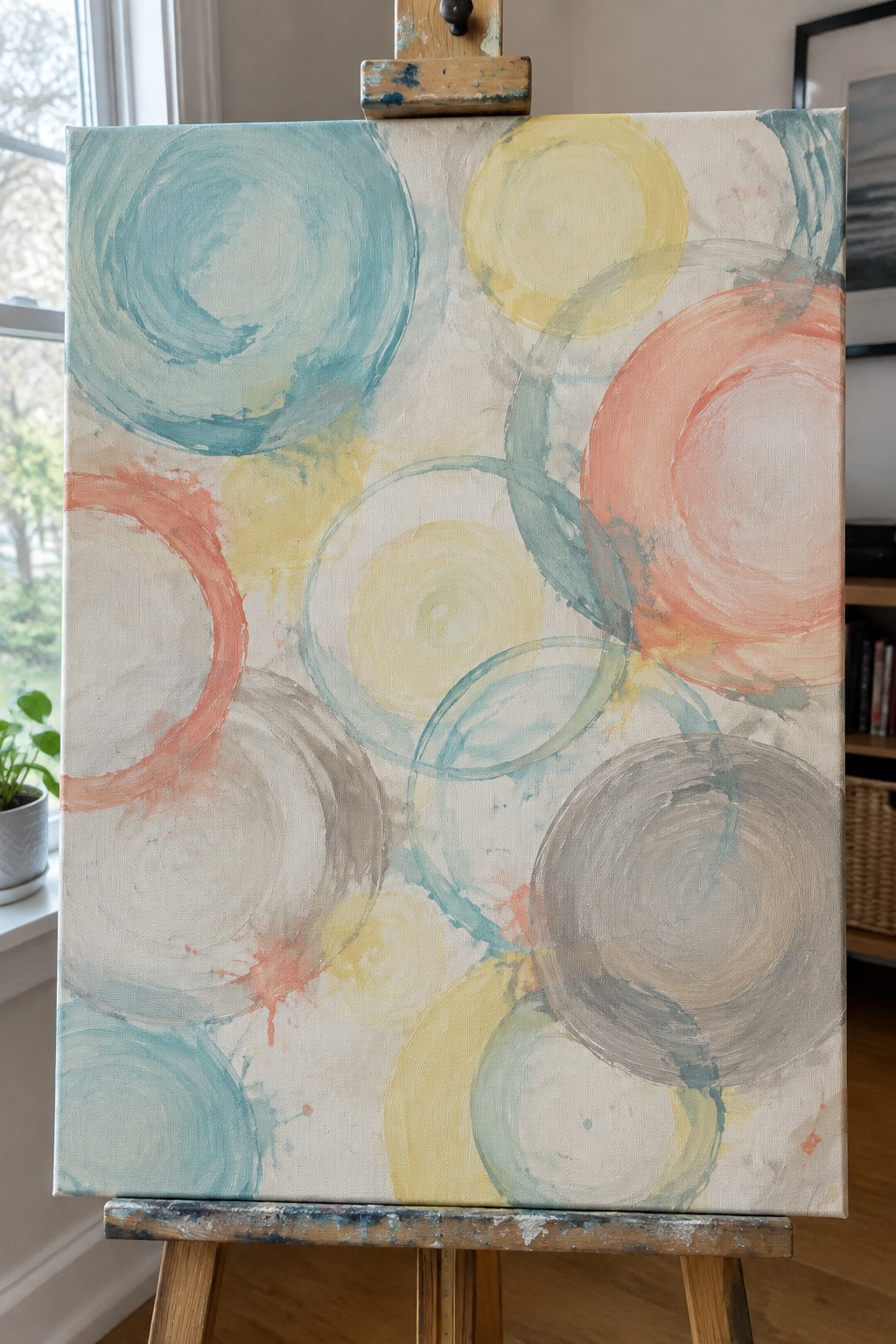
An abstract painting idea centered on overlapping circles works by letting each shape show its own brush direction and paint thickness. The colors stay soft and limited to teal, yellow, coral, and gray so the forms blend without competing. This setup keeps attention on the movement of the strokes rather than on any single element or detail.
The composition does a lot of the work here because the repeated circle shapes are easy to sketch out first and then fill in at any size. You can shift the color mix or change how much the circles overlap to match a room’s existing tones. For wall art, this approach scales cleanly to large canvases while still looking intentional even when the brushwork stays visible and uneven. It would save well as a starting point for anyone who wants to practice building depth through layers instead of adding more colors.
Horizontal Brushwork in Layered Earth Tones
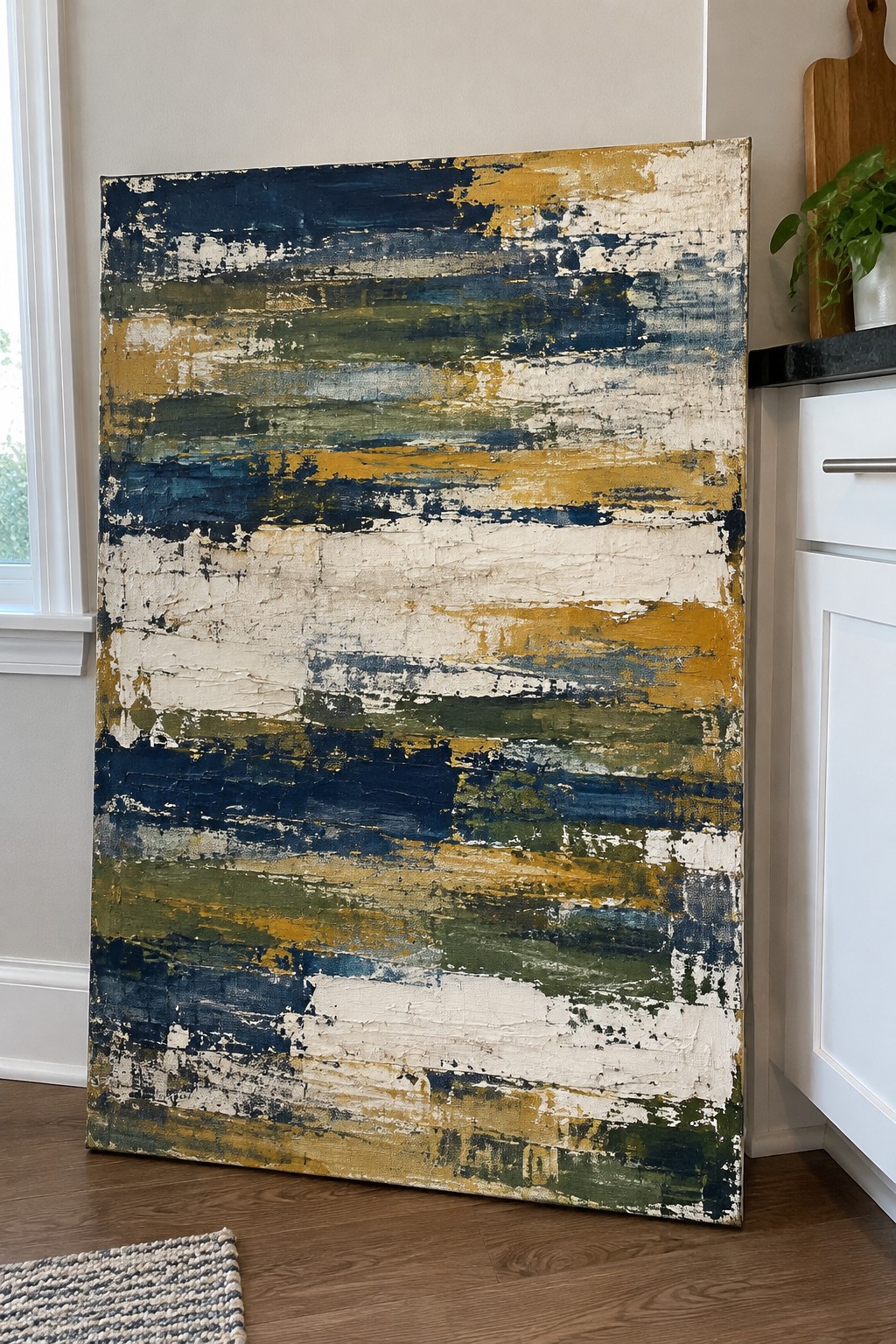
This painting idea uses wide horizontal brushstrokes to build an abstract composition across a large canvas. Overlapping layers of deep blue, mustard yellow, olive green, and cream create contrast and keep the eye moving left to right. The visible texture from the brush marks adds depth without relying on any specific subject or fine detail.
What makes this idea useful is how the horizontal layout fills wall space effectively and works at any size. You can swap the colors to match a room by keeping the same mix of dark, warm, and neutral tones. For practice, focus on varying stroke thickness and letting some layers show through rather than covering everything. The bold marks also photograph well for sharing or pinning.
Sweeping Black Gestures Over Blended Neutrals
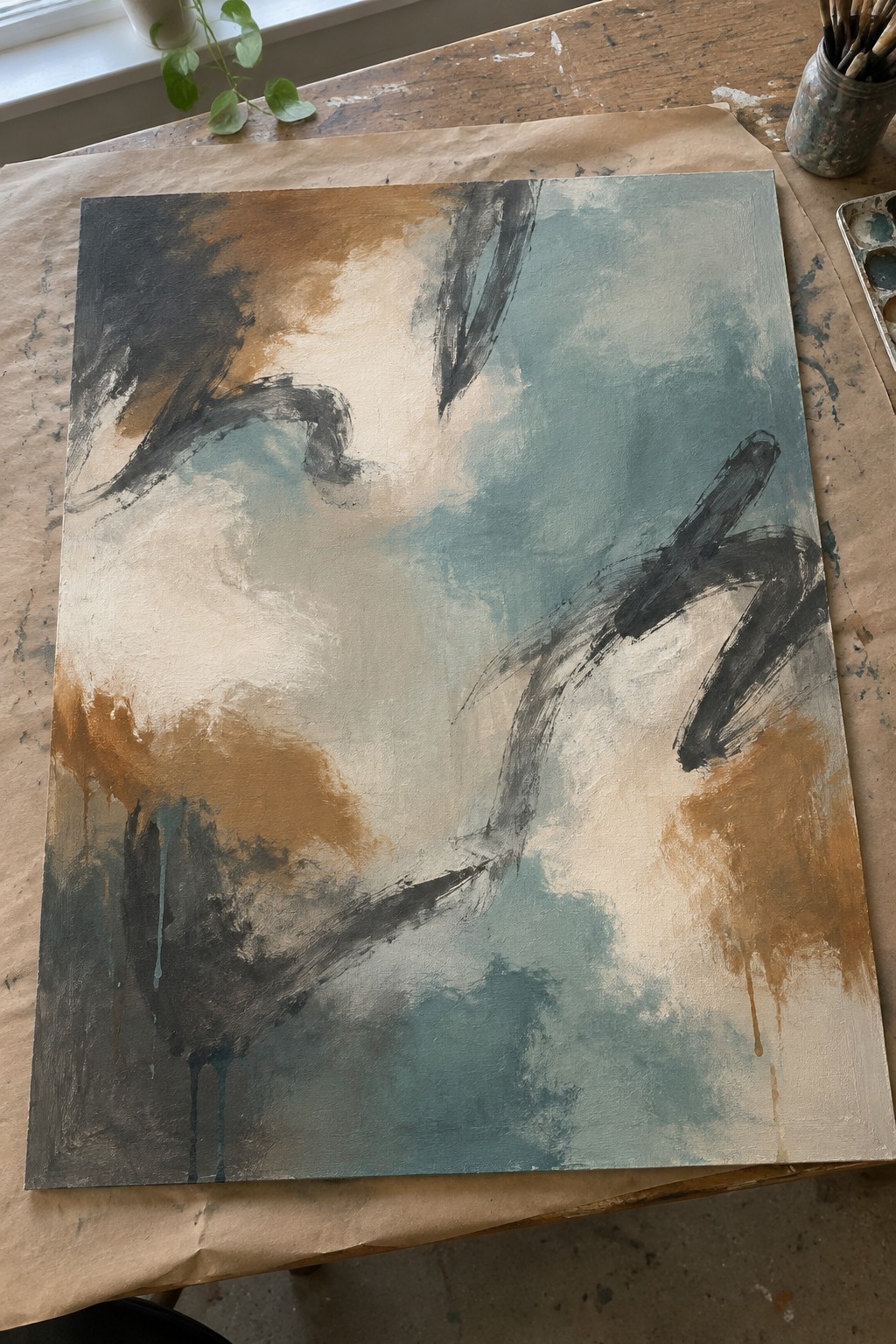
This painting idea uses large, directional black brushstrokes to cut across a soft, layered background of brown, beige, and teal. The strokes vary in pressure and direction, creating movement without filling the entire surface. The approach works well as a pure abstract exercise where the contrast between the dark marks and the lighter ground does most of the visual work.
What makes this idea useful is that the simple color range lets you focus practice time on brush control and gesture. You can swap the background tones to fit different rooms while keeping the same black strokes, or reduce the canvas size if a full large piece feels intimidating. The open space around the marks also makes the composition easy to adapt by adding or removing strokes until the balance feels right.
Sweeping Arcs in Coral and Sage
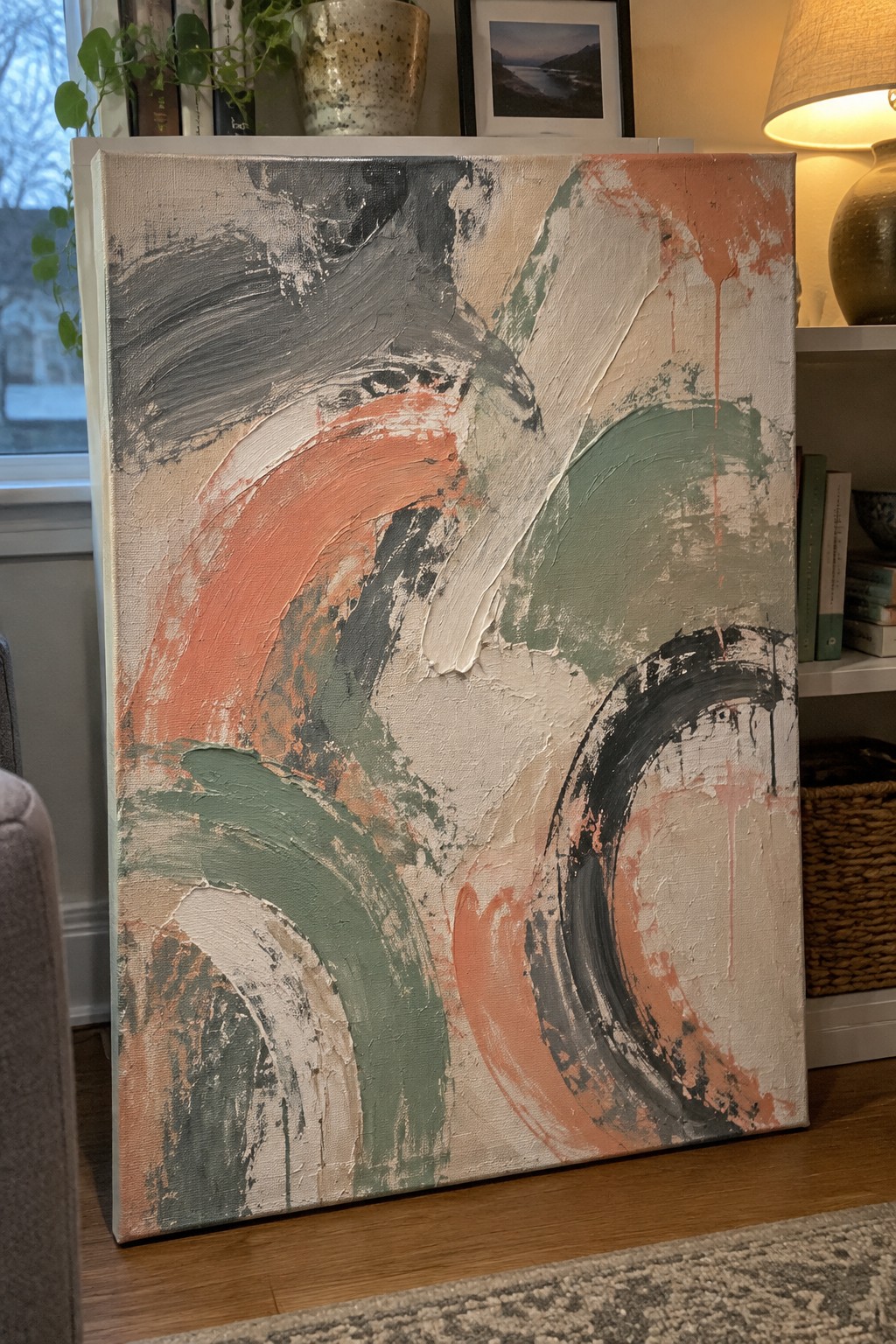
This painting idea focuses on building a large abstract piece through overlapping curved brushstrokes that create movement across the canvas. The main concept uses a restrained palette of coral, sage green, black, and warm neutrals, with thick and thin strokes layered so the shapes feel connected but not crowded. The composition works because the arcs vary in size and direction, which keeps the eye moving without needing extra elements or fine details.
The composition does a lot of the work here since the curved forms naturally guide the viewer and hold attention on their own. You could adapt the idea by changing the accent color to match a room or shrinking the scale for a quicker practice session while keeping the same loose layering approach. For wall art this kind of painting idea stands out on Pinterest because the bold marks read clearly even in a thumbnail, and the neutral base makes it easy to personalize with different accent shades.
Layered Fan Strokes Over Textured Neutrals

This abstract idea centers on building a large canvas with repeated fan-shaped brushstrokes that overlap and vary in direction. The approach relies on a muted palette of teal, mustard, coral, and soft gray applied over a heavily textured base layer. The arcs create visual movement while the scattered color blocks and visible underlayers keep the surface from feeling flat or repetitive.
What makes this idea useful is how quickly the bold strokes cover a big surface without needing fine detail. You can start with a scraped or dry-brushed background, then add the fan marks in stages, letting some of the base show through. The limited color range makes it easy to repeat with different shades you already have on hand, and the same layout works at smaller sizes if you want practice pieces. For wall art, the mix of texture and open areas gives it presence without looking overcrowded.
Frequently Asked Questions
What does expressive brushwork involve in abstract acrylic paintings? Expressive brushwork refers to dynamic, visible strokes that convey emotion and energy rather than precise details. In these 18 large paintings it creates movement and texture through varied pressure, speed, and layering of acrylic paint. Viewers can appreciate how each stroke builds depth and invites personal interpretation of the abstract forms.
What sizes are typical for these large abstract works and why does scale matter? These paintings often range from 48 by 60 inches up to 72 by 96 inches. The large scale allows the brushwork to feel immersive so that viewers experience the energy of the strokes up close while the overall composition holds together from a distance. This size helps the abstract elements dominate a room and encourages prolonged engagement with the piece.
How are acrylic paints and expressive techniques combined in these creations? Acrylics dry quickly which suits bold layering and allows artists to build texture without long waits between applications. Expressive brushwork might include sweeping motions, scraping, or dry brushing to reveal underlayers. The result is vibrant surfaces with visible marks that highlight the physical act of painting and add tactile interest to each of the 18 works.
What inspirations or themes connect the 18 paintings in this collection? The series explores themes of emotion and natural forces through abstract means with each painting varying in color intensity and stroke direction. Common threads include contrasts between calm and turbulent areas that reflect personal experiences or environmental observations. This approach gives the collection cohesion while allowing individual pieces to stand alone.
How should these large acrylic paintings be displayed and maintained? Hang them on sturdy walls away from direct sunlight to prevent fading and use appropriate hardware for the weight. Dust gently with a soft cloth and avoid harsh cleaners. Proper lighting from above or the side enhances the brushwork textures so the expressive qualities remain visible over time.
