

I like to keep a few small canvases around for when I feel like painting without any big plan.
Organic shapes come up a lot in my work because they feel simple to sketch and don’t require perfect lines.
Over time I have collected some of my own versions that stay abstract and use soft forms.
These ideas are all mini so they fit on a shelf and don’t need much paint or time to finish.
I hope one or two of them might be useful if you want to try something similar.
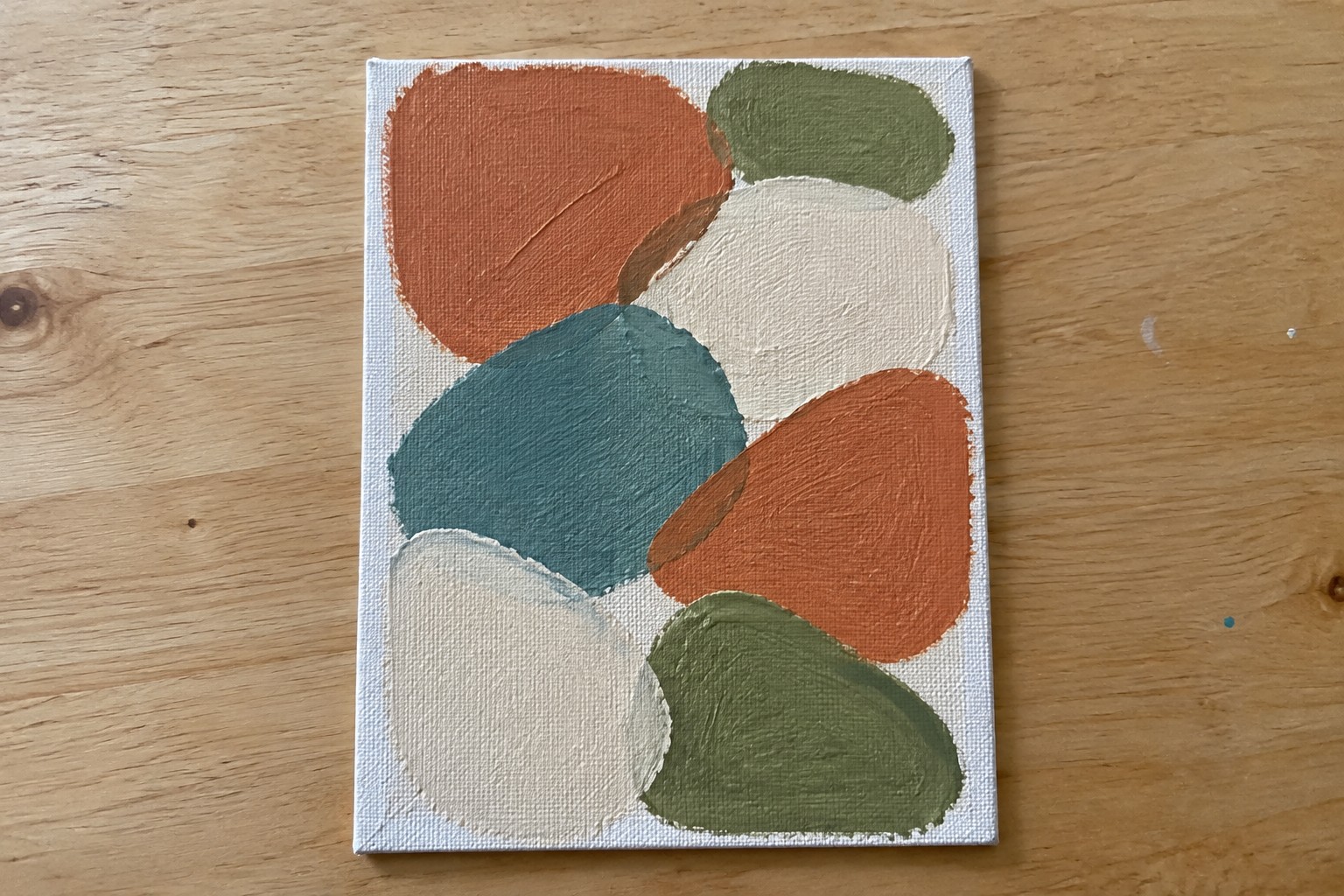
Overlapping Earthy Shapes in a Neutral Palette

This idea uses a handful of rounded organic shapes stacked loosely across the canvas in an abstract arrangement. The palette sticks to terracotta, teal, olive, and beige so the colors balance each other without competing. Varying the size and placement of the shapes creates movement while the white background keeps everything readable.
What makes this idea useful is how the neutral colors work in most rooms without needing a specific theme. You can swap the teal for another earth tone or shrink the whole layout to fit a smaller canvas. The overlaps also cover up any rough edges, so it stays forgiving if you want to practice loose brushwork or make a quick wall piece.
Overlapping Organic Shapes in Soft Pastels

This painting idea centers on building an abstract composition from rounded and teardrop forms that overlap in a loose cluster. The soft blending between teal, coral, lavender, and gray tones creates depth through simple layering rather than detailed rendering. It fits the decorative abstract category because the irregular shapes and muted palette keep the focus on balance and color harmony instead of precise subjects.
The composition does a lot of the work here by letting shapes sit at different angles and sizes to fill the space without feeling crowded. You can adapt the idea easily by swapping in your own color palette or shrinking the scale for a tiny canvas. For beginners, this works well as practice in shape placement and wet-on-wet blending since the forms do not require clean edges. It would translate nicely to acrylics if you want more control over the overlaps.
Stacked Organic Ovals in Earth Tones

Paint a vertical stack of irregular oval shapes in a limited palette of yellow, teal, rust, beige, and peach to create a balanced abstract composition. The idea works by varying the size, tilt, and overlap of each form so the eye travels naturally from top to bottom. Some ovals get simple dot patterns while others stay solid, which adds just enough texture without complicating the overall design.
The composition does a lot of the work here because the staggered placement keeps things interesting even with basic shapes. This approach is easy to adapt by changing the color order or reducing the number of ovals for a smaller canvas. For practice or quick wall pieces, the limited palette and straightforward layering make it simple to finish in one session or repeat with different hue combinations.
Organic Curves with Scattered Petal Forms
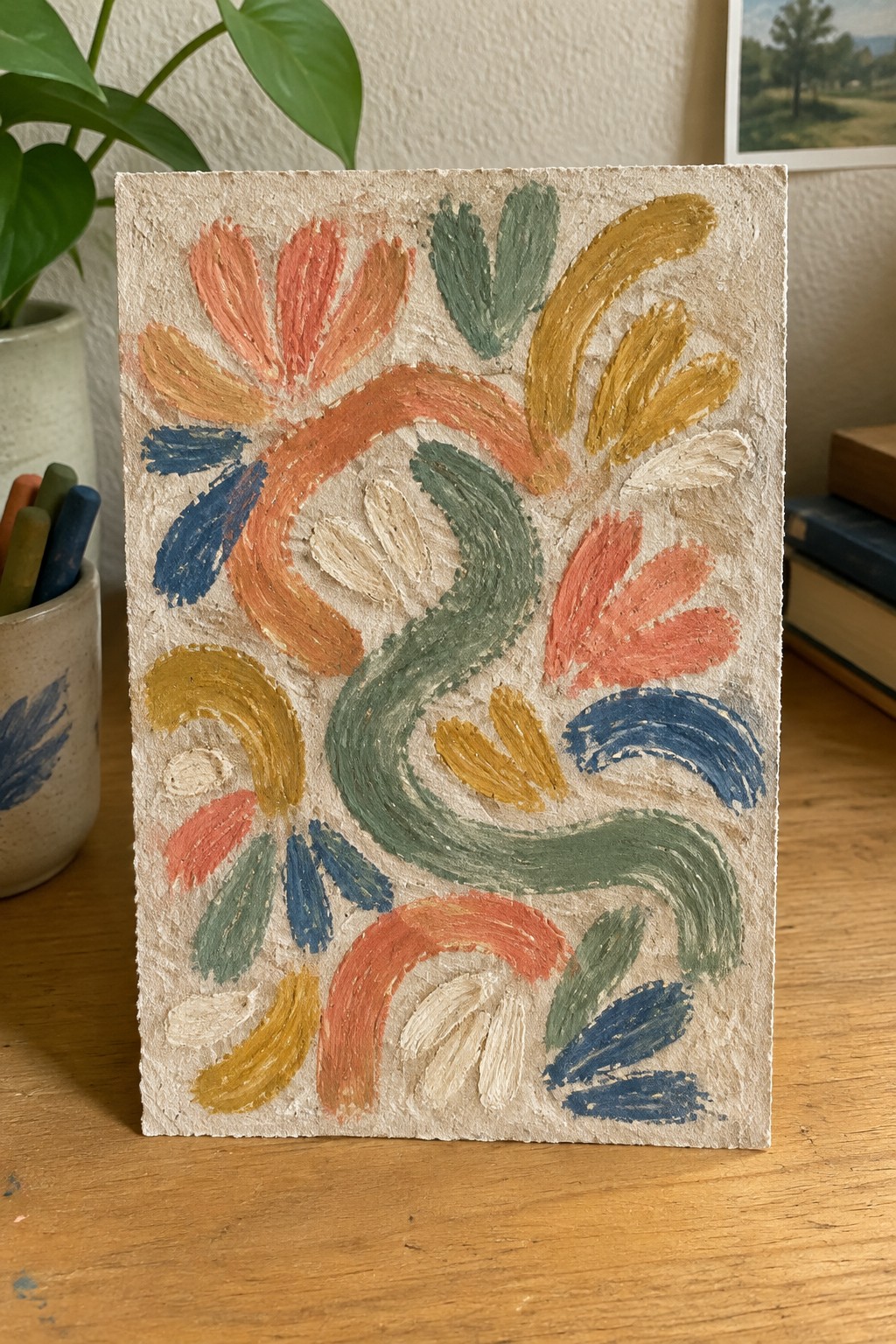
This painting idea uses overlapping curved bands and simple petal shapes to build an abstract composition that feels active without being crowded. The main flow comes from one large looping form that connects smaller clusters of color around it, creating movement across the surface. It works as decorative abstract art that focuses on shape and color balance rather than any specific subject.
What makes this idea useful is how the thick, visible brushstrokes hide small mistakes and add instant texture on a mini canvas. The color palette stays limited to four or five tones, which makes mixing easier and keeps the piece from feeling busy. You can adapt it by stretching the curves wider or dropping a few accent shapes if you want a calmer version for wall art or gifts.
Layered Organic Shapes with Splatter Details

This idea centers on three overlapping rounded forms in teal, yellow, and coral that create new blended colors where they meet. The loose outlines and visible brush marks give the shapes an organic, hand-painted feel while the scattered dots in matching colors add movement without filling the whole canvas. The white background keeps the focus on the shapes and lets the overlaps do most of the visual work.
What makes this idea useful is how the limited palette and simple overlapping structure make it easy to recreate at any size. You can swap the colors to match a room or try different background tints while keeping the same layout. For practice, the loose edges and small canvas size let you experiment with blending without committing to a large piece. The scattered dots also give a quick way to add interest if the shapes alone feel too plain.
Layered Organic Shapes in Muted Neutrals
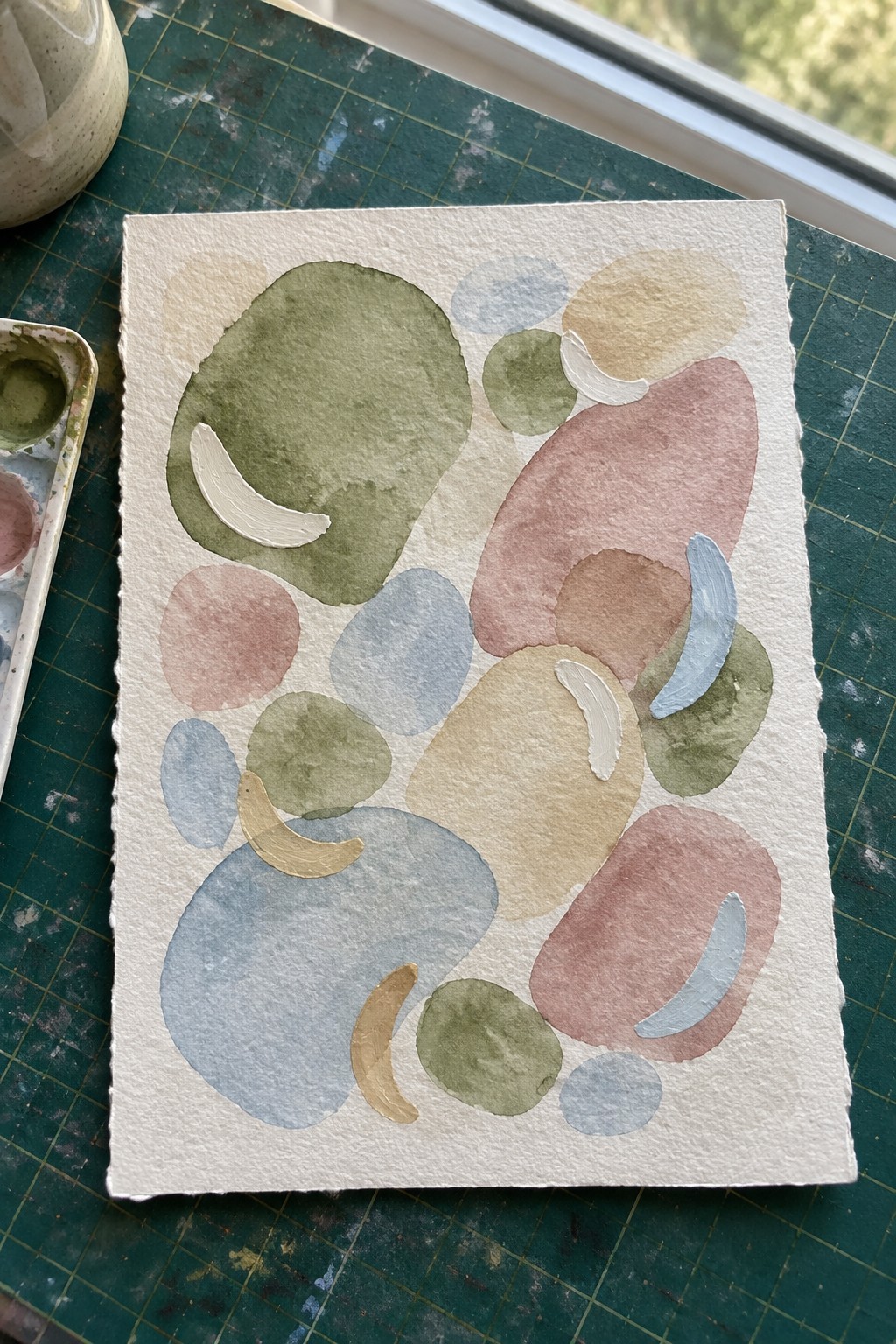
Abstract paintings built from overlapping rounded forms work well when the shapes vary in size and the colors stay within a limited palette. The soft edges and gentle overlaps create movement across the surface without requiring tight control or fine detail. A few lighter strokes on some shapes give just enough contrast to keep the eye moving while the rest of the piece stays relaxed.
What makes this idea useful is how simple it is to change the color mix for different rooms or seasons. You can reduce the number of shapes for a quicker version or enlarge a few forms to fill more of the canvas. The plain background does most of the work by keeping attention on the shapes themselves. For practice pieces or small wall art, this approach adapts easily to whatever paper or canvas size you already have on hand.
Overlapping Ovals and Leaves in Muted Neutrals

This painting idea centers on arranging rounded oval shapes of different sizes alongside curved leaf forms to fill the canvas without a clear focal point. The shapes overlap slightly and sit at varied angles, which keeps the eye moving across the surface while the soft edges prevent anything from feeling too rigid. It works as a straightforward decorative abstract piece that relies on color grouping and negative space rather than precise outlines.
What makes this idea useful is how the limited palette of sage, lavender, taupe, and beige lets you test color combinations without needing many paints. You can simplify it further by using fewer shapes or adapt the layout to fit a horizontal or vertical canvas. The approach also translates well to quick studies on paper before committing to canvas, and the overall balance makes it easy to match with neutral room colors.
Layered Concentric Circles in Earth Tones

This painting idea focuses on building an abstract composition from overlapping sets of concentric circles. The rings vary in size and sit at different angles, which creates natural movement across the canvas. A muted palette of deep blue, peach, olive, and cream keeps the layers distinct while letting them blend where they meet.
What makes this idea useful is how the overlapping shapes handle the layout work for you. You can shift the colors to match a specific room or swap one ring set for a different hue without changing the overall structure. For practice, the subject gives you room to focus on brush pressure and edge blending instead of drawing accuracy. The same arrangement works just as well on a smaller canvas or as a starting point for adding more rings later.
Layered Organic Shapes Forming an Abstract Horizon

This painting idea builds a simple landscape from stacked horizontal bands of curved shapes that suggest sky, distant hills, and foreground without any outlines or details. The composition works by letting the colors shift gradually from cool blue at the top through warmer browns and grays below, with soft edges that keep the eye moving across the surface. It belongs to the abstract landscape category where the main goal is to explore shape flow and color relationships on a small scale.
The stacked layout does most of the work here, so you can finish the piece quickly even on a mini canvas. You could easily change the palette to cooler tones or add one more layer if the current balance feels too even. For practice this kind of subject helps you focus on brush direction and edge control without worrying about drawing anything specific, and the same idea scales well if you want to make a matching set for a wall.
Overlapping Leaf Shapes in Soft Pastel Watercolors

This painting idea uses simplified leaf forms arranged in a loose radial pattern, with each shape layered over the next to create a sense of depth through color overlaps. The soft edges and translucent washes let the shapes blend where they meet, giving the composition movement without hard lines or detailed veins. It falls into the category of abstract organic art that reduces natural elements to basic flowing silhouettes.
What makes this idea useful is how the circular layout does most of the compositional work, so you only need to focus on varying the colors and slight angles of each leaf. The muted palette of teal, sage, and peach can be swapped for any season or room color scheme without changing the structure. For mini canvases, the same idea scales down easily by reducing the number of leaves to five or six while keeping the overlap technique. This type of piece tends to perform well on Pinterest because the clean organic shapes read clearly even as thumbnails.
Organic Shapes with Textured Dot Accents

This painting idea centers on overlapping curved forms in coral, teal, and brown set against a white background. The shapes vary in size and placement to create movement while the white negative space prevents the design from feeling heavy. Raised dots in a few areas add light texture that contrasts with the flatter painted sections.
The composition does a lot of the work here by letting the organic outlines and limited palette handle most of the visual interest. You can adapt it quickly by changing the color pairing or reducing the dots to simple brush marks if texture feels like too much. For mini canvases this approach works well because the shapes stay readable even when scaled down and the white background makes it easy to match different room styles.
Abstract Organic Shapes in Muted Earth Tones

This painting idea uses several irregular rounded forms in soft, dusty colors arranged across a light background with noticeable breathing room between each shape. The limited palette of rose, sage green, navy, cream, and a small accent pink keeps the focus on shape variation and subtle texture from the brushwork. Thin looping lines and scattered dots add just enough movement and connection without complicating the overall layout.
What makes this idea useful is how the loose shapes let you practice color mixing and edge control without needing perfect symmetry. You can easily adjust the number of forms or swap in similar muted tones to match different rooms if you are making wall pieces. The scattered dots and lines also give you a simple way to add interest on a second pass if the first layer feels too empty.
Overlapping Curved Shapes in a Mixed Palette

Abstract ideas built from stacked rounded forms work well when the colors shift between warm and cool tones across the layers. The shapes here stay simple and organic so the focus stays on how they overlap and blend at the edges. This keeps the composition balanced without needing any hard outlines or detailed work.
What makes this idea useful is how the same layout adapts quickly to different canvas sizes or color schemes you already have on hand. You can swap the yellows for other warms or push the teals toward greens depending on the room. The soft blending also makes it forgiving for practice sessions where you want to test color mixing without starting from scratch. For wall pieces, the rounded forms hold up at a distance while still looking intentional up close.
Layered Wavy Bands in a Muted Gradient
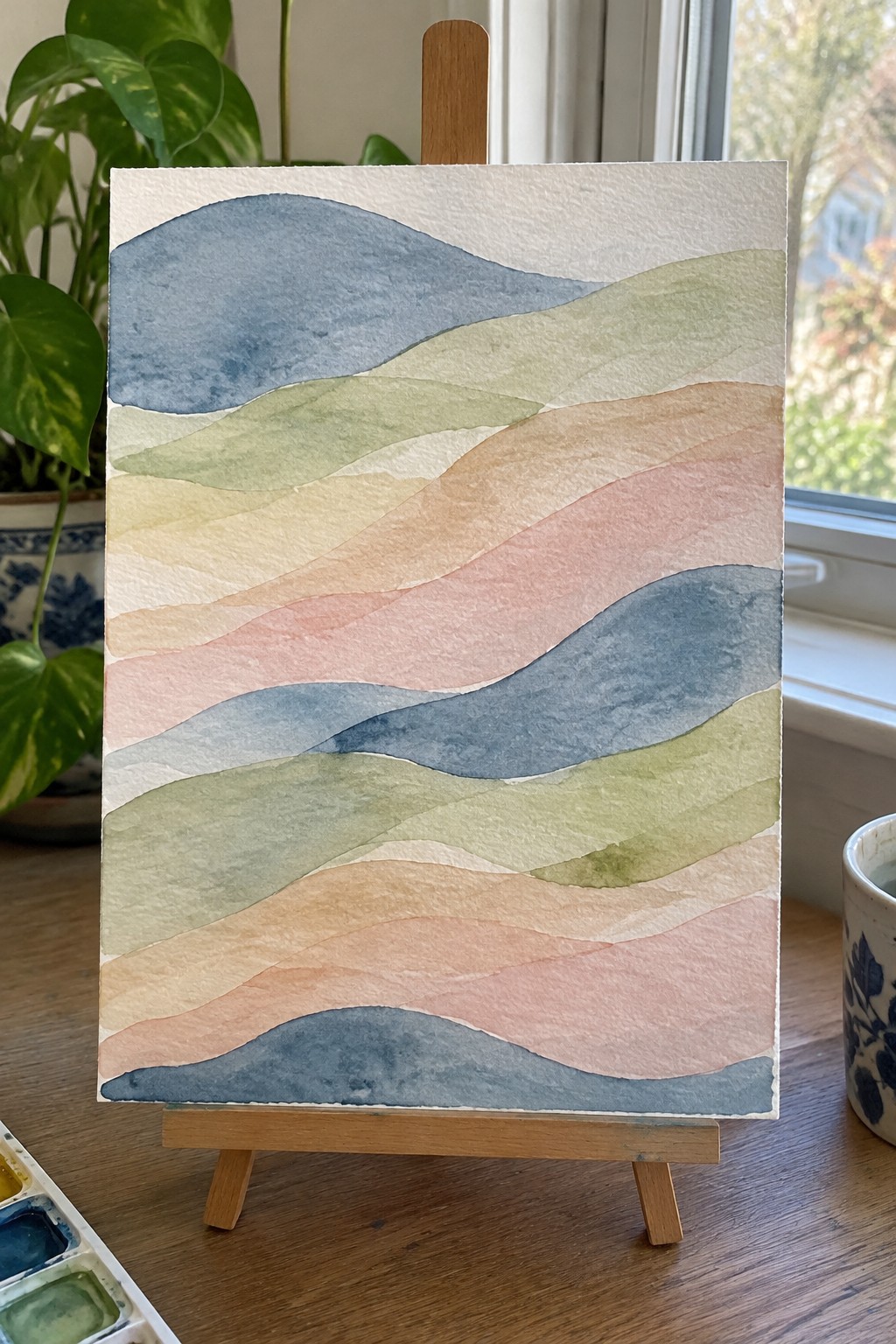
This abstract idea uses stacked horizontal bands that gently rise and fall to suggest rolling terrain or water. Each band receives a single soft wash, with colors shifting gradually from cool blue-gray at the top through sage, peach, and sand tones toward the bottom. The slight overlaps between bands create subtle depth while keeping the overall layout balanced and calm.
What makes this idea useful is how the repeating wave pattern can be stretched or compressed to fit any canvas proportion without losing its flow. You can swap in colors that match a specific room or season while keeping the same band structure. For practice, the approach works well because it builds skill in even washes and soft edges rather than tight control. A version like this also translates cleanly to prints or cards since the horizontal movement reads clearly even at small sizes.
Organic Shapes in Teal and Warm Neutrals

Painting a small canvas with irregular rounded forms in teal, coral, mustard, and soft beige creates an abstract piece that feels balanced without needing precise lines. The shapes vary in size and sit at different angles, with some overlapping to add subtle depth while leaving plenty of negative space on the light background. This kind of abstract idea fits decorative wall art because the limited palette and loose arrangement keep the focus on color and form rather than detail.
What makes this idea useful is how the mix of large and small shapes handles the composition work for you, so you spend less time planning. The earthy color mix adapts easily if you want to swap in colors that match a specific room or season. For practice, this kind of subject works well on mini canvases since you can finish it in one session and test different arrangements before committing to bigger pieces.
Overlapping Organic Shapes in a Muted Palette

An abstract mix of rounded and petal forms creates a loose botanical arrangement without any single focal point. The idea works by varying the size and density of the shapes, with some areas left open and others filled with smaller dotted clusters. A limited palette of mustard, coral, teal, and gray keeps the layers readable while the soft edges allow the colors to blend naturally on the canvas.
What makes this idea useful is how little planning it actually needs. You can start with a few large shapes, then add smaller ones around them until the balance feels right. The same layout adapts easily to different color combinations or canvas sizes, and the loose style makes it forgiving for practice pieces or quick decor. On a mini canvas this approach stands out because the organic shapes feel complete without tight edges or extra detail.
Stacked Crescents with Dot Accents

This painting idea uses three crescent shapes stacked vertically in different earth tones to form a simple abstract composition. The curves share the same upward direction but shift in color and scale, while small dots placed above, beside, and below each shape create visual balance and prevent the piece from feeling too heavy. It works as a decorative abstract that relies on repetition and negative space rather than detail.
What makes this idea useful is the vertical layout, which fits tall narrow canvases or can be stretched wider if needed. The muted palette keeps it easy to match with existing decor, and you can swap in different colors or reduce the number of dots without losing the overall structure. For practice, this kind of subject helps focus on brush control and spacing while still producing a finished piece that reads clearly from a distance.
Layered Organic Shapes in a Compact Floral Study

This painting idea uses bold, overlapping leaf and petal forms to build a floral composition without relying on fine detail or realism. The teal background anchors the piece while the greens and pinks create natural contrast that keeps the shapes readable even at a small size. Loose brushwork and visible edges help the forms feel connected rather than separate, which works well for mini canvases.
The composition does a lot of the work here because the shapes already fill the frame and guide the eye. You can swap the pink tones for any flower color or shift the background to match a room without changing the basic layout. This approach stays approachable for practice sessions and translates easily into a set of matching pieces for a small wall arrangement.
Loose Overlapping Blooms Bouquet

A floral bouquet built from rounded overlapping shapes offers a straightforward way to explore organic forms on a small canvas. The flowers cluster together with stems pulled into a loose bundle at the bottom, while soft color transitions between yellow, coral, sage, and muted gray keep the shapes simple yet varied. This setup works as a mini art idea because the rounded forms stay easy to paint while the gentle color mixing creates visual interest without requiring fine detail.
What makes this idea useful is how the clustered layout lets you focus on color blending and soft edges rather than perfect outlines. You could shift the palette to match different seasons or room colors, or reduce the number of blooms to fit an even smaller canvas. For practice, the gathered stems and scattered paint flecks give you quick ways to add movement without overworking the piece.
Organic Shapes Filled with Simple Patterns
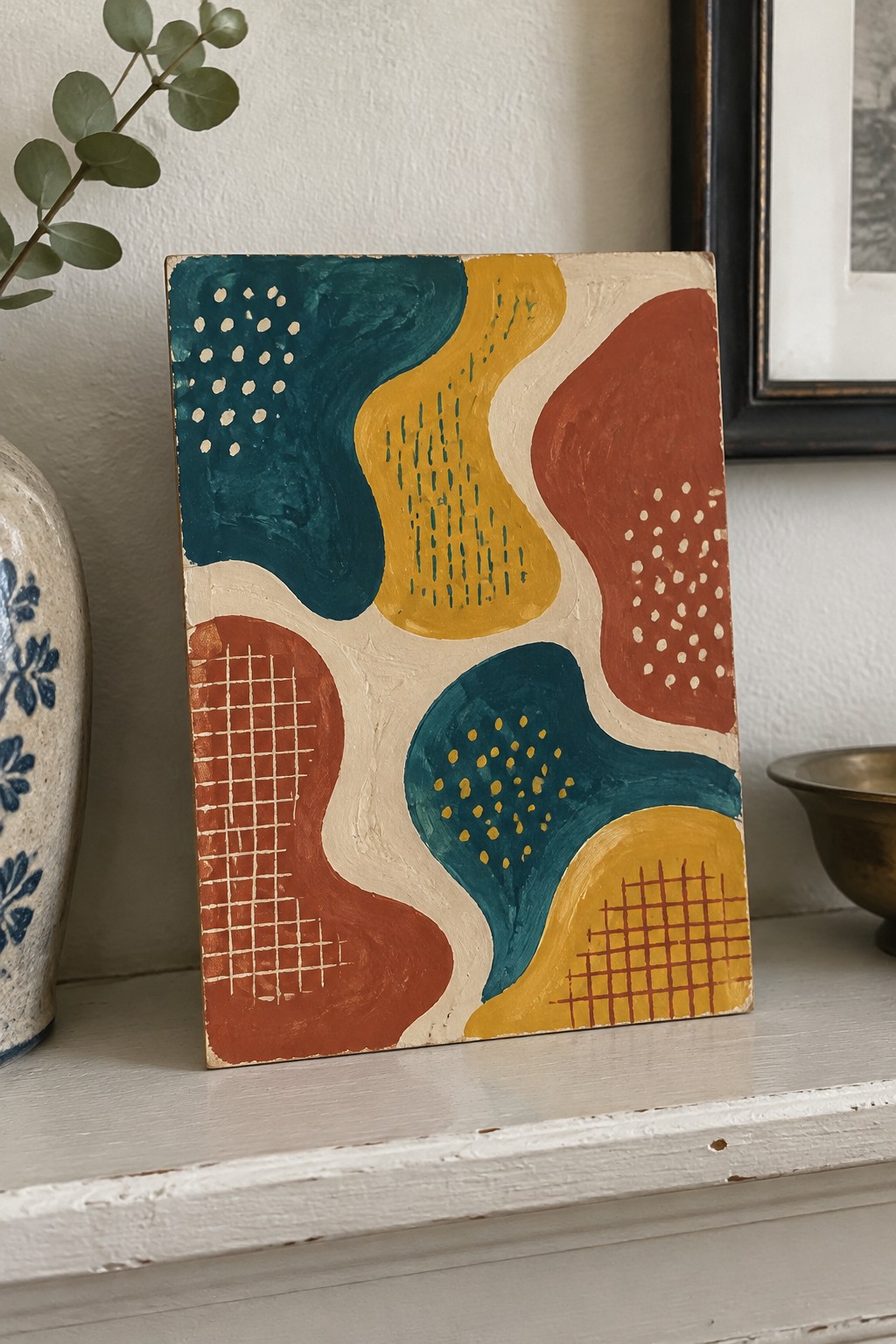
This abstract idea builds a composition from irregular, flowing shapes that overlap slightly on a neutral ground. Each shape gets filled with a different pattern such as grids, scattered dots, or short lines, all kept within a tight palette of teal, mustard, and rust. The approach works because the patterns add texture and contrast without needing fine detail or realistic subject matter.
What makes this idea useful is that the shapes can be drawn loosely with no need for perfect edges, so beginners can focus on color placement and pattern variety instead. You can easily change the palette to match a room or reduce the number of colors if three feels busy. The same layout also scales well to larger canvases or repeats nicely as a small series for gallery walls. For Pinterest, the combination of bold color blocks and graphic patterns tends to photograph cleanly and get saved for modern decor boards.
Overlapping Organic Shapes in Warm Neutrals

An abstract idea built around rounded and curved forms that overlap in a loose arrangement. The color palette stays limited to peach, sage green, dusty blue, and off-white, with a few quick linear marks added for contrast. This approach works as decorative abstract art because the shapes stay simple while the layering creates enough visual interest to hold attention on a small canvas.
What makes this idea useful is how the loose edges and overlapping areas hide minor mistakes, so it stays approachable even on a first try. The color mix of warm and cool tones adapts easily if you want to shift the palette to match a room or season. For practice, this kind of subject helps you focus on shape placement and basic layering without needing fine detail or advanced technique.
Organic Shapes in Coral Teal and Yellow on a Round Canvas

This idea uses a round canvas to build an abstract composition from overlapping organic shapes and simple leaf forms. The layout balances larger curved blobs with smaller pointed leaves, connected by thin black lines that keep the eye moving across the surface. A limited palette of coral, teal, mustard yellow, and soft red keeps the focus on shape and placement rather than color mixing.
What makes this idea useful is the round format, which naturally contains the design and removes the pressure of filling square corners. The color palette is easy to swap for other combinations while keeping the same structure of one dominant warm shape, one cool shape, and a few accent leaves. For practice, this kind of subject works well because the black outlines let you adjust placement before filling in solid areas, and the small size makes it quick to finish or repeat with different color pairings.
Frequently Asked Questions
What supplies work best for creating these mini abstract canvases?
Small stretched canvases in sizes like 4 by 4 inches provide a good starting point. Acrylic paints offer quick drying times and allow easy layering of organic shapes. Include a mix of round brushes for curves and flat ones for filling areas. A palette with earth tones and soft pastels helps achieve natural looks.
How can I adapt the 22 ideas if I want more variety in my organic shapes?
Study real elements from nature such as flowing rivers or leaf veins to generate fresh forms. Sketch several loose variations on paper before committing to canvas. Combine multiple shapes from different ideas in the list to create unique compositions that still feel organic and balanced.
Which color choices enhance the organic feel of these abstract designs?
Analogous palettes using greens blues and muted yellows create smooth natural transitions. Add subtle neutrals like soft grays to ground the shapes. Test colors on a separate sheet first to see how they blend when layered which helps mimic the gentle gradients found in nature.
What are good ways to display finished mini canvases around the home?
Arrange several pieces in a grid on a wall for visual impact. Use small easels on shelves or mantels to showcase them individually. Consider grouping by color theme to tie the organic shapes together and make the collection feel cohesive.
How do I prevent the shapes from looking too stiff when following the ideas?
Work with fluid brushstrokes rather than rigid lines to keep forms lively. Rotate the canvas while painting to encourage natural flow. Allow some overlap between shapes and embrace slight irregularities since they add to the organic quality of the abstract art.
