


I have been trying out acrylic paint pouring on my own canvases and it is interesting to watch how the paint moves and settles.
Some combinations give me soft swirls while others end up with bolder streaks and I never quite know what I will get until it dries.
I put together these 16 ideas because they have worked well for me when I wanted more fluid patterns without a lot of extra steps.
You can start with basic colors and supplies you probably already have around.
A few of them might even help you use up leftover paint from other projects.
Fluid Ocean Swirls Using Acrylic Pouring

A fluid acrylic pour that layers shades of teal, deep blue, and white to form sweeping curves across the canvas. The technique lets cells and lacing develop naturally, creating organic bubble clusters and wave-like bands that keep the eye moving. Gold flecks sit along some of the edges and add quiet contrast to the cool palette without breaking the overall flow.
What makes this idea useful is how the pouring process does most of the work once the colors are mixed. You can swap in different blues or reduce the gold to match a specific room or season. The strong contrast between the dark areas and white foam also helps the design read well in small preview images online.
Concentric Ring Fluid Pour with Gold Accents
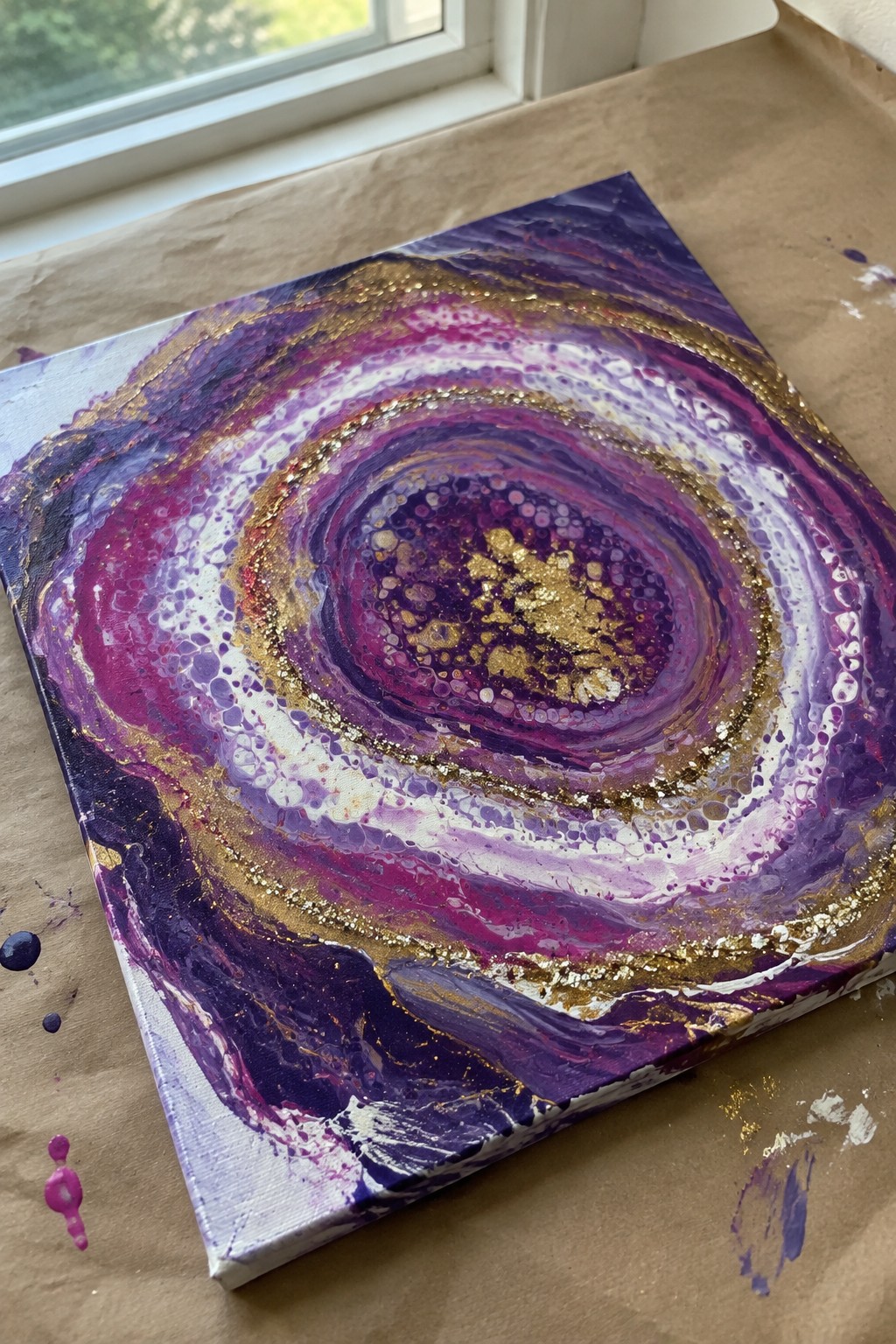
This abstract fluid pour builds a series of concentric rings using deep purple, magenta, and white to form a swirling circular pattern across the canvas. Gold metallic paint or leaf sits along the ring edges and clusters in the center, creating contrast and catching light. The idea fits the decorative abstract category because the layered rings and bubble texture give the piece visual movement without needing any representational subject.
The composition does a lot of the work here since the rings guide the eye inward naturally. You can adapt the color palette by shifting to blues and silvers or earth tones while keeping the same ring structure. This works especially well for wall pieces because the metallic highlights show up clearly in photos for Pinterest. Try it on a smaller square canvas first to test how the pours settle before moving to larger sizes.
Circular Fluid Pour with Warm Cell Patterns

A fluid pour technique builds organic cell structures across a round wooden panel by layering acrylic paints in shades of orange, coral, pink, and yellow. The composition stays effective because the colors shift gradually from one area to the next while the white spaces form clear bubble shapes that give the surface movement and depth. This fits into abstract decorative art where the goal is texture and color flow rather than a defined subject.
The composition does a lot of the work here since the round shape already makes the piece look complete as a tray or small wall accent. Warm palettes like this adapt quickly if you change the ratio of orange to yellow or add a small amount of another bright tone for variety. For practice, this kind of pour helps you test cell formation without needing fine control, and the results photograph well for Pinterest when the bubbles stay distinct against the wood edge.
Monochrome Fluid Pour with Organic Swirls
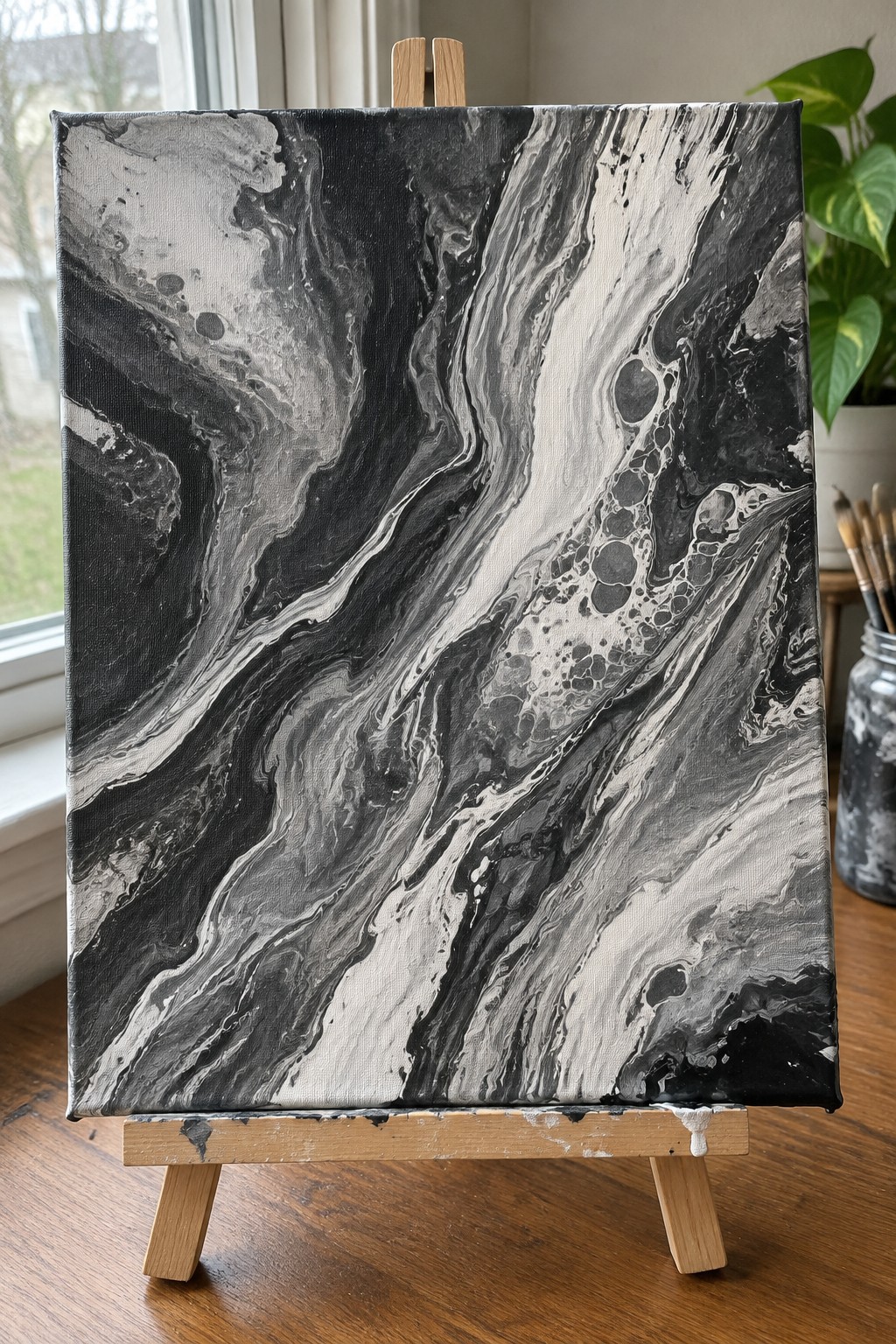
A monochrome fluid pour uses black, white, and gray acrylics to create flowing marble-style patterns across the canvas. The high contrast between the dark and light tones makes the cells and river-like flows stand out clearly. This type of abstract decorative art depends on paint movement and tilt technique to build the composition instead of any planned subject.
What makes this idea useful is how the limited palette removes the pressure of color mixing and lets you focus on pour control. The composition does a lot of the work here since the natural movement creates visual interest without extra layers. You can adapt it by changing the ratio of black to white or trying a smaller canvas first to test different tilt angles. For practice, this kind of subject works well because the results stay striking even when the pour behaves unpredictably.
Rainbow Fluid Pour with Cell Patterns
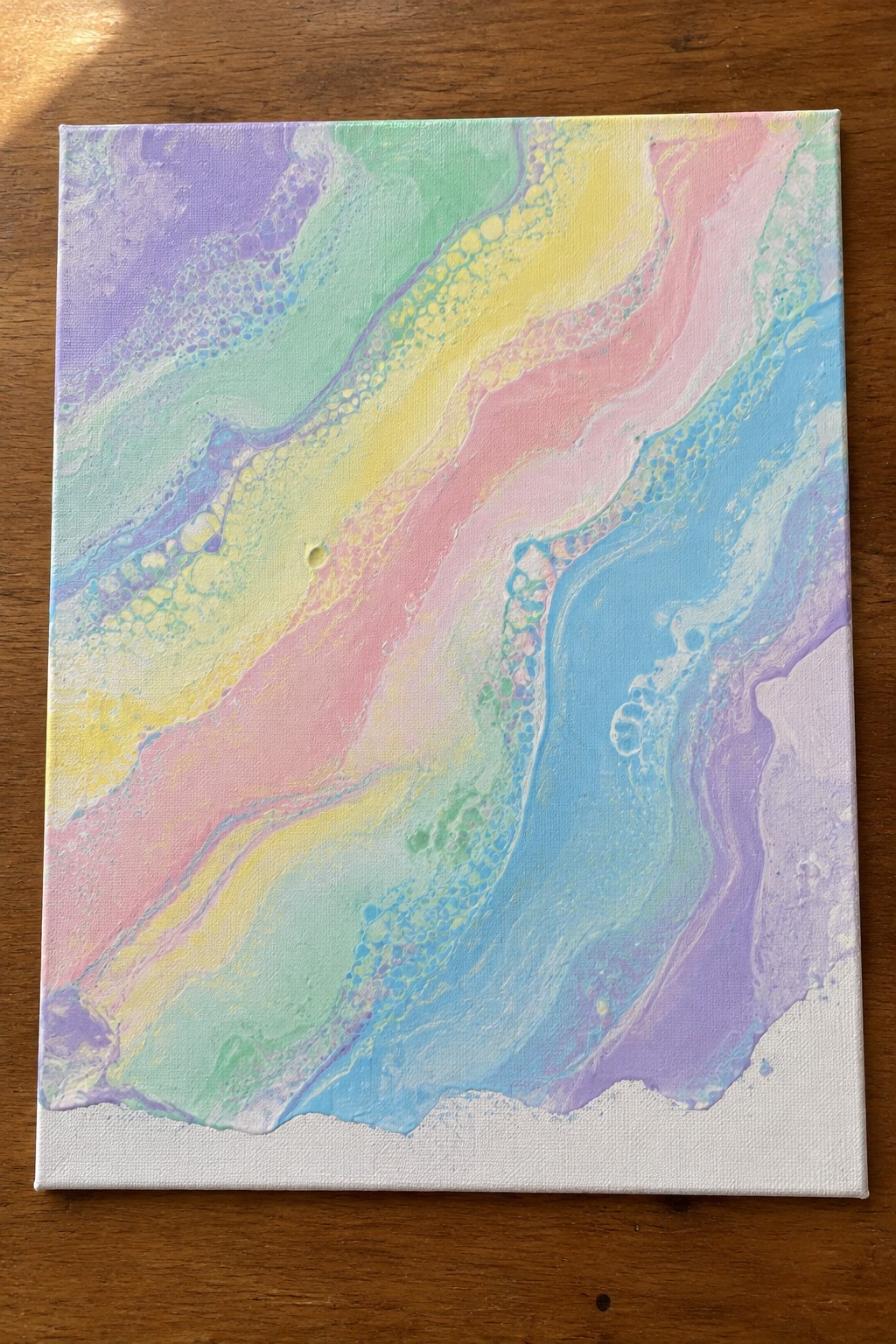
This painting idea uses an acrylic pour technique to blend a full rainbow of colors across the canvas, letting the paint flow into organic swirls and cellular textures. The composition works because the bright hues are arranged to move from one side to the other while the cells and lacing add natural variation without extra tools. It belongs in the abstract decorative category where color movement and surface texture carry the design.
What makes this idea useful is that the color order can be rearranged or reduced to fewer shades depending on the supplies you have. The fluid method scales easily to smaller canvases for practice or larger ones for wall pieces. You can also tilt the canvas more or less during the pour to change how much the colors mix versus stay separate.
Fluid Galaxy Pour with Nebula Swirls
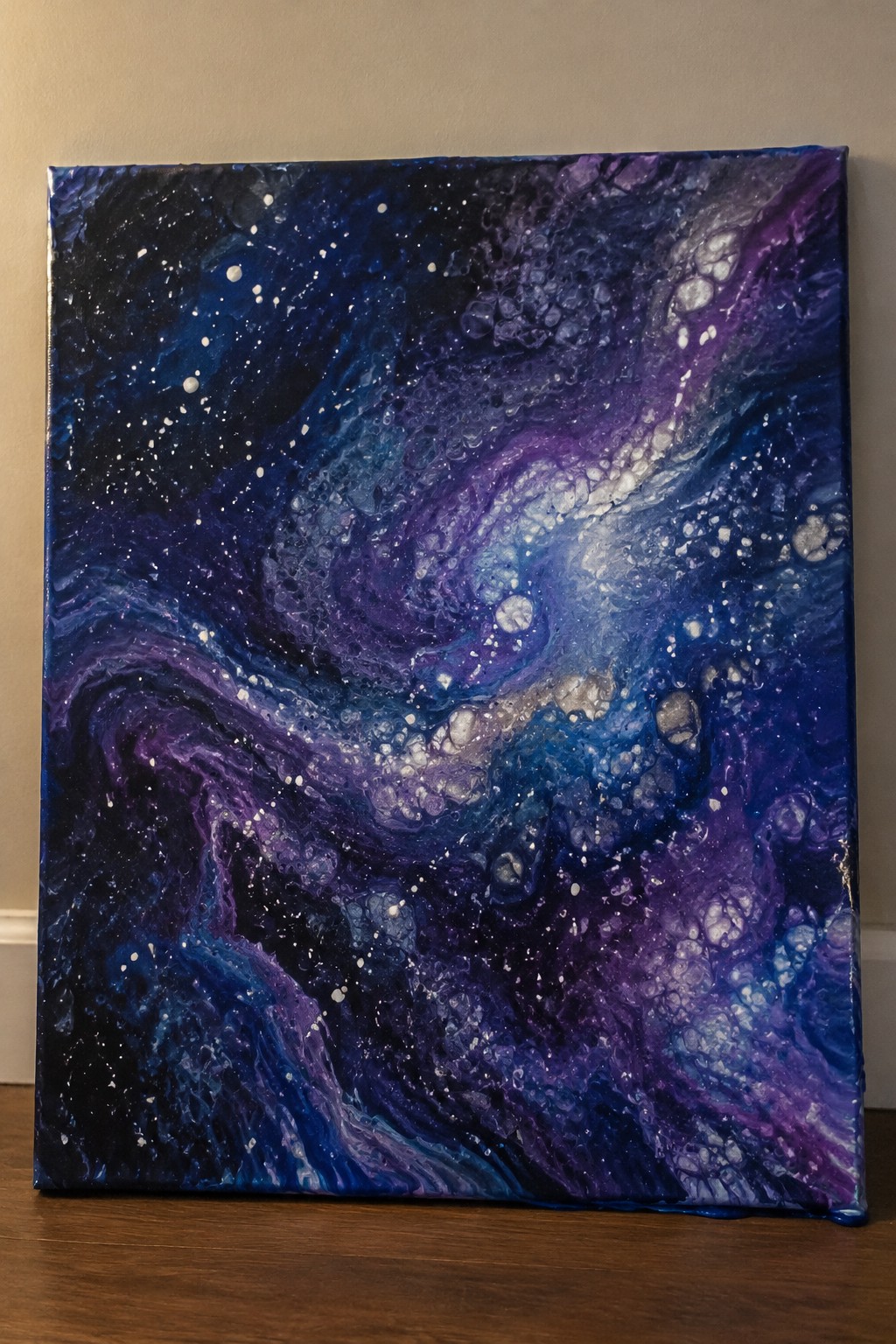
This painting idea uses an acrylic pour to create a galaxy scene through swirling dark blues, purples, and blacks that blend into lighter areas with scattered white and metallic specks. The technique relies on paint flow to form organic shapes and cells that suggest nebulae and star fields without any detailed brushwork. It fits the abstract cosmic category because the color shifts and bubble textures produce depth on their own.
What makes this idea useful is how the pour handles the movement and texture for you once the colors are chosen. You can adapt it by changing the ratio of blue to purple or adding more white for a brighter star effect on a smaller canvas. For wall art, the square format and dark palette work well in modern rooms, and the same pour method can be repeated on wood panels or paper for quicker practice pieces.
Peacock Feather Fluid Pour

A fluid pour technique builds a peacock feather by letting paint flow outward from a central point in curved bands that suggest the feather’s barbs. The idea relies on cell formation and color separation to create the eye-like center and surrounding rings without any brush detail. This fits the decorative art category since the whole effect comes from how the paint moves across the canvas.
The composition does a lot of the work here because the radial flow automatically creates the feather shape once you tilt the surface. You can adapt the palette by swapping the teal and yellow for other high-contrast pairs like purple and copper. This kind of pour stands out on Pinterest because the feather motif stays clear even when the edges stay loose and organic. For practice, start with a smaller canvas so you can test how far the cells travel before the paint sets.
Terrazzo Style Abstract Painting
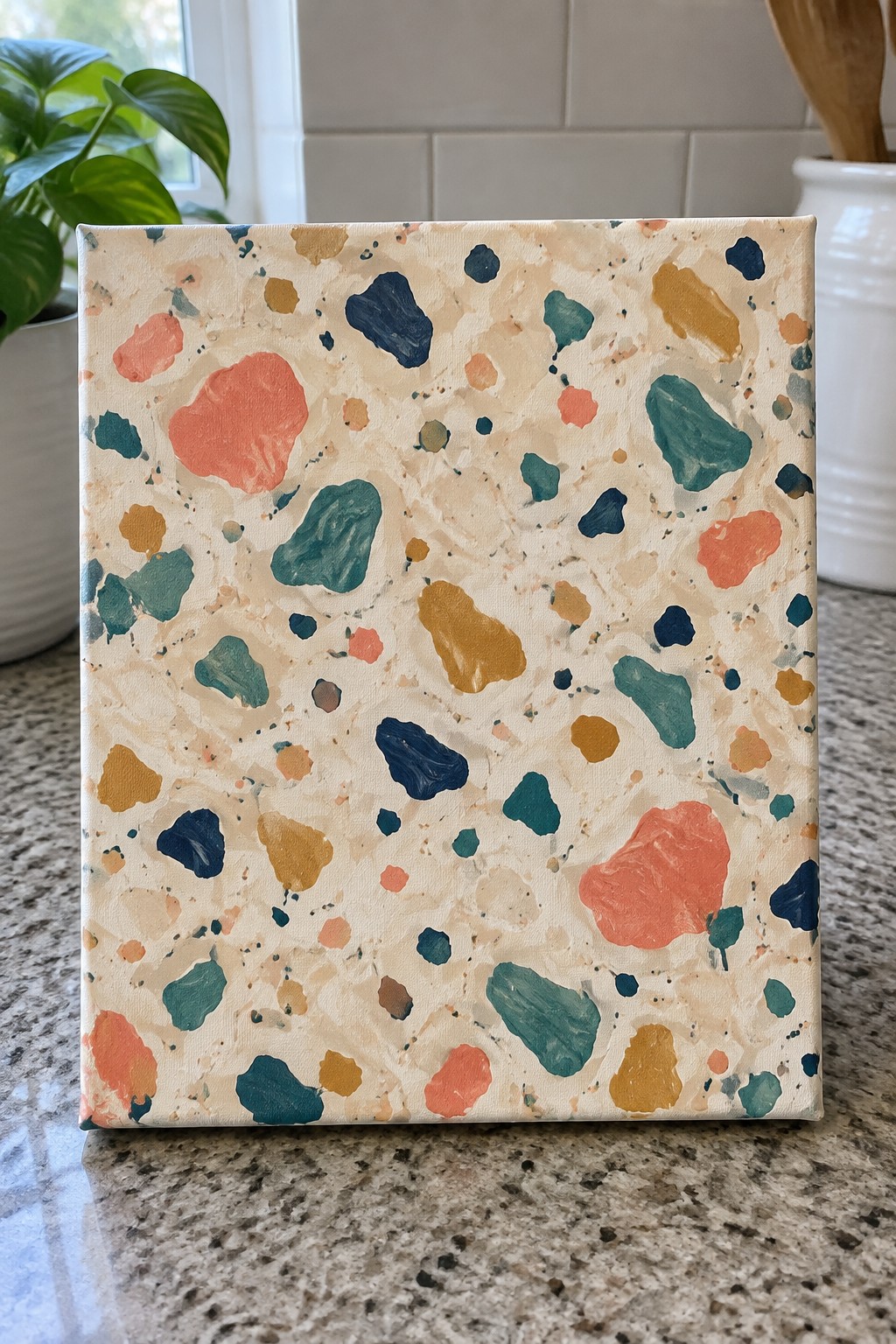
This approach layers irregular blobs of coral, teal, navy, and mustard across a light neutral ground to mimic the look of terrazzo stone. The shapes stay loose and varied in size, which lets the eye move across the surface without settling on any single focal point. It works as decorative abstract art because the interest comes from color placement and contrast rather than any defined subject or fine detail.
What makes this idea useful is how quickly you can change the accent colors to fit different rooms or seasons. The neutral base keeps the piece from feeling busy, so you can add more shapes or pull back depending on the size of canvas you have. For practice, this kind of painting helps you focus on placement and spacing without needing steady lines or blending. It also translates well to smaller panels or even as a background layer for other projects.
Split Horizon Sky and Sea Pour
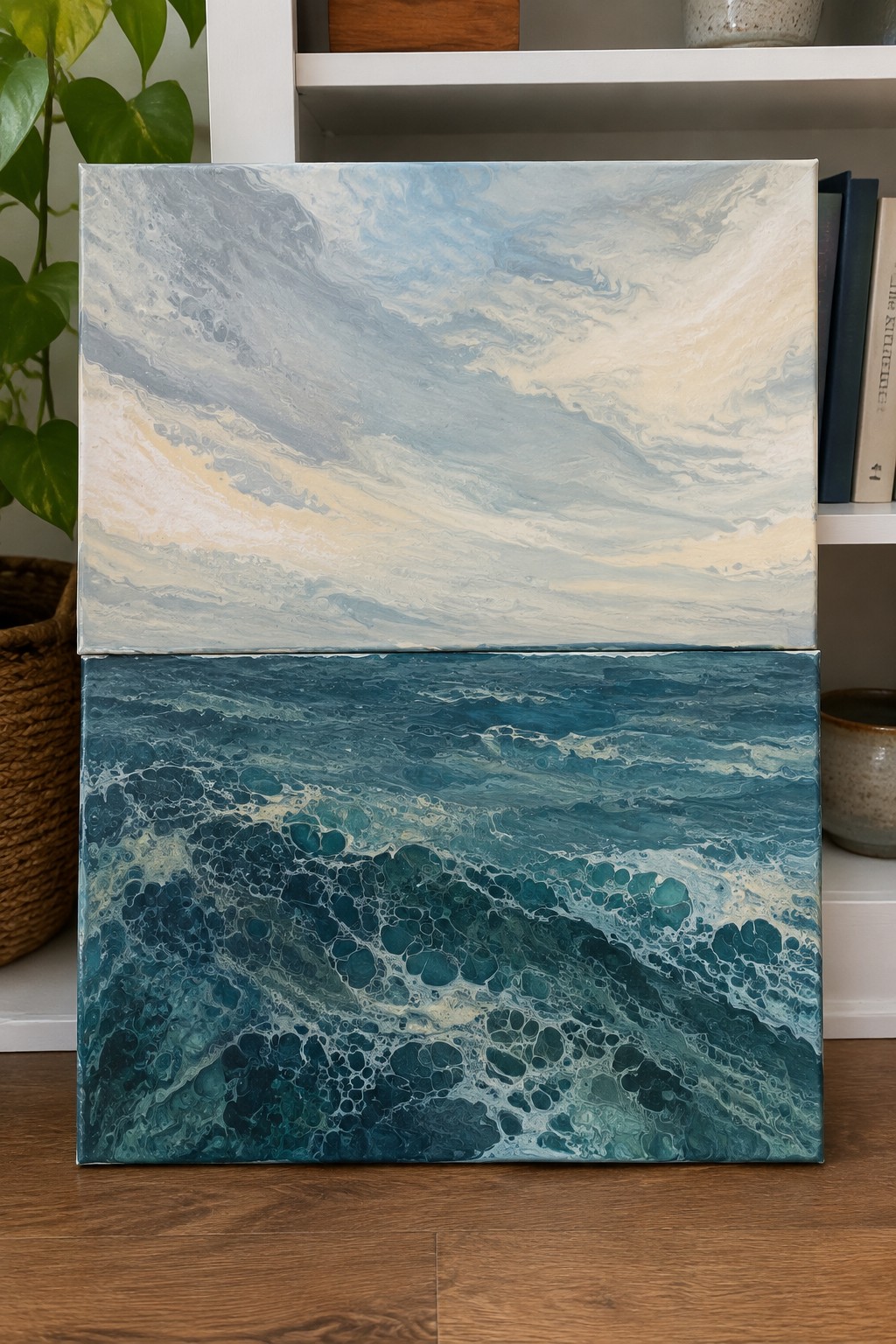
This idea divides a vertical canvas into two distinct pours that meet at a straight horizon line. The upper section uses thin, flowing pours in pale blue, cream, and white to suggest open air, while the lower section uses a heavier pour loaded with teal, turquoise, and white to build dense cells and wave-like movement. The sharp change in color and texture between the two halves does most of the compositional work.
What makes this idea useful is how simply it turns two standard pours into one finished piece. You can swap the palette for different times of day or swap the bottom pour for more muted tones if you want something calmer. The stacked format also works well for testing new color mixes or pouring mediums on a smaller scale before committing to a larger single canvas. For wall art, the clean division gives the piece enough structure to hang without looking random.
Negative Space Heart in Fluid Pour
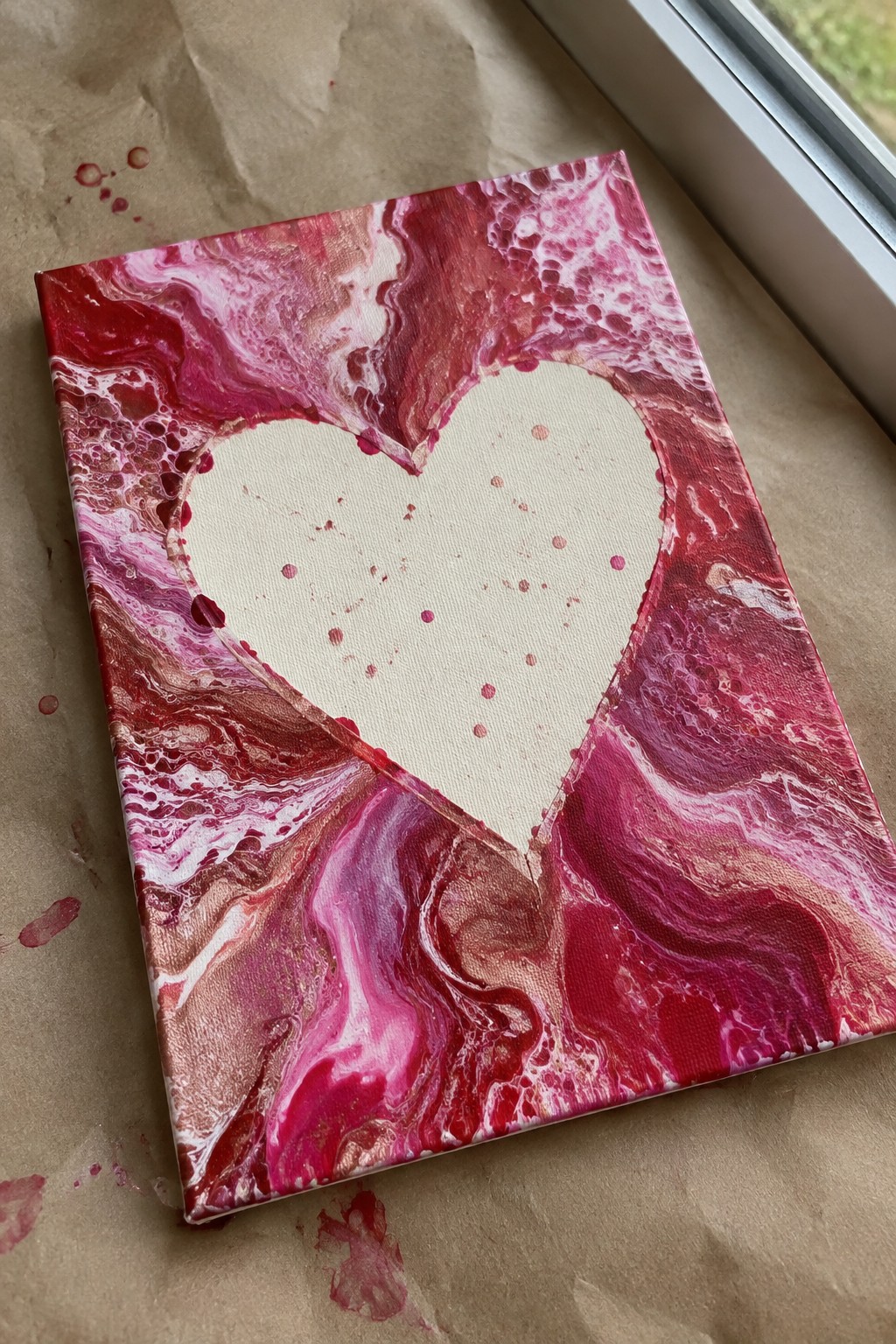
A heart shape left in negative space stands out sharply when fluid acrylics are poured around it in swirling reds, pinks, and metallics. The technique uses the contrast between the busy marbled background and the clean unpainted center to define the shape without any brushwork inside the heart. This approach fits into decorative fluid art where the pour itself creates texture and movement while the masked area stays simple.
What makes this idea useful is how the negative space does most of the work, so you avoid the challenge of painting a perfect heart by hand. The red and pink palette can shift to any color scheme depending on the season or room, and the same layout works on both small practice canvases and larger wall pieces. This would be easy to turn into gifts or seasonal decor by changing the background colors or adding a few extra pours around the edges.
Vertical Fluid Pour with Earthy Swirls
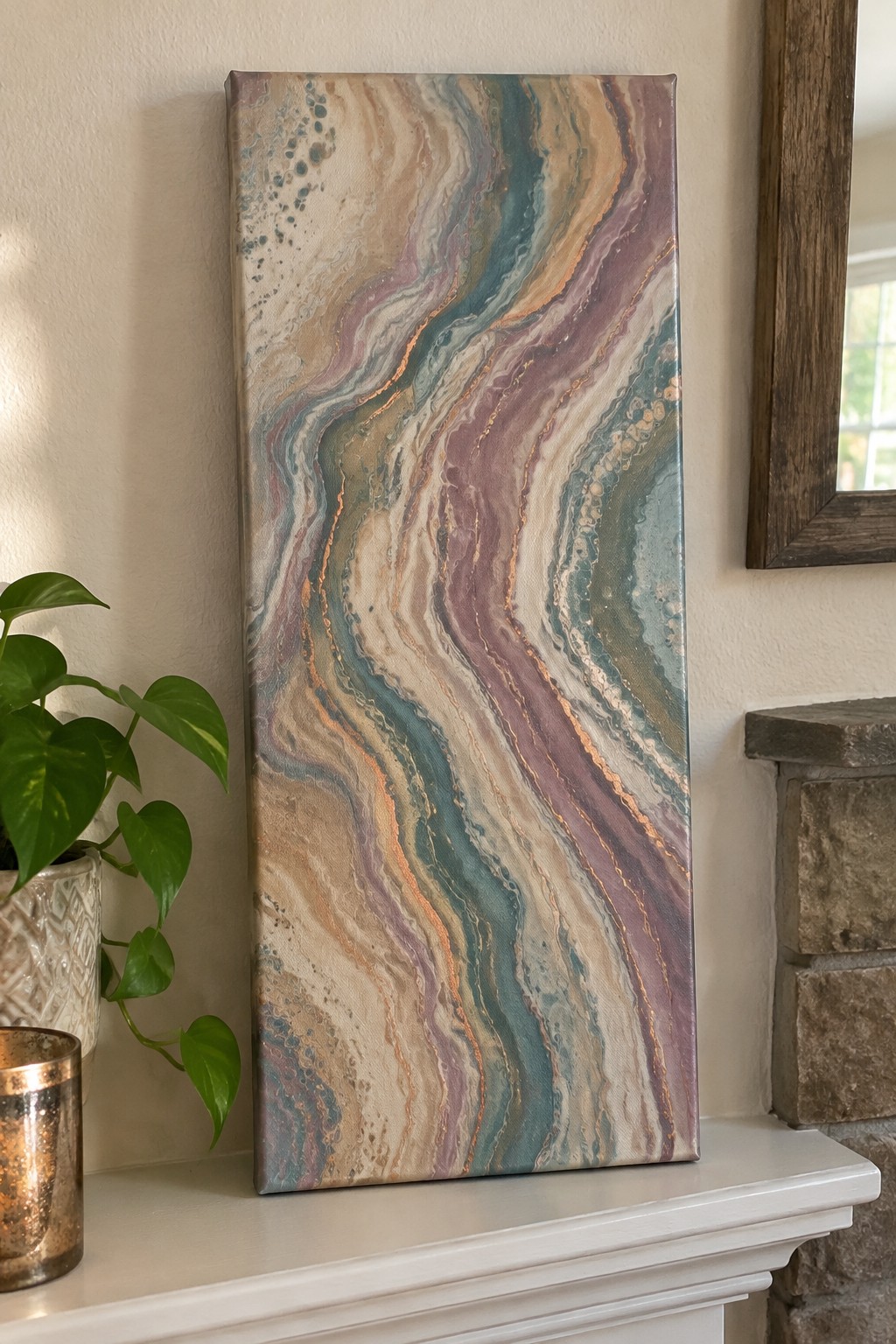
A fluid acrylic pour on a tall vertical canvas creates long, flowing patterns by letting colors interact as they move down the surface. The idea centers on layering several neutral tones with teal and muted purple so the paint forms organic curves and small separated cells without needing a brush. Metallic gold lines running through the design add contrast that keeps the eye moving along the length of the piece.
What makes this idea useful is the vertical shape, which fits narrow spaces above furniture or in hallways where a wide canvas would not work. The neutral base colors make it simple to adapt by swapping in different accent shades to match a room or season. You could try the same pour on a smaller panel first to test color combinations before committing to a larger canvas. This style shows up well on Pinterest because the flowing lines and metallic touches read clearly even in small preview images.
Vibrant Fluid Pour with Overlapping Circle Cells

This painting idea uses acrylic pouring to create clusters of bright circular cells that vary in size and overlap across a white canvas. The technique produces natural rings and color separations that give each shape a defined edge while letting colors blend softly at the edges. It works as abstract decorative art because the high contrast between the saturated colors and the plain background keeps the focus on the fluid patterns.
What makes this idea useful is how easily the colors can be swapped to match any room or season without changing the method. The white background does most of the work by making the circles stand out, so you can use leftover paints or a limited palette and still get a bold result. This style shows up well on Pinterest because the simple round shapes read clearly even in a small thumbnail. You could scale it down to smaller canvases for quick practice pieces or repeat the same pour on a larger surface for a statement wall.
Fluid Pour with Winding Blue Channel on Orange

This abstract fluid art idea uses a pour technique to form a twisting blue and teal stream that runs diagonally across a solid orange field. The composition relies on the contrast between the vibrant base color and the darker flowing channel, with cell formations along the edges adding texture and movement without extra brushwork. It fits the decorative abstract category and works because the simple layout keeps the eye moving along the curve while the color split creates clear visual interest.
What makes this idea useful is how the pour itself does most of the work once the colors are chosen. The strong orange background makes the blue stand out even if the pour does not go perfectly, so it stays forgiving for practice pieces or first attempts at fluid art. You can easily swap the orange for another bold color or scale the canvas size up for a larger wall piece. The same river-like flow also translates well to smaller studies where you test different teal and blue mixes before committing to a final version.
Fluid Acrylic Pour with Coral Silhouettes

This painting idea uses the classic acrylic pour technique to create flowing cells and organic patterns across the canvas. The composition layers cool blues and teals with warm coral tones, then adds defined coral branch shapes in the lower areas to give the fluid background more structure. The contrast between the loose, bubbly pour and the sharper silhouettes makes the design hold together without feeling random.
What makes this idea useful is that the pour does most of the heavy lifting on texture, so you only need to add a few coral shapes afterward. The color mix works on both small practice canvases and larger wall pieces, and you can swap the coral for other simple outlines if you want to change the theme. For beginners, it is a good way to practice paint consistency and cell formation while still ending up with something that looks finished.
Vortex Fluid Pour in Earth Tones

A fluid pour painting that forms a tight central vortex works well as an abstract decorative piece. The idea centers on letting the paint flow create concentric rings that pull the eye inward, with earthy greens, browns, and creams blending where the colors meet. This approach fits the category of abstract fluid art and relies on the natural movement of the pour rather than added brushwork or detail.
What makes this idea useful is that the technique itself builds the composition without requiring steady hand control. You can swap the palette for cooler blues or warmer rust tones to match different rooms, or scale the canvas size up or down depending on the space. For practice sessions, this layout gives beginners a forgiving starting point since slight variations in the pour still produce a balanced result. The strong central spiral also helps the finished piece stand out in a feed of other abstract pours.
Starburst Fluid Pour with High Contrast Colors

This painting idea relies on a fluid pour technique where paint is directed from the center outward to form a starburst or blooming shape. The black background makes the bright pink, turquoise, and white areas pop while the cellular patterns add natural texture and movement. It works as abstract decorative art that suggests a flower or explosion without any detailed drawing or brush control.
The composition does a lot of the work here by keeping the focus tight in the middle and letting the colors spread naturally. What makes this idea useful is how easily you can change the color choices or canvas size while keeping the same pour method. For wall art, something like this stands out because the high contrast and central burst read clearly from a distance. You can simplify it further by using fewer colors or practice it on a smaller panel to control how far the paint travels before it sets.
Frequently Asked Questions
What supplies do I need to start creating fluid patterns with acrylic paint pouring?
You will need acrylic paints in various colors, a pouring medium to thin the paint without losing vibrancy, a canvas or other surface like wood panels, mixing cups, stir sticks, gloves, and a level workspace. Add silicone oil or other additives if you want more cellular effects in your patterns. Always mix paints to a consistency like heavy cream for smooth flows.
How do I mix the paints to get the right flow for the creative ideas in the article?
Combine one part acrylic paint with two to three parts pouring medium in separate cups for each color. Stir gently to avoid air bubbles, then layer or combine colors in one cup based on the specific technique like a dirty pour or swipe method. Test the mixture by lifting a stir stick to see if it flows in a steady ribbon without separating too quickly.
What should I do if my poured patterns develop unwanted bubbles or cracks?
Tap the canvas lightly on your work surface right after pouring to release surface bubbles. Work in a dust-free area with consistent room temperature around 70 degrees to prevent cracking from rapid drying. If cracks appear later, apply a thin layer of clear pouring medium over the dry piece as a fixative.
How can I adapt the 16 ideas for different surfaces or larger projects?
Scale up by using bigger canvases and more paint volume while keeping the same color ratios. For surfaces like glass or metal, apply a primer first to help adhesion. Experiment with the ideas by rotating the canvas at different angles or using multiple pours over time for layered effects on wood or fabric.
How do I finish and protect the completed fluid art pieces?
Allow the painting to dry fully for at least 24 to 48 hours in a flat position. Once dry, apply two to three coats of varnish with a soft brush for UV protection and shine. Store finished works upright in a cool dry place to avoid sticking or warping.
