


I started painting abstracts because they let me experiment without worrying about getting things perfect.
Over time I collected a bunch of easy projects that I keep coming back to.
Each one uses basic acrylic techniques and materials you probably already have.
I wrote down the steps for these 21 ideas so they are straightforward to try at home.
Some days I just pick one and spend an afternoon with my paints.
Color Block Grid Abstract
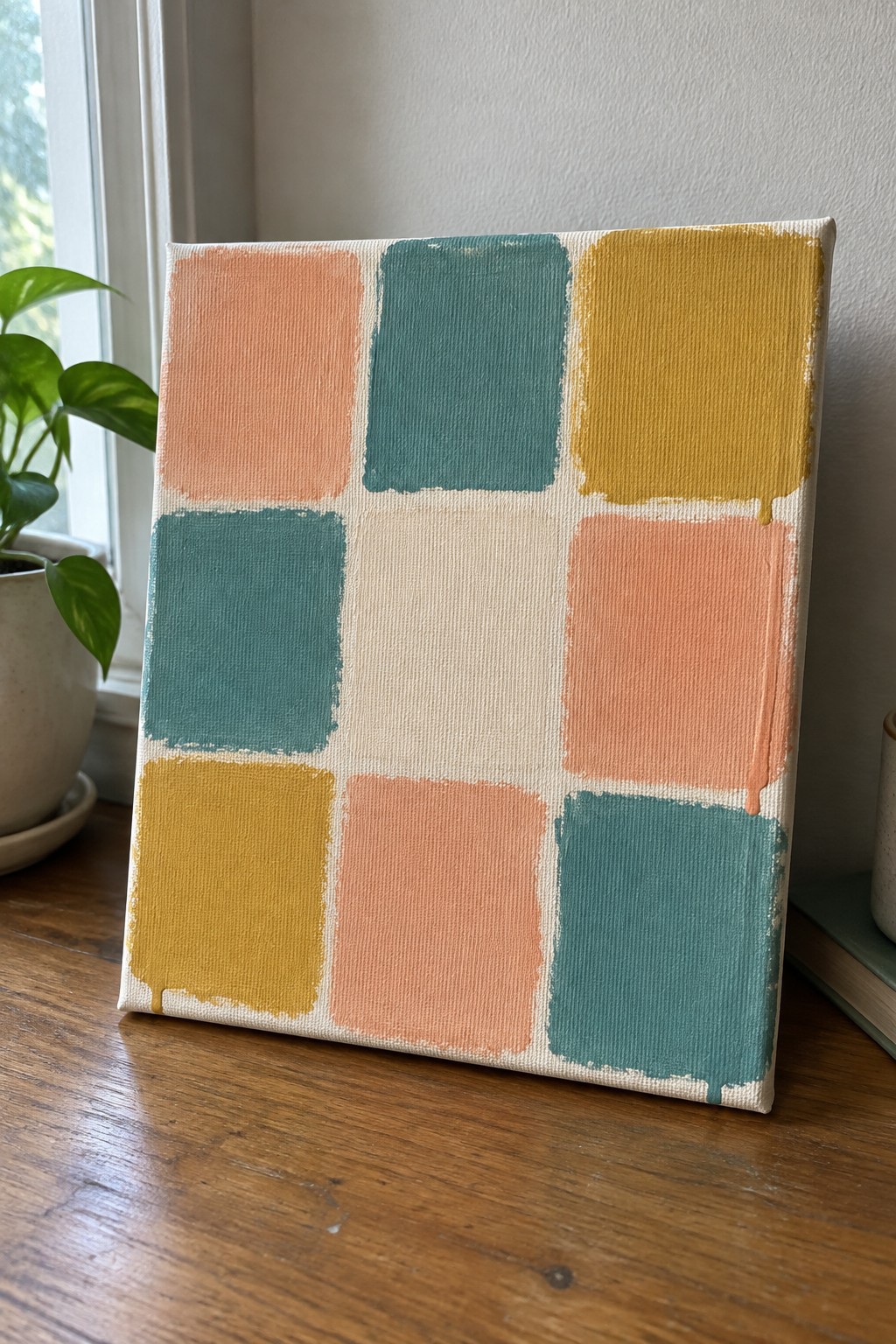
This painting idea centers on a straightforward grid of solid color squares that creates a balanced abstract composition. The palette pairs warm peach and golden yellow with cool teal, using a neutral cream block to separate and unify the arrangement. Slight variations in brush texture and a few paint drips add subtle interest while keeping the focus on clean shapes and color relationships.
What makes this idea useful is how simple it is to adapt the grid size or swap colors to fit different spaces. You could use the same layout on a larger canvas for bigger impact or shrink it for quick practice pieces. The even spacing and limited palette also make it easy to personalize by changing just one or two hues while keeping the overall structure intact.
Blended Concentric Circles in Coral and Lavender
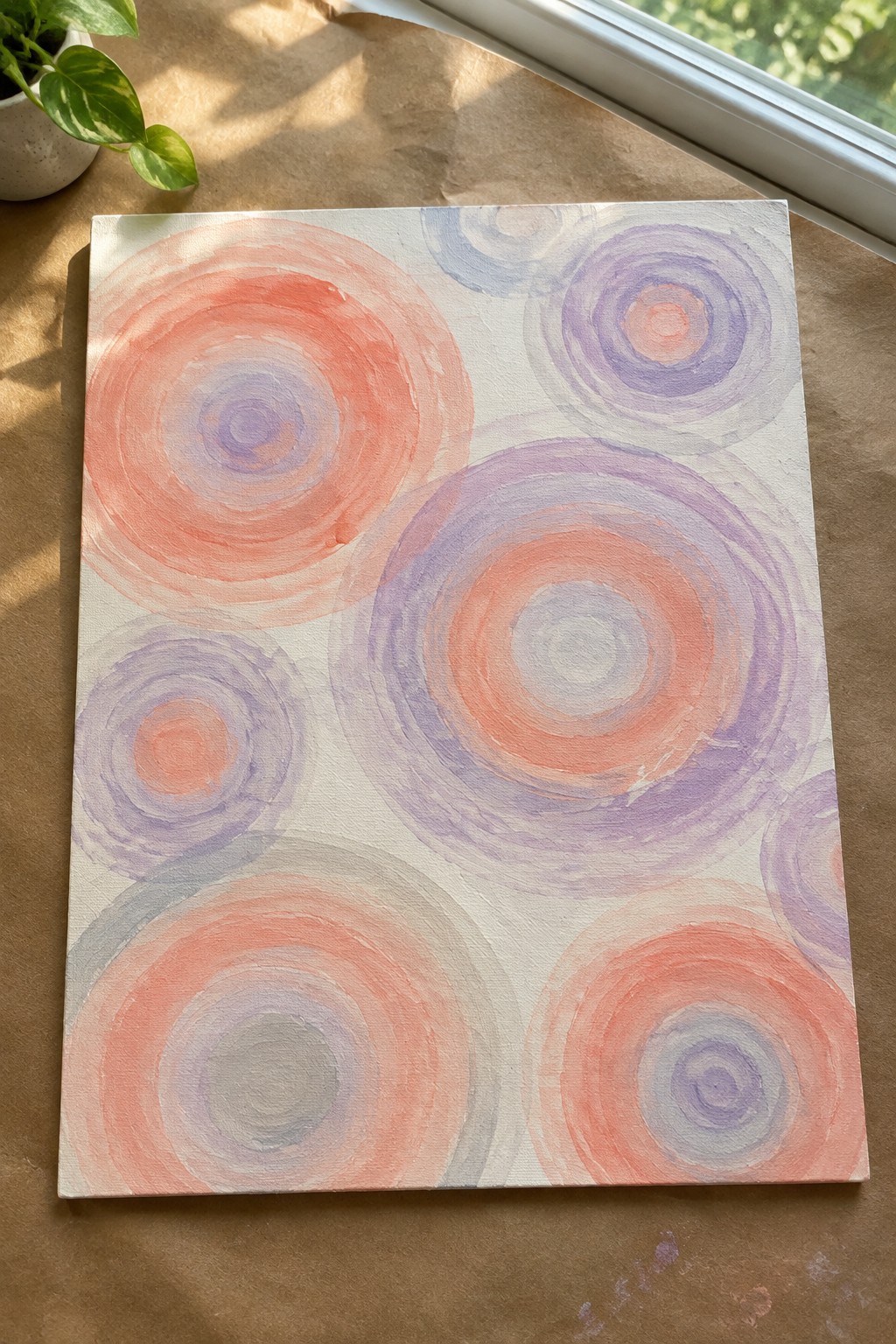
This abstract idea centers on overlapping rings that radiate outward from multiple center points, creating a loose pattern across the canvas. The coral and lavender tones blend where the circles cross, giving each ring a soft gradient from center to edge. The approach keeps the focus on repeated shapes and simple color mixing rather than any specific subject.
What makes this idea useful is how the overlapping layout handles composition for you, so you do not need to plan perfect spacing. The two-color palette plus neutrals makes it fast to mix and easy to match with different decor styles. You could scale the circles larger or smaller for a bigger or smaller canvas, or shift one color to a different hue while keeping the same ring structure.
Simple Three-Band Seascape

A basic beach scene made from three stacked color zones gives you a clean landscape idea that stays easy to paint. The top band handles the sky with soft blue and white blends, the middle uses deeper blue-greens for the water, and the bottom keeps warm sand tones that meet the water at a gentle line. This horizontal split keeps the focus on color transitions instead of shapes or details.
The composition does a lot of the work here because the straight bands let you practice blending across large areas without worrying about perspective. You can shift the water to a deeper navy or warm up the sand for different times of day while keeping the same layout. This kind of painting also works well as a quick practice piece or a calm wall piece since the limited zones make it simple to resize or recolor for a specific room.
Stacked Abstract Shapes with Sun
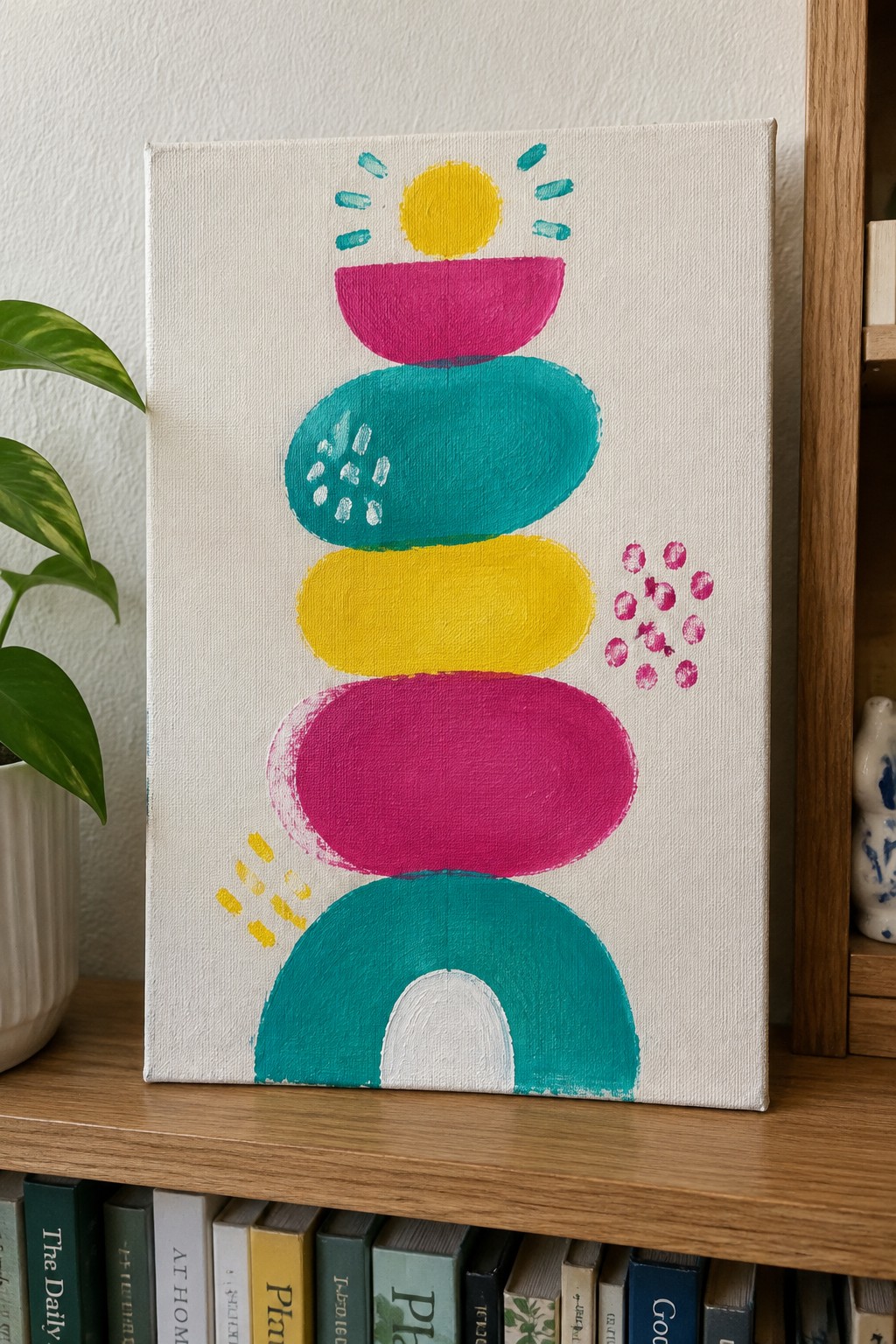
This painting idea centers on a vertical stack of bold, rounded shapes in saturated pinks, teals, and yellows, finished with a simple sun and scattered dot details. The composition relies on overlapping flat forms and a clean white background to keep the focus on color and balance rather than detail. It fits squarely into the abstract decorative category, where shape and color do most of the visual work.
The composition does a lot of the work here because the repeating rounded forms create instant structure without needing precise drawing skills. You can easily swap the color palette to match a room or change the dot clusters to lines or dashes for a different look. A painting like this works especially well for small canvases or as part of a set where each piece uses the same stack layout but different hues. For practice, this kind of subject lets you focus on brush control and color mixing without worrying about realism.
Terrazzo-Inspired Abstract Canvas
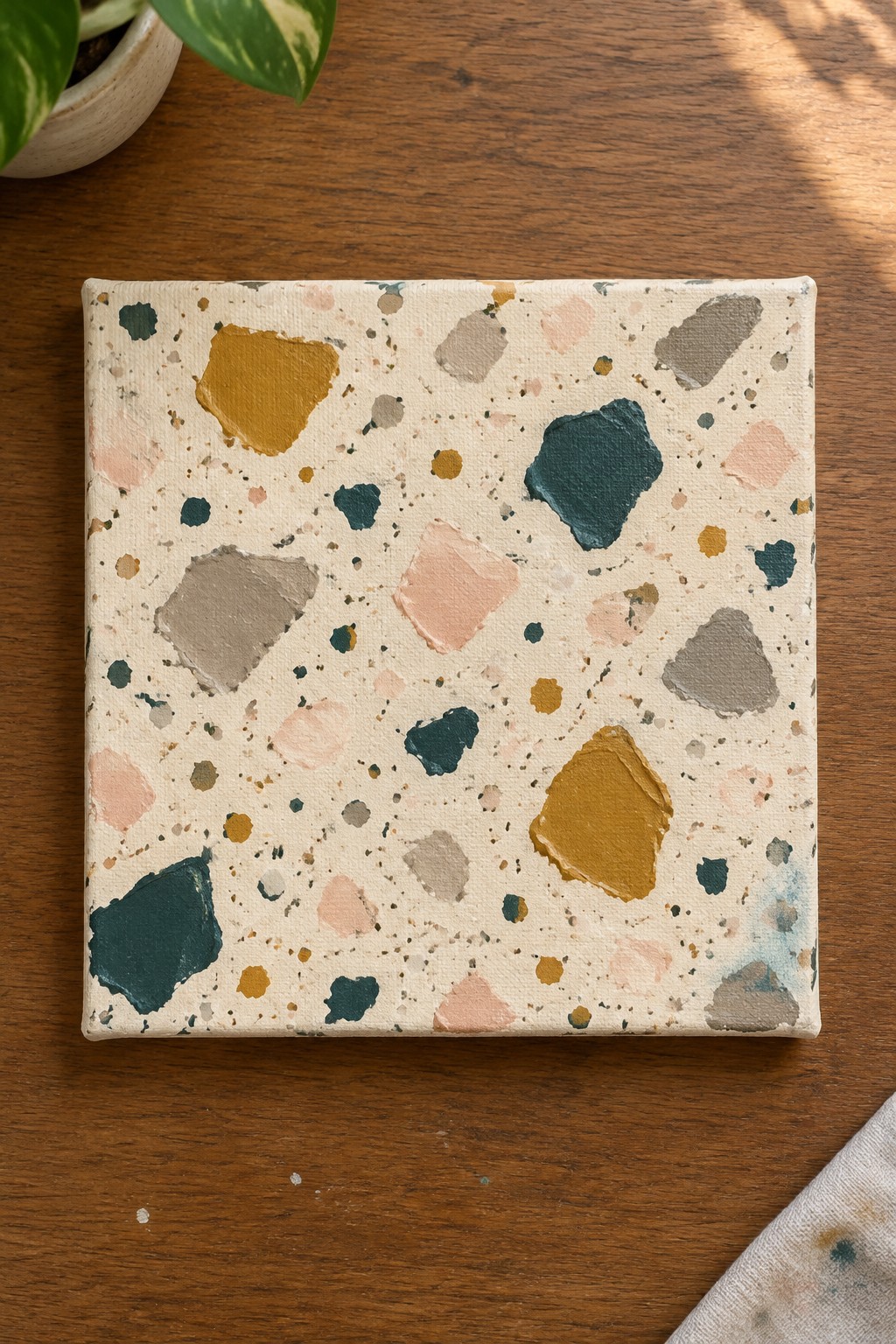
This painting idea centers on building an abstract composition from irregular color blocks placed across a light background, with fine speckles scattered to connect the shapes. The visual effect comes from the contrast between the larger flat areas of color and the small dots that fill the negative space without crowding it. It works as decorative abstract art that relies on shape placement and a restrained palette rather than any recognizable subject.
The composition does a lot of the work here because the shapes can be placed loosely without needing perfect alignment. You can adapt the idea by changing the background tone or swapping in colors that match existing decor. For practice, this kind of subject helps beginners focus on brush pressure and edge control while still producing a finished piece that photographs well for sharing.
Diagonal Brushstroke Abstract in Blue and Orange
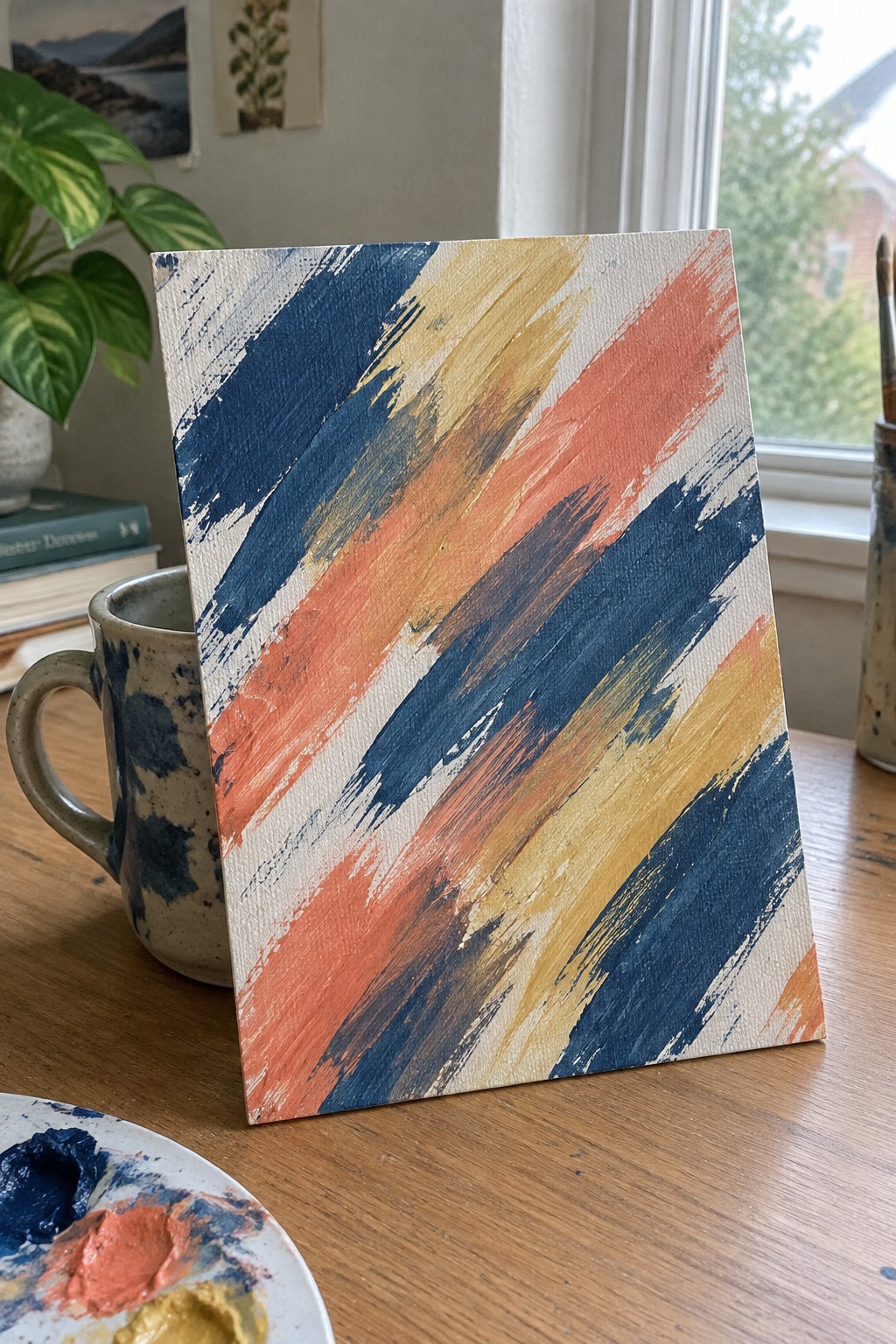
This abstract idea uses bold diagonal brushstrokes layered across the canvas in a repeating pattern. The strokes alternate between deep blue, coral orange, and warm yellow, leaving some of the light background visible between them. The angled direction and varied stroke lengths create movement while the limited palette keeps the whole piece cohesive.
What makes this idea useful is how quickly it comes together with big brushes and just three main colors. You can shift the palette to cooler tones or brighter shades depending on the room or season. For practice, the overlapping strokes let you work on texture and coverage without worrying about precise edges or details.
Abstract Tulips with Loose Brushwork

This painting idea uses three oversized tulip shapes painted in soft blocks of color, with the pink bloom positioned higher, the mustard one overlapping slightly to its right, and the green one lower on the left. Broad, visible strokes define each form while the stems and leaves stay simple and directional, letting the limited palette of pink, mustard, sage, and gray keep the whole piece balanced. It works as a straightforward floral abstract where shape and color placement matter more than fine detail.
What makes this idea useful is how the large shapes remove the pressure to paint realistic petals or perfect symmetry. You can swap any of the three colors for others you already have on hand or shrink the canvas size if you want a faster project. The neutral background also helps the piece fit into different spaces without clashing, and the same loose approach works well if you want to add a fourth bloom or change the stem angles.
Abstract Ocean Swirls in Layered Blues
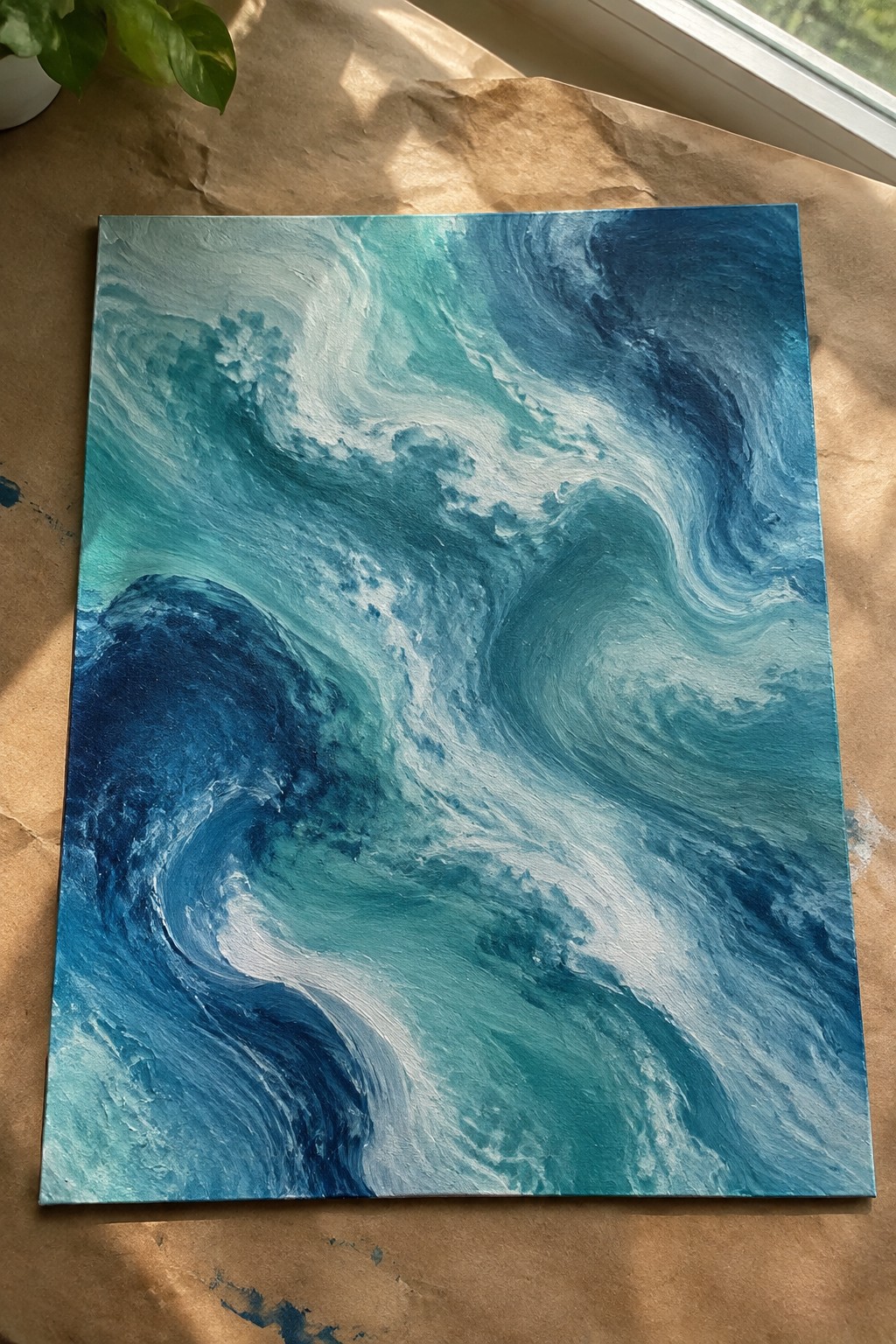
This painting idea uses broad, curving brushstrokes to suggest moving water without any defined shapes or horizon line. The main concept is an abstract seascape built from overlapping swirls in deep blue, teal, and white that create a sense of flow and depth. The composition works because the color shifts and directional strokes keep the eye moving across the canvas while the white accents add contrast without extra detail.
What makes this idea useful is how the loose, repeated swirls let you focus on blending and brush direction rather than planning a scene. You can scale it down for practice on paper or change the palette to cooler grays and navy for a different mood. For wall art, the large flowing shapes hold up well from a distance and still look interesting up close, so the same approach works on both small and large canvases.
Abstract Mountain Peaks Using Overlapping Triangles

This painting idea centers on a geometric landscape built from three overlapping triangles that read as mountains against a soft sky. The composition works by placing the shapes at different angles and heights so they create depth and movement without any fine detail or blending. A limited palette of warm orange, muted teal, and neutral beige against the pale blue background keeps the whole piece balanced and easy to read from a distance.
The composition does a lot of the work here because the overlapping edges naturally add interest without extra brushwork. You can change the canvas size or stretch the triangles wider to make the same idea fit a long horizontal piece or a smaller square. Swapping the teal for another neutral or shifting the background to a warm gray lets you adapt it quickly for different rooms, and the simple shapes make it a solid option for practicing clean edges and color placement before trying more complex scenes.
Striped Abstract with Dot Accents

A striped abstract painting uses horizontal bands of color with rows of dots placed between them to create a simple repeating pattern. The idea relies on color blocking and basic mark-making rather than detailed subjects or blending. The dots add rhythm and break up the solid stripes so the overall design stays balanced and easy to read from a distance.
What makes this idea useful is how quickly you can finish it on any size canvas while still getting a clean result. You can swap the coral and teal palette for cooler tones or earth colors depending on the room. For practice, this kind of subject helps with brush control and even spacing without needing advanced techniques. This would be easy to turn into a set of smaller pieces by changing the stripe widths or dot colors each time.
Abstract Planet with Orbital Lines
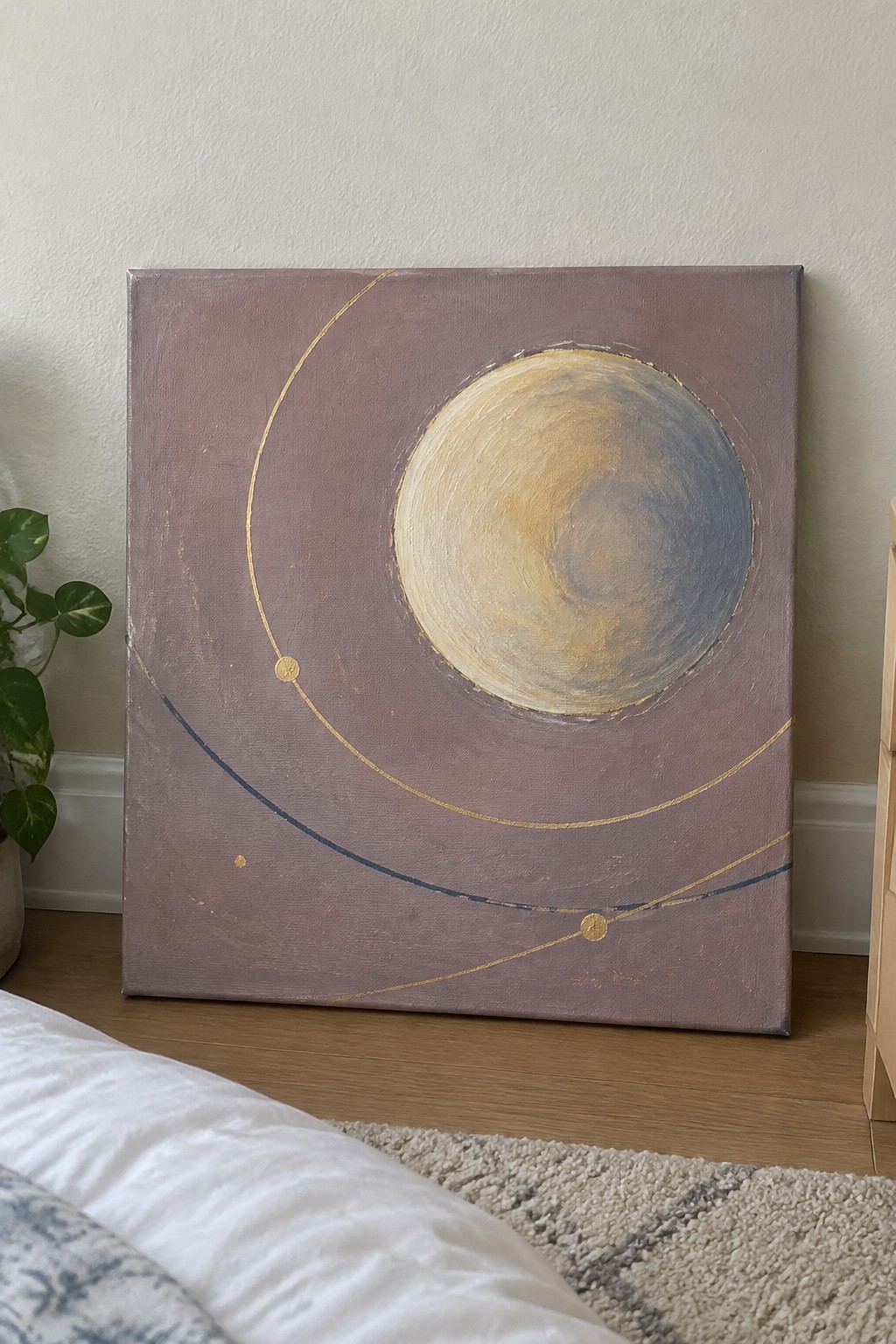
A large central sphere painted with blended yellow to blue tones sits against a solid muted purple background. Thin gold curves and small dots create orbital paths that wrap around the sphere without crowding the space. The contrast between the soft gradient on the main shape and the clean linear accents keeps the whole piece balanced as decorative abstract art.
What makes this idea useful is how the single large element gives you room to practice color blending while the lines stay easy to add with a steady hand or thin brush. You can change the background color or swap gold for silver to match different rooms. This layout adapts quickly to smaller canvases or different planet color schemes if you want a set of matching pieces.
Layered Ocean Horizon Painting
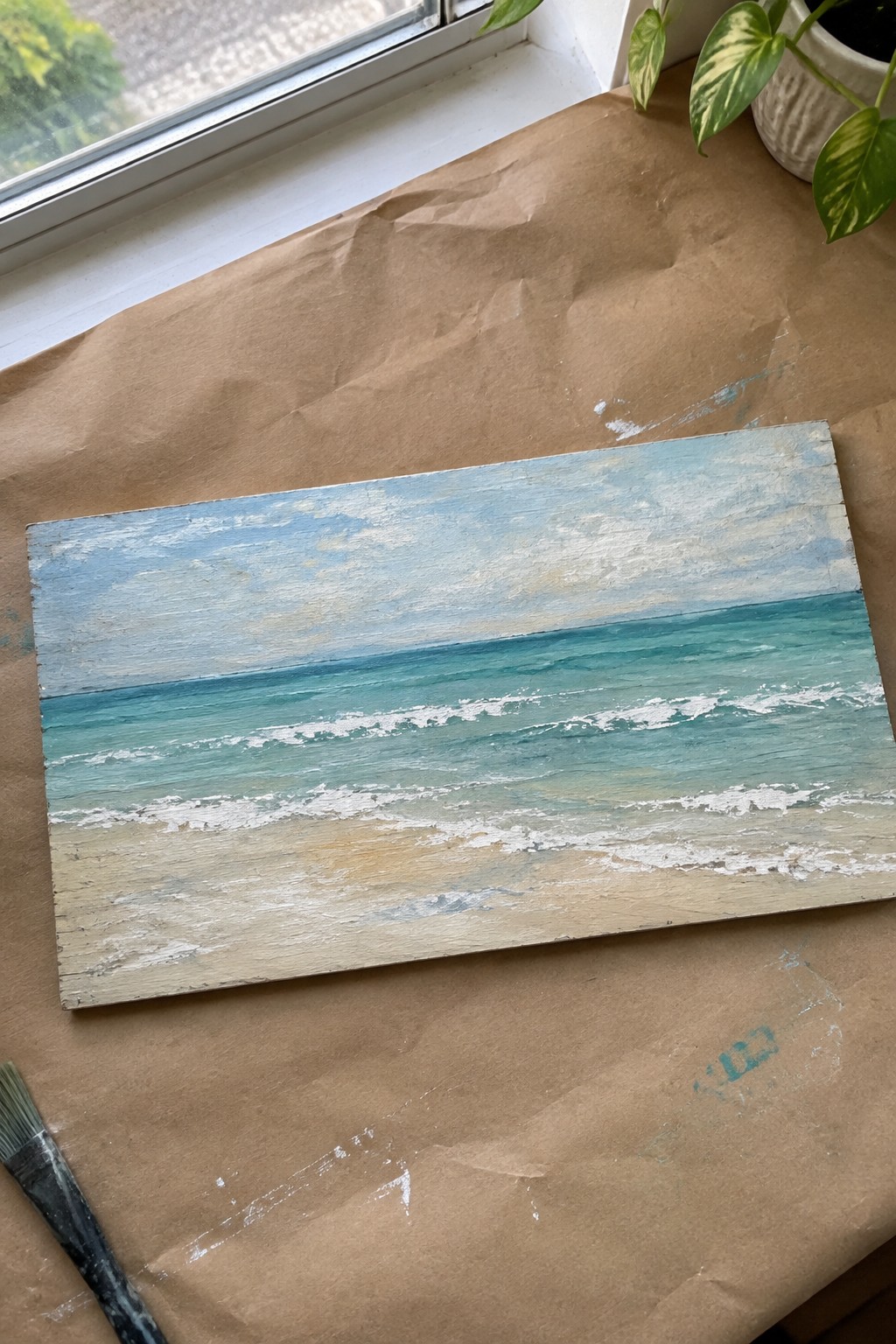
This painting idea focuses on a seascape built from stacked horizontal bands that show sky, open water, rolling waves, and a sandy shore. The visual strength comes from the color progression that moves from pale blue overhead through deeper teal water down to lighter sand at the base, with white strokes added to suggest foam on the waves. The approach keeps the subject readable through broad color blocks and simple wave lines rather than detailed forms.
The composition does a lot of the work here by letting the eye follow the natural top-to-bottom flow of the layers. You can shift the palette toward cooler blues or warmer greens depending on the look you want, and the same structure works on canvas, wood, or even paper. This format stands out on Pinterest because the clean horizontal layout reads clearly even in small thumbnails. For practice, it is easy to adjust the number of wave lines or change the sand color without starting over.
Abstract Torn Shapes with Line Accents
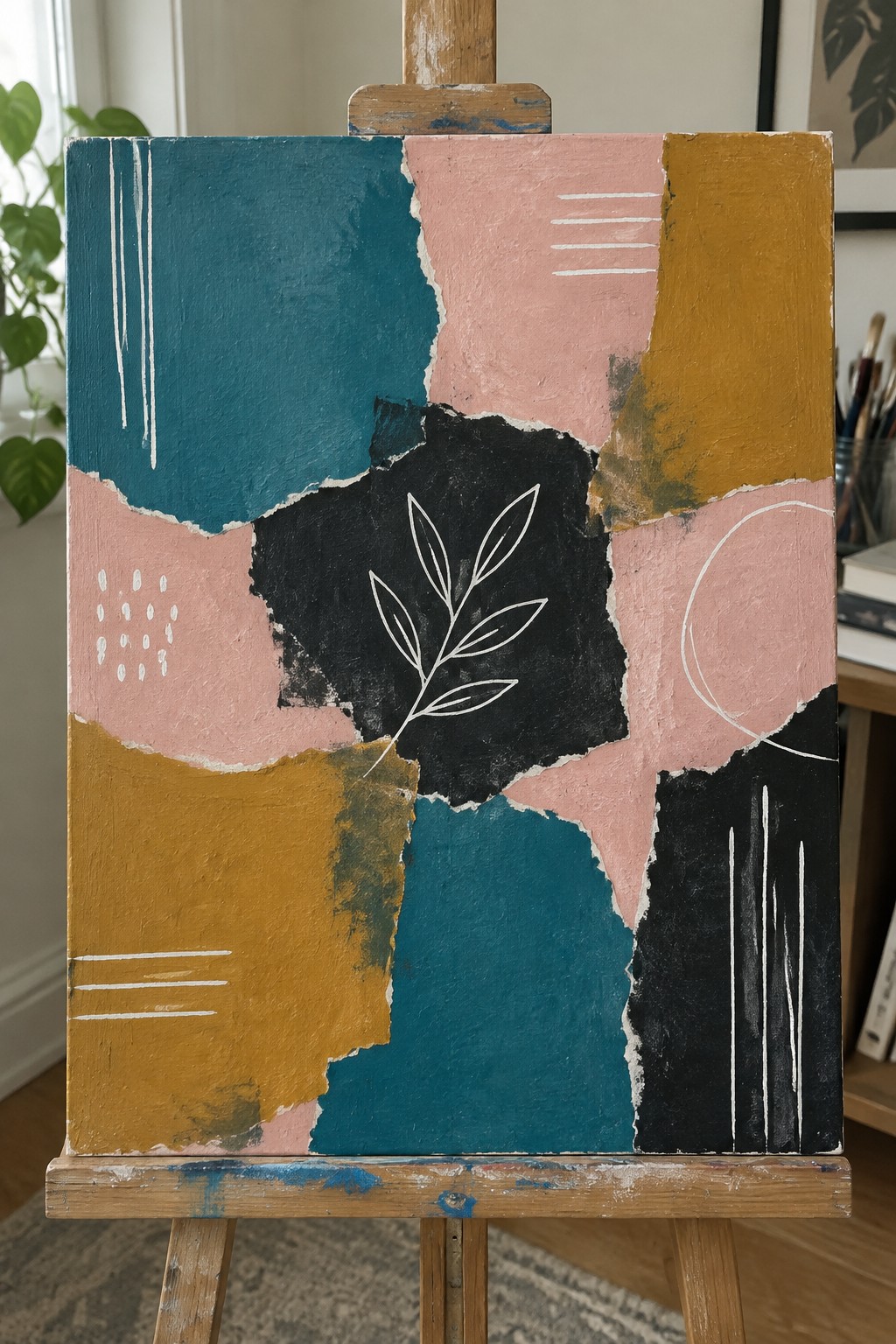
This painting idea uses irregular torn-edge blocks in teal, pink, mustard, and black to build an abstract composition. The shapes overlap in a loose grid that creates movement across the canvas while keeping the layout balanced. Thin white line drawings of a leaf and simple curves provide contrast and keep the eye moving without adding complexity.
What makes this idea useful is the limited palette, which makes color choices easier while still producing a finished look. You can swap the colors to match a room or try different line motifs like stars or abstract marks if the leaf does not appeal. The approach works well for practice because it emphasizes shape placement and contrast over fine detail, and the same layout scales easily to smaller canvases for quick projects.
Earthy Overlapping Circles Abstract
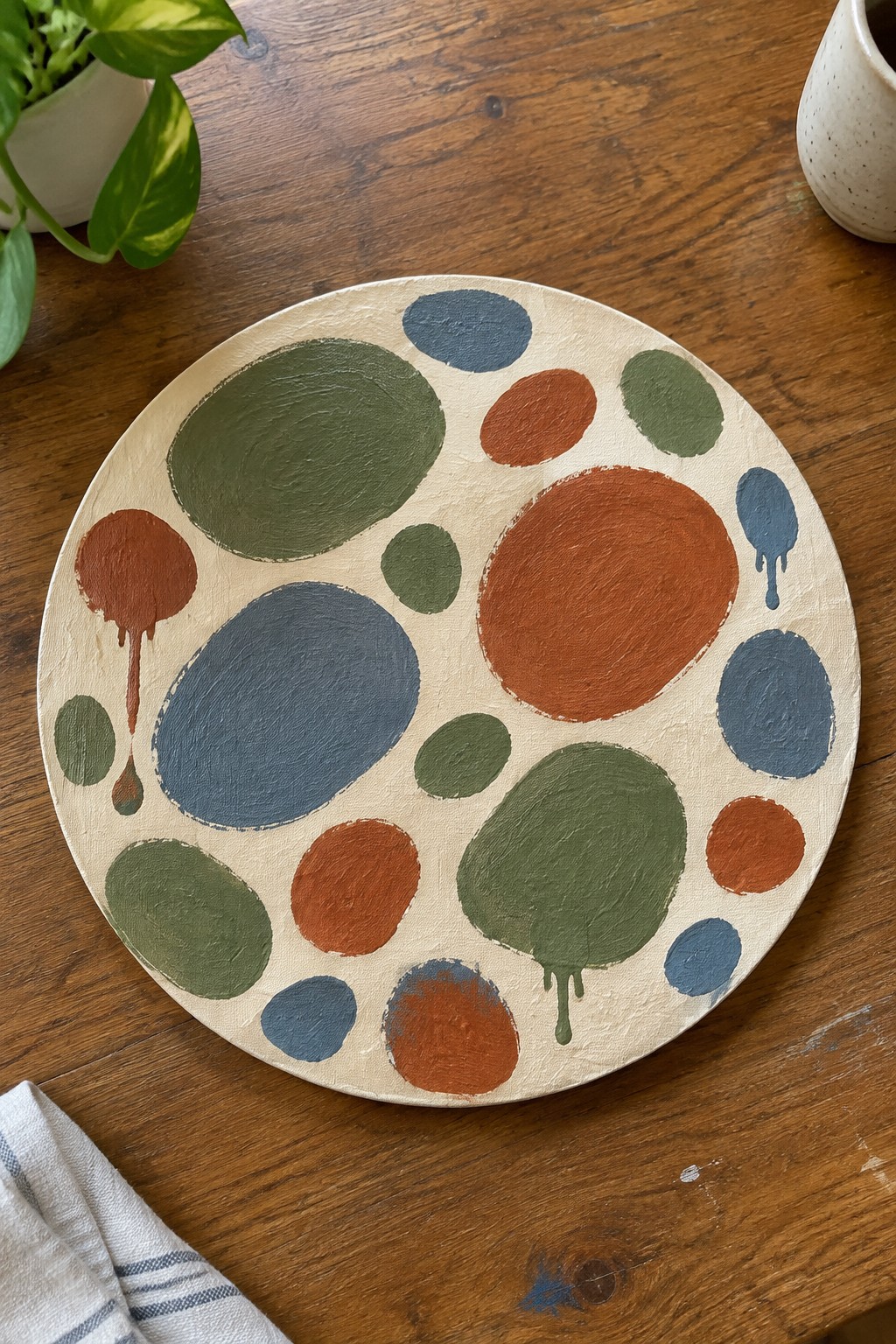
An abstract design made from circles of varying sizes layered across a neutral background creates an easy, balanced composition. The limited palette of greens, blues, and rust tones gives the piece cohesion while the few drips introduce texture and movement without extra effort. This approach fits the decorative abstract category and works especially well on round canvases where the shapes can spread naturally to the edges.
What makes this idea useful is how simple the shapes are to sketch and fill, so you can focus on color placement instead of drawing accuracy. The composition adapts easily to different canvas sizes or color schemes you already have on hand. For wall art, something like this performs well on Pinterest because the drip details add interest without complicating the process, and you can scale the number of circles up or down depending on how much time you have.
Abstract Leaf Shapes in Earthy Tones
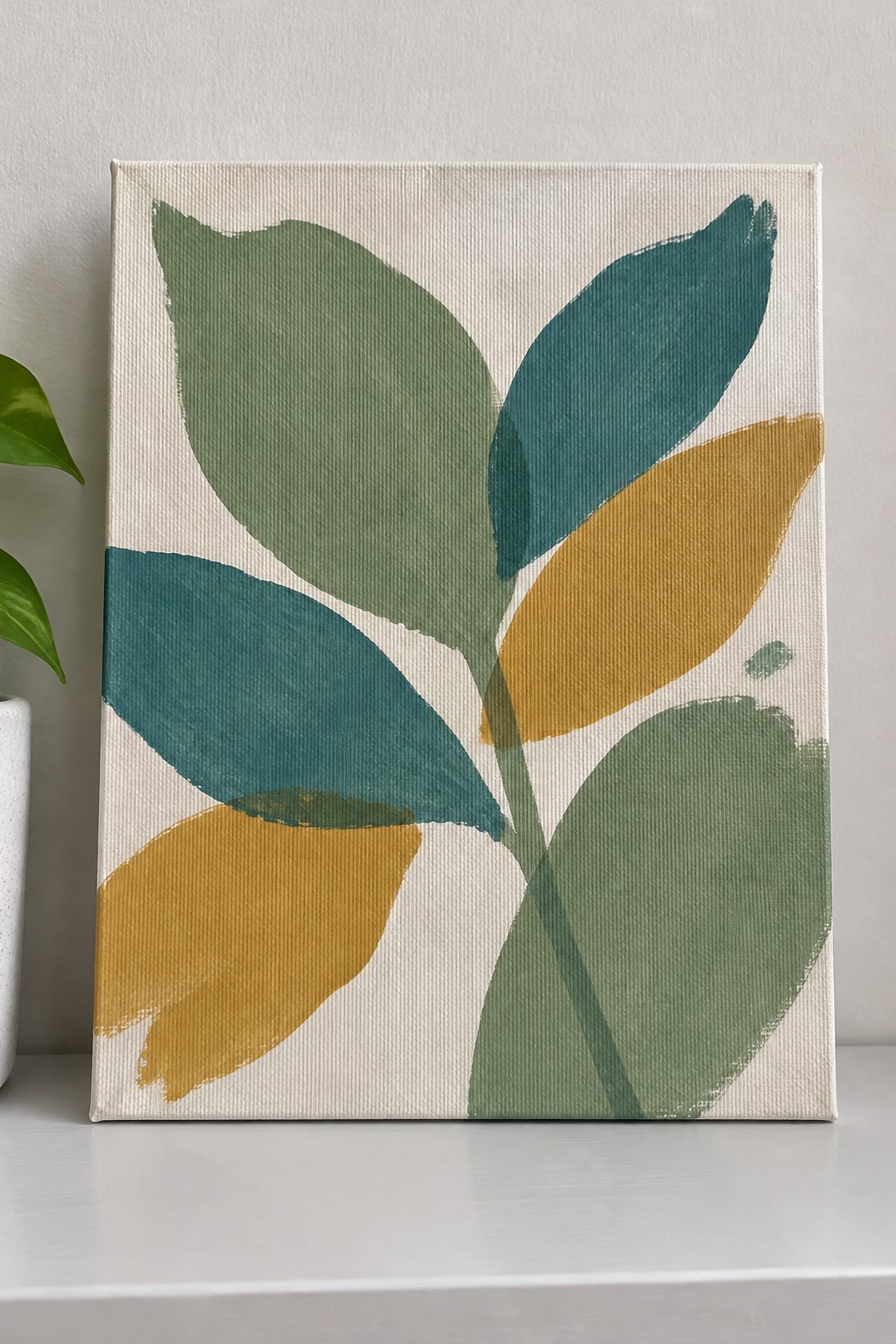
This painting idea uses broad, overlapping leaf forms arranged around a loose central stem to create a simple botanical abstract. The shapes stay flat and graphic, with colors blocked in rather than blended, so the eye moves easily across the canvas through the contrast of sage green, teal, and mustard yellow. It works as decorative abstract art where the focus stays on silhouette and placement instead of detail or realism.
What makes this idea useful is how the large shapes let you practice brush control and color placement without needing tight edges or shading. You could swap the palette for cooler tones or brighter accents depending on the room, or shrink the whole thing down for a set of smaller panels. The background stays light and minimal, which helps the forms stand out clearly even if your brushwork stays loose.
Diagonal Color Band Abstract

This abstract idea uses wide diagonal strokes to divide the canvas into bold color sections that flow from one corner to the next. Deep blue, golden yellow, and soft pink bands overlap slightly with visible brush marks, giving the piece movement while keeping the layout straightforward. The approach works because the direction and color contrast carry the composition without any need for detailed shapes or blending.
What makes this idea useful is how the angled layout guides the eye and hides uneven edges between colors. You can swap the pink for another neutral or change the blue to a different shade to match existing decor. The same structure works at a smaller size for quick practice or scaled up for a larger wall piece, and the loose brushwork makes it forgiving if your strokes vary in thickness.
Abstract Cityscape Reflection Painting
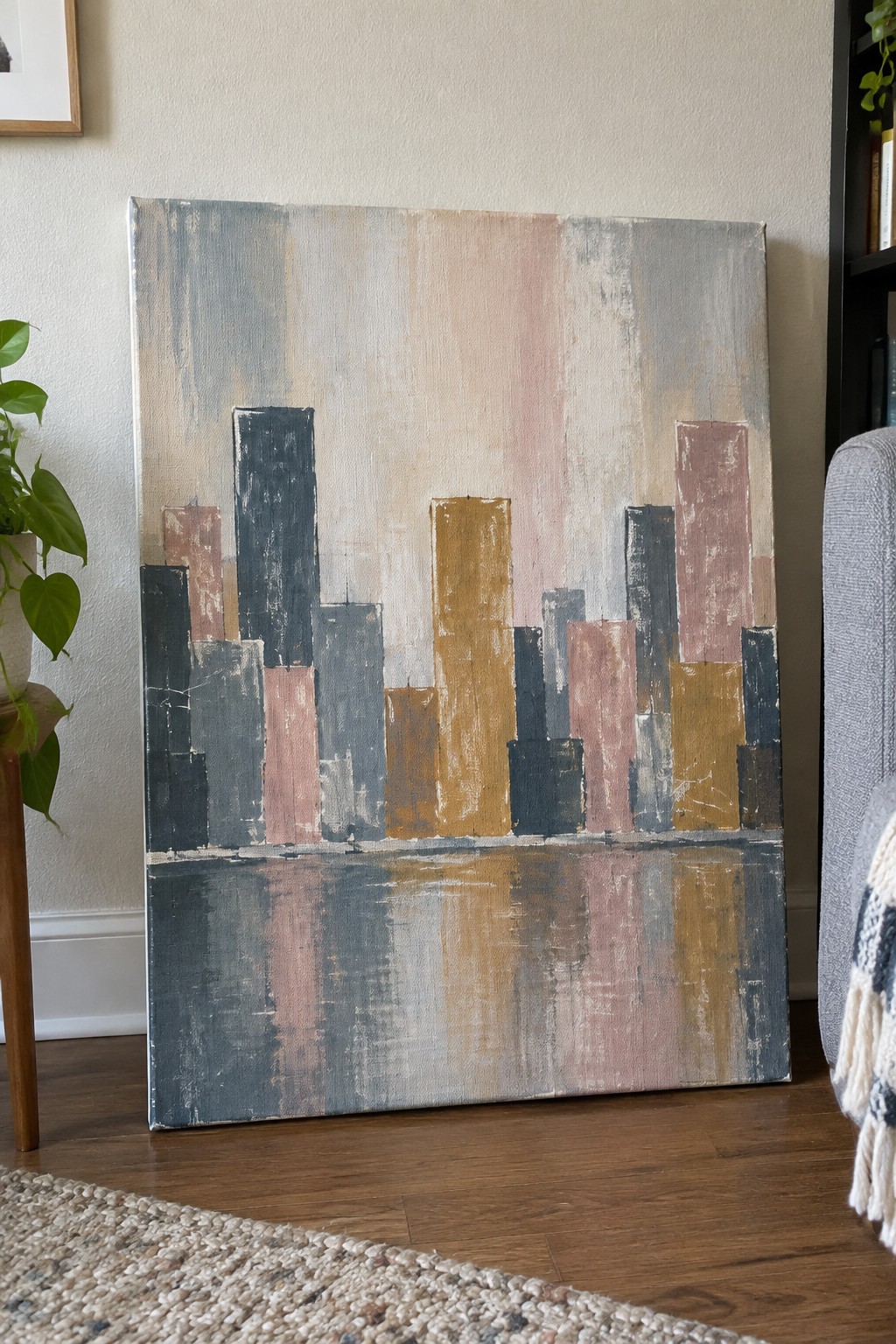
An abstract cityscape built from simple rectangular blocks lets you create a skyline without needing detailed drawing or perspective skills. The idea uses a muted palette of grays, dusty pinks, mustard, and navy to keep the shapes readable while the horizontal reflection band at the bottom anchors the whole composition. Varying the height and width of the buildings adds rhythm without complicating the layout.
What makes this idea useful is how the block shapes let you focus on color mixing and texture instead of precision. You can swap the neutral tones for brighter shades or shrink the format for a quick practice session. The reflection strip gives the piece instant balance, making it a straightforward option for modern wall art or a series of smaller canvases.
Warm Gradient Dot Mandala

A radial abstract painting built from overlapping circles that start small and dense in the center and grow larger toward the edges. The idea uses a warm color shift from deep reds through oranges into yellows against a soft green background to create a simple sunburst effect. The repeated round shapes and gradual color change give the composition its balance and visual pull without any complex drawing.
The composition does a lot of the work here because the symmetry and repeating shapes make it easy to build outward from the center. You can swap the warm palette for any color family or change the background tone to match different rooms or seasons. This kind of piece works well for practice with brush pressure and color mixing while still producing something structured enough to display or share online.
Organic White Shapes on a Soft Gradient Background

This painting idea centers on a muted gradient background that blends blue, pink, and gray tones across the canvas. Three irregular white shapes with rough, deckled edges sit at different angles, creating negative space that breaks up the soft wash. The composition works because the simple shapes and limited palette keep the focus on contrast and placement rather than detail.
What makes this idea useful is how the torn edges give texture without extra technique. You can change the background colors to fit a room or mood while keeping the same three-shape layout. It adapts easily to different canvas sizes and works well as a quick practice piece or a neutral wall accent that still feels intentional.
Loose Circle and Mark Abstract

This abstract painting idea centers on scattered concentric circles in teal, yellow, and coral, paired with short straight brush marks across a light background. The varied circle sizes and slight overlaps create movement and keep the eye traveling across the canvas without any single element dominating. It works as a decorative abstract piece where simple repeated shapes and a balanced warm-cool palette carry the composition.
The composition does a lot of the work here because the light background makes the colors pop while giving you room to adjust spacing or add more marks as needed. You can easily scale it down to a smaller canvas or swap in two colors if you want a faster practice version. This style also stands out on Pinterest because the bold shapes read clearly even in a thumbnail.
Overlapping Color Blocks Abstract
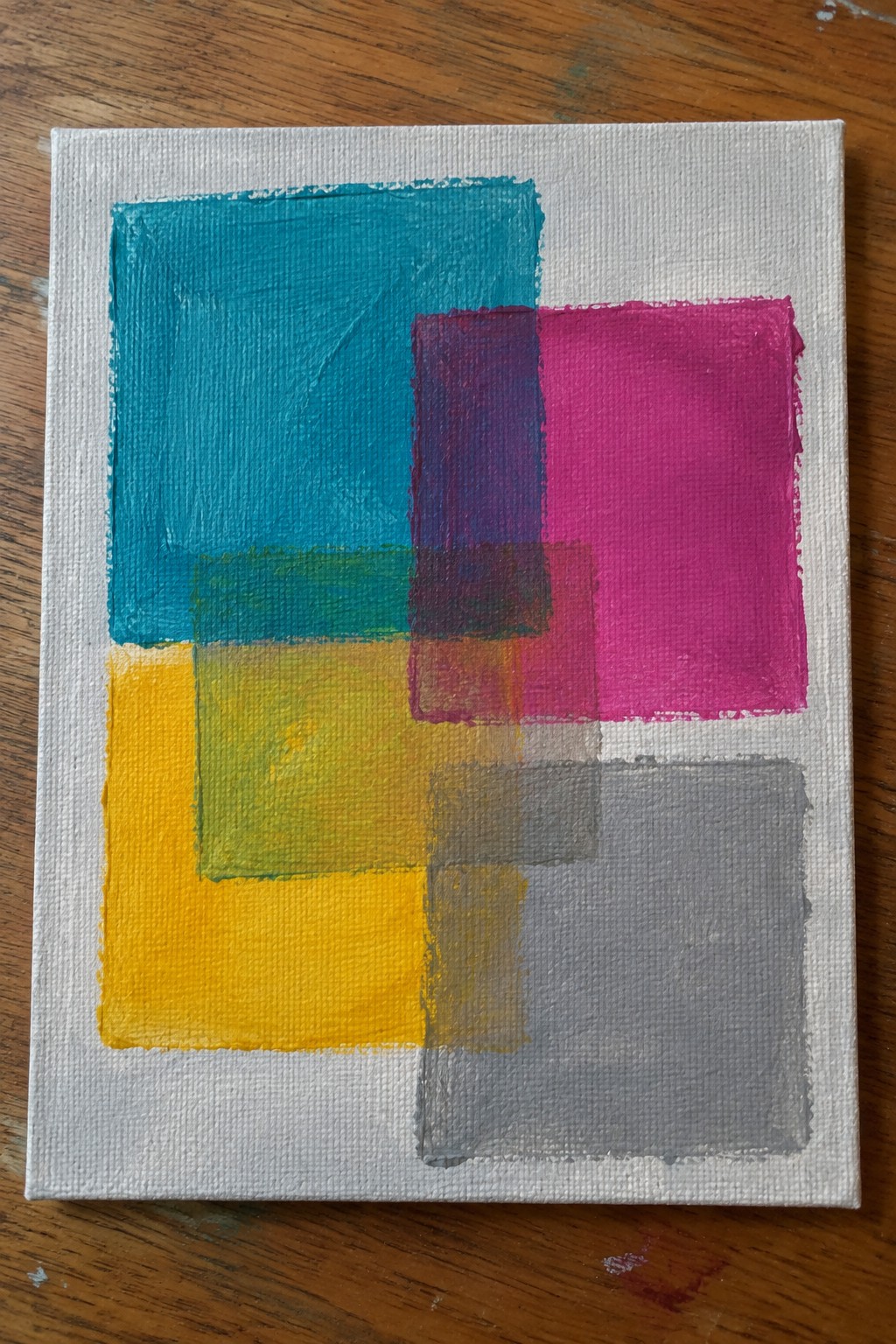
This abstract idea builds a composition from large rectangles that overlap in different spots, letting some colors sit on top of others while others blend at the edges. The palette mixes cool teal and green with warm yellow, bright magenta, and a neutral gray, so the eye moves across the canvas through the color shifts rather than through fine details. It fits the decorative abstract category because the focus stays on how the shapes and hues interact.
What makes this idea useful is how quickly you can adapt the layout to different sizes or color schemes. Swap the magenta for a deep blue or change the yellow to an earth tone and the same overlapping structure still holds together. The simple shapes also make it a good choice for testing how acrylics layer and dry at different thicknesses. For wall art, this kind of piece works especially well in modern rooms where bold color blocks can stand alone without extra elements.
Frequently Asked Questions
What basic supplies do I need to complete the projects in this guide?
You will need acrylic paints in a variety of colors, several sizes of brushes, canvases or painting boards, a palette for mixing, water cups, paper towels, and optional items like sponges or palette knives for texture. Most projects use common household items to keep things simple, so start with a basic set and add tools as you try different techniques from the 21 ideas.
How long should each abstract painting project take from start to finish?
Each project is designed to take between 30 minutes and two hours depending on the complexity and drying time between layers. The step-by-step instructions include notes on quick drying methods like using a hair dryer on low heat, so you can finish one in a single session or spread it over multiple short sittings if needed.
What should I do if my painting does not match the example in the instructions?
Abstract art allows for personal interpretation, so embrace variations by adding extra layers or adjusting colors as you go. If a step goes wrong, let the paint dry and paint over it with a new color or texture. The guide encourages experimenting with the 21 projects to make each one unique rather than copying exactly.
How can I adapt these projects for children or complete beginners?
Simplify the color choices to three or four basic shades and focus on broad brush strokes or finger painting instead of detailed tools. Supervise young artists with washable paints and cover surfaces well. Many of the step-by-step instructions already break tasks into easy stages that build confidence quickly.
How do I seal and display my finished acrylic paintings?
Once the paint is fully dry, apply a thin layer of acrylic varnish with a soft brush to protect the surface from dust and fading. For display, frame the canvas or hang it directly on the wall using adhesive hooks. Store unused paintings flat in a cool dry place to prevent warping.
