

I like using acrylics for geometric abstracts because they dry quickly and allow for easy layering.
The patterns usually involve repeating shapes which helps build confidence step by step.
I went through many options and selected 18 that look inspiring yet simple enough.
My own paintings in this style have turned out decent even on the first tries.
They might give you some starting points if you want to experiment too.
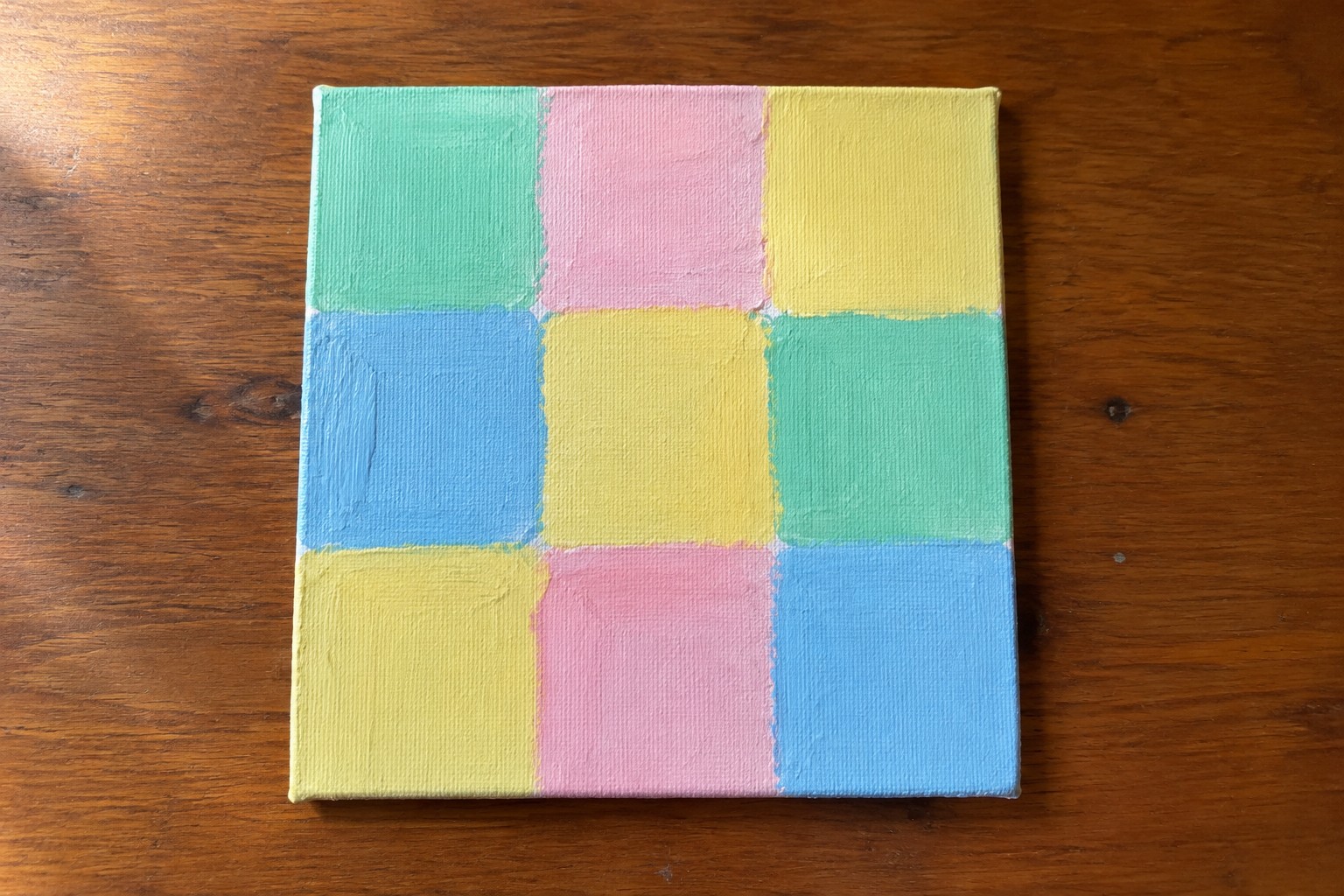
Pastel Color Block Grid Abstract

A 3×3 grid of solid pastel squares creates a simple abstract painting built entirely on color placement. The soft mint, pink, yellow, and blue tones sit next to each other with clean edges and just enough variation to hold interest across the whole piece. This kind of composition works as decorative art because the repeating squares deliver balance and order without any need for detailed shapes or blending.
What makes this idea useful is how little planning it requires beyond choosing colors that sit well together. You can swap the palette to match a room, change the square sizes, or paint the grid on a larger canvas for a different impact. For practice, this layout lets you focus on even coverage and straight lines while still ending up with something that reads as finished wall art.
Stacked Triangles in Contrasting Colors

A geometric abstract built from three vertically stacked triangles gives beginners a clear way to explore shape repetition and color placement. The top coral triangle sits above a larger teal one, which in turn rests over a mustard yellow triangle at the base, all set against a plain off-white ground. This setup works because the limited palette and consistent triangle form keep the eye moving through the canvas without needing extra detail or blending.
The composition does a lot of the work here since the vertical order and slight size changes create balance on their own. You can swap in any three colors that fit a room, adjust the spacing between shapes, or scale the whole thing down for smaller canvases or cards. This kind of painting idea saves well for quick weekend projects or when you want a modern piece that still feels approachable to recreate.
Overlapping Semi-Circles in Earth Tones

This idea builds an abstract composition from repeated semi-circles that overlap across a divided grid. Four colors repeat in a balanced pattern, with the curves creating flow while the straight edges hold the structure together. The limited palette and simple shapes keep the focus on how the forms interact rather than on detail or realism.
The composition does a lot of the work here because the grid layout prevents the curves from feeling scattered. You can adapt it easily by changing the four colors to match a room or season, or by stretching the same idea across a larger canvas with bigger arcs. For practice, this kind of subject helps beginners work on brush control and color placement without needing perfect edges. It would also translate well to a quick acrylic study or a larger decorative piece.
Diagonal Two-Color Split with Metallic Line

A simple geometric abstract idea is to divide the canvas with one clean diagonal and use just two strong colors on either side. The thin gold line along the division adds separation and keeps the eye moving without extra shapes or layers. This approach works because the bold color blocks do most of the visual work while the metallic accent gives the composition a finished edge.
What makes this idea useful is how quickly it comes together once you tape or mark the diagonal. You can change the angle, swap the colors for any room’s palette, or widen the gold line if you want more contrast. For practice or quick wall pieces, the limited elements make it easy to repeat in different sizes or color combinations. The same layout also translates well to smaller canvases or even paper studies before committing to a larger piece.
Hexagon Grid with Warm Color Blocks
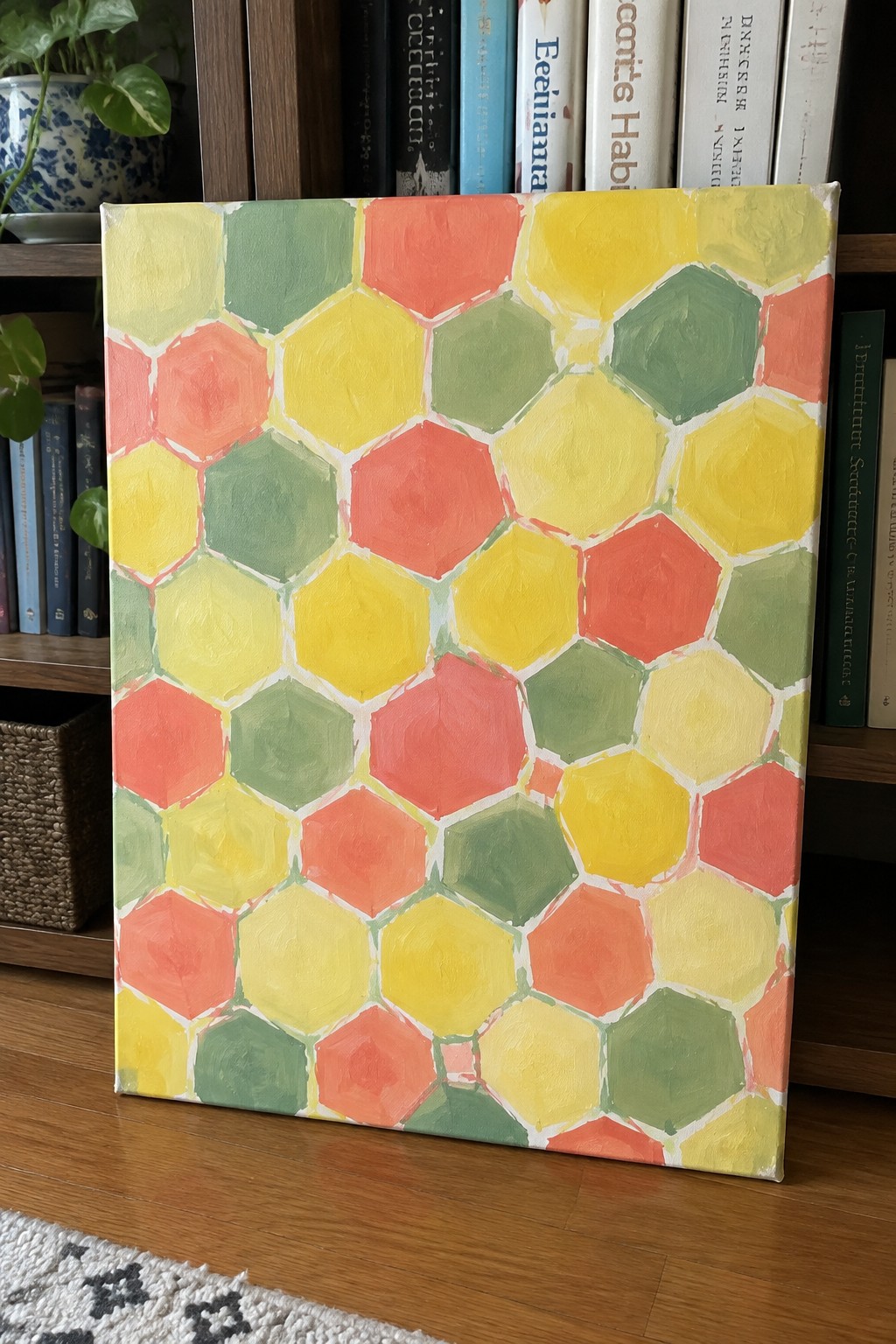
A repeating hexagon pattern forms the core of this abstract idea by tiling irregular six-sided shapes across the canvas in offset rows. Each hexagon gets filled with one of three colors from a yellow, coral, and green palette, while thin white gaps separate the forms and keep the shapes readable. The approach succeeds because the color shifts and slight size variations create movement without any need for precise alignment or extra elements.
What makes this idea useful is how the basic grid layout removes most composition decisions so you can focus on color choices and brushwork instead. The same structure works at different scales, from a small practice canvas to a larger wall piece, and the palette can be swapped for cooler tones or pastels without changing the structure. For beginners, the loose edges and overlapping colors make it forgiving while still producing a finished look that photographs well for sharing.
Vertical Stacks of Bold Color Blocks

This painting idea uses a simple vertical column of horizontal rectangles in repeating teal, magenta, and yellow against a light neutral ground. The composition gains its strength from the repeated color sequence and the slight variations in brush pressure that add texture without complicating the shapes. It belongs to geometric abstract or decorative art, where the impact comes from color placement and proportion rather than subject matter.
What makes this idea useful is how quickly it can be resized or recolored to match different spaces or seasons. The stacked format works especially well on tall narrow canvases or as a set of three smaller panels with shifted color orders. For practice, this kind of subject helps focus on even edges and color mixing while still looking finished. It would stand out on Pinterest as an easy modern option that stays interesting when the palette changes.
Concentric Squares with Limited Color Layers

This painting idea uses a series of nested squares that step inward toward a solid center square, built with just four main colors in a repeating sequence. The approach keeps the focus on clean edges and color blocks rather than blending or shading, letting the geometric repetition create the visual interest. Brush texture shows in the thicker lines but stays secondary to the overall square structure.
What makes this idea useful is how straightforward it is to scale the number of rings up or down depending on canvas size. The limited palette makes color decisions simple while still allowing swaps like replacing the rose with another neutral or using a brighter teal. For practice, this kind of piece works well as a quick study in layering straight edges and testing how different color orders affect the final balance.
Overlapping Circles in Bright Teal and Coral

This painting idea centers on a geometric abstract built from circles of varying sizes that overlap to create depth and movement. The limited palette of teal, yellow, coral, and small accents of green keeps the focus on shape relationships rather than detail, while the neutral background lets the colors stand out clearly. It works as decorative abstract art because the arrangement balances large dominant shapes with smaller supporting ones without overcrowding the canvas.
What makes this idea useful is how simple it is to adjust the circle sizes or swap colors to fit different spaces. You could paint it larger on a bigger canvas or shrink the whole layout for a quick practice piece. The overlaps also make it easy to test color mixing directly on the surface, and the bold shapes hold up well when the finished work is cropped for online sharing.
Two-Canvas Triangle Geometry in Earth Tones
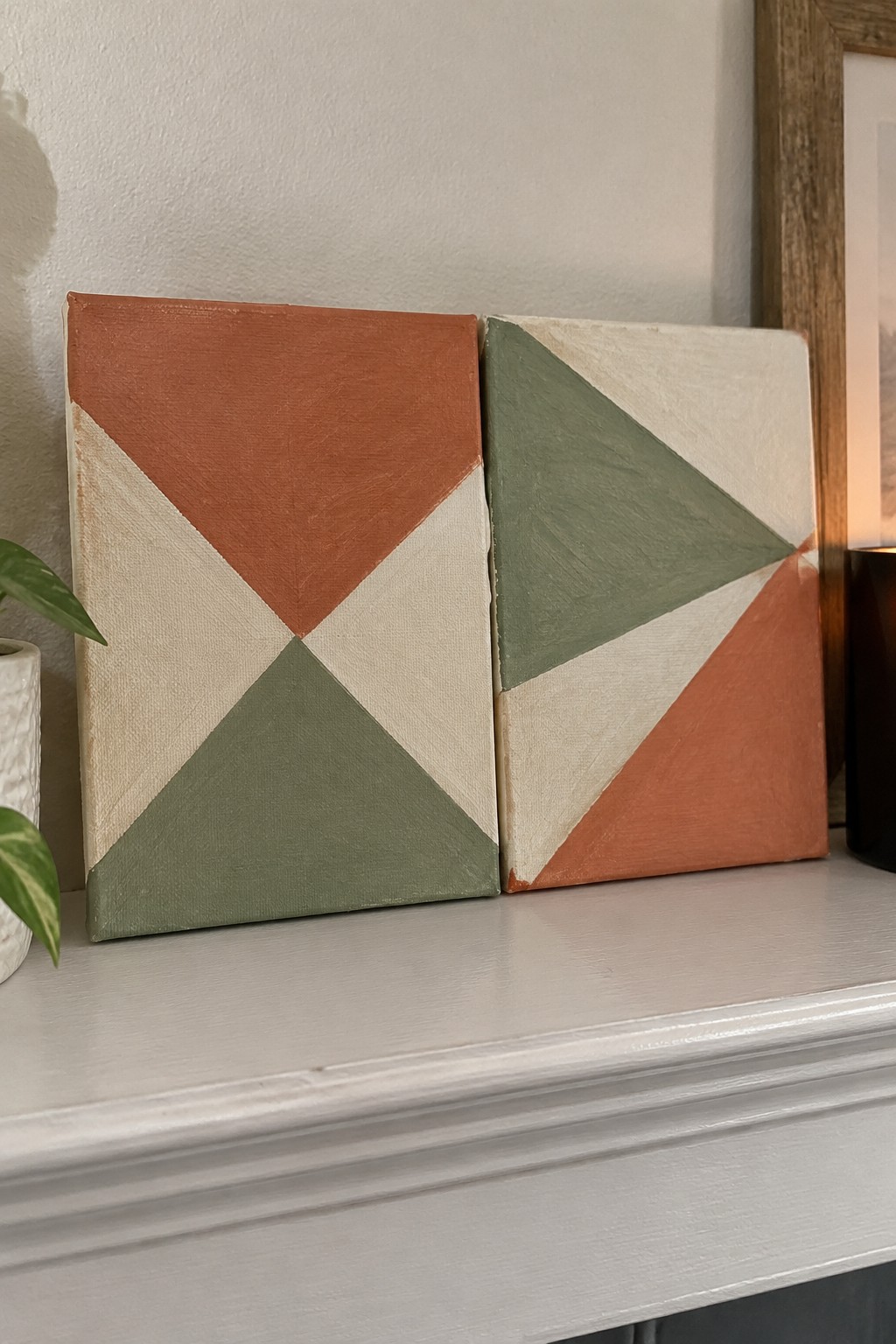
This painting idea uses two square canvases placed side by side, each split into four large triangles that meet at the center point. The same three colors—terracotta, sage green, and cream—are arranged differently on each canvas so the pair reads as connected but not identical. The strong diagonal lines and limited palette create clear contrast without needing extra detail or blending.
What makes this idea useful is how the mirrored layout lets you test color placement across two pieces at once while keeping the process straightforward. The composition does a lot of the work here since the triangles fill the entire surface and require only basic straight-edge guidance. A painting like this works especially well for wall art because the neutral palette fits many rooms and the bold shapes read clearly from a distance. You could adapt it by flipping the color order on the second canvas or trying the same division on a single larger piece.
Earth Tone Square Grid Abstract

A grid of squares painted in a repeating pattern of mustard yellow, teal, terracotta red, and cream forms a clean abstract composition. The idea centers on using a limited palette and even spacing so the colors play off each other without needing extra detail or blending. This type of painting falls into decorative abstract work where the structure itself creates the interest.
The color palette makes this easy to adapt by swapping in shades that match your space or trying a cooler or warmer set. You could lay it out with painter’s tape for sharp edges or paint freehand if you want softer lines between the blocks. For practice, this kind of subject lets you focus on even coverage and color mixing without worrying about drawing anything specific. The simple layout also scales well if you want a quick piece for a shelf or a larger version for a wall.
Diagonal Blocks in Mixed Cool Neutrals

This painting idea uses overlapping diagonal bands and rectangular blocks to build an abstract composition. The shapes cross at different angles with visible brushstrokes that add texture and keep the surface lively. A palette of teal, blue-gray, sage, and beige holds everything together while the white gaps between the forms prevent the design from feeling crowded.
The composition does a lot of the work here because the angles create movement without any need for perfect edges or symmetry. You can swap in other colors from the same cool-neutral range or change the width of the bands to suit a different canvas size. For wall art this layout works especially well since the pattern reads clearly from a distance and still holds interest up close.
Earth Tone Polygon Mosaic with One Bright Accent

A geometric abstract made from irregular interlocking polygons creates a strong composition when the shapes cover the entire surface without gaps or overlaps. The muted palette of browns, beiges, and grays keeps attention on the angular forms and their arrangement, while the single blue shape breaks the pattern and gives the eye a clear place to rest. This style sits firmly in the decorative abstract category and uses simple color blocking plus visible brush texture instead of detail or shading.
The composition does a lot of the work here by letting the puzzle-like layout carry the design. You can swap the blue for any color that fits your room or pull the rest of the tones from whatever paints you already have on hand. This approach works especially well for beginners who want to practice shape fitting and color placement on a small canvas without needing steady lines or perfect edges. It also translates easily into a quick weekend project that still looks intentional on a wall.
Gradient Rounded Columns

A row of upright rounded rectangles creates the main structure here, with heights staggered so some shapes sit higher or lower than others. The color moves steadily from bright orange-red on the left into deeper purple on the right, applied in soft layers that let the tones blend where they meet. This keeps the painting firmly in the geometric abstract category while using only basic shapes and a single clear transition.
The composition does a lot of the work here because the staggered heights and gradual color shift already give the piece balance and movement. You can swap the palette for any two or three colors you have on hand and still get a finished look that works as wall art or a quick practice piece. The same layout also scales easily to smaller canvases or even sketchbook pages if you want to test different color combinations before committing to a larger version.
Sweeping Arcs in a Three-Color Sequence
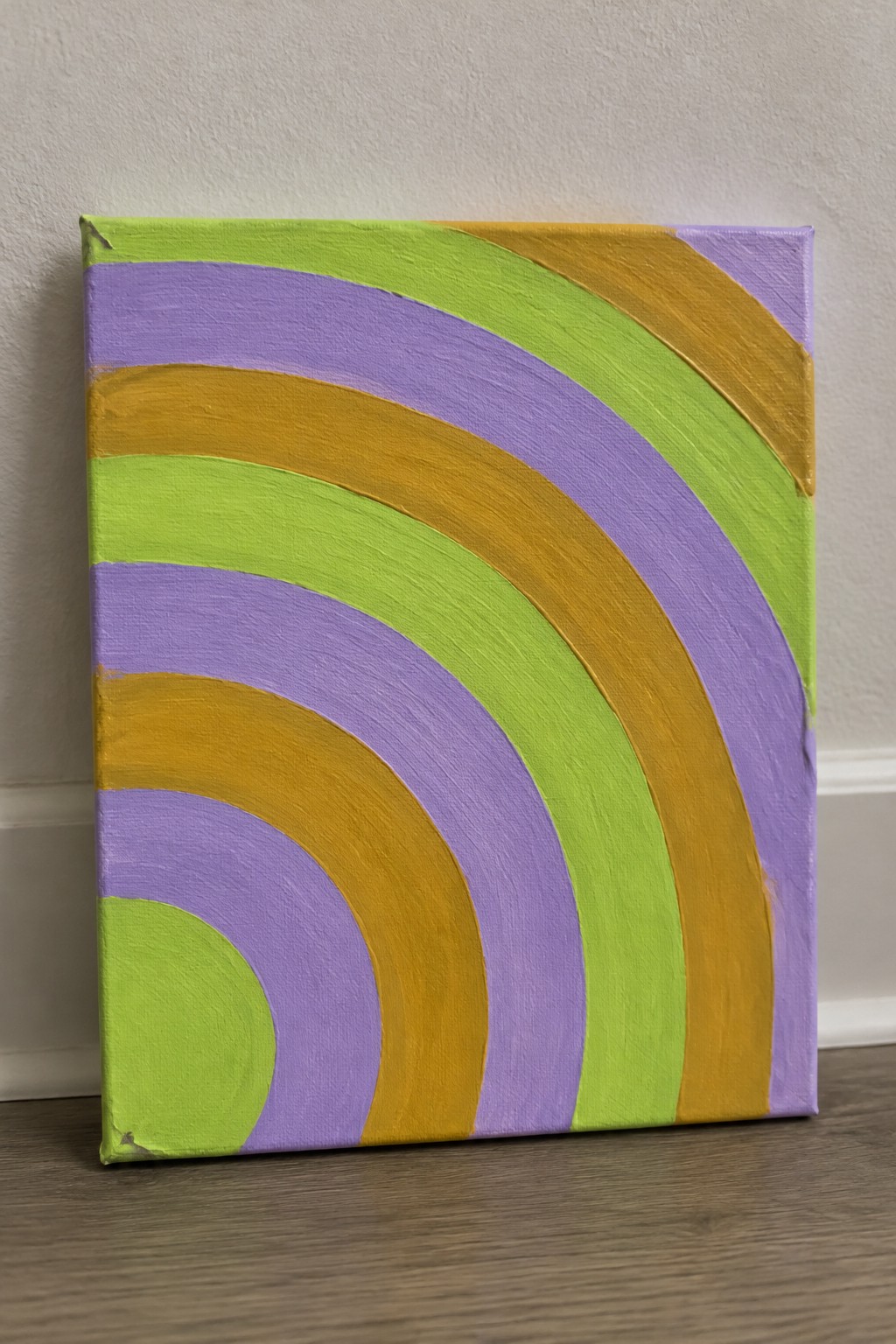
This painting idea centers on filling the canvas with wide, parallel curved bands that repeat in a fixed color order. The sequence of lime green, purple, and mustard yellow creates a clear rhythm while the arcs themselves add gentle movement across the surface. Keeping the bands thick and the palette small makes the composition read as bold and graphic rather than busy.
The composition does a lot of the work here by letting the repeating arc shape carry the design with minimal planning. You can swap the three colors for any combination that fits your space or adjust the band widths to make the piece feel tighter or more open. For practice, this approach works well because it builds confidence with large brushstrokes and color repetition before moving into more complex geometric patterns.
Vertical Stack of Overlapping Circles

This geometric abstract idea uses three circles stacked in a straight vertical line with slight overlaps to create a simple but balanced composition. Each circle sits in its own muted tone against a plain light background, letting the shapes and soft color shifts carry the design. The approach works because the limited palette and repeated form keep the focus on placement and negative space instead of extra detail.
The composition does a lot of the work here by relying on alignment and overlap rather than complex technique. You can swap the charcoal, warm beige, and blue for any three colors that match a room or mood, or adjust the canvas size without changing the layout. For practice this subject helps with brush control and edge work while staying forgiving if the circles are not perfectly round. It also translates easily into a quick study or a larger wall piece.
Horizontal Brushstroke Stripes Abstract

This painting idea uses repeated horizontal brushstrokes to build a simple grid-like structure across the canvas. The colors shift between teal, yellow, and blue-gray in each row, with slight variations in length and pressure that keep the pattern from feeling rigid. The white space between strokes lets the colors stand out while the overall layout stays balanced and orderly.
What makes this idea useful is how easily the same layout can be adjusted for different color schemes or canvas sizes. The strokes require only basic brush control, so it works well as a first project or a quick practice piece when you want something structured but not detailed. You can swap in seasonal colors or match it to existing room tones without changing the core arrangement.
Muted Geometric Grid with Soft Color Blocks
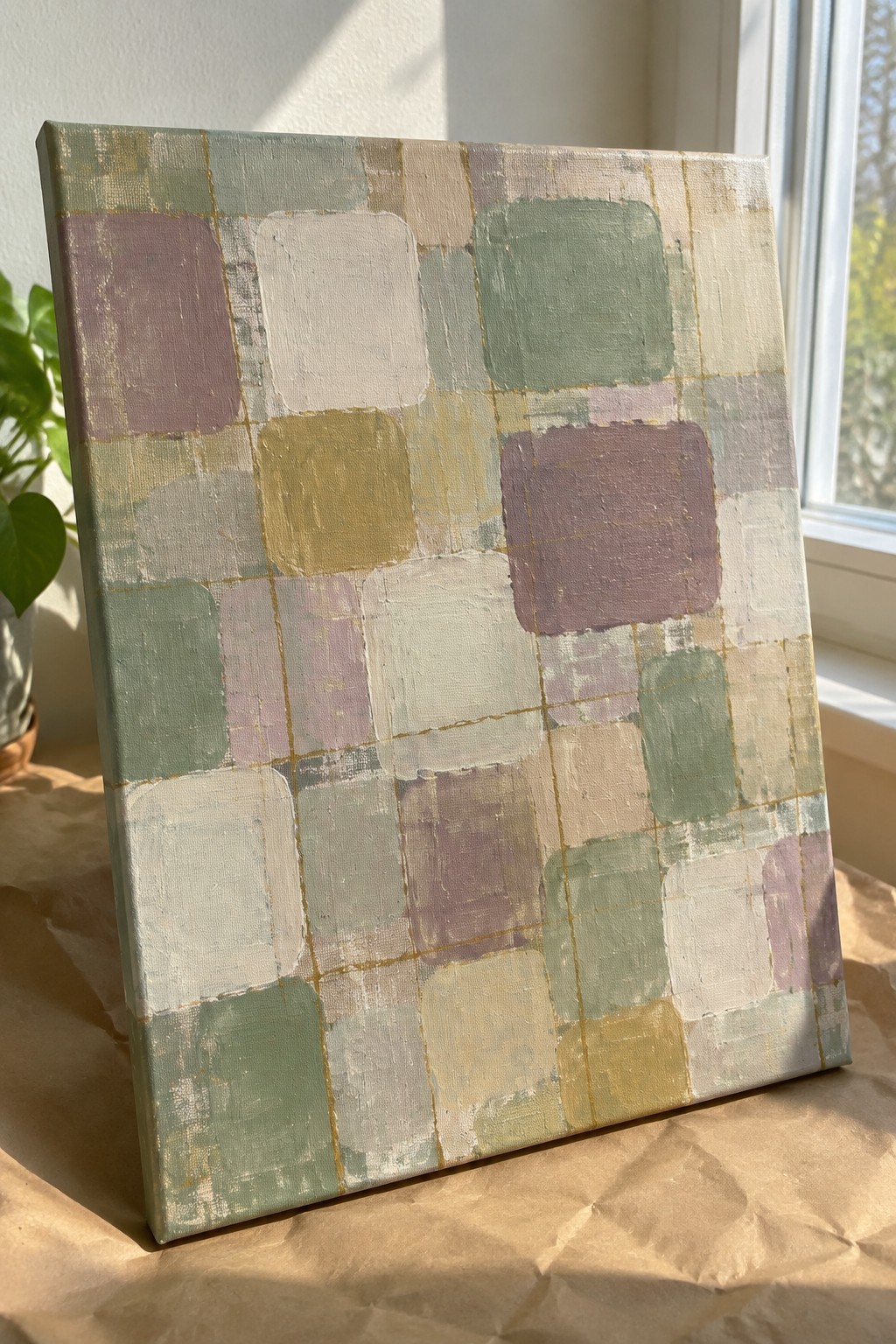
A loose grid of overlapping rectangles and squares in soft sage, lavender, beige, and pale gold creates a balanced abstract layout that feels calm but not flat. The irregular edges and slight overlaps between shapes prevent the pattern from looking too mechanical. Thin gold lines along some divisions add quiet structure while keeping the overall effect gentle and cohesive.
The composition does a lot of the work here by letting the grid hold everything together while the soft color shifts keep it interesting. You can swap the palette for cooler tones or brighter accents without changing the structure, making it simple to match different rooms or moods. This kind of painting works especially well for beginners who want to practice color mixing and shape placement without needing precise lines or complex details. For wall art, something like this scales easily to larger canvases or can be repeated in a small series.
Scattered Geometric Shapes in Coral and Teal

This painting idea uses basic shapes like triangles, circles, and short lines placed loosely across a light background without any strict pattern or grid. The combination of filled shapes and thin marks keeps the eye moving across the surface while the limited palette of coral, teal, yellow, and gray holds everything together. It works as abstract decorative art where the focus stays on shape variety and color placement rather than detail or realism.
What makes this idea useful is how the irregular spacing lets you add or remove shapes without ruining the balance. The color palette makes this easy to adapt by swapping in whatever acrylics you already have on hand. For practice, this kind of subject helps you experiment with composition and brush pressure on a small scale before moving to larger canvases. A painting like this would stand out on Pinterest as a simple abstract option that still feels fresh.
Frequently Asked Questions
What supplies are essential for a beginner starting geometric abstract acrylic paintings?
To begin, gather acrylic paints in primary colors plus black and white for mixing, a set of synthetic brushes in various sizes, a palette for blending, and a canvas or heavy paper primed for acrylics. Add painter’s tape for crisp lines, a ruler for straight edges, and water for cleaning brushes. These basics keep costs low while allowing experimentation with shapes like triangles, circles, and polygons seen in the inspiring examples.
How do I plan a composition using ideas from the 18 featured paintings?
Start by sketching simple geometric layouts on paper, focusing on balance and repetition of shapes rather than complex details. Study the examples for color blocking and negative space, then adapt one or two elements into your own design. Limit your palette to three or four colors at first to maintain harmony, and use tape to mask areas for clean divisions before painting.
What techniques help beginners achieve clean lines and shapes in acrylics?
Apply painter’s tape firmly to create straight edges, then paint over it with thin layers to avoid bleeding. Work from light to dark colors and let each layer dry fully before adding details. For curves, use a compass or freehand with a steady hand after practicing on scrap paper. Thin your acrylics slightly with water for smoother application without losing opacity.
How can I avoid common mistakes when trying these abstract styles for the first time?
Begin with small canvases to reduce pressure and focus on one shape or color interaction at a time. Avoid overworking wet paint, which can muddy colors, by planning your sequence in advance. If a shape feels off, scrape it off gently while wet or let it dry and paint over it. Practice mixing colors on a palette first to match the vibrant yet balanced tones in the inspiring works.
Where can I find ongoing inspiration and track my progress with geometric abstracts?
Keep a sketchbook to note ideas from daily observations or online galleries, and photograph your finished pieces alongside the 18 examples for comparison. Join beginner art communities or follow tutorials that build on basic shapes. Review your work monthly to spot improvements in composition and color use, adjusting your approach based on what feels most engaging.
